Common Floor Problems We Repair
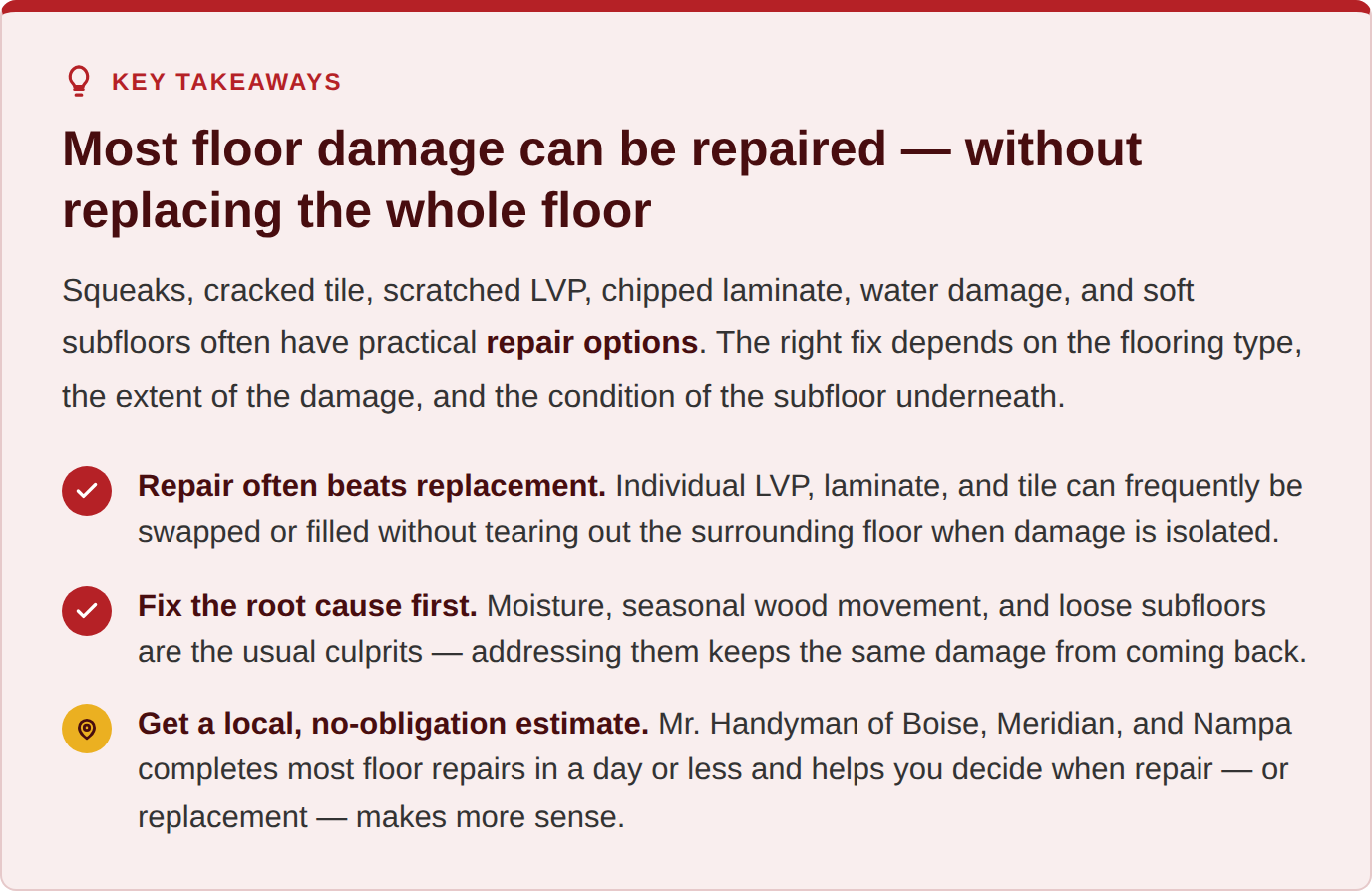
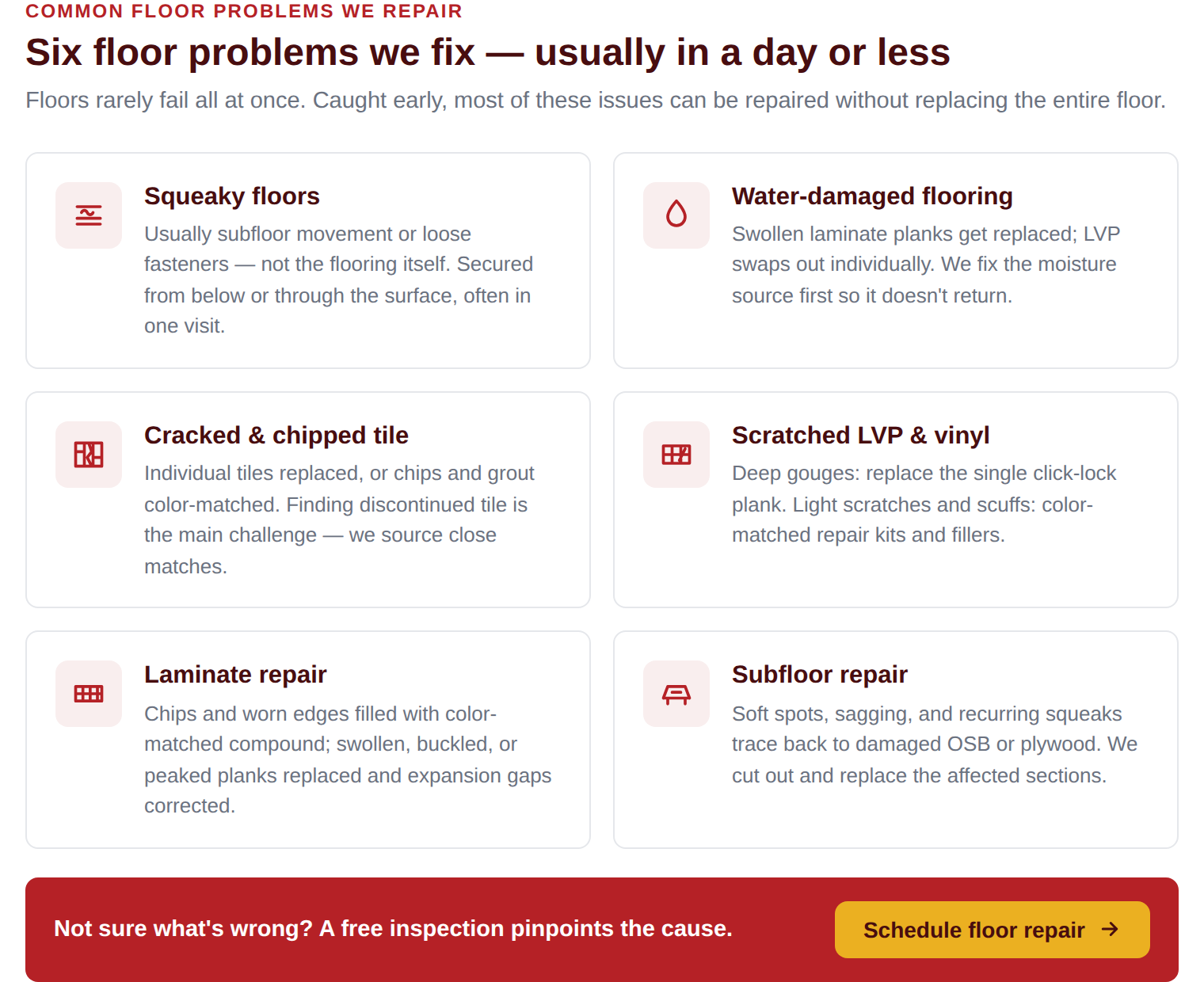
Floors rarely fail all at once. It usually starts with a squeak that gets louder, a cracked tile, a soft spot underfoot, or flooring that begins to separate after water damage. However, Mr. Handyman can repair many common flooring problems without replacing the entire floor, especially when we address them early.
Squeaky Floor Repair
Yes, most squeaky floors can be repaired without removing the finished flooring. In many cases, the problem isn’t the flooring itself but movement between the subfloor, floor joists, or fasteners beneath it.
Squeaks can develop as homes naturally expand and contract with seasonal temperatures and humidity changes, typically due to friction. In the Treasure Valley, Idaho’s dry climate and seasonal weather shifts can cause wood to shrink, creating small gaps that make the floor feel unsteady underfoot. Loose fasteners, minor subfloor movement, and gaps between the subfloor and joists are also common culprits.
The right repair depends on what’s causing the noise. When the underside of the floor is accessible, repairs may involve securing the subfloor to the joists or installing clips to eliminate movement. In finished spaces, specialized fastening systems can stabilize the floor through carpet or hardwood with little to no visible evidence of the repair.
While most squeaks are simply an annoyance, some can indicate a significant problem, such as subfloor damage or structural issues with the floor framing. During your appointment, we will identify the source of the squeak and recommend the most appropriate repair. Many squeaky floor repairs can be completed in a single visit.
Water-Damaged Floor Repair
Whether a water-damaged floor can be repaired depends largely on the flooring material and how quickly the damage is resolved. Laminate flooring with a swollen fiberboard (MDF) core typically requires replacement of the affected planks because the material cannot return to its original shape once it has absorbed moisture. Luxury vinyl plank (LVP), on the other hand, allows individual damaged planks to be removed and replaced without disturbing the surrounding floor.
In the Treasure Valley, water damage commonly results from leaking dishwashers, washing machines, and ice maker lines, as well as from spring snowmelt or irrigation water entering through doorways and sliding glass doors. Regardless of the source, identifying and correcting the moisture problem is the first step in any successful repair.
Once the leak has been resolved, the repair process typically includes inspecting the subfloor for moisture damage and soft spots, replacing compromised flooring, and blending the new material with the surrounding floor whenever possible. Correcting water damage promptly can mean the difference between replacing a few damaged planks and repairing a damaged subfloor or structural framing caused by prolonged moisture exposure. If the wet areas aren’t handled within the first 24 to 48 hours, mold can begin to develop, resulting in additional issues that must be addressed.
Cracked and Chipped Tile Repair
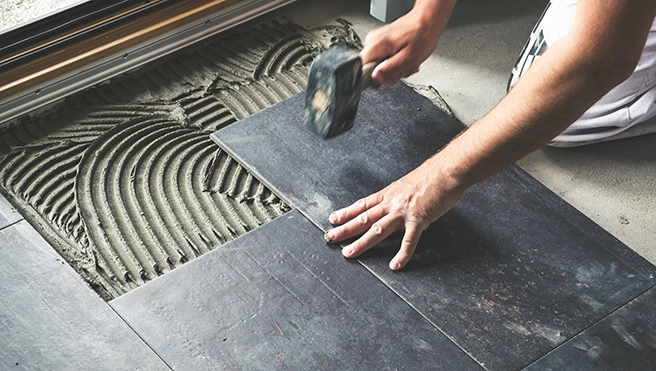
Tile damage can happen for several reasons. Heavy objects may crack the surface on impact, while subfloor movement, normal house settling, or improper installation can place stress on the tile over time. If the underlying cause isn’t addressed, replacement tiles may crack the same way.
One of the biggest challenges in tile repair is finding a matching replacement tile. Many tile styles are discontinued after a few years, making an exact match difficult. When replacement tiles aren’t available, professionals may use leftover tiles from the original installation, source the closest available match, or relocate a matching tile from a less visible area, such as a closet, before replacing it with a similar alternative. At Mr. Handyman, we take tile replacement to the next level by also using color-matching fillers, depending on the size, location, and condition of the tile.
Tile repairs also provide an opportunity to address damaged grout. Replacing cracked grout or regrouting the surrounding area can improve the floor's appearance and help protect it from future moisture intrusion.
Scratched or Damaged LVP and Vinyl Repair
Deep scratches, gouges, and other significant damage to luxury vinyl plank (LVP) can be repaired by replacing only the affected plank rather than the entire floor. Because many LVP products use a click-lock installation system, individual planks can typically be removed and replaced without disturbing the surrounding floor.
Not every scratch requires a replacement, however. Light surface scratches and minor scuffs may respond well to repair kits or color-matched fillers, particularly when the damage is cosmetic and hasn’t compromised the plank itself. More extensive damage that exposes the core or affects the locking system typically calls for replacement.
In the Treasure Valley, scratches in LVP and vinyl flooring can result from everyday wear and tear. Pet claws, furniture dragged across the floor, and grit tracked inside during Idaho’s dry, dusty summers can all leave noticeable marks over time. According to Consumer Reports, if you take care of your floor, LVP can last up to 25 years in your home.
If you’ve recently installed LVP, it’s worth holding on to a few extra planks. Having matching material on hand makes future repairs much easier. If no spare planks are available, Mr. Handyman will work to source a compatible replacement or, when possible, relocate a matching plank from a less visible area to achieve the best possible result.
Laminate Floor Repair
Mr. Handyman can repair many laminate flooring problems, but the right solution depends on the type of damage. For example, we can fix minor chips, small gouges, and worn edges with color-matched repair compounds. On the other hand, we often replace swollen, buckled, or water-damaged planks because laminate can’t be sanded and refinished like hardwood.
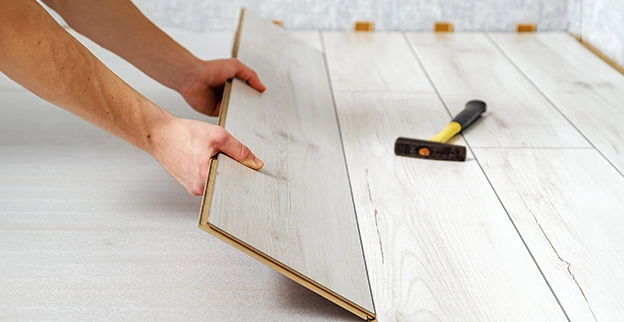
Many laminate floors use a click-lock installation system, making it possible to replace individual planks instead of the entire floor. The complexity of the repair depends on where the damaged plank is located. Boards near walls are typically easier to access, while damage in the middle of a room may require temporarily removing surrounding planks to reach the affected area.
Changing seasons can also affect laminate flooring. As Idaho’s humidity levels rise and fall seasonally, planks may expand and contract, leading to gaps, peaking, or lifted edges if the floor doesn’t have adequate expansion space. Correcting those issues involves adjusting the expansion gap or replacing damaged planks rather than replacing the entire floor.
Subfloor Repair
Subfloor damage is commonly caused by long-term moisture exposure, improper installation, remodeling damage, or normal wear over time. Warning signs include a spongy feeling underfoot, sagging areas, recurring squeaks, visible water staining from below, or cracked tile that keeps reappearing after repairs.
Mr. Handyman’s approach is first to identify the source of the problem. Once we remove the floor as needed, we can cut out damaged sections of OSB or plywood and replace them, while re-sealing loose panels. Doing so can help prevent future damage to the finished flooring installed above it.
Flooring Materials We Repair
Every flooring material presents its own repair challenges. Whether your floor is chipped, scratched, water-damaged, or showing signs of wear, Mr. Handyman repairs many of the most common residential flooring materials throughout the Treasure Valley.
Common repairs to each surface include:
- Tile (Ceramic, porcelain, and natural stone): Individual tile replacement, chip repair, grout repair, and re-grouting.
- Vinyl and Luxury Vinyl Plank (LVP): Individual plank replacement, seam repair, sheet vinyl patching, and scratch repair where appropriate.
- Laminate: Plank replacement, chip filling, expansion-gap corrections, and repairs for peaking or separated boards.
- Subfloors (OSB and plywood): Section replacement, re-fastening loose panels, leveling, and repairs for moisture-related damage.
An inspection helps determine whether a targeted repair will restore the floor or whether replacement is the more practical long-term solution.
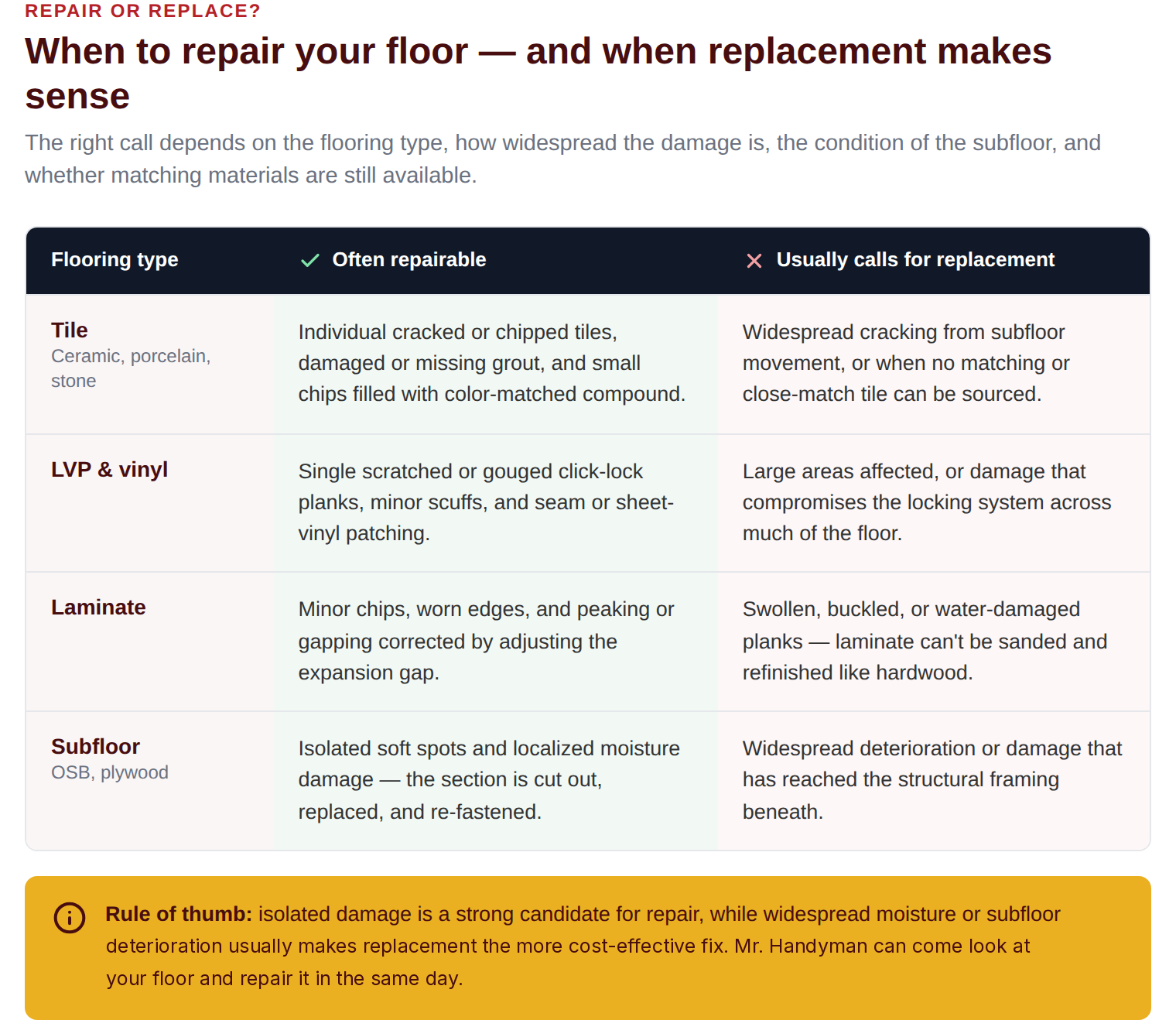 One of the first questions you may ask is whether your floor can be repaired or if it’s time for a replacement. The answer depends on the type of flooring, the extent of the damage, the condition of the subfloor, and whether matching materials are still available.