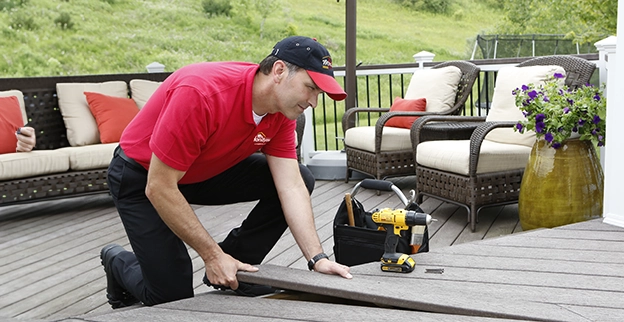
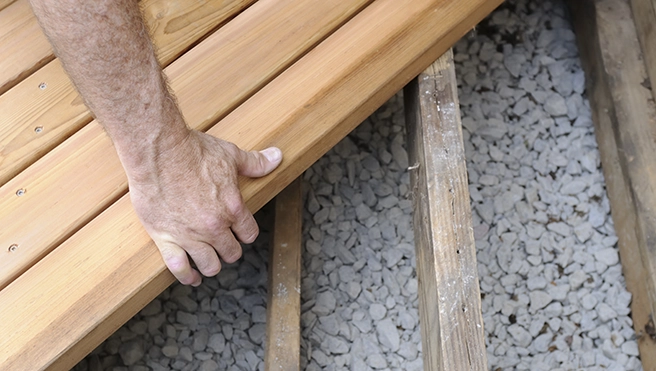
Every deck material ages differently in this humid mid-Atlantic climate, and the material on your deck changes exactly how we diagnose it and how long any given repair holds up. Pressure-treated wood, cedar, redwood, IPE hardwood, vinyl, PVC, and composite decking all show wear on different timelines. A pressure-treated pine deck rated for ground contact might need board replacement and re-fastening after ten years. A well-built composite deck can go two decades before it needs more than a wash. Hardwood deck materials like IPE resist rot better than pine. They split differently when fasteners work loose, though, so the repair technique still has to match the wood species involved.
Natural wood decks built from pressure-treated hardwoods last longer at ground contact than untreated lumber. Fastener pattern matters more than species once boards start moving. We've seen decks where the wood itself was sound, but every third screw had backed out enough to let water track underneath, causing damage close to what rot itself would cause over a longer stretch of time. Natural stone steps or landings built into a deck's entry point get checked on their own, since stone settles on its own schedule and can pull a deck's bottom stair out of level even when the framing above it is fine.
Rot is the most common call we get, especially after a particularly wet spring. Frederick's humid summers push moisture into end grain and fastener holes. Once wood swelling sets in around a board's edge, it doesn't reverse itself on its own. Our crew probes suspect boards with an awl, checks the ledger board where the deck ties into the structure, and traces any leak back to its source. More often than not, that source is a gutter dumping water straight onto the structure below. Gutter condition comes up in almost every deck inspection we run. Termite damage shows up similarly: soft, spongy wood that gives more than it should under light pressure. We cut out the compromised section, replace it with matching material, and check adjacent boards so the problem doesn't resurface six inches over next season.
Surface damage isn't always structural, but it's rarely just cosmetic either. Peeling paint on a painted deck traps moisture beneath it and holds it there, and a warped board changes how weight is distributed across the joists beneath it. We look at both together during an inspection, because a deck that looks fine from six feet away can still be failing where it counts. Weather damage compounds over a full year of Frederick's swings between humid summers and icy winters, so a deck rarely fails from one bad season alone; it's usually years of small, unaddressed issues stacking up.
Board and Rail Repair
Railing repair comes up almost as often as board work, and it's the item we take most seriously from a safety standpoint. The International Residential Code calls for a guardrail at least 36 inches high on most residential decks, and once a rail loosens at its post connection, that safety margin is gone even if the rail still looks straight to the eye. We check every post, tighten or replace hardware, and won't sign off on a repair that leaves a rail capable of flexing under real weight. Stair railings get equal scrutiny, since a loose stair rail fails exactly when someone reaches for it. Balusters spaced too far apart on an older deck are another item we flag even when nothing is technically broken yet, since code minimums have tightened over the years and an older deck sometimes predates the current spacing standard.
Drainage and Grading Fixes
Frederick County's clay-heavy soil doesn't drain the way sandy soil does, so site grading and drainage problems around deck footings show up faster here than they would in a lighter, sandier soil profile. Footings need to sit below the frost line, several feet down, and when the ground around them erodes or holds standing water after a storm, the whole structure can shift out of level. We regrade the area, add drainage where the water has nowhere else to go, and check every footing carefully for movement before closing anything back up. A deck that stays wet underneath for weeks at a time is also more likely to develop the kind of hidden rot that doesn't show until a board finally gives. Gutters play into this more than most homeowners expect, since a downspout dumping straight onto the ground next to a footing can undo a proper grading job within a single hard rain.
Refinishing and Resurfacing
Once repairs are fully done, most decks need refinishing to hold up through the next season outdoors. We recommend deck refinishing on a roughly two- to three-year cycle for a natural wood deck, and more often for a deck that gets full afternoon sun with no shade. Weather sealing protects against both driving rain and UV breakdown, and weather- and stain-resistant finishes hold their color noticeably longer than a basic clear sealer. We'll match a wood stain to a home's siding or roof color if that's the goal, or move straight to standard sealing if the homeowner just wants protection. Maintenance-free composite decking still needs a rinse now and then. Still, it skips the sealing step entirely, which is one reason composite decking has become the default choice for homeowners tired of an annual refinishing project. Wood fiber composite blends handle moisture differently than pure vinyl decking does, so we check which type is installed before recommending a cleaning approach.
Refinishing only works if the surface underneath is actually sound, though. Sealing over a board that's already splintering or holding moisture just traps the problem under a fresh coat, and it comes back looking worse within a year. That's why resurfacing is scheduled after the repair is complete on any deck where the inspection revealed more than just surface wear. A deck sealed properly on that same interval for its whole life usually needs far less structural work than one that's gone a decade without any attention. That gap is the single biggest factor separating a light repair from a major one.
Patio Repairs
Paver patios develop three predictable problems around here: sunken sections, cracking, and erosion underneath. A sunken paver usually means the base beneath it compacted unevenly or washed out after heavy rain, and it's a trip hazard long before it looks bad. We pull the affected pavers, rebuild the sand base, and reset them level. A quick patch just delays that failure by another season. Dirt and moss growth on shaded pavers gets treated the same visit if it's contributing to slipping hazards near steps or doorways.
Cracks in a concrete or natural stone patio spread if they're ignored, and a small hairline crack this year is a broken slab in two or three. We fill hairline cracks, replace individual cracked pavers or stones, and trace the crack back to its likely cause, a tree root or a settling footing nearby. Natural stone patios crack along the stone's natural grain, following the mineral lines already present in the material. Poured concrete cracks in a straighter structural line. We treat the two materials as separate repair problems. Erosion is the more serious cousin of both issues: once soil washes out beneath a patio's edge, pergola footings and nearby steps can start moving, too. A property owner dealing with erosion around a patio might also need mulch, plantings, or a small grade change to redirect water away from the foundation. Outdoor structures built close to a sloped yard see this more than patios on flat ground, since gravity does most of the damage on its own over time.
Power washing and pressure washing handle the cosmetic side of patio repair: the dirt, moss, and algae film that build up on shaded stone through a Maryland spring. It's also the prep step before any sealing work, since sealant won't bond correctly to a dirty surface. We treat pressure washing as routine exterior maintenance, much like residential and commercial property maintenance covers gutters and siding as part of the annual calendar. Spring cleaning season is when we see the biggest jump in patio repair calls, right as homeowners start planning for backyard gatherings again after months of not looking too closely at the yard.
A patio that gets an annual wash and a periodic seal check tends to need far less crack and paver repair over time than one left alone between problems. It's similar logic to the deck side of the business: catching a small settling issue or a hairline crack early costs far less effort than waiting until the whole section needs to be removed and reset. Patios shaded by mature trees retain moss and moisture longer than patios in open sun, so we factor tree cover into how often we recommend washing for a given yard.