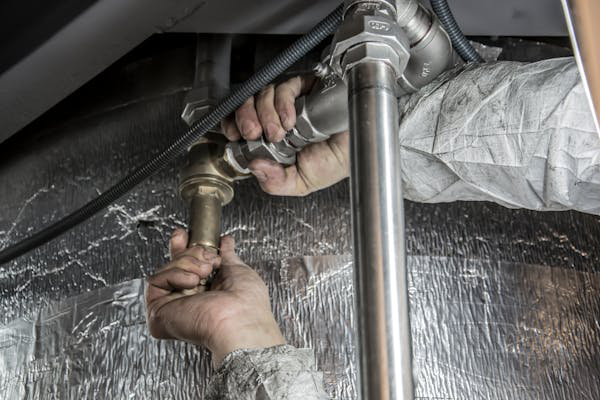
Cold winters, hard water, and aging plumbing systems are often the culprits behind Idaho’s most common plumbing problems. Freezing temperatures frequently lead to frozen or burst pipes, while mineral-rich water causes scale buildup that restricts water flow and shortens the lifespan of fixtures and appliances. Older homes are also more prone to sewer line issues, leaks, and recurring drain problems due to outdated materials and underground pipe deterioration.
The most common plumbing issues Idaho homeowners face include:
- Frozen and burst pipes caused by prolonged freezing temperatures, especially in uninsulated crawl spaces and exterior walls
- Hard water mineral buildup that reduces water pressure, clogs fixtures, and accelerates wear on plumbing components
- Water heater problems from sediment accumulation, leading to inconsistent temperatures and reduced efficiency
- Recurring drain clogs and sewer line issues, often tied to mineral buildup, aging pipes, and tree root intrusion.
Proactive maintenance—such as insulating pipes, cleaning fixtures, flushing water heaters, and monitoring early warning signs—can help Idaho homeowners reduce costly repairs and prevent long-term plumbing damage.
Plumbing problems can quickly turn into a homeowner's worst nightmare. Even though a minor leak or a backed-up drain may seem small at first, it can lead to expensive repairs, water damage, and mold growth, costing you hundreds if not thousands of dollars. Where you live can also be a significant factor in whether you experience these issues, as well. For example, Idahoans may be all too familiar with plumbing problems due to their exposure to cold winters, mineral-rich water, and aging plumbing systems.
Despite the prevalence of plumbing problems in the area, knowing about them can help you identify early warning signs. With this knowledge, you can act fast before minor issues become expensive and time-consuming repairs.
Why Plumbing Problems Are Common in Idaho Homes
Several factors contribute to the frequency of plumbing problems in Idaho homes. Climate conditions, water quality, and the age of many residential buildings all affect how often issues occur and how quickly they can develop.
When combined, all of these factors can cause significant plumbing issues if you don’t address them promptly.
Cold Winters and Freezing Temperatures
As one of America’s northernmost states, a majority of Idaho is familiar with below-freezing temperatures and some of the aches that come along with it. Most notable are frozen pipes. When water freezes in pipes, it expands and exerts additional pressure on the pipe walls. As it thaws, this pressure can cause cracks, ruptures, or sudden bursts, often leading to water damage that only becomes apparent after temperatures rise.
Pipes in unheated areas like crawl spaces, basements, and exterior walls are particularly at risk when insulation is insufficient or indoor temperatures fluctuate. Even brief drops in temperature overnight can be enough to freeze exposed sections.
Hard Water and Mineral Content
Hard water is a common problem not only in Idaho but across the country, and with various culprits. The higher mineral levels in Idaho's water supply are mainly to blame. These minerals can slowly and silently accumulate in pipes, fixtures, and appliances. This buildup narrows passageways and reduces water flow in pipes. As a result, plumbing systems have to work harder, which can reduce efficiency and accelerate wear.
Homeowners typically first see the effects in everyday household fixtures like faucets and showerheads. Reduced water pressure, clogged aerators, and visible residue are common early signs that mineral buildup is impacting the plumbing system.
Aging Plumbing Systems
Many early Idaho neighborhoods have homes with older plumbing and piping systems. Home builders used to build these water systems with materials like cast iron, galvanized steel, and polybutylene, which is now banned. As plumbing and water systems age, joints can loosen, materials may corrode, and connections can become more prone to leaks or failures.
Since these changes happen slowly over time, problems can develop unnoticed. Leaks or weaknesses may go undetected until they cause visible damage. This makes regular awareness and prompt attention critical in older homes.
The Most Common Plumbing Problems Idaho Homeowners Face
Due to Idaho's climate, water conditions, and housing stock, some plumbing problems occur more frequently than others. While some issues arise suddenly, many start with subtle warning signs that can be easy to miss. Knowing which plumbing problems are most common and how they usually appear in the home can help you spot concerns early. The earlier you spot these issues, the better you can avoid further damage.
Burst Pipes
Burst pipes often occur after freezing weather and can cause extensive water damage quickly. Signs include sudden drops in water pressure, visible leaks, or water pooling in unexpected areas. It’s crucial to act fast if a burst pipe is suspected to limit damage.
Mineral Buildup and Scale in Fixtures
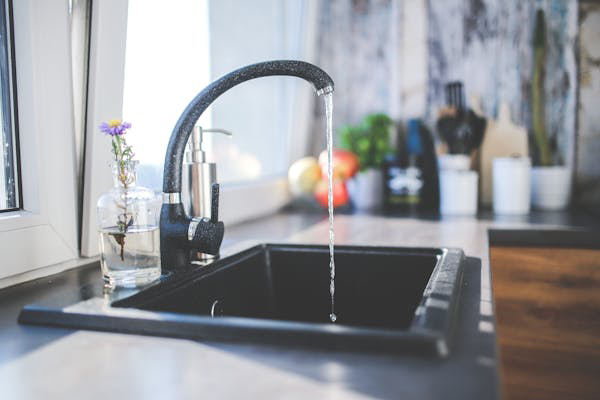
Hard water often causes mineral buildup in fixtures and faucets over time. This buildup can gradually restrict water flow in showers, sinks, and toilets. As minerals accumulate, homeowners may notice clogged aerators, reduced water pressure, or fixtures wearing out or eroding faster than anticipated. A white or chalky residue around faucets and showerheads is a common early sign of this type of buildup.
However, if you don’t regularly clean your faucets of this buildup, it can accumulate, affecting the flow of water in your sinks. Eventually, you may even have to replace them just to have a functional bathroom.
Water Heater Problems
Hard water can also build up in other areas of the home, such as your water heater. Here, sediment tends to settle at the bottom of the tank. This makes the system work harder to heat water properly. You might notice that your water supply can’t maintain a consistent temperature, or you run through hot water more quickly than usual. Your water heater may also start to make strange noises, such as popping or rumbling, while the heater is running.
If you notice these issues, you may need to replace your water heater. Otherwise, you can prevent an early replacement by prioritizing regular maintenance like flushing out your water heater every two to four years, and testing the temperature and pressure relief valve regularly.
Recurring Drain Problems
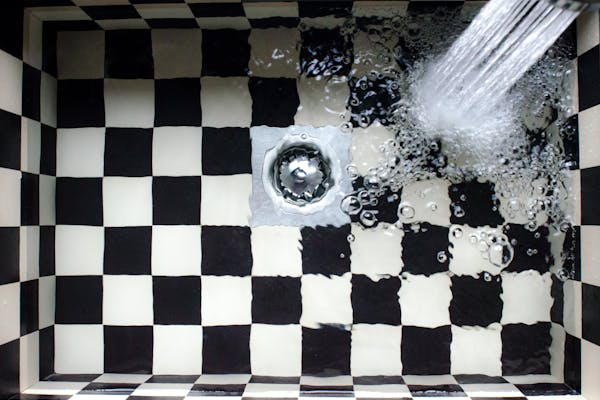
When you’re taking a shower, the last thing you want to experience is a clogged drain. However, it’s only natural as grease, soap residue, hair, and debris build up in your home’s pipes. While clogged drains are seemingly ordinary, they can be a sign of a bigger issue if multiple drains in the home are clogged at the same time or if clogs return soon after being cleared.
These patterns can indicate issues within the plumbing system that basic maintenance alone may not fix.
Sewer Line Issues
Sewer line issues are more common in older Idaho neighborhoods. Aging infrastructure and things like tree roots can interfere with proper drainage. Since sewer lines are buried underground, issues often develop slowly and may not be noticeable right away.
Common warning signs include frequent drain backups, lingering foul odors, slow drainage throughout the home, or unexplained wet spots around the yard.
How To Prevent Common Idaho Plumbing Problems
Taking proactive steps can help lower the chances of plumbing issues, especially in Idaho's climate.
These preventive actions can help long-term:
- Check your plumbing regularly: Regular inspections, including winter preparation and spring checkups, can help catch problems early.
- Manage complex water effects: Regularly clean fixtures and address mineral buildup to extend the life of plumbing parts.
- Know your home's plumbing layout: If you know where your shutoff valves are and where your pipes run in your home, it can make all the difference in an emergency.
- Insulate your pipes: Insulating pipes can help prevent freezing during cold months.
Plumbing issues are a fact of life for many homeowners, especially in a climate like Idaho's, but recognizing early signs of these issues and prioritizing plumbing maintenance can help prevent severe damage. Whether it's protecting pipes from freezing or fixing minor fixture problems, staying proactive can save time, stress, and repair costs.
If you need assistance with minor plumbing repairs or preventive maintenance at home, reach out to Mr. Handyman of Boise, Meridian, and Nampa to see how local professionals can help keep your home running smoothly.
FAQs About Idaho Plumbing Problems
What Are The Most Common Plumbing Problems In Idaho Households?
The most common plumbing problems in Idaho households include frozen or burst pipes, hard-water mineral buildup, water-heater inefficiencies, slow drains, and sewer line issues. Cold winters, high mineral content, and aging plumbing systems often influence these problems.
Why Are Frozen Pipes So Common In Idaho?
Frozen pipes are a common experience for many Idaho homeowners due to exposure to freezing temperatures for long periods of time. If your house’s pipes are in your basement, crawl space, exterior walls, or in unheated areas, your home may be more susceptible to frozen pipes due to the lack of insulation.
Can Hard Water Cause Plumbing Problems Over Time?
Yes, hard water can cause plumbing problems over time by leaving mineral deposits inside pipes, fixtures, and appliances. This buildup can reduce water pressure, clog aerators and showerheads, and shorten the lifespan of water heaters and other plumbing components.
What Plumbing Issues Can Homeowners Typically Handle Themselves?
Homeowners can often handle basic maintenance tasks such as cleaning fixture aerators, addressing minor drips, insulating exposed pipes, and performing routine drain care. These tasks help prevent larger problems but are most effective when you catch issues early.
How Can I Prevent Common Winter Plumbing Problems In My Home?
Preventing common winter plumbing problems involves insulating vulnerable pipes, maintaining consistent indoor temperatures, disconnecting outdoor hoses, and preparing plumbing systems before cold weather arrives. Proactive steps taken before winter often reduce the risk of freezing and pipe damage.