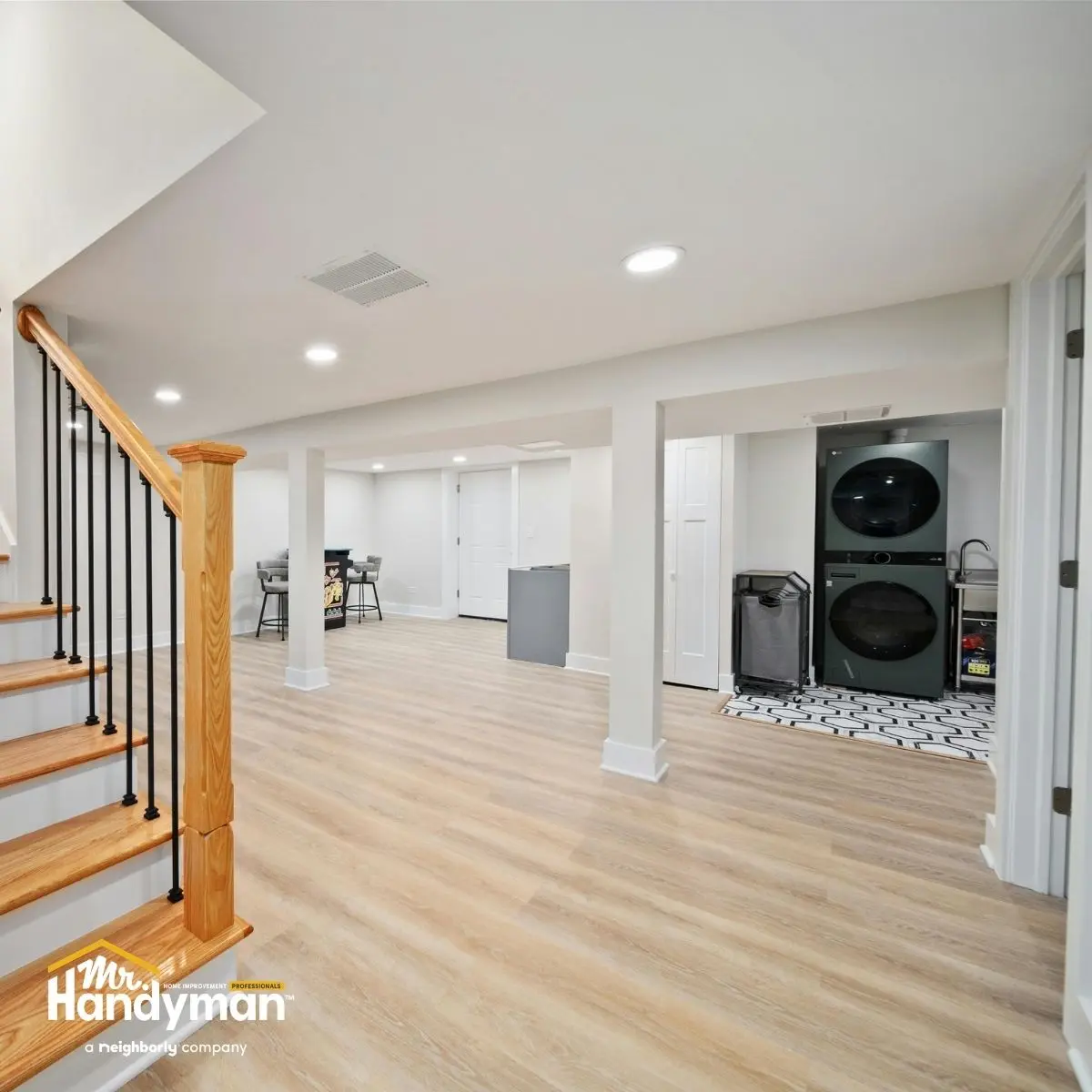
Basements in Middle Tennessee homes are often underutilized. They start as storage areas for holiday decorations, old furniture, and boxes that never got unpacked after the last move. Over time, they become cluttered, damp, and forgotten—wasted square footage that could be serving your household in far more useful ways. Whether you're looking for a home office, a playroom for kids, a workout area, or just a comfortable space to watch TV without disturbing the rest of the house, your basement has potential that's currently going unrealized.
The good news is that turning a basement into functional living space doesn't require a massive renovation. Small, strategic improvements—addressing moisture, improving lighting, adding flooring, and finishing walls—transform a dark storage area into a room people actually want to spend time in. Homes in Murfreesboro, Franklin, Brentwood, Nashville, and Clarksville built in the 1980s and 1990s often have partial or full basements that were left unfinished or minimally finished during construction. These spaces have good bones but lack the touches that make them livable.
Finishing a basement adds usable square footage to your home without the cost and complexity of a full addition. It increases your home's value, provides flexibility as your household's needs change, and gives you space that doesn't compete with the main living areas. The improvements that matter most aren't expensive or complicated—they're the foundational fixes that address moisture, comfort, and functionality so the space feels like an extension of your home rather than a neglected afterthought.
Why Basements in This Region Need Attention Before They're Livable
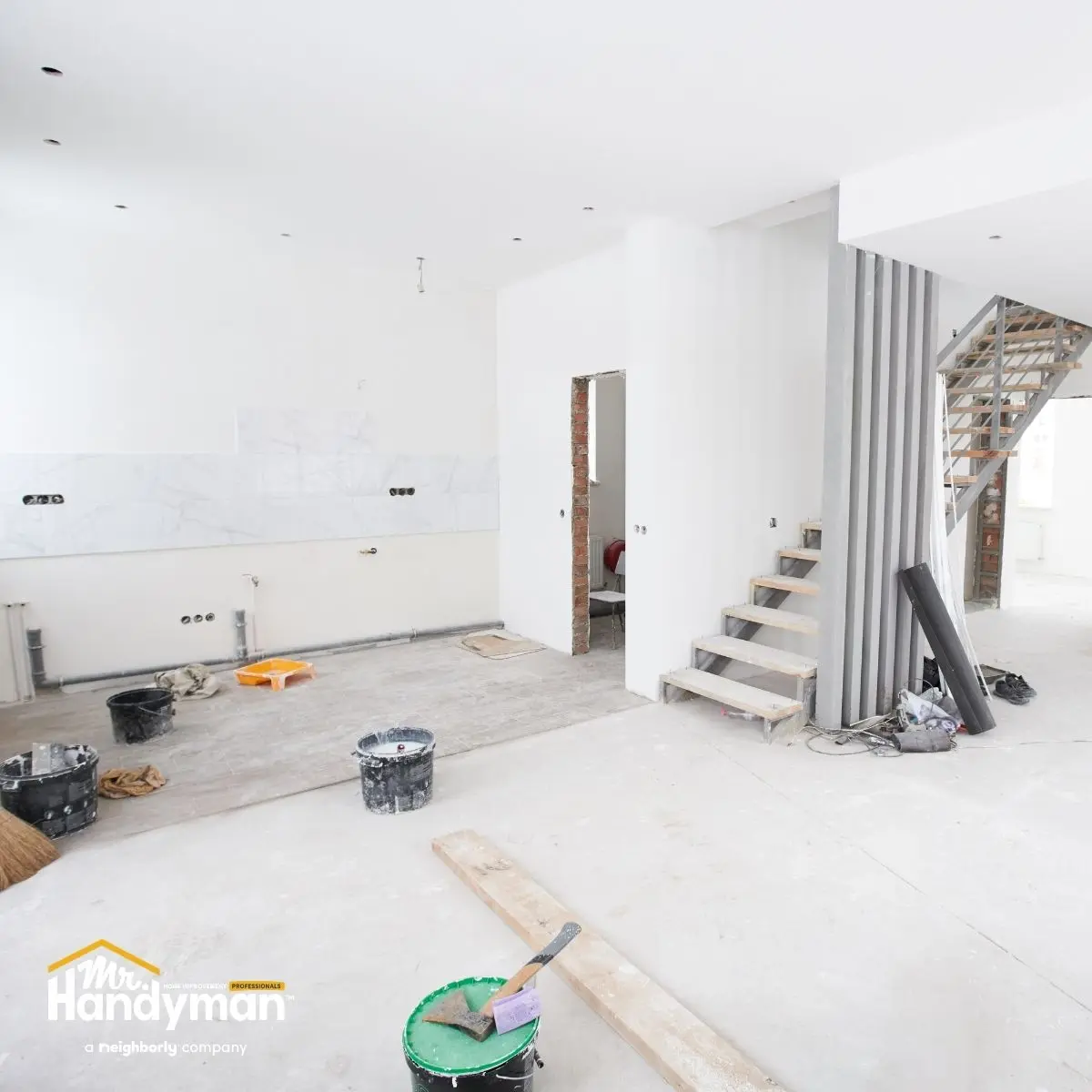
Basements in Middle Tennessee face specific challenges tied to our climate and soil conditions. We experience humid summers, occasional heavy rainfall, and soil with high clay content that doesn't drain well. These factors contribute to moisture problems, which are the number one issue that keeps basements from being comfortable living spaces. Even if your basement doesn't flood, it likely feels damp, smells musty, and has that characteristic coolness that makes it uninviting.
Homes built in the 1980s and 1990s throughout Smyrna, La Vergne, Bellevue, and Green Hills often have basements with poured concrete or cinder block walls, concrete slab floors, and minimal or no insulation. Builders finished these spaces to the bare minimum—maybe some drywall, basic lighting, and carpet laid directly over concrete. They weren't designed with modern expectations for comfort or energy efficiency, and they weren't built to handle the moisture levels common in this region.
Moisture enters basements through several pathways. Groundwater seeps through foundation walls and floor slabs. Humidity condenses on cool surfaces during summer months. Poor grading around the foundation directs rainwater toward the house instead of away from it. Gutters that overflow or downspouts that dump water too close to the foundation contribute to the problem. Over time, this moisture creates an environment where mold and mildew thrive, finishes deteriorate, and the space feels perpetually damp no matter how much you run a dehumidifier.
Addressing moisture is the first and most important step in making your basement livable. No amount of nice flooring or furniture makes a difference if the space smells musty or feels clammy. Once moisture is controlled, the other improvements—lighting, flooring, walls, and climate control—transform the basement into space that feels as comfortable as the rest of your home.
Control Moisture Before You Do Anything Else
You cannot finish a basement successfully without addressing moisture. It's the foundation of every other improvement, and skipping it leads to failed projects, wasted money, and spaces that deteriorate quickly. Moisture control starts outside the house and works its way in, addressing the sources of water infiltration before dealing with interior finishes.
Start by evaluating your exterior grading and drainage. The ground around your foundation should slope away from the house, directing rainwater toward the yard rather than pooling against the basement walls. Homes in older neighborhoods throughout Murfreesboro, Franklin, and Nashville often have settled soil that's created low spots near the foundation, and correcting this with additional fill dirt and proper grading prevents water from accumulating where it causes problems.
Gutters and downspouts play a huge role in basement moisture. If your gutters are clogged, sagging, or undersized, they overflow during heavy rain and dump water directly against the foundation. Downspouts that terminate too close to the house—within three feet—don't move water far enough away. Extending downspouts with splash blocks or underground drain lines keeps water away from the foundation and reduces hydrostatic pressure against basement walls.
Inside the basement, a dehumidifier is essential, especially during summer months when humidity levels in Middle Tennessee regularly exceed 70 percent. A basement that feels dry in January may be damp and musty by June. Whole-house dehumidifiers designed for basements can maintain humidity levels between 40 and 50 percent, which prevents mold growth and keeps the space comfortable. Portable units work for smaller basements, but they require regular emptying and don't have the capacity to manage larger spaces effectively.
If your basement has visible water seepage, cracks in the foundation, or chronic dampness even after addressing exterior drainage, you may need more involved solutions like interior drainage systems, sump pumps, or exterior waterproofing. Homes in areas with high water tables or poor soil drainage—common in parts of Smyrna, Ashland City, and certain Nashville neighborhoods—sometimes require these more extensive fixes to keep basements dry year-round.
Improve Lighting to Make the Space Feel Inviting
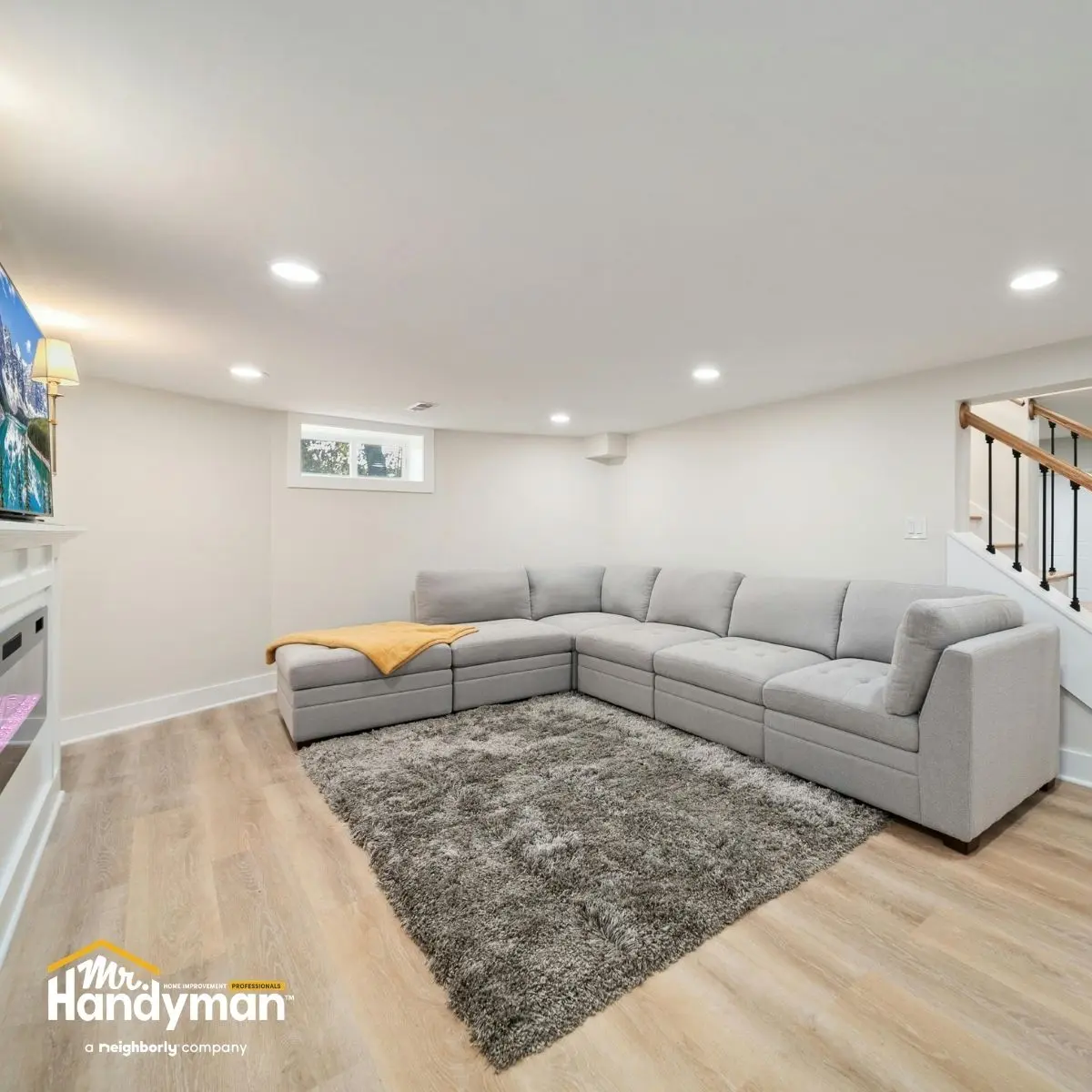
Basements are inherently dark. Most have limited or no natural light, and the lighting that exists is often inadequate—a few bare bulbs or outdated fixtures that cast harsh shadows and make the space feel cold and uninviting. Improving lighting is one of the simplest, most impactful changes you can make. Good lighting transforms how a basement feels and makes it a place people actually want to use.
Recessed lighting is the most effective way to brighten a basement. Installing a grid of recessed LED fixtures across the ceiling provides even, ambient light that eliminates dark corners and shadows. LEDs are energy-efficient, long-lasting, and produce minimal heat, which is important in a basement where ventilation may be limited. Homes in Brentwood, Franklin, and Clarksville with unfinished or partially finished basements benefit enormously from adding recessed lighting as part of the improvement process.
If your basement has drop ceilings, recessed lighting is straightforward to install. If you have exposed joists or a drywall ceiling, the installation is slightly more involved but still manageable. The key is spacing the lights properly—typically four to six feet apart—to ensure complete coverage without creating bright spots and dark zones.
Task lighting matters in areas where you'll be working or reading. If you're setting up a home office, craft area, or workout space, adding desk lamps, floor lamps, or directional track lighting provides focused light where you need it. Layering different types of lighting—ambient, task, and accent—gives you control over the mood and functionality of the space.
For basements with small windows or egress windows, maximizing natural light improves the feel of the space. Keeping window wells clean, painting walls in light colors, and avoiding heavy window treatments allows as much daylight as possible to enter. Even a small amount of natural light makes a basement feel less cave-like and more connected to the rest of the house.
Install Flooring That's Durable and Moisture-Resistant
Concrete floors are cold, hard, and uncomfortable. Even if your basement is dry, a bare concrete slab makes the space feel unfinished and uninviting. Adding flooring changes the entire character of the room, making it warmer, more comfortable, and more usable. The challenge is choosing flooring that can handle basement conditions—potential moisture exposure, temperature fluctuations, and the hard substrate of a concrete slab.
Luxury vinyl plank is one of the best flooring options for basements. It's waterproof, durable, comfortable underfoot, and available in styles that mimic hardwood or tile. LVP can be installed as a floating floor over concrete with a moisture barrier underlayment, which makes installation straightforward and protects against any residual moisture in the slab. Homes in Murfreesboro, Smyrna, and La Vergne with basement flooring projects often choose LVP because it performs well in conditions where other materials fail.
Carpet tiles are another practical option. Unlike wall-to-wall carpet, which can trap moisture and develop mold if the basement gets damp, carpet tiles are modular and replaceable. If one section gets damaged or stained, you can pull it up and replace it without redoing the entire floor. Carpet tiles also provide warmth and sound absorption, which is valuable in basements where hard surfaces can make the space feel echo-prone and cold.
Engineered hardwood can work in basements if moisture is fully controlled, but it's riskier than LVP or tile. Solid hardwood should never be installed in a basement—it will warp and buckle with even minor moisture exposure. If you want the look of wood, LVP offers a safer, more durable alternative that handles basement conditions without the risk.
Avoid installing any flooring directly on concrete without a moisture barrier. Even basements that seem dry can have moisture vapor transmission through the slab, and over time this damages flooring and creates an environment for mold growth. Underlayment with a built-in vapor barrier or separate moisture barrier sheeting protects your investment and ensures the flooring lasts.
Finish Walls to Make the Space Feel Complete
Unfinished concrete or cinder block walls make a basement feel like exactly what it is—a below-grade storage area. Finishing the walls transforms the space into a room that feels intentional and livable. The approach you take depends on your budget, the condition of the walls, and how much moisture control you've already addressed.
Drywall is the most common wall finish and creates a clean, smooth surface that can be painted to match the rest of your home. If your basement walls are dry and free of cracks or seepage, framing them with treated lumber, adding insulation, and hanging drywall is straightforward. Homes in Franklin, Brentwood, and Nashville with dry basements benefit from this traditional finish, which allows for electrical outlets, recessed lighting, and a polished look.
If moisture is a concern, consider moisture-resistant materials like cement board or specialized basement wall systems designed to handle occasional dampness. These systems often include built-in insulation and vapor barriers, and they're engineered to resist mold and mildew even in less-than-ideal conditions. Basements in Murfreesboro, Smyrna, and areas with higher groundwater levels benefit from these products, which provide a finished look without the risk of drywall deteriorating.
Painting basement walls—even unfinished concrete or block—makes a significant difference. Light colors like white, light gray, or soft beige brighten the space and make it feel larger. Concrete and masonry paints are formulated to adhere to these surfaces and provide a durable, washable finish. If you're on a tight budget and not ready for a full wall finish, painting the existing walls is a quick improvement that changes how the space feels.
Add Climate Control for Year-Round Comfort
Basements are naturally cooler than the rest of the house, which feels great in summer but uncomfortable in winter. Without proper climate control, your basement will be too cold to use comfortably for much of the year. Extending your HVAC system into the basement or adding supplemental heating and cooling makes the space usable year-round.
If your home's HVAC system has capacity, adding ductwork and vents to the basement is the most effective solution. This integrates the basement into your home's heating and cooling system and ensures consistent temperature control. Homes in Bellevue, Green Hills, and Dickson with existing forced-air systems can often extend ductwork into the basement without upgrading the furnace or air handler, though you should verify capacity with an HVAC professional.
If extending your HVAC isn't feasible, ductless mini-split systems provide heating and cooling without requiring ductwork. These systems are energy-efficient, quiet, and allow you to control the basement's temperature independently from the rest of the house. They're a good solution for basements that are used intermittently or for specific purposes like a home gym or office where you want precise temperature control.
Space heaters and portable air conditioners work in a pinch, but they're not ideal long-term solutions. They're less efficient, noisier, and require more active management than permanent systems. If you're serious about using your basement as living space, investing in proper climate control pays off in comfort and usability.
Insulating basement walls and ceilings also improves temperature regulation. Adding insulation to exterior walls reduces heat loss in winter and keeps the space cooler in summer. Insulating the ceiling—the floor joists of the level above—reduces sound transmission between floors and keeps the basement's conditioned air from escaping into the rest of the house.
Define the Space With Intentional Layout and Furniture
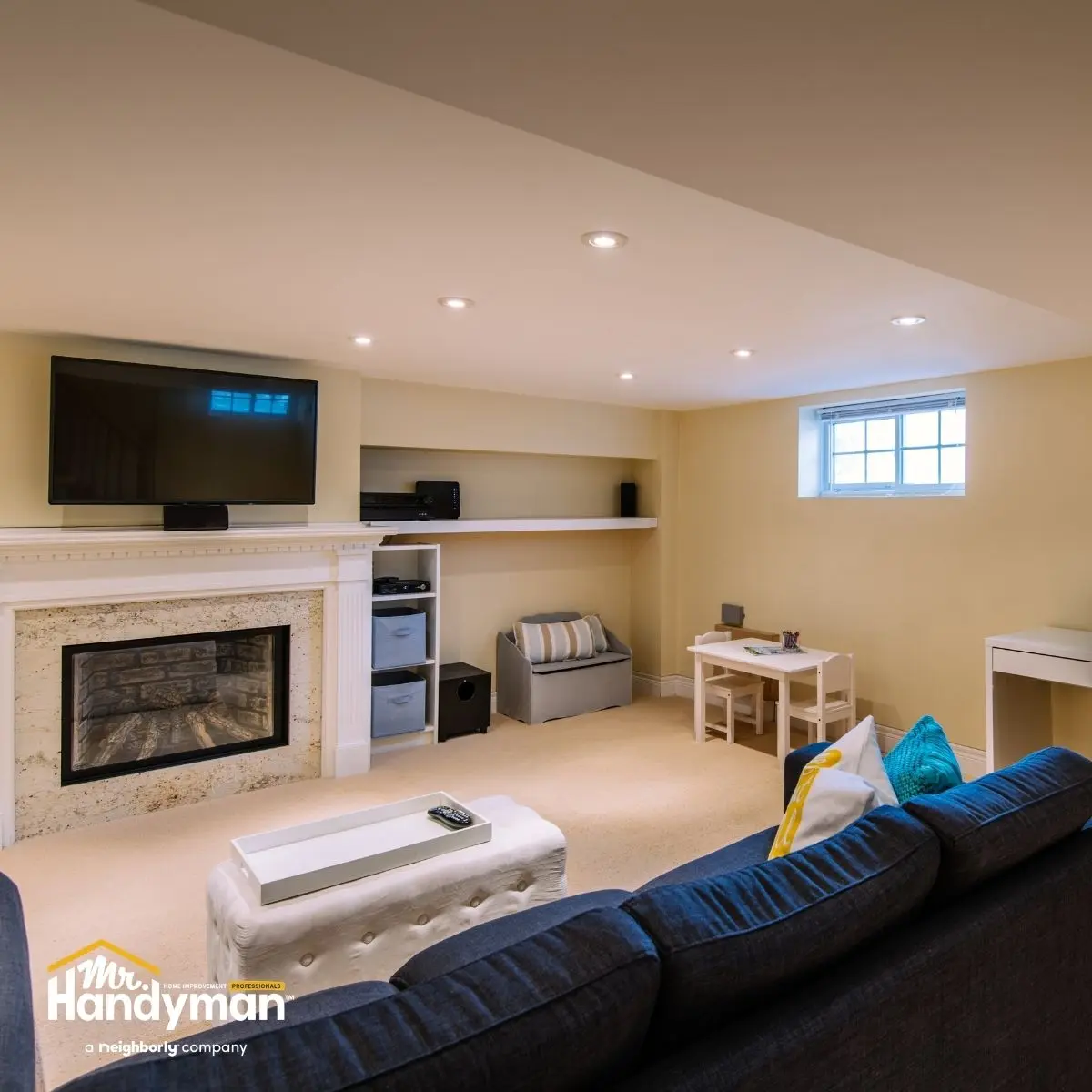
Once the foundational improvements are complete—moisture control, lighting, flooring, walls, and climate control—you can focus on layout and furnishing. How you arrange the space depends on what you're using it for, but the goal is to make it feel like a purposeful room rather than leftover square footage.
If you're creating a home office, position the desk near a window if possible to take advantage of natural light. Add task lighting, comfortable seating, and storage for files and supplies. Basements make excellent home offices because they're separated from the main living areas, which reduces distractions and creates a clear boundary between work and home life.
For playrooms or recreation areas, durable, easy-to-clean furniture and storage solutions keep the space functional. Basements handle the wear and tear of active kids better than formal living rooms, and having dedicated play space keeps toys and clutter contained. Homes in Smyrna, La Vergne, and Shelbyville with young families often use basements this way, and it's one of the most practical uses of the space.
Home gyms are another popular basement use. The concrete slab provides a solid, level surface for equipment, and the separation from bedrooms means early morning or late evening workouts don't disturb others. Rubber flooring or interlocking foam mats protect the concrete and provide cushioning. Mirrors, good lighting, and a sound system make the space more motivating.
Guest suites or additional bedrooms require egress windows to meet building codes. If your basement doesn't have an egress window and you want to use it as a bedroom, installing one is necessary for both safety and code compliance. This is a more involved project, but it adds significant value and functionality.
Frequently Asked Questions
Do I need a permit to finish my basement?
In most cases, yes. Finishing a basement typically requires permits for electrical, plumbing, and structural work. Requirements vary by jurisdiction, so check with your local building department before starting.
How much does it cost to finish a basement?
Basic finishes—moisture control, lighting, flooring, drywall, and paint—typically run $15 to $30 per square foot. More extensive projects with bathrooms, kitchens, or high-end finishes can exceed $50 per square foot.
Can I finish a basement that occasionally gets damp?
You need to address the moisture issue first. Finishing over a damp basement leads to mold, deteriorating finishes, and wasted money. Fix the drainage and moisture problems before finishing.
What's the best flooring for basements?
Luxury vinyl plank is one of the best options. It's waterproof, durable, and comfortable. Carpet tiles and ceramic tile also work well. Avoid solid hardwood and be cautious with engineered hardwood unless moisture is fully controlled.
How do I know if my basement needs a dehumidifier?
If your basement feels damp, smells musty, or has condensation on surfaces during summer, you need a dehumidifier. Humidity levels above 60 percent create conditions for mold growth.
Can I add a bathroom to my basement?
Yes, but it requires plumbing work and potentially a sewage ejector pump if the basement is below the sewer line. This adds cost but significantly increases the basement's functionality and your home's value.
Turn Your Basement Into Usable Living Space
Small improvements—controlling moisture, upgrading lighting, installing flooring, finishing walls, and adding climate control—transform your basement from wasted storage into functional living space. Whether you need a home office, playroom, gym, or guest suite, your basement has potential that's currently going unrealized.
If you're in Murfreesboro, Franklin, Brentwood, Smyrna, Shelbyville, La Vergne, Bellevue, Christiana, Nashville, Belle Meade, Clarksville, Ashland City, Green Hills, Dickson, Antioch, Berry Hill, or any of the surrounding areas, Mr. Handyman of Murfreesboro, Franklin, and Brentwood and Mr. Handyman of West Nashville, Belle Meade, and Clarksville can help you tackle these basement improvements.
Call us or visit
https://www.mrhandyman.com/murfreesboro-smyrna/ or
https://www.mrhandyman.com/nashville-west-south-central/
to schedule a consultation.
