Gym flooring is the surface that every member interacts with for the entire duration of every visit. It is stepped on, jumped on, dropped on, dragged across, and subjected to the combined weight and impact of hundreds of workouts every week in an active fitness facility. Despite that continuous and demanding use, gym flooring rarely receives the systematic maintenance attention it deserves until a condition develops that cannot be ignored. By then, the damage has typically progressed well beyond what proactive maintenance would have addressed, and the safety risk that deteriorated flooring creates has already been present for every workout that occurred between the time the damage began and the time it was finally noticed and addressed.
For gym owners and fitness facility managers in Murfreesboro, Franklin, and Brentwood, flooring condition is a safety obligation that sits alongside equipment maintenance and staff training in the hierarchy of operational responsibilities that protect members and the business simultaneously. The connection between flooring condition and member injury is direct and well-documented. Trip hazards from lifted seams and damaged tile edges, unstable surfaces from compressed or deteriorated foam underlayment, traction loss from worn or contaminated rubber flooring, and impact absorption failure from depleted cushioning systems are all mechanisms through which damaged gym flooring produces the falls, ankle injuries, and impact-related conditions that generate liability claims and erode member confidence in the facility's management standards.
Middle Tennessee's fitness market has matured significantly alongside the region's growth, and the members who populate Murfreesboro, Franklin, and Brentwood's gyms and fitness facilities are increasingly sophisticated consumers who evaluate the facilities they patronize across multiple dimensions of quality. Flooring condition is one of the dimensions they evaluate every time they train, even when they are not consciously doing so. A facility whose flooring is clean, intact, and performing correctly creates a subconscious confidence in every member who trains there. A facility whose flooring shows visible damage, lifting edges, compacted areas, or worn surfaces where traction has been compromised creates a subconscious unease that accumulates over visits into the kind of dissatisfaction that drives membership cancellations and negative reviews without members necessarily articulating flooring condition as the specific cause.
Understanding Gym Flooring Types and Their Failure Modes
Commercial gym flooring is not a single material category. It encompasses several distinct flooring systems designed for different functional applications within the fitness environment, each with its own performance characteristics, wear mechanisms, and failure modes that maintenance programs need to address specifically. Understanding what each flooring type is designed to do and how it fails when maintenance is insufficient is the foundation of a flooring management program that prevents the safety conditions that deteriorated flooring creates.
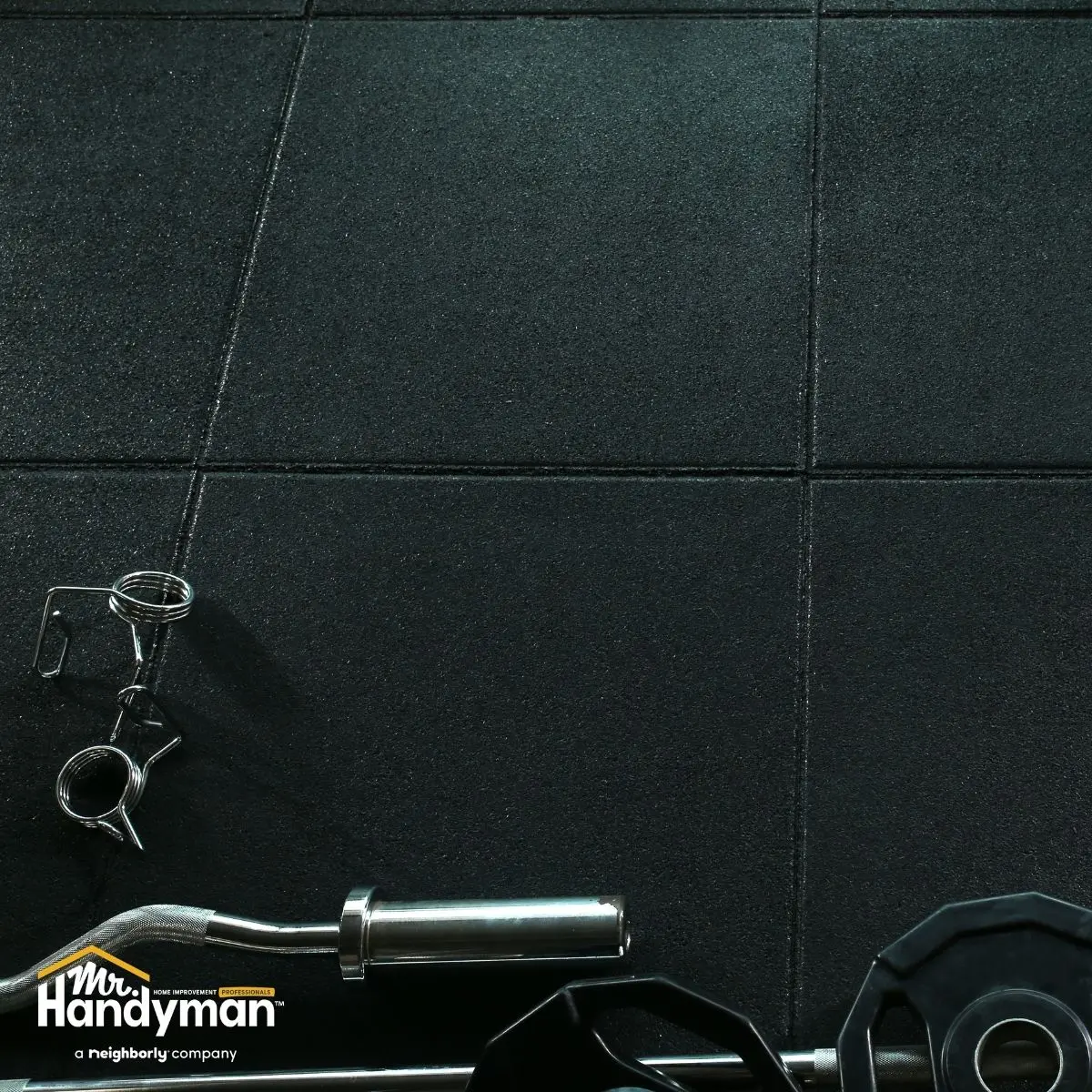
Rubber flooring is the dominant material in the functional fitness areas of most commercial gyms in Middle Tennessee, used in weightlifting areas, free weight floors, stretching zones, and high-traffic circulation areas because of its combination of impact absorption, traction, and durability under the mechanical demands those areas deliver. Commercial rubber flooring is available in rolled and tile formats, with each presenting different installation characteristics and different failure modes under sustained use. Rolled rubber flooring installed as a continuous surface eliminates the seam network that tile formats create, but it introduces edge and seam conditions at room perimeters and transitions between flooring zones that are the primary locations where deterioration begins. Tiles provide easier spot replacement when damage occurs but create a network of joints throughout the floor surface that are the locations where lifting, separation, and edge damage develop through the mechanical stress of dropped weights, rolling equipment, and the constant foot traffic that compresses and flexes joints until the adhesive or interlocking connection fails.
The failure modes of rubber flooring that create safety risks progress through a predictable sequence that regular inspection can identify at each stage before the condition reaches the point where it produces an injury. Joint separation between tiles, where the connection between adjacent tiles opens to create a gap or a differential height between tile edges, is the earliest and most common failure mode in commercial rubber tile flooring. A joint that has separated by even a small amount creates a trip hazard for forward-moving foot traffic that catches the elevated tile edge, and it creates a destabilization hazard for lateral movements where a foot landing across the joint edge transfers load to an unstable surface. Left unaddressed, joint separation allows the edge of the adjacent tile to lift further as foot traffic catches it repeatedly, progressing from a minor joint gap to a fully lifted tile corner that presents an obvious and serious trip hazard.
Foam flooring used in group fitness studios, yoga and Pilates rooms, and children's activity areas provides the cushioning and acoustic absorption those spaces require but has a specific failure mode that is less visually obvious than rubber flooring damage yet equally significant in its safety implications. Foam flooring compresses under sustained load and repeated impact, and compressed foam loses the cushioning properties that protect joints during the high-impact activities conducted on its surface. A foam floor that looks visually intact but has compressed to a fraction of its original thickness in the areas of highest use is no longer providing the impact absorption it was specified to deliver. Members performing jumping movements, high-impact aerobics, or plyometric exercises on a depleted foam floor are receiving impact loads through their joints that the floor's specification promised to attenuate and that its actual condition is failing to manage.
The Trip Hazard Problem and Its Consequences
Trip hazards in gym environments are more consequential than in most other commercial settings because of the specific characteristics of gym activity that compound the risk they create. In a general retail or office environment, a person who encounters a trip hazard is typically walking at a moderate pace, maintaining their balance through normal ambulatory movements, and positioned to recover from a stumble without significant injury risk. In a gym environment, the same person may be carrying a loaded barbell, moving laterally at speed during a conditioning drill, running at full treadmill pace, or positioned in a loaded squat where their balance margin is already committed to the movement they are performing. A trip hazard encountered in any of those conditions produces consequences that are fundamentally more severe than the same hazard encountered during normal walking.
Lifted tile edges, separated rubber flooring seams, and any surface discontinuity that creates a height differential across the floor surface are the primary trip hazard conditions that gym flooring develops when maintenance is insufficient. In free weight areas where members move between equipment while carrying dumbbells, plates, or loaded barbells, these conditions present the risk of a fall while carrying significant weight that can cause injury both from the fall itself and from the weight that the falling person cannot control as they go down. In group fitness spaces where lateral movement patterns are part of the workout design, a raised flooring edge encountered during a lateral shuffle or side-to-side drill catches the foot at a point in the movement where recovery is very difficult, producing the ankle rollover injuries that are among the most common gym-related injury claims.
In Middle Tennessee's active fitness market, where members range from experienced athletes who move confidently and quickly through the training environment to beginners who are still developing their movement awareness and spatial orientation in a gym setting, the population of people whose risk of encountering and being injured by a flooring trip hazard is broad. Experienced athletes move faster and more dynamically, which means they encounter hazards with less opportunity for avoidance and with more kinetic energy behind the movement when they do. Beginners have less body awareness and movement control, which means they are less able to recover from the destabilization that a trip hazard initiates. Both groups are at meaningful risk from flooring conditions that regular maintenance would prevent.
Traction Loss and Its Role in Gym Injuries
Traction is the property of gym flooring that allows members to generate force against the floor surface during movement without slipping, and it is a property that deteriorates through mechanisms that regular maintenance is specifically designed to address before traction loss reaches the level where it contributes to an injury. The traction performance of commercial gym flooring depends on the surface texture of the flooring material, the cleanliness of that surface, and the integrity of the material itself, all three of which are affected by the cleaning practices, use patterns, and maintenance protocols of the facility.
Rubber flooring surface texture that has been polished smooth through the abrasion of continuous foot traffic loses the microscopic surface roughness that creates traction. This wear-based traction loss is gradual and concentrated in the highest-traffic areas of the gym floor, which means it develops in the areas where traction is most critically needed, around equipment clusters, at transition points between flooring zones, and along the paths between frequently used stations. Regular inspection that evaluates traction performance in high-traffic areas, rather than simply assessing the visual condition of the floor, identifies traction loss before it reaches the level where a member's foot slides unexpectedly during a movement that depends on the floor's grip.
Contamination-based traction loss occurs when perspiration, water from water bottles, cleaning product residue, or equipment lubricants create a film on the flooring surface that reduces the coefficient of friction between the member's footwear and the floor. In Middle Tennessee's summer months when gym members arrive already warm from the outdoor heat and perspire more heavily during workouts, perspiration contamination of flooring surfaces is a consistent management challenge that cleaning protocols need to specifically address. Cleaning products that leave a residue on rubber flooring, which includes many general-purpose commercial cleaners that are not formulated for rubber surfaces, can actually reduce traction rather than restoring it, which is why cleaning product selection for gym flooring is a maintenance specification decision rather than a general supply purchase.
How Middle Tennessee's Climate Affects Gym Flooring Condition and Maintenance Needs
The specific climate conditions of Murfreesboro, Franklin, and Brentwood shape gym flooring maintenance requirements in ways that facility managers who apply generic national maintenance standards do not fully account for. Middle Tennessee's combination of humid summers, cold winters, and the seasonal transitions between those extremes creates flooring stress conditions that accelerate the failure modes discussed in Part A and that require maintenance protocols specifically calibrated to regional conditions rather than the moderate climate assumptions that most manufacturer maintenance guidelines are written around.
Summer humidity in Middle Tennessee is one of the most consequential climate factors for gym flooring management. When outdoor relative humidity regularly reaches the seventy to eighty percent range through June, July, and August, and when members arrive at the gym having already been exposed to that humidity and perspiring from the outdoor heat, the moisture load introduced to the gym floor surface during a busy summer operating day is substantially higher than the same facility experiences during cooler, drier months. That elevated moisture load affects rubber flooring in two specific ways. First, it increases the frequency and volume of perspiration contamination on the floor surface, which requires more aggressive and more frequent cleaning to maintain traction at a safe level. Second, it introduces moisture to the adhesive systems beneath glued-down rubber tiles and at the edges of rolled rubber installations, where repeated wet-dry cycling weakens adhesive bonds and accelerates the edge lifting and joint separation that create the trip hazards that Part A described.
Winter conditions in Middle Tennessee introduce a different but equally significant flooring challenge. Members who enter the gym during cold and wet weather track in moisture, road salt where it has been applied to exterior surfaces, and the fine grit that winter conditions deposit on exterior walkways and parking areas. Salt tracked onto rubber flooring is particularly aggressive because it is hygroscopic, meaning it attracts and retains moisture from the air and from subsequent foot traffic, maintaining a wet surface condition in the entry and high-traffic areas of the gym floor even after cleaning. Fine grit and sand tracked in during winter acts as an abrasive between foot traffic and the flooring surface, accelerating the traction-reducing surface polish that Part A identified as a wear-based failure mode. Entry mat systems that capture tracked-in moisture and debris before it reaches the primary gym flooring are a maintenance investment that significantly reduces the winter wear rate on the main floor surfaces.
Seasonal temperature cycling in Middle Tennessee gym facilities that are not maintained at consistent year-round temperatures, including facilities in older buildings with less effective climate control, produces expansion and contraction cycling in rubber flooring that stresses adhesive bonds and interlocking tile connections repeatedly through the year. Rubber flooring that was installed and initially adhered at one temperature dimension will be slightly larger during warmer months and slightly smaller during cooler months, and that dimensional cycling works at every adhesive bond and joint connection in the floor over time. Facilities in older Murfreesboro and Franklin commercial buildings where HVAC systems are less capable of maintaining consistent temperatures through Middle Tennessee's seasonal extremes experience accelerated flooring joint and adhesive failures compared to facilities in newer, better-conditioned buildings, and their maintenance programs need to account for that accelerated failure rate with more frequent inspection and earlier intervention.
Zone-Specific Flooring Maintenance Requirements
A professionally managed gym flooring maintenance program recognizes that different zones within the facility present different flooring conditions, different use intensities, and different failure risk profiles that require zone-specific maintenance protocols rather than a single uniform approach applied across the entire floor area. Understanding the specific demands of each functional zone and calibrating inspection frequency, cleaning protocols, and repair thresholds to those demands produces a maintenance program that allocates attention and resources where they are most needed.
Free weight areas carry the highest mechanical impact loads of any zone in the facility, receiving the dropped barbell plates, kettlebells, and dumbbells that create point load impacts far exceeding what any other activity delivers to the floor surface. Rubber flooring in free weight zones requires the greatest thickness specification to manage those impacts without bottoming out against the concrete subfloor, and it develops the surface compression, edge damage, and tile joint stress that result from those impacts faster than flooring in any other zone. Inspection of free weight zone flooring should occur on the shortest interval of any zone in the facility, because the consequences of a member encountering a lifted tile edge or unstable surface in this zone while carrying significant weight are the most serious of any flooring condition in the gym.
Cardio equipment zones carry sustained, repetitive loading from treadmills, ellipticals, and rowing machines that is less impactful than free weight zone loads but that creates persistent stress concentrations at the points where equipment feet contact the flooring surface. Equipment feet that carry the weight and vibration of a running treadmill or an operating elliptical create localized compression in the flooring beneath them that, over time, depresses the flooring surface in a pattern that matches the equipment's footprint. When that equipment is moved for cleaning or reconfiguration, the depressed footprint pattern is visible as a surface irregularity that can create a trip hazard at the transition between the compressed and uncompressed flooring areas. Regular rotation of equipment positions, where the floor plan allows, distributes this loading more evenly and prevents the severe localized compression that creates the most problematic surface irregularities.
Group fitness studios present flooring maintenance requirements centered on the cushioning performance and surface cleanliness that those spaces demand. Foam flooring compression in high-traffic areas of group fitness studios needs to be assessed on a scheduled basis using measurement rather than visual inspection, because compressed foam looks visually similar to intact foam in ways that make visual assessment an unreliable indicator of actual cushioning performance. A simple compression test using a calibrated gauge at multiple points across the studio floor, conducted quarterly, identifies areas where foam has compressed beyond the threshold where its cushioning function is meaningfully degraded and where replacement is needed to restore the impact protection the space's programming requires.
Establishing a Flooring Maintenance Program That Protects Members and the Business
Building a flooring maintenance program for a Middle Tennessee fitness facility requires defining inspection protocols, cleaning specifications, repair thresholds, and documentation requirements that together create a systematic, consistent approach to flooring condition management. The program needs to be specific enough to produce consistent outcomes when executed by different staff members on different days, and it needs to be documented thoroughly enough to create the liability protection record that demonstrates professional management of a known safety responsibility.
Daily inspection walkthroughs by trained staff members who know what they are looking for and how to document what they find are the operational foundation of an effective flooring maintenance program. A daily walkthrough that covers every zone of the facility, checking specifically for lifted tile edges, surface discontinuities, visible damage, traction-compromising contamination, and any member-reported concerns about flooring condition, creates the front-line monitoring that identifies developing conditions before they reach the safety threshold. Staff members conducting these walkthroughs need specific training in what to look for in each flooring type and zone, how to assess whether a condition warrants immediate out-of-service response or scheduled maintenance attention, and how to document findings in the maintenance record that the program maintains.
Repair thresholds are the criteria that define when a flooring condition requires immediate intervention versus scheduled maintenance attention, and establishing those thresholds clearly prevents the ambiguity that allows staff members to observe a developing condition without taking action because they are uncertain whether it meets the standard for reporting and response. A tile corner that has lifted more than a defined height warrants immediate temporary repair or area restriction. A joint separation that exceeds a defined width warrants same-day professional assessment. A surface contamination that cannot be removed by the standard cleaning protocol warrants immediate treatment with an appropriate cleaning agent rather than leaving a traction-compromised surface available for member use. Clear thresholds eliminate the judgment calls that produce inconsistent responses and that create liability exposure when a condition that was observed but not acted upon subsequently produces a member injury.
Frequently Asked Questions
How often should gym flooring be professionally inspected in a Middle Tennessee facility?
A professional flooring inspection that includes compression testing of foam areas, adhesive bond assessment beneath rubber tile installations, traction measurement in high-traffic zones, and structural condition evaluation of all transitions and perimeter conditions is appropriate on a semi-annual basis for most commercial fitness facilities. Facilities with very high membership density, free weight zones with heavy barbell use, or older flooring installations that are approaching the end of their service life benefit from quarterly professional assessment. Daily staff inspection supplements the professional inspection schedule by identifying conditions between professional visits.
What is the appropriate response when a member reports a flooring concern?
A member-reported flooring concern should be treated with the same urgency as a staff-identified condition. The reporting member's name, the specific location and description of the concern, the date and time of the report, and the staff member who received the report should all be documented immediately. The reported location should be inspected before the next member use of that area, and if the concern is confirmed, the area should be restricted from use until the condition is assessed and addressed by qualified maintenance personnel. Communicating back to the reporting member that their concern was received, inspected, and addressed closes the loop in a way that reinforces the facility's commitment to member safety.
Can gym flooring damage be repaired or does damaged flooring always require full replacement?
Many flooring damage conditions are repairable without full replacement when they are identified at an early stage of development. Lifted rubber tile corners and edges can be re-adhered with appropriate flooring adhesive when the underlying concrete and the tile back are clean and the tile itself is not cracked or deformed. Separated joints between interlocking tiles can be corrected by removing, cleaning, and re-engaging the affected tiles when the interlocking profile is intact. Surface contamination that has reduced traction can often be restored through appropriate deep cleaning protocols. Conditions that warrant full replacement include tiles that are cracked through their full thickness, foam flooring that has compressed beyond its functional recovery threshold, and rubber flooring that has worn through its surface texture in areas too extensive for spot repair to address effectively.
How does flooring replacement timing affect the liability record of a gym facility?
Flooring that is replaced proactively, before it has developed the safety conditions that create liability exposure, generates a maintenance record that demonstrates responsible facility management. Flooring that is replaced reactively, after a member injury has occurred on a surface whose deteriorated condition was documented in prior inspection records but not acted upon, creates a liability record that the maintenance documentation itself makes difficult to defend. The timing of flooring replacement decisions relative to the documented condition history of the installation is one of the most consequential factors in how a liability situation involving gym flooring is adjudicated, which is why replacement decisions should be driven by the maintenance program's established thresholds rather than by budget convenience.
What flooring maintenance tasks can facility staff handle versus those requiring professional service?
Daily visual inspection, surface cleaning with appropriate products, immediate temporary response to identified hazards including area restriction and warning placement, and minor adhesive re-bonding of small lifted edges using appropriate materials are within the capability of trained facility staff. Compression testing of foam flooring, adhesive condition assessment beneath rubber tile, traction measurement using calibrated equipment, subfloor condition evaluation, and any repair work involving significant material removal or installation requires professional flooring service expertise. The boundary between staff-appropriate and professional-required tasks should be defined in the facility's maintenance program documentation rather than determined situationally by staff members without the expertise to make that assessment reliably.
Flooring That Protects Members Protects the Business
Every Middle Tennessee gym and fitness facility that operates with flooring in safe, well-maintained condition is making a daily statement about its management standards, its commitment to member safety, and the seriousness with which it treats the operational responsibilities that a fitness facility carries. That statement is received by every member who trains there, whether they consciously register it or not, and it accumulates over visits into the trust and confidence that drives the retention, referral, and positive reputation that sustain a fitness business through Middle Tennessee's competitive market.
Mr. Handyman of Murfreesboro, Franklin, and Brentwood supports fitness facility owners and managers with professional flooring inspection, repair, and maintenance services that keep commercial gym environments safe, functional, and presenting at the standard members expect and operators are obligated to provide. From rubber flooring repairs and foam replacement assessments to general facility maintenance that keeps the full environment in the condition your members deserve, the team delivers the professional reliability that fitness facilities throughout the region depend on.
Website: https://www.mrhandyman.com/murfreesboro-smyrna/
Serving fitness facilities and commercial properties throughout Murfreesboro, Franklin, and Brentwood with professional maintenance services and the reliability your members and your business deserve.
