The condition of painted surfaces in a fitness facility communicates something to members that they register continuously, even when they are not consciously evaluating it. Scuffed walls along high-traffic corridors, chipped paint at door frames, faded accent walls that no longer deliver the visual energy they were designed to create, and the accumulated marks and gouges that commercial fitness environments produce through daily activity all create a background condition that shapes how members feel about the facility. That feeling is not abstract. It translates directly into the confidence members have in the management quality of the facility, the pride they feel about training there, and ultimately the renewal decisions that determine the financial performance of the business.
For gym owners and fitness facility managers in Murfreesboro, Franklin, and Brentwood, painted surface condition is a member experience variable that requires less investment to maintain at a high standard than most operators assume. The gap between a fitness facility whose painted surfaces communicate active management attention and one whose surfaces reflect deferred paint maintenance is not bridged by a comprehensive repainting project on a five-year cycle. It is maintained through a systematic touch-up program that addresses developing conditions continuously, preventing the accumulation of deferred paint deterioration that eventually makes comprehensive repainting necessary before its time.
Small paint repairs, executed promptly and correctly, deliver impression improvements that are disproportionate to the cost and time they require. A touched-up door frame that no longer shows the chipped paint that every entering member observed during a month of peak-hour traffic, a repaired wall surface in the stretching area that no longer displays the scuff marks that accumulated from equipment contact over a quarter, and a refreshed accent wall in the reception area that restores the visual energy the color was selected to create all contribute to a cumulative impression of facility quality that members experience as the difference between a facility that cares about its environment and one that does not. In Middle Tennessee's competitive fitness market, that impression difference has retention and referral consequences that the cost of a systematic touch-up program consistently justifies.
Why Paint Deterioration Accelerates in Fitness Environments
Understanding the specific mechanisms through which painted surfaces deteriorate in commercial fitness facilities helps explain why the maintenance frequency that gym environments require exceeds what standard commercial painting maintenance guidelines anticipate. The combination of physical impact, moisture exposure, cleaning chemical contact, and the specific traffic and activity patterns of fitness facility use creates a surface deterioration rate that generic commercial maintenance schedules underestimate.
Physical impact is the primary cause of paint deterioration in fitness facility training areas. Equipment being moved between workout stations contacts walls at the height and angle that the specific equipment geometry dictates, producing the characteristic gouge and chip patterns that accumulate in free weight areas, functional fitness zones, and any area where portable equipment is repositioned during use. Dumbbell racks repositioned for cleaning, medicine balls stored against walls, resistance bands anchored to wall-mounted hardware, and the general physical activity of members moving through a training environment all produce the wall contact events that chip, gouge, and scuff painted surfaces. In a busy Middle Tennessee fitness facility where hundreds of members train weekly, the rate of these contact events is high enough that painted surfaces in primary training areas require attention on a monthly basis rather than the annual or semi-annual schedule that low-impact commercial environments might support.
Moisture exposure in locker rooms, shower-adjacent corridors, and any area near water fountains or hydration stations accelerates paint deterioration through the mechanisms that Middle Tennessee's humidity amplifies. Paint applied without appropriate moisture-resistant formulation in high-humidity zones absorbs moisture through the film, loses adhesion to the substrate behind it, and develops the bubbling and peeling conditions that communicate both maintenance neglect and hygiene concerns to members using those spaces. The rate at which this moisture-driven deterioration develops is faster in Middle Tennessee than in drier climates because the ambient humidity that the region's summers produce maintains the moisture loading on susceptible paint surfaces for extended periods between cleaning and ventilation cycles.
Cleaning chemical contact from the disinfecting and cleaning products that fitness facilities use throughout the operating day degrades paint film integrity over time in ways that are less visually dramatic than impact damage but that progressively reduce the paint's appearance and protective performance. Cleaning products with pH levels outside the range that standard interior paints tolerate, applied repeatedly to the same surfaces during daily cleaning protocols, remove gloss, fade pigment, and eventually penetrate the film to the point where the surface accepts further moisture and contamination differently than the intact paint film would. Using cleaning products formulated for the specific paint types applied in each zone, and confirming that cleaning protocols do not involve contact with painted surfaces that are not designed for direct chemical exposure, is the preventative practice that extends the service life of painted surfaces between touch-up cycles.
Color Selection and Paint Specification for Fitness Facility Touch-Ups
Touch-up paint repairs deliver their full impression improvement only when the repair matches the existing surface in color, sheen, and texture with sufficient accuracy that the touched-up area does not draw attention as a repaired location. Achieving that match requires paint specification and storage practices that most fitness facilities do not implement until the absence of those practices has produced a touch-up program that creates visual inconsistency rather than resolving it.
Maintaining touch-up paint inventory for every color and sheen used in the facility, stored in properly sealed containers with clear labeling of the paint brand, color name and number, sheen level, and the specific areas of the facility where each product was applied, is the foundational specification practice that makes the touch-up program functional. Facilities that have not maintained this inventory face the situation where a touch-up repair requires color matching an existing surface, which introduces the color drift and sheen inconsistency that makes touched-up areas visible as repairs rather than invisible as maintenance. A color that was custom mixed for a specific accent wall may not be reproducible from memory or from a sample chip alone, which means that the absence of a stored touch-up inventory can make a straightforward touch-up into a color matching project that produces acceptable but not seamless results.
Sheen matching is the touch-up specification variable that most commonly produces visible repair artifacts in fitness facility environments. A touch-up applied in a flat sheen to a wall painted in eggshell, or a repair in semi-gloss to a surface painted in satin, creates a sheen inconsistency that is immediately visible under the directional lighting common in fitness facilities even when the color match is perfect. Confirming the exact sheen level of the existing surface before performing touch-up work, and applying only paint of the matching sheen specification, is the detail discipline that makes the difference between a touch-up that restores the surface appearance seamlessly and one that draws attention to the location of the repair.
Surface preparation before touch-up application is the step that most directly determines whether the repair adheres correctly and blends with the surrounding surface. A touch-up applied to a surface that has not been cleaned to remove the perspiration residue, cleaning chemical film, and general contamination that fitness facility surfaces accumulate will not achieve the adhesion or the appearance blending that the repair requires. Cleaning the repair area with an appropriate surface cleaner, allowing it to dry completely, and lightly sanding any raised chip edges before applying the touch-up paint produces repairs that hold correctly and blend visually, while touch-ups applied to uncleaned surfaces peel prematurely and remain visible as poorly integrated repairs.
How Paint Condition Shapes Member Perception Across Middle Tennessee's Fitness Markets
The impression that painted surface condition creates in fitness facility members varies across Murfreesboro, Franklin, and Brentwood in ways that reflect each community's market character and the specific expectations that members in each market carry into their facility experience. Understanding how paint maintenance investment performs in your specific market context helps calibrate the frequency and thoroughness of the touch-up program to the standard that member retention in that market requires.
Murfreesboro's fitness market serves a membership base that evaluates facility quality across a range of expectation levels reflecting the community's diverse demographics and the breadth of facility types competing for membership in the market. Members who train at Murfreesboro fitness facilities notice paint deterioration in the spaces they occupy most frequently, and their response to accumulated surface neglect follows the pattern that competitive markets produce when members have alternatives available. A Murfreesboro facility whose painted surfaces in primary training areas, reception zones, and locker rooms are maintained through a consistent touch-up program presents a managed appearance that supports the membership retention conversations the facility must win continuously. One whose surfaces have accumulated months of deferred paint maintenance creates a physical environment that works against retention regardless of the quality of the programming or equipment the facility offers.
Franklin's fitness market carries the elevated expectation standard that shapes every physical environment dimension of the member experience. Members at Franklin facilities evaluate painted surface condition within a comparison set that includes the well-maintained commercial environments they encounter across a premium market context, and that comparison set creates a higher threshold for acceptable surface condition than lower-market contexts establish. Chipped door frames, scuffed corridor walls, and faded accent colors that might be tolerated through a full maintenance cycle in a lower-expectation environment become active retention risks in Franklin's market because they create a perception gap between the premium positioning the facility projects and the physical reality the member experiences daily. A touch-up program that maintains painted surfaces at a standard consistent with Franklin's market expectations protects the premium positioning that the facility's membership pricing and programming quality have established.
Brentwood's premium market creates the most direct relationship between painted surface condition and the member experience outcomes that drive retention and referral behavior. At the price points that Brentwood fitness facilities command, members carry an expectation of consistent environmental quality that extends to every painted surface they encounter during their visit. A Brentwood facility whose touch-up program maintains surfaces in the reception area, training floor, locker rooms, and all member-accessible areas at a standard that reflects active management investment communicates the operational quality that premium membership pricing promises. Accumulated paint deterioration in that context communicates the opposite message with particular force because the contrast between the premium pricing and the neglected surface condition is felt as a specific and personal disappointment by members whose expectations the pricing created.
Zone by Zone: Where Touch-Ups Deliver the Most Immediate Return
A systematic touch-up program that allocates attention to specific zones based on their visibility, their traffic intensity, and their impact on member perception delivers a better return on maintenance investment than an undifferentiated approach that addresses all surfaces with equal frequency regardless of their relative importance to member experience.
Reception and entry areas are the highest-priority touch-up zones in any fitness facility because they create the first impression of every visit and the last impression as members depart. Paint conditions in reception areas are evaluated by every member during every visit, which means that deterioration in this zone affects the full membership's experience simultaneously rather than the subset of members who access specific training areas. Scuffed paint along the reception desk face, chipped edges at the entry door frame, and any color fading on the accent wall behind the reception desk are conditions that deserve the most immediate touch-up response in the facility's maintenance prioritization. A reception area whose painted surfaces are consistently well-maintained communicates management investment from the first moment of every member interaction.
Primary training floor walls in free weight zones, functional fitness areas, and high-traffic equipment corridors are the second-priority touch-up zone because of the impact frequency those areas produce and the time members spend in them during each visit. The wall surfaces immediately behind dumbbell racks, adjacent to squat rack and barbell storage, and along the paths between equipment clusters accumulate impact damage at the highest rate in the facility. Monthly inspection of these areas with prompt touch-up response to identified chip and gouge conditions maintains the surface quality that an active training environment requires without allowing accumulation to reach the level where comprehensive repainting becomes necessary prematurely.
Locker rooms and restrooms are the third-priority touch-up zone, carrying the hygiene-perception dimension that makes paint condition in these spaces particularly influential on overall facility impression. The connection between paint deterioration and cleanliness perception in a restroom or locker room environment is more direct than in training areas because members in these spaces are attuned to hygiene signals in ways that exercising members are not. Peeling paint in a shower-adjacent area, chipped paint at a locker room door frame, and faded or stained wall surfaces in a changing area all create hygiene-adjacent impressions that cleaning protocols cannot address because the source is surface deterioration rather than surface contamination.
Building a Touch-Up Program That Runs Consistently
A touch-up program that delivers consistent impression maintenance across a fitness facility requires defined inspection protocols, clear response standards, a properly maintained paint inventory, qualified execution resources, and documentation that creates both operational accountability and maintenance record value.
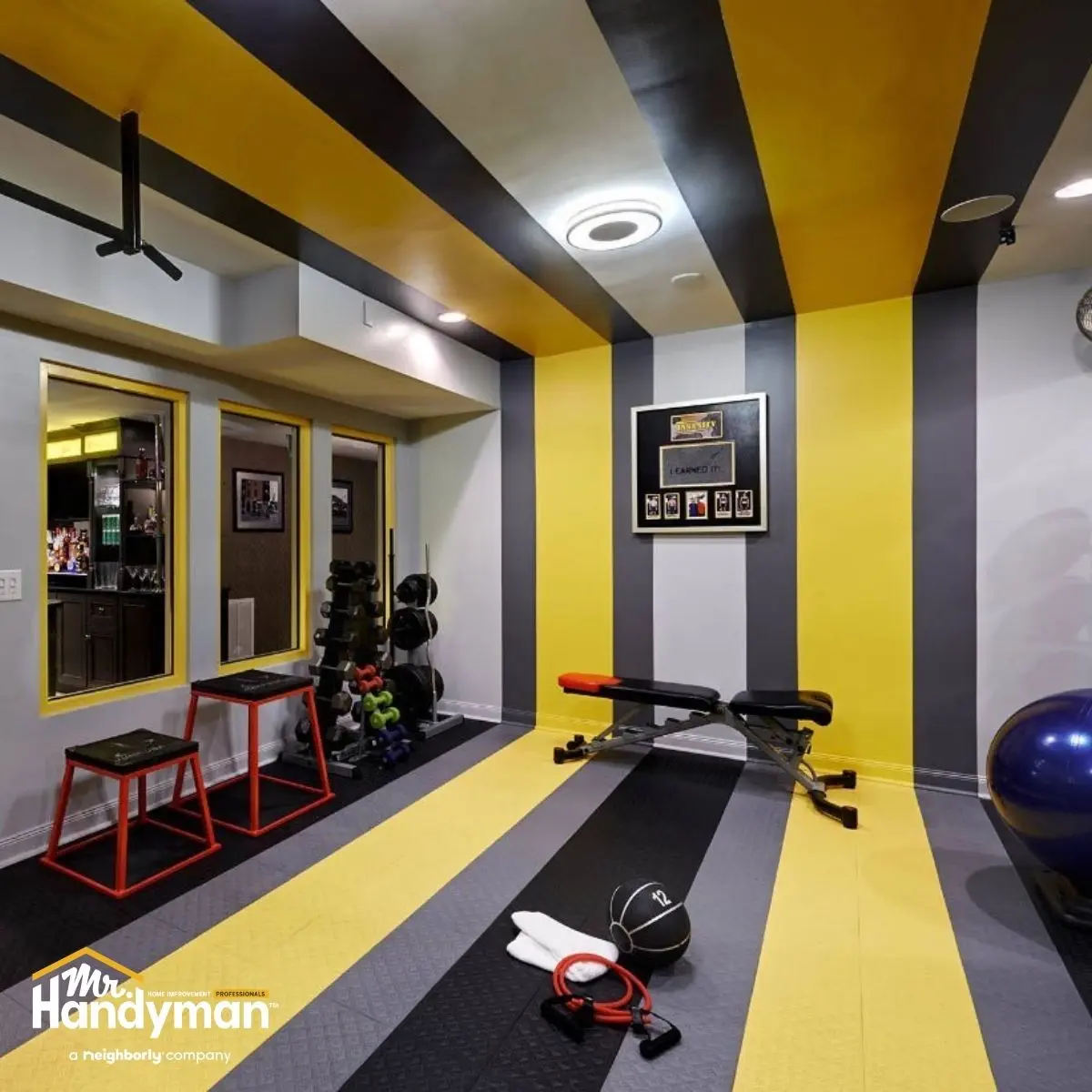
Monthly painted surface inspections conducted by trained staff members who walk every member-accessible zone specifically to assess paint condition create the systematic front-line monitoring that identifies touch-up needs promptly. The monthly inspection should cover all wall surfaces in primary training areas at the heights where impact damage most commonly occurs, all door frames and door face surfaces throughout the facility, all reception and entry area surfaces, and all locker room and restroom wall surfaces. Findings should be documented with location, description, and severity assessment that assigns each condition to either immediate response or scheduled touch-up maintenance based on its visibility and impression impact.
Response standards that define how quickly different categories of paint conditions are addressed prevent the accumulation of identified conditions in a deferred maintenance queue that defeats the purpose of the inspection program. Chip and gouge damage in reception and entry areas warrants same-week touch-up response because its visibility and impression impact begin immediately. Impact damage in primary training areas warrants monthly touch-up cycles that address all accumulated conditions identified during the monthly inspection. Moisture-driven paint failure in locker rooms and restrooms warrants prompt professional assessment to confirm that the moisture source has been addressed before touch-up work is performed, ensuring that the repair does not simply conceal an ongoing condition that will reproduce the failure.
Execution quality in touch-up work is the variable that determines whether the program delivers seamless surface restoration or a collection of visible repairs that call attention to themselves. Staff members executing touch-up repairs need training in surface preparation, paint application technique, and the feathering approach that blends touch-up edges into the surrounding painted surface. Touch-up application that is not feathered at its edges creates a distinct boundary between the repaired area and the surrounding surface that is visible under the directional lighting of fitness facility environments regardless of color accuracy. Professional touch-up execution by qualified painters for high-visibility areas including reception spaces and locker rooms, with trained staff handling lower-visibility training area touch-ups, allocates execution quality to the locations where it delivers the greatest impression return.
Frequently Asked Questions
How do I match touch-up paint to an existing wall color that I do not have a record of?
A paint store with spectrophotometer color matching capability can produce a very close match to an existing painted surface from a small sample. The most reliable sample is a paint chip removed from a low-visibility area of the actual wall surface, which provides a sample of the exact color and formulation including any fading that has occurred since original application. Color matching from a chip removed from the wall produces a closer result than matching from a paint swatch or a memory description. Maintaining painted surface records going forward, including brand, color name and number, and sheen level for every surface in the facility, eliminates the need for color matching on future touch-up cycles.
What sheen level performs best for fitness facility walls subject to frequent cleaning?
Eggshell and satin sheens provide the best balance of cleanability and appearance for fitness facility wall surfaces. Flat sheens absorb cleaning products and moisture rather than shedding them, which accelerates the staining and paint film degradation that high-frequency cleaning produces. Semi-gloss and gloss sheens provide excellent cleanability but reflect light in ways that make surface imperfections more visible and that create glare conditions in zones with directional or high-intensity lighting. Eggshell and satin formulations in commercial-grade interior paints offer the moisture resistance, cleanability, and appearance quality that fitness facility wall surfaces require across most zones.
How frequently should a busy Middle Tennessee gym inspect painted surfaces for touch-up needs?
Monthly inspection of all member-accessible painted surfaces is the appropriate baseline frequency for an active Middle Tennessee fitness facility. During periods of unusually high membership activity, including January membership surge periods and post-holiday traffic increases, shortening the inspection interval to every two weeks in primary training areas prevents the accumulation that peak-traffic periods accelerate. Annual comprehensive painted surface assessment that evaluates the overall condition of the full facility's paint inventory and identifies areas approaching the threshold where touch-up is no longer sufficient and full repainting is needed keeps the touch-up program within its appropriate scope and informs capital planning for scheduled repainting projects.
Should touch-up work be performed by facility staff or professional painters?
The appropriate execution resource depends on the specific zone and the visibility of the repair. Touch-up work in primary training areas where minor chip and gouge repairs require color accuracy and adhesion but not the seamless blending that high-visibility locations demand is appropriate for trained maintenance staff with proper materials and technique training. Touch-up work in reception areas, locker rooms, and any zone where the repair will be observed at close range by members whose impression of the facility is being directly shaped by the surface quality warrants professional painter execution that delivers the seamless results those locations require.
What is the most cost-effective investment in fitness facility paint maintenance?
Maintaining a complete touch-up paint inventory for every surface in the facility, stored correctly and labeled clearly, is the highest-return paint maintenance investment available because it enables the prompt response to identified conditions that prevents deterioration from accumulating into comprehensive repainting need before its time. The cost of maintaining the inventory is modest. The value of having the correct paint immediately available when a touch-up need is identified, rather than delaying the repair until a paint store visit can be arranged, is the consistency of response that makes the touch-up program function as intended rather than as an aspirational maintenance standard that practical barriers prevent from being executed.
Surfaces That Reflect Your Standard Retain the Members Who Notice
Every member who trains at a Murfreesboro, Franklin, or Brentwood fitness facility is continuously forming impressions from the physical environment that surrounds them, and painted surfaces are among the most pervasive elements of that environment. A touch-up program that maintains those surfaces at a standard reflecting active management investment creates a facility that members are proud to train in, confident in the management standards of, and willing to recommend to their networks. The cost of that program is modest. The retention and referral value it protects is the ongoing revenue stream that sustains the business through Middle Tennessee's competitive fitness market.
Mr. Handyman of Murfreesboro, Franklin, and Brentwood brings professional painting, surface repair, and facility maintenance capabilities to fitness facilities throughout the region. From touch-up programs and accent wall refreshes to comprehensive repainting and surface restoration, the team delivers the quality and consistency that keeps your facility presenting at the standard your members and your brand deserve.
Website: https://www.mrhandyman.com/murfreesboro-smyrna/
Serving fitness facilities and commercial properties throughout Murfreesboro, Franklin, and Brentwood with professional painting and maintenance services and the craftsmanship your facility deserves.