
The exterior of a home is its first and most continuous line of defense against everything the environment delivers. In Middle Tennessee, that means enduring a winter season that combines freezing temperatures, ice storms, sustained cold, and the kind of wind events that accompany frontal passages through the region, followed immediately by a spring that brings heavy rainfall, rapid warming, and the kind of humidity that begins testing every sealed surface and drainage system the moment temperatures climb. For homeowners in Murfreesboro, Franklin, and Brentwood, preparing the home's exterior for warmer weather is not a seasonal ritual. It is a practical discipline with real consequences for the home's structural integrity, appearance, and long-term value.
The transition from cold to warm in Middle Tennessee happens faster than in more temperate climates, and it carries more moisture than most homeowners fully account for. A week of cold rain in March followed by a week of warm, humid air in April creates conditions that test every exterior surface simultaneously. Roofing systems that collected debris and ice through winter face their first significant rainfall loads. Gutters that were stressed by ice and debris face peak flow conditions. Exterior paint and sealant that was worked by freeze and thaw cycling faces the moisture pressure of spring rain. And drainage systems that were dormant through winter are called upon to manage the significant volumes of water that Middle Tennessee's spring delivers. Preparing for those conditions before they arrive is what separates homeowners who manage their exterior proactively from those who discover its vulnerabilities through the damage those vulnerabilities allow.
This preparation process is systematic rather than intuitive. It covers the home's exterior from top to bottom, evaluating each system and surface in sequence and addressing the conditions that winter left behind before warmer weather adds spring and summer's demands on top of them. Homeowners who work through this process consistently, every spring without exception, accumulate the maintenance advantage that keeps small issues from compounding into large ones and keeps their home's exterior in the condition that protects everything inside it.
Starting at the Top: Roof Inspection and Repair

The roof is the most consequential exterior system on any home, and it is the one that most directly affects the safety and integrity of everything beneath it. A roof that is performing correctly manages every weather event without allowing water to reach the structure or interior. A roof with even a small failure point allows water to enter and begin the damage sequence that progresses from wet insulation to stained ceilings to compromised framing and eventually to the mold conditions that Middle Tennessee's humidity accelerates dramatically once moisture is present inside the building envelope.
Post-winter roof inspection in Murfreesboro, Franklin, and Brentwood homes should cover shingle condition, flashing integrity, ridge and hip cap condition, soffit and fascia condition, and the condition of any penetrations through the roof deck including plumbing vents, exhaust fans, and chimney structures. Shingle damage from winter wind events is the most common finding, presenting as missing shingles that leave the roof deck directly exposed, shingles that have been lifted and re-laid but whose adhesive seal strip has been broken, and shingles that have developed granule loss or surface cracking from ice and thermal cycling. Missing shingles are the highest-priority finding because they represent an active, unprotected opening in the roof surface that every rain event exploits. Shingles with broken seal strips are equally important because they are lifted by the next wind event and allow water infiltration beneath the course during rain.
Flashing inspection deserves specific attention because flashing failures are responsible for a significant share of residential water intrusion in Middle Tennessee homes, yet they are among the conditions most frequently overlooked in informal assessments. Flashing at chimney bases, wall-to-roof transitions, dormers, skylights, and plumbing penetrations creates the waterproof transition between the roofing material and the adjacent building element. When flashing lifts, corrodes, or pulls away from the sealant that holds it against the adjacent surface, water finds the gap immediately and follows it into the structure below. Spring flashing inspection that confirms every transition is sealed and secure eliminates one of the primary water entry pathways that winter conditions open.
Soffit and fascia condition affects both the appearance and the function of the roof system. Fascia boards that have developed rot from water exposure behind failed gutters, and soffits that have deteriorated from moisture intrusion through compromised roof edges, need to be addressed in spring before summer heat and humidity accelerate the biological deterioration that moisture in wood promotes. Replacing deteriorated fascia and soffit sections restores the clean, finished appearance of the roofline while eliminating the entry points through which insects and wildlife access the attic space that compromised soffit panels create.
Gutters, Downspouts, and Drainage Systems

Gutters and downspouts are the component of the exterior drainage system that most Middle Tennessee homeowners understand in concept but manage inconsistently in practice. They are designed to collect roof runoff and deliver it to downspouts that carry it away from the foundation, which is a simple and essential function that the system only performs correctly when it is clean, properly attached, and draining to locations that genuinely move water away from the structure.
Winter leaves Middle Tennessee gutters in a condition that requires spring attention across virtually every home in the region. Ice that accumulated in gutters through freeze events applies weight that pulls hanger screws from the fascia, bends gutter sections at their support points, and stresses the seams and end caps where sections join and terminate. Debris that accumulated through fall and was then matted and compressed by winter moisture sits in gutter channels, restricting flow and holding moisture against the gutter material and the fascia behind it. Spring gutter maintenance that clears accumulated debris, reattaches pulled hangers, reseals leaking seams, and confirms that downspouts are draining freely and directing water at least four to six feet from the foundation restores the system to the functional standard that Middle Tennessee's spring rainfall season demands.
Downspout extensions and splash blocks are elements of the drainage system that homeowners frequently overlook when assessing gutter condition, yet they are directly responsible for whether roof runoff ends up safely away from the foundation or directly against it. A downspout that terminates at grade without an extension or splash block delivers concentrated roof runoff against the foundation wall at the point of highest hydrostatic pressure. Over a season of spring rainfall events, that concentrated delivery saturates the soil against the foundation and drives moisture toward basement walls, crawl space entries, and any foundation crack or gap it encounters. Adding or replacing downspout extensions and confirming that splash blocks are positioned to direct water away from the foundation is a spring maintenance step that costs very little and prevents the kind of moisture intrusion that costs significantly more to remediate.
Exterior Paint, Caulking, and Surface Condition
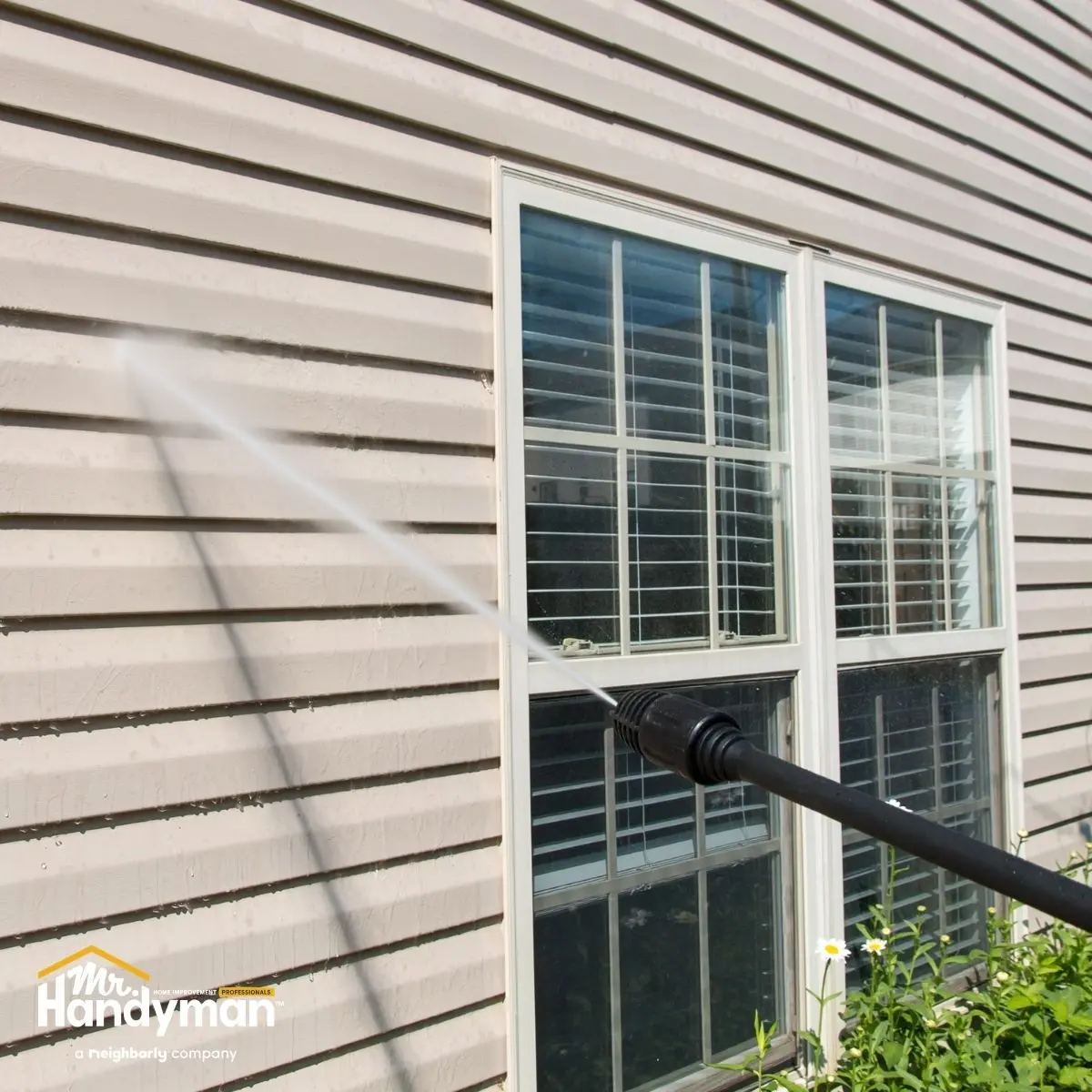
Exterior surfaces that were subjected to Middle Tennessee's winter weather cycle emerge in spring carrying conditions that range from minor cosmetic wear to active moisture entry points that require immediate attention. The systematic assessment of exterior paint, caulking, and surface condition in spring identifies those conditions in sequence from most to least consequential and creates a repair priority list that addresses the home's most vulnerable points before warmer weather adds spring and summer moisture loads on top of them.
Caulking and sealant at every transition between different exterior materials is the first priority in any spring surface condition assessment. Where wood trim meets siding, where window and door frames meet the surrounding siding, where any penetration passes through the exterior wall, and where different siding materials meet at corners and transitions, sealant maintains the weather barrier that prevents water from finding its way into the wall assembly behind the exterior finish. Sealant that has cracked, pulled away from one of the surfaces it bridges, or deteriorated beyond its functional service life is an open invitation for water infiltration during every rain event. Replacing failed sealant with quality exterior caulk appropriate to the specific application, polyurethane or hybrid polymer products for most painted surfaces, silicone for window frame perimeters and dissimilar material transitions, addresses those vulnerabilities before spring rain delivers the moisture pressure that exploits them.
Exterior paint condition assessment in spring covers four primary failure modes. Peeling indicates that moisture has gotten behind the paint film and disrupted its bond with the substrate. Chalking, where the paint surface has degraded to a powdery consistency, indicates that the film has reached the end of its protective life. Checking and cracking, where the paint film has developed a network of surface fractures, indicates age-related brittleness that allows moisture entry. And fading, where color has diminished significantly from its original intensity, indicates ultraviolet degradation that has consumed the film's pigment and begun degrading its protective properties. Each of these failure modes requires a different preparation approach before repainting, and identifying which mode is present determines whether spot repair, full surface preparation, or complete removal and repainting is the appropriate response.
How Middle Tennessee's Climate Shapes Exterior Preparation Priorities
The exterior preparation priorities for homes in Murfreesboro, Franklin, and Brentwood reflect the specific climate, soil conditions, and housing characteristics of Middle Tennessee in ways that make a regionally informed approach significantly more effective than a generic exterior maintenance checklist. Understanding how local conditions shape which preparations matter most and why they matter in the specific sequence that Middle Tennessee's seasonal transition demands produces a preparation process that addresses the right conditions at the right time with the right level of urgency.
Rutherford County, which encompasses Murfreesboro and its surrounding communities, has a combination of clay-heavy soil and relatively flat terrain in many neighborhoods that creates drainage conditions homeowners need to account for during spring exterior preparation. Clay soil that has absorbed winter precipitation retains moisture near the surface and against foundation walls for extended periods after rain stops, maintaining hydrostatic pressure against the foundation long after the rain event that produced it has passed. Spring exterior preparation in Murfreesboro homes that sit on clay-heavy soil should specifically include an assessment of the grading condition around the foundation perimeter, confirming that the grade slopes away from the foundation at a rate sufficient to move surface water away from the structure rather than toward it. Grading that has settled toward the foundation through winter, or that has been disturbed by landscaping activity near the home, redirects roof runoff and surface drainage toward the foundation rather than away from it, compounding the hydrostatic pressure that clay soil retention already creates.
Franklin's topography introduces a slope-related drainage dynamic that affects a meaningful share of the community's residential properties. Homes positioned at the base of sloped lots in Franklin neighborhoods receive not only the rainfall that falls directly on their property but also the runoff that drains from neighboring properties above them. During Middle Tennessee's sustained spring rain events, that compounding drainage load can produce surface water volumes that exceed what the home's drainage system was sized to manage, directing water toward the foundation, into window wells, and across any low points in the grading around the structure. Spring exterior preparation for Franklin homes in slope-receiving positions should include specific assessment of how surface water moves across the property during a rain event, and where swales, extensions, or grading corrections would redirect that flow away from the structure more effectively.
Brentwood's mature tree canopy is an asset that defines the community's character and that contributes to the exterior preparation requirements that Brentwood homeowners face each spring. Large deciduous trees drop significant volumes of leaves, seeds, and small branch material onto roof surfaces, into gutters, and across hardscape areas through fall and winter. In spring, that accumulated organic material holds moisture against every surface it contacts, promoting the biological growth that darkens roof shingles, clogs gutter channels, and stains hardscape surfaces. Spring exterior preparation in Brentwood homes with significant tree canopy coverage should include thorough removal of accumulated organic material from all exterior surfaces, including roof surfaces where it is safe to do so, gutters, downspouts, deck surfaces, and any hardscape areas where organic accumulation is promoting moss or algae growth.
Deck and Outdoor Structure Preparation for Warmer Weather
Decks, porches, pergolas, and other outdoor structures that carried Middle Tennessee's winter through their framing, decking, and connection hardware emerge in spring requiring the kind of systematic assessment and targeted repair that prepares them for the heavy use that warmer months deliver. Structures that are used intensively through summer and outdoor entertaining season without having received spring attention carry developing conditions into that period of peak use, where the combination of increased loading and Middle Tennessee's humidity and rainfall accelerates whatever deterioration was already underway.
Deck structural assessment in spring begins below the surface, at the ledger board connection, the post bases, the beam and joist connections, and any hardware that holds the framing assembly together and to the house. These structural elements are not visible during normal deck use, which is precisely why they require deliberate inspection before the season of heavy loading begins. Ledger board connections that have developed moisture intrusion between the ledger and the house rim joist are among the most consequential structural findings in residential deck assessment, because rot in that connection compromises the attachment point that transfers deck loads to the house structure. Flashing at the ledger that has lifted, corroded, or allowed water behind it needs to be addressed immediately, as the rot that moisture access to that joint produces develops faster than homeowners typically expect.
Post bases at grade level are the structural connection points most vulnerable to moisture-driven deterioration in Middle Tennessee's climate, because they sit at the intersection of the wood post, the metal connector hardware, and the concrete footing, where moisture from rain, condensation, and soil contact is most consistently present. Post base hardware that is visibly corroded, post ends that have developed soft spots from moisture exposure, and concrete footings that have cracked or shifted from freeze-thaw cycling all represent structural conditions that spring inspection identifies and spring repair addresses before summer loading tests them under full occupancy conditions.
Deck surface assessment covers the decking boards, the railing system including posts, balusters, and top rails, and the stair structure including stringers, treads, and any handrail connections. Decking boards that have developed checks, cracks, raised grain, or splinter-prone surface conditions from winter moisture cycling need to be assessed for whether surface treatment can restore them to a safe and functional condition or whether replacement is the appropriate response. Boards with structural integrity intact but weathered surfaces are candidates for cleaning, sanding, and refinishing that restores their appearance and applies fresh protective treatment before the summer season. Boards with through-checking, rot at fastener locations, or physical damage that creates a safety hazard need to be replaced rather than refinished.
Landscaping, Hardscape, and Foundation Perimeter Preparation
The landscape and hardscape areas immediately surrounding a Middle Tennessee home are the exterior zones that most directly affect how water moves around the foundation during rain events, and their spring preparation has consequences for foundation moisture management that extend through the entire wet season ahead. Attention to these areas in spring exterior preparation is as much about water management as it is about appearance, and the two objectives align closely enough that addressing appearance concerns almost always serves the water management function simultaneously.
Foundation perimeter inspection in spring covers grading condition, the presence and condition of any foundation plantings, the status of window wells where present, and the condition of any hardscape surfaces adjacent to the foundation including concrete walkways, patios, and steps. Grading that drains toward the foundation, plantings that have grown to the point where they hold moisture against the foundation wall, window wells that have accumulated debris and water, and adjacent hardscape that has settled toward the foundation rather than away from it all represent conditions that direct water toward the foundation rather than away from it. Correcting these conditions in spring, before the rainy season delivers the sustained moisture loads that exploit every drainage deficiency, protects the foundation and everything inside it from the moisture intrusion that these conditions facilitate.
Hardscape surfaces including concrete driveways, walkways, patios, and steps carry post-winter conditions including widened cracks, surface spalling, and joint failures that spring repair addresses before summer activity loads test them further. Concrete surfaces that have developed crack networks through freeze-thaw cycling benefit from crack sealing before spring rainfall infiltrates those cracks and saturates the base material beneath. Steps with settled or separated joints between the tread and the riser, or between the step structure and the adjacent walkway surface, create trip hazard conditions that warm weather foot traffic will encounter daily if they are not corrected in spring.
Frequently Asked Questions
How do I safely inspect my roof without getting on it?
A ground-level inspection with binoculars, conducted from multiple vantage points around the home, can identify many of the most obvious conditions including missing shingles, visibly lifted flashing, and significant granule loss on asphalt shingles. A drone inspection, either conducted personally or by a professional service, provides closer visual access to roof conditions without requiring anyone to be on the roof surface. For a definitive assessment of the roof's condition, particularly for older roofs or those that have experienced significant wind or ice events, a professional roofing inspection by someone who can safely access the surface and evaluate conditions at close range is the appropriate approach.
What exterior caulking products perform best in Middle Tennessee's climate?
Siliconized latex or hybrid polymer caulks perform well for most painted exterior applications including trim to siding transitions, window perimeters at painted frames, and general gap filling at building envelope transitions. Pure silicone caulk is appropriate for glass-to-frame transitions, metal flashing laps, and any application where the surfaces being sealed cannot be painted. Polyurethane caulk provides the strongest adhesion and durability for horizontal surface applications and high-movement joints. Selecting a caulk rated for exterior use and for the specific substrate materials being sealed, rather than defaulting to an all-purpose product, produces a seal that performs reliably through Middle Tennessee's seasonal temperature and moisture cycling.
How do I know if my deck needs refinishing or full board replacement?
Press a screwdriver tip firmly into the wood surface at several locations across the deck, paying particular attention to areas around fasteners, at board ends, and anywhere the surface appears discolored or soft. Wood that is structurally sound resists the screwdriver tip with firm resistance. Wood that has begun to rot allows the tip to penetrate with light pressure. Boards that resist penetration but have weathered surfaces, raised grain, or surface checking are candidates for refinishing. Boards that allow screwdriver penetration, particularly at fastener locations or board ends, have structural integrity concerns that refinishing cannot address and that replacement resolves.
What is the most important exterior preparation step for Middle Tennessee's spring rainfall season?
Confirming that the full drainage path from roof surface to downspout termination is clear, secure, and directing water away from the foundation is the single most consequential exterior preparation step for spring in this region. A properly functioning gutter and downspout system manages the significant rainfall volumes that Middle Tennessee's spring delivers without directing that water against the foundation, which is the most common source of basement moisture intrusion and crawl space moisture problems in residential properties throughout Murfreesboro, Franklin, and Brentwood.
How often should exterior wood surfaces be refinished in Middle Tennessee?
Horizontal wood surfaces including deck boards, porch floors, and step treads that receive direct sun exposure and foot traffic typically benefit from refinishing every two to three years in Middle Tennessee's climate. Vertical painted surfaces including siding, trim, and railings typically require repainting on a five to seven year cycle when quality products are applied over properly prepared surfaces. Stained vertical surfaces exposed to significant sun may need refinishing closer to the three to five year range depending on product quality and exposure conditions.
Your Home's Exterior Is Ready for What's Coming. Make Sure It Actually Is.
Warmer weather in Middle Tennessee does not arrive gently. It arrives with rain, humidity, heat, and the sustained outdoor activity that tests every exterior surface and system a home has. The homeowners whose exteriors handle those conditions without generating repair calls, water intrusion events, or visible deterioration are the ones who prepared before the season arrived rather than after it revealed the vulnerabilities they missed. In Murfreesboro, Franklin, and Brentwood, spring exterior preparation is the discipline that keeps a home performing at the level its owner invested in, season after season, without the compounding cost of conditions that deferred attention allows to develop.
Mr. Handyman of Murfreesboro, Franklin, and Brentwood brings professional exterior preparation capabilities to homeowners throughout the region. From roof assessment support and gutter maintenance to caulking, painting, deck preparation, and foundation perimeter corrections, the team handles the full range of exterior preparation work that gets Middle Tennessee homes ready for warmer weather with the professional quality and honest assessment your home deserves.
Website: https://www.mrhandyman.com/murfreesboro-smyrna/
Serving homeowners throughout Murfreesboro, Franklin, and Brentwood with professional exterior preparation services and the craftsmanship your home deserves as warmer weather arrives.