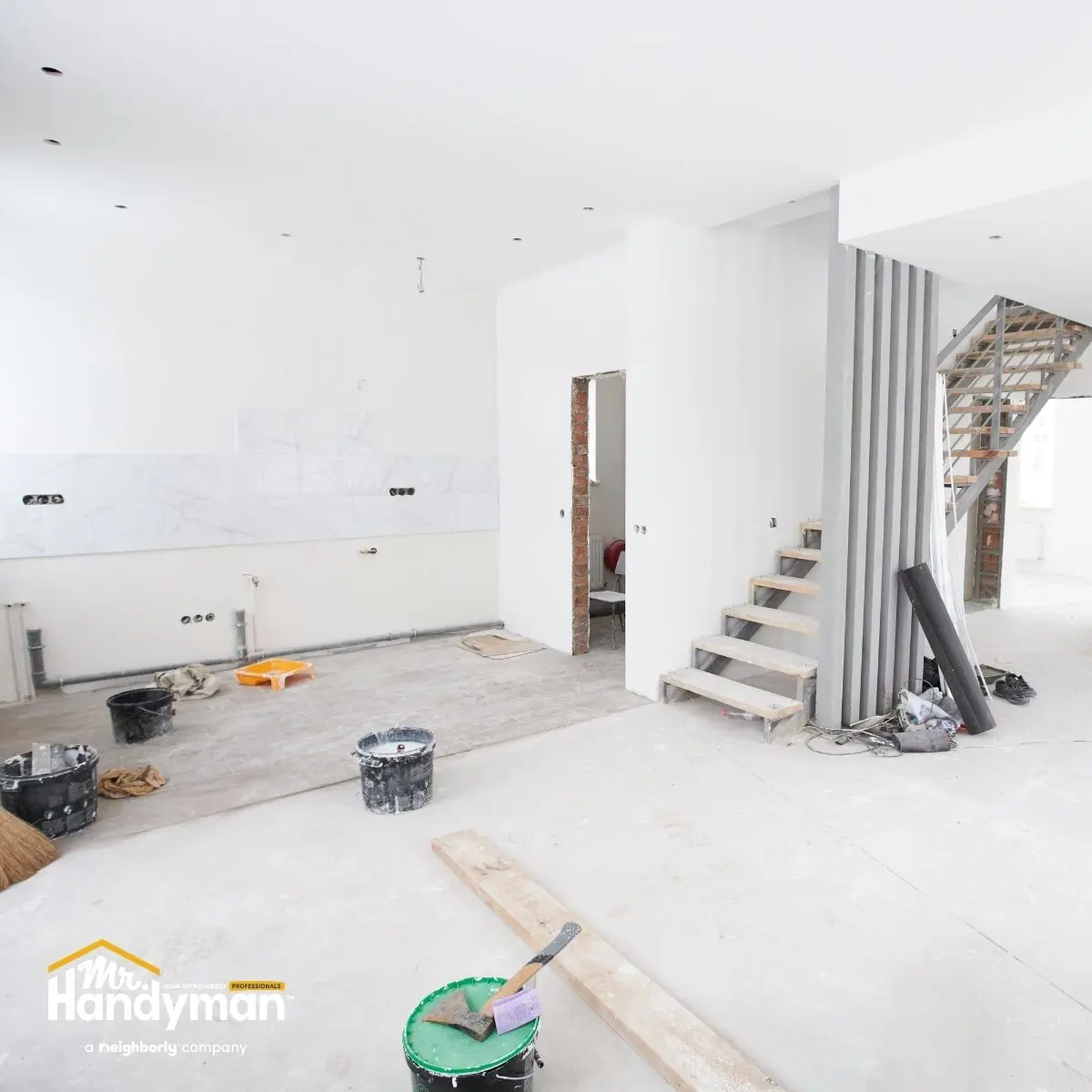
Basements are among the most underutilized spaces in Middle Tennessee homes. For many homeowners in Murfreesboro, Franklin, and Brentwood, the basement functions as a default storage area, a mechanical room, or simply an unfinished space that was never given serious consideration as livable square footage. That approach leaves a significant opportunity on the table. A basement that is properly assessed, addressed for moisture and structural integrity, and improved with targeted upgrades can add meaningful functional living space to a home without the cost and complexity of an addition, and without consuming any of the yard or outdoor space that Middle Tennessee homeowners value highly.
The distinction between a full basement finishing project and the kind of targeted small improvements this guide focuses on is important. A complete basement finishing project, involving framing, drywall, electrical, HVAC extensions, and full flooring installation throughout the space, is a substantial undertaking with a correspondingly substantial budget. Small basement improvements work differently. They identify the specific barriers that make a basement feel unusable, address those barriers efficiently, and create functional areas within the existing space that serve real household needs without requiring a full renovation commitment. The result is a basement that feels intentional rather than abandoned, and that adds daily value to the home in proportion to the investment made.
For homeowners in Middle Tennessee who are approaching this process for the first time, the starting point is always an honest assessment of what the basement currently is, what conditions need to be addressed before improvements can be made, and what functional purpose the improved space will serve. Those three questions, answered clearly and in order, are what separate a basement improvement project that delivers lasting satisfaction from one that adds cosmetic finishes over unresolved problems.
What Middle Tennessee Basements Face Before Improvements Begin
Basements in Murfreesboro, Franklin, and Brentwood face a specific set of conditions that shape what improvements are appropriate and what preparation work must precede them. Middle Tennessee's climate, soil composition, and rainfall patterns all affect how basements behave, and understanding those regional factors is essential to making improvement decisions that hold up over time.
Moisture is the primary challenge in Middle Tennessee basements, and it takes multiple forms that require different responses. Condensation forms when warm, humid outdoor air enters a cool basement space during summer months, depositing moisture on walls, floors, and any surfaces that are below the dew point. This form of moisture is invisible in the sense that there is no visible entry point, but its effects accumulate steadily in the form of musty odors, surface mold, and a general sense of dampness that makes the space feel uninhabitable. Proper ventilation, vapor barriers, and dehumidification address condensation effectively before any finishing work begins.
Seepage is a different problem with a different solution. When groundwater under hydrostatic pressure finds its way through cracks, gaps at the floor-wall joint, or porous masonry, it enters the basement as liquid water that appears during or after rain events. Seepage that is present in a basement is not a condition that finishes or coverings can address. It must be resolved at the source, whether through interior drainage systems, exterior waterproofing, improved grading around the foundation, or crack injection, before any improvement work proceeds. Finishing a basement over active seepage produces a situation where finished materials trap moisture against structural components, accelerating the very damage the finishing was meant to conceal.
Clay-heavy soil that is prevalent in much of Rutherford and Williamson County retains water near the foundation for extended periods after rain events, maintaining hydrostatic pressure against basement walls longer than sandier soils would. This characteristic makes moisture assessment and waterproofing more important in this region than in areas with naturally better-draining soil, and it is why a professional moisture evaluation before beginning any basement improvement work is not optional in Middle Tennessee. It is the foundation upon which every subsequent decision rests.
Targeted Lighting Improvements That Transform the Space
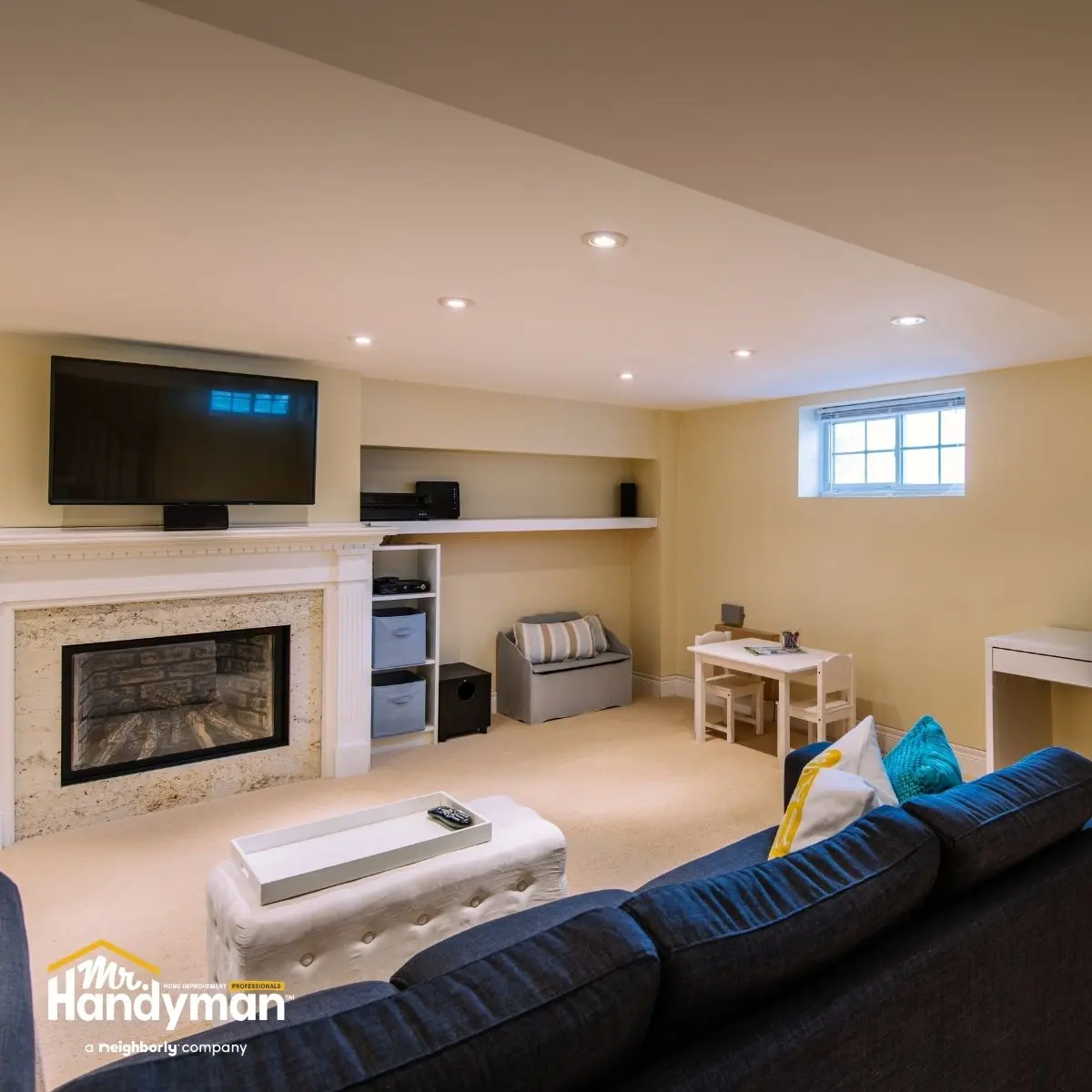
Lighting is the single most impactful and most cost-effective improvement available to Middle Tennessee basement owners, and it is consistently the most overlooked. The instinct to describe a basement as dark, oppressive, or uninviting is almost always a lighting problem as much as it is a structural one. Basements that receive proper lighting treatment feel dramatically different from the same space lit by a few bare bulbs or aging fluorescent tubes, and the transformation happens without touching the walls, floor, or any structural element.
The typical baseline lighting in an unfinished Middle Tennessee basement consists of one or two ceiling-mounted fixtures, often with exposed bulbs or basic utility globes, positioned without regard for how the space is used. This kind of lighting creates harsh shadows in some areas and leaves others in near darkness, which reinforces the feeling that the space is not meant to be occupied. Addressing this through a combination of recessed can lights, track lighting for flexibility, and task lighting in areas designated for specific functions transforms the ambient quality of the basement in a way that no other single improvement can match.
Recessed lighting installed in a grid pattern across the basement ceiling, whether the ceiling is drywall, drop tile, or exposed joists, creates an even distribution of light that eliminates the shadow-and-glare dynamic of point-source fixtures. In basements with lower ceiling heights, recessed fixtures are particularly valuable because they do not reduce headroom the way pendant or surface-mounted fixtures do. LED recessed fixtures operate at low heat, consume minimal energy, and have lifespans measured in decades, making them a practical long-term investment rather than a temporary fix.
Lighting that is positioned to highlight specific functional areas within the basement reinforces the sense that the space has been intentionally organized. A well-lit work area in one corner, a reading or relaxation area with warmer, lower-intensity lighting in another, and utility lighting near mechanical equipment and storage areas creates a visual organization that makes the basement feel purposeful rather than incidental. That sense of intentionality is what transforms an unfinished basement from a space people avoid into one they choose to use.
Flooring Solutions That Address Comfort and Moisture
Concrete basement floors are functional but uninviting, and they are also cold, hard underfoot, and acoustically harsh in ways that make spending time in the space uncomfortable for extended periods. Addressing the floor is the second most impactful small improvement available to basement owners, and there are several options that work well in Middle Tennessee conditions depending on the moisture status of the slab and the intended use of the space.
Luxury vinyl plank flooring has become the dominant choice for basement floor improvements across Middle Tennessee for reasons that align precisely with what basement conditions require. It is fully waterproof, dimensionally stable in the humidity fluctuations that basements experience seasonally, comfortable underfoot, and available in styles that convincingly replicate hardwood and stone at a fraction of the cost. It installs directly over a clean, level concrete slab without adhesive in most configurations, which means it can be removed and reinstalled if a moisture event requires access to the slab beneath. For a basement that has been evaluated for moisture and confirmed as dry or successfully waterproofed, luxury vinyl plank delivers a finished floor appearance that redefines the space immediately.
Interlocking foam or rubber tile systems offer a different solution for basements designated for exercise, play, or workshop use. These systems provide cushioning underfoot, thermal insulation from the cold slab, and a surface that is appropriate for the physical demands of their intended use. They install without tools or adhesive, can be reconfigured as needs change, and are fully removable for cleaning or slab access. In basements being improved for fitness use, a rubber tile floor paired with appropriate lighting and a dedicated equipment area creates a functional home gym without the cost of a full finishing project.
Small Basement Improvements That Add Extra Living Space in Murfreesboro, Franklin, and Brentwood
How Small Improvements Create Functional Zones in Middle Tennessee Basements
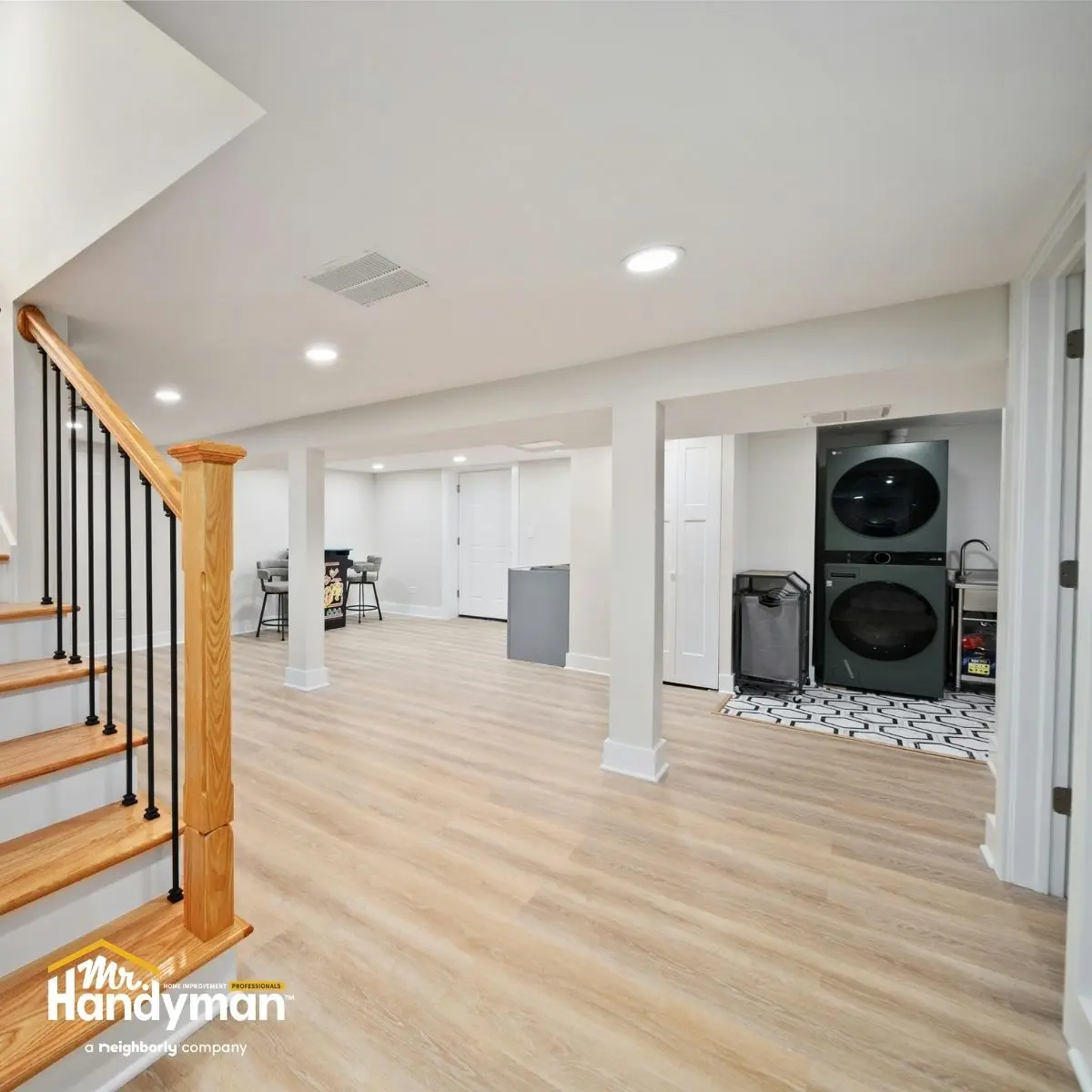
The concept of zoning is what separates a basement that has received scattered improvements from one that feels like a genuinely useful extension of the home. Zoning means designating specific areas of the basement for specific purposes and making the targeted improvements within each area that allow it to serve that purpose reliably and comfortably. It does not require walls, permits, or a full finishing project. It requires intentional planning, efficient use of the available square footage, and improvements that are matched to the actual needs of each designated area.
Middle Tennessee households have consistent patterns in how they want to use improved basement space, and those patterns reflect the region's lifestyle, home sizes, and family structures. Home offices are among the most requested basement uses, driven by the continued prevalence of remote and hybrid work arrangements that have made dedicated workspace a genuine daily necessity rather than a convenience. Exercise areas rank equally high, reflecting the preference for home fitness solutions that eliminate commute time to gyms and provide flexibility around unpredictable Middle Tennessee weather. Recreation and media spaces for children and teenagers are a consistent priority in family homes throughout Murfreesboro and Franklin, where growing families need activity space that does not consume the main living areas of the home.
Each of these uses requires a different combination of improvements, and understanding what each zone actually needs prevents over-investment in features that do not serve the intended purpose and under-investment in the elements that matter most for daily usability.
Creating a Functional Home Office Zone
A basement home office requires three things above all others to function effectively: adequate lighting that supports focused work without eye strain, reliable climate control that keeps the space comfortable through Middle Tennessee's temperature extremes, and acoustic separation from the activity happening in the rest of the home during working hours.
Lighting for a home office zone goes beyond the ambient recessed lighting discussed in Part A. Task lighting positioned specifically at the work surface eliminates shadows that cause eye fatigue during extended screen time. A desk lamp with adjustable color temperature, shifting from cooler light during active work to warmer light during reading or calls, supports the kind of sustained focus that productive work requires. If the basement has any egress windows, positioning the work area to take advantage of natural light during daytime hours adds a connection to the outdoor environment that basement workers consistently identify as improving their comfort and productivity.
Climate control in a basement home office is a non-negotiable requirement in Middle Tennessee. Basements that are not connected to the home's HVAC system are comfortable in spring and fall, unbearably humid in summer, and cold enough to be unusable in winter. A ductless mini-split unit is the most efficient solution for a basement office zone that is not served by existing ductwork. Mini-splits provide both heating and cooling from a single unit, operate quietly enough for a work environment, and can be installed without the ductwork modifications that connecting to the central system would require. The investment is meaningful but produces a space that is usable year-round rather than seasonally.
Building a Home Fitness Area That Actually Gets Used
Home fitness areas in basements fail for predictable reasons that good planning prevents. Equipment that was purchased with enthusiasm but positioned in a space that is cold, poorly lit, and acoustically uncomfortable sits unused within weeks of installation. The basement fitness areas that get regular use are the ones that were improved with the specific requirements of physical activity in mind before the first piece of equipment arrived.
Flooring, as discussed in Part A, is the foundation of a usable fitness area. Rubber tile or interlocking foam flooring provides the cushioning and traction that exercise demands and protects the concrete slab from equipment weight and impact. In Middle Tennessee basements where summer humidity can make surfaces slippery, a flooring system with appropriate texture and drainage characteristics is particularly important for safety during high-intensity workouts.
Mirror panels along one wall of the fitness zone serve both a functional and a spatial purpose. Mirrors allow users to monitor form during strength training and cardio work, which improves the effectiveness of the workout and reduces injury risk. They also visually double the apparent size of the space, making a modest basement fitness area feel significantly more open and less confining. Full-length mirror panels that run from near the floor to the ceiling height, installed on one primary wall of the fitness zone, are among the most impactful and cost-effective improvements specific to this use.
Dedicated electrical capacity for fitness equipment is a practical planning requirement that homeowners sometimes overlook until it becomes a problem. Treadmills, ellipticals, and other motorized equipment draw enough current that sharing a circuit with other basement loads can cause tripping. Having a dedicated circuit run to the fitness area during the improvement phase, before equipment is in place and wall treatments are installed, is far less disruptive and expensive than addressing it after the space is complete.
Storage Organization That Reclaims Usable Square Footage
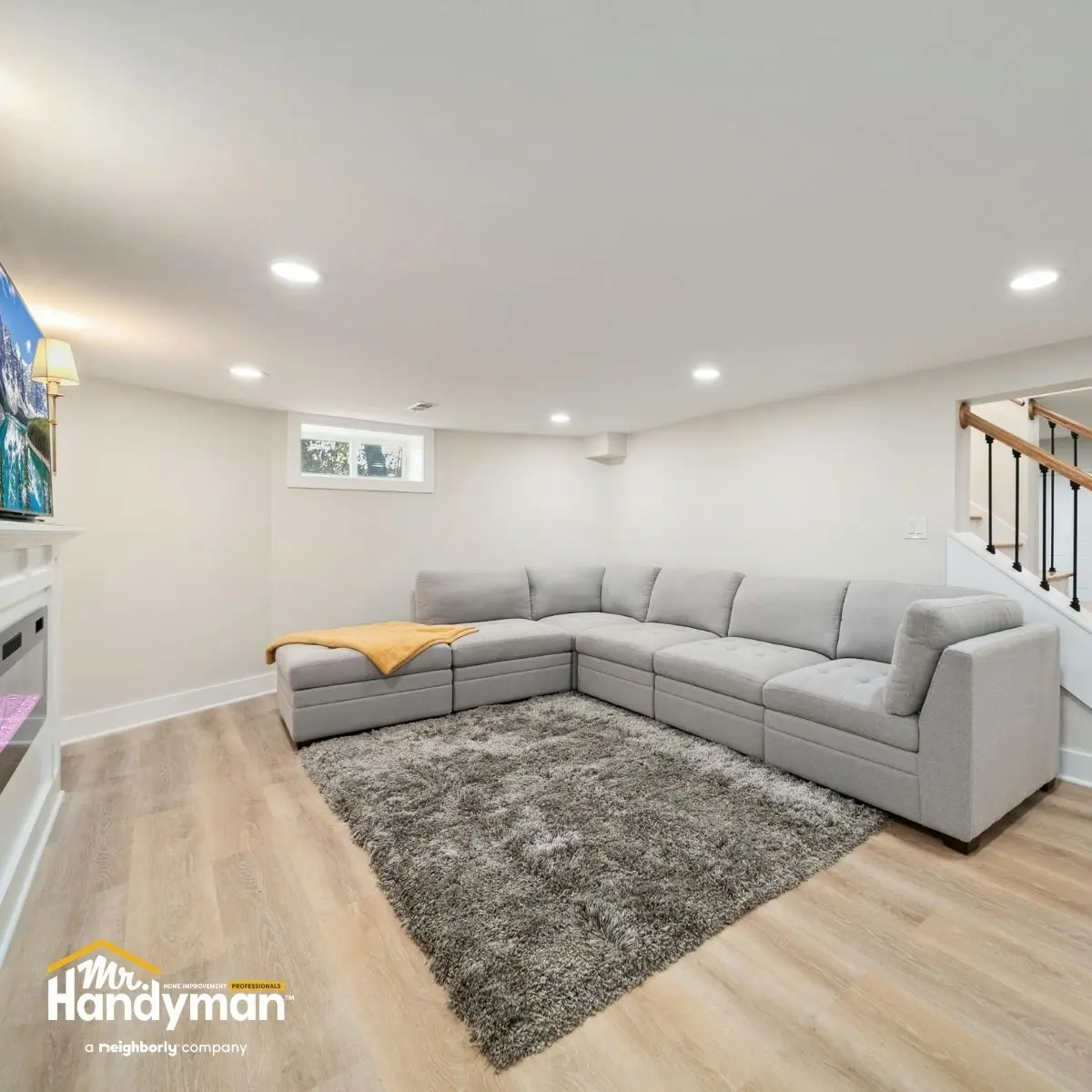
One of the most effective small basement improvements in Middle Tennessee homes is also one of the least glamorous: proper storage organization that consolidates the items being stored into a defined, efficient area and frees the remaining square footage for active use. Most unfinished basements contain storage that has expanded to fill whatever space is available, creating a condition where usable floor area is consumed by boxes, seasonal items, and miscellaneous belongings that have never been organized or evaluated.
Wall-mounted shelving systems installed along one or two perimeter walls consolidate storage vertically, moving items off the floor and creating clear floor space in the areas designated for active use. Heavy-duty metal shelving units that bolt directly to the masonry or framed walls hold significant weight and provide a flexible, adjustable storage solution that can be reconfigured as storage needs change over time. In Franklin and Brentwood homes where basements are larger and storage needs are correspondingly greater, a dedicated storage wall that runs the full length of one perimeter creates an organized, accessible storage system that serves the household without consuming the entire basement.
Ceiling-mounted storage solutions, including overhead racks designed for seasonal items like holiday decorations, luggage, and infrequently used equipment, take advantage of vertical space that basements offer but that rarely gets used. In Middle Tennessee basements with ceiling heights of eight feet or more, overhead storage systems can hold a substantial volume of items while leaving the floor and wall areas entirely clear for active use zones.
Frequently Asked Questions
Do I need a permit for small basement improvements in Murfreesboro, Franklin, or Brentwood?Permit requirements vary by scope and municipality. Cosmetic improvements such as flooring installation, painting, lighting fixture replacement, and storage organization typically do not require permits in most Tennessee jurisdictions. Work that involves new electrical circuits, plumbing additions, HVAC installation, or structural modifications generally does require permits and inspections. Confirming the specific requirements with your local building department before beginning work that might trigger permit requirements protects you from compliance issues and ensures the work is done to code.
How do I know if my basement is dry enough to install finished flooring?The most reliable field test is the plastic sheet test. Tape a twelve by twelve inch piece of plastic sheeting flat against the concrete slab, sealing all four edges completely, and leave it in place for 48 to 72 hours. If moisture appears on the underside of the plastic when you remove it, the slab is releasing moisture vapor that will affect finished flooring. A professional moisture meter test provides more precise measurement. Luxury vinyl plank tolerates moderate vapor emission better than wood-based products, but any active seepage or standing water must be fully resolved before any finished flooring is installed.
What is the most cost-effective first improvement for an unused basement?Lighting delivers the most immediate and dramatic transformation per dollar spent in almost every basement situation. Before investing in flooring, wall treatments, or furniture, improving the lighting throughout the space changes its fundamental character and allows you to evaluate its potential with fresh eyes. Many homeowners discover that a well-lit basement with its existing concrete floor and unfinished walls feels significantly more usable than they expected, which informs the subsequent improvement decisions with a clearer sense of what additional investment is actually needed.
How do I address the musty smell in my basement before improving it?Musty odor in a Middle Tennessee basement is almost always a moisture and mold issue rather than a cosmetic one, and it must be addressed at its source before improvements are made. A thorough inspection to identify and resolve any active seepage, installation of a properly sized dehumidifier to maintain relative humidity below 50 percent, and cleaning or treating any visible mold growth on surfaces are the steps that eliminate the odor permanently. Painting over mold or installing flooring over a damp slab masks the symptom temporarily while allowing the underlying condition to worsen.
Can a mini-split handle both heating and cooling for a basement space in Middle Tennessee?Yes, and for basement spaces not served by existing ductwork, a mini-split is typically the most efficient and practical climate control solution available. Modern mini-split systems operate effectively in both heating and cooling modes across the temperature range Middle Tennessee experiences, including the cold snaps that characterize local winters. Sizing the unit correctly for the square footage being conditioned and having it installed by a qualified professional ensures it performs efficiently and reliably year-round.
Your Basement Has More Potential Than You Are Using
The basements in Murfreesboro, Franklin, and Brentwood homes represent square footage that most households are paying to own but not benefiting from daily. Small, targeted improvements that address lighting, flooring, climate control, and organization transform that underutilized space into a functional living area that serves real household needs without the cost and disruption of a full finishing project. The key is starting with an honest assessment of the space, resolving any moisture conditions before improvements begin, and planning each zone around how it will actually be used rather than how it might theoretically function.
Mr. Handyman of Murfreesboro, Franklin, and Brentwood brings the skills and local knowledge to help homeowners evaluate their basement's potential and execute the targeted improvements that deliver the most value. From lighting upgrades and flooring installation to storage organization and general repairs, the team handles the work that turns an overlooked basement into a space your household genuinely uses every day.
Website: https://www.mrhandyman.com/murfreesboro-smyrna/
Serving homeowners throughout Murfreesboro, Franklin, and Brentwood with professional service and the quality craftsmanship your home deserves.