
There is a reason home improvement activity surges every spring across Middle Tennessee. It is not simply a matter of warmer weather making outdoor work more comfortable, though that is part of it. The case for spring as the best season for home improvements is built on a convergence of practical factors that align more completely in this season than in any other. Contractor availability, material lead times, working conditions, and the strategic positioning of completed work relative to the seasons of heaviest home use all point to the same conclusion. For homeowners in Murfreesboro, Franklin, and Brentwood who have improvement projects on their list, spring is not just a convenient time to start. It is the optimal time, and understanding why helps homeowners act on that window with the urgency and preparation it deserves.
Middle Tennessee's climate creates a seasonal rhythm that is more pronounced than in milder regions, and that rhythm shapes when home improvements deliver their most complete value. Projects completed in spring are ready for use through the summer months when homes carry their heaviest activity loads, their most frequent outdoor entertaining, and their greatest demand on every system and surface. Projects deferred until fall are completed just as the season of heaviest use is ending, which means homeowners wait another full year before the improvement delivers its full benefit. Projects attempted in the heat of summer face working conditions that compromise quality for exterior work, contractor availability constraints that reduce choice, and scheduling pressure that limits the careful planning that produces the best outcomes.
The homeowners who get the most from their home improvement investments are consistently the ones who plan in winter, commit in early spring, and execute through the mild weeks before summer heat arrives. That sequence allows material selection to be made thoughtfully, contractors to be secured before their schedules fill, and work to be completed under the conditions that support the highest quality outcomes. It is the sequence that spring uniquely enables, and it is why spring deserves its reputation as the season when Middle Tennessee homes are transformed.
The Practical Case for Spring Timing

The practical advantages of spring timing for home improvements in Murfreesboro, Franklin, and Brentwood extend beyond general observations about weather and into specific, concrete factors that affect project cost, quality, and outcome. Each of those factors is worth understanding clearly because together they make a compelling argument for acting in spring rather than allowing projects to drift into summer or fall.
Contractor availability is the factor that homeowners most consistently underestimate when planning home improvements. Skilled handymen, contractors, painters, and tradespeople in Middle Tennessee book quickly as spring progresses, and the window of reasonable scheduling flexibility closes faster than most homeowners expect. A contractor who can start a project in two weeks in early March may not be available until August by the time April arrives. For homeowners who wait until they feel the urgency of summer approaching to begin contractor conversations, the options available to them are the contractors whose schedules are still open, which is not always a flattering filter for quality. Beginning contractor conversations in February and March, with a clear project scope and a defined timeline, secures the professionals whose work is in demand precisely because it is worth scheduling around.
Material lead times affect spring project timing in ways that are less visible than contractor availability but equally consequential for project completion schedules. Custom cabinetry, specialty flooring materials, specific window and door products, and certain tile and countertop selections all require lead times that can extend from several weeks to several months between order and delivery. Homeowners who begin the material selection process in January and February, confirming availability and lead times before finalizing project schedules, build those lead times into their planning rather than discovering them after a contractor is ready to begin and the materials have not arrived. This discipline is the difference between a project that completes on schedule and one that sits in a state of partial completion waiting for backordered materials through the summer months when the space was meant to be fully functional.
Working conditions for exterior improvements, which represent a significant share of the home improvement projects Middle Tennessee homeowners undertake, are genuinely superior in spring compared to summer or fall. Exterior painting requires temperatures and humidity levels within specific ranges for paint to apply, flow, and cure correctly. Middle Tennessee's spring window, before summer heat and humidity push conditions outside those ranges, is when exterior painting produces its most reliable and durable results. Roofing, siding, deck construction, and concrete work all have similar environmental requirements that spring satisfies more consistently than the hotter, more humid months that follow. The quality of exterior work done in spring is measurably better than the same work done in conditions that fall outside the optimal range, which means spring timing is not just a scheduling preference but a quality decision.
Interior Improvements That Spring Timing Positions for Maximum Value

Interior home improvements benefit from spring timing in ways that are less about working conditions and more about strategic positioning relative to how homes are used through the year. An interior improvement completed in spring is in place and functioning through the summer months when homes carry their peak activity loads and when the value of a well-functioning interior space is most directly felt in daily life.
Kitchen improvements are among the most impactful interior projects a Middle Tennessee homeowner can undertake, and their value is most fully realized when they are complete before summer entertaining season begins. A kitchen that has been updated with new countertops, refreshed cabinetry, improved lighting, and updated fixtures functions at a different level during the summer gatherings, holiday cooking sessions, and daily meal preparation that characterize the warmer months. The same kitchen update completed in October delivers its value during a period of lower home activity and waits nearly a full year before the peak season of use arrives. Spring completion captures the full seasonal value of the improvement within months of project completion rather than across a twelve month waiting period.
Bathroom improvements similarly deliver their most immediate daily value when completed before summer's increased household activity and guest traffic. A primary bathroom that has been updated with a new vanity, improved lighting, re-tiled shower surfaces, and refreshed fixtures provides a better daily experience through the months when it is used most intensively. Secondary bathrooms that serve guest rooms see their highest use during summer and holiday periods, which means improvements completed in spring are in place exactly when they matter most to the household's daily comfort and the impression the home makes on visitors.
Flooring replacement throughout main living areas is a spring project that benefits from the season's mild temperatures and lower humidity levels, which support adhesive curing times for glue-down installations and allow floating floor systems to acclimate to the home's conditions before the humidity swings of summer and the dryness of winter expose any installation issues. A flooring installation completed in spring under stable temperature and humidity conditions performs more consistently over its first year than one installed during the extremes of summer or winter, when acclimation conditions are less predictable and installation adhesives behave differently than their specifications anticipate.
Exterior Improvements and the Spring Advantage
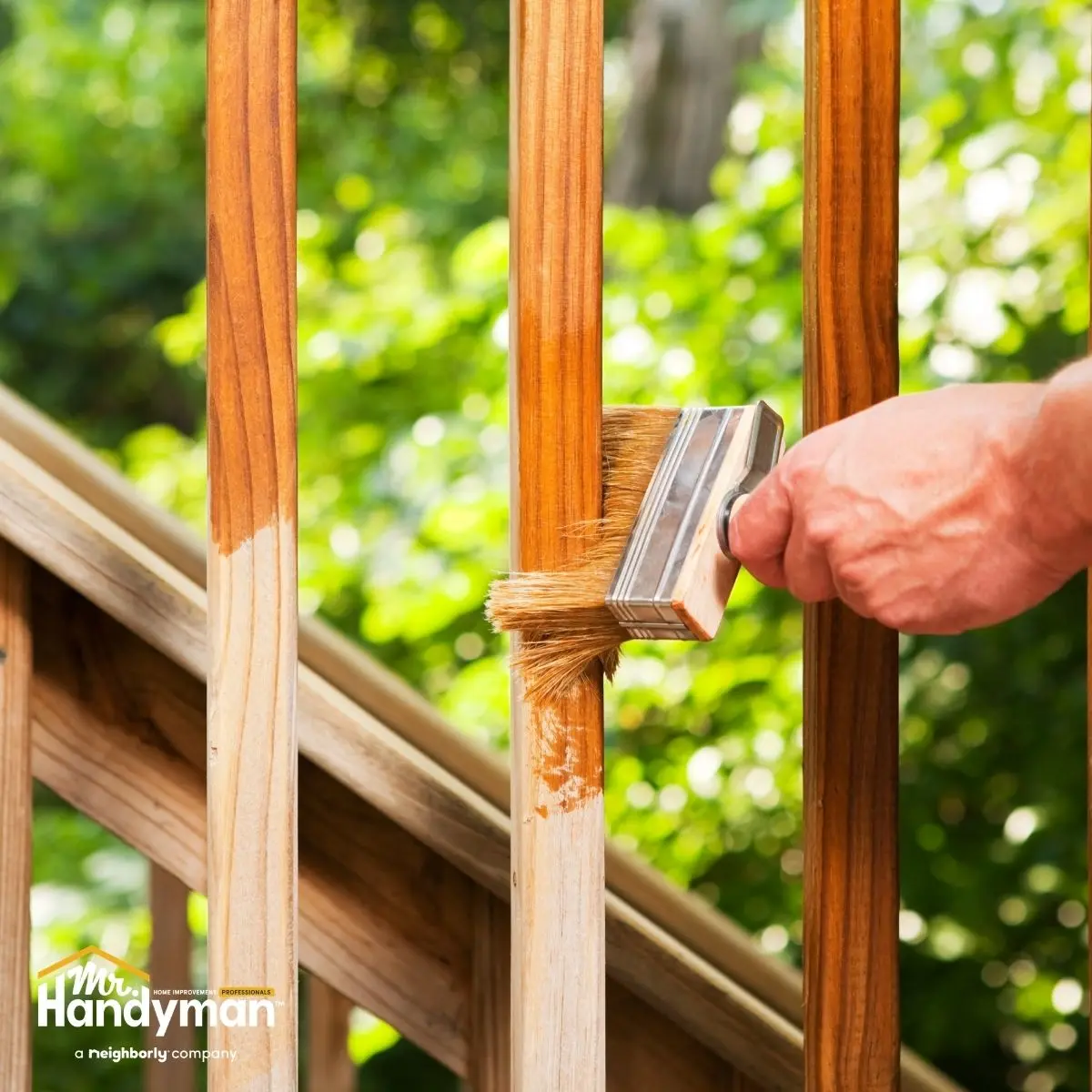
Exterior improvements in Murfreesboro, Franklin, and Brentwood homes benefit from spring timing more directly and more comprehensively than any other improvement category. The combination of mild working conditions, stable ground conditions, and the strategic timing of completion relative to the summer outdoor living season makes spring the season when exterior improvements deliver their most complete value from the earliest possible moment after completion.
Deck construction and restoration is a spring project that benefits from every dimension of the seasonal advantage. New deck construction initiated in March or April can realistically be complete by late May or early June, delivering a fully functional outdoor living space for the peak of the Middle Tennessee outdoor season. Deck restoration work, including board replacement, structural repairs, and surface refinishing, requires the temperature and humidity conditions that spring provides for stains and sealers to penetrate and cure correctly. Deck restoration done in spring produces a finish that enters summer properly cured and protected, while the same restoration done in summer heat can produce a finish that dried too quickly to penetrate the wood surface adequately, reducing both its appearance and its protective performance.
Exterior painting completed in spring enters summer in its most fully cured condition, with the paint film fully hardened and bonded to the substrate before the ultraviolet exposure and thermal cycling of summer begins working on it. Paint applied in optimal spring conditions and allowed to cure fully before summer arrives consistently outperforms paint applied in summer heat or fall cooling in terms of adhesion, color retention, and resistance to the moisture and biological growth that Middle Tennessee's humid climate promotes on exterior surfaces.
Landscaping and hardscape improvements that define and enhance the outdoor areas around a Middle Tennessee home benefit from spring timing because completed work has the full growing season ahead of it to establish and mature. Plants installed in spring develop root systems through the summer and fall that prepare them for their first winter far more effectively than fall-installed plants that have limited time to establish before cold arrives. Hardscape improvements including patio installation, walkway construction, and retaining wall work done in spring settle and cure through the dry summer months before winter freeze-thaw cycling tests them for the first time.
How Spring Improvement Timing Serves Each Middle Tennessee Community
The practical advantages of spring home improvement timing apply across Murfreesboro, Franklin, and Brentwood, but the specific ways those advantages play out reflect the distinct character of each community's housing market, buyer profile, and lifestyle patterns. Understanding how spring timing serves your specific community context helps clarify which improvements to prioritize and how to frame the investment decision in terms that reflect your local market reality.
Murfreesboro's housing market serves a broad range of buyers and homeowners across a wide spectrum of price points and property ages. The city's rapid growth has produced neighborhoods at every stage of development, from recently completed subdivisions where homes are still within their initial warranty periods to established neighborhoods near the historic core where homes carry decades of accumulated character and deferred improvement needs. For Murfreesboro homeowners in older neighborhoods, spring improvement timing is particularly valuable because the improvements that deliver the most value in these properties, exterior repairs, interior surface refreshes, kitchen and bathroom updates, and system replacements, all benefit from the mild working conditions and contractor availability that early spring provides. For homeowners in newer Murfreesboro subdivisions, spring is the season when landscaping establishment, deck construction, and the personalization improvements that transform a builder-grade house into a genuinely individual home are best executed.
Franklin's housing market rewards improvement investment with particular consistency because the community's desirability, its school systems, its historic character, and its proximity to Nashville's employment base maintain demand that supports strong property values across market cycles. Spring improvements in Franklin homes that address the conditions buyers evaluate most directly, kitchen quality, bathroom condition, exterior presentation, and overall maintenance standard, are investments that the local market is reliably positioned to reward. Franklin homeowners who complete targeted spring improvements before considering a sale are consistently better positioned than those who list their homes in their current condition and attempt to negotiate price reductions that compensate buyers for the improvements they will need to make. The market's strength means that well-positioned homes attract competitive interest, and spring improvements create that positioning at the most strategically valuable moment in the annual market cycle.
Brentwood's premium market creates the clearest and most direct relationship between improvement quality and market reward of the three communities. Buyers in Brentwood are comparing properties at price points where the difference between a well-maintained, thoughtfully improved home and one with visible deferred maintenance or dated finishes is measured in significant dollars and meaningful negotiating position. Spring improvements in Brentwood homes that bring the property's condition and finish quality in line with what buyers at the applicable price point expect are investments with measurable and often immediate returns. The premium character of the Brentwood market means that the ceiling for improvement return is higher than in most markets, and spring is the season when that ceiling is most accessible because the improvement is in place before the peak buying season tests it against competing properties.
Planning Spring Improvements the Right Way
The difference between a spring home improvement that delivers its full potential value and one that produces frustration, cost overruns, and incomplete outcomes is almost entirely attributable to the quality of planning that preceded it. Spring improvements that are well-planned before a contractor is engaged, a material is selected, or a budget is committed produce better outcomes than those that begin with general intent and develop specifics as the project proceeds. The planning investment is modest in time and cost relative to the improvement investment that follows, and its return is disproportionately large in the quality and satisfaction of the finished result.
Defining project scope with precision before contractor conversations begin is the planning step that most directly affects project cost accuracy and timeline reliability. A homeowner who can describe exactly what they want, in terms of specific materials, specific outcomes, and specific functional requirements, gives a contractor the information needed to produce an accurate estimate rather than an approximation that will require revision as the project develops. Scope clarity also protects the homeowner during the project, because changes to a well-defined scope are identifiable as changes and can be evaluated and priced as such, while changes to a vaguely defined scope are absorbed into a project that never had a clear baseline to change from.
Setting a realistic budget before material selection begins is the planning discipline that most directly prevents the cost overruns that produce dissatisfaction with home improvement projects. Material selection without a budget framework leads to choices that consume available funds before all project components are addressed, forcing compromises in areas that were not anticipated when the first selections were made. A budget established before showroom visits and contractor conversations, informed by realistic cost research for the specific improvements being planned in the Middle Tennessee market, creates a framework within which all subsequent decisions can be made with clarity about what is affordable and what requires trade-offs.
Getting multiple contractor estimates for significant improvement projects is a planning practice that Middle Tennessee homeowners sometimes skip in the interest of moving quickly, particularly in spring when contractor schedules fill fast and the temptation to secure a contractor before the window closes is real. The information value of multiple estimates extends beyond price comparison, though price comparison is valuable. Different contractors may identify different approaches to achieving the same improvement outcome, and evaluating those approaches produces a more informed decision about both the project methodology and the contractor best suited to execute it. Two or three estimates from qualified contractors, evaluated on the basis of scope completeness, timeline realism, and contractor communication quality as well as price, produces a contractor selection that the homeowner can proceed with confidently.
Improvements That Pay for Themselves Before Summer Ends
Certain home improvements deliver returns that begin immediately and accumulate through the first season of use in ways that make their cost straightforward to justify against practical outcomes rather than purely aesthetic or lifestyle grounds. Understanding which improvements fall into this category helps homeowners prioritize within a limited spring improvement budget in ways that generate the most complete and most immediate return.
Energy efficiency improvements, including air sealing, insulation upgrades, and HVAC system servicing or replacement, deliver immediate and ongoing returns in the form of reduced utility costs that accumulate every month the improvement is in place. In Middle Tennessee, where summer cooling costs represent a significant portion of annual utility expense, improvements that reduce the cooling load on the HVAC system begin generating savings within the first billing cycle after completion. A spring air sealing project that addresses the infiltration points that allowed conditioned air to escape through winter produces measurable cooling cost reductions through every month of the summer season, generating returns that compound over the years the improvement remains in place.
Deferred maintenance repairs that are addressed in spring prevent the cost escalation that the same conditions produce when they are allowed to develop through another season without intervention. A roof repair that costs a defined amount in spring prevents the interior water damage, insulation replacement, ceiling repair, and potential mold remediation that the same unaddressed roof condition produces after a summer of rainfall cycles through it. The return on deferred maintenance repair is not the aesthetic improvement it delivers. It is the significantly larger cost it prevents, which makes it among the highest-return improvement investments available regardless of the season.
Frequently Asked Questions
How far in advance should I plan a spring home improvement project?
For projects of any significant scope, planning should begin in January or February. This timeline allows contractor conversations to begin before spring scheduling pressure reduces options, material lead times to be identified and built into the project timeline, and budget development to occur with sufficient time to refine scope if initial cost estimates exceed available funds. Projects begun in planning before winter ends consistently produce better outcomes than those whose planning begins when the homeowner feels the urgency of spring arriving.
What is the most common mistake Middle Tennessee homeowners make with spring improvement projects?
Underestimating lead times for materials is the most consistently recurring mistake. Homeowners who select materials without confirming availability and lead times frequently discover that the specific countertop, cabinet, flooring, or window product they selected requires eight to twelve weeks from order to delivery, which pushes project completion well beyond the spring window they were planning around. Confirming material availability and lead times before finalizing project schedules is the single planning step that most reliably prevents this outcome.
Should I tackle multiple improvements simultaneously or sequence them?
For improvements that are interdependent, sequencing is essential. Flooring installation should follow painting, not precede it. Cabinet installation should precede countertop templating. Tile work should precede fixture installation. For improvements that are independent of each other, simultaneous execution by different trades can accelerate overall completion, but it requires careful coordination to prevent one trade's work from interfering with another's. A general contractor or experienced handyman service that coordinates multiple trades is valuable precisely because managing that coordination is complex and consequential when it is not done correctly.
How do I evaluate whether a spring improvement is worth its cost?
Frame the evaluation around three questions. Does it address a functional deficiency that affects daily life or creates risk of escalating damage? Does it bring the home's condition in line with comparable properties in the neighborhood, which protects its market position? And does it deliver value through the peak season of use that is immediately ahead? Improvements that answer yes to all three questions are straightforward to justify. Those that answer yes to fewer questions require more careful cost-benefit analysis relative to available budget and competing priorities.
What spring improvements add the most value in Middle Tennessee specifically?
Kitchen and bathroom updates that bring finishes and fixtures to current market standards consistently deliver the strongest return in all three communities. Exterior painting and repair that restores curb appeal and protects the building envelope performs well across all price points. Deck construction and outdoor living improvements that extend usable living space into Middle Tennessee's long outdoor season deliver strong lifestyle and market value returns. Energy efficiency improvements that reduce cooling costs deliver immediate and ongoing financial returns that compound over time.
Spring Is Already Here. The Window Is Open Now.
Home improvements that are planned in winter and executed in spring deliver their value through every month of the year's most active and most rewarding seasons. The window that spring provides, mild working conditions, contractor availability, material lead time accommodation, and strategic positioning before summer, is finite and it is open right now for homeowners in Murfreesboro, Franklin, and Brentwood who are ready to act on it. Every week of delay in spring is a week of summer use that a completed improvement would have delivered, and a week closer to the scheduling and availability constraints that make summer projects more difficult and more expensive to execute well.
Mr. Handyman of Murfreesboro, Franklin, and Brentwood is ready to help homeowners make the most of the spring improvement window with professional skill, honest assessment, and the local knowledge that turns improvement plans into completed projects that deliver lasting value. From interior updates and exterior repairs to full room refreshes and targeted system improvements, the team handles the work that makes Middle Tennessee homes better before the season that tests them most fully arrives.
Website: https://www.mrhandyman.com/murfreesboro-smyrna/
Serving homeowners throughout Murfreesboro, Franklin, and Brentwood with professional home improvement services and the quality craftsmanship your home deserves this spring.