Every Door in Your Facility Is Making a Statement
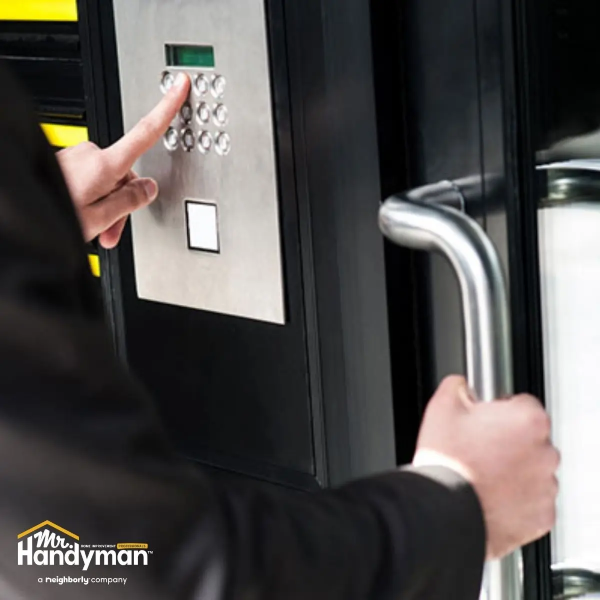
A fitness facility's doors are among the most interacted-with physical components in the building, contacted by every member on every visit, operated under the full range of conditions that Middle Tennessee's climate and commercial fitness use produces, and evaluated unconsciously by every person who passes through them against a standard that functional doors meet invisibly and non-functional doors fail conspicuously. A door that swings freely, latches securely, and seals properly communicates professional facility management in the same way that clean floors and functioning equipment do. A door that binds in its frame, that requires excessive force to operate, or that fails to latch without deliberate attention communicates the deferred maintenance that members and prospective members translate into assessments of the facility's overall management quality.
The functional requirements that doors and locks in a commercial fitness facility must meet extend considerably beyond simply opening and closing. Security systems that control access to the facility and to specific zones within it determine whether members feel safe and whether the facility's liability exposure from unauthorized access is managed appropriately. ADA compliance requirements that govern door hardware, opening force, and clearance dimensions determine whether the facility is accessible to members with disabilities and whether it meets the regulatory standards that federal accessibility law establishes for commercial facilities open to the public. Emergency egress requirements that determine how quickly and reliably occupants can exit the facility during an emergency determine whether the facility meets the life safety standards that Tennessee's commercial building code requires.
Nashville, Belle Meade, and Clarksville fitness facilities operate in a regulatory and competitive environment where each of these functional requirements is independently consequential. A facility that manages all three correctly creates the secure, accessible, and safe physical environment that member trust and regulatory compliance both require. A facility with deficiencies in any of these categories is carrying liability exposure, compliance risk, or member experience failures that the remaining functional areas cannot offset.
How Middle Tennessee's Climate Affects Door and Lock Performance
The climate conditions that Middle Tennessee delivers to commercial fitness facility doors and locks accelerate the deterioration and misalignment that less demanding environments produce more slowly, and maintenance approaches that do not account for regional conditions allow failure modes to develop that properly calibrated maintenance prevents.
Humidity and thermal cycling produce wood door expansion and contraction that is more aggressive in Middle Tennessee than in drier climates, creating the binding and latching failures that members experience as doors requiring excessive force to operate. A wood door that was properly fitted in its frame during a spring installation has been through Middle Tennessee's full humidity cycle by fall, and the expansion that summer humidity produces in an improperly sealed or maintained wood door can change its fit in the frame enough to produce the binding that damages door hardware, strains closer mechanisms, and requires member force that ADA standards specifically prohibit. In older Nashville and Belle Meade commercial buildings where original wood door frames reflect decades of seasonal movement and multiple paint layers, this seasonal binding pattern is a maintenance reality rather than an exceptional condition.
Corrosion on door hardware in fitness facility environments develops through the combined effect of Middle Tennessee's ambient humidity and the accelerated moisture environment that member perspiration, post-workout traffic, and locker room-adjacent humidity create at door hardware surfaces. Lock cylinders, door closers, panic hardware, and hinge hardware all develop corrosion at their moving components and fastener connections in high-humidity commercial fitness environments at rates that require maintenance frequency above what standard commercial building maintenance schedules specify. A door closer whose hydraulic fluid has been contaminated by moisture infiltration through a degraded seal produces closing force that varies from its adjustment rather than maintaining the consistent controlled closing that ADA compliance and emergency egress safety both require.
Foundation and building movement in Middle Tennessee's expansive clay soils produces frame misalignment in building-mounted door frames that seasonal soil moisture variation drives through the same mechanism that affects foundation walls and concrete flatwork. A door frame that is out of square because the wall assembly it is mounted in has moved through seasonal soil expansion and contraction produces door operation problems that hardware adjustment and door surface planing address at the surface level without resolving the underlying frame condition that continues driving misalignment with each seasonal cycle.
Security Systems: What Functional Doors and Locks Actually Protect
The security function that doors and locks in a Nashville, Belle Meade, or Clarksville fitness facility provide is not limited to preventing unauthorized entry to the facility. It extends to the zone-specific access control that protects member personal property in locker rooms, staff areas containing sensitive information or equipment, and mechanical spaces whose unauthorized access creates both safety and liability concerns.
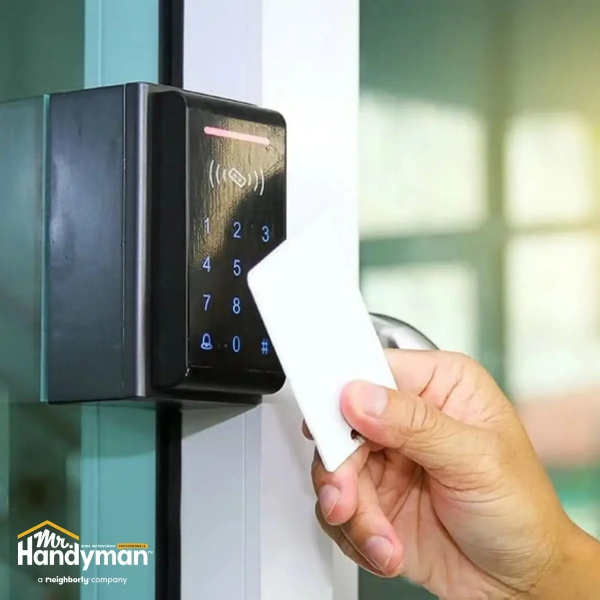
Main entry access control in commercial fitness facilities has evolved beyond simple keyed locks to electronic access systems that provide member entry logging, time-based access restrictions, and remote management capability that mechanical lock systems cannot match. An electronic access system whose credential readers, door strikes, and control hardware have not been maintained correctly produces the access failures that members experience as entry barriers during legitimate facility visits and the access gaps that unauthorized entry exploits through malfunctioning hardware that appears to be functioning. In Nashville fitness facilities where membership volume makes individual staff member recognition of legitimate members impractical, the electronic access system is the primary security layer whose reliable function determines whether the facility's member access management is actually performing its intended function.
Locker room security in fitness facilities across Middle Tennessee carries a specific member trust dimension that other facility security zones do not. A member who stores personal property in a locker room is extending trust to the facility that the space and the access control governing entry to it will protect that property through the duration of their workout. Locker room door hardware that has developed function failures, that allows doors to remain unlatched through closer malfunction, or that has been bypassed through informal maintenance workarounds has compromised the security layer that member property trust depends on. In Belle Meade fitness facilities where members' personal property carried into the facility reflects the overall economic profile of the membership, locker room security failures create liability exposure whose consequence is proportional to the value of the property the failed security allowed access to.
Staff and mechanical area access control in fitness facilities protects both the operational integrity of the facility and the safety of members who might inadvertently access areas whose hazards they are not prepared to manage. A mechanical room door whose lock has failed and that stands accessible to any member who tries the handle contains HVAC equipment, electrical distribution components, and chemical storage that presents genuine safety hazards to a member without the knowledge to navigate those hazards safely. A staff office with a non-functioning door lock exposes member personal information, payment records, and operational documentation to the unauthorized access that a failed lock permits.
ADA Compliance: The Regulatory Standard That Functional Doors Must Meet
The Americans with Disabilities Act accessibility standards that apply to commercial fitness facilities open to the public establish specific, measurable requirements for door hardware, operating force, opening width, and approach clearances that are not aspirational standards but legal requirements whose violation creates federal civil rights liability independent of any specific member complaint or injury.
Door operating force standards under ADA require that interior doors other than fire doors require no more than five pounds of force to open. This standard exists because higher opening forces exclude individuals with limited upper body strength, manual wheelchair users, and individuals with conditions affecting grip strength from independent facility access in ways that constitute discrimination under federal accessibility law. A fitness facility door whose closer mechanism has been adjusted to a closing force that requires more than five pounds of opening force, or whose binding from seasonal humidity expansion produces de facto operating force above that threshold, is out of ADA compliance regardless of whether the noncompliance was intentional or the result of deferred maintenance.
Door hardware specifications under ADA require operable parts that can be operated with one hand without tight grasping, pinching, or twisting of the wrist. Round knob hardware that requires wrist rotation to operate does not meet this standard. Lever hardware, push plates, and pull hardware with appropriate grip dimensions that can be operated with a closed fist meet the standard. In older Nashville and Belle Meade commercial buildings whose original door hardware predates ADA requirements or whose hardware has been replaced without attention to accessibility compliance, round knob hardware on member-accessible doors creates a compliance deficiency that hardware replacement addresses at a cost that is modest relative to the civil rights liability that ongoing noncompliance creates.
Door width and clearance requirements under ADA establish a minimum thirty-two-inch clear opening width at interior doors, with specific maneuvering clearance dimensions on each side of the door that depend on the door's swing direction and approach configuration. A door whose clear opening width has been reduced by frame modifications, hardware additions, or door surface work that was not evaluated against the thirty-two-inch minimum may be excluding wheelchair users from areas of the facility that its original construction intended to be accessible. Clearance violations at door approaches that prevent a wheelchair user from positioning correctly to operate the door hardware and open the door represent accessibility barriers that are as significant as the door width violations that more obviously visible conditions present.
Emergency Egress: The Life Safety Function That Cannot Be Compromised
Emergency egress requirements in Tennessee commercial fitness facilities establish the standards for emergency exit door hardware, panic hardware function, and emergency exit path clearance that determine whether occupants can exit the facility rapidly and reliably during a fire or other emergency that requires immediate evacuation.
Panic hardware function on emergency exit doors in fitness facilities must allow unobstructed exit through a single motion, a push on the crossbar, without requiring any learned operation sequence, special knowledge, or hardware manipulation. A panic hardware device that has been rendered non-functional through deferred maintenance, that has been locked through a chain or padlock added by facility management, or that requires more force than a single push to activate is not meeting the emergency egress standard that Tennessee fire code requires regardless of the operational rationale that led to its current condition.
Emergency exit door condition in fitness facilities includes the door assembly's ability to swing freely through its full opening range when activated under emergency conditions. A door that binds in its frame under normal conditions binds under emergency conditions as well, and the member who encounters that binding while attempting to exit under emergency stress is experiencing the life safety consequence of deferred door maintenance at exactly the moment when that maintenance failure matters most. In Nashville and Clarksville fitness facilities where emergency exit doors are in zones that experience the humidity and temperature conditions that produce seasonal frame movement, maintaining free door operation through seasonal adjustment is a life safety maintenance requirement rather than an operational convenience.
Maintaining Door Hardware Through Middle Tennessee's Seasonal Demands
The maintenance program that keeps fitness facility doors and locks functioning correctly through Middle Tennessee's seasonal cycle addresses both the hardware components that wear through commercial use and the door and frame conditions that climate-driven movement produces between hardware service intervals.
Door closer adjustment and service is the maintenance task that most directly determines whether doors throughout a Nashville, Belle Meade, or Clarksville fitness facility meet the ADA operating force standard and the controlled closing performance that member safety and security both require. A door closer that has not been serviced since installation drifts from its original adjustment through the hydraulic fluid viscosity changes that temperature cycling produces in the fluid that controls closing speed and latching force. In Middle Tennessee's climate, where the transition between summer heat and air-conditioned interior temperatures produces consistent thermal stress on closer hydraulic systems, annual closer adjustment verification that confirms closing force remains within ADA limits and that latching force is sufficient for secure closure without exceeding operating force standards maintains the performance baseline that installation established.
Hinge maintenance on commercial fitness facility doors addresses the component whose failure produces the frame binding and misalignment that member experience as doors requiring excessive force. Hinge pins that have corroded in their barrels through Middle Tennessee's humidity, hinge leaves that have pulled from their mortises through the repeated stress of heavy commercial door use, and hinge components that have worn to the point of allowing door sag that misaligns the latch with its strike all require maintenance attention that prevents the progressive misalignment that eventually produces door operation failures that frame adjustment and door surface work address at greater cost than hinge maintenance would have required.
Lock cylinder service in commercial fitness facility access control hardware requires periodic lubrication and inspection that the humidity and airborne particulate environment of a fitness facility makes more frequent than standard commercial building maintenance schedules specify. A lock cylinder that has accumulated debris in its plug, whose pin stacks have corroded to the point of sluggish operation, or whose cam or tailpiece connection has developed wear that produces intermittent lock engagement is communicating developing failure through the increased key force it requires before it produces the complete failure that leaves a door unlocked or a member unable to enter or exit. Graphite lubrication of lock cylinders on a semiannual schedule in high-use fitness facility applications maintains the operation quality that member security experience depends on.
Strike plate alignment verification after seasonal door movement confirms that the latch engages the strike correctly after the frame movement that Middle Tennessee's humidity cycling has produced since the last alignment check. A latch that must compress to enter a misaligned strike before snapping into engagement, rather than entering the strike cleanly and latching positively, is placing stress on the latch mechanism with every closure event. Over time that stress produces the latch damage and door hardware fatigue that misalignment is responsible for, and the strike adjustment that corrects the misalignment costs a fraction of the hardware replacement that the fatigue it produces eventually requires.
Electronic Access Control Maintenance in Fitness Facilities
Electronic access control systems in Nashville, Belle Meade, and Clarksville fitness facilities require maintenance attention that is distinct from mechanical door hardware service and that reflects the specific failure modes that electronic components develop in commercial fitness environments.
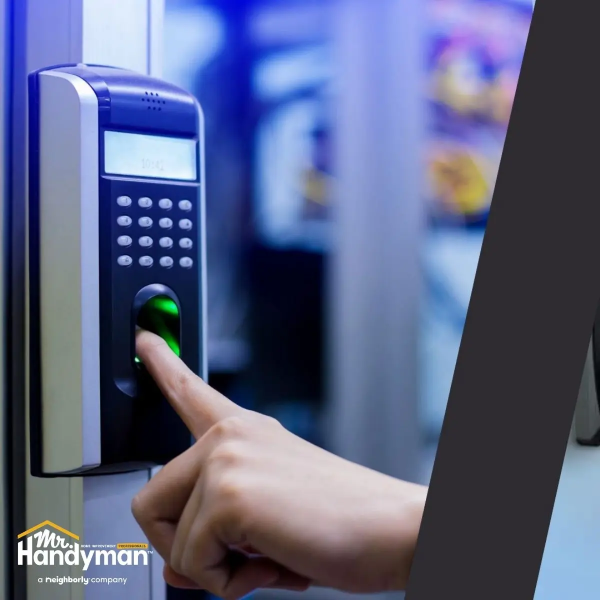
Credential reader maintenance at facility entry points and zone access control locations requires periodic cleaning and inspection that the dust, humidity, and airborne particulate environment of a commercial fitness facility introduces at rates that controlled-environment electronic system maintenance schedules do not account for. A card reader or fob reader whose lens has accumulated film from the airborne environment of a fitness facility entrance produces read errors at a rate that increases progressively with lens contamination, generating the member frustration of repeated credential presentation failures that a clean reader would not produce. Monthly lens cleaning combined with quarterly inspection of weatherproofing integrity at exterior-mounted readers maintains the read reliability that member access experience depends on.
Door strike and magnetic lock performance verification confirms that the electrical components that control physical door release are activating and releasing correctly within the timing parameters that access system programming specifies. A door strike that releases correctly but re-engages before the door has fully opened, a magnetic lock that requires more than the specified hold force to disengage when valid credentials are presented, and an electric strike that has developed intermittent engagement through corrosion at its electrical connection all produce member access failures that the credential system's correct function cannot compensate for. Quarterly functional testing of each electrically controlled door release device confirms that the physical access control is performing in alignment with the credential management system that authorizes it.
Backup power system testing for access control systems in fitness facilities confirms that the battery backup that maintains door release function during power outages is performing at the capacity its design specifies. An access control system whose backup battery has depleted through age or self-discharge fails in a power outage at exactly the moment when its function is most critical, potentially trapping members in access-controlled areas or preventing emergency responders from entering zones whose normal access requires electronic credential verification. Annual backup battery capacity testing and replacement at the manufacturer-specified service interval maintains the emergency function that backup power exists to provide.
ADA Compliance Audit: What a Systematic Assessment Covers
A systematic ADA compliance assessment of fitness facility door and access systems in Middle Tennessee goes beyond confirming that lever hardware is installed and that closers are adjusted to five pounds or below. It evaluates the complete accessible route experience that a wheelchair user or member with limited mobility encounters from the parking area through every member-accessible space in the facility.
Accessible parking to entry path evaluation confirms that the route from designated accessible parking spaces to the facility's accessible entrance maintains the continuous accessible surface, cross-slope limits, and curb cut specifications that ADA requires for the outdoor approach. A fitness facility that has correct interior door hardware but whose accessible parking spaces are connected to the entry by a route with cross-slopes that exceed ADA limits, or whose entry ramp has a running slope that exceeds the one-in-twelve ratio the standard requires, has an accessible route failure that interior compliance does not offset.
Maneuvering clearance assessment at each door confirms that the floor space adjacent to the door on both the pull and push sides meets the dimensional requirements for the approach direction and door swing configuration at that location. In older Nashville and Belle Meade fitness facilities where interior layouts were established before ADA requirements shaped design decisions, maneuvering clearance deficiencies at doors whose adjacent equipment placement, wall projections, or architectural features reduce the clear floor space below ADA minimums are common findings that layout modification or equipment repositioning addresses.
Restroom and locker room door assessment in fitness facilities deserves specific attention in an ADA compliance audit because these are the spaces whose accessibility determines whether members with disabilities can use the facility's full amenity offering rather than only its training floor. A fitness facility whose weight room entry meets ADA standards but whose locker room door requires round knob operation, whose toilet room entry lacks adequate maneuvering clearance, or whose shower stall entry does not accommodate wheelchair access has provided accessible training space while excluding members with disabilities from the personal care amenities that complete facility use requires.
Preventive Maintenance Schedule for Fitness Facility Doors and Locks
Building a preventive maintenance schedule that addresses the full range of door and lock maintenance needs in a Middle Tennessee fitness facility requires a structured approach that sequences seasonal adjustment work, hardware service, electronic system maintenance, and compliance verification at intervals that reflect the actual deterioration rates each component experiences in the facility's specific use environment.
Monthly tasks should include visual inspection of all member-accessible doors for binding, latching difficulty, and hardware condition, testing of emergency exit panic hardware function, cleaning of electronic credential reader lenses, and confirmation that all door closers are returning doors to fully latched position without manual assistance. These are the conditions that develop rapidly enough in commercial fitness use that monthly inspection frequency is appropriate for catching them before member experience is affected.
Quarterly tasks should include door closer operating force measurement against ADA standards, strike plate alignment verification on doors showing any latching resistance, electronic door strike and magnetic lock functional testing, hinge condition inspection for corrosion and play, and lock cylinder lubrication on high-use entry and security hardware. These are the conditions that develop over weeks to months and that quarterly attention catches before they produce the member-facing failures that monthly visual inspection alone cannot consistently prevent.
Annual tasks should include comprehensive door and frame condition assessment that evaluates seasonal movement effects on fit and operation, access control backup battery capacity testing and replacement if indicated, panic hardware disassembly inspection and lubrication, door seal and weatherstripping replacement assessment, and ADA compliance verification of operating force, hardware type, and maneuvering clearances throughout the facility. These are the conditions and compliance items that require the depth of annual assessment rather than the routine monitoring that monthly and quarterly tasks provide.
Frequently Asked Questions
How do I know if my fitness facility's doors meet ADA operating force requirements?
An inexpensive door pressure gauge, available from building supply sources, measures the force required to open a door in pounds. Testing each interior door by applying the gauge at the latch side of the door at a height between thirty-four and forty-eight inches from the floor produces a measurement that can be compared directly to the five-pound maximum that ADA establishes for interior doors other than fire doors. Any door measuring above five pounds requires closer adjustment or binding correction before it meets the standard.
What is the liability exposure for ADA door compliance violations in a commercial fitness facility?
Federal ADA civil rights enforcement allows individuals to file complaints with the Department of Justice or pursue private litigation for accessibility barriers that exclude them from equal access to commercial facilities. Remediation costs ordered in ADA enforcement actions typically include both the physical barrier removal and the complainant's legal fees, producing total costs that substantially exceed the compliance correction investment that a proactive audit and remediation program would have required. Tennessee state accessibility enforcement adds a parallel compliance pathway that federal enforcement alone does not capture.
How often should panic hardware on emergency exit doors be tested in a fitness facility?
Monthly functional testing that confirms panic hardware activates correctly with a single push, that the door opens freely through its full range when the hardware is activated, and that the hardware resets correctly after activation meets the minimum testing standard for emergency egress hardware in commercial occupancies. Annual disassembly inspection and lubrication by a qualified door hardware technician confirms the internal mechanism condition that functional testing cannot evaluate.
Should fitness facilities use electronic or mechanical locks for locker room security?
Both electronic and mechanical locker room security approaches are appropriate for different fitness facility contexts. Electronic locker systems that issue member-specific temporary credentials for each visit provide the highest security standard and the most complete access logging but require the infrastructure investment and maintenance program that electronic systems involve. Mechanical combination locks and keyed padlocks provide adequate security at lower initial cost but require the member management protocols that prevent unauthorized code sharing and lost key accumulation over time.
How does door condition affect fitness facility insurance premiums in Tennessee?
Commercial fitness facility property and liability insurance underwriting evaluates physical condition factors that affect loss likelihood, and documented ADA compliance and life safety system maintenance support favorable underwriting positions relative to facilities with known compliance deficiencies. A facility that can demonstrate documented door and lock maintenance programs, confirmed ADA compliance through systematic audit, and current emergency egress hardware testing presents a risk profile that supports competitive insurance placement in Tennessee's commercial fitness facility market.
What should I do if a member reports difficulty operating a door in my facility?
Treat every member report of door operation difficulty as a maintenance trigger that requires same-day inspection and same-day correction if the difficulty reflects an ADA operating force violation or a security hardware failure. Document the report, the inspection finding, and the corrective action taken. A member report that is documented and responded to promptly demonstrates the management attention that due diligence requires. A member report that is received and not acted upon creates a documented known-condition liability that is more difficult to manage than the door condition that generated the report.
Doors That Work Are the Foundation of a Facility That Functions
Every member who enters, moves through, and exits a Nashville, Belle Meade, or Clarksville fitness facility depends on doors and locks that function correctly to access the facility securely, navigate its zones safely, use its amenities without physical barriers, and exit quickly when circumstances require. The maintenance program that keeps those doors and locks performing correctly through Middle Tennessee's demanding climate and commercial fitness use conditions is not an overhead cost that competes with member experience investment. It is the infrastructure investment that member experience, regulatory compliance, and facility security all depend on.
The team at Mr. Handyman of West Nashville, Belle Meade, and Clarksville brings the commercial door and hardware maintenance experience to help fitness facility operators keep every door in their facility functioning at the standard that member safety, accessibility compliance, and security management require.
Website: https://www.mrhandyman.com/nashville-west-south-central/
Serving businesses throughout Nashville, Belle Meade, and Clarksville with dependable commercial maintenance and the expertise your facility deserves.
