Gym Mirrors Are Not Decoration. They Are Infrastructure.
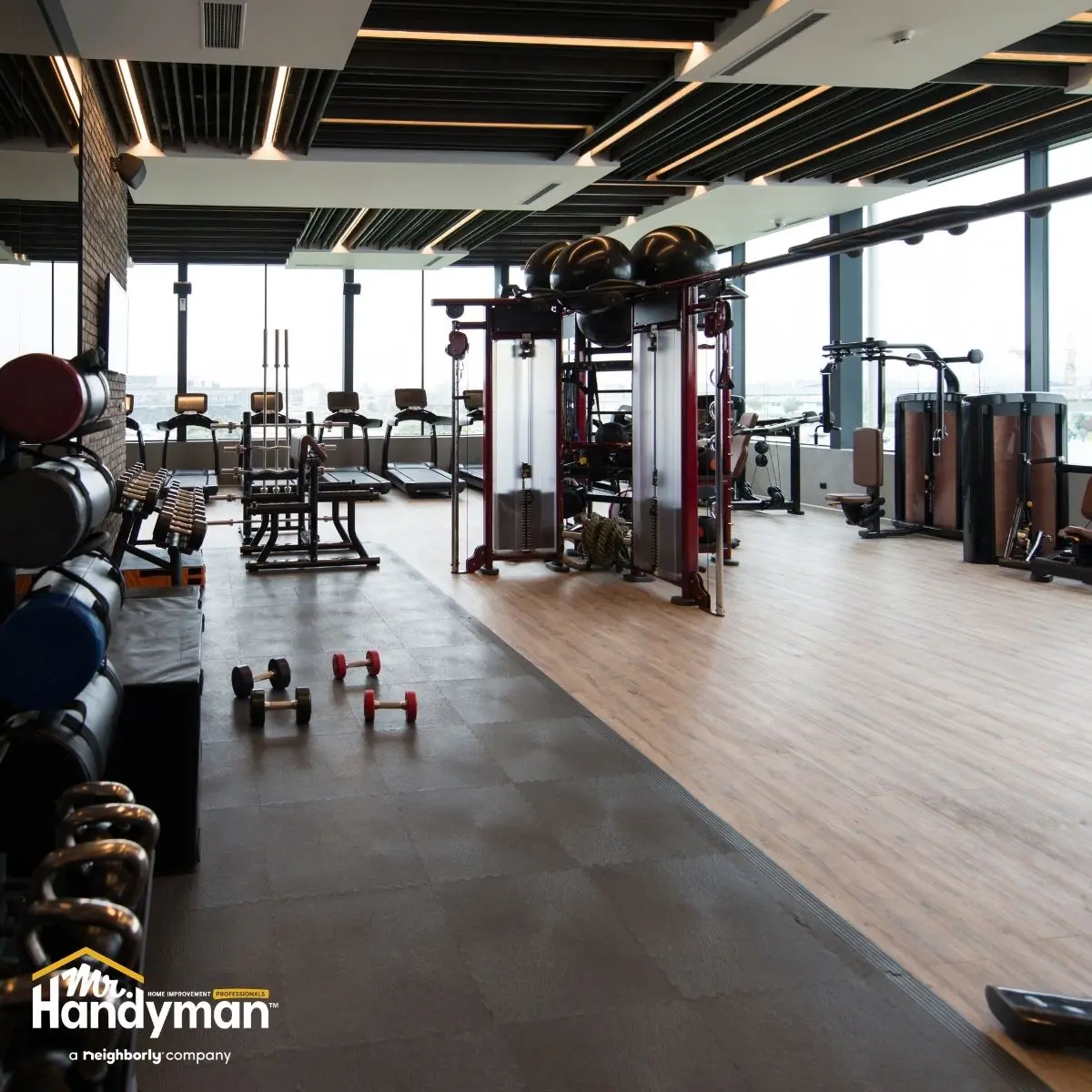
Walk into any fitness facility in Middle Tennessee and the mirrors covering the walls of the weight room, group fitness studio, and stretching area feel like a standard feature of the environment, so standard that their presence is assumed rather than evaluated. Members use them to monitor form during lifts, instructors use them to observe class participants during group fitness sessions, and the visual expansion they provide makes relatively modest studio and training spaces feel significantly larger than their actual dimensions. Their functional role in the facility is genuine and daily, and it is precisely that daily functional role, combined with the physical environment of a commercial fitness facility and the specific conditions that Middle Tennessee's climate creates, that makes proper gym mirror installation a matter of facility safety rather than simply interior design.
A gym mirror that has been improperly mounted is not a decoration that might eventually look crooked. It is a large, heavy glass assembly positioned at head and body height in a space where members are actively moving, carrying load, and in some cases losing control of equipment in ways that no facility design anticipates. The consequences of a gym mirror that fails from its mounting are not abstract. They are immediate, physical, and severe in ways that the liability exposure they create reflects accurately. In Nashville, Belle Meade, and Clarksville's competitive fitness market, where member trust is the foundation of retention and where facility safety reputation is increasingly visible through online review platforms, the standard of mirror installation that a facility maintains is not a peripheral maintenance consideration. It is a direct expression of how seriously the facility takes its responsibility to the members it serves.
Understanding why proper gym mirror installation matters, what specific failure mechanisms improperly installed mirrors develop in Middle Tennessee's conditions, and what the correct installation approach involves produces a more informed and more protective approach to this facility infrastructure than treating mirror installation as a commodity task that any available contractor can execute equivalently.
The Physical Reality of Commercial Gym Mirrors
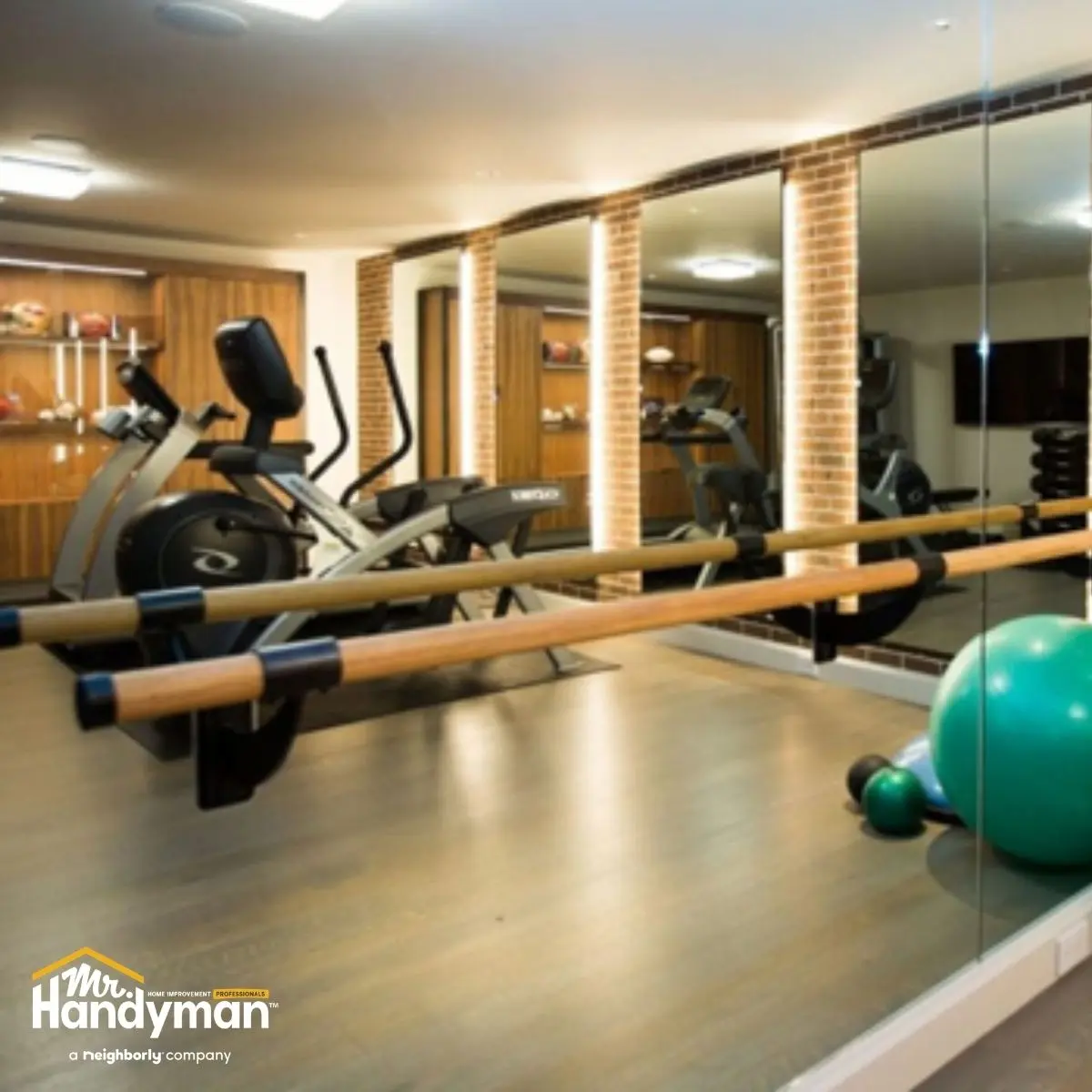
Commercial gym mirrors are not the mirrors that hang in residential bathrooms or bedroom closets. The scale, weight, and installation requirements that commercial fitness facility mirrors involve differ from residential mirror applications in ways that the contractor experience required to install them correctly reflects.
Mirror dimensions and weight in commercial fitness applications typically involve glass panels that run floor to ceiling or close to it, spanning widths that require multiple panels to cover the wall sections they are installed across. A standard commercial gym mirror panel measuring four feet wide by eight feet tall and a quarter inch thick weighs approximately eighty pounds. A single wall in a Nashville or Clarksville weight training room covered with mirror panels across a twenty-foot span involves five panels totaling approximately four hundred pounds of glass mounted at head and body height in a space with continuous member activity directly adjacent to those mounted panels. The load demands that installation hardware must manage and the consequences of hardware failure under those loads are fundamentally different from residential mirror installation applications.
Glass type specifications for commercial fitness facility mirrors differ from residential mirror glass in ways that affect both safety and performance. Tempered safety glass, which fractures into small granular pieces rather than large sharp shards when broken, is the appropriate specification for gym mirrors in member-facing positions. Annealed glass, which is standard residential mirror glass, fractures into large sharp-edged pieces that produce severe laceration injuries when broken. A commercial fitness facility that installs standard residential mirror glass in member-facing positions because it costs less than tempered glass is accepting a risk profile that the cost savings do not justify and that the liability exposure of a glass failure event reflects without ambiguity.
Mirror thickness affects both the optical quality of the reflection that members depend on for form monitoring and the structural rigidity of the panel under the load conditions and vibration that commercial fitness environments produce. Quarter-inch glass is the minimum thickness appropriate for commercial gym mirror applications. Thinner mirror glass produces the distorted reflections that are immediately apparent to members monitoring their form and that undermine the functional purpose the mirror serves. It also flexes under vibration from impact activity adjacent to the mirror surface in ways that stress mounting hardware connections and adhesive bonds at a rate that thicker glass does not experience.
Why Middle Tennessee's Conditions Create Specific Installation Challenges
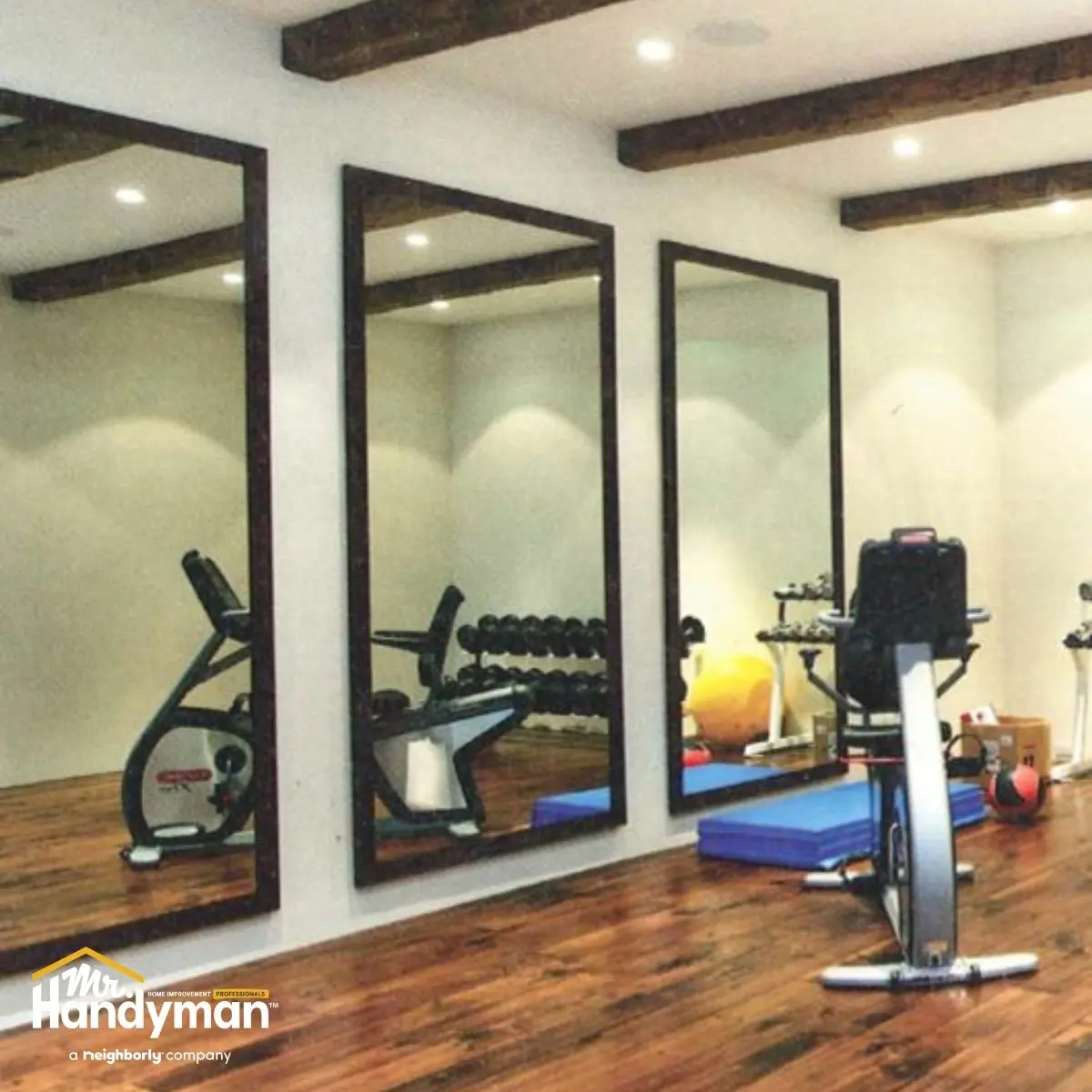
The installation conditions that Middle Tennessee's climate creates for commercial gym mirrors are more demanding than those in drier or more stable climates, and mirror installations that do not account for regional conditions develop failure modes that properly specified installations in this climate avoid.
Humidity and temperature cycling in Middle Tennessee fitness facilities produces thermal and moisture-driven movement in the wall assemblies that mirror mounting hardware anchors into and in the mirror panels themselves. A gym mirror installation in Nashville or Clarksville that is secure in the moderate temperatures of spring is subject to the expansion and contraction that the transition between summer heat and air-conditioned interior temperatures produces in both the glass panels and the wall surface behind them. Mounting hardware that was installed without allowance for that movement develops stress concentrations at anchor points that accumulate with each thermal cycle. Adhesive mirror mounting systems that were applied without accounting for the humidity conditions that Middle Tennessee's climate introduces to the adhesive's cure and long-term performance develop adhesion characteristics that differ from what controlled-condition application produces.
Wall substrate conditions in fitness facilities across Nashville, Belle Meade, and Clarksville vary in ways that directly determine what mirror mounting approach is appropriate and what hardware specifications are required. A mirror mounted into metal stud framing with drywall facing requires anchor hardware that spans the drywall and engages the stud directly rather than relying on drywall fastener capacity for the full panel weight. A mirror mounted into a masonry wall in an older Nashville commercial building requires masonry anchors rated for the load the panel places on each mounting point. A mirror mounted into a wall assembly with existing moisture damage behind the drywall surface has a compromised substrate that standard mounting hardware cannot perform in reliably regardless of specification.
Vibration from training activity adjacent to mirror walls in commercial fitness facilities introduces dynamic loading to mirror mounting systems that static weight calculations alone do not capture. A power rack positioned near a mirrored wall creates floor and wall vibration during heavy barbell use that cycles through the mirror mounting hardware with every training set. A group fitness class with jumping and impact activity in a studio with floor-to-ceiling mirrors on three walls generates vibration that adhesive mirror mounting systems experience continuously through every class session. Mounting systems specified only for the static weight of the mirror panels and not for the dynamic loading that adjacent training activity produces develop fatigue failures at anchor points and adhesive bond degradation that static load calculations do not predict.
The Specific Failure Modes That Improperly Installed Gym Mirrors Develop
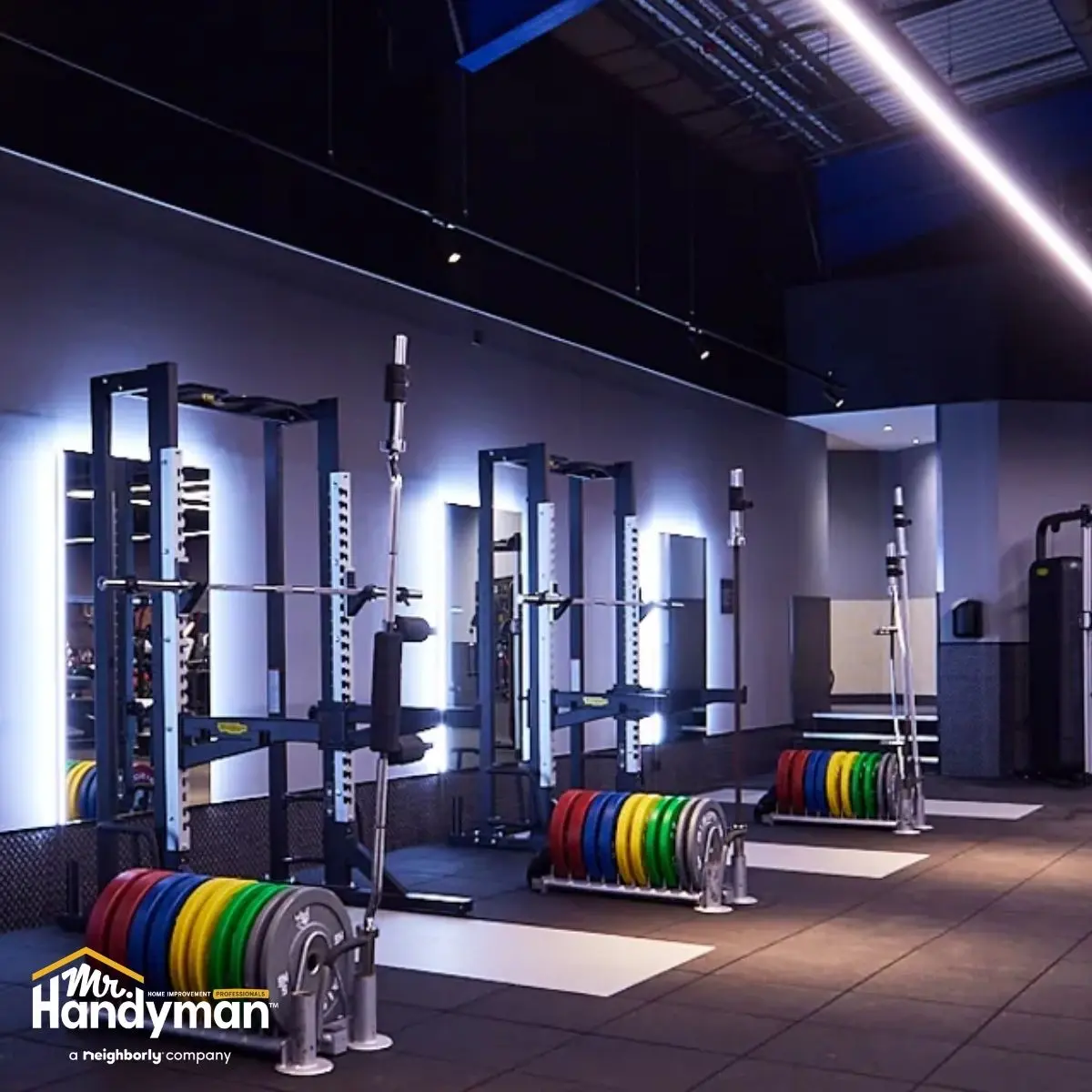
Understanding the specific ways that improperly installed gym mirrors fail clarifies why installation quality matters more than whether a mirror appears securely mounted immediately after installation. The failure modes that develop in inadequately installed gym mirrors are progressive conditions that are invisible at the surface until they produce a failure event under the load and environmental conditions that reveal inadequate installation quality.
Anchor point failure in mirrors mounted with hardware that was not correctly specified for the wall substrate, the panel weight, or the dynamic loading of the fitness environment produces a specific failure sequence. The anchor that is closest to its capacity limit loosens first under the combination of static panel weight and vibration loading. As that anchor loosens, the load it was carrying redistributes to adjacent anchors that are now carrying load beyond their design capacity. The failure propagates across the mounting system in a sequence that accelerates as each anchor reaches its limit, and the final failure when the last anchor gives way releases the full panel weight instantly rather than producing a slow detachment that allows any response before the panel falls.
Adhesive bond failure in mirrors installed with adhesive-only mounting systems that were applied without mechanical backup anchors develops through the moisture and temperature cycling that Middle Tennessee's climate delivers to wall surfaces behind mirror panels. Mirror mastic adhesive that was applied to a wall surface with elevated moisture content at installation cures with reduced bond strength. Adhesive applied to a smooth, unsealed drywall surface develops bond characteristics that differ from adhesive applied to a properly primed surface. And adhesive that has been cycling through the thermal expansion and contraction that Middle Tennessee's seasonal temperature range produces develops cohesive fatigue that reduces its effective bond strength below what initial installation testing would have confirmed.
Glass failure from improper support occurs when mirror panels are installed without adequate bottom support that distributes the panel weight through the glass uniformly from its lowest edge. A mirror panel that rests on mounting clips positioned too far apart, or that was installed without bottom support entirely and relies on adhesive and top clips to carry the full panel weight, develops stress concentrations in the glass at the support points that acoustic and vibration exposure from adjacent training activity cycles through repeatedly. Those stress concentrations produce the spontaneous fracture events that gym mirrors with inadequate bottom support occasionally experience without any direct impact, which are among the most alarming failure modes from a member safety perspective because they occur without warning and without an obvious cause that members can avoid.
What Correct Gym Mirror Installation Actually Involves
The gap between a gym mirror installation that holds reliably through years of commercial fitness use in Middle Tennessee and one that develops the progressive failure modes that Part A described is almost entirely a function of whether the installation was executed with the specification, preparation, and hardware selection that the application actually requires. That gap is not primarily a function of how much the installation cost. It is a function of whether the contractor who performed it understood the load requirements, substrate conditions, and environmental factors that commercial fitness facility mirror installation involves.
Substrate assessment before installation is the step that most frequently determines whether a gym mirror installation performs correctly over its service life or develops the failure conditions that improper substrate engagement produces. Wall framing layout, stud spacing, and framing member condition behind the drywall surface determine which anchor hardware approach is appropriate and what load capacity the mounting system can reliably deliver. In older Nashville and Belle Meade commercial buildings where wall framing may not be at standard stud spacing, where metal studs may have been substituted for wood framing in renovation work, or where previous wall modifications have created hollow sections behind drywall that appear sound from the surface, substrate assessment that maps the actual framing layout before hardware placement prevents the anchor location decisions that rely on assumed rather than confirmed substrate conditions.
Moisture content of the wall substrate in Middle Tennessee fitness facilities should be assessed before adhesive application in any mirror installation that includes adhesive bonding as part of its mounting system. A substrate moisture reading that exceeds the adhesive manufacturer's recommended maximum at the time of application produces bond strength below what the system's load calculations assumed, and that reduced bond strength is the condition the mirror installation will perform at for its entire service life rather than the condition the installation would have achieved with a properly dried substrate.
Hardware selection and specification for gym mirror installations in commercial fitness facilities should be driven by load calculations that account for the full panel weight distributed across the number of mounting points, the dynamic loading factor that adjacent training activity introduces, and a safety factor that reflects the consequences of hardware failure in an occupied fitness facility. J-bar and Z-clip mounting systems that provide positive mechanical engagement of the mirror panel from below, combined with mechanical top and side clips that prevent panel movement without relying on adhesive bond for load transfer, represent the installation approach whose failure mode characteristics are most appropriate for a life safety application in an occupied commercial space.
Adhesive used as a supplemental bonding component rather than as a primary load-bearing element improves the vibration resistance and surface contact of mechanically mounted panels without creating the sole failure pathway that adhesive-only systems present. Mirror mastic applied in continuous vertical beads at appropriate spacing behind mechanically mounted panels damps the vibration that adjacent training activity delivers to the panel and distributes the panel weight evenly across the wall surface rather than concentrating it at discrete hardware contact points.
Bottom support installation is the mounting detail whose absence most directly produces the stress concentration failure mode that spontaneous glass fracture represents. A continuous bottom support channel, J-bar, or individual support clips positioned at the panel's lowest edge at spacing that supports the panel weight without creating point loading concentrations distributes the panel weight through the glass from its lowest edge in the way the panel's structural design assumes. Mirror panels installed without bottom support that rely on adhesive and top clips to carry the full panel weight are loaded in a manner the glass was not designed to accommodate, and the failure timeline that loading condition produces is a function of the vibration environment the panel is exposed to rather than a question of whether failure will occur.
Inspection and Maintenance After Installation
Correct installation establishes the baseline that gym mirror safety depends on, but installation quality alone does not eliminate the need for ongoing inspection that confirms the mounting system is performing correctly as the facility ages and as the environmental and use conditions that affect mounting system integrity accumulate their effects.
Monthly visual inspection of all gym mirror installations in Nashville, Belle Meade, and Clarksville fitness facilities should be a documented component of the facility's maintenance program rather than an informal observation during routine cleaning. The visual indicators that a mounting system is developing stress include gap formation between adjacent panels that has widened since installation, visible separation between the panel edge and the wall surface at mounting clip locations, surface cracking in the paint or finish at anchor penetration points that indicates movement around the anchor, and any audible sound from the panel during vibration events that was not present immediately after installation. Each of these indicators represents a developing condition that warrants professional evaluation before the next use period rather than continued monitoring.
Hardware torque verification at mechanical anchor points should be performed annually in Middle Tennessee fitness facilities because the thermal cycling that the region's climate delivers to wall assemblies through seasonal temperature variation loosens fastener connections over time through the differential expansion and contraction that different materials experience through the same temperature range. A mounting screw that was correctly torqued at installation may be at sixty percent of that torque after a full Middle Tennessee seasonal cycle in a space that transitions between summer outdoor temperatures and air-conditioned interior conditions through the ambient air that members introduce continuously through peak operating hours.
Adhesive bond integrity assessment at the perimeter of mirror panels where adhesive bond is visible or where bond separation can be detected by gentle pressure testing should accompany visual inspection on a quarterly basis in high-humidity fitness spaces. A bond line that produces a hollow sound when the panel surface is tapped adjacent to it indicates adhesive separation behind the panel surface that has not yet produced visible gap formation. That separation represents a reduction in the bonded area that is carrying the panel load, and its progression should be evaluated against the load capacity of the remaining mechanical mounting components before the panel is returned to service without repair.
The Liability Framework That Makes Professional Installation Non-Negotiable
The liability environment that gym mirror installations exist within in Tennessee's commercial fitness market is specific enough that it deserves direct treatment beyond the general liability principles that apply to fitness facility safety. A mirror failure event in a Nashville, Belle Meade, or Clarksville fitness facility that produces member injury creates a liability situation whose resolution depends heavily on what the facility can document about installation quality and ongoing maintenance.
Installation documentation that records the contractor's qualifications, the hardware specifications used, the substrate assessment performed before installation, and the load calculations that supported hardware selection creates the foundation of a defensible position in any subsequent liability proceeding related to mirror condition. A facility that cannot produce documentation of who installed its mirrors, what hardware was used, and what assessment was performed before installation is in a significantly weaker position than one whose documentation demonstrates that professional judgment was applied at every stage of the installation decision.
Inspection records that document the dates, findings, and any responsive actions of monthly and quarterly mirror inspections create the due diligence record that demonstrates ongoing maintenance attention to an installation whose condition was professionally established. The pattern of documented inspection with consistent findings of sound condition is the evidence that a facility exercised reasonable care in maintaining an installation that subsequently failed through causes that routine inspection could not have detected. The absence of inspection records is the evidence that due diligence was not exercised regardless of how sound the installation actually was.
Contractor qualification verification before mirror installation work is authorized protects the facility from the liability that an unqualified installation creates regardless of how professional the installer appeared. Requesting documentation of the contractor's experience with commercial fitness facility mirror installation specifically, their insurance coverage for the work being performed, and their familiarity with the glass specifications and mounting hardware requirements that commercial applications involve produces either the qualification confirmation the facility needs or the warning signal that the contractor is not appropriate for the application before the installation is performed rather than after it fails.
Room by Room: Mirror Installation Priorities Across the Fitness Facility
Different zones of a Middle Tennessee fitness facility present different mirror installation requirements that reflect the specific use conditions and load environment each zone creates.
Weight training areas represent the highest-demand mirror installation environment in any fitness facility because they combine the heaviest adjacent equipment, the most significant floor and wall vibration from impact and loaded equipment use, and the member positions closest to mirror surfaces during active training. Mirror installations in weight training areas require the most conservative hardware specifications, the smallest anchor spacing, and the most frequent inspection intervals of any zone in the facility. The consequences of a mirror failure in an occupied weight room, where members are adjacent to mirror surfaces while managing loaded barbells and heavy dumbbells, represent the most severe injury scenario that gym mirror installation quality determines.
Group fitness studios present mirror installation conditions that differ from weight training areas in the nature of the dynamic loading rather than its intensity. Continuous rhythmic movement during high-attendance classes generates floor and wall vibration that cycles through mirror mounting systems at the class frequency rather than at the discrete interval of individual training sets. Adhesive fatigue from continuous low-amplitude vibration through high-class-volume periods is a different stress pattern than the high-amplitude discrete vibration of heavy barbell use, and mounting system selection for group fitness studio mirrors should account for that continuous cycling rather than defaulting to weight room specifications that are calibrated for a different vibration profile.
Stretching and recovery areas present the lowest dynamic loading of any mirrored zone in a fitness facility and accommodate mounting system specifications that reflect the lower stress environment, while still requiring the mechanical mounting backup and bottom support that life safety applications demand regardless of the zone's relative position in the facility's dynamic loading hierarchy.
Frequently Asked Questions
What is the minimum hardware specification for gym mirror installation in a commercial fitness facility?
Mechanical mounting systems with hardware rated for a minimum of four times the static panel weight at each anchor point, combined with continuous bottom support and supplemental adhesive bonding, represent the minimum specification appropriate for commercial fitness facility mirror installations. Applications in high-vibration zones like weight training areas and high-attendance group fitness studios should apply a higher safety factor that reflects the dynamic loading those environments introduce.
How long should a properly installed commercial gym mirror last?
A properly installed gym mirror with correct glass specification, appropriate hardware, and regular maintenance inspection should remain in service for fifteen to twenty years in a well-maintained Middle Tennessee fitness facility. The limiting factor is typically the wall substrate condition behind the installation rather than the glass or hardware themselves, which is why substrate assessment before installation and moisture management in the facility environment both extend service life beyond what they would achieve independently.
Should gym mirrors be installed by a general contractor or a specialist?
Commercial fitness facility mirror installation specifically benefits from a contractor with documented experience in this application category. The load calculations, glass specifications, substrate assessment requirements, and hardware selection decisions that commercial gym mirror installation involves go beyond general contractor competence in a way that residential mirror installation experience does not prepare a contractor for. Verifying specific commercial fitness facility mirror installation experience before contracting is appropriate regardless of the contractor's general capability.
Is adhesive-only mirror mounting ever appropriate in a fitness facility?
Adhesive-only mirror mounting is not appropriate in any member-facing position in a commercial fitness facility regardless of the zone's dynamic loading level. The failure mode of adhesive-only systems, which releases the full panel weight when the adhesive bond fails without the controlled detachment that mechanical backup systems provide, is not acceptable in an occupied commercial space where members are adjacent to large glass panels during active exercise.
How do I assess whether my existing gym mirror installations are safe?
A professional assessment that evaluates hardware type and condition, anchor spacing and engagement, bottom support presence and condition, adhesive bond integrity, and glass type confirmation provides the objective basis for determining whether existing installations meet the safety standard that commercial fitness facility mirror installations require. Facilities that cannot confirm their existing installations meet minimum specifications should treat that uncertainty as a prompt for professional assessment rather than as a reason to assume compliance.
What should I do if I discover a gym mirror that has shifted or shows signs of mounting failure?
Remove member access from the area immediately by positioning equipment or barriers between members and the affected mirror surface. Document the condition with photographs before any corrective action. Contact a qualified contractor for same-day assessment rather than scheduling a future visit. Do not attempt to resecure a shifting mirror panel without professional assessment of why the movement occurred, because reanchoring a panel whose mounting failure has a substrate or specification root cause produces a result that fails again through the same mechanism.
Mirrors That Members Can Trust Are the Only Mirrors Worth Installing
The gym mirrors in a Nashville, Belle Meade, or Clarksville fitness facility are infrastructure that members depend on for form feedback during every training session and that they stand adjacent to throughout their facility visit. The installation quality that determines whether those mirrors remain secure through years of commercial fitness use in Middle Tennessee's demanding climate is not a variable that facility operators should accept uncertainty about. It is a defined, achievable standard whose documentation protects members, manages liability, and reflects the seriousness with which the facility approaches its responsibility to the people it serves.
The team at Mr. Handyman of West Nashville, Belle Meade, and Clarksville brings the commercial installation experience to help fitness facility operators assess existing mirror installations, execute new installations to the specifications that commercial fitness environments require, and maintain the documentation that professional installation and ongoing inspection produces.
Website: https://www.mrhandyman.com/nashville-west-south-central/
Serving businesses throughout Nashville, Belle Meade, and Clarksville with dependable commercial maintenance and the expertise your facility deserves.