Safety Infrastructure Is the Foundation Every Other Facility Investment Depends On
A fitness facility in Middle Tennessee can invest in premium equipment, exceptional programming, professional staff, and well-maintained aesthetics, and all of that investment is undermined if the physical safety infrastructure that protects members during their facility use is not being maintained at the standard that monthly inspection and systematic attention requires. Safety infrastructure in a commercial fitness facility is not a regulatory compliance exercise that exists separately from the member experience. It is the physical foundation that makes the member experience safe to have, and its condition determines whether the facility is genuinely protecting the people it serves or simply appearing to do so.
Nashville, Belle Meade, and Clarksville fitness facilities operate in a regulatory and liability environment where monthly safety system inspection is not a best practice recommendation from cautious insurance advisors. It is the minimum frequency that the use patterns, member demographics, and facility conditions of commercial fitness environments justify when the consequences of safety system failure are evaluated honestly. A handrail that has loosened over several weeks of member loading, a grab bar in a locker room that was not correctly installed and has been developing movement, or an emergency call system whose battery backup has depleted without anyone confirming its function all represent developing safety failures that monthly inspection catches before they produce the member injury events that retrospective investigation traces back to maintenance gaps that systematic attention would have prevented.
Middle Tennessee's climate adds specific dimensions to safety infrastructure maintenance that facilities in more moderate environments do not experience with the same intensity. Humidity cycling through Middle Tennessee's seasons affects the mounting hardware of handrails and grab bars through the corrosion and fastener loosening mechanisms that sustained moisture exposure produces in metal components anchored into wall assemblies that are themselves subject to seasonal movement. Temperature cycling stresses the electrical connections of emergency systems in ways that controlled-environment installations do not experience. And the particular demands that Middle Tennessee's fitness facility member demographics place on safety infrastructure, including the significant older adult membership in Belle Meade and Nashville facilities whose fall prevention depends specifically on the handrail and grab bar systems they rely on daily, make the consequences of safety system failure in this region's specific market more severe than average demographics would suggest.
Handrails: The Safety System Members Rely on Without Thinking
Handrails in a commercial fitness facility serve a fall prevention function that is most critical for the members whose safety depends on them most directly, which are typically older adults, members recovering from lower extremity injuries, and members whose exercise fatigue at the end of a training session reduces their stability below their normal baseline. The fact that most members use handrails without incident most of the time does not indicate that handrails are functioning at the safety standard they are installed to provide. It indicates that the conditions that test handrail integrity to its limits have not yet coincided with a handrail deficiency severe enough to produce a failure event. Monthly inspection changes that coincidence from a liability the facility carries to a condition it actively manages.
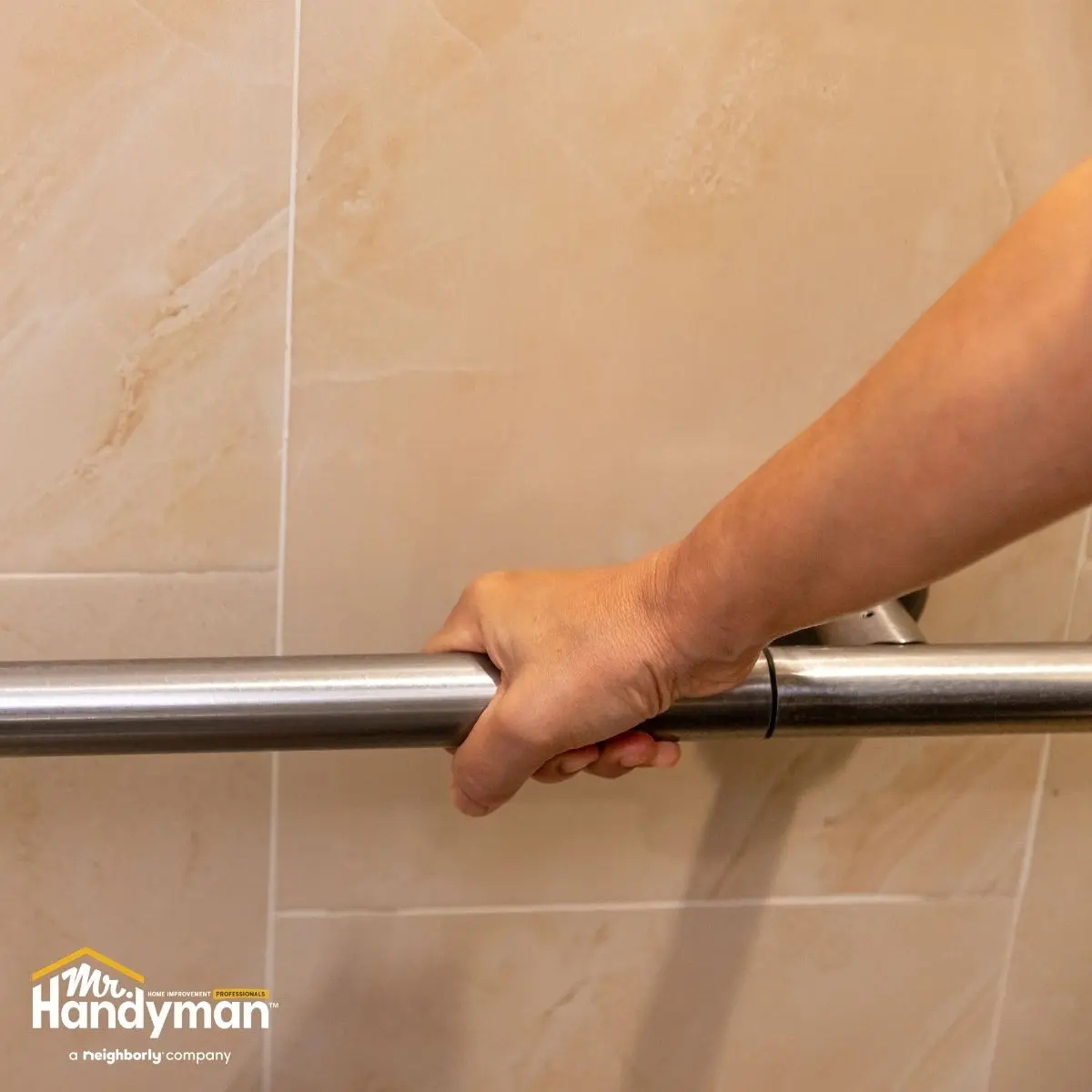
Stairwell handrail integrity in Nashville, Belle Meade, and Clarksville fitness facilities requires monthly assessment that evaluates both the structural connection of the handrail to its mounting points and the condition of the handrail surface that members grip. A handrail that exhibits any movement when lateral force is applied to it has a mounting condition that does not meet the structural requirement that building codes establish for handrail installations in commercial occupancies. The acceptable deflection for a compliant handrail under a 200-pound point load applied at any point along its length is essentially zero perceptible movement, and any movement that a firm lateral push produces indicates a mounting deficiency that the weight of a falling member would reveal at the worst possible moment.
Handrail mounting hardware in Middle Tennessee fitness facilities develops the specific failure modes that humidity and temperature cycling produce in metal anchors set into concrete or masonry and in lag screws driven into wood framing through drywall. Anchor bolts in concrete that have developed corrosion at their embedment zone lose the bond strength that the corrosion-free installation provided. Lag screws in wood framing that have cycled through Middle Tennessee's seasonal humidity variations experience the wood movement around them that loosens their engagement over time. Monthly pull testing that applies lateral force at each bracket location identifies the mounting points whose integrity has declined before the total bracket count whose integrity remains provides inadequate collective support for the handrail's safety function.
Graspability assessment of handrail profiles confirms that the handrail cross-section meets ADA requirements for graspable profile dimensions and that the surface condition provides the friction that a gripping hand requires for fall arrest. A handrail whose surface has been coated with paint applications that have built up its profile beyond the 1.25 to 2 inch diameter range that ADA graspability standards require, or whose surface has become polished through member use to a smoothness that reduces grip friction below useful levels for a member whose hand is sweaty from exertion, is not providing the fall arrest assistance that a compliant handrail installation delivers. Monthly graspability assessment that confirms profile dimensions and surface friction condition maintains the functional standard that handrail safety depends on.
Grab Bars: Where Installation Quality and Monthly Inspection Intersect
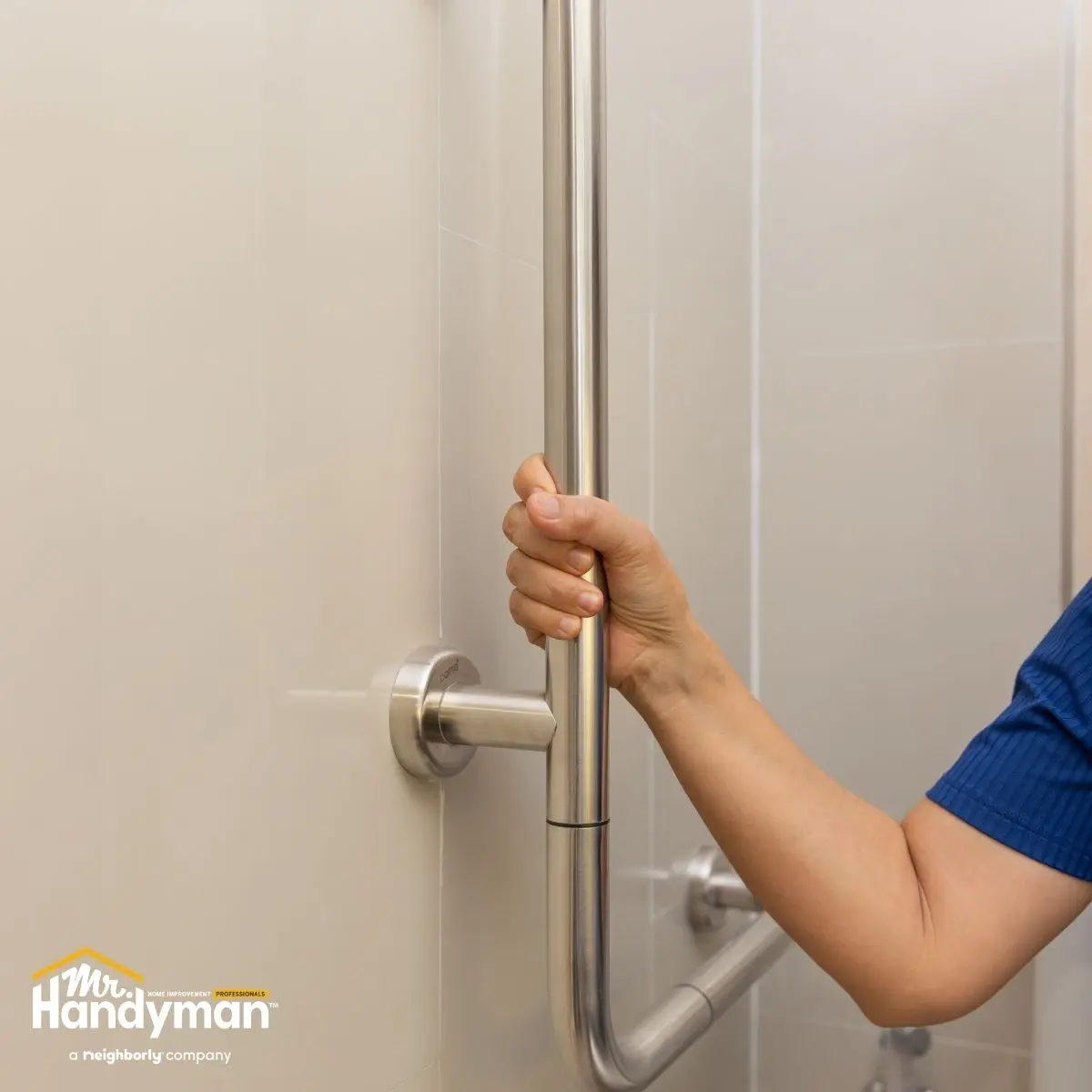
Grab bars in locker room shower areas, toilet rooms, and changing areas serve a member safety function that is even more direct than stairwell handrails because they are installed in the specific locations where the combination of wet surfaces, limited footwear, and the physical vulnerability of undressed members creates the fall risk that grab bars exist to prevent.
Mounting integrity assessment for grab bars in Middle Tennessee fitness facility wet areas requires monthly attention that goes beyond visual inspection to include the physical load testing that confirms the bar's installation has not been compromised by the moisture environment it operates within. A grab bar that has been installed correctly into wall studs or with appropriate toggle anchors provides secure resistance to the 250-pound point load that commercial grab bar installations in public accommodations are required to withstand. A grab bar that was installed into drywall without stud engagement or appropriate backing, which is a common installation deficiency in fitness facilities whose locker rooms were constructed or renovated without specific attention to ADA grab bar requirements, provides mounting integrity that is inadequate for the load a falling member applies to it.
Monthly load testing that applies a firm downward and outward pull to each grab bar at its midpoint, combined with a lateral push that tests the mounting in the direction that a sideways fall would load it, identifies bars whose mounting has developed movement that visual inspection alone does not reveal. A bar that moves during load testing has either inadequate initial installation or developing mounting failure that requires immediate professional assessment and repair before the bar returns to member use.
Corrosion assessment of grab bar surfaces and mounting hardware in Middle Tennessee locker room wet areas reflects the specific deterioration that sustained moisture exposure produces in stainless steel, chrome-plated, and powder-coated bar finishes that are not maintained against the chemical exposure that locker room cleaning protocols produce. Surface corrosion on a grab bar is not primarily a cosmetic concern. It is an indicator of material degradation that affects both the structural integrity of the bar and the surface friction that members depend on when their hands are wet. Monthly corrosion assessment that identifies surface degradation at an early stage allows treatment or replacement before the corrosion has compromised either the structural or functional performance of the installation.
ADA placement compliance at grab bars in toilet rooms and shower areas should be verified during monthly inspection to confirm that the bars remain at the heights and positions that ADA standards require for their specific locations. Grab bars in toilet rooms that have been repositioned during maintenance activities, that have shifted through mounting movement, or that were installed at non-compliant heights due to original installation error all represent ADA compliance deficiencies that monthly inspection identifies before a compliance review or member accessibility complaint surfaces the condition.
Emergency Systems: The Safety Infrastructure That Members Hope Never to Need
Emergency systems in commercial fitness facilities serve their safety function entirely in the events that members hope will never occur, which is precisely why their maintenance cannot be deferred on the basis that their function has not been needed recently. The emergency pull cord in a locker room, the automated external defibrillator mounted in the facility lobby, the emergency exit lighting above evacuation routes, and the fire suppression system serving the facility all represent safety systems whose maintenance condition determines their function at the moment of highest consequence, which is the moment that no amount of post-incident maintenance can retroactively address.
Emergency pull cord and call system testing in locker room and restroom accessible areas confirms that the alert signal reaches the monitoring point the system is designed to activate within the response time that the member emergency the system exists to address requires. A pull cord system whose connection to a monitoring station has failed, whose battery backup for the monitoring receiver has depleted, or whose cord has been tied up to prevent floor contact in a way that makes it inaccessible from a floor-level position is not providing the emergency assistance access that ADA requires in accessible restroom and shower areas. Monthly pull cord activation testing that confirms signal delivery to the monitoring point and that verifies cord accessibility from floor level maintains the emergency assistance function that the system is installed to provide.
AED inspection and readiness confirmation is a monthly safety checklist item whose importance in a Middle Tennessee fitness facility reflects both the statistical likelihood of a cardiac emergency in a high-exertion commercial occupancy and the documented survival rate improvement that prompt AED use delivers relative to waiting for emergency medical services. Monthly AED inspection that confirms the device's status indicator shows ready function, that electrode pads are within their expiration date, that the battery charge indicator shows adequate capacity, and that the device is accessible from its mounted location without obstruction maintains the cardiac emergency response capability that an unconfirmed AED condition leaves uncertain. In Nashville and Belle Meade fitness facilities with significant older adult membership whose cardiac emergency risk is statistically elevated, AED readiness confirmation is a monthly safety imperative rather than a periodic maintenance convenience.
Fire Safety Systems: The Monthly Inspection Items That Cannot Be Assumed
Fire safety systems in Nashville, Belle Meade, and Clarksville fitness facilities represent the safety infrastructure category whose maintenance is most extensively governed by Tennessee's commercial building code and fire marshal enforcement requirements, and whose monthly inspection discipline most directly determines whether the facility meets the life safety standard that those requirements establish independent of any member injury event that triggers regulatory scrutiny.
Smoke detector and heat detector function in fitness facility spaces requires monthly testing attention that confirms each device is in operational condition rather than assuming that the absence of fault signals from the fire alarm panel indicates all devices are functioning correctly. Smoke detectors in fitness facility environments accumulate the airborne particulate that high-occupancy exercise spaces generate at rates that standard commercial space detector maintenance schedules do not account for, producing the sensitivity drift that over time causes detectors to either fail to activate at smoke concentrations that should trigger them or to produce the nuisance alarms that management responds to by disabling devices that have not been cleaned and recalibrated. Monthly detector testing that physically activates each device and confirms panel response maintains the detection function that fire safety depends on in the occupancy conditions that fitness facilities create.
Fire extinguisher accessibility and condition monthly verification confirms that extinguishers throughout the facility are mounted at their designated locations, that their pressure gauges indicate adequate charge, that their inspection tags reflect current annual professional inspection, and that no physical condition has developed that would impair their operation if a member or staff member attempted to use one during a fire event. Extinguishers that have been relocated from their designated positions during facility rearrangement, that have been partially discharged without replacement, or that have sustained physical damage that affects their discharge mechanism are not providing the fire response capability their installation positions them to deliver. Monthly location and condition verification maintains the fire response capability that extinguisher placement and maintenance status determine.
Exit door and egress path clearance monthly verification in fitness facilities addresses the persistent tendency of commercial spaces under operational pressure to accumulate equipment, supplies, and other obstructions in the corridor and exit door clearances that emergency egress requires. A fitness facility where equipment storage has migrated into exit corridor widths, where a secondary exit door has been blocked by equipment placement that seemed temporary when it occurred, or where an emergency exit path has been narrowed by the accumulation of items that individually seemed too minor to address is carrying a life safety deficiency that monthly egress path inspection identifies before a fire marshal visit or an emergency evacuation reveals it under conditions where the deficiency matters most.
Wet Area Safety Systems: Floors, Surfaces, and Anti-Slip Conditions

The wet area safety systems in fitness facility locker rooms, shower areas, and pool-adjacent spaces serve the specific fall prevention function that wet surface exposure creates for members who are barefoot or in minimal footwear in the environments where the combination of water, soap residue, and smooth surfaces produces the slip conditions that anti-slip flooring systems and drainage design exist to manage.
Anti-slip surface condition in shower areas and locker room wet zones requires monthly assessment that evaluates whether the surface treatment that slip resistance depends on remains effective or has been degraded through the cleaning protocols, member use, and the Middle Tennessee humidity conditions that accelerate the deterioration of anti-slip surface treatments in wet area environments. Anti-slip tile coatings that have been abraded through regular cleaning with scrubbing pads, anti-slip mat surfaces that have accumulated the soap residue and biofilm that reduce their friction coefficient below their original specification, and anti-slip tape that has lifted at edges or lost its surface grit through member foot traffic all represent anti-slip system failures that monthly assessment identifies before a member slip event occurs on the surface that the system was installed to protect.
Floor drain flow adequacy in shower areas determines whether water accumulates to a depth that creates the standing water conditions that the facility's drainage design intended to prevent. A shower area drain that is flowing at full capacity eliminates standing water that would otherwise create the slip conditions that fall prevention in wet areas specifically addresses. Monthly flow testing that confirms each drain is handling the water volume of normal shower use without surface accumulation maintains the drainage function that slip risk management depends on. In Middle Tennessee fitness facilities where hard water mineral deposits and the hair accumulation that high-volume shower use produces combine to restrict drain flow at rates that exceed the service interval of standard commercial drain maintenance, monthly drain flow confirmation catches the restriction before it produces the standing water conditions that members and floor drains are not designed to manage safely.
Shower threshold and transition conditions between wet and dry zones in fitness facility locker rooms create the specific slip risk that the transition from wet to dry flooring produces for members who are carrying moisture from shower use onto surfaces that were dry at the start of their locker room visit. Threshold strips that have lifted, transition surfaces that have become polished through member traffic, and walk-off mat systems that have saturated beyond their moisture absorption capacity all represent monthly inspection items whose condition determines whether the wet-to-dry transition is managed at the safety standard that wet area design intends.
Building a Monthly Safety Inspection Protocol That Covers Everything
The monthly safety inspection that Nashville, Belle Meade, and Clarksville fitness facilities need is not a casual walkthrough that confirms the obvious conditions visible from the facility floor. It is a structured protocol that covers every safety system in the facility against a checklist calibrated to the specific failure modes each system develops in the facility's use environment and regional climate conditions.
Protocol structure for monthly safety inspection should assign specific inspection responsibilities to qualified staff members with the technical knowledge to evaluate each safety system category correctly, provide the specific testing and measurement approaches that differentiate meaningful assessment from visual observation, and establish the documentation standard that each inspection category requires for both operational planning and liability management. A protocol that assigns handrail inspection to the same staff member who performs it every month builds the familiarity with baseline conditions that allows developing changes to be identified against a known reference rather than evaluated in isolation from historical condition.
Condition grading in monthly inspection documentation distinguishes between conditions that require immediate corrective action, conditions that require scheduled repair within a defined timeframe, and conditions that are being monitored without current repair indication. This three-tier grading system prevents the conflation of minor developing conditions with immediate safety concerns that produces either over-response that disrupts facility operations unnecessarily or under-response that allows genuinely urgent conditions to be managed on the same timeline as minor developing ones. In Tennessee's commercial fitness facility liability environment, documented condition grading that demonstrates proportionate response to identified conditions supports the reasonable care standard that due diligence requires.
Follow-up verification that confirms corrective actions identified in monthly inspection have been completed before the next inspection cycle produces a closed-loop maintenance system rather than an inspection system that identifies conditions without tracking their resolution. A monthly inspection that identifies a loose handrail bracket and documents it without confirming repair before the next inspection cycle has not fulfilled the safety function that the identification represented. Closed-loop verification that documents repair completion, the repair approach, and the post-repair condition confirmation creates the complete maintenance record that both operational safety and liability management require.
The Documentation Standard That Monthly Inspection Requires
Monthly safety inspection documentation in Nashville, Belle Meade, and Clarksville fitness facilities serves both the operational function of tracking safety system condition over time and the liability management function of demonstrating the due diligence that commercial occupancy safety responsibilities require.
Inspection records that document the date, the inspector, the specific systems evaluated, the conditions found at each evaluation point, and the corrective actions initiated for any identified deficiency create the maintenance history that demonstrates systematic safety attention over time. A facility whose monthly inspection records show consistent attention to handrail integrity, grab bar mounting, emergency system function, and wet area safety conditions across multiple inspection cycles is demonstrating the safety management standard that distinguishes a well-managed facility from one that responds to safety conditions reactively.
Photographic documentation of identified conditions and post-repair conditions creates a visual record that supplements written inspection notes in ways that text alone cannot provide for conditions whose severity and progression are most clearly communicated through visual comparison. A photograph of a loose handrail bracket taken at the time of identification and a photograph of the repaired condition taken after correction creates the visual evidence of identified condition and responsive repair that written notes describe but cannot fully convey.
Corrective action timelines documented in monthly inspection records demonstrate that identified conditions were addressed at the urgency their severity warranted rather than on a uniform timeline that treats immediate safety concerns and minor developing conditions equivalently. Immediate out-of-service action for conditions that present active member safety risk, same-day repair scheduling for conditions approaching the safety threshold, and monitored status with defined reassessment intervals for minor developing conditions all represent appropriate responses whose documentation demonstrates proportionate safety management.
Frequently Asked Questions
What qualifications should the staff member conducting monthly safety inspections have? Monthly safety inspections in commercial fitness facilities benefit from staff members who have completed formal safety inspection training relevant to fitness facility environments, who understand the ADA standards applicable to the systems they are inspecting, and who have the physical assessment skills to perform load testing on handrails and grab bars rather than relying on visual observation alone. Facilities whose staff do not have this training background benefit from supplementing internal monthly inspections with quarterly professional safety assessments that provide the technical depth internal inspections cannot deliver.
How should I handle a safety system deficiency discovered mid-month outside of the regular inspection cycle? Any safety system deficiency identified outside of the regular monthly inspection cycle should be treated with the same urgency grading that the monthly protocol would assign to the same condition. Immediate safety concerns identified at any time require immediate corrective action and documentation regardless of where they fall in the inspection calendar. The monthly inspection cycle establishes the minimum systematic assessment frequency, not the maximum frequency at which identified conditions receive attention.
Does monthly safety inspection reduce fitness facility insurance premiums in Tennessee? Documented monthly safety inspection programs are a favorable factor in commercial fitness facility insurance underwriting in Tennessee because they demonstrate the systematic risk management approach that reduces the loss frequency that liability insurance covers. While premium impact varies by insurer and policy structure, facilities that can demonstrate documented monthly safety inspection programs, responsive corrective action, and closed-loop repair verification consistently present more favorable risk profiles than those without documented safety management programs.
How long should monthly safety inspection records be retained? Tennessee's statute of limitations for personal injury claims that could arise from fitness facility safety system failures establishes the minimum retention period that monthly inspection records should be maintained for. Consulting with legal counsel familiar with Tennessee commercial liability law provides the specific retention guidance appropriate for the facility's circumstances, but a minimum of seven years from the date of each inspection record is a conservative standard that most liability exposure timelines fall within.
Should monthly safety inspections be performed by internal staff or external professionals? A combination approach that uses trained internal staff for monthly systematic inspection and qualified external professionals for quarterly comprehensive assessment produces better safety outcomes than either approach alone. Internal staff provide the frequency and familiarity with baseline conditions that developing condition identification requires. External professionals provide the technical depth, independent assessment perspective, and specialized testing capability that internal inspections cannot consistently deliver for all safety system categories.
What is the most commonly missed safety system in monthly fitness facility inspections? Emergency pull cord accessibility from floor level in accessible restroom and shower areas is the most consistently missed safety inspection item in Nashville, Belle Meade, and Clarksville fitness facilities. Pull cords that have been tied or looped to prevent floor contact are inaccessible to a member who has fallen and cannot reach a standing position to activate them, which is precisely the emergency scenario the system is installed to address. Monthly confirmation that pull cords hang to within twelve inches of the floor as ADA requires maintains the accessibility that the emergency they are installed to address demands.
Monthly Inspection Is the Commitment That Safety Requires
The fitness facility in Nashville, Belle Meade, or Clarksville that conducts systematic monthly safety inspections is not simply meeting a regulatory obligation or managing liability exposure, although it is doing both. It is fulfilling the fundamental commitment that every commercial fitness facility makes to its members when it opens its doors, which is that the physical environment they are using to pursue their health and fitness goals is being maintained at the safety standard their trust in the facility deserves.
The team at Mr. Handyman of West Nashville, Belle Meade, and Clarksville brings the commercial safety system inspection and repair experience to help fitness facility operators build and execute the monthly safety inspection programs that protect their members, manage their liability, and demonstrate the safety management standard that professional facility operation requires.
Website: https://www.mrhandyman.com/nashville-west-south-central/
Serving businesses throughout Nashville, Belle Meade, and Clarksville with dependable commercial maintenance and the expertise your facility deserves.