What Members See on the Walls Tells Them Everything About How the Facility Is Run
There is a moment that occurs in every fitness facility visit, typically within the first thirty seconds of entry, where a member or prospective member forms a comprehensive impression of the facility's management quality. That impression draws from multiple simultaneous inputs, the cleanliness of the floor, the condition of visible equipment, the lighting quality, and the wall and ceiling surfaces that frame the entire environment. Of those inputs, wall and ceiling condition is the one that most directly communicates whether a facility is actively managed or passively operated, because walls and ceilings do not clean themselves and their deterioration does not occur through a single dramatic event that demands immediate response. It accumulates gradually, through conditions that become normalized by the staff who see them daily, until the cumulative impression they create has already affected the member experience and the facility's brand position in ways that management has stopped noticing.
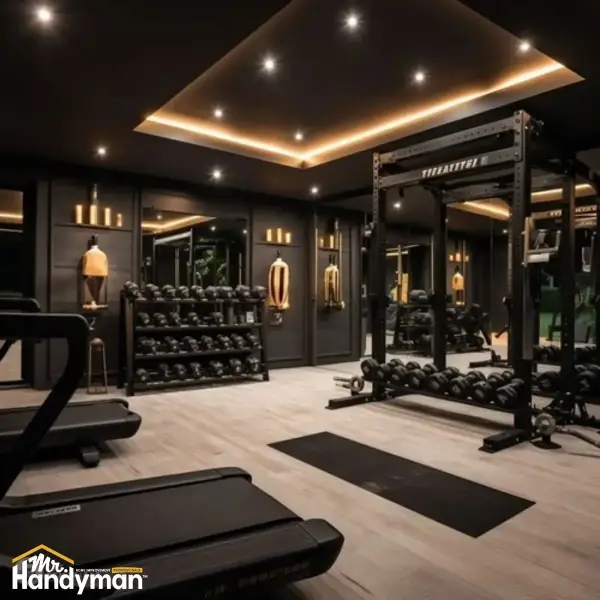
In Nashville, Belle Meade, and Clarksville's competitive fitness market, where members choose between facilities whose pricing, programming, and equipment are increasingly comparable, brand image has become a genuine differentiator that determines where members commit their recurring investment. A fitness facility whose wall and ceiling surfaces communicate professional management and active maintenance investment is presenting a brand image that members translate into confidence about every other aspect of the facility's operation. A facility whose surfaces communicate deferred attention is undermining that confidence in ways that aggregate review scores, declining renewal rates, and stagnant new member acquisition eventually make financially measurable.
This is not a discussion about perfect aesthetics or luxury finishes. It is a practical examination of how specific wall and ceiling damage conditions affect member perception, how Middle Tennessee's climate accelerates those conditions, and which repairs should be prioritized first to deliver the strongest brand image return on the maintenance investment.
How Middle Tennessee's Climate Creates Specific Wall and Ceiling Damage Patterns
The wall and ceiling damage that fitness facilities in Nashville, Belle Meade, and Clarksville experience reflects the specific climate conditions that Middle Tennessee delivers to commercial spaces that are also high-occupancy, high-perspiration environments. The combination of outdoor humidity, member-generated moisture, and the thermal cycling that conditioning systems manage through Middle Tennessee's demanding seasons creates deterioration patterns that differ from what facilities in drier or more moderate climates experience.
Humidity-driven paint failure is the most pervasive wall surface condition in Middle Tennessee fitness facilities and the one that affects member perception most broadly because it occurs across large surface areas rather than at isolated damage points. Paint that has lost adhesion to the underlying drywall or plaster surface through the moisture cycling that a high-humidity fitness environment delivers develops the bubbling, peeling, and flaking patterns that members register as obvious neglect rather than as the climate-driven maintenance challenge that it actually represents. In group fitness studios and locker room-adjacent spaces where member perspiration and showering introduce sustained moisture to wall surfaces, that moisture cycling is most aggressive and paint failure most consistent.
Moisture staining on ceilings in Nashville and Clarksville fitness facilities traces to multiple sources that Middle Tennessee's conditions specifically support. Roof drainage systems that experienced winter freeze-thaw stress, HVAC condensation from systems managing the significant latent heat load that Middle Tennessee's humid summers introduce to heavily occupied fitness spaces, and plumbing above finished ceilings that experienced winter thermal stress all produce the ceiling staining that members interpret as evidence of ongoing water intrusion regardless of whether the source has been resolved. A yellow-brown ceiling stain in a fitness facility does not read as a historical condition to a member evaluating whether to renew their membership. It reads as a facility that has a water problem and has not addressed it.
Impact damage on walls in weight training areas, functional training zones, and group fitness studios accumulates through the specific activities those zones support. Barbell plates that contact walls during loading and unloading, resistance bands that snap against wall surfaces when released, and the general equipment movement that commercial fitness use requires all produce impact marks, drywall damage, and finish deterioration at the wall surfaces adjacent to training zones. This damage category is unique to fitness facilities among commercial spaces and requires a maintenance approach that accounts for its continuous recurrence rather than treating each repair as a one-time correction.
Mold and mildew growth on wall and ceiling surfaces in Middle Tennessee fitness facilities is a condition whose health implications extend the management responsibility beyond brand image into member safety. The sustained humidity that fitness facility interiors experience during Middle Tennessee's summer months, combined with the warm temperatures that member comfort requires, creates ideal conditions for mold colonization on any surface that has experienced moisture exposure without adequate drying time. In locker rooms, shower areas, and group fitness studios with insufficient ventilation, mold growth on grout lines, painted surfaces, and ceiling tiles is a recurring condition rather than an isolated incident, and its management requires systematic ventilation and surface treatment rather than reactive cleaning responses to visible growth.
The Brand Image Consequences of Specific Damage Categories
Not all wall and ceiling damage conditions affect brand image equally, and understanding which conditions carry the heaviest brand image weight in Middle Tennessee's fitness market helps facility operators prioritize repair investment where it delivers the strongest perception return.
Visible ceiling staining carries the heaviest brand image consequence of any wall or ceiling damage category because it communicates structural vulnerability rather than simply aesthetic neglect. A member who sees ceiling staining in a fitness facility is not thinking about paint quality or maintenance schedules. They are thinking about whether the building has a water problem, whether that problem is being addressed, and whether they want to continue paying membership fees to a facility whose physical condition suggests management is not on top of its responsibilities. In Belle Meade's fitness market, where member expectations are calibrated to the overall quality standard of the community's commercial environment, ceiling staining in a fitness facility creates a specific gap between expectation and experience that directly affects renewal decisions.
Peeling and bubbling paint across large wall surface areas communicates the gradual, accumulated neglect that members find most discouraging because it reflects conditions that have clearly been present for a significant period without response. A single paint bubble that appeared last week is a maintenance item. A wall section with widespread paint failure that has been developing through multiple seasons of deferred attention is a brand statement that the facility is not actively managed. In Nashville's fitness market, where Google and Yelp reviews regularly specifically mention facility condition and maintenance quality, wall surfaces with obvious accumulated paint failure generate the review content that affects new member acquisition before a prospect ever visits.
Impact damage and holes in drywall adjacent to training zones communicate something specific about facility management that other damage categories do not. Members who see unrepaired drywall damage in a weight training area understand that the damage was caused by training activity and that it has not been repaired. The message they receive is that the facility management either does not inspect the space regularly enough to notice the damage or has noticed it and chosen not to repair it. Either interpretation undermines confidence in facility management in ways that extend beyond the specific damaged wall surface.
Mold and mildew on visible surfaces is the wall and ceiling damage category with the most severe brand image consequences because it connects physical facility condition to member health in a way that no other damage category does. A member who identifies mold growth on a locker room ceiling or shower grout line is evaluating whether to continue using a facility that may be exposing them to a respiratory health risk. In Clarksville's growing fitness market, where new members are forming their initial facility preferences and where word-of-mouth referral drives significant membership acquisition, a mold condition that becomes widely known among the member base produces membership loss that is disproportionate to the physical area the condition occupies.
Priority Assessment: Which Repairs Come First
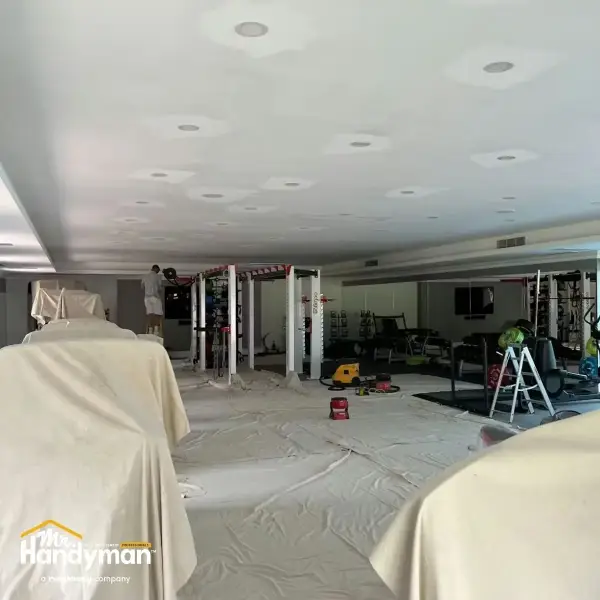
Establishing a repair priority framework that sequences wall and ceiling repairs by their brand image consequence, their safety implication, and their relationship to underlying conditions that will continue producing damage if not resolved allows facility operators to deploy maintenance budgets where they deliver the strongest combined return.
Ceiling staining resolution sits at the top of any fitness facility wall and ceiling repair priority list because it carries the heaviest brand image consequence and because it involves an underlying condition that continues producing damage until the source is resolved. Painting over a ceiling stain without identifying and addressing the moisture source that produced it creates a result that deteriorates within one to two rain events or HVAC condensation cycles, which communicates a more specific management failure than the original stain did. Source identification first, remediation of the source second, surface drying confirmation third, and stain-blocking primer and paint application fourth is the correct repair sequence for ceiling staining regardless of the scheduling pressure to produce a visible result quickly.
Mold and mildew remediation follows ceiling staining in the priority sequence because its health implications extend the management responsibility beyond brand image. Professional mold assessment that identifies the extent of colonization and the moisture conditions that support it should precede remediation work that addresses surface growth without confirming that the underlying moisture condition is resolved. In Middle Tennessee's fitness facility context, where member perspiration and inadequate ventilation are the most common mold preconditions, remediation without ventilation improvement produces regrowth on the remediated surfaces within a single humid season.
Large-area paint failure in member-visible spaces follows mold remediation in the repair priority because its brand image consequence is significant and its repair is straightforward when the underlying moisture conditions that drove the paint failure have been identified and addressed. Repainting wall surfaces with ongoing moisture exposure using standard interior latex paint produces results that fail again through the same mechanism, which is why moisture-resistant paint products in high-humidity fitness facility zones are not optional specifications but baseline requirements for any paint repair that is expected to hold through Middle Tennessee's conditions.
Executing Wall and Ceiling Repairs That Actually Hold in This Climate
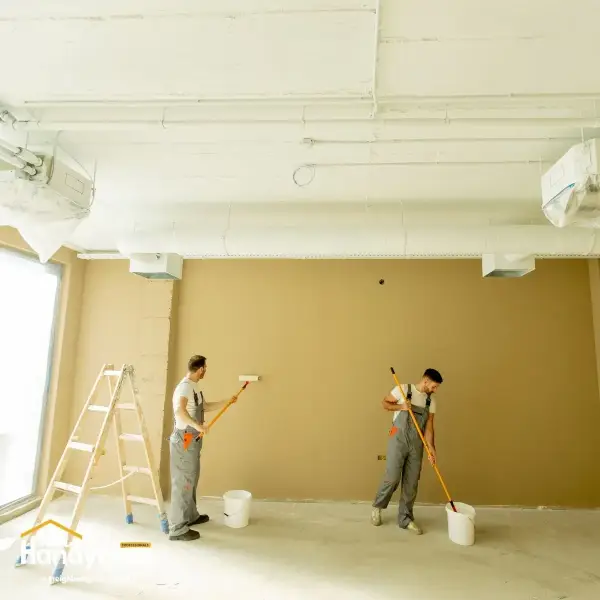
The repair quality that Middle Tennessee's fitness facility environment requires goes beyond what standard commercial painting and drywall work delivers in less demanding conditions. A fitness facility wall repair that holds for one season before the same conditions that produced the original damage reproduce the failure is not a successful repair. It is a deferred maintenance cost that creates the additional brand image liability of a facility that visibly repairs the same conditions repeatedly without resolving them.
Surface preparation standards for wall and ceiling repairs in Middle Tennessee fitness facilities must account for the moisture conditions that the facility environment sustains rather than for the dry conditions that standard drywall and painting preparation assumes. Drywall that has absorbed moisture through humidity exposure or direct water contact must be confirmed dry to the substrate before any repair material or paint product is applied. A moisture meter reading that confirms substrate moisture content below the threshold for paint adhesion is not an optional quality check for fitness facility wall repairs in this climate. It is the baseline confirmation that distinguishes a repair that will hold from one that will fail through the same mechanism as the original damage.
Moisture-resistant material specifications for fitness facility wall repairs reflect the actual conditions those repairs will experience after completion. Standard joint compound applied to drywall repairs in a high-humidity fitness environment absorbs ambient moisture and loses its surface hardness over time in ways that moisture-resistant joint compound formulations resist. Standard interior latex paint applied to repaired surfaces in locker rooms, group fitness studios, and any zone with sustained humidity exposure fails adhesion faster than semi-gloss or gloss formulations with moisture-resistant additives. Specifying materials for the conditions they will actually experience rather than for standard interior conditions is the technical distinction between repairs that hold and repairs that require repetition.
Impact-resistant finishes in weight training areas and functional training zones address the recurrence mechanism that makes impact damage the most persistently appearing wall condition in fitness facility spaces. Standard painted drywall in a zone where equipment contact is a routine occurrence of normal facility use will require repeated repair regardless of how carefully the original repair was executed. Fiberglass-reinforced panels, impact-resistant drywall products, and high-build paint systems with glass bead reinforcement in surface coatings all provide impact resistance that extends the interval between required repairs in these zones. In Nashville and Clarksville fitness facilities where member training intensity and equipment volume make wall contact inevitable, specifying impact-resistant wall surfaces in training zones is a one-time upgrade whose return accumulates through every season of deferred repair costs it eliminates.
Ventilation: The Underlying Condition That Determines Whether Repairs Last
Every category of wall and ceiling damage that Middle Tennessee fitness facilities experience, from paint failure to mold growth to ceiling staining from HVAC condensation, is either caused or accelerated by inadequate ventilation that allows moisture to remain in contact with building surfaces longer than those surfaces were designed to accommodate. Repairs made without addressing ventilation deficiencies that drive moisture accumulation produce results that deteriorate through the same mechanism as the original damage on a timeline that reflects the severity of the unresolved ventilation problem.
HVAC capacity assessment in fitness facilities that are experiencing recurring wall and ceiling moisture damage should be a standard component of any comprehensive repair program in Nashville, Belle Meade, and Clarksville. Middle Tennessee's summer latent heat load, which reflects the moisture content of outdoor air that conditioning systems must remove in addition to sensible temperature reduction, is among the highest in the country during peak summer months. A fitness facility HVAC system that was sized for the building's square footage without adequate account for the latent heat load that member occupancy and perspiration adds to the conditioning demand may maintain acceptable temperature conditions while failing to remove sufficient moisture from the air to prevent the surface condensation and humidity accumulation that drives recurring wall and ceiling damage.
Exhaust fan performance in locker rooms, restrooms, and shower areas directly determines whether the moisture that these spaces generate remains in contact with wall and ceiling surfaces long enough to drive the paint failure and mold growth that recur in inadequately ventilated fitness facility wet areas. An exhaust fan that is moving less than its rated air volume because its motor has weakened or its grille has accumulated debris restriction is not providing the ventilation that the space's moisture load requires regardless of how recently it was installed. Confirming exhaust fan performance through air flow measurement rather than through the assumption that an installed fan is performing correctly is the verification step that distinguishes ventilation assessment from ventilation assumption.
Air circulation in training zones affects the rate at which perspiration moisture is removed from the surface and air of high-occupancy fitness spaces. A group fitness studio or weight training area with inadequate air circulation sustains elevated surface humidity through peak class and training periods that accumulates in wall and ceiling assemblies over time. Supplemental circulation through strategically positioned ceiling fans or increased supply air volume from the HVAC system reduces that accumulation and extends the service life of the wall and ceiling finishes in those zones.
Developing a Wall and Ceiling Maintenance Schedule for Fitness Facilities
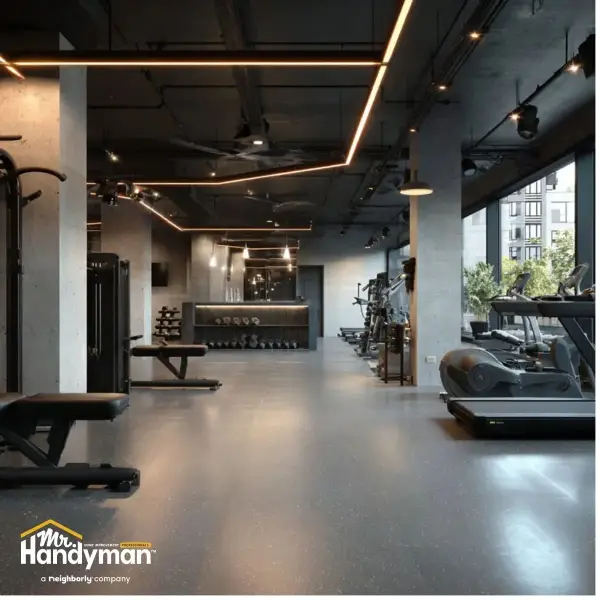
The fitness facilities in Nashville, Belle Meade, and Clarksville that maintain consistent wall and ceiling condition are not those with the largest maintenance budgets. They are those with structured maintenance schedules that address developing conditions before they reach the threshold of member-visible deterioration and that sequence repair work in a way that resolves underlying conditions before cosmetic restoration is applied.
Monthly visual inspection of all member-accessible wall and ceiling surfaces produces a condition baseline that identifies new damage and tracks the progression of monitored conditions between professional maintenance visits. The inspection discipline that makes monthly visual assessment meaningful is documentation. An inspection that produces written notes and photographs of identified conditions creates the baseline against which the following month's inspection measures change. An inspection that produces a verbal summary without documentation creates no record that supports condition tracking, repair urgency assessment, or liability management.
Quarterly professional assessment of wall and ceiling conditions in Middle Tennessee fitness facilities provides the technical depth that staff visual inspection cannot deliver. A qualified professional who evaluates moisture conditions behind surfaces using appropriate diagnostic tools, who assesses the integrity of wall assemblies in high-humidity zones through physical inspection rather than visual observation alone, and who identifies developing conditions that have not yet produced visible symptoms provides condition information that prevents the surprise of a significant repair need that appeared suddenly but had actually been developing for months.
Annual cosmetic restoration of high-visibility member areas, including lobby surfaces, group fitness studio walls, and primary corridor ceilings, maintains the brand image baseline that first impressions depend on regardless of whether specific damage conditions have been identified during the year. Paint that has not failed but that has lost its initial freshness through a year of facility use reads differently to a new member than it does to a staff member who has seen it gradually change. Annual cosmetic refreshing in primary member-facing areas maintains the brand image standard that existing members and prospective members both evaluate against the same first-impression reference point.
Frequently Asked Questions
How do I determine whether ceiling staining is from an active leak or a historical one?
Active stains feel damp to the touch, show color at the center rather than only at the ring edge, and grow in area between observations. Historical stains are dry, show their darkest color at the outer ring where mineral deposits concentrated as moisture evaporated, and do not change in area between observations. Confirmation requires accessing the space above the stained ceiling to evaluate the moisture source directly rather than relying on surface characteristics alone. In Middle Tennessee fitness facilities with HVAC systems above finished ceilings, condensation from inadequately insulated ductwork is a common active staining source that roof condition alone does not identify.
What paint products perform best on fitness facility walls in Middle Tennessee's humidity?
Semi-gloss and satin finish interior paints with mildew-resistant additives outperform flat and eggshell formulations in high-humidity fitness facility zones because their denser film formation resists moisture absorption and their smoother surface resists mold colonization more effectively. In shower and locker room areas, epoxy-based or masonry paint products provide moisture resistance that latex formulations cannot match in direct moisture exposure conditions. Product selection should be matched to the specific humidity and moisture contact conditions of each zone rather than applying a uniform product specification across the entire facility.
How should impact damage in weight training areas be repaired to last longer than standard drywall repair?
Standard drywall repair in impact-prone training zones should be upgraded to fiberglass mesh reinforcement at the repair area, moisture-resistant joint compound, and a high-build finish coat that provides surface hardness beyond standard latex paint. For zones with repeated impact history, replacing the damaged drywall section with cement board or impact-resistant drywall before finishing eliminates the substrate vulnerability that standard drywall presents in those locations. The higher material cost of these upgrades is recovered through the reduced frequency of repair in zones where standard repairs require repetition within a single season.
Is it worth repainting an entire fitness facility at once or is zone-by-zone refreshing more practical?
Zone-by-zone refreshing that prioritizes primary member-facing areas over secondary and back-of-house spaces produces better brand image return on a constrained maintenance budget than spreading the same budget across an entire facility repaint that treats high-visibility and low-visibility areas equally. A lobby, group fitness studio, and primary corridor that are freshly painted while secondary zones await their scheduled refresh cycle presents a stronger brand image than an entire facility repainted at the lowest quality level the budget allows when distributed equally.
How does wall and ceiling condition affect gym membership renewal rates specifically?
Direct causal data connecting wall condition to renewal rates is difficult to isolate from other retention factors, but the consistent pattern across Nashville, Belle Meade, and Clarksville fitness facilities is that members who cite facility condition as a renewal concern reference wall and ceiling conditions more frequently than equipment condition in exit surveys and cancellation conversations. The interpretation is that equipment condition communicates operational investment while wall and ceiling condition communicates management attention, and members who perceive management is not attentive to the facility they occupy lose confidence in the facility's overall operational quality.
What should I do if mold is discovered during a wall repair project?
Stop the repair project at the point of mold discovery and assess the extent of colonization before proceeding. Surface mold that is limited to the paint and facing paper of drywall can be addressed through professional remediation followed by replacement of the affected drywall sections and treatment of adjacent surfaces. Mold that has penetrated to the drywall core or spread to adjacent framing members requires more extensive remediation that professional assessment should scope before any repair work resumes. In Middle Tennessee's humid climate, mold discovered during wall repair should be assumed to extend beyond the visible area until professional assessment confirms otherwise.
Walls and Ceilings Speak Before Anyone Else Does
In a Nashville, Belle Meade, or Clarksville fitness facility, the wall and ceiling surfaces that surround every member during every visit are communicating the facility's management standard continuously and without words. A facility that maintains those surfaces with the inspection frequency, repair quality, and material specifications that Middle Tennessee's climate and commercial fitness use require is communicating professional management that members translate into confidence, loyalty, and the word-of-mouth referral that sustainable membership growth depends on.
The team at Mr. Handyman of West Nashville, Belle Meade, and Clarksville brings the commercial repair experience to help fitness facility operators address wall and ceiling conditions correctly, with the material specifications and underlying condition resolution that Middle Tennessee's environment demands.
Website: https://www.mrhandyman.com/nashville-west-south-central/
Serving businesses throughout Nashville, Belle Meade, and Clarksville with dependable commercial maintenance and the expertise your facility deserves.
