
Why Exterior Safety Is a Business Responsibility That Cannot Be Deferred in North Texas
Every business that operates a physical location in the Plano area has a responsibility that extends beyond the walls of the building itself. The moment a customer, employee, vendor, or visitor steps onto the property, the business assumes a duty of care for that person's safety that begins in the parking lot, continues along every walkway, and doesn't end until the person exits the property entirely. That responsibility is legal, financial, and ethical, and it applies equally to a small retail storefront in downtown Plano and a large commercial facility along the US-75 corridor.
What makes this responsibility particularly pressing for Plano area businesses is the specific set of exterior conditions that North Texas climate and the region's commercial infrastructure create. The thermal cycling that Plano experiences across genuine seasonal extremes, from summer heat that routinely exceeds 100 degrees to winter ice events that arrive without the gradual cooling that more northern climates produce, is among the most destructive forces acting on paved surfaces, concrete walkways, and exterior building components. A single North Texas summer can advance a minor crack in asphalt into a significant surface condition, push a settled section of sidewalk further out of alignment, and accelerate the deterioration of stair edges, railing systems, and drainage infrastructure that were already showing wear before the heat arrived.
The result in many commercial properties throughout Plano, Allen, Frisco, and the surrounding North Texas communities is an exterior environment that accumulates safety deficiencies over time, each one individually minor but collectively representing genuine liability exposure and genuine risk to the people who use the property every day. A business that defers exterior maintenance through one season typically finds that the cost of addressing the same issues the following season has increased, because North Texas weather-related deterioration doesn't pause while repairs are being scheduled.
Understanding what exterior safety conditions Plano area businesses should be checking, why those conditions develop the way they do in North Texas's climate, and which repairs fall within Mr. Handyman of Plano's permitted scope under Texas law gives business owners and property managers a clear framework for responsible exterior maintenance that protects both customers and the business itself.
What Texas Law Permits for Commercial Exterior Safety Repairs
Before examining specific exterior safety categories, understanding the permitted scope framework helps Plano area business owners identify which exterior safety repairs Mr. Handyman of Plano addresses directly and which require licensed specialty contractor involvement.
Within the permitted handyman scope for commercial exterior safety repairs, Texas law allows carpentry and structural wood repair including deck and walkway surface correction, exterior painting and protective finishing, gutter cleaning and repair, siding repair, door installation and repair, window work without hardwired electrical components, signage mounting without electrical connections, general concrete surface assessment and minor masonry repair, railing tightening and hardware replacement where the existing structural post is sound, exterior wood element repair and finishing, and general maintenance across the property's exterior environment.
Outside the permitted scope, commercial exterior repairs involving concrete cutting or major structural concrete repair, asphalt resurfacing or extensive pothole repair, electrical work including parking lot lighting repair and illuminated signage maintenance, plumbing work including underground drainage modification, and any structural assessment requiring licensed engineer involvement must engage the appropriate licensed specialty contractors. Mr. Handyman of Plano executes permitted scope exterior safety work while directing business owners to the appropriate licensed resources for the work that falls outside that scope.
The Parking Area: Where First Impressions and Safety Intersect
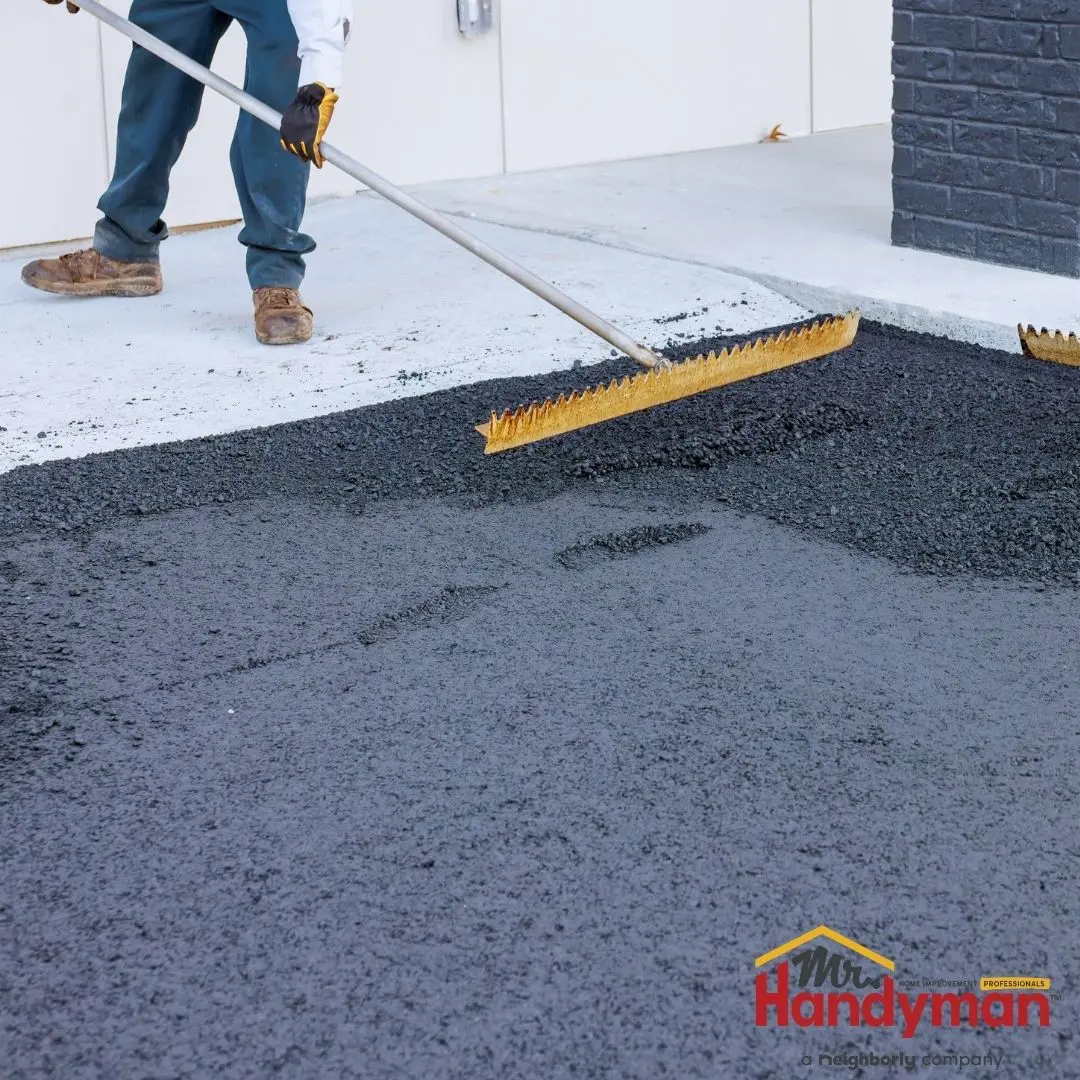
The parking area is typically the first element of a commercial property that customers interact with, and it sets an immediate impression of the business that affects how the property and the business itself are perceived before a single interior element is encountered. Beyond impression, the parking lot is the surface where slips, trips, falls, and vehicle incidents are most likely to occur, making its condition a primary liability consideration for any Plano area commercial property.
Surface Condition Assessment
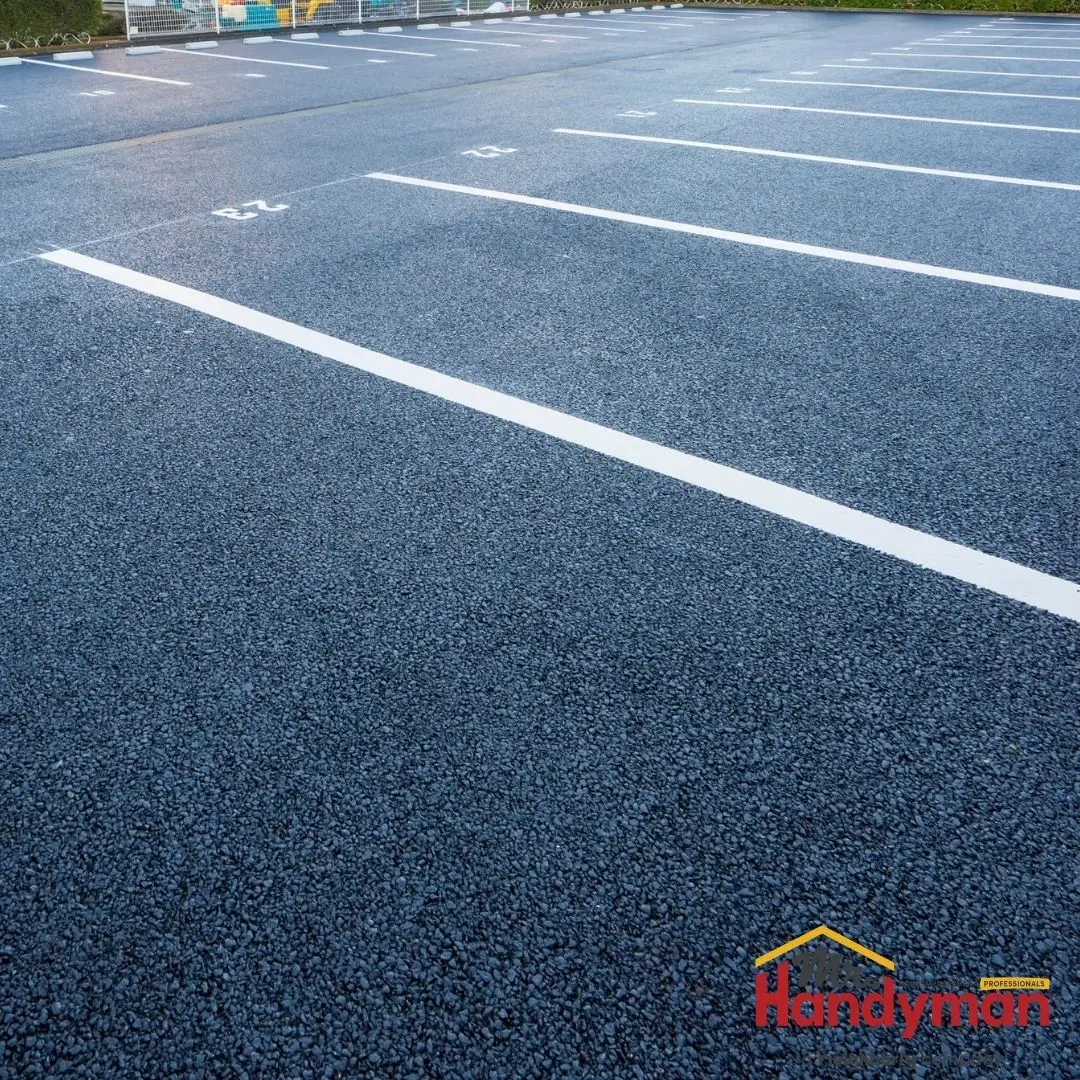
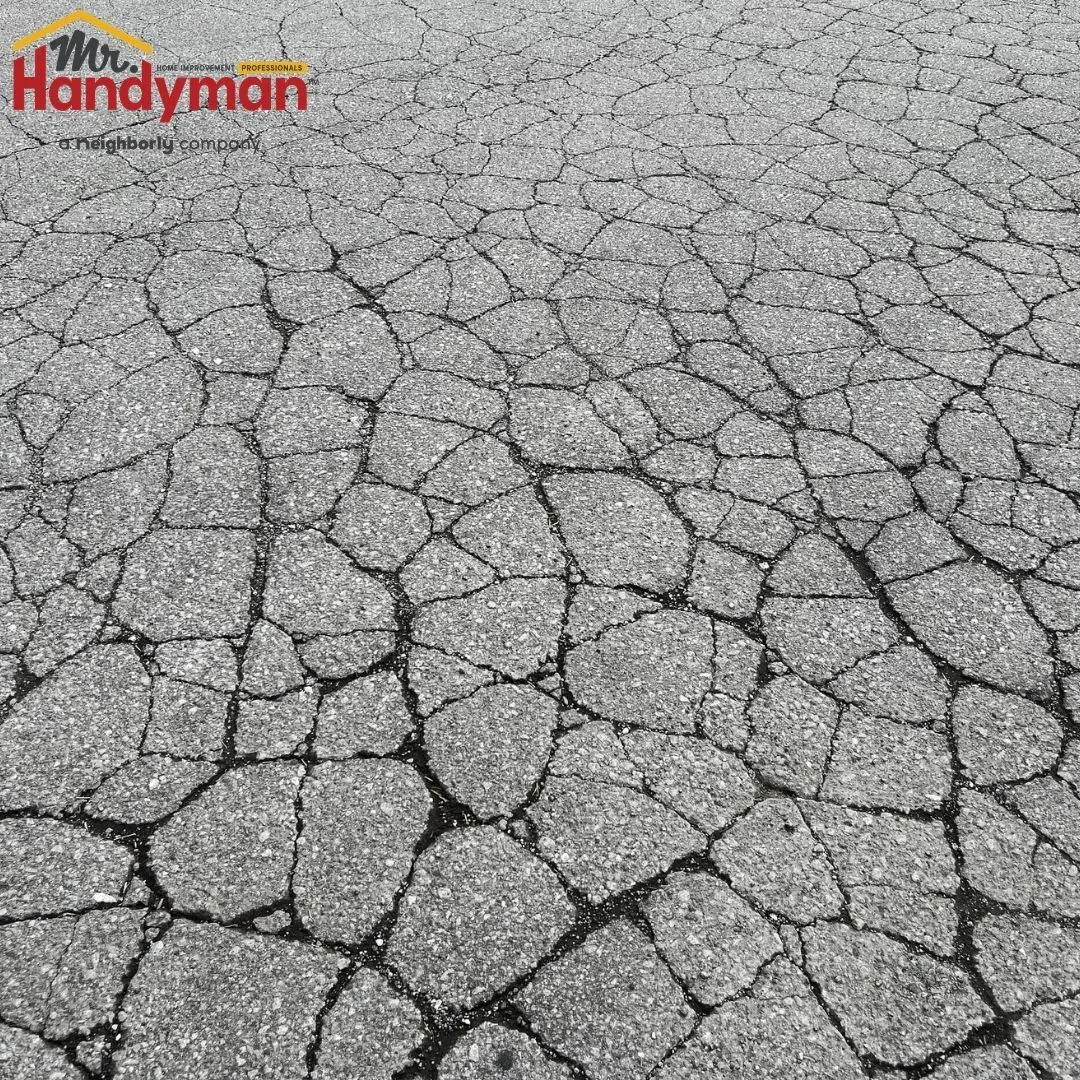
Parking lot surface conditions in Plano area commercial properties reflect the specific damage mechanisms that North Texas climate produces. Summer heat softens asphalt to the point where vehicle loading creates deformation under sustained parking in the same locations. Thermal cycling between summer heat extremes and winter cold produces the expansion and contraction that advances surface cracking from hairline separations to the significant openings that admit water, vegetation, and the freeze damage that North Texas ice events deliver when water in those cracks freezes and expands.
While major asphalt repair and resurfacing falls outside the permitted handyman scope under Texas law and requires licensed paving contractor involvement, the assessment of parking lot surface conditions and the identification of conditions requiring specialist attention is a service that Mr. Handyman of Plano provides as part of a comprehensive exterior safety evaluation. Identifying which conditions require immediate licensed contractor attention and which can be monitored through the current season gives business owners the complete picture their liability management requires.
Minor concrete repair at parking area features including curb stops, wheel stops, and concrete curbing that has cracked or spalled from North Texas thermal cycling falls within the masonry repair scope that Mr. Handyman of Plano addresses. These features create the trip and vehicle contact hazards that their deteriorated condition introduces into the parking environment, and their repair within the permitted scope addresses specific safety conditions without the full parking lot resurfacing that licensed paving contractors handle.
Parking Area Striping Assessment
Parking lot striping that has faded to the point where individual spaces, fire lanes, accessible parking designations, and pedestrian crossing paths are no longer clearly visible creates both safety and compliance problems that Plano area business owners need to address. While fresh striping application requires specialty contractor involvement with appropriate line striping equipment and materials, the assessment of current striping visibility and the identification of marking conditions that have deteriorated below safe and compliant levels is part of the exterior safety evaluation that Mr. Handyman of Plano provides.
Accessible parking space marking compliance deserves specific attention in any Plano area commercial property exterior safety assessment. The ADA requirements for accessible parking space marking, access aisle width, and associated signage placement create compliance obligations that deteriorated striping compromises regardless of how the original installation was executed. Identifying these compliance gaps gives business owners the specific information they need to schedule specialty restriping work before those gaps create regulatory exposure.
Walkways, Sidewalks, and Pedestrian Surfaces
The walkway network of a commercial property carries the highest concentration of pedestrian slip and fall risk on the property. These are the surfaces where customers are on foot, often carrying items, and frequently not examining the surface beneath their feet with the attention that would allow them to identify and avoid a hazard before encountering it.
Concrete Joint Settlement and Trip Hazards
Concrete sidewalk panels in Plano area commercial properties settle differentially as the expansive clay soils common throughout North Texas respond to the moisture changes that seasonal variation produces. Clay soils that expand significantly when wet and contract when dry produce the vertical movement at sidewalk panel joints that creates the raised edges constituting trip hazards for pedestrians moving at normal pace.
A vertical offset as small as a quarter inch at a sidewalk joint is enough to catch a toe and initiate a fall. Offsets of half an inch or greater are consistently categorized as significant trip hazards in premises liability assessments. In Plano area commercial properties where sidewalk settlement has produced these conditions at multiple panel joints, the cumulative trip hazard exposure represents meaningful liability risk that business owners are responsible for addressing.
Concrete grinding that reduces a raised panel edge to eliminate the trip hazard without replacing the panel is a surface repair within the permitted handyman scope that Mr. Handyman of Plano addresses as part of exterior safety work on Plano area commercial properties. For panels with more significant settlement or structural deterioration beyond surface grinding's ability to address, panel replacement requires concrete specialty contractor involvement, and identifying which conditions fall into each category is part of the comprehensive exterior safety assessment that guides the repair program.
Stair Condition and Edge Deterioration
Exterior stairs at commercial building entries are among the highest-risk surfaces on any commercial property because they combine the inherent fall risk of vertical transitions with the surface deterioration that North Texas weather produces in exposed concrete and masonry. A stair edge that's chipped or spalled provides a less predictable footfall surface than an intact edge, and the visual deterioration that chipped stair edges communicate affects how customers perceive the business before they enter.
Repairing spalled concrete stair edges with appropriate concrete repair materials, properly bonded to the existing concrete and finished to the original edge geometry, is within the masonry repair scope that Mr. Handyman of Plano addresses for Plano area commercial properties. This repair restores both the safety and the appearance of the stair while protecting the underlying concrete from the continued deterioration that exposed aggregate and water infiltration advance through subsequent North Texas thermal cycling.
Railing Systems and Structural Integrity
Handrails and guardrails on exterior stairs and elevated walkways at commercial properties in Plano are structural safety systems whose condition requires assessment that goes beyond visual observation. A railing system that appears intact but that has developed looseness at its mounting points, corrosion at the base connections in concrete, or hardware that no longer provides adequate mechanical resistance, provides false security that can be more dangerous than no railing at all.
Building Exterior Conditions Within Permitted Scope

The building exterior itself, including the facade, entry systems, exterior wood elements, and the drainage components attached to the structure, carries safety and maintenance conditions that business owners in the Plano area need to evaluate with the same systematic attention given to pavement and pedestrian surfaces. Several of these conditions fall within Mr. Handyman of Plano's permitted scope and deserve specific pre-summer attention before North Texas heat and afternoon storm season act on them through the busiest customer-facing months of the year.
Entry Door Condition and Operation
Commercial entry doors in Plano area businesses experience the thermal expansion that summer heat produces in door frames and door components in ways that affect operation consistency throughout the season. A door that latched correctly in April may bind, fail to latch cleanly, or resist closing completely by July when summer heat has expanded the door and frame beyond the clearances that spring conditions provided. A door that doesn't close and latch completely is a door that's not providing the security, climate control, or barrier function that a properly operating entry delivers.
Door condition assessment for commercial properties covers every customer-accessible entry, including primary entry doors, secondary access doors, and any emergency exit doors whose operation affects life safety compliance. Hardware condition including locksets, panic bars, door closers, and threshold conditions are all within the permitted handyman scope that Mr. Handyman of Plano assesses and addresses. A door closer that's slamming because summer heat has thinned its hydraulic fluid, a threshold that's settled and created a gap at the door base, or a lockset whose operation has become inconsistent through accumulated wear and thermal stress are all conditions that exterior safety assessment identifies and permitted scope repair addresses.
Weatherstripping condition on commercial entry doors affects both energy performance and the pest barrier that an adequate door seal provides. North Texas summers are active pest seasons, and entry doors without effective weatherstripping provide the access gaps that insects exploit when commercial entries open and close hundreds of times during a busy summer day. Weatherstripping replacement is permitted handyman work that Mr. Handyman of Plano executes as part of commercial entry door service, and it's a repair whose benefit compounds across every customer entry and exit through the full summer season.
Exterior Wood Elements and Protective Finishing
Commercial properties throughout Plano that incorporate exterior wood elements, including decorative trim, fascia boards, porch and canopy framing, outdoor seating deck surfaces, and any architectural wood detail, face the North Texas summer UV exposure and thermal cycling that accelerates wood deterioration faster than cooler climates produce. Pre-summer assessment of these elements identifies the specific conditions that require repair or protective treatment before summer's conditions advance them further.
Paint failure on exterior wood elements, including peeling, chalking, and areas where the paint film has thinned to the point where it's no longer protecting the substrate beneath it, creates moisture infiltration pathways during Plano's afternoon summer storms that advance wood deterioration beneath the surface even when the exterior appears intact from a distance. Scraping failed paint to a sound surface, sanding affected areas, applying appropriate primer to bare wood, and finishing with quality exterior topcoat is wood surface restoration within the permitted handyman scope that protects the substrate through summer and reduces the rate at which subsequent seasons advance the deterioration that this season's treatment addresses.
Exterior deck surfaces serving commercial outdoor seating areas need both safety and protective treatment assessment before summer customer use season begins. Deck boards with surface checking that creates splinter risk for customers in summer footwear, fasteners that have worked above the deck surface creating snag hazards, and boards whose protective finish has failed to the point where moisture absorption is advancing deterioration are all conditions that pre-summer deck assessment identifies and permitted scope repair addresses.
Facade Caulking and Sealant Condition
The caulking at window and door perimeters, at transitions between different facade materials, and at any penetration through the exterior wall surface serves as the primary water barrier at those joints. Plano's thermal cycling between summer heat extremes and winter cold produces the expansion and contraction that advances caulk deterioration faster than more temperate climates, and sealant that was performing adequately in spring may have developed the cracking and separation that compromises its water barrier function by the time summer afternoon storms test it.
Exterior caulking inspection and replacement at deteriorated locations throughout the commercial property facade is permitted handyman work within the scope that Mr. Handyman of Plano performs as part of pre-summer commercial exterior preparation. Fresh caulk applied before summer storm season provides the water barrier that afternoon storms will test repeatedly through June, July, and August, protecting the wall assembly and interior spaces from the moisture infiltration that failed caulk allows during each storm event.
The Business Case for Proactive Exterior Safety Maintenance
Commercial property owners in the Plano area who approach exterior safety maintenance reactively, addressing conditions only after they've produced a visible problem or an injury, consistently face higher total maintenance costs and greater liability exposure than those who manage exterior conditions proactively. Understanding the business case for proactive maintenance reframes it from an expense category into a risk management investment with a quantifiable return.
The direct cost comparison between proactive and reactive maintenance consistently favors early intervention. A concrete stair edge repaired when spalling first appears costs modest material and labor. The same stair edge left until the spalling has advanced and a customer has stumbled costs the repair plus the premises liability exposure that the incident creates and that the documented deteriorated condition supports. A door closer adjusted before summer heat causes it to slam costs a service call. The same closer after it has damaged a door frame through a full summer of slamming costs the adjustment plus the door frame repair that the slamming produced.
The liability cost comparison is where the business case for proactive maintenance is most compelling for Plano area commercial property owners. A premises liability claim arising from a slip or fall on a commercial property in Texas can produce damages that far exceed any realistic exterior maintenance budget. A business that maintains documented records of regular exterior safety assessments and prompt repair of identified conditions occupies a fundamentally different liability position than one that cannot demonstrate systematic maintenance attention.
Frequently Asked Questions
Which exterior safety repairs can Mr. Handyman of Plano legally perform under Texas law?
Mr. Handyman of Plano performs commercial exterior safety repairs within the permitted handyman scope that Texas law defines. This includes entry door repair, adjustment, and hardware service, weatherstripping replacement, exterior wood repair and protective finishing, deck surface repair and fastener correction, concrete stair edge repair with appropriate materials, railing hardware tightening and replacement where structural posts are sound, facade caulking inspection and replacement, gutter cleaning and repair, siding repair, exterior painting, and general maintenance across the commercial property exterior. Conditions requiring asphalt repair, major concrete work, electrical system service, or structural engineering assessment are directed to the appropriate licensed specialty contractors.
My parking lot has significant potholes. Can Mr. Handyman of Plano repair them?
Significant pothole repair and asphalt resurfacing requires licensed paving contractor involvement and falls outside the permitted handyman scope under Texas law. Mr. Handyman of Plano can assess the condition of parking area surfaces, identify which conditions require immediate licensed contractor attention, and document the full scope of parking lot conditions as part of a comprehensive exterior safety evaluation. This assessment gives Plano area business owners the specific information they need to schedule appropriate licensed contractor work rather than discovering the full scope of conditions incrementally through customer complaints or incidents.
How often should a Plano area commercial property receive a formal exterior safety inspection?
A comprehensive exterior safety assessment should be conducted at minimum twice annually, with spring and fall timing that addresses the specific conditions each seasonal transition produces in North Texas. The spring assessment evaluates winter damage and identifies conditions requiring repair before summer customer volume arrives. The fall assessment evaluates summer UV and heat damage and prepares the property for the winter ice events that North Texas delivers with limited advance warning. Properties with older pavement, aging drainage infrastructure, or known problem areas benefit from quarterly assessments that allow conditions to be monitored at closer intervals.
What documentation should a Plano area business maintain regarding exterior safety maintenance?
Maintaining dated records of exterior inspections, the conditions identified during each inspection, the repairs completed in response to identified conditions, and the contractors or personnel who performed those repairs creates a documented maintenance history that demonstrates the business's commitment to exterior safety management. Photographs taken during inspections that document both conditions found and completed repairs provide visual evidence that written records alone don't supply and that is particularly useful when evaluating whether recurring conditions are being adequately addressed. This documentation should be retained for a period consistent with the applicable statute of limitations for premises liability claims in Texas.
What should a Plano area business do immediately when a customer identifies an exterior safety condition?
Address the condition that creates immediate injury risk before the next customer encounters it, whether through temporary barrier placement that prevents customer access to the hazard zone or through immediate repair if the condition is within the scope of available resources. Document the condition photographically before any repair is made. Complete the repair as promptly as possible and document the completed repair with date, description, and photographs. Record the customer report and the response in the property's maintenance documentation. Contact the appropriate licensed specialty contractor if the condition identified requires work outside the permitted handyman scope. A documented response that addresses identified conditions promptly and completely is the most effective liability management practice available to Plano area commercial property owners.
Exterior Safety as an Ongoing Commitment
The exterior of a commercial property in the Plano area is not a static environment that can be addressed once and considered complete. It's a dynamic system of surfaces, structures, and components that responds continuously to the demands of North Texas weather, regular use, and the natural aging of materials. Managing that system effectively requires consistent attention, seasonal awareness, and a willingness to address conditions at early stages when intervention is most cost-effective and most protective of the people who use the property every day.
Mr. Handyman of Plano works with commercial property owners and managers throughout the area on the full range of exterior safety repairs and maintenance services within the permitted handyman scope that Texas law defines. From entry door service and exterior wood repair to facade caulking, gutter maintenance, and comprehensive exterior safety assessment, the team brings the experience and reliability that Plano area commercial properties deserve.
Website: https://www.mrhandyman.com/plano
Serving Plano and the surrounding North Texas communities with dependable service and the expertise your home deserves.
