Before any structural deck work begins, local rules matter. In Greer and throughout Greenville County, permits are required for deck construction and many types of repairs, especially when boards, railings, or structural components are involved. Permits exist to protect homeowners by ensuring repairs meet safety standards.
Skipping this step can lead to fines or even orders to remove unapproved work. In some cases, owners may apply for permits themselves, but Mr. Handyman is often required for rental properties or structural changes. Code guidelines also specify approved materials. Deck lumber must be pressure-treated or naturally durable, and fasteners must resist corrosion to hold up in damp conditions. Following these rules helps protect both the home and the people using it.
Greer’s climate and its effects on decks
Greer experiences hot summers, cooler winters, and steady rainfall throughout the year. High humidity allows moisture to linger in wood fibers, creating an ideal environment for rot and fungal growth. During wetter months, water seeps into cracks and joints, slowly weakening boards and supports.
Termites add another layer of concern. In South Carolina, they remain active year-round. Damage often happens out of sight, inside beams or beneath deck surfaces, which makes early detection especially important. Climate alone does not ruin decks, but it speeds up wear when maintenance is delayed.
Common deck problems in Greer
Wood rot
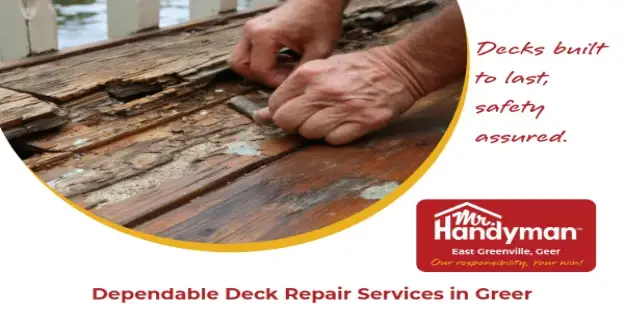
Rot develops when moisture and fungi break down wood fibers. Signs include soft or spongy boards, darkened areas, cracks, or a musty odor. Rot weakens structural integrity and should never be ignored.
Cracking, warping, and splinters
Boards expand and contract with temperature changes. Over time, this leads to cracks, warped edges, and splintering that can catch bare feet or cause trips.
Termite damage
Subterranean and drywood termites often work quietly. Mud tubes, discarded wings, or hollow-sounding wood can point to a larger hidden issue beneath the surface.
Loose railings and fastener failure
Wobbly railings and rusted screws signal trouble. Ledger board failure, where the deck pulls away from the house, is one of the most serious risks and a leading cause of collapses.
Age-related issues
Older decks commonly show fading color, sagging boards, and the need for repeated re-nailing. These are signs the structure may be reaching the end of its reliable lifespan.
Inspection and safety checklist
Regular inspections help reduce surprises. Checking your deck in spring and fall makes it easier to catch issues early.
A simple homeowner checklist includes:
- Pressing a screwdriver into boards to test for softness
- Looking for cracks, warping, or discoloration
- Checking railings for movement
- Inspecting fasteners for rust or loosening
- Examining ledger board connections
- Watching for signs of termites or rot
Annual professional inspections add another layer of protection. Trained eyes can evaluate structural connections and load-bearing elements that are easy to overlook.
Repair vs. replace, making the right decision
Minor issues can often be repaired. Tightening screws, sanding splinters, cleaning mildew, sealing surfaces, or replacing a single damaged board may restore safety and function.
Intermediate repairs involve reinforcing weakened areas, replacing several boards at once, or strengthening support beams. These repairs address problems before they spread.
Replacement becomes the better option when damage is widespread. Deep structural cracks, extensive rot, severe warping, failing fasteners, or termite infestations usually signal that patching will not hold up long term. Weighing repair frequency, labor costs, and future reliability helps guide the decision.
Materials and techniques for board replacement
Material choice matters in Greer’s climate. Pressure-treated lumber remains a reliable option due to its resistance to rot and insects. Naturally durable woods like cedar or redwood perform well when properly maintained. Composite decking offers low maintenance and consistent performance but requires correct installation.
Proper spacing allows water to drain and boards to dry evenly. Corrosion-resistant fasteners help prevent loosening and rust. During board removal, safety comes first, old nails should be removed immediately to avoid injuries.
Professional vs. DIY repair
Some homeowners handle small tasks comfortably, such as swapping out one damaged board. Structural repairs, permit-required work, or issues involving ledger boards and framing are better handled by Mr. Handyman.
Professional deck repair near me searches often reflect a desire for clarity and peace of mind. Mr. Handyman can spot hidden issues, manage permits, and ensure repairs meet local code. This approach helps prevent repeat problems and protects long-term value.
Seasonal and preventative maintenance tips
Timing matters. Drier months typically provide better conditions for repairs and for treatments to cure properly. Annual sealing or staining protects wood from moisture and sun exposure. Keeping vegetation trimmed away from posts and directing water away from the deck reduces rot risk.
Termite prevention includes controlling moisture near foundations, removing mulch close to structures, and scheduling regular inspections. Small habits go a long way toward extending deck life.
When repairs move beyond simple fixes, experienced support brings reassurance. Late-stage deck work should feel straightforward, not stressful. Mr. Handyman serves East Greenville, Maulding, Taylors, and Greer, providing dependable help when safety and structure matter most. Our responsibility. Your win. We make the process simple, we are bonded and insured, and our uniformed, background-checked handymen take care of the details so you do not have to.