.webp)
Remodeling projects live or die based on material choices. The right materials look good, perform well, and last for years. The wrong materials fail prematurely, require constant maintenance, or simply don't fit how you actually live in your home. The difference between a remodel you're proud of and one you regret often comes down to selecting materials that match your priorities, budget, and the specific conditions of your home.
In West Virginia and Maryland, material selection carries extra weight because homes here face seasonal extremes. Winter brings freezing temperatures, ice, and snow. Summer delivers heat and humidity. Spring rains test drainage and water resistance. Older homes, which dominate neighborhoods throughout Martinsburg, Charles Town, and Montgomery County, add another layer of complexity because new materials must work with existing structures that weren't built to modern standards.
The remodeling materials industry overwhelms homeowners with options. Walk into any home improvement store and you'll find fifteen types of flooring, twenty cabinet finishes, and dozens of countertop materials. Online research multiplies the confusion because every product claims to be the best choice for your application.
Choosing materials isn't about finding the single "best" option. It's about understanding what matters most for your specific project, how you use your home, and what maintenance you're willing to commit to. A material that's perfect for one household becomes a maintenance nightmare for another.
Understanding Durability Versus Maintenance Requirements
Durability and low maintenance aren't the same thing. A material can be incredibly durable but require constant upkeep. Hardwood floors last decades but need refinishing. Natural stone countertops are nearly indestructible but require regular sealing. Conversely, some materials are less durable overall but need almost no maintenance during their lifespan.
Before committing to any material, ask two separate questions. First, how long will this last under normal use? Second, what does it take to keep it looking and performing well during that lifespan?
Kitchens and bathrooms face different durability demands than living spaces. Kitchen countertops endure hot pans, knife blades, acidic foods, and constant cleaning. Bathroom floors deal with water exposure, humidity, and temperature fluctuations. Living room flooring needs to handle foot traffic and furniture weight but doesn't face the same moisture challenges.
In this region's older homes, durability also means compatibility with settling foundations, temperature swings, and houses that have shifted over decades. Rigid materials crack when homes move. Materials that require perfect substrate conditions fail when installed over original subfloors that aren't perfectly level.
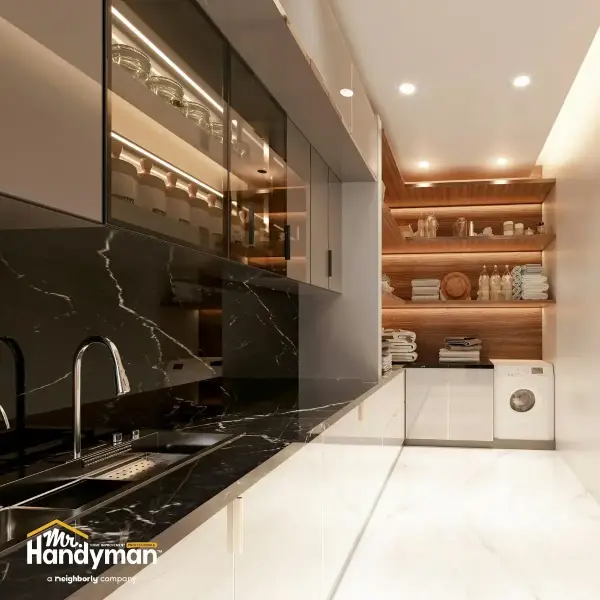
High-maintenance materials work fine if you enjoy the upkeep or can afford professional maintenance. Marble countertops are beautiful, but they stain easily and require regular sealing. If you're willing to seal them twice a year and clean up acidic spills immediately, they're a great choice. If you want to set down a lemon and forget about it, choose something else.
Matching Materials to Actual Use Patterns
Homeowners often choose materials based on how they want their lives to look rather than how their lives actually function. This creates mismatches that lead to frustration, damage, or constant worry about ruining finishes.
If you have kids, pets, or frequent guests, pristine white surfaces and delicate finishes create stress rather than enjoyment. Materials should accommodate your life, not require you to change your behavior to protect them. Dark grout shows every spill. Light-colored upholstery in a household with dogs becomes a cleaning project.
Think about your actual habits. Do you cook frequently? Do you entertain? Are you meticulous about cleaning or more relaxed? Honest answers guide you toward materials that work with your lifestyle rather than against it.
Kitchens where serious cooking happens need different materials than kitchens used primarily for reheating. Busy cooks need surfaces that handle high heat, sharp knives, and acidic ingredients without damage. Laminate countertops struggle with hot pans. Butcher block needs regular oiling. Quartz handles almost anything without complaint.
Bathrooms used by multiple people every morning need materials that dry quickly and resist mildew. Textured tiles that look beautiful in showrooms trap moisture and develop mold in real bathrooms. Glass shower enclosures show water spots unless cleaned after every use.
Flooring choices should reflect who walks on them and what gets spilled on them. Engineered hardwood looks great but scratches easily under pet nails and swells if water sits on it. Luxury vinyl plank handles both pets and moisture without issues but doesn't have the same resale appeal as real wood.
Climate and Regional Considerations That Matter Here

West Virginia and Maryland aren't moderate climates. Homes here experience temperature swings from below zero to over 90 degrees, plus high humidity in summer and freeze-thaw cycles in winter. Materials that perform well in temperate regions fail here without proper selection and installation.
Wood products expand and contract with humidity changes. Solid hardwood flooring installed without adequate expansion gaps buckles when humidity rises in summer. Engineered wood handles humidity fluctuations better than solid wood because its layered construction resists expansion and contraction.
Tile and stone also respond to temperature changes. Large-format tiles crack more easily than smaller tiles when substrates expand and contract. Natural stone can spall, meaning the surface flakes off, if water penetrates and then freezes.
Basement and crawl space materials require moisture resistance. Standard drywall grows mold in below-grade applications if moisture isn't controlled. Moisture-resistant drywall, cement board, or alternative wall coverings perform better. Flooring in basements needs to be waterproof or highly water-resistant because concrete slabs transmit moisture vapor constantly.
Pay attention to manufacturer recommendations for climate zones. Products rated for your region have been tested in conditions similar to what your home experiences. Materials marketed nationally might not specify climate limitations, but installation failures often trace back to using products outside their intended climate range.
Balancing Upfront Cost With Long-Term Value
Material costs vary dramatically, and the cheapest option rarely delivers the best value over time. The most expensive option doesn't guarantee better performance for your specific application. The goal is understanding what you're paying for and whether those benefits matter in your situation.
Initial cost is the price tag at the store. But total cost includes installation, maintenance, and replacement timing. A material that costs half as much initially but lasts half as long costs the same over time, plus the disruption and labor of replacing it sooner.
Some materials cost more upfront but save money through longevity or reduced maintenance. Metal roofing costs significantly more than asphalt shingles initially but lasts 50-plus years versus 20 to 30 for asphalt. Over the life of the roof, metal often costs less per year.
Labor costs also factor into material selection. Some materials install quickly with basic tools. Others require specialized equipment, professional installation, or extensive substrate preparation. Complex installation can double or triple the total project cost beyond the material price alone.
Energy efficiency impacts long-term costs as well. Insulated windows cost more than single-pane but reduce heating and cooling costs forever. Better insulation in walls and attics pays for itself through lower utility bills.
Part B
Flooring Materials for Different Rooms and Functions
Flooring is one of the most visible material choices in any remodel, and different rooms demand different performance characteristics. What works beautifully in a bedroom fails in a kitchen or bathroom.
Kitchens need flooring that resists water, handles dropped objects without cracking, and cleans easily. Luxury vinyl plank checks all these boxes while looking like hardwood or stone. It's waterproof, comfortable underfoot, and durable enough for high-traffic areas. Porcelain or ceramic tile also works well in kitchens because it's waterproof and extremely durable, though it's harder and colder underfoot than vinyl.
Bathrooms require completely waterproof flooring. Tile is the traditional choice and performs reliably if properly installed with waterproof underlayment. Luxury vinyl plank or sheet vinyl also works well and is warmer and softer than tile. Avoid laminate flooring in bathrooms because it swells and delaminates when water seeps into seams.
Living rooms and bedrooms have more flexibility because water exposure is minimal. Hardwood, engineered wood, carpet, and luxury vinyl all work depending on your priorities. Hardwood offers timeless appeal and can be refinished multiple times. Engineered wood provides a similar look with better moisture resistance. Carpet adds warmth and comfort but shows wear and stains more readily.
Basements need waterproof or highly water-resistant flooring because concrete slabs transmit moisture vapor. Luxury vinyl plank, tile, and sealed concrete all work. Carpet can work if installed over proper vapor barrier and the basement is dry, but it's risky in basements with any moisture history.
Consider transitions between rooms. Flooring that changes at every doorway looks choppy and increases installation complexity. Using the same flooring throughout main living areas creates visual flow and simplifies installation.
Countertop Materials Beyond Granite and Laminate
Countertop materials span a wide range of performance levels and price points. Understanding what each material handles well and where it struggles helps you choose appropriately.
Quartz countertops dominate modern kitchens because they're nearly indestructible, non-porous, and require zero maintenance beyond normal cleaning. They resist stains, heat, and scratches better than most natural stone. The downside is cost, which is comparable to granite, and the fact that they're engineered rather than natural, which some homeowners see as less desirable.
Granite remains popular because each slab is unique and it handles heat well. However, granite is porous and requires regular sealing to prevent stains. Acidic substances like lemon juice can etch the surface. If you're diligent about sealing and careful about spills, granite performs beautifully.
Butcher block countertops bring warmth and natural beauty to kitchens. They're ideal for food preparation because knives won't dull as quickly as on stone. But they require regular oiling, can't handle standing water, and burn or scorch if hot pans are placed directly on them. They're a lifestyle choice more than a practical one.
Laminate has improved dramatically in recent years. Modern laminate countertops look convincingly like stone or wood and cost a fraction of the price. They resist stains and are easy to clean. However, they can't be repaired if damaged, they're not heat-resistant, and cuts or scratches expose the substrate underneath.
Solid surface materials like Corian offer a middle ground. They're non-porous, repairable if scratched, and available in numerous colors and patterns. They resist stains well but can be damaged by heat and aren't as hard as quartz or granite.
For bathroom vanities, the same materials work, but moisture resistance becomes more critical. Quartz, granite, and solid surface all handle bathroom humidity well. Laminate works if installed carefully with sealed edges, but water intrusion at seams causes swelling and failure.
Cabinet and Trim Materials That Last
Cabinets represent a significant portion of kitchen and bathroom remodel budgets. Material choice affects both appearance and longevity.
Solid wood cabinets are the traditional standard. They're durable, can be refinished, and age well. However, they're expensive and can warp or crack in high-humidity environments. Maple, oak, and cherry are common choices, each with distinct grain patterns and hardness levels.
Plywood cabinet boxes with hardwood doors and drawer fronts offer a good balance. Plywood is more stable than solid wood and resists warping. Using solid hardwood only for visible surfaces reduces cost while maintaining appearance.
Medium-density fiberboard (MDF) cabinets with painted finishes are increasingly common. MDF provides a smooth, uniform surface ideal for paint. It's less expensive than solid wood and doesn't have grain patterns that telegraph through paint. However, MDF is vulnerable to water damage and swells if it gets wet.
Particleboard is the least expensive cabinet material. It works adequately in low-moisture areas but degrades quickly if exposed to water. Budget cabinets often use particleboard for boxes with thin veneer or laminate surfaces.
Cabinet hardware matters as much as the boxes themselves. Soft-close hinges and drawer slides cost more initially but eliminate slamming and extend cabinet life. Full-extension drawer slides provide better access than cheaper alternatives.
Trim and molding choices affect how finished a remodel looks. MDF trim is easy to work with and ideal for painted applications. It's stable, smooth, and less expensive than solid wood. Solid wood trim is preferable for stained applications because MDF doesn't accept stain.
Primed finger-jointed pine trim offers a middle option. It's paintable, relatively inexpensive, and made from solid wood, though the finger joints are visible if stained.
When to Upgrade and When to Save

Not every material choice deserves premium investment. Understanding where upgrades matter and where budget options perform adequately helps you allocate resources effectively.
Invest in materials that affect daily function or are expensive to replace later. Quality flooring, countertops, and plumbing fixtures matter because you interact with them constantly and replacement requires significant work. Choosing durable options in these categories pays off through years of reliable performance.
Save on materials that are easy to change later or purely aesthetic. Paint colors, cabinet hardware, light fixtures, and wall decorations can all be updated inexpensively as tastes change. Starting with budget options in these areas leaves money for upgrades that affect livability.
Hidden materials deserve investment even though you won't see them. Quality subflooring, moisture barriers, insulation, and structural fasteners prevent problems that cost far more to fix later. Skimping on these materials to afford fancier finishes is backwards thinking.
Items with long replacement cycles justify higher initial investment. A quality toilet, faucet, or light fixture that lasts 20 years costs less per year than a cheap version that fails in five and needs replacement multiple times.
Highly visible materials in focal areas warrant upgrades. Kitchen countertops, primary bathroom vanities, and main living area flooring are seen and used constantly. Budget materials in these locations make the entire remodel feel cheap.
Secondary spaces can use budget materials without affecting the overall quality impression. Guest bathroom fixtures, basement flooring, and utility room finishes don't need the same investment as primary living areas.
Frequently Asked Questions
How do I know if a material will work in my older home?
Older homes have settled, shifted, and developed quirks over decades. Materials for these homes need to accommodate movement and imperfect substrates. Flexible materials like luxury vinyl plank work better than rigid materials like large-format tile. Consult with professionals familiar with older home renovations before committing to materials that require perfect installation conditions.
Are expensive materials always better quality?
Not necessarily. Price often reflects brand recognition, aesthetics, or niche appeal rather than performance. Some expensive materials require more maintenance than cheaper alternatives. Research performance characteristics specific to your application rather than assuming higher price means better quality.
Can I mix different flooring materials in an open floor plan?
You can, but transitions should occur at logical boundaries like doorways or where rooms clearly divide. Multiple flooring changes in open spaces look disjointed and increase installation complexity. If mixing materials, choose products with similar thickness to minimize transition strips.
How important is it to match existing materials exactly?
Exact matches are rarely necessary or possible. Materials age, manufacturers discontinue products, and dye lots vary. Focus on coordinating rather than matching. Choose materials that complement existing finishes in color tone and style rather than trying to achieve perfect matches.
Should I choose materials based on resale value?
Consider resale value if you're planning to sell within five years. Beyond that, choose materials you'll enjoy living with. Trends change, and what's popular now may not appeal to buyers a decade from now. Durable, neutral materials have broader appeal than trendy choices.
What's the best way to compare material warranties?
Read warranty terms carefully rather than just comparing length. Some warranties cover only manufacturing defects, not normal wear or installation issues. Others void if you don't use specific installation methods or maintenance products. Understand what's actually covered before weighing warranty length in your decision.
Making Material Choices That Serve Your Home
Material selection determines whether your remodel succeeds in the long term. The shiniest, newest, or most expensive options aren't always the right choices. The right materials balance performance, maintenance requirements, cost, and compatibility with how you actually live.
Take time to research beyond marketing claims. Talk to people who've lived with the materials you're considering. Ask professionals about real-world performance, not just what manufacturer literature promises. Visit completed projects and see how materials have aged.
Consider your timeline for living in the home, your maintenance tolerance, and what aspects of the remodel matter most to you. These factors guide material choices more reliably than generic recommendations.
If you're unsure which materials suit your specific remodel, home conditions, or lifestyle, professional guidance prevents expensive mistakes. Experienced handymen and contractors have seen how materials perform in regional climate conditions and older homes. They can recommend options that match your priorities and budget while avoiding materials known to fail in applications similar to yours.
Mr. Handyman of Martinsburg and Charles Town
Mr. Handyman of Northern Montgomery County
Mr. Handyman of South Montgomery County
The right materials make remodels last. Choose thoughtfully, install properly, and maintain appropriately. Your remodel will serve you well for years.
