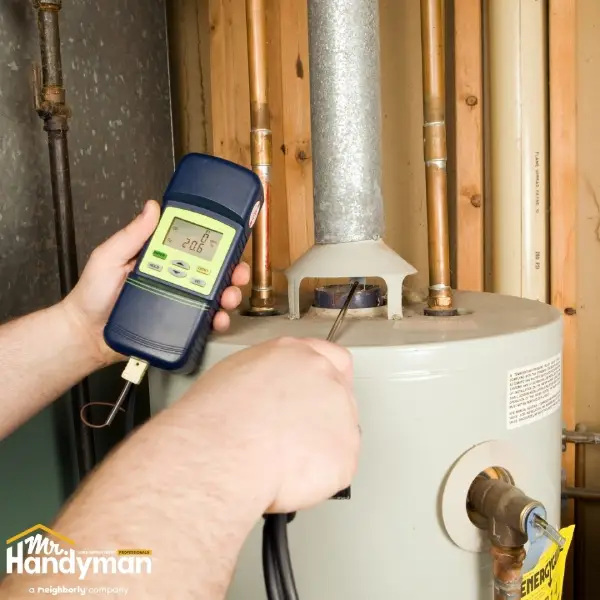
Signs Your Water Heater Is Struggling in Cold Weather often appear gradually, then escalate quickly once winter temperatures settle in. Cold weather places additional strain on water heaters because incoming water temperatures drop significantly, forcing systems to work harder just to maintain normal performance. When a unit is already aging or poorly maintained, winter exposes weaknesses that may not be noticeable during warmer months.
At Mr. Handyman of Montgomery County and Martinsburg, winter water heater issues are among the most common cold weather service calls. Homes throughout Rockville, Silver Spring, Gaithersburg, Bethesda, and Martinsburg experience similar challenges due to colder groundwater, increased hot water demand, and aging plumbing systems. Recognizing early warning signs can help homeowners avoid sudden failures and costly emergency repairs.
Why Cold Weather Is Hard on Water Heaters
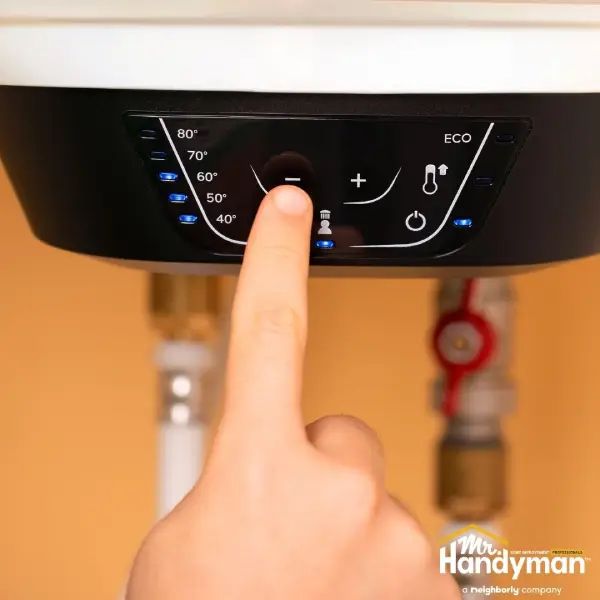
Water heaters are designed to raise water temperature to a set level. During winter, incoming water enters the system much colder than usual. This forces the heater to run longer and cycle more frequently.
Several winter specific factors increase stress on water heaters:
- Lower groundwater temperatures
- Higher household hot water usage
- Longer recovery times between cycles
- Increased sediment impact inside tanks
- Greater pressure fluctuations
Over time, this added strain accelerates wear on heating elements, burners, and internal components. Cold weather does not usually cause a problem on its own. It exposes issues that were already developing.
Inconsistent Hot Water Is a Key Warning Sign
One of the earliest signs your water heater is struggling in cold weather is inconsistent hot water. Water may start hot but turn lukewarm quickly, or temperature may fluctuate unexpectedly during normal use.
What Causes Temperature Inconsistency
Common causes include:
- Sediment buildup reducing tank capacity
- Failing heating elements
- Undersized water heater for household demand
- Thermostat issues
- Increased winter demand overwhelming the system
During winter, these issues become more noticeable because the system has less margin for error.
Why This Should Not Be Ignored
Inconsistent hot water often indicates declining efficiency. Left unaddressed, it can lead to complete system failure during peak cold weather when repair timelines are longer and demand is higher.
Longer Recovery Times Between Uses
If it takes noticeably longer for hot water to return after showers, laundry, or dishwashing, the water heater may be struggling.
Why Recovery Time Increases in Winter
Recovery time slows because:
- Incoming water is much colder
- Heating elements must work harder
- Sediment insulates the tank bottom
- Components lose efficiency with age
Homes in areas such as Germantown, Olney, and Poolesville often experience this issue more sharply due to colder overnight temperatures and larger household usage patterns.
When Slow Recovery Becomes a Problem
Occasional slow recovery can be normal in extreme cold. Persistent delays usually indicate maintenance issues that should be addressed before winter demand peaks.
Unusual Noises Coming From the Tank
Cold weather often makes existing water heater noises more noticeable. Sounds such as popping, rumbling, or cracking are common warning signs.
What These Sounds Mean
Noises usually occur when sediment hardens at the bottom of the tank. As the burner or heating element activates, trapped water bubbles through the sediment layer, creating noise and uneven heating.
Why Winter Makes This Worse
Sediment buildup reduces efficiency year round, but winter increases its impact because the heater runs longer and hotter to compensate for cold water. This accelerates wear and shortens system lifespan.
Water Heater Is Running Constantly
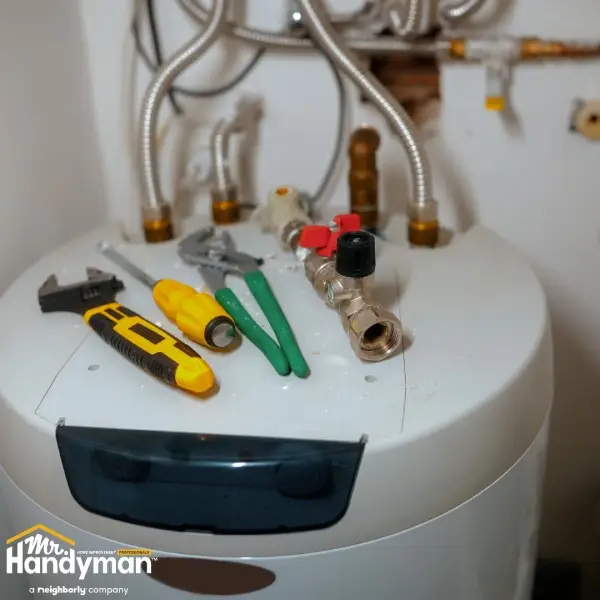
A water heater that runs almost continuously during winter may be struggling to keep up with demand.
Common Causes of Overworking
- Undersized unit
- Poor insulation on hot water pipes
- Aging components
- Thermostat calibration issues
Constant operation increases energy costs and raises the likelihood of breakdowns during cold weather.
How This Affects Home Maintenance Costs
An overworked water heater is more likely to fail unexpectedly. Emergency replacements during winter are typically more expensive and disruptive than planned maintenance or upgrades.
Visible Leaks or Moisture Around the Unit
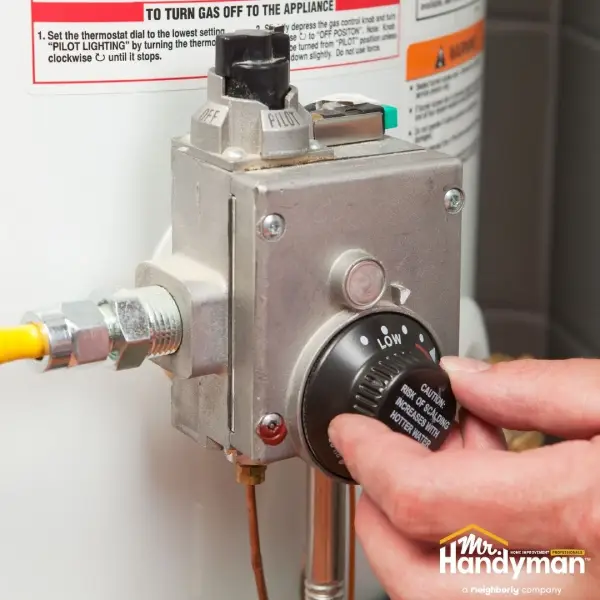
Any moisture around a water heater should be taken seriously, especially during winter.
Where Leaks Commonly Appear
- Pressure relief valve
- Tank seams
- Pipe connections
- Drain valve
Cold weather increases pressure inside the tank due to thermal expansion. Weak points are more likely to fail under these conditions.
Why Small Leaks Are a Big Deal in Winter
A slow leak can quickly worsen as temperature fluctuations stress the tank. Winter leaks also increase the risk of water damage spreading unnoticed due to dry indoor air and heating systems masking early signs.
Rusty or Discolored Hot Water
Discolored hot water is a sign of internal corrosion, which often becomes more noticeable during winter.
What Causes Discoloration
- Deteriorating anode rod
- Internal tank corrosion
- Sediment mixing during increased cycling
Once corrosion begins, failure is often not far behind.
Why Cold Weather Accelerates the Issue
Increased heating cycles stir sediment and expose weakened internal surfaces. This makes winter an especially risky time for older water heaters.
Age of the Water Heater Matters More in Winter
Most traditional tank water heaters last eight to twelve years. Cold weather places older units under greater stress than they can reliably handle.
Signs Age Is Catching Up
- Frequent temperature complaints
- Rising energy bills
- Increased noise
- Minor but recurring leaks
Older systems may function during warmer months but fail once winter demand increases.
Water Heater Issues Affect More Than Comfort
A failing water heater impacts daily routines, energy efficiency, and overall home repair costs. Sudden failures can disrupt entire households and lead to secondary damage if leaks go unnoticed.
Recognizing signs your water heater is struggling in cold weather allows homeowners to act early. Preventative maintenance, timely repairs, or planned replacements are far more manageable than emergency situations during freezing conditions.
Common Winter Conditions That Expose Water Heater Weaknesses
Cold weather does not usually create new water heater problems. Instead, it exposes weaknesses that already exist. Understanding which winter conditions stress water heaters the most helps homeowners recognize why certain issues appear suddenly once temperatures drop.
Several environmental and usage factors combine during winter, making this season the most demanding time of year for hot water systems.
Colder Groundwater Temperatures Increase System Load
During winter, the temperature of incoming water can drop dramatically. The colder the incoming water, the harder the water heater must work to raise it to the desired temperature.
This increased workload leads to:
- Longer heating cycles
- Higher energy consumption
- Increased wear on heating elements or burners
- Reduced system efficiency
Units that performed adequately during warmer months may struggle once winter arrives because they no longer have enough capacity to compensate.
Higher Household Hot Water Demand
Cold weather naturally increases hot water usage. Showers run longer, handwashing increases, and appliances such as dishwashers and washing machines are used more frequently.
Increased demand can overwhelm systems that are:
- Undersized for the household
- Near the end of their lifespan
- Affected by sediment buildup
When demand exceeds capacity, performance declines rapidly.
Sediment Buildup Becomes a Bigger Problem in Winter
Sediment accumulation is one of the most common hidden causes of winter water heater trouble. Minerals in water settle at the bottom of tank style units over time. During winter, sediment causes more damage than usual.
How Sediment Affects Winter Performance
Sediment creates an insulating layer between the heating source and the water. This forces the system to work harder to produce the same results.
Winter related consequences include:
- Slower heating times
- Increased noise
- Higher energy bills
- Overheating of internal components
- Premature tank failure
Cold weather magnifies these issues because the system is already under increased load.
Why Sediment Often Goes Unnoticed
Many homeowners do not realize sediment is present until performance declines significantly. Annual flushing is often skipped, allowing buildup to worsen year after year.
Sediment problems are a common factor in winter breakdowns and should be addressed as part of routine home maintenance.
Pressure Changes Stress Aging Components
Winter temperature fluctuations cause expansion and contraction inside plumbing systems. Water heaters experience pressure changes as cold water enters the tank and hot water exits.
Components Most Affected by Pressure Changes
- Tank seams
- Pressure relief valves
- Pipe connections
- Internal weld points
In newer systems, these components are designed to handle normal pressure variation. In older or poorly maintained units, winter pressure changes can trigger leaks or sudden failure.
Why Pressure Issues Often Appear in Winter
As the system works harder, internal pressure rises. Combined with thermal expansion, this creates stress at weak points. Small defects that were stable during warmer months may fail once winter demand increases.
Ventilation and Combustion Issues in Cold Weather
For gas powered water heaters, winter can introduce additional risks related to ventilation and combustion.
How Winter Affects Venting Systems
Cold air, snow, and ice can interfere with proper ventilation. Restricted airflow affects combustion efficiency and can cause safety issues.
Common winter venting problems include:
- Blocked exhaust vents
- Condensation buildup in vent pipes
- Backdrafting due to cold air pressure
These issues reduce performance and may trigger safety shutoffs.
Why This Matters for Home Safety
Ventilation problems affect more than hot water availability. They can lead to carbon monoxide risks and system shutdowns. Any performance decline in a gas water heater during winter should be evaluated promptly.
Tankless Water Heaters Have Winter Specific Challenges
Tankless water heaters handle cold weather differently than tank style units, but they are not immune to winter strain.
Cold Weather Effects on Tankless Systems
- Reduced flow rates to maintain temperature
- Increased electrical or gas demand
- Potential freezing of intake or exhaust lines
- Error codes during extreme cold
Tankless units rely on consistent water flow and proper ventilation. Winter conditions disrupt both, especially if components are exposed or poorly insulated.
Signs Tankless Systems Are Struggling
- Sudden drops in water temperature
- Fluctuating output during use
- System shutdowns in extreme cold
Winter performance issues in tankless systems often indicate installation or insulation deficiencies.
Energy Costs Rise When Water Heaters Struggle
One of the clearest indicators of winter water heater trouble is a noticeable increase in energy bills. When systems lose efficiency, they consume more energy to deliver the same results.
Why Winter Bills Increase More Than Expected
- Longer heating cycles
- Constant system operation
- Heat loss through uninsulated pipes
- Reduced efficiency due to sediment
Energy spikes without corresponding usage increases often signal underlying water heater problems.
When Performance Decline Signals the Need for Action
Some winter performance changes are expected. Others indicate the system is nearing failure.
Signs Immediate Attention Is Needed
- Repeated loss of hot water
- Persistent noise
- Visible leaks
- System error codes
- Strong temperature fluctuations
Ignoring these signs during winter increases the risk of sudden breakdowns and emergency replacement.
Why Early Intervention Matters
Addressing water heater issues early helps homeowners avoid:
- Emergency service calls
- Higher repair costs
- Water damage
- Extended downtime during cold weather
Proactive evaluation during early winter supports reliable performance and aligns with responsible home repair planning.
How to Respond When Your Water Heater Shows Winter Warning Signs
Recognizing signs your water heater is struggling in cold weather is only helpful if the next steps are clear. Once warning signs appear, timely action can prevent complete system failure, reduce repair costs, and avoid water damage during the most demanding season of the year.
Cold weather shortens the margin for error. Problems that might be manageable in spring or summer often escalate quickly in winter, when systems are already operating near their limits.
Why Delaying Repairs Is Riskier in Winter
Water heaters rarely fail without warning. Most winter breakdowns occur after weeks or months of declining performance. Ignoring those early signs increases both the likelihood and severity of failure.
What Happens When Issues Are Left Unaddressed
Delays often lead to:
- Sudden loss of hot water
- Tank rupture or major leaks
- Water damage to surrounding areas
- Emergency service calls during peak demand
- Higher replacement and labor costs
Winter conditions amplify these risks because repair windows are narrower and system stress is constant.
Short Term Steps to Reduce Winter Strain
While long term solutions are ideal, certain short term actions can help stabilize a struggling water heater during cold weather.
Immediate Actions Homeowners Can Take
- Lower hot water usage during peak times
- Space out showers, laundry, and dishwashing
- Reduce thermostat settings slightly to limit overworking
- Insulate exposed hot water pipes
- Keep the water heater area adequately heated
These steps do not fix underlying problems, but they can reduce stress while a professional evaluation is scheduled.
When Maintenance Is Enough and When It Is Not
Not every winter water heater issue requires replacement. Many systems benefit significantly from proper maintenance if addressed early.
Situations Where Maintenance Can Help
Maintenance may resolve issues when:
- The unit is under ten years old
- Problems are related to sediment buildup
- Performance decline is mild or recent
- No visible leaks are present
Common maintenance services include tank flushing, thermostat adjustment, valve inspection, and minor part replacement. These steps restore efficiency and extend system life.
When Replacement Becomes the Smarter Choice
Replacement is often the better option when:
- The tank shows signs of corrosion
- Leaks are present at seams or welds
- Repairs are frequent or recurring
- The system is near the end of its lifespan
- Winter demand consistently overwhelms capacity
Replacing an aging unit before it fails avoids emergency scenarios and allows homeowners to choose the right system for their needs.
How Winter Performance Reveals System Capacity Issues
Cold weather highlights whether a water heater is properly sized for the home. A unit that barely meets demand during winter is likely undersized or inefficient.
Signs a System Is Undersized
- Hot water runs out quickly during normal use
- Multiple fixtures cannot be used at once
- Recovery times are excessively long
- Temperature drops occur during extended use
Winter exposes these limitations because incoming water is colder and household demand increases.
Why Proper Sizing Matters
An appropriately sized system:
- Maintains consistent temperatures
- Reduces energy consumption
- Experiences less wear
- Performs reliably year round
Correct sizing is a key factor in long term home maintenance and comfort.
The Role of Preventative Inspections Before Peak Cold
Waiting until a water heater fails in winter often results in rushed decisions and higher costs. Preventative inspections allow issues to be addressed on a planned timeline.
What Preventative Inspections Identify
A professional inspection can reveal:
- Sediment accumulation
- Failing heating elements or burners
- Pressure regulation problems
- Ventilation issues
- Early signs of corrosion
Catching these issues early reduces the chance of unexpected winter outages and supports responsible home repair planning.
How Water Heater Problems Affect the Entire Home
Water heater struggles affect more than hot water availability. They impact energy efficiency, plumbing system pressure, and even indoor air quality in gas powered systems.
Secondary Effects of Water Heater Failure
- Increased energy bills
- Strain on plumbing connections
- Moisture related damage
- Potential safety concerns
Addressing water heater issues promptly protects the entire home, not just one appliance.
Why Professional Help Is Especially Important in Winter
Winter is not the time for guesswork. Diagnosing water heater problems requires experience, especially when cold weather complicates performance.
Professional handyman services provide:
- Accurate system assessment
- Safe repair and replacement options
- Preventative recommendations
- Proper installation and compliance
Experienced professionals help homeowners avoid repeat issues and ensure systems are prepared for ongoing cold weather.
Planning Ahead Prevents Winter Emergencies
The most reliable way to avoid winter water heater failure is to plan ahead. Recognizing signs early and acting before peak cold arrives gives homeowners control over timing, cost, and outcomes.
Understanding the signs your water heater is struggling in cold weather allows for informed decisions that protect comfort, safety, and property value throughout the winter season.
Schedule Water Heater Service Before Winter Problems Escalate
If you are noticing warning signs or want to ensure your system is ready for cold weather, Mr. Handyman of Montgomery County and Martinsburg can help. Our team provides dependable handyman services focused on preventative maintenance, repairs, and long term solutions.
Call us to schedule a water heater inspection or service and reduce the risk of winter breakdowns before temperatures drop further.