The Season That Opens Up Half Your Home
For most of the year, the outdoor spaces attached to a home exist at the edge of daily life. They are visible through windows, occasionally used for a quick errand or to let the dog out, but not genuinely lived in. Then spring arrives, and everything changes. Temperatures become comfortable, daylight extends into the evening, and the instinct to move life outside reasserts itself naturally.
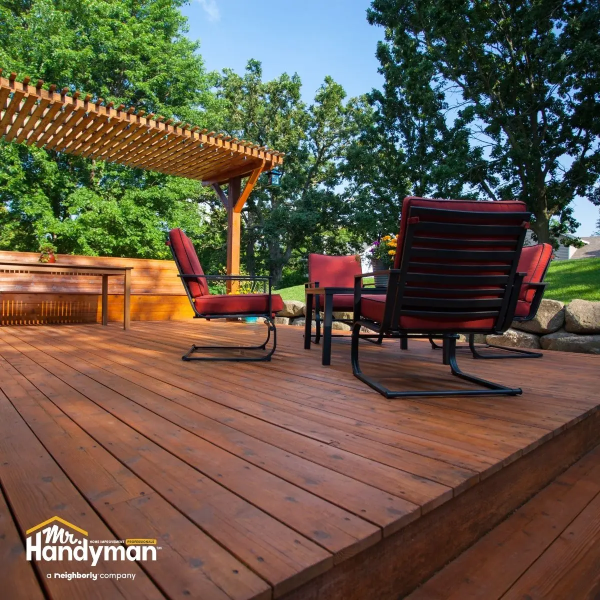
Outdoor living spaces, whether a deck, patio, screened porch, pergola, or simply a well-configured backyard, represent a significant portion of a home's usable square footage during the warmer months. Homes that have invested in functional, comfortable outdoor spaces use them consistently from April through October, extending the effective living area of the home for more than half the year. Homes where outdoor spaces have been neglected, damaged, or never properly developed leave that potential completely unrealized.
Spring is not just a convenient time to start outdoor living projects. It is the strategically correct time. The reasoning goes beyond simply wanting to enjoy the space once it is complete. Starting outdoor work in spring means projects are finished and fully usable before the peak of summer entertaining season, before the heat of July and August makes outdoor construction work difficult, and before contractor schedules fill with the rush of homeowners who waited too long and are now competing for limited availability.
Across Martinsburg, Charles Town, and the communities of Montgomery County, Maryland, spring arrives with enough warmth to work comfortably outdoors while leaving adequate time before summer to complete meaningful projects. Homeowners who understand this window and act on it early consistently get more from their outdoor spaces than those who plan to start in June and find themselves still waiting on materials and scheduling in August.
What Winter Leaves Behind and Why It Matters
Before new outdoor living projects can be planned and executed, winter has to be honestly assessed. The Eastern Panhandle of West Virginia and Montgomery County, Maryland both experience genuine winter conditions, with repeated freeze-thaw cycles, sustained cold, ice accumulation, and the kind of temperature swings that stress outdoor structures in ways that are not always immediately visible.
Decks absorb the full impact of winter. Wood decking expands and contracts with every temperature change, and the cumulative effect of a full winter season shows clearly in spring. Boards that have cupped or warped create uneven surfaces that are both unsightly and a tripping hazard. Fasteners that have worked loose through repeated movement leave boards that flex or shift underfoot. Ledger boards, which connect the deck to the house structure, are particularly vulnerable to moisture intrusion and rot because they sit against the exterior wall where water can collect and remain.
Concrete and paver patios suffer differently but equally. Freeze-thaw cycles force water into cracks and joints, expand it, and widen those cracks with every cycle. Pavers that were level in October may have heaved or settled significantly by March. The polymeric sand that fills joints between pavers erodes over winter, leaving gaps that allow weeds to establish and water to migrate beneath the surface. Concrete patios develop new cracks or see existing ones widen, and surfaces that were sealed before winter may have lost that protection entirely.
Pergolas, fences, and other wood structures that spent winter under snow load and repeated wet-dry cycles need careful inspection for post rot at ground contact points, joint separation where hardware has loosened, and any structural member that has begun to bow or crack under sustained stress. These issues do not announce themselves dramatically. They develop quietly and become obvious only when the structure is actually being used and stress is applied.
Understanding this damage is the foundation of good spring outdoor project planning. Some of what needs to happen in spring is repair before improvement. Getting the existing structure into sound condition before building on top of it ensures that new investment is protected by a solid foundation rather than compromised by underlying problems that were never addressed.
Why Spring Conditions Make Outdoor Work Possible and Practical
Outdoor construction and finishing work is directly dependent on temperature and moisture conditions in ways that indoor projects are not. Concrete must be poured and cured within specific temperature ranges. Deck stains and sealers require surface temperatures and humidity levels that summer and fall can provide but that winter entirely prevents. Wood framing work is best done in dry conditions where materials are not absorbing moisture before they are built into a structure.
Spring in this region delivers conditions that are nearly ideal for outdoor construction work. Temperatures in March through May typically range from the mid-40s to the low 80s, which covers the working range for virtually every outdoor construction material and finish product. Rainfall is present but not so sustained that work days are consistently lost. The ground has thawed and settled from winter heaving, which matters for any project involving footings, posts, or paving work.
Lumber purchased and used in spring is typically drier and more dimensionally stable than lumber purchased in the humid peak of summer, which matters for decking and framing work where dimensional stability affects the long-term appearance and performance of the finished structure. Concrete work done in spring cures at rates that are more predictable and controlled than the accelerated curing that happens in summer heat, which can compromise surface strength if not carefully managed.
These practical advantages mean that spring outdoor work not only starts at the right time relative to the summer use season but also produces better results than the same work done in less favorable conditions.
Deck Projects: Repair, Restore, or Replace
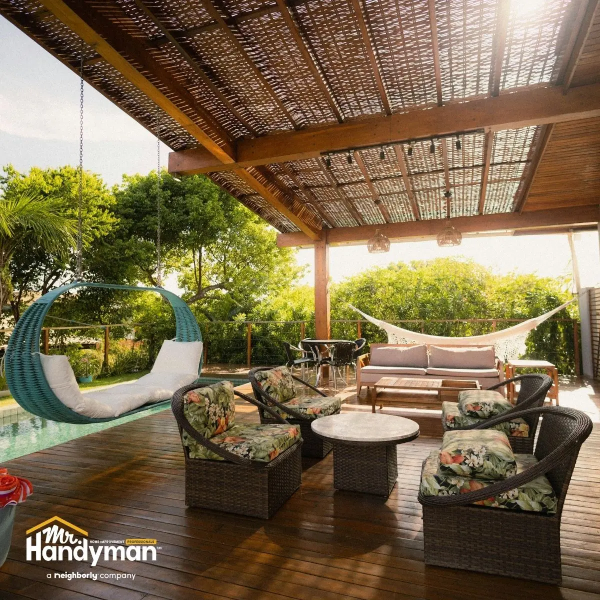
The deck is the most used outdoor living space in most homes, and it is the structure that most consistently requires spring attention after a winter season in this region.
Assessing What You Actually Have
Before any deck project can be scoped, an honest structural assessment needs to happen. This means going beyond the surface and evaluating the condition of the framing beneath the decking boards. Probe the ledger board, the rim joists, the posts, and the beam connections with a screwdriver or awl. Sound wood resists penetration. Rotted wood gives way easily and often looks fine from the surface until pressure is applied. Decks where surface boards are replaced without addressing underlying framing rot are a safety concern and a financial waste, because the new surface will begin to fail as moisture from the rotted framing below continues to migrate upward.
Post bases that sit directly in soil or concrete without proper standoffs are a consistent rot point in older decks throughout this region. Water wicks up through the base and into the post end grain, where rot progresses from the inside out. By the time surface discoloration appears, the post may already be significantly compromised structurally.
Repair Versus Replacement
A deck where the framing is sound but the surface is worn, stained, or has isolated board failures is a strong candidate for surface repair and refinishing rather than full replacement. Replacing individual boards, re-driving or replacing fasteners, and applying a fresh coat of stain or sealer can restore both the appearance and the protective function of a deck at a fraction of replacement cost.
A deck where framing members are rotted, where posts are compromised, or where the ledger connection to the house has been affected by moisture intrusion requires more serious evaluation. In some cases, targeted structural repairs address the problem effectively. In others, the cumulative condition of the structure makes full replacement the more practical and cost-effective path over the following five to ten years.
Outdoor Lighting, Electrical, and the Details That Make Spaces Livable After Dark
An outdoor living space that is fully functional during daylight but unusable after sunset is only half a living space. Outdoor lighting is consistently one of the most underinvested aspects of outdoor living projects, and it is one of the updates that most dramatically extends how much a space is actually used throughout the spring and summer months.
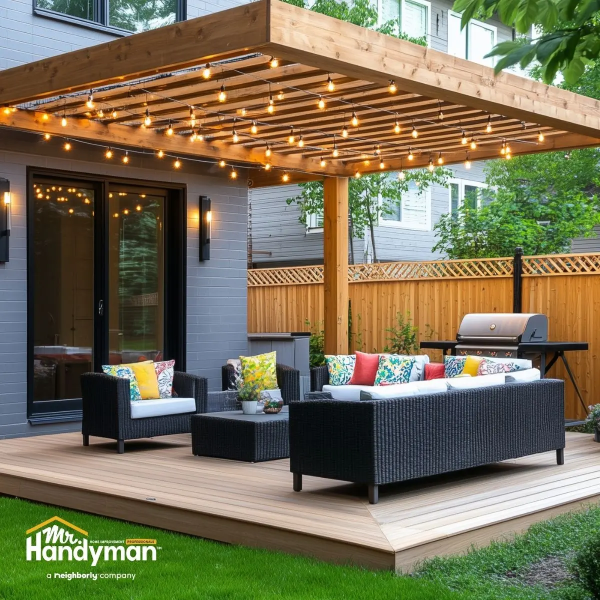
String lighting suspended between pergola posts or along roof lines creates the warm, ambient atmosphere that makes outdoor spaces feel genuinely inviting during evening gatherings. This is the most requested outdoor lighting addition in residential projects and for good reason. It is relatively simple to install, requires minimal infrastructure, and transforms the feel of an outdoor space more dramatically than almost any other single addition.
Recessed lighting installed in pergola or porch ceilings provides task illumination for dining and food preparation areas while maintaining a clean, intentional appearance that string lighting alone does not always deliver. Step lighting along deck stairs and path lighting leading from the house to outdoor living areas address safety as much as atmosphere, ensuring that transitions between indoor and outdoor spaces are safe to navigate after dark.
Any outdoor lighting project that involves hardwired fixtures rather than plug-in or solar options requires electrical work that should be planned and permitted appropriately. Outdoor electrical circuits need to be protected by ground fault circuit interrupter protection, and all fixtures, boxes, and conduit used in outdoor applications need to be rated for exterior use. These requirements are not bureaucratic formalities. They reflect the real difference in safety outcomes between properly installed outdoor electrical systems and improvised ones.
Outdoor Kitchens and Functional Cooking Spaces
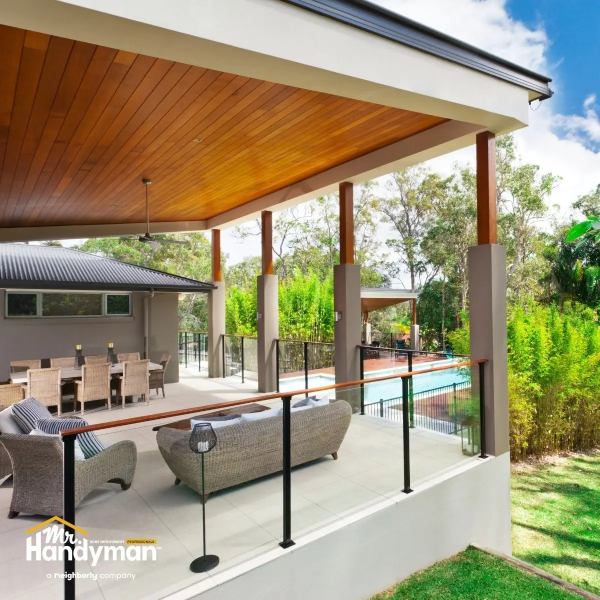
Outdoor entertaining in this region increasingly centers on outdoor cooking, and the difference between a portable grill on a patio and a properly configured outdoor cooking space is the difference between a functional outdoor kitchen and an afterthought. Spring is the right time to plan and build outdoor cooking infrastructure because the project can be completed before the grilling season peaks and because the materials used in outdoor kitchen construction, particularly masonry, concrete, and stone, benefit from the moderate curing conditions that spring provides.
A basic outdoor cooking area that goes beyond a standalone grill includes a built-in grill or smoker set into a countertop surface, a prep area with adequate counter space on at least one side, and storage for tools, fuel, and accessories. Adding a small outdoor refrigerator and a side burner for sauces, sides, and boiling extends the functional range of the space significantly. Homeowners who entertain frequently find that these additions, while modest in cost relative to the overall project, change how the outdoor kitchen actually gets used.
Counter surfaces for outdoor kitchens need to withstand temperature extremes, UV exposure, moisture, and the grease and food contact that cooking generates. Concrete, natural stone, and porcelain tile are all appropriate materials that hold up reliably under outdoor conditions. Granite, while requiring sealing for outdoor use, remains a popular choice because of its heat resistance and visual appeal.
What Homes in This Region Specifically Need for Outdoor Projects
The combination of climate, housing age, and lot characteristics across the Eastern Panhandle and Montgomery County creates outdoor project considerations that are specific to this region and that shape how projects should be planned and executed.
Lots with significant slope, which are common throughout the hilly terrain of the Eastern Panhandle and the more varied topography of Montgomery County, require careful drainage planning for any patio or ground-level outdoor structure. Water that flows toward a patio during rain events erodes the base over time, shifts pavers, and can direct moisture toward the foundation if the drainage path is not properly managed. French drains, swales, and proper grade management around outdoor structures are not optional details in these conditions. They are fundamental to how long the project holds up.
Homes in Martinsburg, Shepherdstown, and Charles Town frequently have mature trees in close proximity to outdoor living areas. Tree roots are an ongoing consideration for both patio and deck projects, as they exert upward pressure on pavers and concrete over time and can undermine post footings if structural elements are placed within the root zone. Understanding the root patterns of significant trees before finalizing the layout of outdoor structures avoids conflicts that become expensive to resolve after construction is complete.
The older homes throughout both regions often have original exterior electrical service that does not include outdoor circuits or adequate capacity for the lighting and appliance loads that outdoor living spaces generate. Planning outdoor electrical needs as part of the overall outdoor project rather than as an afterthought avoids the situation where a completed outdoor space cannot be fully used because the electrical infrastructure to support it was never properly addressed.
Frequently Asked Questions
When is the best time to start an outdoor living project to ensure it is finished before summer?
Projects started in March or early April have the best chance of completion before Memorial Day weekend, which is the practical beginning of summer entertaining season in this region. The earlier the planning and material selection is completed, the more likely the project finishes on schedule. Waiting until May to begin planning typically means the project is not complete until midsummer at the earliest.
How long does a typical deck repair or restoration take?
A deck restoration involving board replacement, fastener repairs, cleaning, and staining typically runs three to five days depending on the size of the deck and the extent of the repairs. Full deck replacement takes longer, generally one to two weeks for a standard residential deck. Structural repairs that involve post or beam replacement add time depending on scope.
Is a pergola a good investment for homes in this region?
A pergola adds functional outdoor living space, improves the visual appeal of the home's exterior, and contributes positively to perceived value in resale situations. In this region where outdoor living is practical for six or more months of the year, a well-built pergola that creates a defined outdoor room delivers consistent value both in daily use and in how the home presents to buyers.
Do outdoor living projects require permits?
Permit requirements vary by project type and jurisdiction. Decks above a certain height, pergolas with footings, and any electrical work typically require permits in both West Virginia and Maryland jurisdictions. Working with an experienced handyman service that understands local permit requirements ensures that projects are completed correctly and that no compliance issues arise during a future home sale.
How do I maintain outdoor living spaces after they are built?
Wood surfaces should be cleaned and resealed or restained every two to three years depending on sun and moisture exposure. Paver patios benefit from annual joint sand replenishment and periodic cleaning and resealing. Pergola connections and hardware should be inspected each spring for loosening or corrosion. Screens on enclosed porches should be inspected annually and replaced when damage appears. Consistent light maintenance extends the life of outdoor structures significantly and prevents the kind of deferred deterioration that turns manageable repairs into full replacements.
Can a handyman service handle full outdoor living projects, or do I need a general contractor?
Experienced handyman services handle the full range of outdoor living projects including deck repair and replacement, patio installation and repair, pergola construction, screen porch work, outdoor lighting, and fixture installation. Projects that involve significant electrical panel upgrades or complex structural engineering benefit from specialist involvement for those specific elements, but the majority of residential outdoor living work falls well within the scope of a skilled handyman service.
Start Your Outdoor Living Project Before Summer Arrives
The outdoor spaces surrounding your home represent some of its most valuable and most underused potential. Spring is the season that makes realizing that potential both practical and timely, with conditions that support quality work, timelines that allow completion before peak summer use, and the motivation that comes from months of winter finally giving way to warmth and light.
Mr. Handyman brings the experience and range of skills that outdoor living projects require across the Eastern Panhandle and Montgomery County. From deck repairs and patio restoration to pergola construction, screen installation, outdoor lighting, and the careful attention that older homes and regional conditions specifically demand, their technicians approach every outdoor project with the goal of building something that lasts and performs through every season.
Mr. Handyman of Martinsburg and Charles Town
mrhandyman.com/martinsburg-charles-town
Mr. Handyman of Northern Montgomery County
mrhandyman.com/northern-montgomery-county
Mr. Handyman of South Montgomery County
mrhandyman.com/south-montgomery-county
Call us to schedule a spring outdoor living consultation. Whether you are repairing what winter damaged, restoring a space that has been neglected, or building something entirely new, the right help makes the difference between a project that sits unfinished through summer and one that becomes the best part of your home before June arrives.