The Exterior of Your Business Is Always Working, Even When You Are Not
Every customer who pulls into your parking lot, walks toward your entrance, or glances at your building from the street is forming an impression before they set foot inside. That impression is shaped entirely by what they see on the exterior of the property, and in Northern Indiana's competitive business environment, what they see either reinforces confidence in the business or introduces doubt that the interior experience has to overcome.
Commercial exterior condition in Northern St. Joseph and Elkhart Counties faces a specific annual reset that businesses in more moderate climates do not experience at the same intensity. A Northern Indiana winter delivers lake-effect snow accumulation, sustained below-zero temperatures, repeated freeze-thaw cycling in late winter and early spring, and the physical stress of snow removal equipment operating across parking surfaces and adjacent to building exteriors through months of continuous winter management. The exterior that looked sound in October arrives at spring carrying the full account of what that winter delivered, and the businesses that address that account before busy season arrives are presenting themselves from a fundamentally different position than those that carry winter's damage through the months when customer impression matters most.
South Bend, Mishawaka, Elkhart, and Goshen businesses that move through spring without addressing accumulated exterior conditions head into their busiest season carrying a presentation liability and a physical maintenance deficit that compounds with every week of deferred attention. Understanding what Northern Indiana winters specifically do to commercial exteriors, and which repairs deliver the strongest return when addressed before busy season, produces a more effective exterior repair investment than a generic maintenance list provides.
What Northern Indiana's Winter Does to Commercial Exteriors
The specific damage patterns that Northern Indiana winters produce on commercial exteriors are shaped by conditions that moderate-climate commercial maintenance guidance does not fully address. Understanding these patterns before a repair scope is developed produces a more targeted and effective spring exterior repair program.
Masonry and mortar joints in older South Bend and Mishawaka commercial buildings absorb moisture through their porous surfaces during the wet fall and winter periods that precede the sustained freezes of a Northern Indiana winter. When that absorbed moisture freezes at the temperatures Northern Indiana regularly reaches, which can extend well below zero during cold snaps, it expands within the masonry structure with greater force than freeze-thaw cycling in moderate climates produces. The spalling and mortar joint deterioration that results is more aggressive than a single mild freeze produces, and Northern Indiana's winters deliver this cycling repeatedly across the season. A commercial masonry surface that shows minor mortar joint deterioration after one winter carries accelerating damage if that deterioration is not addressed before the next season adds to it.
Painted exterior surfaces on commercial buildings experience adhesion failure through freeze-thaw cycling in ways that are particularly pronounced in Northern Indiana. Paint that has aged past its effective adhesion life holds through mild temperature variation but releases from the substrate when the amplitude of Northern Indiana's freeze-thaw cycling exceeds what the degraded adhesion can accommodate. The cracking, peeling, and bubbling that appears on commercial exteriors across Northern Indiana every spring becomes more extensive with each passing season if the underlying surface preparation and paint quality issues are not addressed during repainting.
Metal components on commercial exteriors, including door frames, window frames, awning structures, handrails, and signage mounting hardware, experience the corrosion that Northern Indiana's combination of moisture, road salt exposure, and temperature cycling accelerates. In Northern Indiana's commercial environment, where deicing salts applied to parking surfaces and walkways through a long winter season are tracked and splashed against building exteriors repeatedly, the corrosion that metal exterior components develop is driven not just by moisture and temperature but by the chemical action of deicing products that moderate-climate commercial buildings do not experience at the same frequency or concentration.
Sealants and caulking around every penetration in the commercial building envelope lose flexibility and adhesion through Northern Indiana's temperature cycling in ways that are more aggressive than moderate-climate sealant degradation. A caulk joint that cycles through the full temperature range that a Northern Indiana winter delivers, from well below zero during cold snaps to the thaw temperatures of late winter, experiences the expansion and contraction stress that produces the cracking and adhesion failure that allows moisture infiltration into wall assemblies during spring rain events that follow immediately after winter's end.
Parking Lots and Paved Surfaces: The High-Stakes Exterior Repair

Commercial parking surfaces in Northern Indiana carry a maintenance urgency that is specifically driven by the region's winter conditions and that differs meaningfully from parking surface maintenance in moderate climates.
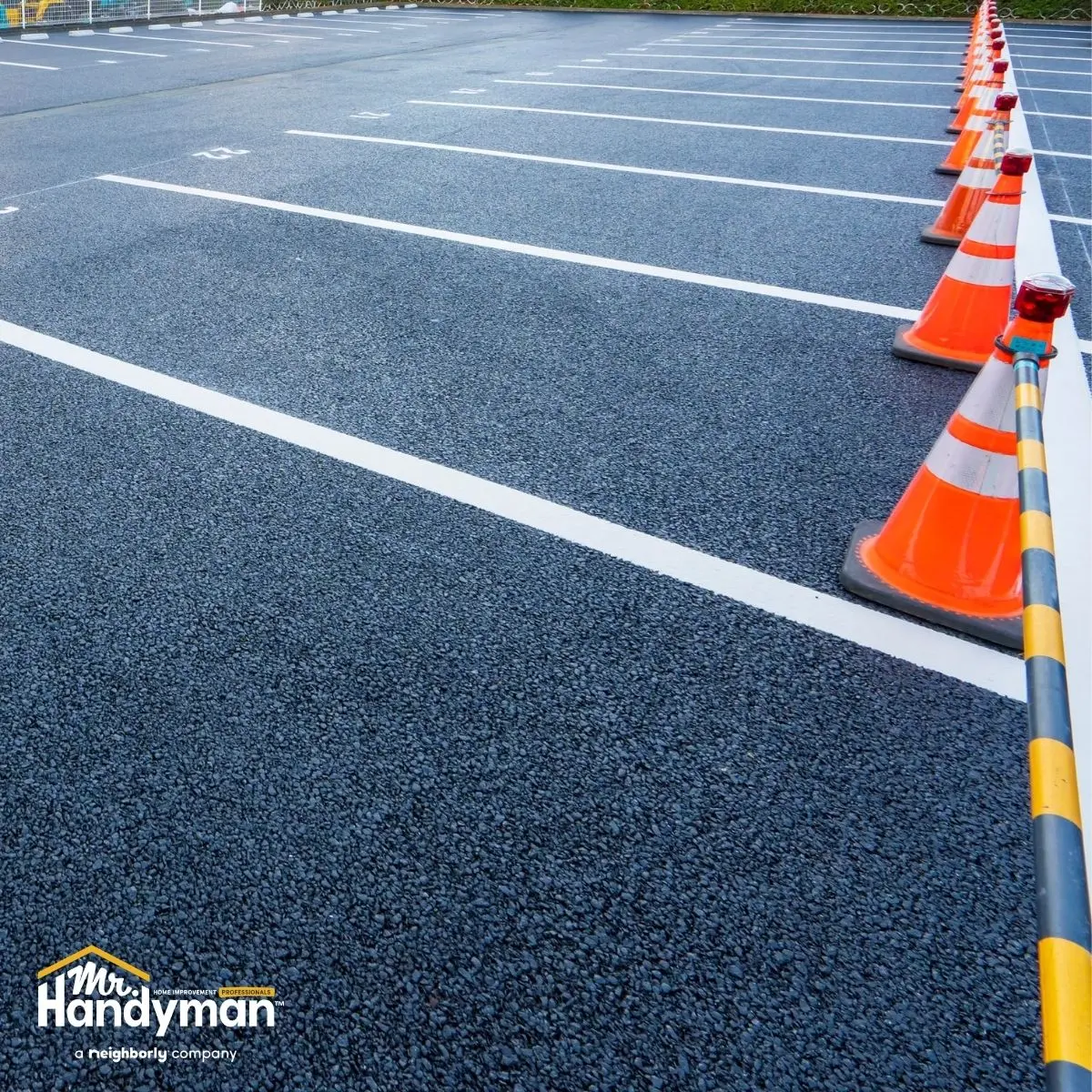
Asphalt surface deterioration in Northern Indiana commercial parking lots reflects the compounded effect of freeze-thaw cycling, deicing product application, and the heavy snow removal equipment that plows, salts, and clears commercial parking surfaces through months of winter management. Asphalt that developed surface cracking over previous seasons allowed water infiltration that froze within the existing crack structure and expanded it through each freeze-thaw cycle. The deicing products applied to Northern Indiana commercial surfaces through winter accelerate the chemical deterioration of asphalt binders in ways that reduce surface integrity beyond what temperature cycling alone produces. By spring, commercial parking surfaces across Northern Indiana that have not received consistent crack sealing maintenance show the alligatoring and edge deterioration that base saturation and surface failure produce when surface cracking is left to develop through multiple Northern Indiana winters.
The practical implication for South Bend, Mishawaka, Elkhart, and Goshen commercial property owners is that spring crack sealing performed before the next freeze season is the intervention that prevents the progression from surface cracking to base failure at a cost that is a fraction of what reconstruction requires once base failure is established. Every Northern Indiana winter that passes over unsealed surface cracks advances that progression, and the spring following each winter is the intervention window that commercial property owners who protect their pavement investment use consistently.
Concrete parking surfaces and aprons at commercial properties develop the joint and crack deterioration that Northern Indiana's freeze-thaw cycling produces in rigid paving materials with particular aggression. Concrete joints that have lost their sealant through the temperature cycling of a Northern Indiana winter allow water and incompressible debris to enter, producing joint spalling and panel cracking that worsens with each seasonal cycle. Spring concrete joint resealing maintains the joint protection that prevents the freeze-thaw damage that enters through open joints.
Parking lot striping that has been degraded through winter weather, snow removal equipment scraping across marked surfaces, and the deicing product exposure that Northern Indiana winters deliver to parking surface markings requires spring restriping to restore the function and presentation that faded markings no longer provide. In Northern Indiana commercial properties where snow removal through the winter effectively scours surface markings across months of plowing activity, spring restriping is a near-annual maintenance requirement rather than the periodic one that warmer-climate parking surfaces require.
Entry Areas and Facades: Where Customer Impression Begins
The entry sequence of a commercial property in Northern Indiana, from the parking surface to the building entrance, carries the winter damage that customers evaluate as their first impression of the business before any interior quality is encountered.
Entry door condition and function in Northern Indiana commercial properties reflects the stress that a long winter of high-use entry and exit cycles through cold and wet conditions delivers to door hardware, weatherstripping, and closer mechanisms. A commercial entry door in a South Bend or Mishawaka business that has been operating through months of cold weather, with thermal contraction affecting frame dimensions, moisture exposure affecting hardware function, and the physical stress of high-use entry in a climate that requires customers to push through wind and cold, arrives at spring with maintenance needs that are more extensive than the same door would develop through a moderate-climate winter. Weatherstripping that has been compressed past its recovery point, closer mechanisms that have drifted from their adjustment through thermal cycling, and hardware that has developed corrosion at exposed surfaces all require spring attention before the busy season tests entry door function under peak customer traffic conditions.
Awning and canopy condition over Northern Indiana commercial entries reflects the specific stress that significant snowfall and ice accumulation delivers to overhead structures that moderate-climate commercial buildings do not experience. Canvas awnings that survived summer's UV exposure may have sustained damage through the weight of accumulated snow or ice that formed on their surfaces through a Northern Indiana winter. Metal canopy structures with connection points that experienced the thermal cycling and ice accumulation that Northern Indiana winters deliver require spring inspection that confirms structural integrity before those connections are tested by spring wind events and the weight of spring rain accumulation on horizontal surfaces.
Exterior wall surfaces adjacent to the building entry, where customer attention is concentrated during their approach, carry the winter paint failure, masonry deterioration, and caulking failure that Northern Indiana's seasonal stress specifically produces at the locations that are most visible to arriving customers. A spring exterior repair program that prioritizes the entry zone surfaces that customers evaluate most directly delivers the strongest impression return on the repair investment.
Roofline and Upper Facade: What Gets Missed Because It Is Out of Sight
The upper portions of a commercial building exterior receive the least routine attention and the most sustained weather exposure of any surface on the property. In Northern Indiana, where a winter of lake-effect snow accumulation, ice dam formation, and repeated freeze-thaw cycling is followed immediately by spring rain events that test every compromised surface, the roofline and upper facade of a commercial building concentrate damage in ways that ground-level observation alone does not fully reveal.
Fascia and soffit condition along the roofline of Northern Indiana commercial buildings reflects the sustained moisture exposure that snow accumulation and ice dam formation deliver to those surfaces through a demanding winter. Wood fascia that absorbed moisture from the ice dam conditions that form along eave lines during Northern Indiana winters where interior heat loss meets exterior snow cover develops paint failure and wood degradation that spring inspection identifies before another winter advances the deterioration further. In South Bend and Mishawaka commercial buildings where original wood fascia has been in service for decades, this inspection is particularly important because the material has less resilience to absorb additional seasonal stress than sound material carries.
Parapet wall condition on flat-roofed commercial buildings, which represents a significant portion of Northern Indiana's commercial building stock across both established urban districts and newer suburban commercial development, deserves spring inspection attention that is specifically informed by the ice and snow conditions that Northern Indiana winters create at these exposed wall tops. Coping caps displaced by ice expansion, cap flashing separated from parapet faces through the freeze-thaw cycling that parapet walls experience on three exposed sides simultaneously, and through-wall flashing that has lost its seal through thermal movement all allow water to enter the building envelope from the highest and most exposed point on the structure with each spring rain event.
Expansion joints across upper facades of larger commercial buildings in Northern Indiana experience the sealant failure that the region's full temperature range, from summer heat to well-below-zero winter cold, produces in joint sealant systems through a single seasonal cycle. Expansion joint sealant that was applied at moderate temperatures and has since cycled through a Northern Indiana winter may have cracked or separated at one or both bond surfaces in ways that are not visible from the ground but that allow water infiltration at every point where the joint has opened. Spring expansion joint inspection and resealing is the maintenance task that closes these water infiltration pathways before another spring rain season tests them.
Drainage and Site Utilities: Protecting the Building From the Ground Up
Commercial exterior drainage systems that were stressed through a Northern Indiana winter of significant snowmelt and spring rainfall need spring assessment that confirms they are managing water correctly before summer storm events place peak demand on systems that may have sustained damage or blockage through the winter.
Downspouts and storm drainage connections from commercial roofs require spring inspection that confirms they are clear of ice blockage residue, debris, and any damage that winter snow and ice loads produced at connection points and discharge locations. In Northern Indiana commercial buildings where downspout discharge points may have experienced ice formation at grade through the winter, confirming that discharge paths are open and directing water away from the foundation before spring rain events arrive prevents the foundation moisture problems that blocked drainage redirects against building perimeters.
Site grading and surface drainage around Northern Indiana commercial buildings reflects the frost heave and soil movement that the region's freeze-thaw cycling produces in site surfaces that may have drained correctly before winter but have developed the low spots and drainage reversals that soil movement creates. Spring is when those drainage problems are most visible because the ground is saturated and drainage patterns are active. Correcting negative grade areas and clearing blocked site drainage before summer storm season prevents the foundation moisture accumulation that misdirected drainage creates.
How Exterior Repair Investment Affects Commercial Property Value
For commercial property owners across South Bend, Mishawaka, Elkhart, and Goshen, exterior condition affects market position in ways that extend beyond customer impression to the financial performance of the property as a real estate asset.
Commercial properties in Northern Indiana's active investment market carry deferred maintenance discounts in appraisal and lease negotiations that typically exceed what the actual repair work costs. A commercial building with obvious winter damage, failing parking surfaces, and deteriorated facade elements is being evaluated by prospective tenants and buyers who include the visible maintenance deficit in their financial assessment of the property. Addressing that deficit through spring exterior repairs before the property is evaluated in lease renewal or sales conversations produces a market position that deferred maintenance cannot achieve regardless of how competitive the lease rate or asking price.
Elkhart County's commercial market, which includes significant industrial and retail development activity driven by the county's manufacturing and recreational vehicle economy, brings tenants and buyers who evaluate commercial property condition with the practical eye of business operators who understand maintenance costs. A commercial exterior that presents as well-maintained communicates ownership quality that supports both lease terms and property valuations in ways that Northern Indiana's business community recognizes and responds to directly.
Frequently Asked Questions
How do I prioritize exterior repairs when the full scope exceeds the available budget?
In Northern Indiana's context, prioritize by the consequence of another winter on unrepaired conditions. Masonry and caulking failures that will absorb another season of freeze-thaw cycling without repair will produce significantly more damage by next spring. Parking surface cracks that are sealable now will become base failures after one more Northern Indiana winter. Prioritizing the conditions that Northern Indiana's specific winter stress will most aggressively worsen produces better outcomes than prioritizing by visibility or cost alone.
Is it worth repainting a commercial exterior if surface preparation is not done correctly?
Never. Paint applied over surfaces that have not been properly cleaned, stripped of failing existing finish, primed, and prepared fails through the same mechanism that produced the original failure within a single Northern Indiana seasonal cycle. The labor cost of proper surface preparation is the investment that determines how long the paint system performs, and skipping it produces a result that requires redoing before the investment in the paint itself has been recovered.
How often should Northern Indiana commercial parking lots be sealed and restriped?
Asphalt sealing every two to three years rather than the three to five year intervals appropriate for moderate climates reflects the more aggressive deterioration rate that Northern Indiana's freeze-thaw cycling, deicing product exposure, and snow removal equipment activity produces on commercial pavement surfaces. Restriping in Northern Indiana commercial lots often approaches an annual requirement given the scouring effect that snow removal equipment has on surface markings through a full winter season.
Should exterior repairs be completed before or after interior renovations?
Exterior envelope repairs always precede interior work. Completing interior finishes in a building with unresolved roof leaks, failed exterior caulking, or compromised masonry exposes the interior investment to the same moisture intrusion that damaged the existing interior. Northern Indiana's spring rain season that follows immediately after winter makes this sequencing requirement particularly urgent because the interval between winter's end and the first significant spring rain events is shorter than the time available to complete both exterior and interior work simultaneously.
How do I evaluate contractor quality for Northern Indiana commercial exterior repair?
Request references from commercial properties of similar construction type in Northern Indiana specifically. Experience with the freeze-thaw damage patterns, deicing product effects on building materials, and the masonry and roofing conditions that Northern Indiana winters produce is a meaningful qualification that general commercial exterior experience in more moderate climates does not provide. Contractors who work consistently in this region develop the specific knowledge of how Northern Indiana winters damage commercial exteriors that produces better repair outcomes than contractors whose experience does not include this climate's specific demands.
Before the Busy Season Begins
Commercial exterior repairs completed before busy season produce returns that compound through every week of high-activity business operation that follows. Every customer who arrives at a well-maintained Northern Indiana commercial property, every lease negotiation conducted from a position of demonstrated property quality, and every rain event that a properly sealed building envelope handles without interior damage represents a return on the repair investment made in spring.
The team at Mr. Handyman of Northern St. Joseph and Elkhart Counties brings the commercial exterior repair experience to help business owners and property managers address what Northern Indiana's winter left behind and present their properties at their best before the season that matters most.
Website: https://www.mrhandyman.com/northern-st-joseph-elkhart-counties/
Serving businesses throughout Northern St. Joseph and Elkhart Counties with dependable commercial maintenance and the expertise your property deserves.