Lighting Is the First Thing Members Feel and the Last Thing Operators Think About
There is a quality to a well-lit fitness facility that members register immediately and that shapes their entire workout experience in ways they rarely articulate but consistently act on. A weight room with lighting that delivers accurate color rendering, adequate illumination across the full training floor, and no flickering or dim zones feels energizing and professional. A group fitness studio with lighting that supports instructor visibility and provides adequate ambient illumination for safe movement feels designed for its purpose. A locker room with consistent, flattering illumination that has not yellowed or dimmed through years of service feels maintained and respected.
The inverse of each of these descriptions is what members experience in South Bend, Mishawaka, Elkhart, and Goshen fitness facilities where lighting maintenance has been deferred. Flickering lamps in a weight training area create a visual environment that is distracting during loaded movements requiring focus and that communicates the same deferred maintenance message as any other visible facility condition left unaddressed. Dark zones in a group fitness studio create safety concerns for members navigating a moving class environment. Yellowed or aged locker room lighting produces the institutional quality that members associate with neglected facilities regardless of actual surface cleanliness.
Northern Indiana's fitness market has matured to the point where lighting quality is a differentiator that operators who maintain their facilities deliberately leverage and that operators who defer lighting maintenance allow to work against them. The specific environmental conditions that Northern Indiana delivers to commercial fitness facility lighting systems, from the humidity variation of seasonal transitions to the temperature cycling that the region's demanding climate produces, accelerate the deterioration that affects lamp output, fixture integrity, and electrical component performance in ways that moderate-climate maintenance intervals consistently underestimate.
How Northern Indiana's Climate Affects Commercial Fitness Facility Lighting
The specific environmental conditions that Northern Indiana fitness facilities present to their lighting systems create deterioration patterns whose rate and character reflect regional climate demands that national lighting maintenance guidance calibrated to average conditions does not fully address.
Humidity variation across Northern Indiana's seasons produces stress in lighting fixture components that the region's seasonal amplitude specifically drives. The transition from the low humidity of Northern Indiana's extended heating seasons to the elevated humidity of summer cycles fixture housing seals, socket contacts, and electrical connections through the moisture absorption and drying that affects metal components and electrical interfaces in ways that facilities in more stable humidity environments experience less severely. A fixture housing that was fully sealed at installation develops the micro-penetrations through Northern Indiana's seasonal cycling that allow humidity to reach internal components, accelerating the corrosion that affects electrical performance over time.
Temperature cycling between Northern Indiana's cold winters and conditioned interior temperatures produces thermal stress in lighting fixture mounting hardware, lens materials, and lamp bases that accumulates across seasonal cycles. Recessed fixture housings in ceiling assemblies that transition between conditioned facility interior and attic spaces above them experience the thermal differential continuously during heating and cooling seasons, producing the mounting hardware loosening and lens seal deterioration that periodic inspection and maintenance identifies before it affects fixture performance.
Vibration from training activity in Northern Indiana weight rooms and group fitness studios introduces dynamic loading to lighting fixtures that ceiling-mounted commercial fixtures in less active commercial spaces do not experience. Fixtures mounted above functional training zones that receive heavy equipment use, including barbell drops and jump landings that Northern Indiana's winter use concentration makes particularly frequent during peak indoor training months, vibrate through each impact event in ways that loosen lamp bases in their sockets, fatigue mounting hardware connections, and stress the electrical connections at fixture mounting points over time.
The Safety Functions That Lighting Maintenance Supports
Lighting in a Northern Indiana commercial fitness facility is not simply an amenity. It is a safety system whose condition determines whether the physical environment provides members with the visual information their safety requires.
Fall prevention is the most direct safety function that adequate illumination supports. A member navigating a group fitness class in a studio with insufficient illumination cannot see mat edges, equipment positioned by other participants, or instructor foot positions during directional movements with the accuracy that fall prevention requires. In South Bend facilities serving a membership that includes older adults associated with the city's university and established residential communities, the fall risk that inadequate studio lighting presents is a genuine safety responsibility rather than an aesthetic concern.
Emergency egress lighting in Northern Indiana fitness facilities is a safety system with specific maintenance requirements distinct from general facility lighting. Emergency lighting fixtures whose battery backup systems have depleted through age are particularly relevant in Northern Indiana's climate where cold temperatures reduce battery capacity in ways that do not reveal themselves during normal building operation but that affect performance during the power outages that Northern Indiana's winter and spring storm systems produce. Annual testing that confirms every emergency lighting fixture activates correctly on battery backup maintains the emergency function that Northern Indiana's storm season specifically tests.
Mirror and equipment visibility in weight training areas depends on illumination quality appropriate for the visual tasks those areas require. In Northern Indiana facilities where the winter indoor season concentrates member training intensity, the visual demands of weight training under adequate illumination are experienced by more members simultaneously than in facilities where outdoor alternatives distribute training more evenly across seasons.
Lamp and Fixture Maintenance: What a Systematic Program Looks Like
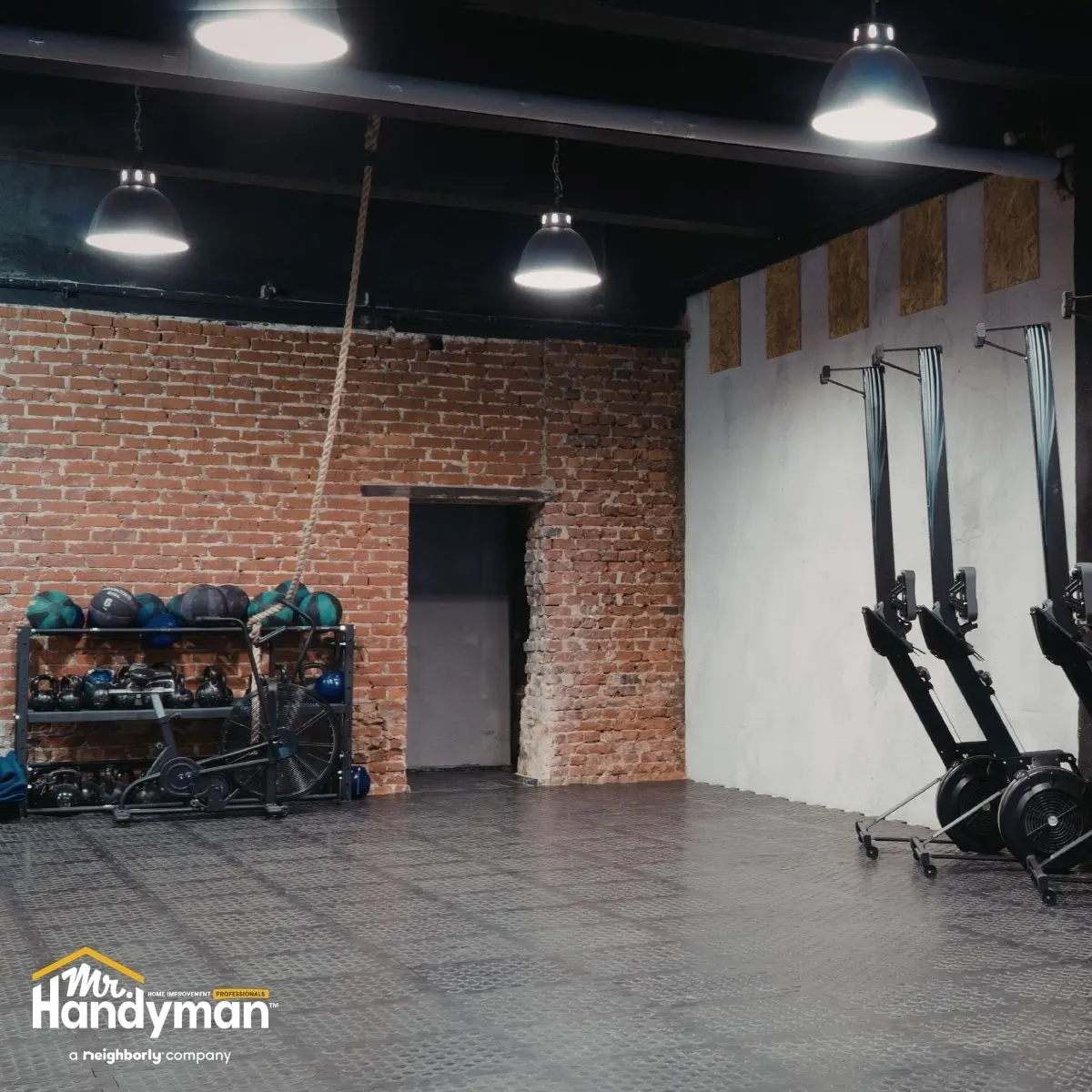
Group relamping schedules that replace all lamps in a facility zone simultaneously at the end of rated lamp life deliver consistent illumination that reactive individual replacement cannot maintain. A Northern Indiana weight room where lamps are replaced individually as they fail contains a variable mix of new lamps at full output and aging lamps at reduced output, producing the uneven illumination that members experience as dark zones without any individual lamp having completely failed.
Fixture cleaning protocols that remove dust, debris, and the film of airborne particulates that Northern Indiana fitness environments deposit on lens surfaces maintain the light transmission that clean fixtures deliver. In Northern Indiana facilities where the extended heating season keeps indoor air circulating through enclosed spaces for months, the airborne particulate accumulation on fixture lenses occurs at rates that require cleaning frequency reflecting actual accumulation rather than calendar intervals.
LED retrofit programs in Northern Indiana fitness facilities operating legacy fluorescent or metal halide lighting deliver simultaneous improvements in illumination quality, energy consumption, and maintenance frequency that make them among the most defensible lighting investments available in this market.
Energy Efficiency: Where Lighting Maintenance Delivers Financial Returns in Northern Indiana
The energy efficiency argument for systematic lighting maintenance in Northern Indiana fitness facilities is grounded in the specific operating conditions that these facilities present and the energy cost environment that Northern Indiana's utility rates create for commercial operations running extended daily hours.
A fitness facility operating sixteen hours daily in Northern Indiana runs its lighting systems for approximately 5,800 hours annually. At that operating volume, the difference between a lighting system maintained at designed efficiency and one operating with aging lamps consuming the same wattage while delivering significantly less light is both a quality deficit and an ongoing energy cost problem. In Northern Indiana's fitness market, where the winter indoor season concentrates member use and extends facility operating hours beyond what facilities in moderate climates typically maintain through comparable periods, that energy cost premium accumulates more intensely than national averages reflect.
LED conversion economics in Northern Indiana fitness facilities present a return on investment calculation that the region's utility rates and facility operating hours make favorable. Indiana Michigan Power and other utility providers serving Northern St. Joseph and Elkhart Counties have commercial rate structures that, applied across the operating hours of a facility-wide LED conversion from legacy fluorescent or metal halide sources, produce annual energy savings that recover the conversion investment within a reasonable payback timeline. That payback calculation is before accounting for the reduced maintenance labor and lamp replacement costs that LED sources' longer service lives produce relative to the legacy sources they replace.
Demand charge management in commercial utility billing structures rewards the peak demand reduction that LED conversion delivers beyond kilowatt-hour consumption savings. Commercial utility billing that includes demand charges assesses the peak power draw the facility places on the distribution system during the highest-demand billing interval. Legacy lighting systems whose high wattage contributes to peak demand are penalized in ways that LED systems with their lower wattage do not produce. Northern Indiana fitness facilities that convert to LED lighting reduce both consumption and demand charges, producing total utility cost reductions that exceed the kilowatt-hour savings that straightforward efficiency calculations capture.
Lighting controls integration with occupancy sensors and programmable dimming schedules produces energy savings that extend beyond the lamp source efficiency improvement that LED conversion delivers. A Northern Indiana fitness facility that operates lighting at full output through all operating hours regardless of zone occupancy is consuming energy that occupancy-responsive controls would not draw. Locker rooms maintaining full illumination through early morning and late evening hours when occupancy is minimal, stretching areas remaining at full output between peak class periods, and zones adjacent to windows maintaining full artificial illumination regardless of available daylight all represent optimization opportunities whose savings accumulate continuously.
Zone-Specific Lighting Requirements Across the Northern Indiana Fitness Facility
Different zones of a Northern Indiana fitness facility present different lighting requirements that a systematic maintenance program addresses with the specificity those differences require.
Weight training and free weight areas require illumination delivering adequate foot-candle levels at the floor surface, accurate color rendering that makes equipment edges and floor marking colors distinguishable, and fixture positioning that minimizes shadow formation in working planes adjacent to benches and racks. The minimum illumination standard for weight training areas in commercial fitness applications is typically fifty foot-candles at the floor level. In Northern Indiana facilities where the winter indoor season concentrates strength training activity, confirming that this standard is maintained through periodic measurement rather than visual assessment alone identifies when lamp aging or fixture contamination has reduced output below the safety threshold.
Group fitness studios require lighting flexibility that other facility zones do not because the range of class formats a single studio accommodates may include high-intensity classes benefiting from bright illumination, yoga and flexibility sessions performing better under reduced light, and cycling or dance formats with specific lighting character requirements. Dimming systems that have been installed but not maintained, whose control interfaces have failed or been bypassed, no longer deliver the flexibility they were designed for. In Northern Indiana facilities where winter concentrates group fitness participation, properly functioning studio dimming systems serve a member population that is particularly dependent on indoor class formats through extended cold months.
Locker rooms and restrooms require illumination serving both functional adequacy and the member experience quality that personal care spaces demand. Locker room lighting at vanity areas specifically requires color rendering quality allowing members to evaluate their appearance accurately. Fixtures in locker room shower areas must be rated for wet location conditions that splash and steam exposure create, and maintenance confirming wet location integrity of shower area fixtures prevents the electrical safety conditions that standard dry location fixtures develop in moisture exposure.
Parking areas and exterior approaches serve the safety function of illuminating member arrival and departure during early morning and late evening hours that Northern Indiana fitness facilities operate through across all seasons. Northern Indiana's winter darkness, which limits natural light significantly through the extended heating season when member fitness motivation peaks, makes exterior lighting function particularly consequential for member safety during the dark arrival and departure conditions that characterize most facility visits through winter months.
Building a Lighting Maintenance Program for Northern Indiana Fitness Facilities
Illumination measurement protocols using a calibrated light meter to verify foot-candle levels at the floor surface of each facility zone against minimum standards provide the objective basis for maintenance scheduling that visual assessment cannot deliver. In Northern Indiana facilities where the extended heating season's airborne particulate accumulation on fixture lenses reduces light transmission progressively, measurement that identifies zones falling below minimum standards before visual symptoms appear identifies maintenance needs at the point where scheduling flexibility still exists.
Fixture inspection schedules that include physical examination of housing integrity, lens condition, mounting hardware security, and electrical connection condition at intervals appropriate for Northern Indiana's seasonal demands maintain the fixture infrastructure that lamp replacement alone cannot sustain. A fixture with a clean new lamp installed in a housing with compromised mounting hardware or corroded socket contacts from Northern Indiana's humidity cycling is not performing at the standard that the new lamp alone would deliver in a properly maintained fixture.
Documentation and tracking of lamp replacement dates, illumination measurements, and fixture inspection findings creates the maintenance record that supports both operational planning and the liability management that Northern Indiana fitness facility safety responsibilities require.
Frequently Asked Questions
What illumination level is appropriate for weight training areas in a Northern Indiana commercial fitness facility? The Illuminating Engineering Society recommends a minimum of fifty foot-candles at the floor level for weight training areas in commercial fitness applications. Group fitness studios benefit from variable illumination capability, and locker room vanity areas require a minimum of fifty foot-candles with high color rendering index. These standards apply equally in Northern Indiana facilities and should be verified through measurement rather than visual assessment given the accelerated fixture and lamp deterioration that Northern Indiana's seasonal conditions produce.
How often should lighting fixtures in Northern Indiana fitness facility locker rooms be inspected for wet location integrity? Locker room shower area fixtures should be physically inspected quarterly in Northern Indiana fitness facilities. The combination of direct moisture exposure, the thermal cycling from shower steam meeting the conditioned air that Northern Indiana's heating systems maintain, and the cleaning chemical exposure that locker room maintenance involves accelerates wet location seal deterioration at rates that annual inspection misses developing conditions before they produce electrical safety concerns.
Is LED conversion cost-effective for a smaller Northern Indiana boutique fitness facility? The energy savings and maintenance cost reduction that LED conversion delivers are proportional to facility size and operating hours but remain favorable across Northern Indiana's utility rate environment even for smaller operations. A boutique facility in Mishawaka or Goshen with lower overall lighting load benefits proportionally from the same efficiency improvement that larger facilities achieve, and the extended service life of LED sources reduces the maintenance labor cost that lamp replacement in a smaller operation often requires outsourcing at disproportionate expense.
How do I handle lighting maintenance in areas difficult to access safely in a Northern Indiana facility? High-bay fixtures in large training areas, fixtures in stairwells with restricted access, and ceiling-mounted fixtures above equipment should be scheduled for service during facility closed periods with appropriate lift equipment. In Northern Indiana facilities where the winter indoor season maintains nearly continuous member occupancy during operating hours, scheduling maintenance access during the brief low-occupancy windows that exist requires advance planning that safety cannot be compromised to avoid.
What is the most common lighting maintenance mistake in Northern Indiana fitness facilities? Reactive individual lamp replacement that addresses visible failures without evaluating adjacent lamp output condition is the most common mistake across Northern Indiana fitness facilities. This approach creates the variable illumination mix of new and aging lamps that produces uneven training floor illumination, generates repeated individual service calls costing more total labor than scheduled group relamping, and allows zone illumination to decline progressively between reactive events in ways that affect member experience before any individual lamp has completely failed. Northern Indiana's extended indoor seasons make this progressive decline particularly consequential because the member population experiencing it is more continuously present than in facilities with longer outdoor alternatives.
Light Is the Environment That Everything Else Happens In
Every piece of equipment, every mirror, every wall surface, and every member in a Northern St. Joseph and Elkhart County fitness facility is experienced through the light that the facility's lighting system delivers. A lighting system maintained at the illumination levels, color quality, and energy efficiency that its design intended is the foundation that makes everything visible in the facility perform at its best through Northern Indiana's demanding seasons.
The team at Mr. Handyman of Northern St. Joseph and Elkhart Counties brings the commercial lighting maintenance experience to help fitness facility operators keep their lighting systems performing at the standard that member safety, brand image, and energy efficiency require.
Website: https://www.mrhandyman.com/northern-st-joseph-elkhart-counties/
Serving businesses throughout Northern St. Joseph and Elkhart Counties with dependable commercial maintenance and the expertise your facility deserves.