Every Door in Your Facility Is Making a Statement
A fitness facility's doors are among the most interacted-with physical components in the building, contacted by every member on every visit, operated under the full range of conditions that Northern Indiana's climate and commercial fitness use produce, and evaluated unconsciously by every person who passes through them against a standard that functional doors meet invisibly and non-functional doors fail conspicuously. A door that swings freely, latches securely, and seals properly communicates professional facility management. A door that binds in its frame, requires excessive force to operate, or fails to latch communicates the deferred maintenance that members translate into assessments of the facility's overall management quality.
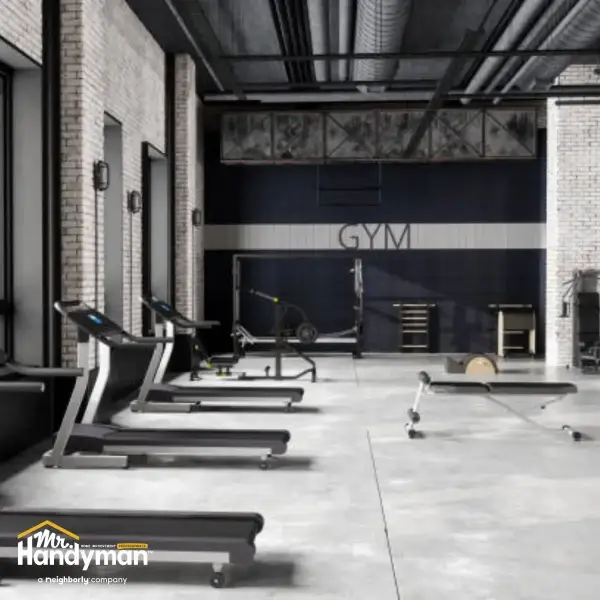
The functional requirements that doors and locks in a Northern Indiana commercial fitness facility must meet extend considerably beyond simply opening and closing. Security systems controlling access to the facility and specific zones determine whether members feel safe and whether liability exposure from unauthorized access is managed appropriately. ADA compliance requirements governing door hardware, opening force, and clearance dimensions determine whether the facility is accessible to members with disabilities. Emergency egress requirements determine how quickly and reliably occupants can exit during an emergency.
Northern Indiana's climate creates specific door maintenance demands that moderate-climate facilities do not experience at the same intensity. The region's extreme winter temperatures, significant snowfall, and the humidity variation between extended heating seasons and summer all affect door operation, hardware function, and frame alignment in ways that require maintenance frequency reflecting Northern Indiana's actual seasonal demands rather than moderate-climate maintenance intervals.
How Northern Indiana's Climate Affects Door and Lock Performance
The climate conditions that Northern Indiana delivers to commercial fitness facility doors and locks accelerate deterioration and misalignment more aggressively than moderate-climate facilities experience, and maintenance approaches calibrated to average conditions allow failure modes to develop that properly calibrated programs prevent.
Temperature extremes in Northern Indiana produce wood door expansion and contraction that is more significant than in moderate climates. A wood door properly fitted in its frame during a spring installation has cycled through Northern Indiana's full temperature range by the following spring, and the dimensional changes that the heating season's low indoor humidity produces in wood doors can change frame fit enough to create the binding that damages hardware, strains closer mechanisms, and requires member force exceeding ADA standards. In older South Bend and Mishawaka commercial buildings where original wood door frames reflect decades of seasonal movement and multiple paint layers, this seasonal binding pattern is a recurring maintenance reality rather than an exceptional condition.
Corrosion on door hardware in Northern Indiana fitness environments develops through the combined effect of the region's humidity variation and the specific conditions that member traffic through winter months introduces. Members arriving at fitness facilities from Northern Indiana parking lots through winter bring the deicing salt residue and moisture that Northern Indiana's snow management requires, and that residue contacts door hardware at every entry and exit. Lock cylinders, door closers, panic hardware, and hinge hardware all develop corrosion at moving components and fastener connections from this deicing chemical exposure at rates that moderate-climate facilities managing only ambient humidity do not experience.
Foundation and building movement in Northern Indiana's freeze-thaw cycle produces frame misalignment in building-mounted door frames through the mechanism that affects foundation walls and concrete flatwork. A door frame misaligned through the frost heave that Northern Indiana's significant frost depth produces in building foundations creates door operation problems whose root cause is structural rather than hardware-related, and hardware adjustment that does not address the underlying frame movement produces temporary corrections that the next seasonal cycle undoes.
Security Systems: What Functional Doors and Locks Protect
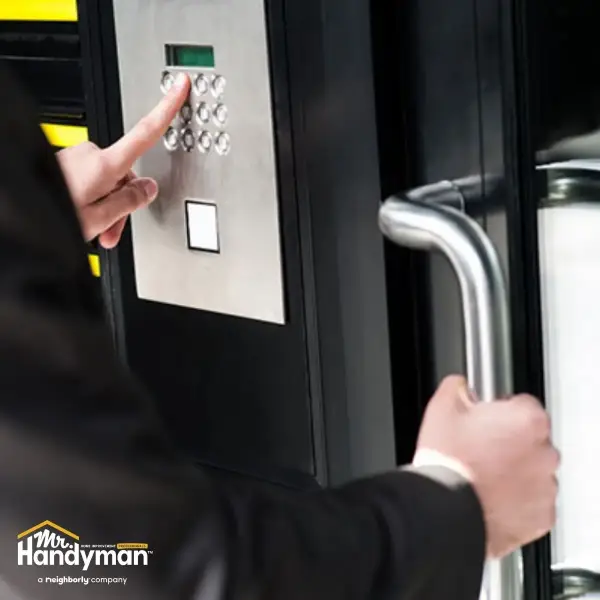
The security function that doors and locks in a Northern Indiana fitness facility provide extends beyond preventing unauthorized entry to the zone-specific access control that protects member personal property, sensitive staff areas, and mechanical spaces whose unauthorized access creates safety and liability concerns.
Main entry access control in Northern Indiana commercial fitness facilities has evolved toward electronic access systems that provide member entry logging, time-based access restrictions, and remote management that mechanical lock systems cannot match. In South Bend facilities where membership volume makes individual staff recognition impractical, the electronic access system is the primary security layer whose reliable function determines whether member access management is performing its intended function through the winter months when members arrive bundled in winter clothing that makes visual identification even less reliable.
Locker room security in Northern Indiana fitness facilities carries a specific member trust dimension that the region's winter season amplifies. Members who store clothing and personal property while changing from winter outer garments trust the facility that the locker room and its access control will protect that property through their workout. In Elkhart County facilities where members may arrive with the winter gear and equipment that Northern Indiana cold weather requires, locker room security failures create liability exposure proportional to the value of the property the failed security allowed access to.
Staff and mechanical area access control protects both the operational integrity of the facility and the safety of members who might access areas whose hazards they are not prepared to manage. In Northern Indiana fitness facilities where mechanical rooms contain heating equipment that operates under sustained heavy demand through long winters, unauthorized member access to mechanical spaces creates safety hazards that properly functioning door locks specifically prevent.
ADA Compliance: The Regulatory Standard That Northern Indiana Facilities Must Meet
The ADA accessibility standards that apply to commercial fitness facilities open to the public establish specific, measurable requirements for door hardware, operating force, opening width, and approach clearances that are federal legal requirements whose violation creates civil rights liability independent of any specific member complaint.
Door operating force standards under ADA require that interior doors other than fire doors require no more than five pounds of force to open. In Northern Indiana fitness facilities where seasonal wood door expansion creates binding that increases operating force above that threshold during humid summer periods, and where closer mechanisms drift from their adjustment through Northern Indiana's thermal cycling, maintaining compliance with the five-pound standard requires seasonal adjustment verification rather than one-time installation confirmation.
Door hardware specifications under ADA require operable parts that can be operated with one hand without tight grasping, pinching, or twisting. In older South Bend and Mishawaka commercial buildings whose original door hardware predates ADA requirements, round knob hardware on member-accessible doors creates compliance deficiencies that hardware replacement addresses.
Emergency egress requirements in Indiana commercial fitness facilities establish standards for emergency exit hardware function and exit path clearance that determine whether occupants can exit rapidly during emergencies. Emergency exit doors that bind through Northern Indiana's seasonal frame movement, or whose panic hardware has been compromised through deferred maintenance, fail this standard at the moment when its function matters most.
Maintaining Door Hardware Through Northern Indiana's Seasonal Demands
The maintenance program that keeps fitness facility doors and locks functioning correctly through Northern Indiana's demanding seasonal cycle addresses both the hardware components that wear through commercial use and the door and frame conditions that the region's extreme temperature range and humidity variation produce between hardware service intervals.
Door closer adjustment and service is the maintenance task that most directly determines whether doors throughout a Northern Indiana fitness facility meet the ADA operating force standard through every season. A door closer that was correctly adjusted during spring installation drifts from that adjustment through the hydraulic fluid viscosity changes that Northern Indiana's full temperature range produces across a single seasonal cycle. In facilities where summer heat and winter cold represent extremes that exceed the temperature range for which standard closer hydraulic fluid maintains consistent viscosity, annual closer adjustment verification that confirms operating force remains within ADA limits maintains the compliance baseline that installation established and that seasonal cycling undermines.
Hinge maintenance on Northern Indiana fitness facility doors addresses the component whose failure produces the frame binding that members experience as doors requiring excessive force. Hinge pins that have corroded through the deicing salt exposure that Northern Indiana winter member traffic introduces to door hardware, hinge leaves that have pulled from their mortises through the repeated stress of heavy commercial door use combined with Northern Indiana's thermal cycling, and hinge components that have worn to the point of allowing door sag all require maintenance attention that prevents the progressive misalignment that eventually produces door operation failures whose correction at the hinge level is far less involved than the frame adjustment that advanced misalignment requires.
Lock cylinder service in Northern Indiana commercial fitness facility access control hardware requires periodic lubrication and inspection that the region's specific environmental conditions make more frequent than standard commercial building maintenance schedules specify. Deicing salt residue that Northern Indiana winter members introduce to entry door hardware contaminates lock cylinders in ways that standard graphite lubrication addresses when applied on a schedule reflecting actual contamination frequency. A lock cylinder accumulating winter deicing residue through months of Northern Indiana winter member traffic without service develops the sluggish operation that precedes complete failure at the entry point where member access experience is formed on every visit.
Strike plate alignment verification after Northern Indiana's seasonal door movement confirms that the latch engages correctly after the frame movement that both summer humidity expansion and winter cold contraction have produced since the last alignment check. In Northern Indiana facilities where wood door assemblies cycle through the full amplitude of the region's seasonal humidity and temperature range, strike misalignment that develops between annual service visits produces the latch compression and hardware stress that misalignment maintenance prevents at lower cost than the hardware fatigue it creates if left unaddressed.
Electronic Access Control Maintenance in Northern Indiana Fitness Facilities
Electronic access control systems in Northern Indiana fitness facilities require maintenance that reflects the specific failure modes that electronic components develop in a climate combining significant temperature extremes, humidity variation, and the deicing chemical exposure that Northern Indiana winters introduce to entry hardware.
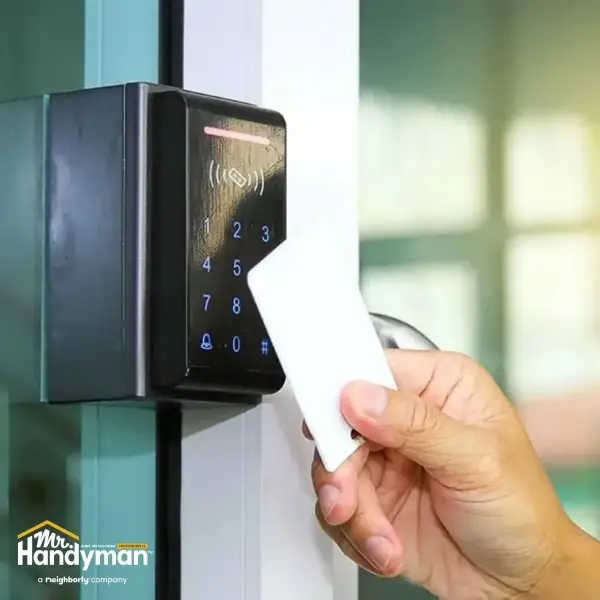
Credential reader maintenance at facility entry points requires cleaning and inspection frequency reflecting Northern Indiana's specific environmental demands. Card readers and fob readers at South Bend and Elkhart facility entries that are exposed to the temperature cycling, moisture, and deicing residue that Northern Indiana winter entry traffic introduces develop read errors at rates that moderate-climate reader maintenance intervals do not prevent. Monthly lens cleaning combined with quarterly weatherproofing integrity inspection at exterior-mounted readers maintains the read reliability that member access experience depends on through the winter months when member arrival conditions are most demanding.
Backup power system testing for access control systems in Northern Indiana fitness facilities must account for the battery capacity reduction that cold temperatures produce in backup systems exposed to Northern Indiana's winter conditions. A backup battery that maintains adequate capacity at moderate temperatures may not provide the specified backup duration at the temperatures that Northern Indiana's winter delivers to electrical components in exterior and partially conditioned locations. Annual backup battery capacity testing after the conclusion of the heating season, rather than at a fixed calendar date that may coincide with moderate temperatures, confirms battery performance following the cold period that tests it most.
ADA Compliance Audit for Northern Indiana Fitness Facilities
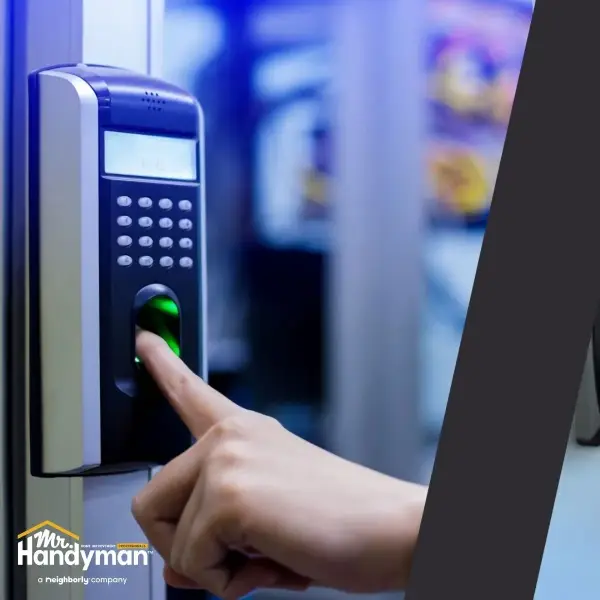
A systematic ADA compliance assessment of Northern Indiana fitness facility door and access systems evaluates the complete accessible route experience that a wheelchair user or member with limited mobility encounters from the parking area through every member-accessible space, with specific attention to the conditions that Northern Indiana's seasonal demands create for accessible route maintenance.
Accessible parking to entry path evaluation in Northern Indiana fitness facilities must account for the specific conditions that winter creates in exterior accessible routes. Snowfall accumulation, ice formation, and the frost heave that Northern Indiana's significant frost depth produces in exterior paved surfaces all create accessible route conditions that require maintenance frequency beyond what moderate-climate accessible route management specifies. Spring ADA assessment that evaluates whether frost heave has created surface irregularities in accessible parking areas, whether curb cut slopes meet ADA requirements after winter soil movement, and whether the accessible entry path is free of the surface damage that Northern Indiana's winter produces provides the post-winter condition baseline that accessible route management depends on.
Maneuvering clearance assessment at each door in Northern Indiana fitness facilities includes the specific consideration that seasonal equipment storage and the winter gear storage that Northern Indiana members require can reduce the clear floor space at door approaches below ADA minimums when temporary storage encroaches on maneuvering clearance zones that meet requirements without that encroachment. Spring ADA assessment that evaluates actual clearance conditions rather than design intent confirms compliance through the equipment and storage configurations that Northern Indiana facility operations actually create.
Preventive Maintenance Schedule for Northern Indiana Fitness Facility Doors and Locks
Monthly tasks should include visual inspection of all member-accessible doors for binding and latching difficulty, testing of emergency exit panic hardware function, cleaning of electronic credential reader lenses contaminated by Northern Indiana winter entry traffic, and confirmation that all door closers return doors to fully latched position without assistance. These are the conditions that develop within monthly intervals under Northern Indiana's demanding member traffic and seasonal conditions.
Quarterly tasks should include door closer operating force measurement against ADA standards, strike plate alignment verification on doors showing any latching resistance, electronic door strike functional testing, hinge condition inspection for the deicing corrosion that Northern Indiana winters introduce, and lock cylinder lubrication reflecting actual contamination from winter entry traffic. These conditions develop over weeks to months under Northern Indiana's specific environmental demands.
Annual tasks should include comprehensive door and frame condition assessment evaluating seasonal movement effects on fit and operation, access control backup battery capacity testing after the heating season, panic hardware disassembly inspection, door seal and weatherstripping replacement assessment, and ADA compliance verification of operating force, hardware type, and maneuvering clearances throughout the facility.
Frequently Asked Questions
How do I know if my Northern Indiana fitness facility's doors meet ADA operating force requirements after winter?
An inexpensive door pressure gauge measures the force required to open a door in pounds. Testing each interior door at the latch side between thirty-four and forty-eight inches from the floor provides a measurement comparable to the five-pound ADA maximum. Northern Indiana facilities should test doors in spring after seasonal wood expansion has produced the binding that winter-to-spring transition creates, because compliance confirmed in fall may not persist through the humidity changes that Northern Indiana's summer delivers to wood door assemblies.
What is the liability exposure for ADA door compliance violations in a Northern Indiana fitness facility?
Federal ADA civil rights enforcement allows individuals to file complaints with the Department of Justice or pursue private litigation for accessibility barriers in commercial facilities. Indiana state accessibility enforcement adds a parallel compliance pathway. In Northern Indiana's fitness market, where facilities serve members across a range of physical abilities, demonstrated compliance through documented inspection and maintenance is the standard that protects facility operators from the compliance exposure that informal approaches to accessibility management create.
How often should panic hardware on emergency exit doors be tested in a Northern Indiana facility?
Monthly functional testing confirms panic hardware activates correctly. Annual disassembly inspection by a qualified door hardware technician confirms the internal mechanism condition that functional testing cannot evaluate. In Northern Indiana facilities where winter member traffic introduces deicing residue to door hardware through months of winter use, annual inspection timing after the conclusion of winter traffic provides the most relevant assessment of the contamination and corrosion that Northern Indiana winters specifically produce in panic hardware components.
How does door condition affect Northern Indiana fitness facility insurance premiums?
Commercial fitness facility insurance underwriting evaluates physical condition factors affecting loss likelihood, and documented ADA compliance and life safety system maintenance support favorable underwriting positions. Northern Indiana fitness facilities that can demonstrate documented door and lock maintenance programs, confirmed ADA compliance through systematic audit, and current emergency egress hardware testing present risk profiles that support competitive insurance placement in Indiana's commercial fitness facility market.
What should I do if a Northern Indiana fitness facility member reports difficulty operating a door?
Treat every member report as a maintenance trigger requiring same-day inspection and same-day correction if the difficulty reflects an ADA operating force violation or a security hardware failure. Document the report, the inspection finding, and the corrective action. A Northern Indiana facility that responds promptly to reported door operation difficulty demonstrates the management attention that ADA compliance and member safety require. A facility that receives a report and does not act creates documented known-condition liability that is more difficult to manage than the door condition that generated the report.
Doors That Work Are the Foundation of a Facility That Functions
Every member who enters, moves through, and exits a Northern Indiana fitness facility depends on doors and locks that function correctly through the demanding conditions that Northern Indiana's climate and commercial fitness use produce across every season. The maintenance program that keeps those doors and locks performing correctly is not overhead cost competing with member experience investment. It is the infrastructure investment that member experience, regulatory compliance, and facility security all depend on.
The team at Mr. Handyman of Northern St. Joseph and Elkhart Counties brings the commercial door and hardware maintenance experience to help fitness facility operators keep every door in their facility functioning at the standard that member safety, accessibility compliance, and security management require.
Website: https://www.mrhandyman.com/northern-st-joseph-elkhart-counties/
Serving businesses throughout Northern St. Joseph and Elkhart Counties with dependable commercial maintenance and the expertise your facility deserves.