The Air Members Breathe Is the Product the Facility Delivers First
Before a member lifts a weight, attends a class, or uses any piece of equipment in a South Bend, Mishawaka, Elkhart, or Goshen fitness facility, they are already interacting with the most fundamental environmental condition the facility provides. The air quality in a fitness and wellness center is not a background variable that members notice only when it fails. It is the immediate, continuous, and physically intimate experience that begins the moment they walk through the door and that shapes their entire workout experience in ways that no amount of equipment quality or programming excellence fully compensates for when it is inadequate.
Northern Indiana's fitness market creates specific air quality management demands that distinguish this region's facilities from those in moderate climates. The extended heating season that Northern Indiana delivers requires fitness facility HVAC systems to manage the low humidity and recirculated air conditions of months-long winter operation while maintaining the indoor air quality standards that high-occupancy exercise environments require. The transition to summer then introduces the latent heat load and elevated outdoor humidity that Northern Indiana's seasonal shift produces, requiring the same systems to shift from heating mode operation to the dehumidification performance that summer fitness facility occupancy demands.
A fitness facility where the HVAC system is maintained correctly delivers air that is appropriately conditioned for exercise demands, that carries the humidity levels supporting comfortable exertion, and that is filtered to the standard removing the airborne particulate and biological contaminants that high-occupancy exercise environments generate. A facility where HVAC maintenance has been deferred delivers an air quality experience that members register through the odors, stuffiness, and physical discomfort that inadequate air quality produces during exertion that is more physiologically demanding than any other commercial occupancy category.
What Makes Fitness Facility Air Quality Uniquely Demanding in Northern Indiana
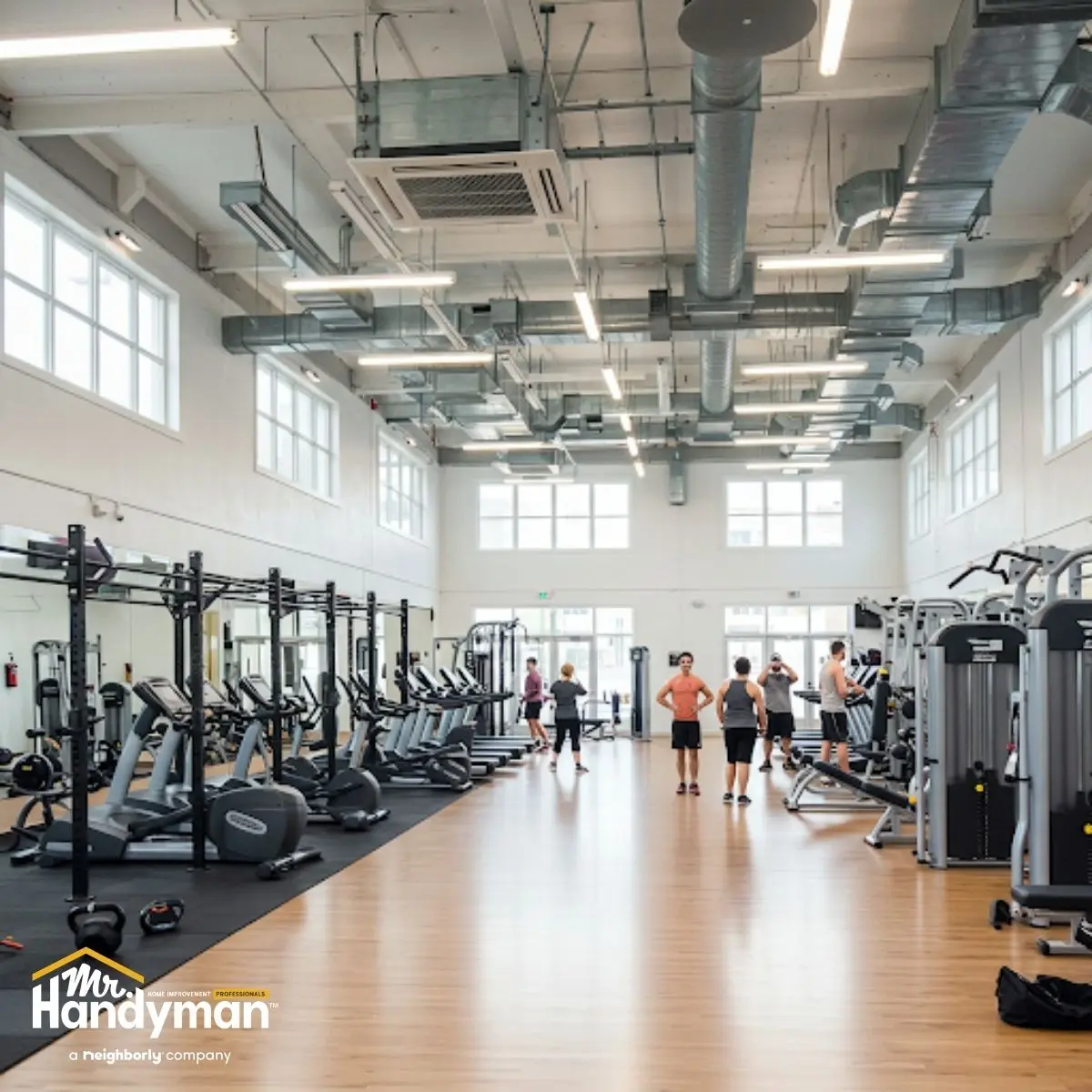
The air quality management demands of a Northern Indiana commercial fitness facility differ from those of virtually every other commercial space category in ways that the region's specific climate compounds beyond the general fitness facility air quality challenge.
Member-generated heat and moisture load in a Northern Indiana fitness facility during peak hours creates internal environmental conditions that the HVAC system must manage on top of the outdoor conditions it is also processing. A single adult exercising at moderate intensity generates approximately 300 to 500 watts of heat and significant perspiration moisture. A facility with fifty members training simultaneously during peak winter hours is introducing that combined load to a space where the HVAC system is simultaneously managing the low-humidity, cold-infiltration challenges of Northern Indiana's winter building operation. The system managing both demands simultaneously through months of continuous operation experiences the wear and maintenance needs that that sustained dual demand produces.
Biological contaminant generation in Northern Indiana fitness facilities is more concentrated than in any other commercial occupancy, and the extended indoor season that Northern Indiana's winter creates amplifies that concentration by reducing the outdoor alternative that distributes fitness activity across venues in moderate climates. Members exercising at elevated heart rates exhale respiratory aerosols at rates that the ventilation adequate for sedentary commercial occupancy does not dilute to acceptable levels. When Northern Indiana's winter concentrates those members indoors for months, the cumulative biological contaminant load that fitness facility HVAC systems must manage is higher than seasonal averages suggest.
Seasonal transition demands in Northern Indiana create specific HVAC maintenance stress that the amplitude of the region's seasonal changes produces. The transition from months of heating operation to cooling operation in Northern Indiana involves a system shift that is more abrupt and more extreme than moderate-climate transitions produce. HVAC components that managed heating demands adequately through winter may have developed the refrigerant, coil, or control system conditions that affect cooling performance without producing symptoms during heating operation. Spring maintenance that evaluates system condition before cooling demands begin identifies those conditions while scheduling flexibility still exists.
How Northern Indiana's Extended Heating Season Specifically Affects HVAC Air Quality
The extended heating seasons that Northern Indiana delivers to fitness facilities create specific air quality management conditions that facilities in moderate climates do not experience at the same duration or intensity.
Low humidity during extended heating season in Northern Indiana creates an air quality condition that is the opposite of the summer humidity challenge but equally consequential for fitness facility member comfort and indoor air quality. Northern Indiana fitness facilities that run heating systems continuously through months of cold weather may experience indoor relative humidity that drops below the 30 percent level at which member comfort, respiratory comfort, and indoor air quality all begin to be affected. Maintaining adequate indoor humidity through Northern Indiana's heating season requires HVAC humidification management that the system's maintenance condition directly determines.
Coil fouling rates in Northern Indiana fitness facility air handlers reflect both the biological contaminant load that fitness occupancy generates and the extended duration of heating season operation that runs air handling equipment continuously for months. An evaporator coil that has operated through a Northern Indiana heating season without cleaning enters the cooling season carrying the particulate, biological material, and mineral deposits that months of continuous operation deposits on its surface. That fouling affects both cooling season heat transfer efficiency and the biological contamination of the conditioned airstream that an uncleaned coil introduces.
Ductwork conditions in older South Bend and Mishawaka fitness facility buildings reflect the moisture and particulate accumulation that the extended heating seasons and the building assembly conditions of older commercial construction create in distribution systems that may not have been professionally inspected since installation. Ductwork in buildings whose construction predates the insulation standards that current energy codes require experiences the condensation-driven moisture accumulation that inadequate insulation allows in Northern Indiana's winter conditions, creating the biological growth conditions in distribution systems that deliver contaminated air to every connected outlet.
Filtration Standards for Northern Indiana Fitness Facility Air Quality
MERV rating requirements for Northern Indiana fitness facilities should reflect the particle size distribution that fitness facility biological contaminant generation produces combined with the extended indoor season that concentrates that generation. MERV 13 filtration captures the respiratory aerosol particle sizes that exercising members generate at higher efficiency than lower-rated alternatives and is the minimum appropriate specification for fitness facility air handling in Northern Indiana's high-occupancy exercise environments.
Filter replacement frequency in Northern Indiana fitness facilities should be calibrated to the actual particulate loading that the region's extended indoor season and fitness occupancy produce rather than the calendar intervals that residential or light commercial filtration maintenance schedules specify.
Ventilation Rates: The Standard That Northern Indiana Fitness Occupancy Requires
The ventilation rates that Northern Indiana fitness facilities must maintain to deliver acceptable indoor air quality during peak occupancy periods reflect the combination of exercise-generated contaminant loads and the extended indoor season that concentrates member presence in ways that moderate-climate facilities distribute more evenly across outdoor and indoor activity.
ASHRAE 62.1 requirements for exercise spaces establish outdoor air ventilation rates based on floor area and occupant density that significantly exceed rates appropriate for sedentary commercial occupancies. A Northern Indiana fitness facility weight room requires approximately 0.18 cubic feet per minute of outdoor air per square foot of floor area plus 20 cubic feet per minute per occupant during peak occupancy. In Northern Indiana's extended indoor fitness season, when outdoor temperatures make outdoor air introduction energetically costly, the temptation to restrict outdoor air to reduce heating loads creates the ventilation inadequacy that member respiratory health and indoor air quality standards prohibit regardless of the energy savings it produces.
Economizer operation in Northern Indiana fitness facilities requires maintenance attention that confirms damper function through the full operating range across seasonal conditions. During the moderate temperature shoulder seasons that Northern Indiana's spring and fall provide, economizer systems that function correctly provide both required ventilation and energy-efficient cooling through outdoor air introduction. An economizer damper that has seized in a restricted position through the corrosion that Northern Indiana's deicing chemical exposure introduces to exterior mechanical components fails to deliver the ventilation rates that exercise occupancy requires during the conditions when economizer operation should supplement mechanical ventilation most efficiently.
Exhaust system balance with supply air delivery determines whether the Northern Indiana fitness facility maintains the pressure relationship that prevents uncontrolled infiltration of unconditioned outdoor air. During Northern Indiana's winters, a facility operating under negative pressure draws outdoor air through every gap in the building envelope, introducing the unfiltered, unconditioned air that the region's cold and moisture-laden winter conditions make particularly problematic for both air quality and heating system performance. Annual airflow measurement confirming supply and exhaust balance maintains the pressure relationship that controlled ventilation requires through seasonal conditions that the system's operational balance is periodically tested by.
Coil and Air Handler Maintenance for Northern Indiana Conditions
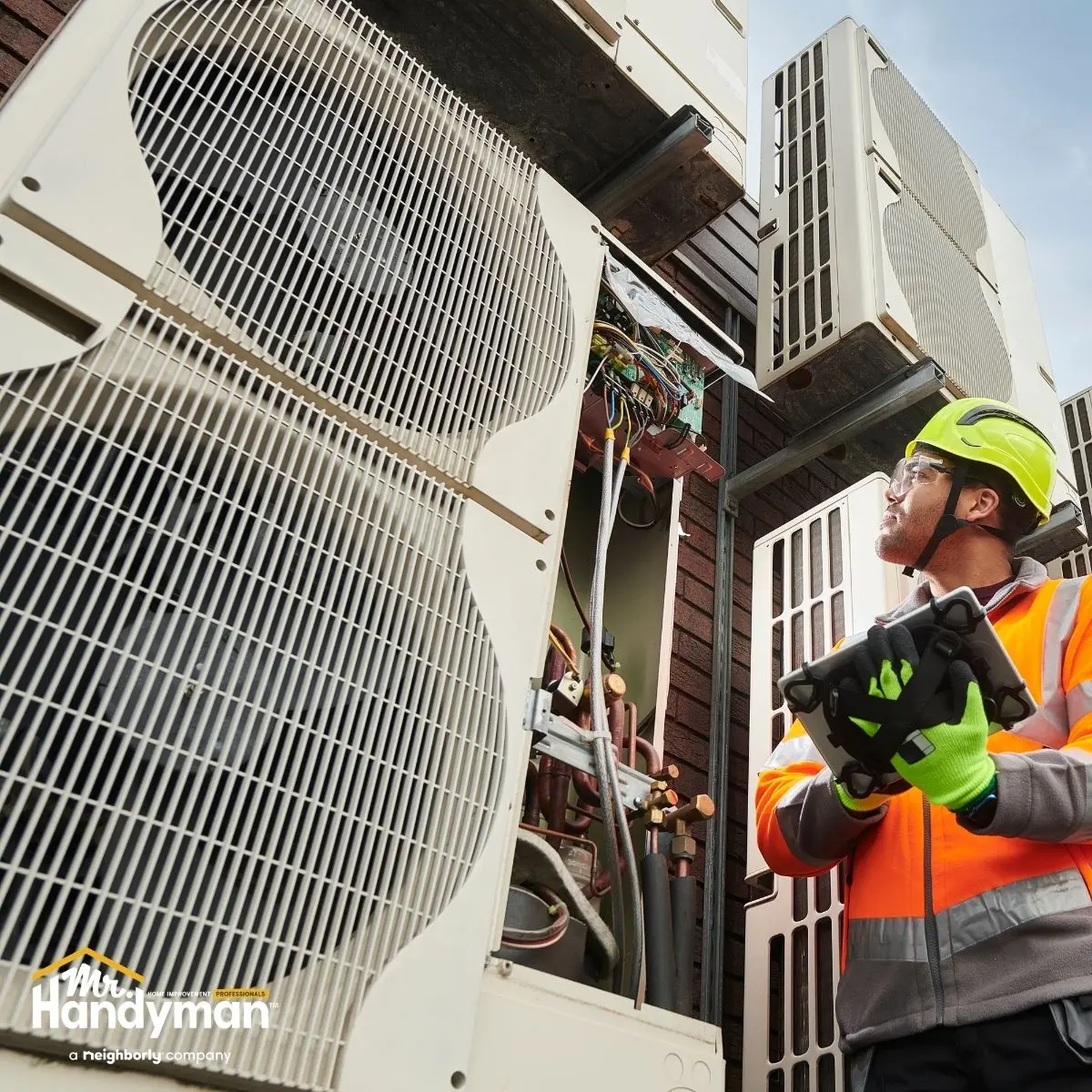
The evaporator coil and air handler components that condition and distribute air throughout a Northern Indiana fitness facility are the maintenance items whose condition most directly determines both air quality and energy efficiency across the seasonal demands that Northern Indiana's climate creates.
Evaporator coil cleaning in Northern Indiana fitness facility air handlers requires frequency reflecting the combined effect of the region's extended heating season operation and the fitness occupancy biological contaminant load. Quarterly coil inspection with cleaning performed whenever visible fouling has developed maintains the coil surface condition that heat transfer efficiency and biological contamination prevention both require. The Northern Indiana-specific maintenance consideration is the inspection timing that addresses the coil condition resulting from the extended heating season before cooling demands begin, providing the clean starting point that summer's transition to full cooling mode requires.
Drain pan maintenance in Northern Indiana air handler units requires the attention frequency that the significant moisture removal these systems perform during the heating-to-cooling season transition justifies. A drain pan that has accumulated biological growth through the extended heating season, when condensate volumes are lower and biological conditions in standing water are more favorable, enters the cooling season as a contamination source that the increased condensate volumes of summer distribute through the condensate drainage system. Monthly drain pan inspection and drain line flushing at the beginning of cooling season addresses the heating season accumulation before summer amplifies its consequences.
Air handler cabinet integrity in Northern Indiana fitness facilities includes the specific consideration that thermal cycling through the region's extreme seasonal temperature range produces in cabinet panels, access door gaskets, and structural components that moderate-climate air handlers do not experience at the same amplitude. Cabinet inspection that confirms all access panels are correctly secured and that gaskets provide the seal the system requires prevents the filter bypass that allows unfiltered air to enter the conditioned airstream through cabinet gaps that Northern Indiana's thermal cycling has created since the last inspection.
Indoor Air Quality Monitoring in Northern Indiana Fitness Facilities
Northern Indiana fitness facilities that maintain the strongest air quality performance monitor the specific parameters that indicate ventilation adequacy and filtration effectiveness rather than relying on member comfort impressions alone.
Carbon dioxide monitoring in Northern Indiana fitness facility occupied spaces provides a real-time indicator of ventilation adequacy that the extended indoor season makes particularly valuable. During winter months when outdoor air introduction is energetically costly, the temptation to restrict ventilation creates the elevated CO2 conditions that monitoring detects before member experience reflects them. Carbon dioxide concentrations consistently above 1,100 parts per million above outdoor baseline indicate ventilation inadequacy that Northern Indiana's winter heating cost incentives may be creating through unauthorized damper restriction or economizer bypass.
Relative humidity monitoring in Northern Indiana fitness facilities tracks conditions across both extremes of the seasonal range that the region creates. During the extended heating season, monitoring that identifies indoor relative humidity below 30 percent indicates the dry conditions that Northern Indiana's winter creates in heated fitness spaces and that humidification management should address. During summer transition, monitoring that confirms the system is maintaining adequate dehumidification prevents the elevated humidity conditions that Northern Indiana's outdoor air introduces to conditioned spaces through the ventilation rates that exercise occupancy requires.
Particulate monitoring in high-occupancy fitness zones provides an indicator of filtration system performance whose value in Northern Indiana's extended indoor season reflects the sustained contaminant generation that months of concentrated indoor fitness activity produces. A baseline particulate measurement established during lower-occupancy periods provides the reference against which peak occupancy readings are compared, and sudden increases that are not explained by increased occupancy indicate filtration or ventilation system conditions that maintenance investigation should address.
Frequently Asked Questions
How often should Northern Indiana fitness facility HVAC filters be replaced? High-occupancy Northern Indiana fitness facilities operating MERV 13 filtration should inspect filters monthly and replace them when loading has reached visible saturation, which during the extended indoor fitness season may occur every four to six weeks rather than the quarterly interval lower-occupancy applications support. The Northern Indiana-specific consideration is that the extended heating season concentrates member indoor presence in ways that accelerate filter loading beyond what seasonal average use patterns suggest.
What are the signs that a Northern Indiana fitness facility's HVAC system is not managing air quality adequately? Member complaints about stuffiness or odor that persist despite thermostat readings indicating appropriate temperature indicate inadequate latent heat or ventilation management. In Northern Indiana facilities, dry air complaints during the heating season indicate humidification inadequacy alongside the air quality concerns that low humidity creates. CO2 readings consistently above 1,100 parts per million above outdoor baseline confirm ventilation inadequacy that member comfort impressions alone may not reliably identify during the heating season when outdoor ventilation air introduction is energetically costly.
Is UV germicidal irradiation worth installing in Northern Indiana fitness facility air handlers? UV-C germicidal irradiation systems installed in air handlers to irradiate coil surfaces provide supplemental biological contamination control that Northern Indiana's extended indoor fitness season specifically justifies. Coil fouling rates during the heating season in Northern Indiana fitness facilities create the biological growth conditions on coil surfaces that UV-C irradiation continuously addresses between physical cleanings, reducing the contamination that the transition to cooling season would otherwise distribute through conditioned air at the beginning of summer operation.
How does Northern Indiana's extended heating season affect fitness facility HVAC energy costs specifically? A Northern Indiana fitness facility HVAC system maintained at designed efficiency through the extended heating season consumes energy at its designed efficiency rating across the months of continuous heating operation that the region's winter requires. Each maintenance deficiency that reduces system efficiency compounds across those extended operating hours more significantly than the same deficiency would in a moderate climate with a shorter heating season. A system with fouled coils and a loaded filter operating through a Northern Indiana winter accumulates the energy cost premium of those deficiencies across more operating hours than national efficiency calculations based on moderate heating season durations reflect.
What is the most commonly neglected HVAC maintenance item in Northern Indiana fitness facilities? Economizer damper function verification is consistently neglected across Northern Indiana fitness facilities. Economizer systems that have seized in restricted positions through the corrosion that Northern Indiana's winter deicing chemical environment introduces to exterior mechanical components are invisible to occupants and to maintenance programs that do not specifically test damper function across the full control range. The ventilation deficiency that a failed economizer produces accumulates across every occupied hour between the failure and the maintenance visit discovering it, and in Northern Indiana's extended indoor season that interval represents a substantial period of inadequate ventilation that member respiratory health absorbs without visible symptom until CO2 monitoring or complaint patterns reveal it.
Clean Air Is the Invisible Amenity Members Notice When It Is Gone
The air quality that a Northern Indiana fitness facility delivers is the amenity members notice most acutely when it fails and that they experience as the physical comfort of a well-maintained facility when it is correct. An HVAC system maintained at the standard that Northern Indiana's demanding seasonal climate and fitness occupancy require is not a background operational expense. It is the system that makes the facility's investment in equipment, programming, and physical environment accessible to every member through air that supports their health, comfort, and performance through every workout they complete in the facility.
The team at Mr. Handyman of Northern St. Joseph and Elkhart Counties brings the commercial HVAC maintenance experience to help fitness facility operators keep their systems performing at the air quality and energy efficiency standard that member health, regulatory compliance, and facility reputation require.
Website: https://www.mrhandyman.com/northern-st-joseph-elkhart-counties/
Serving businesses throughout Northern St. Joseph and Elkhart Counties with dependable commercial maintenance and the expertise your facility deserves.
