Gym Mirrors Are Not Decoration. They Are Infrastructure.
Walk into any fitness facility in Northern Indiana and the mirrors covering the walls of the weight room, group fitness studio, and stretching area feel like a standard feature of the environment. Members use them to monitor form during lifts, instructors use them to observe class participants, and the visual expansion they provide makes relatively modest studio and training spaces feel significantly larger than their actual dimensions. Their functional role is genuine and daily, and it is precisely that daily functional role, combined with the physical environment of a commercial fitness facility and the specific conditions that Northern Indiana's climate creates, that makes proper gym mirror installation a matter of facility safety rather than simply interior design.
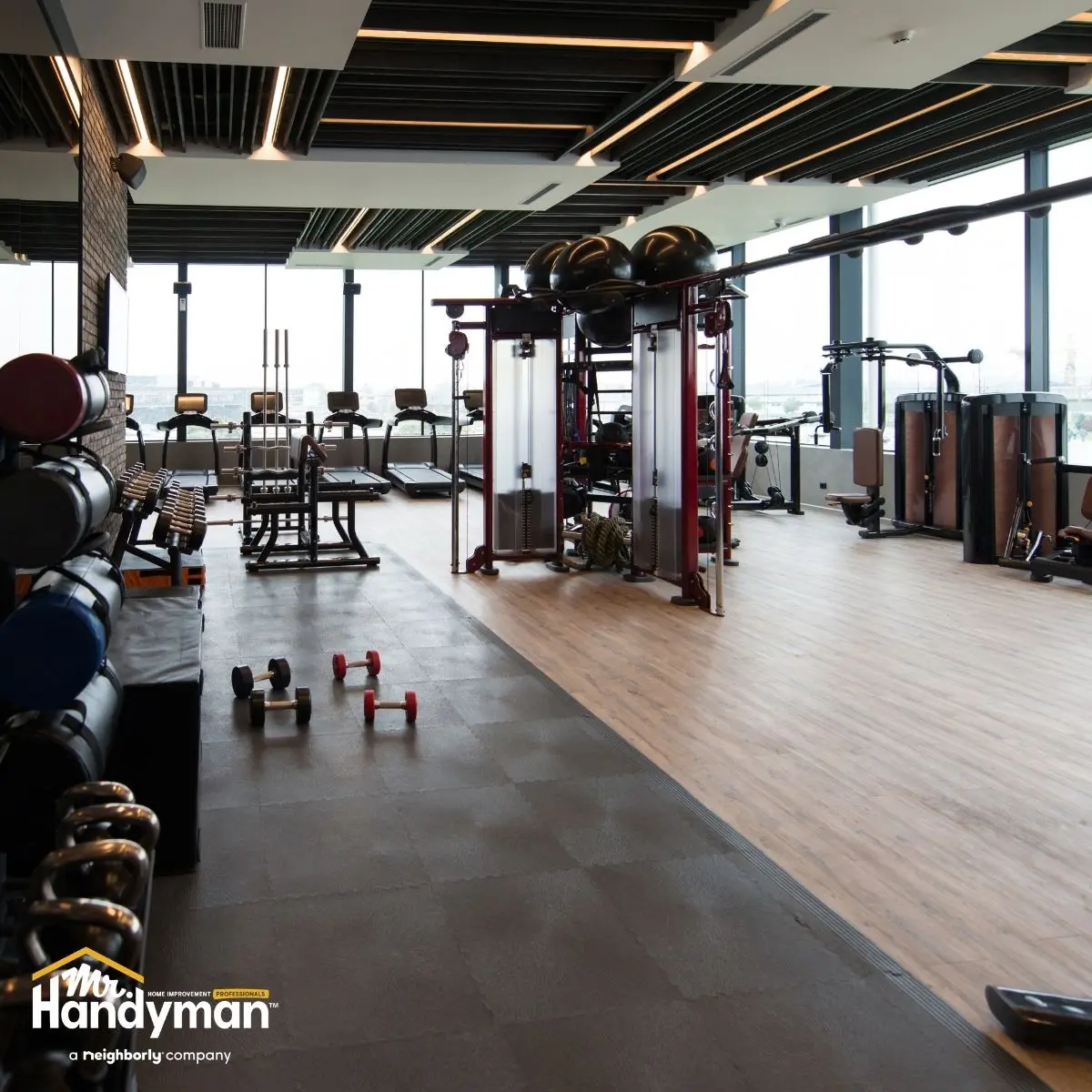
A gym mirror that has been improperly mounted is not a decoration that might eventually look crooked. It is a large, heavy glass assembly positioned at head and body height in a space where members are actively moving, carrying load, and in some cases losing control of equipment. The consequences of a gym mirror that fails from its mounting are immediate, physical, and severe in ways that the liability exposure they create reflects accurately. In South Bend, Mishawaka, Elkhart, and Goshen's competitive fitness market, where member trust is the foundation of retention and facility safety reputation is increasingly visible through online review platforms, the standard of mirror installation that a facility maintains is a direct expression of how seriously the facility takes its responsibility to members.
Northern Indiana's climate introduces specific installation and maintenance challenges that moderate-climate facilities do not face at the same intensity. The combination of extended heating seasons that dry wall assemblies aggressively, the humidity of summer that introduces moisture to those same assemblies, and the temperature cycling that Northern Indiana's four-season climate delivers to every building component creates conditions that improperly installed mirrors develop failure modes through more rapidly than moderate-climate installations.
The Physical Reality of Commercial Gym Mirrors
Commercial gym mirrors are not the mirrors that hang in residential bathrooms. The scale, weight, and installation requirements differ from residential mirror applications in ways that the contractor experience required to install them correctly reflects.
Mirror dimensions and weight in commercial fitness applications typically involve glass panels running floor to ceiling across widths that require multiple panels to cover wall sections. A standard commercial gym mirror panel measuring four feet wide by eight feet tall weighs approximately eighty pounds. A single wall in a Northern Indiana weight training room covered with mirrors across a twenty-foot span involves five panels totaling approximately four hundred pounds of glass mounted at head and body height in a space with continuous member activity directly adjacent. The load demands that installation hardware must manage and the consequences of failure under those loads are fundamentally different from residential mirror applications.
Glass type specifications for commercial fitness facility mirrors should reflect safety requirements that distinguish them from residential mirror glass. Tempered safety glass, which fractures into small granular pieces rather than large sharp shards, is the appropriate specification for gym mirrors in member-facing positions. Annealed glass, which is standard residential mirror glass, fractures into large sharp-edged pieces that produce severe laceration injuries. A Northern Indiana fitness facility that installs standard residential mirror glass because it costs less than tempered glass is accepting risk that no cost savings justifies.
Mirror thickness affects both optical quality and structural rigidity. Quarter-inch glass is the minimum appropriate for commercial gym mirror applications. Thinner glass produces distorted reflections that members monitoring form notice immediately and that undermine the functional purpose the mirror serves. It also flexes under vibration from impact activity adjacent to the mirror surface in ways that stress mounting hardware connections faster than thicker glass experiences.
Why Northern Indiana's Conditions Create Specific Installation Challenges
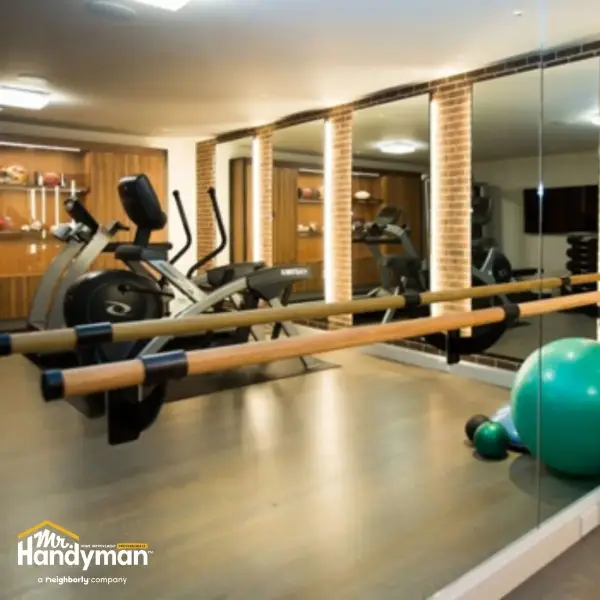
The installation conditions that Northern Indiana's climate creates for commercial gym mirrors are more demanding than moderate climates, and installations that do not account for regional conditions develop failure modes that properly specified installations avoid.
Humidity and temperature cycling in Northern Indiana fitness facilities produces thermal and moisture-driven movement in the wall assemblies that mirror mounting hardware anchors into and in the mirror panels themselves. A gym mirror installation in a South Bend or Elkhart facility that is secure in the moderate temperatures of spring is subject to the expansion and contraction that the transition between Northern Indiana's cold winters and air-conditioned interior temperatures produces in both the glass panels and the wall surface behind them. The amplitude of that thermal cycling in Northern Indiana's climate exceeds what moderate-climate facilities experience, and mounting hardware specified without allowance for that movement develops stress concentrations that accumulate through each seasonal cycle.
Wall substrate conditions in Northern Indiana fitness facilities vary in ways that directly determine appropriate mounting approach and hardware specifications. A mirror mounted into the metal stud framing of a newer Elkhart County fitness facility requires anchor hardware that spans the drywall and engages the stud directly. A mirror mounted into a masonry wall in an older South Bend commercial building requires masonry anchors rated for the load each panel places on each mounting point. In Northern Indiana's older commercial building stock, wall assemblies that have been through decades of seasonal moisture cycling may have substrate conditions behind the drywall surface that visual inspection does not reveal and that mounting hardware cannot perform in reliably regardless of specification.
Vibration from training activity in Northern Indiana fitness facilities introduces dynamic loading to mirror mounting systems that static weight calculations alone do not capture. Power racks positioned near mirrored walls in facilities where Northern Indiana's winter concentrates member training intensity create floor and wall vibration during heavy barbell use that cycles through mirror mounting hardware continuously through peak use periods. Mounting systems specified only for static panel weight rather than the dynamic loading that adjacent training activity produces develop fatigue failures that static load calculations do not predict.
The Specific Failure Modes That Improperly Installed Gym Mirrors Develop
Anchor point failure in mirrors mounted with hardware not correctly specified for wall substrate, panel weight, or dynamic loading produces a specific failure sequence. The anchor closest to its capacity limit loosens first under the combination of static weight and vibration. As that anchor loosens, load redistributes to adjacent anchors carrying load beyond their capacity. The failure propagates and the final release when the last anchor gives way releases full panel weight instantly.
Adhesive bond failure in mirrors installed with adhesive-only mounting systems develops through Northern Indiana's humidity and temperature cycling. Mirror mastic applied to a wall surface with elevated moisture content at installation cures with reduced bond strength. Adhesive that has cycled through Northern Indiana's full seasonal temperature range develops cohesive fatigue that reduces effective bond strength below what initial installation testing confirmed.
Glass failure from improper support occurs when panels are installed without adequate bottom support that distributes panel weight through the glass uniformly. Vibration exposure from adjacent training activity cycles stress concentrations at inadequate support points in ways that produce spontaneous fracture without any direct impact.
What Correct Gym Mirror Installation Actually Involves in Northern Indiana
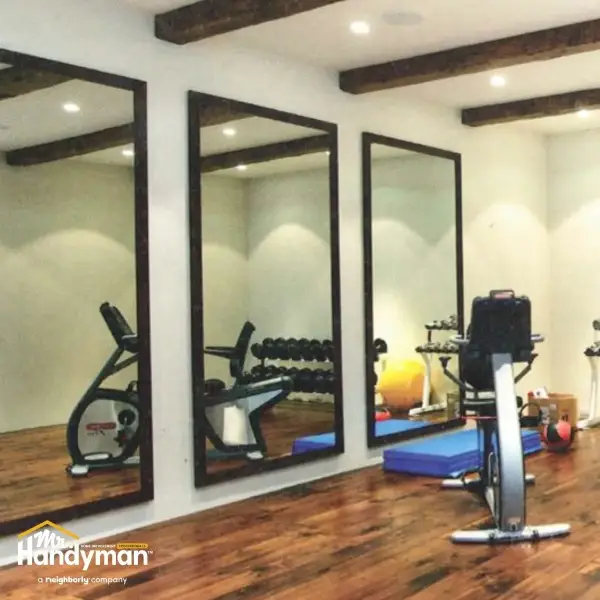
The gap between a gym mirror installation that holds reliably through years of commercial fitness use in Northern Indiana and one that develops progressive failure modes is almost entirely a function of whether the installation was executed with the specification, preparation, and hardware selection that the application requires. That gap is not primarily a cost function. It is a function of whether the contractor understood the load requirements, substrate conditions, and the specific environmental factors that Northern Indiana's climate introduces to commercial fitness facility mirror installations.
Substrate assessment before installation determines whether a gym mirror installation in a Northern Indiana facility performs correctly over its service life or develops the failure conditions that improper substrate engagement produces. Wall framing layout, stud spacing, and framing member condition behind the drywall surface determine which anchor hardware approach is appropriate and what load capacity the mounting system can reliably deliver. In older South Bend and Mishawaka commercial buildings where wall framing may not be at standard stud spacing, where metal studs may have been substituted for wood framing in renovation work, or where the seasonal moisture cycling of Northern Indiana's climate has affected framing member condition behind surfaces that appear sound from the exterior, substrate assessment that maps the actual framing layout before hardware placement prevents the anchor location decisions that rely on assumed rather than confirmed substrate conditions.
Moisture content of the wall substrate in Northern Indiana fitness facilities should be assessed before adhesive application in any installation including adhesive bonding. Northern Indiana's seasonal transitions create substrate moisture conditions that fluctuate across the year, and installation timing that coincides with elevated substrate moisture from a humid summer period or from the moisture introduction that snowmelt produces in building assemblies during spring produces bond strength below what the system's load calculations assumed.
Hardware selection and specification for gym mirror installations in Northern Indiana fitness facilities should be driven by load calculations that account for full panel weight, the dynamic loading factor that Northern Indiana's winter use concentration introduces through adjacent training activity, and a safety factor appropriate for a life safety application in an occupied commercial space. J-bar and Z-clip mounting systems that provide positive mechanical engagement from below, combined with mechanical top and side clips, represent the installation approach whose failure mode characteristics are most appropriate for Northern Indiana's demanding climate conditions. Adhesive used as supplemental bonding rather than primary load bearing improves vibration resistance without creating the sole failure pathway that adhesive-only systems present in a climate where seasonal cycling tests adhesive integrity repeatedly.
Bottom support installation is the mounting detail whose absence most directly produces the stress concentration failure mode that spontaneous glass fracture represents. A continuous bottom support channel or individual support clips positioned at the panel's lowest edge distributes panel weight through the glass from its lowest edge in the way the panel's structural design assumes. Mirror panels installed without bottom support that rely on adhesive and top clips to carry full panel weight are loaded in a manner the glass was not designed to accommodate, and Northern Indiana's vibration environment from concentrated winter training activity makes the failure timeline shorter than more moderate use conditions would produce.
Inspection and Maintenance After Installation in Northern Indiana
Correct installation establishes the baseline that gym mirror safety depends on, but Northern Indiana's seasonal cycling and concentrated use patterns make ongoing inspection more important here than in moderate-climate facilities.
Monthly visual inspection of all gym mirror installations should include gap formation between adjacent panels that has widened since installation, visible separation between panel edges and wall surfaces at mounting clip locations, surface cracking in paint at anchor penetration points indicating movement, and any audible sound from panels during vibration events. Each of these indicators represents a developing condition in Northern Indiana's seasonal environment that warrants professional evaluation before the next use period.
Hardware torque verification at mechanical anchor points should be performed annually in Northern Indiana fitness facilities because the thermal cycling of the region's full seasonal temperature range, from summer heat through winter cold, loosens fastener connections through the differential expansion that different materials experience. A mounting screw correctly torqued at installation may be significantly below that torque after cycling through a full Northern Indiana seasonal range, and the cumulative effect of multiple seasonal cycles without verification produces the mounting inadequacy that visual inspection alone does not identify.
Adhesive bond integrity assessment at panel perimeters should accompany visual inspection quarterly in Northern Indiana fitness spaces. A bond line that produces a hollow sound when the panel surface is tapped adjacent to it indicates adhesive separation behind the panel surface. Northern Indiana's seasonal humidity cycling creates the conditions for progressive adhesive degradation that quarterly assessment identifies before the bonded area reduction reaches the point where remaining mechanical mounting components are inadequate for the full panel load.
The Liability Framework That Makes Professional Installation Essential
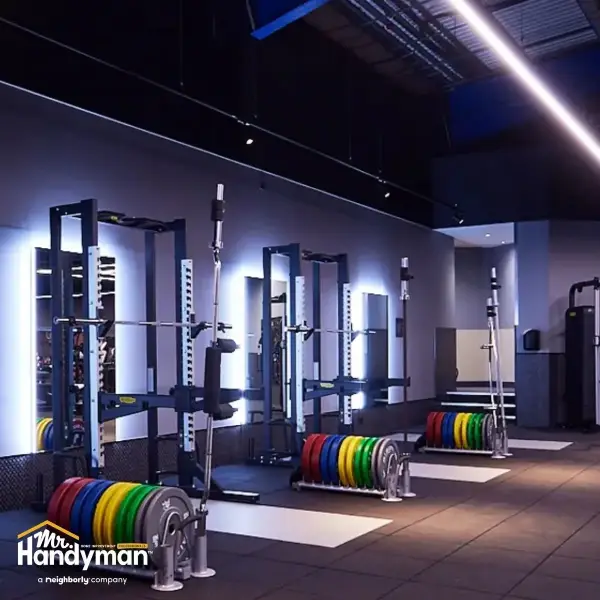
The liability environment that gym mirror installations exist within in Northern Indiana's commercial fitness market is specific enough to warrant direct treatment. A mirror failure event in a South Bend, Mishawaka, or Elkhart fitness facility that produces member injury creates a liability situation whose resolution depends on what the facility can document about installation quality and ongoing maintenance.
Installation documentation recording contractor qualifications, hardware specifications, substrate assessment performed, and load calculations supporting hardware selection creates the foundation of a defensible position. A Northern Indiana facility that cannot produce documentation of who installed its mirrors, what hardware was used, or what assessment preceded installation decisions is in a significantly weaker position than one whose documentation demonstrates professional judgment at every installation stage.
Inspection records documenting monthly and quarterly assessments create the due diligence record that demonstrates ongoing maintenance attention. In Northern Indiana's fitness liability environment, the pattern of documented inspection with consistent findings of sound condition is the evidence that a facility exercised reasonable care in maintaining an installation that subsequently failed through causes routine inspection could not have detected.
Frequently Asked Questions
What is the minimum hardware specification for Northern Indiana gym mirror installations?
Mechanical mounting systems rated for a minimum of four times static panel weight at each anchor point, combined with continuous bottom support and supplemental adhesive bonding, represent the minimum appropriate specification for Northern Indiana commercial fitness facilities. High-vibration zones including weight training areas where Northern Indiana's winter use concentration produces sustained equipment loading warrant higher safety factors that reflect the dynamic loading those environments introduce across extended peak use periods.
How long should a properly installed commercial gym mirror last in a Northern Indiana facility?
A properly installed gym mirror with correct glass specification, appropriate hardware, and regular maintenance inspection should remain in service for fifteen to twenty years in a well-maintained Northern Indiana fitness facility. The limiting factor is typically the wall substrate condition and the adhesive bond integrity that Northern Indiana's seasonal moisture cycling affects over time, which is why substrate assessment before installation and seasonal inspection after it both extend service life beyond what either achieves independently.
Should Northern Indiana gym mirrors be installed by a general contractor or a specialist?
Commercial fitness facility mirror installation benefits from a contractor with documented experience in this specific application category. The load calculations, glass specifications, substrate assessment requirements, and hardware selection decisions that commercial gym mirror installation involves in Northern Indiana's demanding climate go beyond general contractor competence and residential mirror installation experience in ways that verify before contracting rather than discovering after installation fails.
Is adhesive-only mirror mounting ever appropriate in a Northern Indiana fitness facility?
Adhesive-only mirror mounting is not appropriate in any member-facing position in a Northern Indiana commercial fitness facility. The failure mode of adhesive-only systems in Northern Indiana's seasonal humidity and temperature cycling, which releases full panel weight when the adhesive bond fails through the mechanism that Northern Indiana's climate specifically tests, is not acceptable in an occupied commercial space where members are adjacent to large glass panels during active exercise.
What should I do if a Northern Indiana gym mirror has shifted or shows mounting failure signs?
Remove member access from the area immediately with barriers between members and the affected mirror surface. Document the condition with photographs before any corrective action. Contact a qualified contractor for same-day assessment rather than scheduling a future visit. Do not attempt to resecure a shifting panel without professional assessment of why the movement occurred, because Northern Indiana's seasonal cycling that produced the movement will produce the same failure in a resecured panel if the underlying substrate or specification issue is not addressed.
Mirrors That Members Can Trust Are the Only Mirrors Worth Installing
The gym mirrors in a South Bend, Mishawaka, Elkhart, or Goshen fitness facility are infrastructure that members depend on for form feedback during every training session and stand adjacent to throughout their facility visit. The installation quality that determines whether those mirrors remain secure through years of commercial fitness use in Northern Indiana's demanding climate is not a variable that facility operators should accept uncertainty about. It is a defined, achievable standard whose documentation protects members and reflects the seriousness with which the facility approaches its responsibility.
The team at Mr. Handyman of Northern St. Joseph and Elkhart Counties brings the commercial installation experience to help fitness facility operators assess existing mirror installations, execute new installations to the specifications that Northern Indiana's commercial fitness environments require, and maintain the documentation that professional installation and ongoing inspection produces.
Website: https://www.mrhandyman.com/northern-st-joseph-elkhart-counties/
Serving businesses throughout Northern St. Joseph and Elkhart Counties with dependable commercial maintenance and the expertise your facility deserves.