What Members See on the Walls Tells Them Everything About How the Facility Is Run
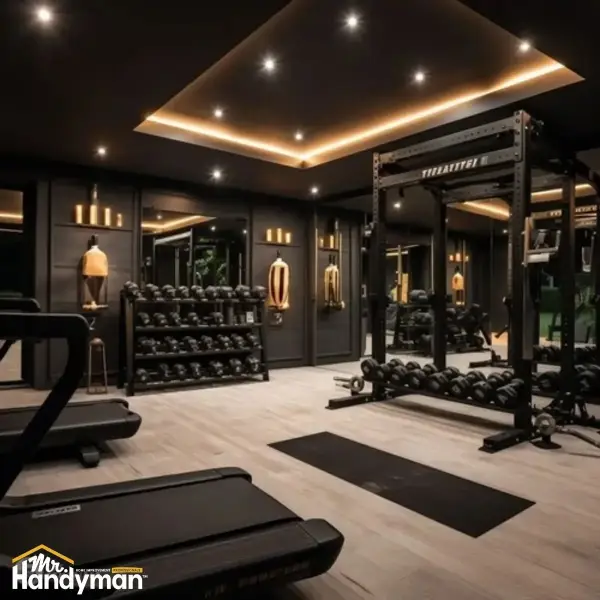
There is a moment that occurs in every fitness facility visit, typically within the first thirty seconds of entry, where a member or prospective member forms a comprehensive impression of the facility's management quality. In Northern Indiana fitness facilities, that moment carries a specific seasonal dimension that warmer-climate facilities do not experience at the same intensity. Spring is when Northern Indiana members arrive at their fitness facilities with the heightened awareness of condition that emerges after months of winter confinement, and the wall and ceiling surfaces they encounter communicate the maintenance standard that was maintained through a season they were not present to observe.
Wall and ceiling deterioration in South Bend, Mishawaka, Elkhart, and Goshen fitness facilities reflects the specific conditions that Northern Indiana's climate creates in commercial fitness environments. The extended heating seasons that Northern Indiana delivers dry interior air aggressively, affecting paint adhesion and finish integrity in ways that moderate-climate facilities do not experience at the same amplitude. The transition into summer's elevated humidity then cycles those same surfaces through the opposing condition, producing the expansion and adhesion stress that paint systems not specified for Northern Indiana's humidity range develop through a single seasonal cycle.
A fitness facility whose wall and ceiling surfaces communicate professional management and active maintenance investment is presenting a brand image that members translate into confidence about every other aspect of the facility's operation. Understanding which damage conditions carry the heaviest brand image weight in Northern Indiana's fitness market, and which repairs should be prioritized first, produces a more focused and effective maintenance investment approach.
How Northern Indiana's Climate Creates Specific Wall and Ceiling Damage
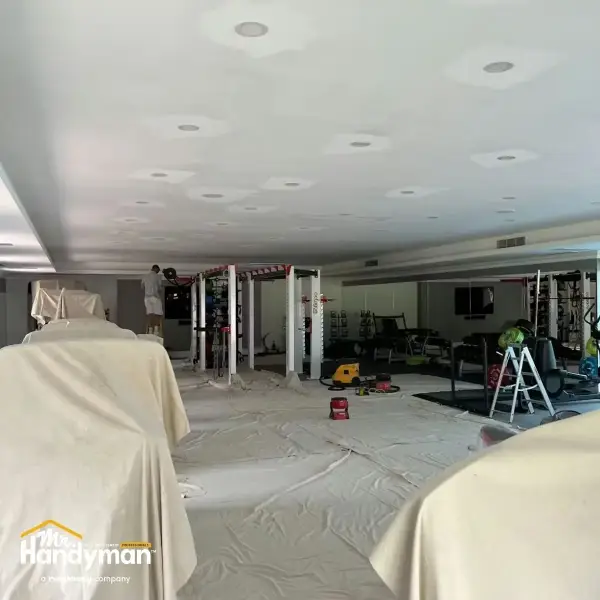
The wall and ceiling damage that fitness facilities in Northern St. Joseph and Elkhart Counties experience reflects the specific climate conditions that the region delivers to commercial spaces managing both high occupancy and Northern Indiana's demanding seasonal transitions.
Humidity-driven paint failure is the most pervasive wall surface condition in Northern Indiana fitness facilities. Paint that has lost adhesion through the humidity cycling that Northern Indiana's transition from extended heating season to summer produces develops the bubbling, peeling, and flaking patterns that members register as obvious neglect. In group fitness studios and locker room-adjacent spaces where member perspiration introduces sustained moisture to wall surfaces, that cycling is most aggressive and paint failure most consistent. The specific challenge in Northern Indiana is that the low humidity of the heating season dries paint films and substrate materials aggressively while summer's humidity then introduces the moisture that compromised adhesion cannot contain.
Moisture staining on ceilings in Northern Indiana fitness facilities traces to sources that the region's conditions specifically support. Roof drainage systems that experienced ice dam stress over winter, HVAC condensation from systems managing Northern Indiana's significant latent heat transition from heating to cooling season, and plumbing above finished ceilings that experienced freeze stress during cold snaps all produce the ceiling staining that members interpret as evidence of ongoing water problems regardless of whether the source has been resolved. A yellow-brown ceiling stain in a South Bend or Elkhart fitness facility does not read as a historical condition to a member evaluating whether to renew. It reads as an active problem in a facility that has not addressed it.
Impact damage on walls in weight training areas accumulates through the specific activities those zones support. Equipment contact during loading, resistance bands snapping against wall surfaces, and the general equipment movement that commercial fitness use requires all produce impact marks and paint damage that accumulates at wall surfaces adjacent to training stations faster than any other location in the facility. This damage category is specific to fitness facilities and requires a maintenance approach that accounts for its continuous recurrence rather than treating each repair as a one-time correction.
Mold and mildew growth on wall and ceiling surfaces in Northern Indiana fitness facilities is a condition whose health implications extend the management responsibility beyond brand image. The transition from Northern Indiana's dry heating season to the elevated humidity of summer creates the moisture introduction that mold colonization requires on surfaces that have been stress-cycled through the low-humidity heating period. In locker rooms and group fitness studios with insufficient ventilation, mold growth is a recurring condition that systematic ventilation and surface treatment addresses rather than reactive cleaning responses to visible growth.
The Brand Image Consequences of Specific Damage Categories
Not all wall and ceiling damage conditions affect brand image equally in Northern Indiana's fitness market, and understanding which conditions carry the heaviest weight helps facility operators prioritize repair investment where it delivers the strongest perception return.
Visible ceiling staining carries the heaviest brand image consequence because it communicates structural vulnerability rather than simply aesthetic neglect. A South Bend or Elkhart fitness facility member who sees ceiling staining is forming an impression about whether the building has a water problem that management is not addressing. In Northern Indiana's fitness market, where the spring season brings members back with fresh evaluative attention after winter, ceiling staining discovered in the first weeks of the new season communicates a maintenance standard that was not maintained through the months members were not present to observe.
Peeling and bubbling paint across large surface areas communicates the gradual accumulated neglect that Northern Indiana members find most discouraging because it reflects conditions that have clearly been present through the long winter season without response. In Mishawaka and Goshen fitness facilities where community word-of-mouth influences facility reputation in ways that smaller community dynamics amplify, wall surfaces with obvious accumulated paint failure generate the review content that affects new member acquisition.
Impact damage and holes in drywall adjacent to training zones communicate something specific about facility management. Members who see unrepaired drywall damage in a weight training area understand that the damage was caused by training activity and that it has not been addressed. The message they receive is that facility management either does not inspect the space regularly or has noticed the damage and chosen not to repair it.
Mold on visible surfaces is the wall and ceiling damage category with the most severe brand image consequences because it connects physical facility condition to member health. A member who identifies mold growth on a locker room ceiling in a Northern Indiana fitness facility where the transition from dry heating season to humid summer creates exactly the conditions mold requires is evaluating whether to continue using a facility that may be exposing them to a health risk.
Executing Wall and Ceiling Repairs That Hold in Northern Indiana's Climate
The repair quality that Northern Indiana's fitness facility environment requires goes beyond what standard commercial painting and drywall work delivers in less demanding conditions. A fitness facility wall repair that deteriorates within a single Northern Indiana seasonal cycle because the materials were not specified for the humidity variation this region delivers is not a successful repair. It is a deferred maintenance cost that creates the additional brand image liability of a facility that visibly repairs the same conditions repeatedly without resolving them.
Surface preparation standards for wall and ceiling repairs in Northern Indiana fitness facilities must account for the moisture conditions that the facility environment sustains across seasonal transitions rather than for the stable conditions that standard preparation assumes. Drywall that has absorbed moisture through the humidity introduction that Northern Indiana's summer transition delivers must be confirmed dry to the substrate before any repair material is applied. A moisture meter reading that confirms substrate moisture content below the threshold for paint adhesion is the baseline confirmation that distinguishes a repair that will hold through Northern Indiana's seasonal cycle from one that will fail through the same mechanism as the original damage.
Moisture-resistant material specifications for fitness facility wall repairs in Northern Indiana reflect the conditions those repairs will experience after completion. Standard joint compound applied to drywall repairs in a space that cycles through Northern Indiana's heating season dryness and summer humidity loses its surface hardness over time in ways that moisture-resistant formulations resist. Standard interior latex paint applied to repaired surfaces in locker rooms and group fitness studios fails adhesion faster than semi-gloss formulations with moisture-resistant additives. Specifying materials for Northern Indiana's actual seasonal conditions rather than for stable interior conditions is the technical distinction between repairs that hold and repairs that require repetition.
Impact-resistant finishes in weight training areas address the recurrence mechanism that makes impact damage the most persistently appearing wall condition in Northern Indiana fitness facility spaces. Standard painted drywall in a zone where equipment contact is routine will require repeated repair regardless of how carefully the original repair was executed. Fiberglass-reinforced panels and high-build paint systems with impact-resistant surface coatings provide the durability that extends the interval between required repairs in these zones, which in Northern Indiana facilities where winter concentrates member training intensity is a meaningful operational advantage.
Ventilation: The Underlying Condition Repairs Depend On
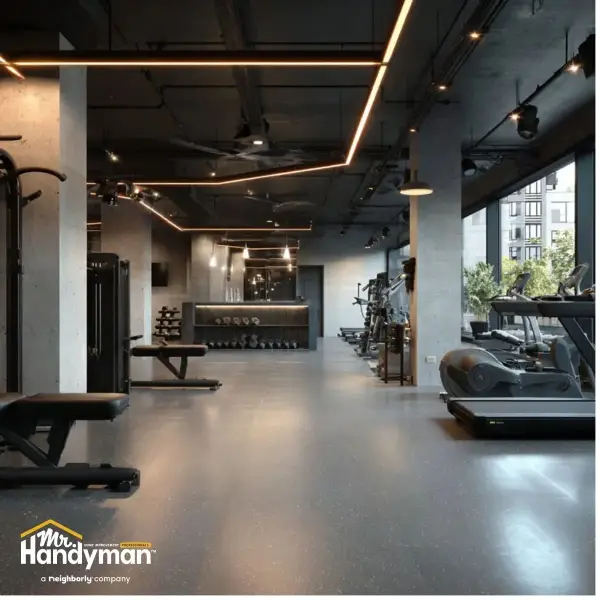
Every category of wall and ceiling damage that Northern Indiana fitness facilities experience is either caused or accelerated by inadequate ventilation that allows moisture to remain in contact with building surfaces longer than those surfaces were designed to accommodate. The Northern Indiana-specific dimension of this problem is the severity of the transition that the facility's ventilation system manages between the dry air of the extended heating season and the elevated humidity that summer introduces.
HVAC capacity in Northern Indiana fitness facilities should be assessed when recurring wall and ceiling moisture damage is identified, because the latent heat load that Northern Indiana's summer humidity transition creates in occupied fitness spaces may exceed what a system sized for the building's square footage without adequate account for occupancy-generated moisture can manage. A facility HVAC system that maintains acceptable temperature while failing to remove sufficient moisture from the air during peak summer occupancy delivers the humidity conditions that paint failure and mold growth require.
Exhaust fan performance in locker rooms, restrooms, and group fitness studios directly determines whether member-generated moisture remains in contact with wall and ceiling surfaces through occupancy periods. An exhaust fan that is moving inadequate air volume because its motor has weakened or its grille has accumulated debris is not providing the ventilation that the space's moisture load requires. Confirming exhaust fan performance through air flow measurement rather than assuming that an installed fan is functioning correctly is the verification step that distinguishes ventilation management from ventilation assumption in Northern Indiana's demanding climate.
Developing a Wall and Ceiling Maintenance Schedule
The Northern Indiana fitness facilities that maintain consistent wall and ceiling condition are those with structured maintenance schedules that address developing conditions before they reach the threshold of member-visible deterioration.
Monthly visual inspection of all member-accessible wall and ceiling surfaces produces the condition baseline that identifies new damage and tracks monitored conditions between professional visits. Documentation that produces written notes and photographs of identified conditions creates the baseline against which the following month's inspection measures change, and that baseline is particularly valuable in Northern Indiana facilities where seasonal transitions advance conditions more rapidly than moderate-climate inspection intervals anticipate.
Quarterly professional assessment provides the technical depth that staff visual inspection cannot deliver, including moisture condition evaluation behind surfaces, assessment of wall assembly integrity in high-humidity zones, and identification of developing conditions that have not yet produced visible symptoms. In Northern Indiana fitness facilities where seasonal transitions create the moisture infiltration risk that quarterly assessment is specifically timed to identify, professional assessment timing that precedes the summer humidity transition provides the most valuable condition information.
Annual cosmetic restoration of high-visibility member areas maintains the brand image baseline that first impressions depend on regardless of whether specific damage conditions have been identified during the year. Paint that has not failed but has lost freshness through a Northern Indiana seasonal cycle reads differently to a new spring member than to staff who have seen it change gradually.
Frequently Asked Questions
How do I determine whether Northern Indiana ceiling staining is active or historical?
Active stains feel damp, show color at the center rather than only at the ring edge, and grow in area between observations. Historical stains are dry, show darkest color at the outer ring, and do not change in area. In Northern Indiana facilities, HVAC condensation from ductwork managing the heating-to-cooling season transition is a common active staining source that roof condition alone does not identify. Access to the space above the stained ceiling is required to confirm the source.
What paint products perform best on fitness facility walls in Northern Indiana's humidity cycling?
Semi-gloss and satin finish interior paints with mildew-resistant additives outperform flat formulations in Northern Indiana fitness facilities because their denser film formation resists the moisture absorption that Northern Indiana's summer humidity transition introduces to wall surfaces that the preceding heating season dried aggressively. In locker rooms and shower-adjacent areas, epoxy-based products provide the moisture resistance that latex formulations cannot sustain through Northern Indiana's seasonal humidity amplitude.
How should impact damage in Northern Indiana weight training areas be repaired to last?
Standard drywall repair in impact-prone zones should be upgraded with fiberglass mesh reinforcement, moisture-resistant joint compound, and a high-build finish coat. For zones with repeated impact history, replacing damaged drywall with cement board or impact-resistant drywall before finishing eliminates the substrate vulnerability that standard drywall presents in locations where Northern Indiana's winter use concentration guarantees continued impact exposure.
How does wall and ceiling condition affect Northern Indiana gym membership renewal specifically?
In Northern Indiana's fitness market, where spring brings members back with fresh evaluative attention after extended winter seasons, wall and ceiling conditions discovered in the first weeks of the new season communicate the maintenance standard that was or was not maintained through the months members were primarily focused on indoor fitness. Members who discover deteriorated wall and ceiling conditions in spring form renewal doubts based on what those conditions communicate about management attention during periods of lower member scrutiny.
What should I do if mold is discovered during a Northern Indiana fitness facility wall repair?
Stop the repair project at the point of mold discovery. In Northern Indiana's climate, where the heating season dries surfaces followed immediately by the moisture introduction of summer, mold discovered during wall repair should be assumed to extend beyond the visible area until professional assessment confirms otherwise. Surface mold limited to paint and facing paper can be addressed through professional remediation followed by affected drywall replacement. Mold that has penetrated to structural framing requires more extensive remediation scoped by professional assessment before any repair work resumes.
Walls and Ceilings Speak Before Anyone Else Does
In South Bend, Mishawaka, Elkhart, and Goshen fitness facilities, the wall and ceiling surfaces that surround every member during every visit communicate the facility's management standard continuously. A facility that maintains those surfaces with the inspection frequency, repair quality, and material specifications that Northern Indiana's climate demands is communicating professional management that members translate into the confidence and loyalty that sustainable membership requires.
The team at Mr. Handyman of Northern St. Joseph and Elkhart Counties brings the commercial repair experience to help fitness facility operators address wall and ceiling conditions correctly, with the material specifications and underlying condition resolution that Northern Indiana's seasonal demands require.
Website: https://www.mrhandyman.com/northern-st-joseph-elkhart-counties/
Serving businesses throughout Northern St. Joseph and Elkhart Counties with dependable commercial maintenance and the expertise your facility deserves.