Spring Arrives With a List Whether You Are Ready for It or Not
Northern Indiana does not ease its way into spring. The season arrives with snowmelt, temperature swings, and the kind of reveal that only happens when warming weather exposes what a winter of lake-effect snow, sustained below-zero cold, and months of freeze-thaw cycling left behind. Gutters packed with debris from fall and winter. Exterior paint cracked where moisture worked beneath the surface during cold snaps. Caulking around windows and doors that lost its flexibility through temperature extremes and now admits water into the wall assembly behind it.
For homeowners in South Bend, Mishawaka, Elkhart, and Goshen, spring home maintenance is not optional work that the attentive homeowner performs in addition to everything else the season demands. It is the annual accounting that determines whether the home heads into summer in sound condition or carrying a growing inventory of deferred problems that compound with every week of additional delay. The difference between a home that is systematically maintained through this seasonal transition and one that is not is measured not in years but in the accumulating cost of repairs that preventive attention would have made unnecessary.
This checklist is built from the ground up around the conditions that Northern Indiana homes actually face, not adapted from moderate-climate guidance that does not reflect what lake-effect winters deliver to the housing stock of Northern St. Joseph and Elkhart Counties.
Roofing and Attic: The Ice Dam Assessment That Cannot Be Skipped

Roofing inspection is the right starting point for a Northern Indiana spring home maintenance checklist because the consequences of a missed roofing issue cascade downward through every other system in the home. And in Northern Indiana specifically, the roofing assessment must include the attic-level ice dam damage evaluation that regions without significant snowpack do not need to prioritize at the same level.
Ice dam evidence in attics is the Northern Indiana-specific inspection item that generic spring checklists consistently underemphasize. Ice dams form when heat escaping through the roof melts accumulated snow at the upper roof surface while the eave line remains frozen, forcing meltwater beneath shingles at the eave line and into the attic assembly. By spring, the evidence of that intrusion, compressed and discolored insulation at the eave line, sheathing with water staining, and in more severe cases visible soft spots in the sheathing, is accessible for assessment in ways that winter access does not allow. A spring attic inspection that evaluates these specific conditions identifies ice dam damage at the point where repair is still manageable rather than after another season allows the moisture-compromised assembly to develop further.
Shingle condition after a Northern Indiana winter reflects the cumulative effect of freeze-thaw cycling, wind events during winter storms, and the weight of accumulated snow and ice on roofing materials that were already experiencing normal age-related weathering. Shingles that have lost significant granule coverage, that show cracking or curling at edges, or that have lifted at tab corners through wind uplift during winter storms should be identified in spring before the heavy rain season that follows tests each compromised point.
Flashing integrity at chimney bases, pipe penetrations, and roof-to-wall transitions deserves specific spring attention because these are the locations where Northern Indiana's thermal cycling most reliably produces the separation and seal failure that water intrusion follows. A chimney flashing that separated from masonry through freeze-thaw movement is directing water into the wall assembly with every spring rain.
Gutters and Drainage: Managing Snowmelt and Spring Rainfall
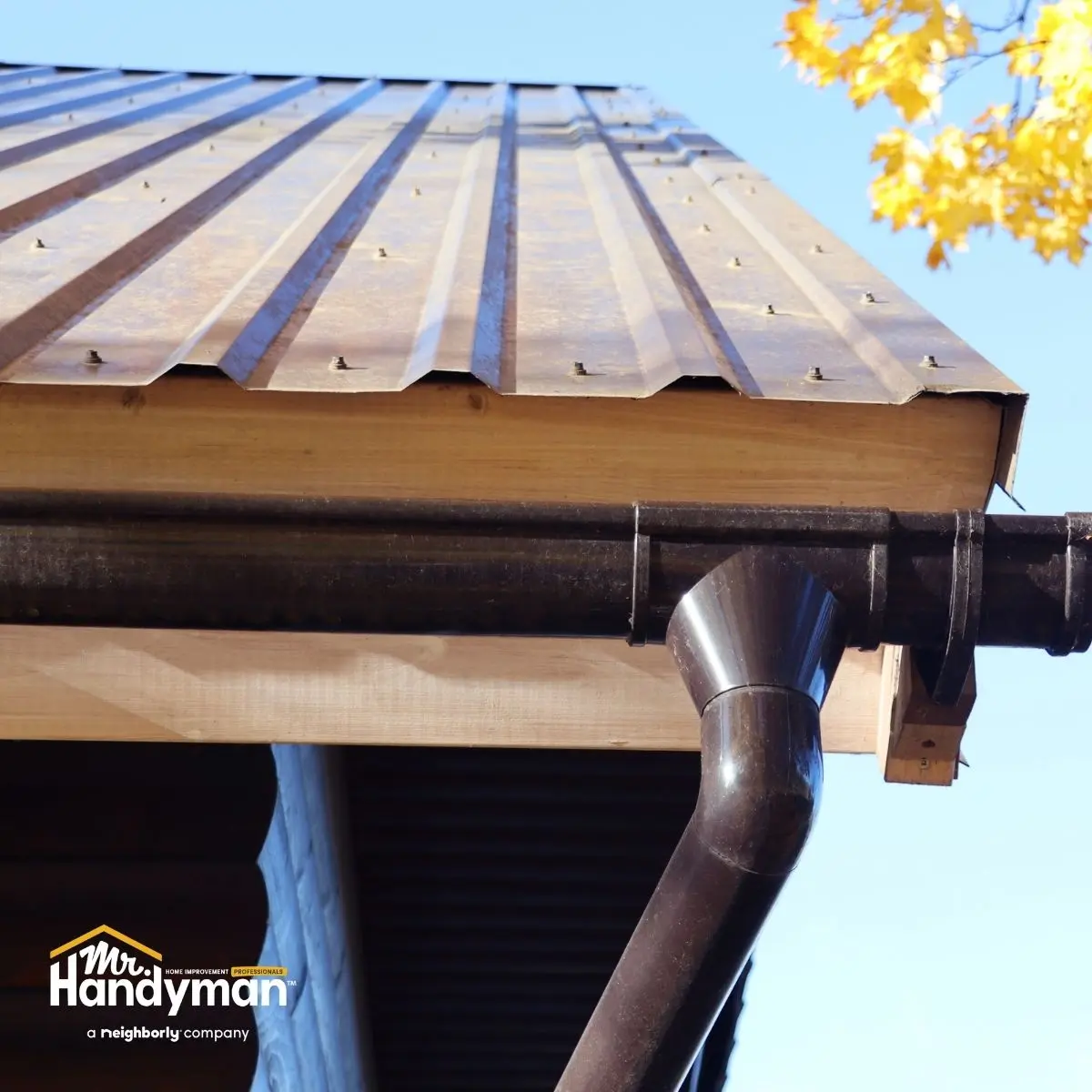
Gutter systems in Northern Indiana homes earn their maintenance attention more directly than in moderate climates because the region's combination of significant snowmelt volumes and spring rainfall creates water management demands that gutters compromised by winter damage and debris accumulation cannot meet reliably.
Gutter cleaning and inspection in spring addresses the debris accumulation that fall leaf drop, winter storm activity, and the organic material that lake-effect snow deposits on roofing surfaces throughout the winter contribute to gutter channels. A gutter channel partially blocked by debris backs up during the significant runoff events that Northern Indiana's snowmelt and spring rains produce, directing water against the fascia and foundation rather than through the downspout system designed to manage it.
Ice dam gutter damage is a Northern Indiana-specific inspection item that spring assessment must specifically evaluate. Ice dams that formed along eave lines through the winter and grew to the size that Northern Indiana's heavy snow accumulation enables can physically displace, crush, or detach gutter sections through the weight and expansion of the ice they contain. A gutter section that appears attached but has been pulled away from its fascia mounting through ice dam stress does not function correctly and must be identified and secured before the spring water management season demands its full performance.
Exterior Surfaces: The Winter Account That Spring Reveals
The exterior surfaces of a Northern Indiana home arrive at spring carrying the specific damage that lake-effect snow, deicing products applied to adjacent surfaces, and the freeze-thaw cycling of a demanding winter delivered across every exposed material.
Exterior paint condition on wood surfaces reflects the moisture cycling that Northern Indiana winters deliver to exterior finishes more aggressively than moderate climates. Paint that has cracked, blistered, or peeled from wood siding, trim, and fascia boards is exposing the wood substrate to the moisture of every spring rain event until the paint film is restored. Addressing exterior paint failure in spring protects the wood beneath it and prevents the more extensive repair that progressing moisture damage requires if another season passes without attention.
Caulking at all exterior penetrations should be inspected systematically each spring. Window and door frames, utility penetrations, and any joint between dissimilar materials all depend on intact caulking to prevent water infiltration. In Northern Indiana, where caulk joints cycle through temperature ranges that moderate climates do not deliver, replacement frequency is higher than national maintenance guidance suggests and spring is the correct intervention window before the rain season that tests every compromised joint.
Plumbing: What a Northern Indiana Winter Leaves Behind
Indoor plumbing systems in Northern St. Joseph and Elkhart County homes experience winter stress that does not always produce immediate visible symptoms but that a spring inspection reliably surfaces before developing conditions reach the failure stage. The combination of sustained deep freezes, colder incoming water temperatures through extended cold periods, and increased indoor usage that Northern Indiana's long winters produce creates a specific set of plumbing maintenance needs that spring is the right time to address.
Supply line inspection under every sink and behind every toilet should be a standard spring maintenance task regardless of whether any leak indication has been observed. In Northern Indiana homes where thermal cycling from extreme winters has stressed rubber and braided supply line materials through multiple demanding seasons, the case for proactive replacement of lines approaching or past their service life is stronger than in moderate climates where supply lines age more gradually. A supply line failure in a bathroom or kitchen does not provide gradual warning, and in Northern Indiana homes where the kitchen or bathroom may sit above a finished basement, that failure sends water downward before discovery.
Outdoor plumbing components including hose bibs and irrigation connections should be confirmed functional before summer outdoor water use begins. A frost-free hose bib that was left with a hose attached during one of Northern Indiana's hard freezes may appear functional when first turned on but develop the internal damage that manifests as a leak into the wall cavity under sustained summer use. Spring confirmation of every outdoor plumbing connection prevents the hidden wall cavity moisture that undetected freeze damage produces through a full season of regular outdoor water demand.
Water heater condition deserves honest spring evaluation in any Northern Indiana home where the unit is approaching eight years of service. A water heater that worked adequately through a Northern Indiana winter of longer heating cycles and significantly colder incoming water may not have the remaining service life to handle summer peak demand without interruption. Flushing the tank to address the sediment accumulation that Northern Indiana's hard water supply accelerates and testing the pressure relief valve confirms the unit's condition while scheduling flexibility for replacement, if needed, still exists.
Windows, Doors, and the Building Envelope
Windows and doors in a Northern Indiana home experience thermal cycling across a full winter that moderate-climate building envelopes do not produce, and the maintenance needs that cycling creates are reliably surfaced by spring inspection.
Window seal failure in double-pane windows is a condition that Northern Indiana's temperature extremes accelerate through the stress they place on the seal integrity that maintains the insulating air gap between panes. Fogged windows whose seal has failed have lost their thermal performance at exactly the points in the home's envelope that are most exposed to Northern Indiana's winter cold. Spring identification of failed window seals allows replacement scheduling before another winter season tests them at reduced effectiveness while heating costs reflect their degraded performance.
Weatherstripping condition around exterior doors and operable windows determines how effectively the building envelope performs at every opening. Weatherstripping that has compressed past its functional recovery range, torn from its mounting, or simply shows the brittleness that Northern Indiana's temperature cycling produces in rubber and foam materials over multiple seasons no longer provides the seal it was designed to maintain. Spring weatherstripping replacement is a low-cost task that reduces both energy consumption and the moisture infiltration that degraded weatherstripping allows during rain events.
Door operation and hardware after a Northern Indiana winter reflects the frame movement and hardware stress that the region's temperature cycling delivers to exterior door assemblies through months of continuous thermal variation. Doors that have developed binding, that no longer latch securely without deliberate force, or whose hardware shows the corrosion that Northern Indiana's moisture and temperature cycling accelerates in exposed metal components require spring attention before summer's high-frequency use tests them under conditions where failures are most inconvenient.
Crawl Space and Basement: The Below-Grade Spring Assessment
Below-grade spaces in Northern Indiana homes concentrate the post-winter maintenance needs that the region's climate produces in the building components most directly exposed to ground moisture and the significant hydrostatic pressure that snowmelt creates against foundations each spring.
Crawl space moisture conditions after a Northern Indiana spring snowmelt should be assessed by physically entering and evaluating the space rather than observing from the access hatch. Standing water, saturated insulation, and vapor barrier damage that the volume of snowmelt water Northern Indiana produces each spring can create in crawl spaces are conditions whose extent is not assessable without direct access. A crawl space inspection that identifies moisture management failures after the snowmelt season's peak addresses those failures before Northern Indiana's summer humidity adds to the moisture load on a space that winter has already compromised.
Foundation crack assessment after a Northern Indiana winter evaluates the conditions that the freeze-thaw cycling and snowmelt hydrostatic pressure of a demanding regional winter specifically produces in foundation assemblies. New horizontal cracks in block foundations, vertical cracks that have widened through winter's thermal movement, and stair-step cracking in older South Bend and Mishawaka homes with masonry foundations all warrant professional evaluation in spring rather than continued monitoring through another wet season.
Frequently Asked Questions
How long does a thorough spring home maintenance inspection take in a Northern Indiana home?
A systematic spring inspection covering roofing and attic conditions, gutters, exterior surfaces, windows, doors, plumbing, and below-grade spaces in a Northern Indiana single-family home typically requires two to four hours. The ice dam attic assessment and crawl space evaluation that Northern Indiana conditions specifically require add time to the inspection that moderate-climate checklists do not include.
What is the most important spring maintenance task specific to Northern Indiana homes?
Attic inspection for ice dam damage evidence is the Northern Indiana-specific maintenance task that generic spring checklists consistently underemphasize. Ice dam intrusion that occurred during winter is invisible from the exterior and may not have produced interior ceiling symptoms yet, but the insulation compression and sheathing moisture exposure it created continues to affect the home's thermal performance and structural integrity until identified and addressed.
Should I address all post-winter repairs before summer or can some wait until fall?
Repairs that affect the building envelope, roofing, flashing, exterior caulking, and foundation drainage, should be addressed before spring rain season in Northern Indiana tests them further. Interior cosmetic repairs that trace to resolved exterior sources can be scheduled more flexibly. Conditions deferred to fall carry the risk of a Northern Indiana summer storm season adding to damage that spring intervention would have prevented at lower cost.
How does Northern Indiana's hard water supply affect spring plumbing maintenance priorities?
Northern Indiana's hard water accelerates mineral sediment accumulation in water heaters, mineral deposit buildup in aerators and showerheads, and mineral scaling in drain line components at rates that softer water supply conditions do not produce. Spring plumbing maintenance should include water heater tank flushing, aerator cleaning or replacement, and drain flow assessment that reflects the regional water chemistry rather than the moderate maintenance intervals that national plumbing guidance calibrated to softer water conditions suggests.
Is spring HVAC service necessary if the heating system worked without problems through winter?
Yes. Northern Indiana heating systems that ran continuously through extended cold periods have components that accumulate wear through sustained operation that the transition to cooling season reveals if spring service does not address them first. Filter replacement, cooling system refrigerant confirmation, and coil cleaning that prepares the system for the shift from heating to cooling demand are spring maintenance tasks whose omission is revealed by the first genuinely hot days of Northern Indiana's compressed but intense summer.
A Home That Is Ready for What Northern Indiana Summer Brings
The spring maintenance checklist exists because Northern Indiana's climate makes systematic seasonal attention the difference between a home that performs reliably through its most demanding seasons and one that accumulates a growing inventory of deferred problems. The work done now, before summer heat, humidity, and storm activity test every system the home depends on, is the most cost-effective maintenance investment available to a Northern Indiana homeowner.
The team at Mr. Handyman of Northern St. Joseph and Elkhart Counties brings the regional experience to help homeowners work through their spring maintenance checklist thoroughly and address what needs attention before the season makes those repairs more urgent and more expensive.
Website: https://www.mrhandyman.com/northern-st-joseph-elkhart-counties/
Serving homeowners throughout Northern St. Joseph and Elkhart Counties with dependable service and the expertise your home deserves.