
Why Spring Storm Preparation Is a Business Priority Across Southwest Dallas County

Spring arrives across Southwest Dallas County's diverse commercial landscape with the meteorological intensity that North Texas's position in the nation's most active severe weather corridor creates for every commercial property from Cedar Hill's hillside commercial developments adjacent to Joe Pool Lake through the established commercial corridors of Duncanville, DeSoto, and Lancaster through Mansfield's rapidly developing commercial areas along the US 287 corridor through Grand Prairie's extensive and varied commercial landscape. The Dallas-Fort Worth metropolitan area's consistently active spring severe weather profile, which historically ranks among the most storm-intense metropolitan areas in the United States, creates commercial property storm preparation requirements whose financial and operational consequences passive observation rather than deliberate preparation consistently amplifies.
Southwest Dallas County's commercial storm preparation context carries specific dimensions that distinguish this service area from both Dallas's urban commercial districts and Rockwall County's lake-proximate commercial environment. The service area's remarkable commercial diversity, from Cedar Hill's hillside commercial properties whose terrain creates specific drainage and wind exposure conditions through the established commercial corridors of Duncanville's and DeSoto's mature business communities through Grand Prairie's extensive commercial landscape spanning multiple development eras, creates commercial storm preparation needs whose appropriate approach varies across that diversity in ways that uniform guidance doesn't adequately address. Cedar Hill's commercial properties adjacent to Joe Pool Lake carry the lake proximity storm enhancement and elevated humidity considerations that lake-effect meteorological conditions create alongside the standard North Texas severe weather preparation appropriate for all Southwest Dallas County commercial properties. Established commercial buildings in Duncanville's and DeSoto's mature commercial corridors carry the building envelope conditions of their construction eras whose specific vulnerabilities differ from newer commercial construction throughout Mansfield's developing commercial areas.
For commercial property owners and managers throughout Southwest Dallas County, understanding which spring storm preparation tasks fall within Mr. Handyman of Southwest Dallas County's permitted handyman scope under Texas law and which require licensed specialty contractor involvement provides the framework for assembling the right preparation resources before storm season's first significant event tests whatever preparation has or hasn't been completed.
What the Permitted Scope Covers for Southwest Dallas County Commercial Storm Preparation
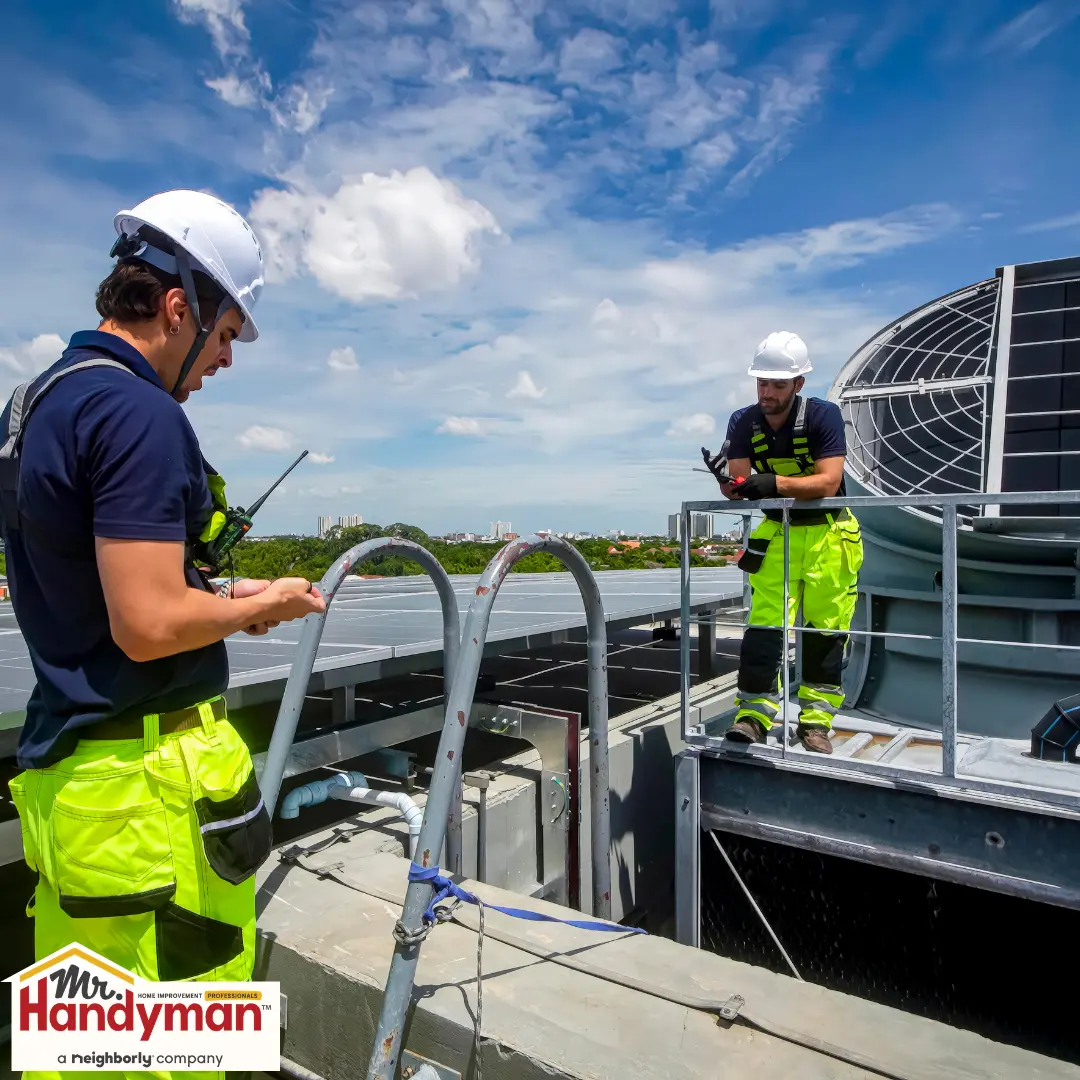
Within Mr. Handyman of Southwest Dallas County's permitted handyman scope under Texas law, commercial spring storm preparation includes exterior caulking inspection and replacement at all building envelope joints and penetrations, door repair and hardware service including closer adjustment and weatherstripping replacement, threshold inspection and correction, window repair without hardwired electrical components, gutter cleaning and repair including refastening and joint sealing, exterior wood repair and protective finishing, siding repair within the general maintenance scope, deck and exterior structure assessment within the carpentry scope, non-electrical signage mounting assessment, railing and connection tightening within the structural hardware scope, drywall repair and interior surface preparation following storm damage, interior painting, trim and finish work, flooring repair, and general maintenance across commercial property interior and exterior.
Outside the permitted scope, work involving electrical system assessment and repair, plumbing system work, HVAC assessment, structural engineering assessment, roofing system assessment and repair, and any work requiring permits requires licensed specialty contractor involvement under Texas Occupations Code Chapter 1301 and Chapter 1305.
Southwest Dallas County's Specific Commercial Storm Exposure Profile
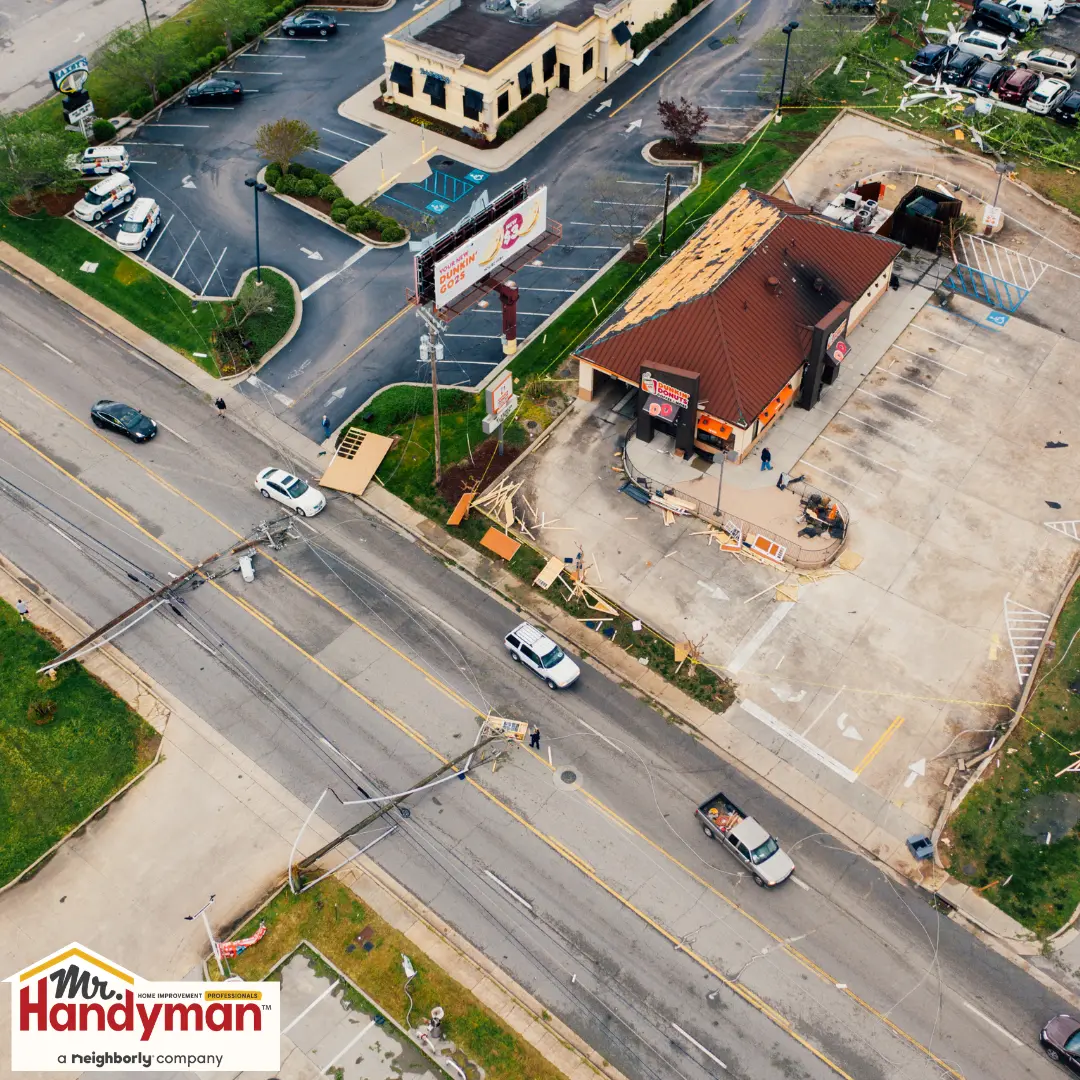
Cedar Hill's Hillside Terrain and Joe Pool Lake Storm Enhancement
Cedar Hill's hillside commercial properties along Highway 67 and throughout the community's commercial corridors carry specific storm exposure conditions that the combination of elevated terrain and Joe Pool Lake's proximity creates. Hillside commercial properties in Cedar Hill may receive wind loading from multiple directions across the terrain features that the rolling landscape creates during spring storm events, and that multi-directional exposure creates building envelope caulking and door system performance requirements whose directionality differs from the more predictable storm approach that flat terrain commercial properties throughout DeSoto, Duncanville, and Lancaster experience during the same regional storm events.
Joe Pool Lake's proximity creates the lake-effect meteorological conditions that large inland water bodies contribute to convective storm development in their immediate vicinity, and Cedar Hill's commercial properties closest to the lake and to Cedar Hill State Park face the storm exposure that lake proximity creates alongside the regional severe weather that affects all Southwest Dallas County commercial properties through the spring season. Pre-season building envelope assessment for Cedar Hill's lake-proximate commercial properties that specifically accounts for the multi-directional wind exposure that hillside terrain creates and the lake-effect storm enhancement that Joe Pool Lake's proximity may contribute produces the most complete storm preparation for these specific commercial locations.
The Established Commercial Corridor Context in Duncanville, DeSoto, and Lancaster
The commercial corridors of Duncanville, DeSoto, and Lancaster carry commercial building stock whose construction eras create specific storm preparation considerations that differ meaningfully from newer commercial construction throughout Mansfield's developing commercial areas. Commercial buildings along Duncanville's and DeSoto's established commercial corridors may carry building envelope conditions, original caulking installations, and drainage infrastructure from earlier construction eras whose accumulated service through multiple North Texas spring storm seasons has advanced specific vulnerability conditions that systematic pre-season assessment identifies and addresses.
Original mortar joints in masonry commercial buildings throughout Southwest Dallas County's established commercial corridors, caulk joints at window and door perimeters in commercial buildings from the 1970s through 1990s construction era that have accumulated decades of North Texas thermal cycling without systematic replacement, and drainage infrastructure designed for the commercial occupancy patterns of earlier eras may all present specific storm preparation vulnerabilities that the construction era of established corridor commercial buildings creates more actively than newer commercial construction whose systems reflect more recent installation standards.
Grand Prairie's Diverse Commercial Landscape
Grand Prairie's large and diverse commercial landscape spans multiple development eras and commercial property types whose storm preparation needs vary across that diversity as meaningfully as the commercial properties themselves. Grand Prairie's entertainment commercial district, its retail corridors, its industrial commercial areas, and the various commercial property types that one of North Texas's largest commercial communities encompasses create storm preparation contexts whose specific requirements reflect each property type's specific exposure conditions, building stock character, and operational continuity stakes.
Mansfield's Rapidly Developing Commercial Corridors
Mansfield's commercial properties along the US 287 corridor and throughout the community's developing commercial areas carry the relatively recent construction whose storm performance is being established through the actual storm event experience that Mansfield's active commercial growth creates alongside the regional spring severe weather season. Newer commercial construction in Mansfield's developing corridors carries the building envelope conditions and drainage infrastructure of recent development whose quality varies across the contractors and developers who have contributed to the area's commercial expansion, and pre-season assessment confirming building envelope integrity before spring storm season's significant events test those conditions provides the most complete storm preparation for these specific commercial properties.
The Building Envelope: Southwest Dallas County's First Commercial Storm Defense

Exterior Caulking Across Southwest Dallas County's Commercial Building Types
Exterior caulking assessment for Southwest Dallas County's commercial properties needs to account for the specific building types, construction eras, and environmental conditions that the service area's commercial diversity creates. Established commercial buildings in Duncanville's and DeSoto's commercial corridors require assessment appropriate for the construction era and building envelope systems those buildings carry, including original or previous generation caulk installations that multiple North Texas spring storm seasons and thermal cycling years have acted on through their accumulated service history. Newer commercial construction in Mansfield's developing corridors requires assessment appropriate for the contemporary commercial construction systems those buildings employ. And Cedar Hill's hillside commercial buildings require assessment that accounts for the multi-directional wind exposure that terrain creates alongside the lake proximity humidity that Joe Pool Lake maintains in the commercial properties nearest to the water.
Fresh caulk at all identified failure locations before spring storm season's active period tests every building envelope joint under concentrated rainfall and wind-driven rain pressure from the multiple directions that Southwest Dallas County's spring convective systems deliver as they move through the service area provides the water barrier that systematic pre-season assessment and targeted replacement produces.
Door System Pre-Storm Service Across Southwest Dallas County's Commercial Districts
Commercial entry doors, service doors, and emergency exit doors throughout Southwest Dallas County's commercial landscape face the specific wind loading that North Texas spring severe weather delivers to building entry systems. Door closer service and adjustment confirming complete closure against spring storm wind pressure, weatherstripping replacement restoring door perimeter sealing, and threshold assessment and correction where settlement or wear has created gaps that wind-driven rain exploits are all permitted scope preparations that Mr. Handyman of Southwest Dallas County performs as part of commercial storm preparation across the service area's varied commercial districts.
For Cedar Hill's hillside commercial properties where multi-directional wind exposure from terrain and potential lake-effect storm enhancement creates door loading conditions that differ from flat terrain commercial door performance requirements, door system service specifically evaluating the lake-facing and terrain-exposed building entries whose storm approach conditions create the most demanding door closure performance requirements is preparation whose hillside and lake proximity character warrants specific attention beyond the standard assessment appropriate for flat terrain inland commercial doors.
For Duncanville's and DeSoto's established commercial corridor properties where original or early replacement door closer hardware may have been in service through multiple North Texas storm seasons without systematic service, door system assessment that specifically evaluates closer condition and adjustment adequacy produces the most complete pre-storm door service for these specific commercial buildings.
Window Condition Assessment Across Southwest Dallas County's Commercial Stock
Commercial window assessment throughout Southwest Dallas County's varied commercial building stock requires awareness of the specific window systems each construction era and commercial property type creates. Established commercial buildings in Southwest Dallas County's mature commercial corridors may carry original or early replacement window systems whose closure, seal, and hardware conditions reflect both their construction era and their accumulated service history through multiple North Texas spring storm seasons. Newer commercial construction in Mansfield's developing corridors carries contemporary commercial window systems whose assessment approach appropriately differs from established commercial building window evaluation. And Cedar Hill's hillside commercial buildings may carry window systems whose exposure to multi-directional terrain wind and lake proximity conditions creates specific assessment priorities.
Gutter and Drainage Preparation Across Southwest Dallas County
Gutter Service Calibrated to Southwest Dallas County's Storm and Terrain Character
Commercial property gutters throughout Southwest Dallas County need spring service completing before the spring storm season's concentrated rainfall events require those gutters to perform at maximum capacity. In Cedar Hill's hillside commercial properties where terrain drainage dynamics during significant rainfall events differ from flat terrain suburban commercial drainage patterns, gutter system performance during concentrated spring rainfall carries specific consequences for foundation protection and building perimeter management that flat terrain commercial gutter overflow doesn't replicate at the same intensity or in the same directions.
For Southwest Dallas County's established commercial corridor properties in Duncanville, DeSoto, and Lancaster where original or older gutter installations may have experienced multiple spring storm seasons advancing their structural integrity and connection adequacy, spring assessment distinguishing between gutters serviceable through permitted scope repair and those requiring replacement assessment provides the most cost-effective investment timing for both decisions.
Site Drainage in Southwest Dallas County's Clay Soil Commercial Environment
Southwest Dallas County's expansive clay soils create site drainage conditions during significant spring rainfall events that redirect concentrated storm water toward commercial building foundations when area drains and site drainage infrastructure is blocked or inadequately functioning. For Cedar Hill's hillside commercial properties where terrain drainage patterns create directional storm water movement that differs from flat terrain commercial site drainage, understanding each property's specific terrain drainage character before storm season produces the most complete site drainage preparation for those specific commercial locations.
Exterior Structure Assessment Across Southwest Dallas County's Commercial Districts
Canopy and Awning Assessment
Exterior canopies and awnings throughout Southwest Dallas County's commercial properties experience the direct wind loading of spring storm events without building wall support. For Cedar Hill's commercial properties along Highway 67 and throughout the community's commercial corridors where hillside terrain creates multi-directional wind exposure conditions, canopy and awning mounting assessment specifically evaluating the structural adequacy for the multi-directional loading that Cedar Hill's terrain creates during spring storm events produces the most appropriate pre-storm structural preparation for these specific commercial locations.
For Southwest Dallas County's established commercial corridor canopy and awning installations where original or older mounting hardware may have accumulated multiple spring storm seasons of loading without systematic assessment and replacement, spring hardware assessment and replacement with corrosion-resistant alternatives appropriate for each commercial property's specific exposure conditions produces the most durable storm season structural preparation.
Non-Electrical Signage Mounting Assessment
Commercial signage throughout Southwest Dallas County's varied commercial districts needs pre-storm mounting hardware assessment confirming structural adequacy for the wind loading that North Texas spring severe weather delivers. For Cedar Hill's hillside commercial signage where multi-directional terrain wind exposure creates loading conditions that differ from flat terrain commercial signage performance requirements, mounting structural assessment accounting for those specific hillside exposure conditions produces more appropriate storm preparation than assessment developed for standard flat terrain commercial signage without terrain wind amplification.
Interior Preparation and Post-Storm Response
Ceiling Assessment Following Previous Southwest Dallas County Storm Seasons
Interior ceiling tile condition in Southwest Dallas County commercial buildings reflects the storm infiltration history that the service area's active spring severe weather seasons have created through previous events. In Southwest Dallas County's established commercial corridor buildings where the construction era of the building envelope creates specific storm infiltration vulnerability patterns, ceiling tile staining from previous storm events whose sources haven't been systematically resolved communicates maintenance concerns to every person occupying those commercial spaces and warrants the source-first assessment and replacement protocol that storm-active commercial ceiling management requires.
Post-Storm Response Protocol for Southwest Dallas County Commercial Properties
Commercial property owners throughout Southwest Dallas County benefit from having a defined post-storm response protocol established before spring storm season begins. The immediate post-storm assessment after each significant event should systematically evaluate the full commercial property perimeter for visible damage with specific attention to the hail impact conditions that Southwest Dallas County's active spring hail season creates at exterior surfaces and the drainage conditions that concentrated spring rainfall has created at foundation perimeters throughout the service area's clay soil commercial landscape.
For Cedar Hill's lake-proximate commercial properties where the warm, humid post-storm conditions that Joe Pool Lake's proximity maintains following spring storm events may advance moisture damage in storm-affected building materials faster than drier inland post-storm environments allow, prompt post-storm assessment and repair scheduling carries the specific urgency that lake proximity's post-storm moisture advancement creates for these specific commercial locations.
Frequently Asked Questions
Which spring storm preparation tasks can Mr. Handyman of Southwest Dallas County perform for commercial properties under Texas law?
Mr. Handyman of Southwest Dallas County performs commercial property spring storm preparation within the permitted handyman scope under Texas law including exterior caulking assessment and replacement appropriate for each Southwest Dallas County commercial building's construction era and environmental conditions, door closer adjustment and weatherstripping replacement, threshold correction, window perimeter caulking and seal assessment, gutter cleaning and structural repair, siding repair within the general maintenance scope, exterior wood assessment and protective finishing, exterior structure fastener and connection assessment within the carpentry scope, non-electrical signage mounting assessment with terrain wind exposure awareness for Cedar Hill's hillside commercial properties, interior surface repair including ceiling tile replacement following confirmed infiltration source resolution, and general maintenance across commercial property interior and exterior. Electrical system work, plumbing, HVAC, structural engineering assessment, roofing, and permit-required work require licensed specialty contractor involvement under Texas law.
How does Cedar Hill's hillside terrain specifically affect commercial storm preparation priorities?
Cedar Hill's hillside terrain creates commercial storm preparation priorities that flat terrain commercial properties throughout DeSoto, Duncanville, and Lancaster don't face at the same character or intensity. Multi-directional wind exposure from terrain features creates building envelope caulking, door system, and signage mounting performance requirements whose directionality during storm events differs from the more predictable storm approach that flat terrain commercial properties experience. Site drainage on Cedar Hill's hillside commercial properties behaves differently during significant rainfall events than flat terrain commercial site drainage, creating specific foundation perimeter protection requirements that terrain-specific drainage assessment addresses more accurately than flat terrain drainage assumptions. And the combination of hillside terrain exposure and Joe Pool Lake proximity for Cedar Hill's lake-adjacent commercial properties creates the most demanding storm preparation context in Southwest Dallas County's commercial landscape.
How does Southwest Dallas County's commercial building age diversity affect storm preparation approaches?
Southwest Dallas County's commercial building age diversity, from established commercial corridor buildings in Duncanville, DeSoto, and Lancaster whose construction eras create the specific building envelope and drainage infrastructure conditions of those decades through newer commercial construction in Mansfield's developing corridors whose systems reflect more recent installation standards, creates storm preparation assessment approaches that appropriately differ across those construction era ranges. Established commercial buildings warrant assessment that specifically evaluates the accumulated service condition of original or previous generation building envelope systems through multiple North Texas storm seasons. Newer commercial construction warrants assessment confirming that recent installation quality meets the performance standards that Southwest Dallas County's active spring storm season creates. And each commercial property between those construction era extremes warrants assessment calibrated to the specific building's construction era and service history.
How far in advance should Southwest Dallas County commercial properties begin spring storm preparation?
Beginning commercial storm preparation in January or February, before Southwest Dallas County's spring severe weather season can deliver significant events as early as late February and March, provides adequate time for the comprehensive assessment, material procurement, and completion of all identified preparation work that the service area's varied commercial property types require before the season's peak activity between April and June. For Cedar Hill's hillside and lake-proximate commercial properties where the combination of terrain exposure and lake-effect storm enhancement may create the most demanding spring storm conditions in Southwest Dallas County's commercial landscape, earlier preparation timing that ensures complete pre-storm readiness before the earliest potential significant events is more reliably protective than later preparation that risks being caught mid-completion by an early-season significant storm.
What post-storm response timing is most important for Southwest Dallas County commercial properties?
Prompt post-storm response within 24 to 48 hours of each significant storm event produces the best damage limitation outcomes across Southwest Dallas County's commercial landscape. For Cedar Hill's lake-proximate commercial properties where lake proximity post-storm warm and humid conditions may advance moisture damage in storm-affected building materials faster than drier inland post-storm environments allow, the 24 hour response window is more urgently important than equivalent inland commercial post-storm timing. Documenting all observed damage with dated photographs before any cleanup begins provides the insurance claim documentation that Southwest Dallas County's active spring storm season makes a routine commercial property management responsibility across the service area.
The Southwest Dallas County Commercial Property That Spring Storm Season Doesn't Defeat
Southwest Dallas County's spring storm season is predictable in its arrival, active in its intensity, and specific in the building envelope vulnerabilities and structural loading conditions it creates across the service area's remarkable commercial diversity from Cedar Hill's hillside lake-proximate commercial properties through the established commercial corridors of Duncanville, DeSoto, and Lancaster through Mansfield's developing commercial areas through Grand Prairie's extensive commercial landscape. The commercial properties throughout Southwest Dallas County that sustain the least storm damage and recover most quickly from significant spring severe weather events are those whose owners treated preparation as a defined operational responsibility appropriate for their specific property's location, construction era, and storm exposure conditions before the season began.
Mr. Handyman of Southwest Dallas County works with commercial property owners and managers throughout the service area on the full range of spring storm preparation services within the permitted handyman scope under Texas law, from building envelope caulking and door service through gutter preparation, exterior structure assessment, and interior surface readiness, with the Southwest Dallas County commercial context awareness and construction era knowledge that this diverse and growing service area's commercial landscape demands.
Website: https://www.mrhandyman.com/southwest-dallas-county/
Serving Southwest Dallas County and the surrounding communities with dependable service and the expertise your home deserves.
