
Why Summer Safety in Southwest Dallas County Requires Specific Attention
Safety in a Southwest Dallas County home during summer is shaped by the intersection of conditions that this service area's specific climate, geology, housing stock, and social patterns create simultaneously. The extreme heat pushing past 100 degrees through the peak summer weeks creates physiological risk for vulnerable household members and compounds the consequences of structural failures that might be minor inconveniences in cooler conditions. The clay soil beneath every residential lot in Cedar Hill, DeSoto, Duncanville, Irving, Oak Cliff, Red Oak, Cockrell Hill, Redbird, and Wolf Creek creates the foundation movement producing trip hazards, loosening structural hardware connections, and shifting door and window frames in ways accumulating through each seasonal cycle. The hail events and high-wind thunderstorm activity of North Texas summers create the periodic acute damage that post-event assessment reveals in the weeks following significant weather. And the family-oriented social culture of these communities creates the summer hosting patterns putting outdoor structures, entry points, and every safety-relevant building element through peak loading conditions when households are fullest and most active.
The housing stock across Southwest Dallas County creates specific safety considerations that summer amplifies. Oak Cliff and Irving's older homes have been through decades of clay soil cycling that has advanced the trip hazard conditions at walkway joints, the railing connection loosening at deck and porch structures, and the door frame alignment issues that structural assessment reveals in buildings with long exposure histories. DeSoto, Duncanville, and Cedar Hill's production homes from previous decades are entering the maintenance-intensive phase where the cumulative consequence of North Texas's climate conditions has brought structural elements to the point where summer's peak use activity creates the maximum test of conditions that have been developing gradually. And the diverse household composition across this service area, including multi-generational families and households with young children, creates the specific safety populations that targeted fixes most directly protect.
Understanding what makes Southwest Dallas County summer safety specifically demanding helps homeowners prioritize the targeted repairs protecting their households before the hosting season creates maximum exposure to conditions that professional assessment and correction addresses efficiently.
Deck and Outdoor Structure Safety
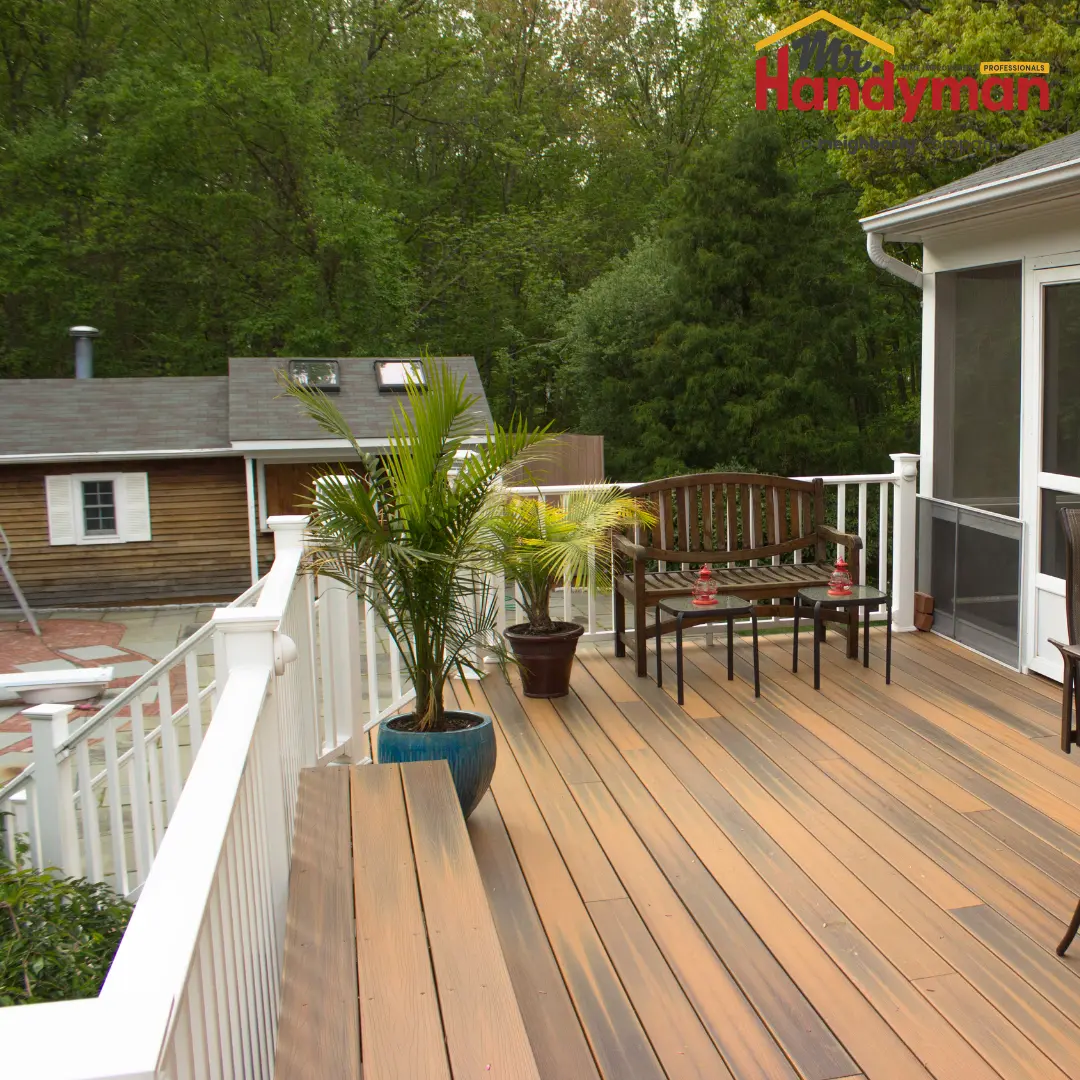
Deck and outdoor structure safety is the summer safety category intersecting most directly with Southwest Dallas County's family-oriented hosting culture and the specific deterioration mechanisms North Texas creates in these structures through each seasonal cycle.
Railing physical safety testing is the assessment no Southwest Dallas County homeowner should defer past the beginning of summer. Grasping each railing post firmly with both hands and applying lateral force in multiple directions is the test. A structurally sound post transmits this force to its base without any perceptible movement at the post or at connection points above and below. Any movement under this test reveals a structural condition requiring correction before the railing performs its fall-prevention function reliably under the dynamic loading that multiple guests create simultaneously at a summer gathering.
The building code standard that deck railings must meet goes beyond the general impression of soundness that visual inspection creates. Code requirements establish minimum loading that multiple people pressing against a railing simultaneously creates, not the static load of a single person leaning casually. A railing appearing adequate under everyday incidental contact may be well below the standard for actual safety loading, and only physical testing applying meaningful lateral force to each post reveals this distinction throughout the decks and porches of this service area.
Baluster spacing verification confirms compliance with the four-inch maximum standard preventing small child entrapment. Clay soil foundation movement can shift railing systems enough over multiple seasonal cycles that original compliant spacing has opened beyond this threshold at specific locations. Physical measurement at multiple points along each railing section identifies any locations where spacing has exceeded the safe standard, which is specifically relevant in the family households throughout DeSoto, Cedar Hill, and Duncanville where young children are present during summer gatherings.
Deck board structural condition requires the hands-on physical assessment distinguishing visually acceptable boards from those whose internal decay creates sudden failure risk. Walking the full deck surface and pressing firmly on each board, noting any softness or springiness indicating internal decay beneath an intact-appearing surface, is the assessment that visual inspection misses consistently. In Southwest Dallas County homes throughout the service area where decks have been through multiple cycles of North Texas's demanding conditions, the number of boards requiring replacement based on this physical test sometimes surprises homeowners whose visual assessment concluded the surface was acceptable.
Stair and step conditions on outdoor stairs adjacent to decks and at exterior entries deserve both structural and surface assessment. Loose stair treads developed movement through fastener failure or wood shrinkage need immediate correction before the sudden shift under foot creates a fall. And outdoor stair surfaces without adequate slip resistance for the wet conditions that Southwest Dallas County summer rain events create need the treatment or replacement that safe wet-surface traction requires for guests unfamiliar with the specific stair's condition.
Trip Hazard Identification and Correction
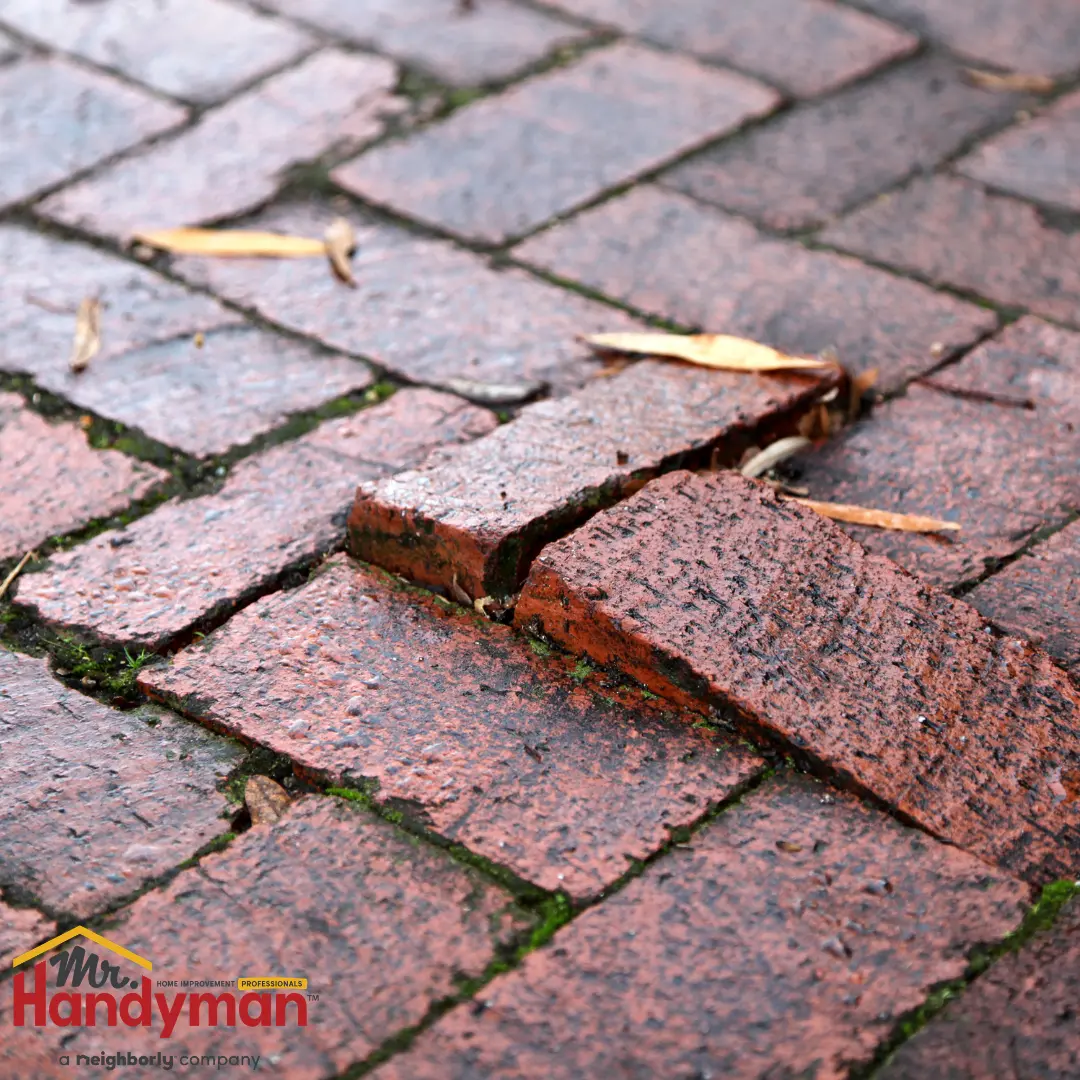
Trip hazards in and around Southwest Dallas County homes are consistently underestimated because their development is gradual, because household members adapt through daily familiarity, and because the clay soil movement creating many of them continues to develop new hazards even as existing ones are corrected.
Exterior walkway assessment should specifically identify the elevation differences at concrete control joints that clay soil differential settlement creates. Joints that were flush when concrete was poured develop the elevation differences that each wet-dry cycle accumulates across adjacent slabs responding to soil movement differently based on their specific load and soil contact conditions. An elevation difference of half an inch or more at a walkway joint creates meaningful trip hazard risk for the average pedestrian, and in Southwest Dallas County homes throughout the service area where multiple wet seasons have advanced these differences, several joints may have reached or exceeded this threshold without household members who navigate them daily being consciously aware of the hazard they represent to guests.
Correction approaches depend on magnitude and direction of the elevation offset. Grinding the raised edge of the higher slab to create a beveled transition reduces trip hazard risk while preserving both sections for modest elevation differences. Slab lifting through mudjacking or foam injection addresses the underlying settlement for more significant differences. And targeted concrete repair or section replacement is appropriate for joints where the elevation difference has developed to the point where neither grinding nor lifting creates an adequate result.
Interior threshold conditions at transitions between different flooring heights, and specifically at interior-to-exterior transitions where door thresholds create the step between finished floor height and exterior surface height, deserve the assessment and correction that clay soil movement makes necessary at regular intervals. A threshold flush with both floor surfaces when installed may have developed an elevated edge through foundation movement creating a trip hazard that daily household familiarity causes occupants to step over without awareness but that guests encounter unexpectedly.
Area rug and mat safety at both interior and exterior transition points is the accessible safety measure reducing slip and trip risk at the locations where foot tracking of moisture from Southwest Dallas County summer rain events creates the slippery surface conditions that hard flooring does not manage safely without slip-resistant mats. Entry mats large enough to capture moisture from multiple steps, bath mats with appropriate non-slip function, and outdoor mats at exterior entries providing wet-surface traction while capturing Southwest Dallas County's red clay soil debris are all safety investments at the cost of quality mat products.
Smoke and Carbon Monoxide Detector Maintenance
Detector maintenance is the summer safety investment that Southwest Dallas County's specific conditions make specifically urgent to address before the season rather than discovering inadequate coverage during it.
Detector function testing confirms these life-safety systems are operational before the summer season when extended indoor occupancy during peak heat increases the importance of reliable function. Testing each detector using the test button confirms the alarm function operates, but does not confirm that the detection sensor itself is functioning at rated sensitivity. Detectors more than seven to ten years old have sensors that may have degraded past reliable detection sensitivity regardless of whether the alarm appears to work during a button press. Replacement at these ages is the safety practice that detection organizations consistently recommend, and in Oak Cliff and Irving's older homes where original detector installations may be approaching or past this threshold, pre-summer assessment and replacement is specifically warranted.
Battery replacement in battery-powered and battery-backup detectors ensures function through the power outages that Southwest Dallas County's summer thunderstorm activity creates with meaningful frequency. A detector whose battery has depleted to low-battery chirp status has an unreliable backup function during outages, and the outages that severe North Texas summer storms create are exactly the conditions where reliable detector function matters most. Fresh batteries in all units before the most active storm period ensures detection when conditions demand it throughout the Cedar Hill, DeSoto, Duncanville, and Irving households that summer storms affect simultaneously.
Detector placement assessment confirms coverage meets current safety guidance throughout the home. Smoke detectors should be present in every bedroom, outside each sleeping area, and on every level. Carbon monoxide detectors should be on every level and outside each sleeping area. In Southwest Dallas County homes where original installation may have been completed to older standards, or where modifications have changed layout affecting coverage, a placement assessment identifies gaps that additional detector installation addresses.
Window Safety and Security
Window guard installation for windows in rooms occupied by young children is the fall prevention measure that upper-floor windows without adequate protection require in Southwest Dallas County households where children's developmental stage or play patterns create the fall risk that window proximity represents. Summer's comfortable evening temperatures motivating open windows for ventilation increases the window-open hours that create this exposure, making pre-summer guard installation the timely intervention that prevents the access that summer ventilation habits create. Window guards rated for the specific opening dimensions they are installed in provide the barrier preventing accidental falls while maintaining the ventilation function.
Window lock function for operable windows throughout Southwest Dallas County homes is the security and safety condition that regular use and clay soil movement both affect over time. Window locks loosened through repeated cycling or rendered inoperable by the frame movement that clay soil foundation behavior creates throughout this service area need tightening, adjustment, or replacement restoring positive locking function. In Oak Cliff and Irving's older homes where original window hardware has been through decades of cycling, lock condition assessment is a specifically relevant pre-season safety step.
Screen integrity for elevated windows that will be opened for ventilation needs assessment specifically for the fall protection limitation that standard residential screens carry. Standard screens are not designed as fall protection barriers, and windows at elevated floors where the screen is the only barrier between an open window and the exterior need either window guards or opening restriction rather than reliance on screen integrity for protection of children and pets during the summer ventilation hours that Southwest Dallas County's comfortable evenings motivate.
Garage Safety Conditions
Garage door reversal function testing confirms the automatic reversal safety feature is functioning correctly by placing a two-by-four on the garage floor in the door's path and activating the door to close. A door reversing immediately upon contact with the obstruction is functioning correctly. A door not reversing has a safety sensor or reversal mechanism condition requiring service before the door is used as a primary entry and exit point through summer's high-cycle use patterns throughout the Cedar Hill, DeSoto, and Duncanville households where the garage is the primary daily entry and exit point.
Chemical storage organization in Southwest Dallas County garages is the summer safety condition that the thermal environment of an uninsulated garage in North Texas summer makes more critical than in moderate climates. Pesticides, automotive fluids, solvents, and cleaning chemicals stored in a Southwest Dallas County garage during summer are subject to temperatures accelerating chemical instability and increasing vapor pressure. Secure, organized storage in appropriate containers, away from ignition sources and in the coolest accessible location within the garage, is the safety practice that professional handyman storage installation supports through appropriate shelving and secure cabinet installation throughout this service area.
Garage floor organization addresses the trip and safety hazards that summer's increased garage activity creates. Extension cords stored on hooks or reels rather than in tangled floor configurations eliminate both the trip hazard and the abrasion damage to cord insulation that floor contact creates. Power tools stored in positions preventing blade and bit contact hazards. And the organized infrastructure preventing floor-level clutter that summer activity generates are all safety improvements that professional handyman garage organization delivers efficiently in a single organized visit.
Caulking as a Safety and Health Measure
Exterior caulking at building penetrations is a health-adjacent safety measure because moisture infiltration through failed caulking allows into wall cavities creates the mold growth conditions that Southwest Dallas County's warm, humid summer environment accelerates dramatically once moisture has accessed the concealed wall spaces where this climate's temperature and humidity create ideal biological growth conditions. Mold in wall cavities creates indoor air quality conditions that are health-relevant for all household members and specifically consequential for the respiratory sensitivities that are prevalent in the diverse populations of this service area. Pre-summer caulking maintenance preventing this moisture access is therefore both building protection and household health protection.
Bathroom caulking at tub surrounds, shower enclosures, and sink perimeters is a slip-and-fall prevention measure alongside its moisture management function. Failed caulking at these locations allows moisture to reach floor surfaces adjacent to fixtures, creating the wet floor conditions constituting slip hazards in the bathroom environments where most residential slip-and-fall injuries occur. Fresh, continuous caulking directing water within the tub or shower rather than allowing it to escape to the floor reduces this risk while simultaneously managing the moisture that failed caulking allows into subfloor structures over time.
Frequently Asked Questions
What is the most critical summer safety fix for Southwest Dallas County homes with young children?
Window fall prevention through window guards on upper-floor windows and deck railing baluster spacing verification are the two safety conditions specifically protecting young children during summer in Southwest Dallas County homes. Both are professional installation scopes that a handyman handles efficiently, and both address the specific summer exposure that open windows for ventilation and peak outdoor gathering activity creates for young children in the family households throughout this service area.
How does Southwest Dallas County clay soil create new trip hazards seasonally?
Clay soil expands when wet and contracts when dry, creating differential settlement between adjacent concrete slabs at control joints over multiple wet-dry cycles. Each cycle can add incrementally to elevation differences at specific joints, and the cumulative effect of multiple cycles creates trip hazards that were not present when concrete was originally placed. Annual spring assessment after the wet season has completed its expansion cycle identifies new hazards before summer's outdoor activity creates peak exposure throughout Cedar Hill, DeSoto, Duncanville, and Irving.
Should Southwest Dallas County homeowners replace smoke detectors before summer?
Detectors more than seven to ten years old should be replaced regardless of season, and summer is as practical a time as any for this investment. The specific motivation in Southwest Dallas County is the power outages that severe thunderstorm activity creates, testing battery backup in detectors whose primary power is household current. Confirming all detectors are within reliable service life and batteries are fresh before the most active storm period ensures detection when conditions demand it.
Can a handyman handle all summer safety fixes in Southwest Dallas County?
A skilled handyman handles the large majority, including deck and railing structural assessment and repair, trip hazard identification and concrete repair coordination, smoke and carbon monoxide detector installation and testing, window guard and lock installation, garage door reversal testing and adjustment within the opener's adjustment range, and garage storage organization. New circuit installation for hard-wired detectors where no circuit exists requires a licensed electrician.
How often should Southwest Dallas County deck railings be physically tested?
Annual physical testing before the summer outdoor use season is the appropriate baseline, with additional testing following any significant wind event creating lateral loading on the railing system. Clay soil movement works at railing post base connections year-round, and annual pre-season testing catches the connection loosening accumulating through the previous year before peak-season loading tests it at a summer gathering. This is specifically important in Oak Cliff and Irving's older homes where decks have been through more complete cycles of North Texas's demanding conditions.
What is the relationship between documented safety maintenance and homeowner's insurance in Southwest Dallas County?
Documented safety conditions that have not been addressed can affect insurance claim outcomes when those conditions are related to a claim event. A fall from a railing that structural assessment would have identified as inadequate creates the claim context where documented deferred maintenance affects coverage outcomes. The proactive safety maintenance that regular professional handyman service delivers creates both actual protection and the documented maintenance record that insurance contexts benefit from throughout the Cedar Hill, DeSoto, Duncanville, and Irving residential market.
Protect Your Southwest Dallas County Home and Household This Summer
The summer safety fixes that Southwest Dallas County homes specifically need are the targeted investments that North Texas's climate, Dallas County's clay soil geology, the area's diverse housing stock, and the family-oriented social culture of these communities make both more necessary and more urgent here than in other markets. The team at Mr. Handyman of Southwest Dallas County brings the structural assessment, installation expertise, and North Texas regional knowledge to handle every summer safety scope throughout Cedar Hill, Cockrell Hill, DeSoto, Duncanville, Irving, Oak Cliff, Red Oak, Redbird, and Wolf Creek.
Call us or visit www.mrhandyman.com/southwest-dallas-county to schedule your summer safety assessment. We show up on time, work cleanly, and back everything we do with the Neighborly Done Right Promise.
