
Why Older Bathrooms in Southwest Dallas County Age the Way They Do
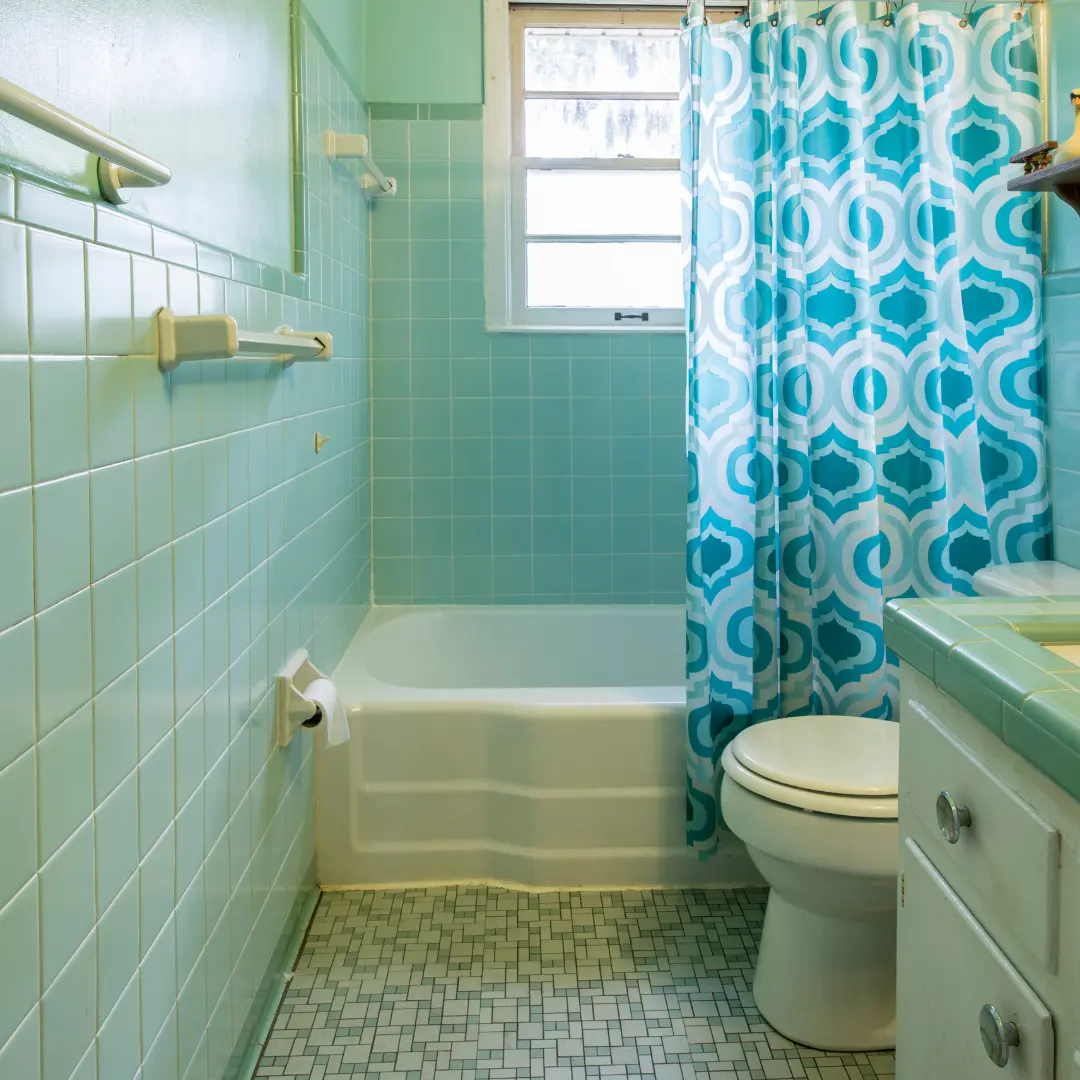
The bathroom inventory across Southwest Dallas County tells the story of the communities it serves. The established neighborhoods of DeSoto, Duncanville, and Cedar Hill carry homes built through the 1970s, 1980s, and 1990s whose bathrooms have been through multiple decades of North Texas conditions without meaningful updating. Irving's denser residential corridors include a wide range of construction vintages, from mid-century homes to production builds from the early 2000s. Oak Cliff's historic character creates bathrooms whose original installations reflect eras even further back. And the newer development in Red Oak and the broader southwestern edge of the county presents more recently built homes where builder-standard specifications are already showing the wear that DFW water and clay soil creates in these spaces faster than homeowners expect.
What these bathrooms share, regardless of their age or original specification, is exposure to the same set of North Texas conditions creating the deterioration that a targeted revival addresses. Hard water from the DFW water supply is the dominant factor. The dissolved minerals in Dallas-area water accumulate on every surface where water contacts and evaporates, creating the white and gray staining on grout, the tarnished fixture finishes, and the etching on glass enclosures that cleaning products address temporarily but cannot reverse. In Southwest Dallas County homes where the water has been doing this work for a decade or more without professional intervention, the accumulated condition is visible and permanent until targeted repair addresses it at the material level.
Clay soil foundation movement creates the bathroom conditions that homeowners throughout this service area find arriving on a schedule they did not anticipate. The caulking at tub surrounds that was intact at purchase develops the small separation that one wet season's foundation movement created. The grout at floor-level transitions develops the hairline crack that the building above the clay soil introduced. And the door that the bathroom shares with the adjacent hallway develops the binding that frame movement produces. These are not signs of a failing home. They are the natural consequences of the geology that Southwest Dallas County sits on, and they accumulate toward the conditions that a bathroom revival corrects.
Caulking: The Non-Negotiable First Step
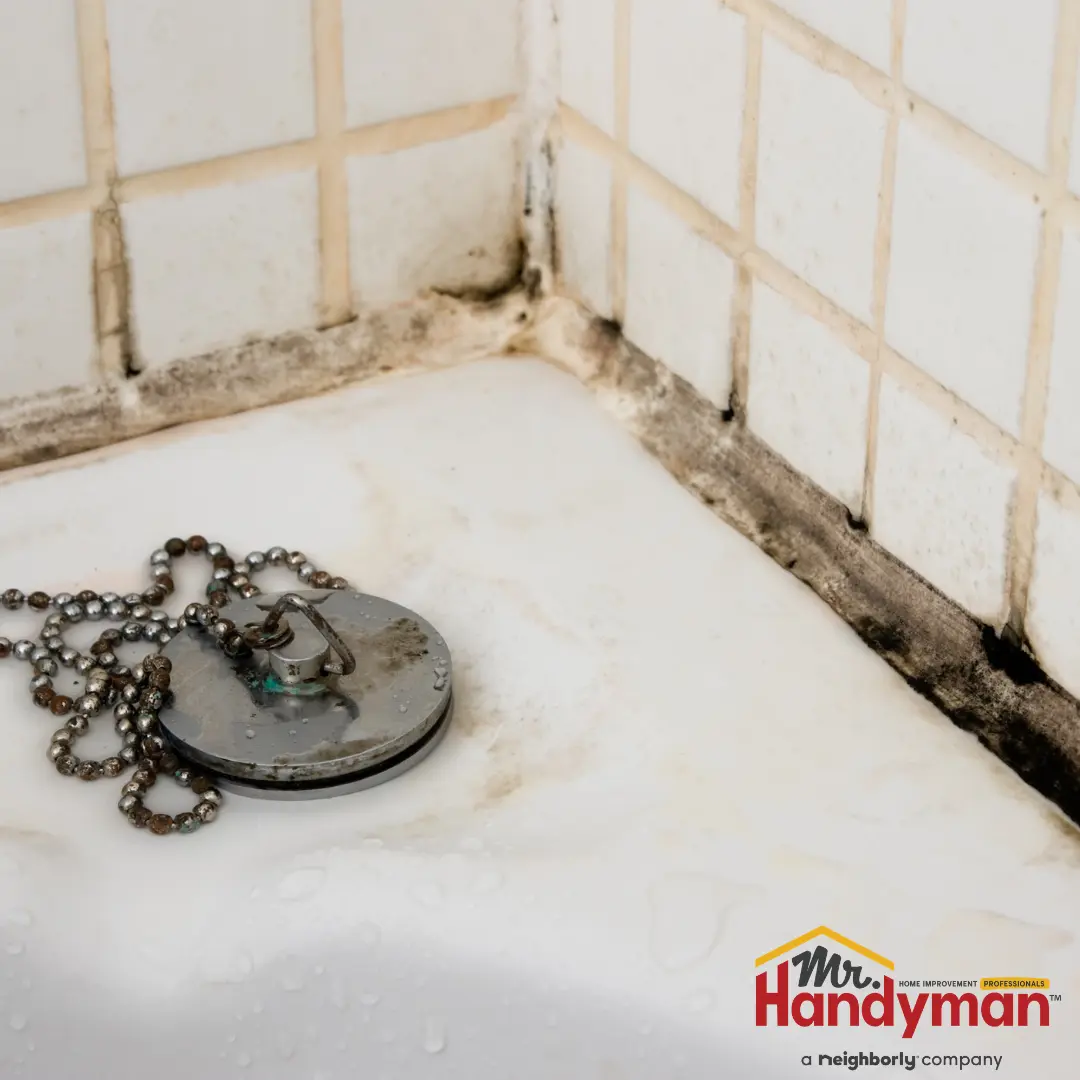
In a Southwest Dallas County bathroom revival, caulking renewal is always the first step and always the most immediately impactful one. The reason goes beyond appearance. In a home on Rockwall or Dallas County clay soil, the building movement that seasonal moisture creates has been working at bathroom caulking joints since the day the home was built. The joint at the tub surround, the shower enclosure base, the toilet base, and the floor-to-wall transition have all experienced this movement, and the gaps and failures that have developed through it are active moisture infiltration pathways into the wall and floor assemblies beneath.
Complete removal of all existing caulking before any new material is applied is the preparation requirement that separates lasting results from temporary cosmetic repair. Every experienced professional knows this, and every homeowner who has watched a bathroom re-caulking fail within a season has usually encountered the shortcut of new over old. Old caulking that has separated from its substrate, developed mold beneath its surface, or become brittle through the mineral adhesion and thermal cycling this climate creates provides no adhesion base for new material. The result inherits the failure pattern of the material beneath and repeats it quickly.
Silicone caulking in colors matched to the specific tile and fixture in the bathroom provides the best long-term performance in Southwest Dallas County's hard water environment. Silicone is non-porous, resisting the mineral deposit adhesion that latex caulking's slightly more textured surface allows, and it maintains the flexibility that clay soil movement and thermal cycling creates ongoing demand for. Surface preparation including thorough cleaning and complete drying before application ensures the adhesion that a Southwest Dallas County bathroom's movement and hard water exposure will test through every subsequent season.
Grout Refresh: Reversing Hard Water's Most Visible Damage

Grout condition is the surface element that hard water affects most visibly and most permanently in Southwest Dallas County bathrooms. The mineral staining accumulating in grout's porous matrix over years of DFW water exposure creates the gray-brown discoloration that no cleaning product fully reverses once the staining has worked into the grout's depth. The bathroom never quite looks clean, and the condition returns within days of the most thorough cleaning effort.
Grout recoloring with a penetrating colorant applied to clean, sound grout is the targeted improvement providing the most dramatic bathroom transformation where the tile itself remains in good condition. Unlike surface paint, penetrating colorant enters the grout's porous matrix to a consistent depth, creating an even color throughout the grout surface and sealing as it colors. This creates the barrier slowing the hard water mineral penetration that caused the original discoloration, and in Southwest Dallas County bathrooms where the tile is intact and original grout installation is structurally sound, it delivers the visual result of tile replacement at a fraction of the cost.
Preparation quality determines how long the result holds in this hard water environment. Thorough mechanical cleaning removing all surface mineral deposits, soap residue, and biological growth before colorant application ensures the colorant is penetrating clean grout rather than sealing contamination into the surface. Grout sections showing cracking or separation from clay soil foundation movement need targeted regrout before colorant application. Applying colorant over physically failed grout creates a cosmetic result failing quickly as the underlying condition continues.
Sealing after recoloring is the step that Rockwall and DFW area hard water specifically demands. Sealed grout resists the mineral penetration that this water supply accelerates dramatically and resists the mold growth that Southwest Dallas County's warm, humid bathroom environments promote on unsealed grout surfaces. This protection step takes under an hour in a standard bathroom and makes the recolor investment hold through the years of hard water exposure that unsealed grout would allow to re-stain quickly.
Fixture and Hardware Updates
Bathroom fixtures are the detail elements communicating renovation era most clearly, and updating them while retaining sound tile and vanity infrastructure is among the most efficient modernizations available in a Southwest Dallas County bathroom revival.
Faucet and hardware replacement targeting finish and profile as the primary design update delivers immediate, visible transformation at accessible cost. In Southwest Dallas County bathrooms where brass-era fixtures from late 1980s and 1990s renovations remain, or where early brushed nickel in dated profiles communicates a previous decade's specification, replacement with current matte black, brushed gold, or coordinated brushed nickel creates the designed impression that aged hardware works against regardless of how well the rest of the bathroom has been maintained.
Finish consistency across all visible metal elements is the design principle making hardware replacement most effective. When faucets, towel bars, robe hooks, toilet paper holders, and any other exposed metal accessory are updated simultaneously to the same current finish, the bathroom reads as intentionally designed rather than incrementally maintained. This coordinated impression distinguishes a bathroom that looks renovated from one where individual elements have been addressed without a unifying vision.
Showerhead replacement addresses both hard water performance and design currency simultaneously. A showerhead accumulating years of Southwest Dallas County hard water mineral deposits in its nozzles delivers reduced flow and uneven spray pattern that every shower makes apparent. Replacing it with a current WaterSense-certified model in the appropriate finish resolves the performance degradation and updates the most prominent fixture in the shower in a single installation. For Southwest Dallas County bathrooms where the shower is the primary daily use priority, a rainfall or multi-function upgrade elevates daily comfort in ways the existing mineral-clogged fixture cannot at any maintenance level.
Towel bar remounting addresses the condition that hard water, concentrated daily use, and inadequate original installation creates in Southwest Dallas County bathrooms. A towel bar pulling from the wall, showing movement under normal force, or already partially detached needs professional remounting anchored into wall framing where available, and appropriate hollow-wall anchor systems calibrated for actual pull-out load where framing access is unavailable at the installation location.
Mirror and Lighting: The Transformation That Changes the Room
The mirror and lighting combination above the vanity is the element that most transforms how a Southwest Dallas County bathroom reads in daily use and in photography. The standard installation in the area's production homes and older residential stock, where a basic mirror mounts to the wall and a globe-bulb strip sits above it, creates both the functional limitation and the visual dating that replacement directly addresses.
The functional improvement from replacing overhead globe-bulb strips with a horizontal vanity bar at appropriate height or flanking sconces at face level is felt immediately and continuously in daily use. Downward-casting overhead fixtures create shadows that make detail tasks unnecessarily difficult. Face-level lighting creates the even, shadow-free illumination that a genuinely functional bathroom requires, and in Southwest Dallas County households where morning routines are practical and time-compressed, this functional improvement matters daily.
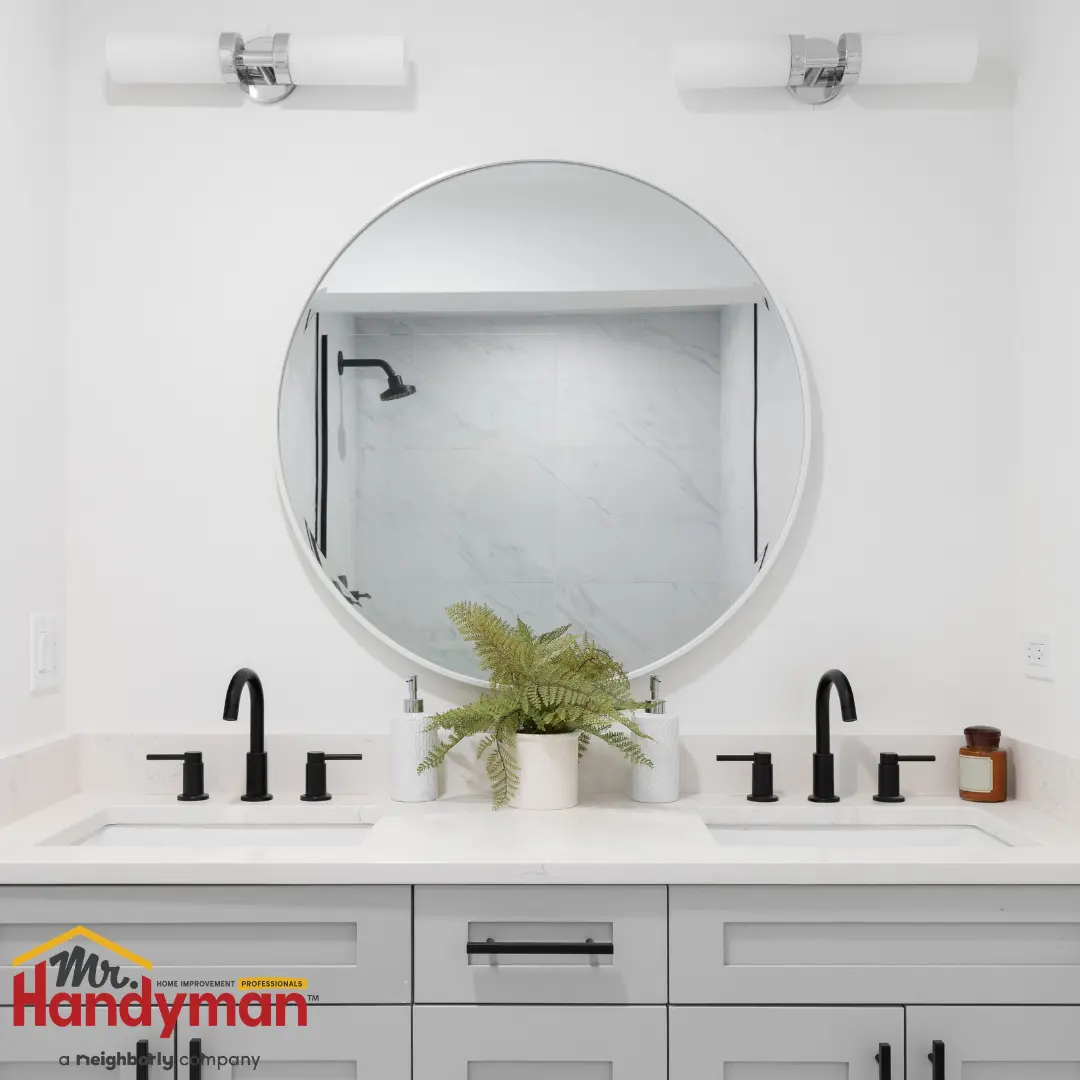
A framed mirror of appropriate scale for the wall it occupies, paired with fixtures in the finish coordinating with the updated hardware throughout the bathroom, creates the resolved appearance that an oversized basic mirror or dated medicine cabinet works against. Mirror sizing that fills the wall appropriately above the vanity, with balanced reveals from the vanity counter and adjacent walls, creates the visual composition that makes the vanity area feel designed rather than assembled from whatever was available at original construction.
Flooring: Practical Options for Southwest Dallas County Bathrooms
Bathroom flooring in Southwest Dallas County homes reflects the clay soil movement and hard water conditions that the area creates over years of ownership. Grout joints at floor tile that have cracked through foundation movement, filled with mineral staining, or developed the raised conditions that differential settlement creates make the floor feel worn in ways that cleaning cannot address.
Floor tile replacement in a Southwest Dallas County bathroom is a realistic revival scope because the bathroom floor is a contained area where a professional visit completes installation without disturbing walls, vanity, or fixture connections. Large-format porcelain tile in a current format creates a floor managing the area's hard water, holding up through clay soil movement cycles better than small-format original tile, and reading as a deliberate design choice rather than a dated original installation. In Cedar Hill, DeSoto, and Duncanville homes where floor tile has been through fifteen or more years of North Texas conditions, replacement delivers the complete transformation that the rest of the revival investment builds on.
Luxury vinyl tile or plank is the practical choice for Southwest Dallas County bathrooms where budget constraints make full tile replacement less accessible but where existing flooring has reached the condition actively working against the revival investment. Current LVP is fully waterproof, installs over existing subfloor in many cases, and delivers complete visual transformation at significantly lower investment than tile replacement requires. For the value-conscious homeowners throughout this service area, this approach provides a credible flooring result that supports the rest of the revival work.
Ventilation: Making Everything Else Last Longer
Exhaust fan performance is the bathroom improvement determining how long every other revival investment holds in Southwest Dallas County's warm, humid bathroom environment. A bathroom without adequate ventilation retains shower humidity in the enclosed space, and this persistent humidity promotes the mold growth at grout joints and caulking that makes fresh work look aged within months of completion.
Testing by holding a sheet of paper near the grille while the fan runs confirms whether the fan is moving air with meaningful velocity. A fan that has accumulated dust on its blades, has a worn motor operating below rated speed, or connects to inadequate ductwork may run continuously without providing the air exchange that Southwest Dallas County's hard water and shower humidity requires. Fan replacement with a correctly sized unit for the bathroom's square footage, vented through properly routed ductwork to the exterior, is the foundational investment making every other revival improvement in a Southwest Dallas County bathroom last as long as it should.
Frequently Asked Questions
What is the first improvement to make in a Southwest Dallas County bathroom revival?
Caulking renewal throughout all joints in the bathroom comes first. It addresses the moisture infiltration pathways that clay soil movement has opened, establishes the clean baseline that makes every subsequent improvement read at its best, and creates the immediate impression transformation that communicates active maintenance. A freshly caulked bathroom looks maintained even before any other changes are made.
How does Southwest Dallas County hard water affect the longevity of bathroom improvements?
DFW hard water accelerates mineral deposit formation on every surface water contacts, which means improvements to grout, caulking, and fixtures face the same accumulation pressure that created the original condition. Sealing grout after recoloring, choosing silicone over latex caulking, selecting fixture finishes with hard water resistance in mind, and ensuring adequate exhaust ventilation all extend the life of revival improvements in this hard water context.
Is grout recoloring a lasting solution or just a temporary fix?
Grout recoloring properly prepared and sealed holds for years in Southwest Dallas County's hard water environment. Failure is almost always traced to inadequate preparation, either incomplete mineral deposit removal before colorant application or omission of sealing afterward. Properly executed with quality penetrating colorant and appropriate sealer, the result outperforms years of repeated cleaning indefinitely.
Can a bathroom revival add value in Southwest Dallas County's real estate market?
Yes. Southwest Dallas County's residential market, where Cedar Hill, DeSoto, and Duncanville all see consistent buyer activity, rewards bathrooms that photograph well and feel fresh in person. The targeted improvements of a revival, specifically caulking, fixture hardware, grout refresh, and lighting, create the clean, current impression that differentiates listings and communicates maintenance quality that buyers respond to directly.
Should flooring be replaced before or after fixture and hardware updates?
Flooring replacement always precedes fixture and hardware updates. Floor work generates debris and involves installation activity risking damage to freshly updated fixtures. Completing the floor first creates the finished surface that all subsequent improvements build on and eliminates the sequencing problem of protecting new fixtures during floor installation.
What exhaust fan size is right for a standard Southwest Dallas County bathroom?
The guideline of one CFM per square foot of floor area applies here, with a minimum of 50 CFM regardless of size. Bathrooms showing existing moisture accumulation on surfaces or that experience heavy steam from long showers benefit from units rated at 70 to 80 CFM. Longer ductwork runs reduce effective airflow below the fan's rated capacity, so longer runs warrant a higher-rated unit to compensate.
Revive Your Southwest Dallas County Bathroom Without the Scope of a Full Remodel
The targeted improvements transforming an older Southwest Dallas County bathroom from caulking and grout refresh through fixture updates and flooring create genuine, lasting results at a fraction of complete renovation cost. The team at Mr. Handyman of Southwest Dallas County brings the tile, caulking, carpentry, and fixture installation expertise to handle every aspect of a bathroom revival throughout Cedar Hill, Cockrell Hill, DeSoto, Duncanville, Irving, Oak Cliff, Red Oak, Redbird, and Wolf Creek.
Call us or visit www.mrhandyman.com/southwest-dallas-county to schedule your bathroom revival service. We show up on time, work cleanly, and back everything we do with the Neighborly Done Right Promise.