What Common Areas Say About the Businesses Inside Them
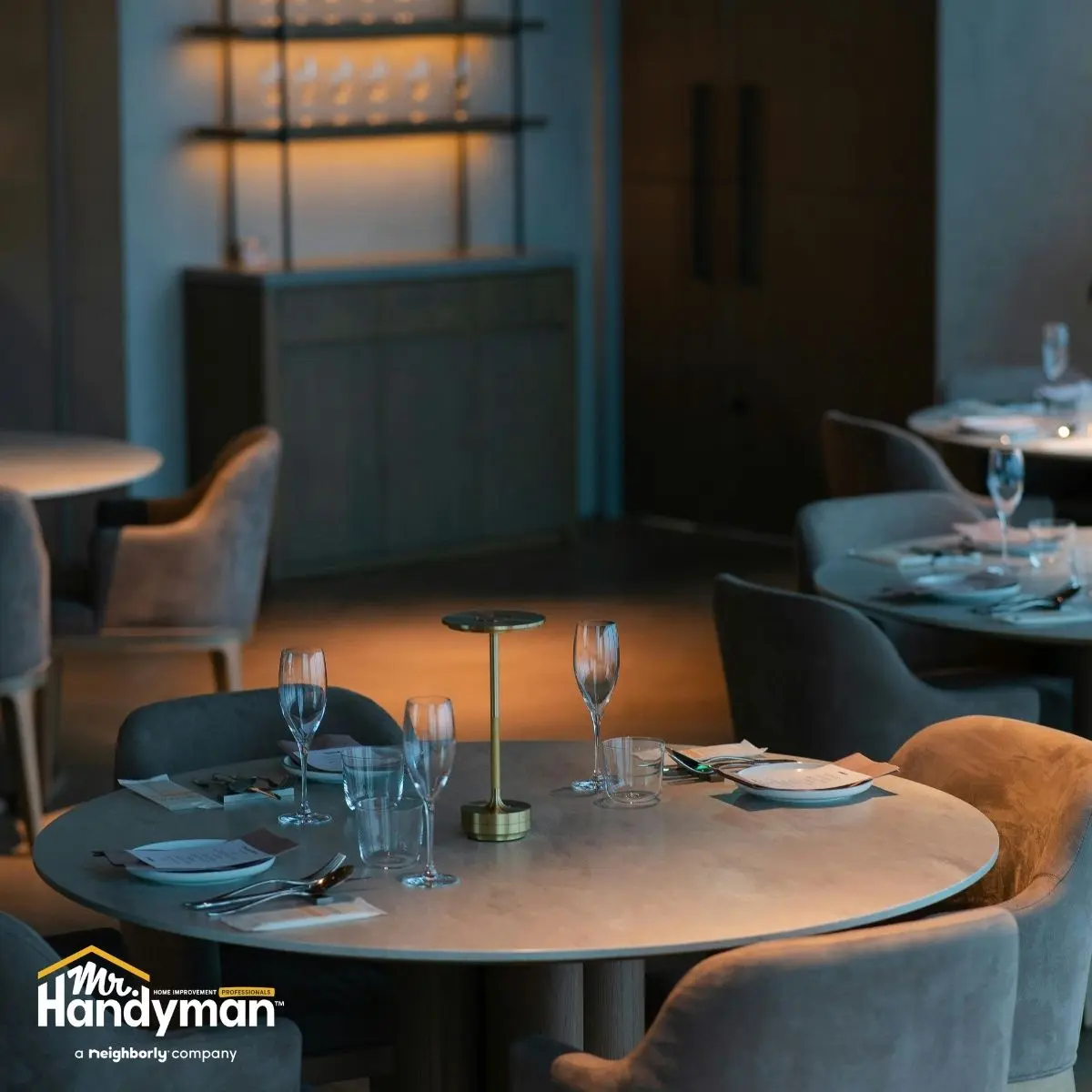
Common areas carry a unique burden in commercial properties. They are not owned by any single tenant or business, yet every person who enters the building passes through them, forms impressions in them, and makes judgments based on their condition. A lobby that feels fresh and well-maintained communicates that the entire property is professionally managed. A hallway with scuffed walls, flickering lights, and worn flooring communicates the opposite — and that message attaches itself to every business operating inside the building, whether they are responsible for the condition or not.
In Oklahoma City and Norman, spring represents the natural reset point for commercial property maintenance. The freeze-thaw cycles of winter are finished, severe weather season is approaching, and foot traffic is about to increase across virtually every commercial category. Tenants are returning from slower winter periods, new clients are visiting for the first time, and the overall pace of business activity picks up in ways that put common areas under more scrutiny than at any other point in the year.
Property managers and building owners who treat spring as a deliberate refresh opportunity rather than just another season transition consistently maintain higher tenant satisfaction, stronger occupancy rates, and better long-term property values. The work involved is rarely dramatic — it is targeted, methodical, and focused on the specific details that shape how a shared space is perceived and experienced by everyone who moves through it.
What Oklahoma's Winter Leaves Behind
Central Oklahoma winters are not the harshest in the country, but they are inconsistent in ways that create specific maintenance challenges. Temperature swings between warm and freezing can occur multiple times within a single week, and that thermal cycling stresses building materials in ways that a consistently cold climate does not. Moisture infiltration, expansion and contraction of building components, and the accumulation of salt and debris tracked in from exterior surfaces all take a measurable toll on common areas between November and March.
Entryway flooring is the most visible casualty. Commercial entry mats become saturated and compressed over winter months, losing their ability to trap moisture and debris effectively. Hard flooring surfaces — tile, polished concrete, and vinyl composition tile — accumulate a dull film from cleaning products, tracked-in salt residue, and foot traffic that no routine mopping fully removes. By March, many commercial lobbies and corridors are operating with flooring that looks perpetually dirty regardless of how recently it was cleaned.
Wall surfaces in high-traffic corridors take consistent abuse from coats, bags, equipment, and general contact throughout winter months when people are moving through spaces quickly and wearing bulkier clothing. The scuff marks, corner damage, and paint wear that accumulate between October and March are most visible once spring light conditions change — natural light entering at different angles suddenly reveals surface damage that artificial lighting had partially concealed all winter.
Ceilings and overhead elements are frequently overlooked during winter maintenance cycles, yet they accumulate dust, moisture staining near HVAC diffusers, and cobweb buildup in corners that becomes increasingly visible as common areas receive more traffic and scrutiny in spring. A ceiling that looks clean from below in January can look noticeably neglected by April once building activity increases.
Lobbies and Entry Vestibules
The lobby is where spring refresh investment delivers its highest return. It is the first interior space every visitor, tenant, and delivery person encounters, and its condition sets the tone for the entire property experience before anyone reaches an individual suite or storefront.
Spring lobby refresh in Oklahoma City and Norman commercial properties typically begins with flooring. Entry vestibule tile that has been repeatedly wet and dried throughout winter often shows grout discoloration and surface film that deep cleaning alone cannot fully address. Re-grouting or professional restoration of entry tile is a contained project that dramatically resets the visual baseline of the entire entry sequence. Hard flooring in the main lobby area benefits from professional stripping and recoating of finish layers that have dulled over winter — this process removes the accumulated film and restores a clean, reflective surface that reads as well-maintained rather than worn.
Wall surfaces in lobbies should be assessed at eye level and below, where contact damage concentrates. Touch-up painting is the minimum intervention, but properties where paint has been touched up repeatedly over several years often reach a point where full repainting of the lobby is more effective than continued spot repairs. A fresh, cohesive wall color in a lobby resets the entire space and eliminates the patchy, inconsistent appearance that accumulated touch-ups create over time.
Furniture and seating in commercial lobbies accumulates winter wear in ways that are easy to overlook incrementally. Cushions compress, upholstery shows soil and wear along armrests and seat edges, and the overall arrangement of lobby furniture often drifts from its original intentional layout as pieces are moved and never fully reset. Spring is the appropriate time to assess whether lobby furniture is serving its function, clean or replace upholstered elements showing significant wear, and deliberately reset the arrangement to reflect a purposeful, welcoming environment.
Corridors, Stairwells, and Transition Spaces
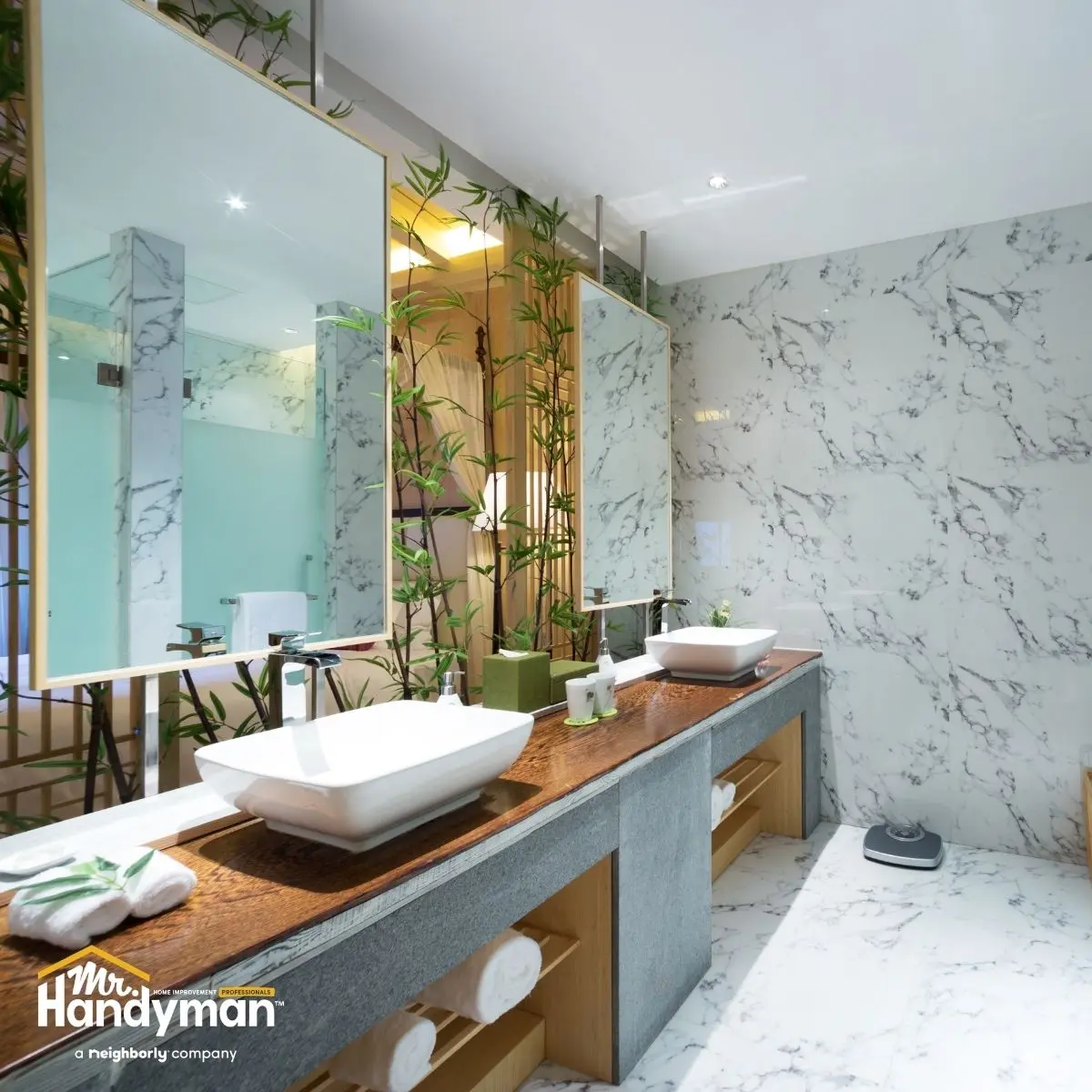
Corridors are the connective tissue of any multi-tenant commercial property, and they receive more cumulative foot traffic than any other common area. Yet they are frequently the last spaces to receive maintenance attention because they lack the visibility of a lobby or the functional urgency of a restroom. The result is that corridors in many Oklahoma City and Norman commercial buildings quietly accumulate years of deferred surface maintenance while more prominent spaces receive periodic attention.
Baseboard trim in commercial corridors takes consistent impact from foot traffic, cleaning equipment, and cart movement. Chipped, cracked, and paint-saturated baseboard that has been painted over repeatedly without repair creates a chronic low-grade shabbiness that affects the overall quality perception of the entire corridor. Replacing damaged baseboard sections and repainting the full corridor from baseboard to ceiling is one of the most cost-effective common area refreshes available to commercial property managers.
Stairwells are among the most neglected spaces in multi-story commercial buildings. They receive significant foot traffic during fire drills, power outages, and among tenants who use them regularly, yet they are rarely included in standard maintenance cycles. Handrail condition, stair nosing integrity, wall surface condition, and lighting adequacy in stairwells all have direct safety implications in addition to their effect on property appearance. Spring is the right time to walk every stairwell with fresh eyes and address the deferred maintenance that has accumulated there.
Taking the Refresh Beyond the Obvious Spaces
The lobbies and corridors of a commercial property receive attention because their condition is impossible to ignore when it deteriorates significantly. But the common areas that most consistently separate well-managed properties from neglected ones are the spaces that fall between obvious and invisible — the elevator interiors, shared restrooms, break rooms, and outdoor common areas that tenants and visitors encounter daily but that rarely appear on a standard maintenance checklist.
In Oklahoma City and Norman, where commercial properties range from single-story professional parks to multi-tenant retail strips and mid-rise office buildings, these secondary common areas reflect property management standards just as clearly as the lobby does. A tenant whose clients regularly use a shared restroom that feels dated and poorly maintained is experiencing a property management problem whether or not it is framed that way. A business whose employees use a shared break room with damaged cabinetry and deteriorating surfaces is operating in an environment that affects morale and retention in ways that are difficult to measure but very real.
Spring refresh is the opportunity to address these spaces systematically rather than reactively — before busy season brings more eyes and higher expectations to every corner of the property.
Shared Restrooms
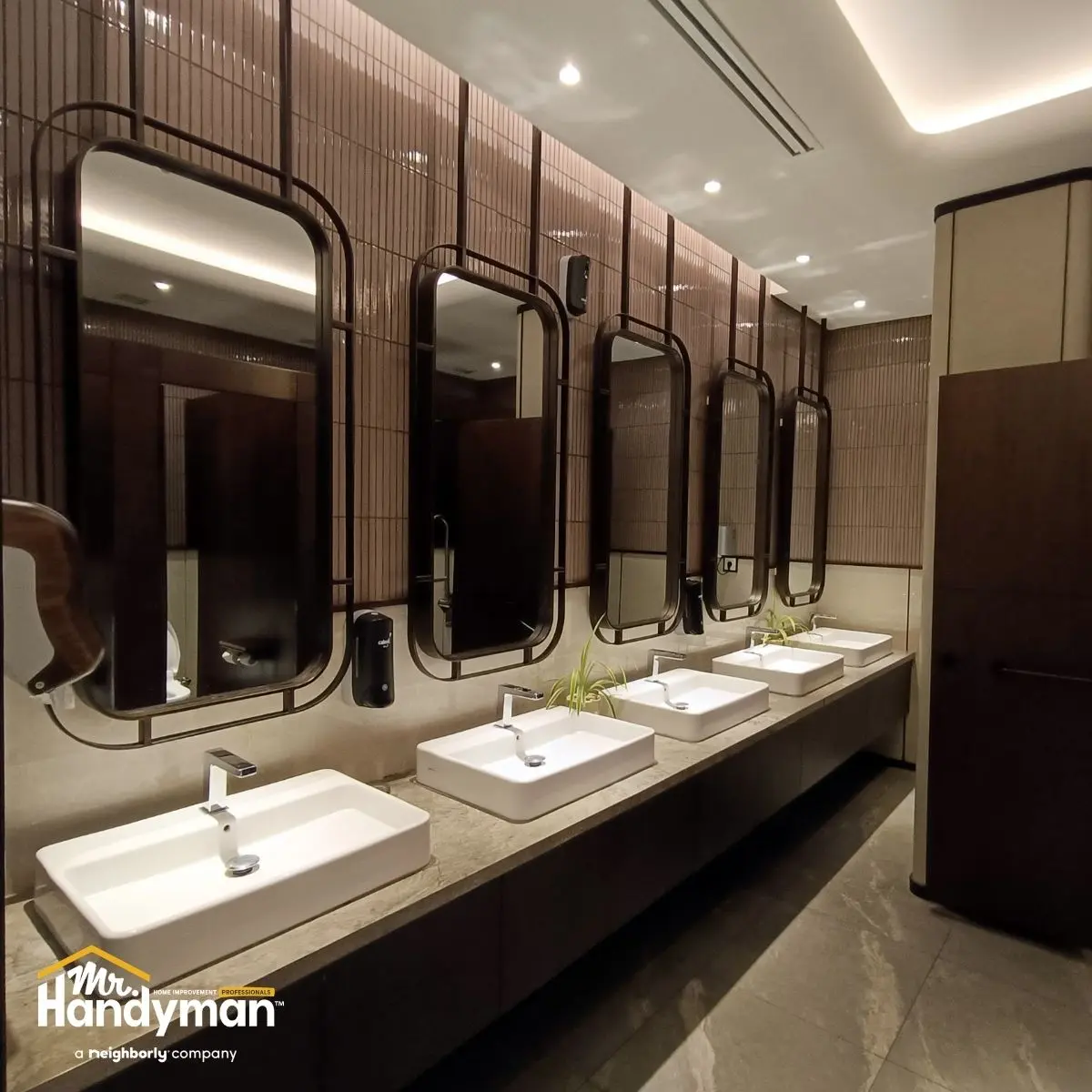
Shared restrooms in commercial properties are evaluated by tenants and their clients with a critical eye that few other common areas receive. They are enclosed, intimate spaces where every surface detail is visible at close range, and their condition is directly associated with the management standards of the entire property.
Winter takes a specific toll on commercial restroom common areas in central Oklahoma. Humidity fluctuations cause caulking around sinks, toilets, and tile transitions to crack and separate. Hard water deposits accumulate on faucet fixtures and drain covers. Exhaust fans that run continuously throughout the heating season collect dust and debris that reduces their effectiveness and creates noise. Grout in tile floors darkens from cleaning product residue and foot traffic in ways that routine mopping does not reverse.
A spring restroom refresh addresses these conditions methodically. Recaulking around all fixtures eliminates moisture infiltration pathways that lead to substrate damage behind walls and under floors. Replacing faucet aerators and cleaning or replacing showerheads where applicable restores water flow and eliminates the hard water buildup that makes fixtures look perpetually dirty. Deep grout cleaning or regrouting in high-traffic tile areas resets the floor appearance more effectively than any surface cleaning protocol.
Hardware replacement in shared restrooms — paper towel dispensers, soap dispensers, toilet paper holders, and grab bars — is a spring refresh step that property managers frequently overlook. Fixtures that are cracked, discolored, or missing components communicate neglect in a space where tenants form strong opinions quickly. Replacing a full set of restroom accessories is a modest investment that delivers an immediate, noticeable upgrade to the overall restroom impression.
Break Rooms and Shared Kitchen Areas
Shared break rooms and kitchen areas in commercial properties exist in a maintenance gray zone — used heavily by tenants but owned by the property, they are frequently claimed by neither when it comes to upkeep. The result is that cabinetry, countertops, sink fixtures, and wall surfaces in shared break rooms accumulate wear and damage that exceeds what would be tolerated in any individually occupied space.
Spring is the right time for property managers to reclaim these spaces and address the deferred maintenance that has built up. Cabinet door hinges that have loosened or failed cause doors to hang improperly, creating both a visual and functional problem that affects the space every time someone opens a cabinet. Replacing hinge hardware, adjusting door alignment, and replacing pulls and knobs that have corroded or broken is a contained repair that makes a shared kitchen feel maintained rather than abandoned.
Countertop surfaces in shared break rooms take concentrated abuse from heat, moisture, and daily use. Laminate surfaces that have lifted at seams, cracked at edges, or developed burn marks create both a hygiene concern and a visual deterioration that affects how tenants perceive the property overall. Resurfacing or replacing a break room countertop is a straightforward project that resets the functional heart of the space and signals to tenants that the property management is attentive to their daily environment.
Outdoor Common Areas and Building Surrounds
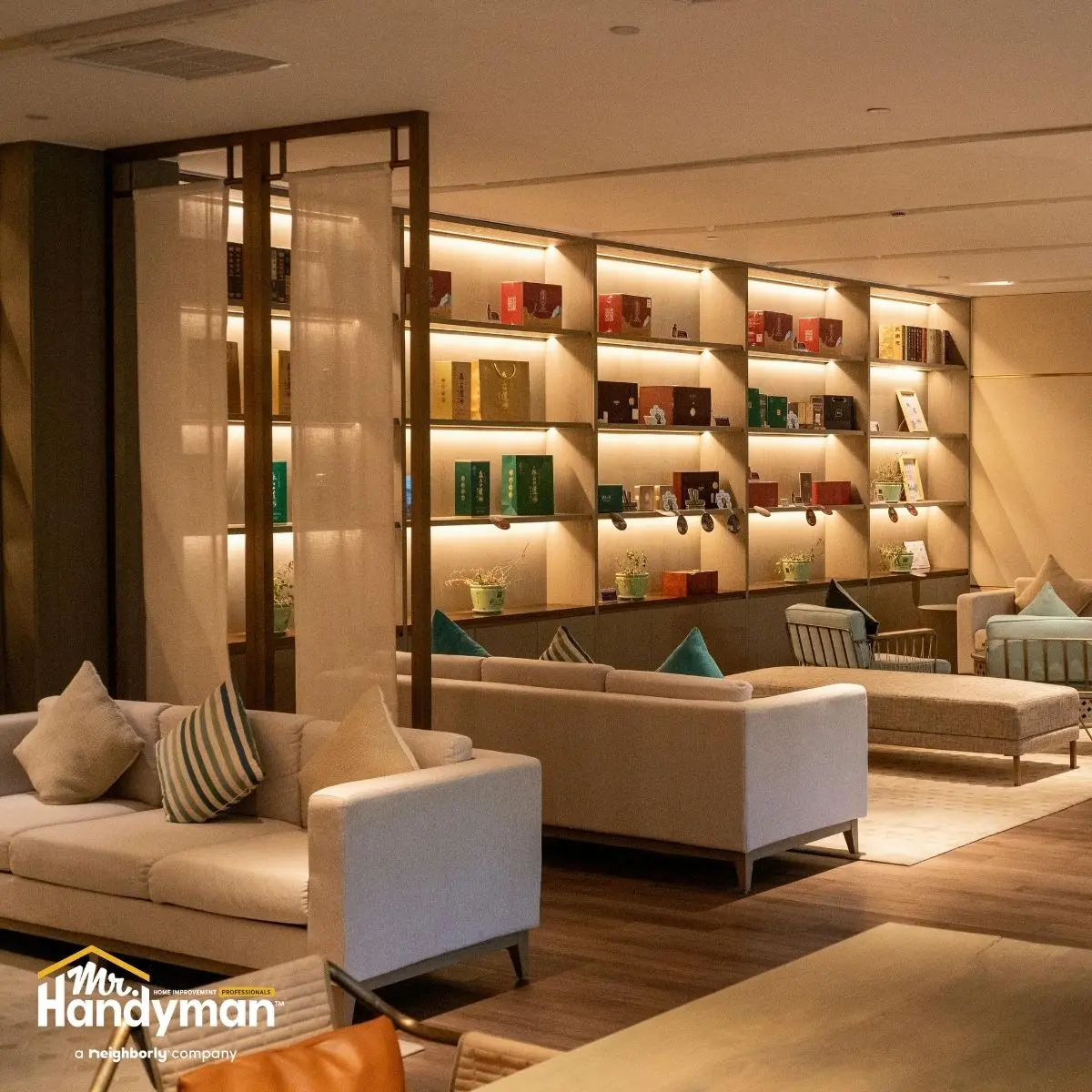
Exterior common areas in Oklahoma City and Norman commercial properties emerge from winter in predictable condition — debris accumulation, surface staining, landscape deterioration, and the general visual fatigue that comes from months of weather exposure without active attention.
Shared walkways connecting parking areas to building entrances need to be assessed for winter damage before spring foot traffic increases. Concrete panels that have shifted, asphalt surfaces that have developed new cracking, and drainage areas that have become obstructed all need attention before seasonal rain events stress them further. Pressure washing of exterior walkways, entry canopies, and building facades removes the accumulated grime of winter and restores a clean baseline that fresh maintenance can build from.
Outdoor seating areas, smoking shelters, and covered gathering spaces associated with commercial properties frequently emerge from winter with damaged furniture, deteriorated roofing components, and surface finishes that have been stripped by UV exposure and moisture. Repainting metal furniture and structures, replacing deteriorated polycarbonate or corrugated roofing panels on shelters, and resealing wood surfaces before summer heat arrives are all spring refresh tasks that extend the life of these features and restore their usability for tenants and visitors.
Exterior signage and wayfinding elements in common areas — directory signs, suite number plaques, parking designation signage, and accessible route markers — should be walked and assessed each spring. Faded lettering, damaged mounting hardware, and signage that has shifted out of alignment all create confusion and communicate a lack of attention to detail that tenants notice even when they do not mention it directly.
FAQs
How often should commercial common areas receive a full spring refresh? Annually is the appropriate baseline for most commercial properties in Oklahoma City and Norman. The combination of winter stress and increased spring activity makes the March through April window the highest-return maintenance period of the year. Properties with higher foot traffic or older building stock may benefit from semi-annual assessments.
Who is responsible for common area maintenance in a multi-tenant commercial property? In most commercial lease structures, common area maintenance — often referred to as CAM — is the responsibility of the property owner or management company, with costs sometimes passed through to tenants as part of their lease agreement. Regardless of cost structure, the coordination and execution of common area repairs falls to property management.
Can common area renovations be phased to avoid disrupting tenants? Yes, and phasing is often the preferred approach for occupied commercial properties. An experienced handyman service familiar with commercial environments can schedule work in sections, during off-hours, or in sequences that keep common areas functional throughout the refresh process.
What common area repairs have the most direct impact on tenant retention? Restroom condition, corridor cleanliness and surface quality, and lobby presentation consistently rank highest in tenant satisfaction surveys. Addressing these three areas before lease renewal periods creates a tangible demonstration of property management responsiveness that influences tenant decisions directly.
How do I prioritize common area repairs when the budget is limited? Start with safety and compliance — handrails, lighting, and trip hazards first. Then move to the highest-visibility, highest-traffic surfaces: lobby flooring, corridor walls, and shared restrooms. Cosmetic improvements to secondary spaces can follow once foundational repairs are complete.
Start Spring With Common Areas That Work for You
A well-maintained commercial property does not happen by accident. It happens because someone makes deliberate decisions about when to address deferred maintenance, where to concentrate refresh investment, and how to stay ahead of the seasonal cycle rather than always reacting to it.
Mr. Handyman of Central Oklahoma City works with commercial property managers and business owners throughout the area to plan and execute exactly this kind of seasonal maintenance — efficiently, professionally, and without the disruption that larger contractors bring to occupied spaces.
🌐 mrhandyman.com/central-oklahoma-city/
Mr. Handyman of S. Oklahoma City and Norman brings the same reliable, detail-oriented approach to commercial properties throughout the southern metro and Norman.
🌐 mrhandyman.com/northern-montgomery-county/
Schedule your spring common area assessment today and head into the busy season with a property that reflects the standards your tenants and their customers expect.