Why the Outside of Your Building Speaks Before You Do
Before a single customer walks through your front door, they have already formed an opinion about your business. That opinion is shaped entirely by what they see from the parking lot, the sidewalk, or the street. A cracked walkway, a faded fascia board, a door that sticks, a gutter hanging at an odd angle — none of these things scream catastrophe on their own, but together they communicate something your business never wants to communicate: neglect.
In Oklahoma City and Norman, the window between winter's end and the true arrival of spring busy season is shorter than most business owners realize. By the time temperatures stabilize and foot traffic picks up, contractors are booked, materials are backordered, and you are stuck managing a deteriorating first impression during the exact weeks when new customers are actively looking for businesses like yours.
The smarter move is to get ahead of it. Exterior repairs completed before busy season are not just cosmetic upgrades — they are operational investments that protect foot traffic, reduce liability, and keep your building functioning through the heat and storm activity that Oklahoma summers reliably deliver.
What Oklahoma's Climate Does to Commercial Exteriors Every Year
Oklahoma City and Norman sit in a climate zone that punishes buildings in ways that many other regions simply do not experience. Winter brings freeze-thaw cycles that work moisture into every small crack, gap, and unsealed joint in your exterior. Water expands as it freezes, and what starts as a hairline crack in a sidewalk or foundation wall becomes a legitimate structural gap by February.
Then spring arrives — and with it, the severe storm season. Oklahoma consistently ranks among the top states in the country for hail activity, high winds, and tornado-related damage. Hail strips caulking from window frames, dents metal flashing, loosens roofline components, and accelerates the aging of any exposed wood surface. Wind events push debris into drainage systems and peel back roofing materials that were already weakened by winter stress.
By the time summer heat sets in, that same exterior is now baking under intense UV exposure, which fades paint, dries out wood, and causes expansion and contraction in materials that were never allowed to fully recover from winter damage.
This cycle — freeze, storm, bake — is not occasional in central Oklahoma. It is annual. Commercial buildings that are not actively maintained fall behind quickly, and catching up mid-season is both expensive and disruptive.
Walkways, Parking Lots, and Entry Points
The approach to your building is where customer impressions begin and where liability risk is highest. Cracked or uneven concrete walkways, deteriorating pavement near entrances, and damaged curbing are not just eyesores — they are slip-and-fall hazards that expose your business to real legal and financial consequences.
After a Central Oklahoma winter, sidewalk panels that shifted due to ground movement need to be assessed. Trip edges — any vertical displacement of a quarter inch or more — should be addressed before busy season foot traffic begins. In many cases, trip hazards can be ground down, patched, or stabilized without full panel replacement, but that assessment needs to happen before the problem worsens.
Entry door thresholds deserve the same attention. Thresholds that have lifted, warped, or separated from the floor create both accessibility issues and liability concerns. Customers using mobility devices, strollers, or simply moving quickly through a busy entrance are all affected by threshold conditions that seem minor until someone trips.
Handrails along steps and ramps also take significant stress during winter. Loose or wobbling handrails — even slightly — are a code compliance issue and a safety risk. Tightening, resetting, or replacing mounting hardware before busy season is a small job with serious consequences if left undone.
Exterior Doors, Frames, and Hardware
Commercial doors work harder than residential ones. They open and close dozens or hundreds of times per day, and the frames, hinges, closers, and hardware that support them absorb every one of those cycles. By the end of winter, it is common to find commercial doors that drag against frames, fail to latch cleanly, close too slowly, or allow visible daylight and air infiltration along their edges.
A door that drags or sticks creates a frustrating first interaction for every customer who encounters it. It also increases energy costs, because a door that does not seal properly allows conditioned air to escape continuously. In Oklahoma summers, where businesses run air conditioning hard from May through September, that gap in your door frame is actively costing you money every hour the building is occupied.
Door closers are frequently overlooked until they fail completely. A closer that is losing hydraulic fluid will begin to close doors inconsistently — too fast, too slow, or not at all. Replacing a door closer before busy season is a straightforward repair. Replacing one in July while your business is at full capacity is a much more disruptive job.
Weatherstripping along door perimeters compresses and degrades over time, particularly at the bottom sweep where it contacts the threshold repeatedly. Replacing worn weatherstripping restores the seal, improves energy efficiency, and eliminates the draft that customers notice immediately when they enter.
Siding, Fascia, Soffit, and Exterior Wood
Commercial buildings across Oklahoma City and Norman vary widely in age and construction, but wood-containing exterior elements — fascia boards, soffit panels, trim around windows and doors, and decorative framing — are consistently vulnerable to the same problems after a difficult winter.
Moisture is the primary enemy. When caulking around windows, doors, and trim separates or shrinks, it creates pathways for water to enter the wall assembly. Once moisture gets behind siding or into wood framing, it does not leave quickly. It supports mold growth, accelerates rot, and compromises the structural integrity of the components it contacts. Left unaddressed, what began as a small caulking failure becomes a rot repair involving multiple layers of the wall.
Inspecting all caulked joints before spring storm season is one of the highest-return maintenance activities a commercial property owner can perform. Fresh caulking is inexpensive. The rot repairs that follow unchecked moisture intrusion are not.
Fascia and soffit boards that show soft spots, discoloration, or visible deterioration should be replaced before the summer heat accelerates further breakdown. Painting or sealing repaired wood immediately after replacement is equally important — bare wood exposed to Oklahoma summer sun begins to check and crack within a single season.
Where Exterior Problems Hide in Plain Sight
Most business owners walk past the same building every day and stop truly seeing it. Familiarity dulls attention to detail, and the gradual nature of exterior deterioration means problems rarely announce themselves dramatically. They accumulate quietly — a slightly loose sign mounting, a gutter that pulls away from the roofline by another half inch each month, a light fixture housing that fills with water after every rain. By the time these issues are obvious enough to demand attention, busy season has already arrived and the timing could not be worse.
In Oklahoma City and Norman, spring arrives alongside an uptick in commercial activity across nearly every industry. Restaurants see patio season begin. Retail businesses push outdoor displays and seasonal inventory. Service businesses ramp up scheduling. Office buildings see increased client visits. Whatever your business category, the weeks between March and June represent a critical window when your exterior is being evaluated by more eyes than at any other point in the year.
The repairs that matter most are not always the ones that look the worst from the street. Sometimes the most damaging problems are tucked under rooflines, hidden behind signage, or working silently inside wall cavities where no one looks until water stains appear on an interior ceiling.
Gutters, Downspouts, and Drainage
Oklahoma's spring storm season delivers rainfall in concentrated, high-intensity events rather than slow steady precipitation. A commercial building's gutter and downspout system is designed to move large volumes of water away from the foundation and exterior walls quickly. When that system is partially blocked, improperly pitched, or pulling away from the fascia, water does not disappear — it finds somewhere else to go.
That somewhere else is almost always damaging. Water that overflows gutters during a storm cascades directly against the building's foundation, saturating soil and creating hydrostatic pressure against below-grade walls. Water that backs up behind a clogged gutter sits against the fascia board and roofline, accelerating rot and creating conditions for mold growth inside the roof assembly.
Before busy season, gutters should be cleared of debris, checked for proper pitch toward downspouts, and inspected where they connect to the fascia. Hangers that have pulled loose need to be reset or replaced. Downspout extensions should direct water at least four to six feet from the building's foundation. These are not dramatic repairs, but their absence during a heavy Oklahoma thunderstorm can cause thousands of dollars in water damage in a single event.
Exterior Lighting and Signage Mounting
A business that looks dim, dated, or poorly lit as the evening hours extend into spring and summer is leaving an impression it cannot afford to leave. Exterior lighting is both a safety feature and a marketing asset — it communicates that a business is active, professional, and attentive.
Winter takes a toll on exterior lighting fixtures in ways that are not always visible during the day. Fixture housings crack under freeze-thaw stress, allowing water to enter and corrode internal components. Bulbs fail at higher rates in cold weather and are often not replaced promptly during slower winter months. Wiring connections at junction boxes loosen over time, creating flickering or complete outages that go unnoticed until a customer mentions them.
Walking your building's exterior at dusk before busy season begins is one of the most useful inspections you can perform. Every dark fixture, every flickering light, every lamp aimed at the wrong angle becomes visible immediately.
Signage mounting deserves equal attention. Oklahoma wind events apply significant lateral force to any sign mounted to an exterior wall or freestanding post. Bolts loosen, mounting brackets fatigue, and signs that were installed years ago may no longer meet current load requirements for the wind speeds central Oklahoma regularly experiences. A sign that shifts, tilts, or falls during a busy spring weekend is both a liability and an embarrassment.
Parking Lot and Exterior Surface Details
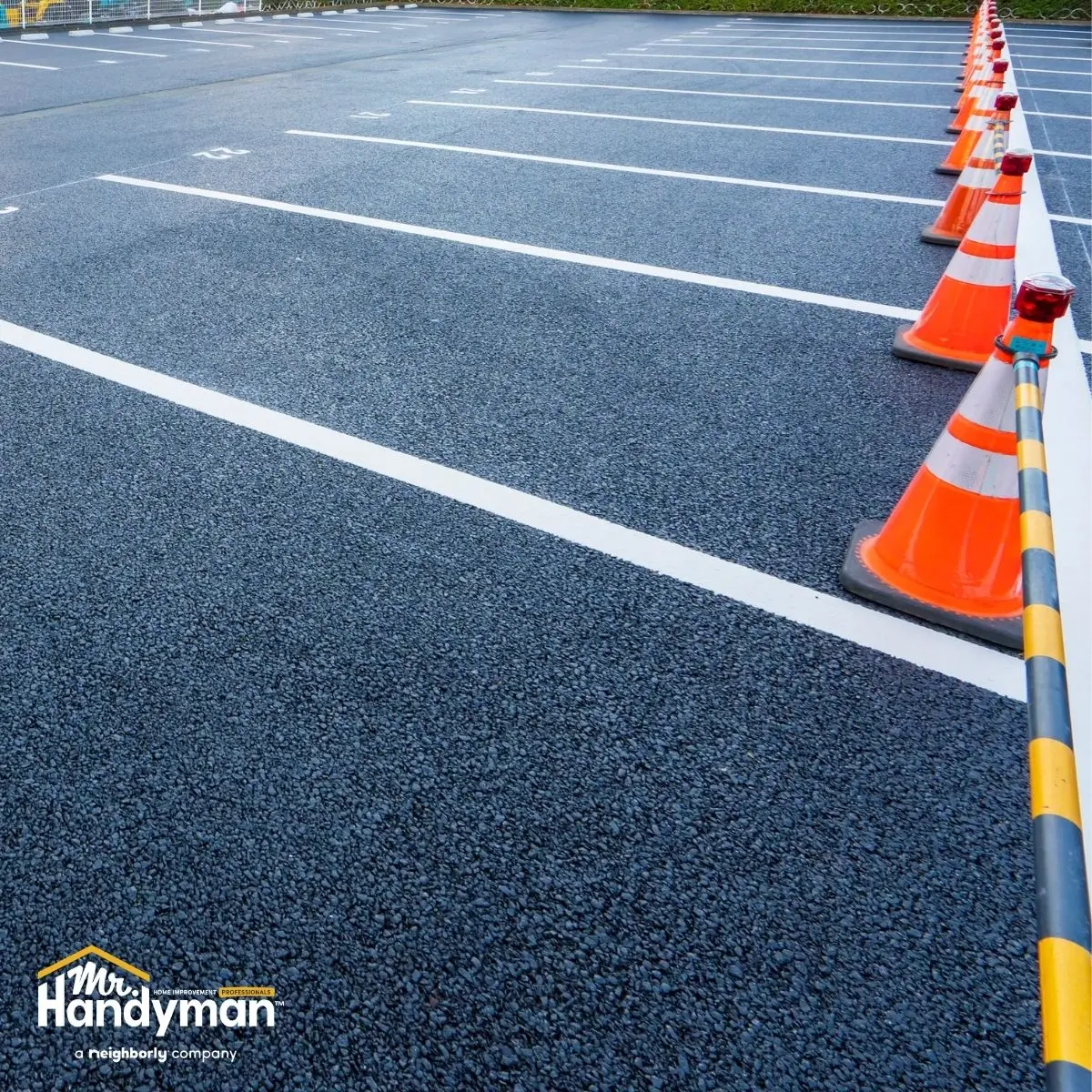
Beyond the major cracks addressed before spring, smaller surface details in your parking lot and exterior hardscape create friction for customers in ways that are easy to underestimate. Faded parking lot striping makes navigation confusing, especially for first-time visitors. Handicap accessible markings that have faded below visibility are a compliance issue, not just an aesthetic one.
Concrete wheel stops that have shifted or broken create both vehicle damage risks and pedestrian tripping hazards. Bollards protecting entrances and storefronts need to be checked for structural integrity — a bollard that has been clipped by a vehicle and never properly reset offers no real protection.
Dumpster enclosures and service areas visible from customer-facing sides of the building also deserve attention before busy season. Damaged gates, broken latches, and deteriorating enclosure panels are consistently overlooked because they sit at the back or side of the property. But customers circling for parking, using rear entrances, or simply observing from the street form impressions based on what they see there too.
FAQs
How far in advance should a business schedule exterior repairs before spring busy season? Ideally, six to eight weeks before your anticipated peak period. In Oklahoma City and Norman, that typically means beginning assessments and scheduling repairs in February or early March at the latest. Waiting until April means competing with every other business that delayed, and quality contractors book quickly once the weather stabilizes.
Are exterior repairs a business expense I can deduct? In most cases, yes — repairs that maintain your property's current condition rather than significantly improving or upgrading it are generally deductible as business expenses. Always confirm specifics with your accountant, as the line between repair and improvement has tax implications.
What exterior repairs create the most liability risk if ignored? Trip hazards on walkways and entry points, loose handrails, failed exterior lighting, and unsecured signage carry the highest liability exposure for most commercial properties. These should be prioritized above cosmetic repairs.
Can a handyman service handle commercial exterior repairs, or do I need a general contractor? For the majority of repairs covered here — caulking, door hardware, lighting, trim, gutters, minor concrete work, and signage mounting — an experienced commercial handyman service is fully equipped to handle the work efficiently without the overhead and scheduling delays of a general contractor.
What happens if I keep deferring these repairs year after year? Deferred exterior maintenance compounds. Small caulking failures become rot repairs. Drainage problems become foundation issues. A building that receives no preventative attention between major events ages significantly faster than one that receives consistent small repairs, and the eventual cost of catching up is almost always far greater than the cost of staying ahead.
Schedule Your Commercial Exterior Assessment Before the Rush
The businesses that enter spring busy season looking sharp, functioning properly, and free of liability concerns did not get there by accident. They got there by addressing small problems before they became expensive ones.
Mr. Handyman of Central Oklahoma City is ready to help your business get there. Whether you need a full exterior walkthrough or have a specific list of repairs to knock out before the season begins, our team brings the experience and reliability your property deserves.
🌐 mrhandyman.com/central-oklahoma-city/
Mr. Handyman of S. Oklahoma City and Norman serves businesses throughout the southern metro and Norman with the same commitment to quality, professionalism, and getting the job done right the first time.
🌐 mrhandyman.com/northern-montgomery-county/
Don't wait until your busy season is already underway. Schedule your exterior assessment today and head into spring with confidence.
