The Door Is the First and Last Thing Every Member Experiences
Every member's interaction with your fitness facility begins and ends at a door. The entry door sets the tone for the entire visit — it is the first physical object a member touches, the first mechanical system they engage, and the first signal your facility sends about its management standards. A door that operates smoothly, latches cleanly, and seals properly communicates competence and care before a member takes a single step onto the equipment floor. A door that sticks, drags, fails to latch, or requires a second attempt to open communicates something entirely different — and that communication happens dozens or hundreds of times per day across every door in your facility.
Gym owners and managers in Oklahoma City and Norman tend to think about doors in terms of access control — who can get in, when they can get in, and how the entry system integrates with membership management software. These are legitimate concerns, but they represent only one dimension of what functional doors and locks actually deliver to a fitness facility. Security, ADA compliance, energy efficiency, fire and life safety code adherence, and the daily member experience are all directly affected by the condition and functionality of every door and locking system in the building.
The challenge is that door and lock deterioration is gradual enough to escape notice until a failure occurs. Hinges loosen incrementally. Door closers lose hydraulic pressure over months. Weatherstripping compresses a fraction of a millimeter with each door cycle. Latch mechanisms wear at strike plates in ways that are invisible until the day a member cannot exit the locker room or a staff member cannot secure the building at close. By the time these failures become obvious, they are usually no longer simple maintenance issues — they are urgent repairs that happen at the worst possible time and carry consequences beyond the repair itself.
What Oklahoma's Climate Does to Commercial Door Systems
Commercial door systems in fitness facilities across Oklahoma City and Norman operate in one of the more demanding environments that door hardware is asked to endure. The combination of Oklahoma's climate extremes and the specific conditions created inside a gym environment accelerates wear in ways that facilities in more temperate regions simply do not experience at the same rate.
Oklahoma's seasonal temperature swings are among the most significant in the continental United States. A commercial door frame that is exposed to summer temperatures exceeding 100 degrees and winter temperatures that drop below freezing is cycling through an enormous thermal range over the course of a year. That thermal cycling causes door frames — particularly aluminum and steel frames common in commercial construction — to expand and contract in ways that gradually shift alignment, stress hinge mounting points, and change the relationship between door and frame that proper latching depends on. A door that latched perfectly when installed may begin to require extra force to engage its latch within a few years simply because thermal cycling has shifted the frame enough to misalign the latch and strike plate.
Interior door conditions in a fitness facility add another layer of stress that standard commercial environments do not produce. High humidity from member activity, the temperature differential between locker rooms and the main equipment floor, and the dramatically higher cycle counts that gym doors experience compared to office or retail doors all accelerate hardware wear. A door in a busy locker room entrance may cycle through more opens and closes in a single day than an office door experiences in a week. Hinges, closers, latch mechanisms, and threshold hardware designed for commercial use are rated for high-cycle performance, but that rating assumes proper installation, periodic adjustment, and maintenance that fitness facility doors rarely receive consistently.
The Oklahoma severe weather season adds a specific concern for exterior doors and their frames. High-wind events apply lateral force to door systems that tests the integrity of frame anchoring, door construction, and threshold sealing simultaneously. Exterior doors in fitness facilities that have experienced wind-driven rain infiltration — visible as water staining at the base of the door or along the frame — have likely developed weatherstripping failures, threshold gaps, or frame sealant separations that will worsen with each subsequent storm event if left unaddressed.
Security Failures That Compromise Member Safety and Facility Liability
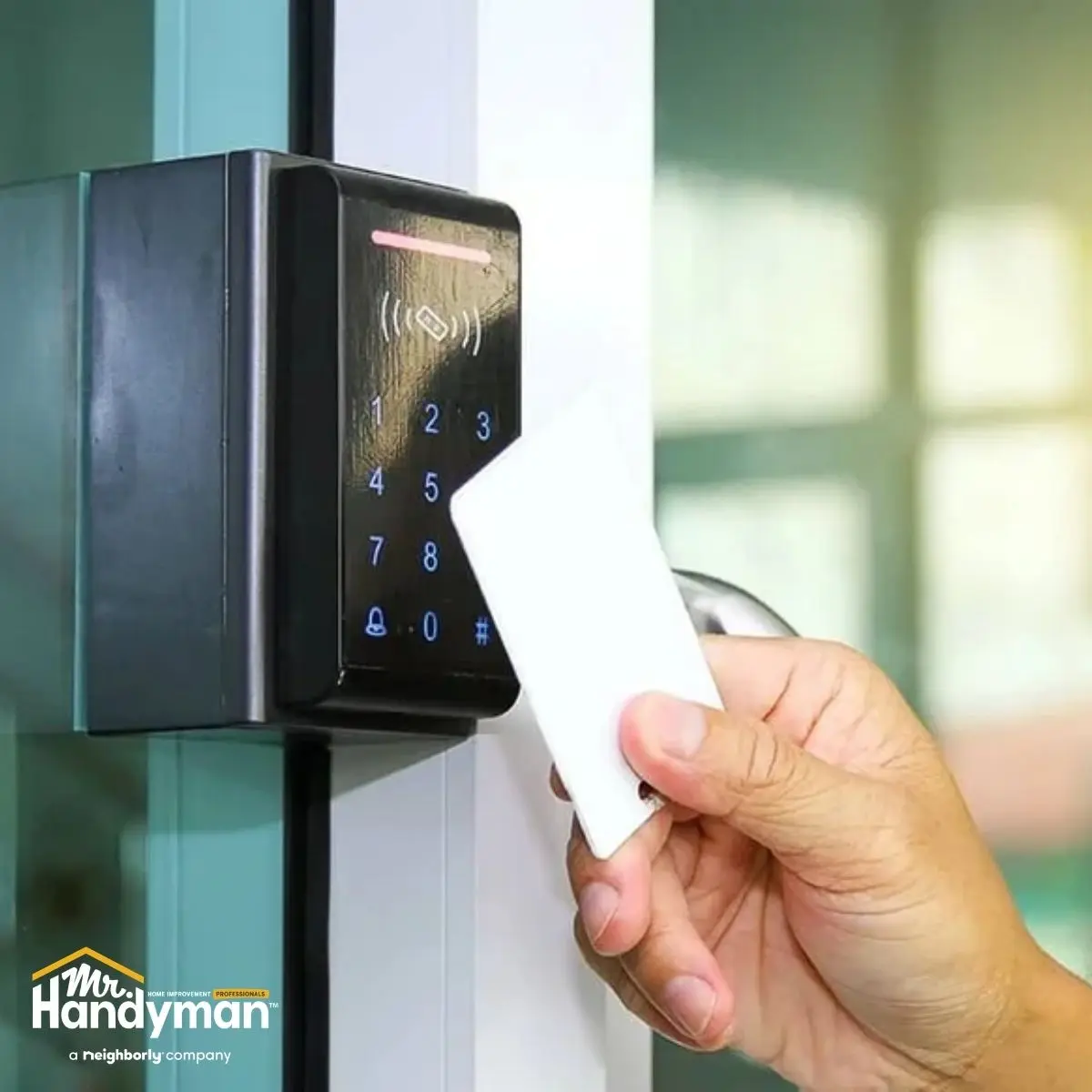
A fitness facility's security posture is expressed largely through its door and locking systems. Members — particularly those who use the facility during early morning, late evening, or low-staff hours — form their sense of personal safety based on the security systems they can see and interact with. A malfunctioning access control door that allows tailgating, a locker room door that does not latch securely, or a panic hardware device on an emergency exit that fails to function correctly are all security failures that have direct member safety implications.
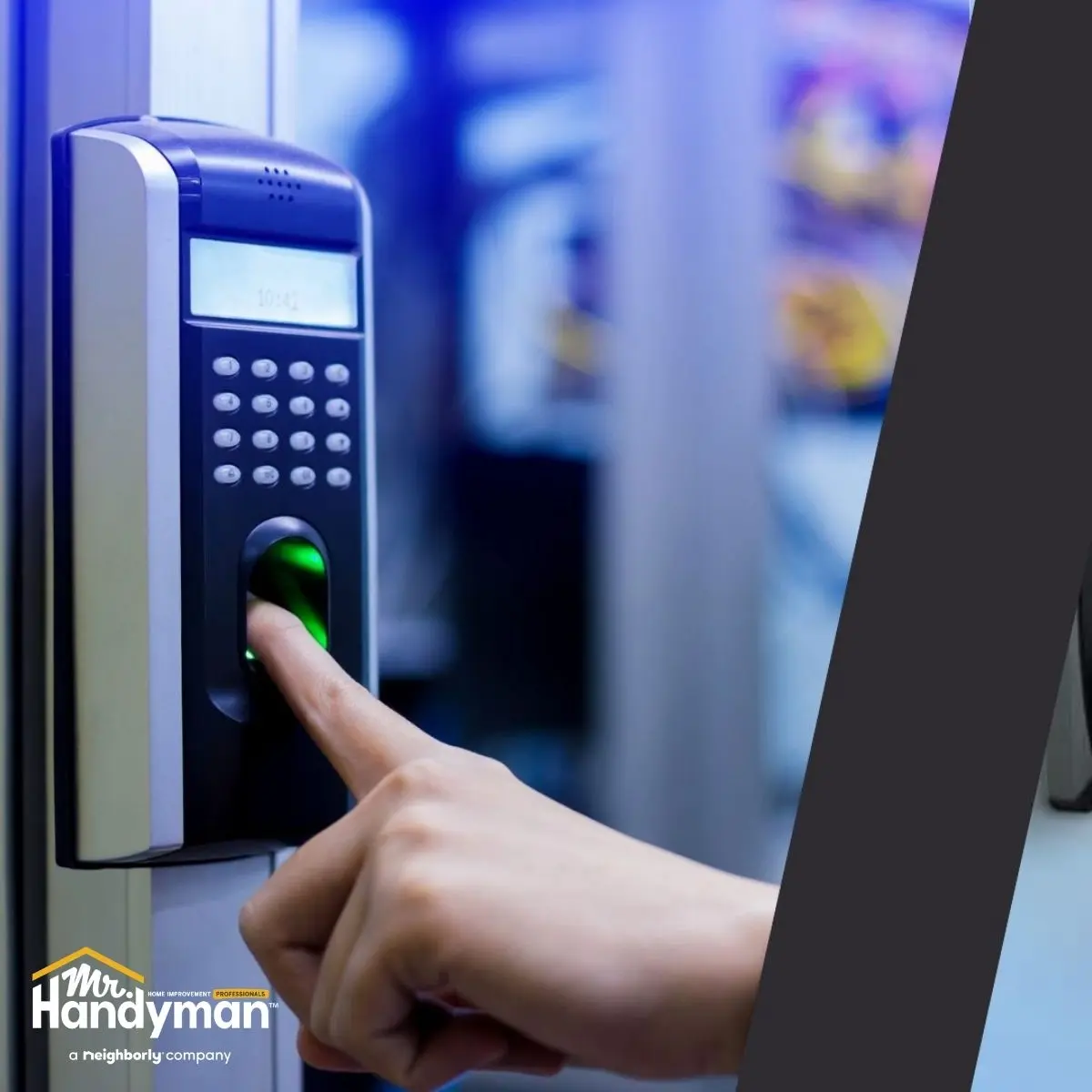
Access control systems at primary entry points are only as effective as the door hardware they depend on. An electronic access control reader that authorizes correctly but controls a door with a misaligned latch or a compromised door closer is providing the appearance of security rather than its substance. The door closer is a particularly critical component in access-controlled entry systems — a closer that allows a door to remain partially open rather than returning fully to the latched position defeats the access control system entirely, allowing unauthorized entry without any system alert.
Locker room security is a concern that members in Oklahoma City and Norman fitness facilities raise consistently when they are dissatisfied with a facility's attention to physical safety. Locker room entry doors that do not latch reliably, that can be pushed open without engaging the handle, or that have locks that members can tell are worn or compromised create a security perception problem that directly affects how safe female members in particular feel using the facility. This perception translates directly into membership decisions — members who do not feel physically secure in a locker room find facilities where they do.
Panic hardware on emergency exit doors requires specific maintenance attention that fitness facilities frequently defer. Push bars, panic rods, and the latch mechanisms they control are life safety devices whose function cannot be compromised by the same gradual wear that merely inconveniences members when it affects a standard door. An emergency exit that does not open under the push-bar force a panicked person would apply — because the panic hardware has worn, the door has swollen against its frame, or the latch mechanism has seized — is a life safety failure with consequences that extend far beyond a maintenance citation.
ADA Compliance and the Legal Dimension of Door Function
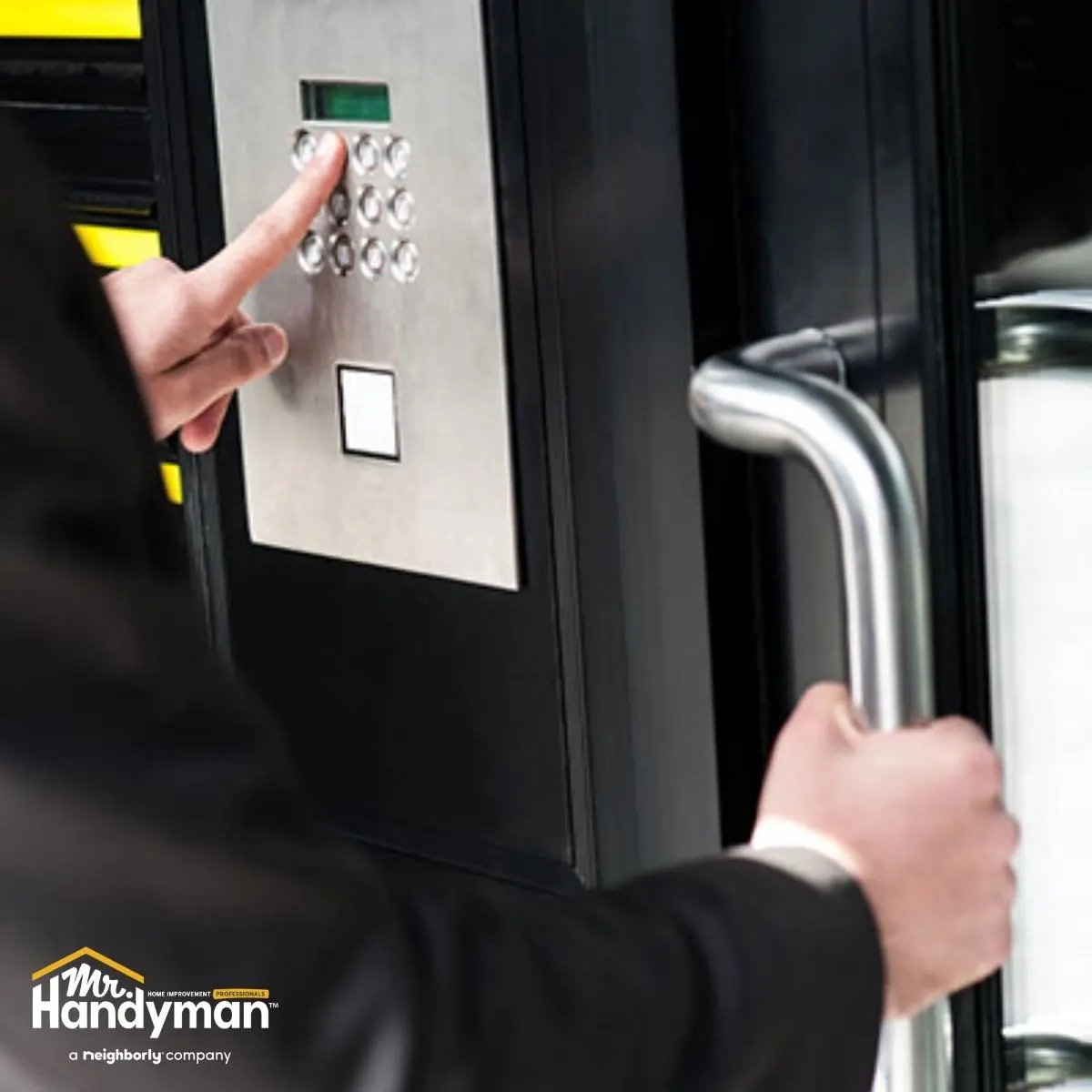
The Americans with Disabilities Act establishes specific, enforceable requirements for door operability in commercial facilities that are open to the public — and fitness facilities in Oklahoma City and Norman are unambiguously covered. These requirements are not suggestions or aspirational standards. They are legal obligations that expose non-compliant facilities to complaint investigations, mandatory remediation, and civil liability in the event that a member with a disability encounters a door that does not meet the standard.
ADA door requirements for fitness facilities cover multiple dimensions of door function simultaneously. Opening force — the maximum force in pounds that is required to operate a door — is specified at five pounds for interior doors. A door closer adjusted too tightly, a door binding against a warped frame, or a threshold that has shifted to create resistance at the door sweep can all push opening force above the compliant threshold without the facility being aware that a violation exists. Members who use wheelchairs, have limited upper body strength, or use assistive devices encounter this force requirement as a real access barrier, not a technical specification.
Door hardware operability is a second ADA dimension that fitness facilities in Oklahoma City and Norman need to maintain actively. Round door knobs are not ADA compliant on doors that must meet accessibility standards — lever handles that can be operated with a closed fist are required. Facilities that have lever hardware installed need to ensure that hardware wear has not compromised the lever's ability to operate with the one-handed, closed-fist actuation the standard requires. A lever handle that has loosened to the point where it requires two hands to operate reliably, or that spins without engaging the latch mechanism, is both a compliance issue and a member experience failure.
Accessible route door width requirements specify a minimum clear opening that doors on accessible routes must provide. A door that met this requirement when installed may fall below it if the door has warped, if a closer has been adjusted to hold the door at a more closed resting position, or if threshold hardware has been installed or replaced without verifying that the clear opening dimension is maintained. Verifying compliance on all accessible route doors is a periodic obligation, not a one-time installation check.
Door closing speed is an ADA requirement that directly affects members with mobility limitations. A door that closes faster than the standard allows — five seconds from 90 degrees to the closed position for the main closer sweep — does not give members with limited mobility adequate time to clear the door before it strikes them. Door closers in fitness facilities need to be adjusted and periodically recalibrated to maintain compliant closing speeds as the hydraulic fluid that controls closer speed ages and changes viscosity with temperature exposure.
Maintenance Priorities That Keep Door Systems Performing
Establishing a structured door and lock maintenance schedule for a fitness facility is fundamentally different from addressing door problems reactively when members report them. Reactive maintenance is consistently more expensive, creates member experience failures during the window between when a problem develops and when it is reported, and allows problems that could have been resolved with simple adjustments to progress to the point where component replacement is required.
A preventative door maintenance schedule for a commercial fitness facility in Oklahoma City or Norman addresses hardware in a sequence that prioritizes life safety and ADA compliance first, then security systems, then member-facing door experience in high-traffic areas, and finally secondary spaces. Panic hardware on emergency exits should be tested monthly — not annually — because the consequences of a failure are life safety related and because the testing process is simple enough to be performed by trained facility staff between professional service visits.
Door closer adjustment is a maintenance task that requires periodic professional attention because closer performance changes gradually in ways that staff walking past doors every day do not perceive as problems. A closer that has drifted to close too quickly, too slowly, or incompletely has usually done so over weeks or months — a timeframe long enough for the change to become the new normal from the perspective of people who use the door daily. A professional assessment against the specifications the closer was originally adjusted to reveal these drifts immediately and allows correction before they reach the threshold of a compliance or safety issue.
Hinge maintenance — tightening mounting screws, lubricating pivot points, and assessing whether hinges have developed enough wear to require replacement — is a task that should be performed annually on all high-cycle doors in a fitness facility. A hinge screw that has begun to pull from its mounting creates an alignment shift that affects door-to-frame fit, latch engagement, and closer performance simultaneously. Catching and correcting hinge hardware issues before they compound keeps door systems performing correctly and eliminates the cascade of secondary adjustments that a misaligned door generates.
FAQs
How do I know if my gym's doors meet current ADA requirements? The most reliable way to verify compliance is a professional accessibility assessment conducted by someone familiar with ADA commercial facility standards. This assessment measures opening force, verifies hardware operability, confirms clear opening dimensions, and checks closing speed against current requirements. Self-assessment is possible using published ADA standards, but professional verification provides documentation that is valuable in the event of a complaint.
What is the most common door problem in fitness facilities? Door closer deterioration is the most consistently common door system problem in commercial fitness facilities. Closers lose hydraulic performance gradually, affecting closing speed, latching reliability, and opening resistance in ways that accumulate unnoticed until the closer is no longer performing within acceptable parameters for either member experience or ADA compliance.
How often should panic hardware on emergency exits be tested? Monthly functional testing of panic hardware — verifying that the push bar actuates correctly, that the door opens fully under appropriate pressure, and that the hardware resets properly after actuation — is the appropriate standard for commercial fitness facilities. Annual professional inspection supplements monthly testing with a more comprehensive assessment of hardware wear and adjustment.
Can door and lock repairs be made without disrupting gym operations? Most door hardware repairs and adjustments can be completed during facility operating hours without significant member disruption. Repairs requiring door removal or extended periods during which a door cannot be secured should be scheduled during off-hours. Emergency exit door repairs should be sequenced so that an alternative egress path is always available during the work.
What is the typical service life of commercial door closers in a gym environment? Commercial door closers in high-cycle fitness facility applications typically have a functional service life of five to ten years, depending on usage intensity, maintenance history, and whether the closer was specified correctly for the door weight and usage frequency it controls. Closers that were undersized for their application or that have never been adjusted after installation typically reach the end of functional life significantly faster than correctly specified and maintained units.
When should a gym consider upgrading its access control system rather than repairing existing hardware? Access control system upgrades make sense when the existing system no longer integrates with current membership management platforms, when the hardware has reached a maintenance frequency that exceeds the cost threshold for replacement, or when security requirements have changed in ways that the existing system cannot accommodate. A professional assessment of the existing system against current requirements provides the information needed to make this decision objectively.
Every Door in Your Facility Is Either Working For You or Against You
A fitness facility's doors are working continuously — controlling access, maintaining security, managing energy costs, providing emergency egress, and creating the physical experience of moving through your space — whether or not anyone is paying attention to their condition. Doors that are properly installed, correctly adjusted, and consistently maintained work silently in the background, contributing to the member experience and compliance posture of the facility without requiring attention. Doors that are deteriorating, misaligned, or operating outside the parameters they were designed for create problems that compound until they demand attention at the worst possible time.
Mr. Handyman of Central Oklahoma City works with fitness facility owners and managers throughout the area to assess, repair, and maintain the door and locking systems that facility security, ADA compliance, and member experience depend on. From panic hardware testing and closer adjustment to ADA compliance verification and access control hardware service, our team delivers the professional standard your facility requires.
🌐 mrhandyman.com/central-oklahoma-city/
Mr. Handyman of S. Oklahoma City and Norman serves fitness facilities throughout the southern metro and Norman with the same reliable, detail-oriented door and lock maintenance that keeps facilities secure, compliant, and operating at the level members expect every single day.
🌐 mrhandyman.com/northern-montgomery-county/
Schedule your door and lock assessment today and make sure every entrance, exit, and access point in your facility is working exactly the way it should.