When Equipment Fails, Everything Fails With It
A gym is only as good as the equipment inside it. Members do not join a fitness facility for the flooring or the lighting — they join for access to machines, weights, and training tools that help them reach their goals. When that equipment is poorly assembled, inadequately maintained, or visibly deteriorating, the message it sends is immediate and damaging. It tells members that the facility does not take their safety seriously. It tells them that their investment in a membership is not matched by an equal investment in their experience. And in a fitness market as competitive as Oklahoma City and Norman, that message sends members directly to the gym down the street.
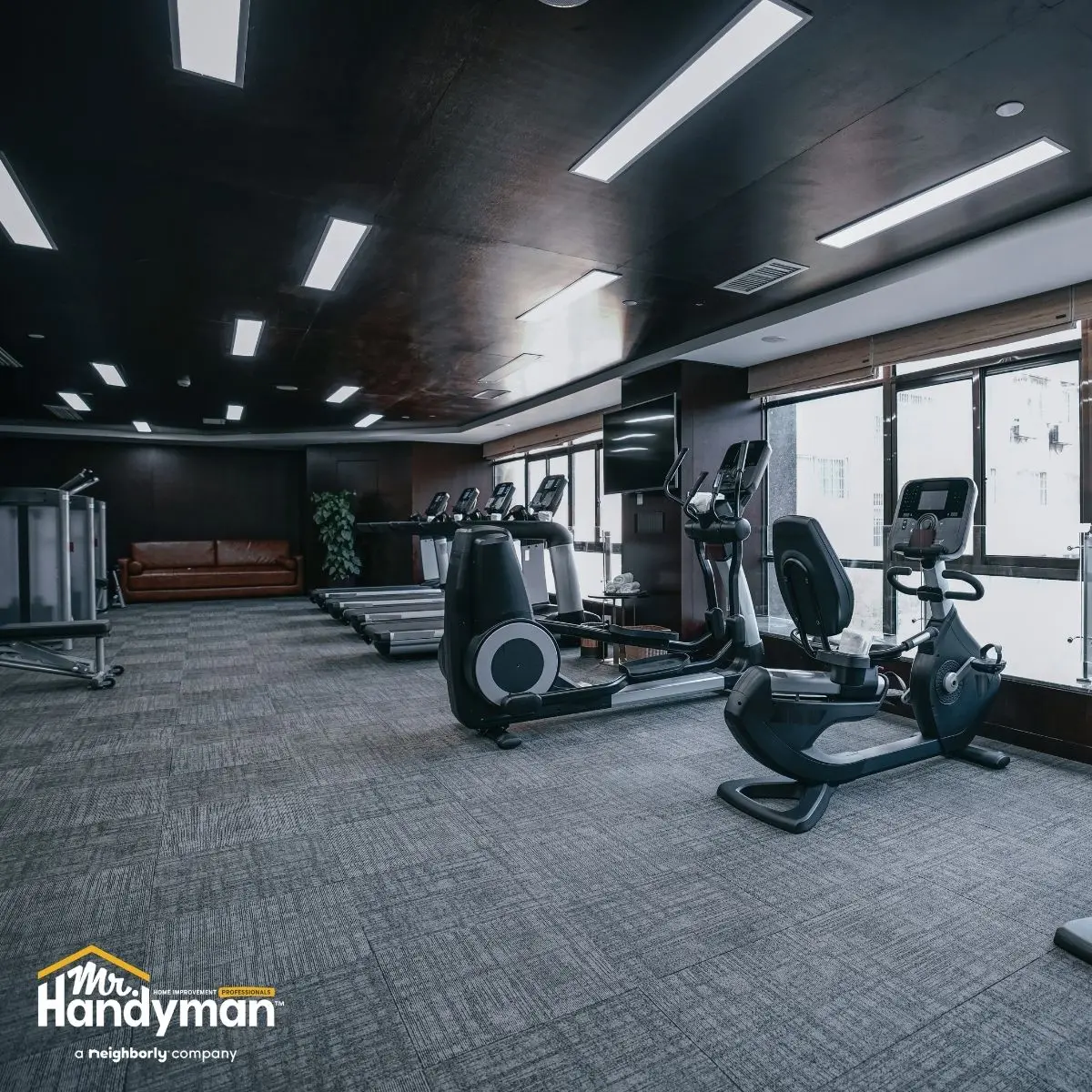
The relationship between equipment condition and member retention is more direct than most gym owners and property managers recognize. Members rarely cancel memberships and cite a loose bolt on a cable machine or a treadmill belt that runs unevenly as the explicit reason. They simply stop coming, downgrade their usage, and eventually let the membership lapse. The equipment condition created friction in their experience — friction that accumulated until the gym no longer felt worth the monthly cost. Understanding this dynamic is the first step toward managing it effectively.
Professional equipment assembly and maintenance is not an operational luxury reserved for high-end fitness chains. It is a baseline requirement for any facility that intends to retain members, manage liability exposure, and protect the significant capital investment that commercial fitness equipment represents. In Oklahoma City and Norman, where fitness facilities range from large commercial gyms to apartment complex workout rooms and corporate wellness centers, the standard applies equally regardless of facility size or membership model.
What Poor Assembly Actually Costs a Facility
The consequences of improperly assembled fitness equipment extend well beyond the immediate safety risk — though that risk alone is serious enough to demand attention. A cable machine assembled without proper tension calibration delivers inconsistent resistance that members attribute to poor equipment quality rather than improper setup. A treadmill with a misaligned belt causes unusual wear patterns that shorten the machine's service life by years. A weight rack assembled without proper leveling creates instability that members feel immediately and that represents a genuine collapse risk under load.
Each of these conditions carries a financial consequence that compounds over time. Improperly assembled equipment wears faster, requires more frequent repair, and reaches end of service life significantly earlier than equipment that was set up correctly from the beginning. The cost of professional assembly, measured against the extended service life it produces, is recovered many times over across the operational life of a commercial fitness facility.
Liability exposure is the consequence that gym owners and property managers in Oklahoma City and Norman cannot afford to underestimate. A member injured on improperly assembled or inadequately maintained equipment creates a liability situation that membership waivers do not fully protect against. Courts have consistently found that facilities carry a duty of care that extends to equipment condition, and that duty is not discharged by a signed waiver when negligent maintenance can be demonstrated. A single injury claim can exceed the cost of years of professional maintenance service — making professional upkeep one of the most cost-effective risk management investments a facility can make.
Beyond the legal and financial exposure, there is the reputational dimension. Oklahoma City and Norman are communities where word travels quickly — through neighborhood apps, Google reviews, and social media. A member who is injured or who witnesses an equipment failure that injures someone else does not stay quiet about it. The reputational damage that follows a preventable equipment-related incident can affect membership numbers for months or years after the incident itself has been resolved.
The Assembly Standard That Protects Everyone
Commercial fitness equipment is engineered to precise specifications that determine how it performs, how safely it operates, and how long it lasts. Those specifications are expressed in assembly documentation that details torque requirements for specific fasteners, tension settings for cable and belt systems, alignment tolerances for moving components, and anchoring requirements for equipment that must be secured to the floor or wall.
Following these specifications accurately requires more than mechanical aptitude. It requires familiarity with commercial fitness equipment across multiple manufacturers, access to appropriate tools — including torque wrenches calibrated to manufacturer specifications — and the discipline to complete assembly methodically rather than quickly. The difference between a treadmill assembled in forty-five minutes and one assembled in two hours is almost entirely in the details: whether every fastener was torqued to specification, whether the belt was centered and tensioned correctly, whether the console and safety systems were tested under load before the machine was placed in service.
In Oklahoma's climate, where temperature and humidity fluctuations affect material behavior, proper initial assembly becomes even more important. Fasteners in equipment assembled during summer humidity may behave differently as the facility's climate control creates drier interior conditions through the fall and winter. Equipment anchored to concrete floors needs to account for the minor movement that Oklahoma's expansive clay soils can create in slab foundations over time. These are not hypothetical concerns — they are the real-world conditions that experienced commercial equipment assemblers account for when setting up fitness facilities in central Oklahoma.
Anchoring is a dimension of assembly that smaller facilities most commonly overlook. Functional training rigs, cable crossover stations, and multi-station weight systems require floor or wall anchoring that distributes load forces safely during use. An unanchored cable crossover used by a member pulling at full resistance is exerting lateral force on a structure that was designed to be stationary relative to a fixed point. The consequences of that structure shifting or tipping under load are serious, and they are entirely preventable with proper anchoring during initial assembly.
Maintenance Schedules That Keep Equipment Performing
Assembly is the foundation, but maintenance is what determines whether equipment continues to perform safely and effectively throughout its service life. Commercial fitness equipment operates under conditions that accelerate wear dramatically compared to residential use. A treadmill in a busy Oklahoma City gym may log more operational hours in a single month than a home treadmill accumulates in a full year. Cable systems on weight machines cycle through thousands of repetitions daily. Upholstered surfaces on benches and seats experience continuous compression and release that degrades foam and fabric at a predictable rate.
Managing this wear requires a structured maintenance schedule rather than a reactive approach that only addresses equipment when something breaks or a member complains. A reactive maintenance model is consistently more expensive than a preventative one — not because reactive repairs cost more per incident, but because equipment that receives no preventative attention fails more frequently, fails more completely, and creates more member-facing disruption when it does.
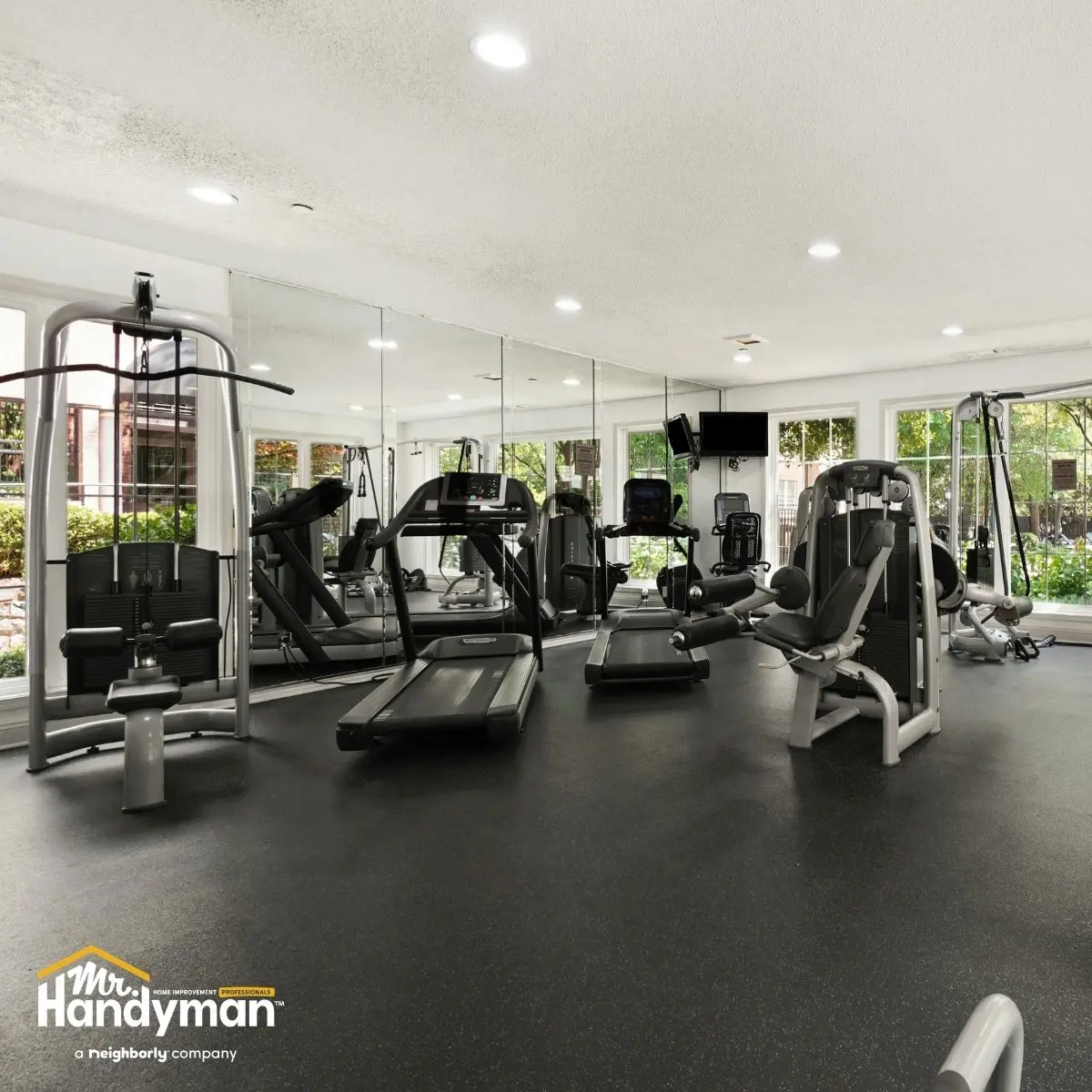
A professional preventative maintenance schedule for a commercial fitness facility in Oklahoma City or Norman typically addresses equipment in tiers based on usage intensity and mechanical complexity. Treadmills and ellipticals — the highest-use, highest-complexity machines in most facilities — require monthly belt lubrication, quarterly belt tension and alignment checks, and semi-annual comprehensive inspections of drive systems, elevation mechanisms, and console electronics. Cable machines require regular cable inspection for fraying, housing checks at all stress points, pulley lubrication, and weight stack pin and selector mechanism maintenance. Free weight areas require regular inspection of dumbbell and barbell collars, rack structural integrity checks, and bench upholstery assessment for tears that create both hygiene and liability concerns.
Flooring in fitness facilities is a maintenance category that receives less attention than equipment but carries significant safety implications. Rubber flooring panels that have shifted, lifted at seams, or developed compression damage create uneven surfaces that affect stability during lifts and increase trip hazard risk in high-traffic areas. Spring and fall assessments of fitness flooring — resetting shifted panels, resealing seams, and replacing sections that have lost their structural integrity — are maintenance tasks that directly affect member safety and the professional appearance of the facility.
Member Retention and the Equipment Experience
Members form their impression of a facility's quality largely through their daily equipment interaction. A treadmill that responds instantly, runs smoothly, and maintains consistent speed is invisible to the user — it simply works, and the member focuses entirely on their workout. A treadmill that hesitates at startup, produces a rhythmic thumping from a worn belt, or displays an error code mid-session is impossible to ignore. It pulls attention away from the workout, creates frustration, and begins building the association between this facility and a substandard experience that eventually drives cancellation decisions.
In Oklahoma City and Norman's fitness market, where members have genuine choices about where to train, equipment experience is a retention factor that competes directly with pricing, location, and class offerings. A facility with slightly less convenient parking but impeccably maintained equipment will retain members that a more conveniently located facility with deteriorating machines consistently loses. Members who feel that a facility invests in their experience — through equipment that works correctly every time they use it — develop loyalty that persists through price increases, schedule changes, and competitive membership offers from newer facilities.
New member onboarding is particularly sensitive to equipment condition. A prospective member touring a facility forms their impression of its quality standard within the first few minutes of that visit. Equipment that is clean, properly adjusted, and functioning correctly communicates a management standard that extends to every other aspect of the facility. Equipment that shows visible wear, improper assembly, or signs of deferred maintenance communicates the opposite — and a prospective member who leaves without joining rarely returns. In a market where acquiring a new member costs significantly more than retaining an existing one, the equipment condition that drives prospective members away before they ever sign up is one of the most expensive maintenance failures a facility can experience.
Staff experience is equally affected by equipment condition. Personal trainers and fitness instructors who work in facilities with well-maintained equipment can focus entirely on delivering quality instruction and member service. Those working in facilities with chronic equipment problems spend time managing member complaints, routing people away from out-of-service machines, and apologizing for conditions they did not create and cannot fix. That experience affects staff morale, professional satisfaction, and ultimately retention — and high staff turnover in a fitness facility creates its own member retention problem as members lose the instructor relationships that often anchor their commitment to a specific gym.
FAQs
How often should commercial fitness equipment be professionally inspected? High-use equipment such as treadmills, ellipticals, and cable machines should receive professional inspection at least quarterly, with monthly lubrication and basic checks performed between inspections. Lower-use equipment in smaller facilities may be adequately served by semi-annual professional maintenance, supplemented by daily staff visual checks for obvious safety concerns.
Can gym staff handle routine maintenance, or does it require outside professionals? Staff can and should perform daily visual inspections — checking for visible damage, loose components, unusual sounds, and cleanliness issues. However, mechanical maintenance involving cable tension, belt alignment, drive system service, and torque verification requires professional expertise and appropriate tools that general facility staff typically do not have access to or training to use correctly.
What are the most common signs that fitness equipment needs immediate attention? Unusual sounds during operation, visible cable fraying, belts that drift to one side during use, resistance that feels inconsistent across the range of motion, structural wobbling under load, and any fastener that can be moved by hand without tools are all conditions that require the machine to be taken out of service immediately and assessed by a professional before it is used again.
How does Oklahoma's climate specifically affect fitness equipment maintenance? Humidity fluctuations in central Oklahoma affect lubrication intervals on treadmill belts and cable systems. Drier interior conditions during heating season accelerate lubrication consumption, while high humidity periods can introduce moisture into electronic components if HVAC systems are not maintaining consistent interior conditions. Facilities in older Oklahoma City and Norman buildings with less reliable climate control may require more frequent maintenance attention than those in newer, well-insulated structures.
Is professional equipment assembly worth the cost for smaller fitness facilities? Yes, without exception. The cost of professional assembly is recovered through extended equipment service life, reduced repair frequency, and eliminated liability exposure. A small apartment complex gym or corporate wellness room with five to ten pieces of equipment carries the same duty of care obligation as a large commercial facility, and improperly assembled equipment creates the same injury risk regardless of how many members use it daily.
What should a gym owner look for when hiring someone to assemble or maintain commercial fitness equipment? Look for demonstrated experience with commercial — not just residential — fitness equipment across multiple manufacturers. Verify that the service provider uses manufacturer-specified tools including calibrated torque wrenches, follows documented assembly procedures, and provides a written record of maintenance performed. A provider who cannot describe their assembly process in specific detail is not operating at the standard commercial equipment requires.
Your Facility Deserves Equipment That Performs Every Single Day
A well-maintained fitness facility is not an accident. It is the result of deliberate, consistent attention to the equipment that members depend on every time they walk through the door. The facilities that retain members, earn referrals, and build lasting reputations for quality are the ones where equipment simply works — because someone made sure it was assembled correctly and maintained professionally from the very beginning.
Mr. Handyman of Central Oklahoma City provides professional fitness equipment assembly and maintenance services for commercial gyms, corporate wellness facilities, and property managers throughout the Oklahoma City area. Our team understands the standards that commercial equipment demands and delivers the detail-oriented workmanship that keeps your facility operating safely and at the level your members expect.
🌐mrhandyman.com/central-oklahoma-city/
Mr. Handyman of S. Oklahoma City and Norman serves fitness facilities throughout the southern metro and Norman with the same commitment to quality assembly, preventative maintenance, and reliable professional service that facility operators throughout central Oklahoma depend on.
🌐mrhandyman.com/northern-montgomery-county/
Schedule your equipment assessment or assembly service today and give your members the facility experience they expect and deserve every time they train.