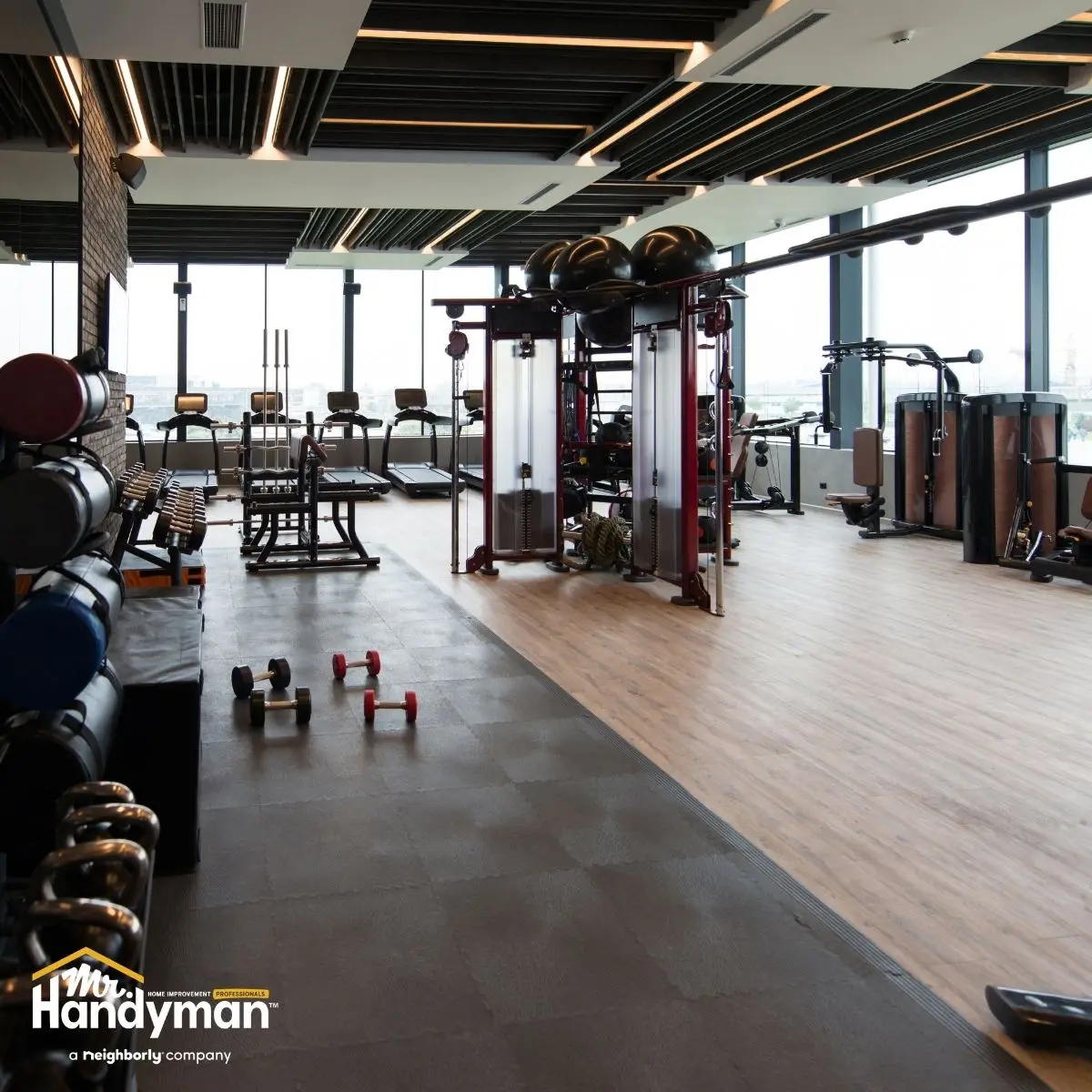
Mirrors are as essential to a gym as the equipment itself. They serve a functional purpose—allowing users to check form, monitor technique, and stay engaged during workouts—but they also make spaces feel larger, brighter, and more professional. What most gym owners and home fitness enthusiasts don't fully appreciate is how critical proper installation is to both safety and longevity. A mirror that's improperly mounted isn't just a liability waiting to happen; it's a ticking clock until vibration, temperature changes, or simple gravity causes a failure that could result in serious injury and significant property damage.
In Oklahoma City and Norman, where DIY culture runs strong and budget-conscious gym owners often look for ways to cut installation costs, improperly mounted mirrors are more common than they should be. The combination of Oklahoma's temperature extremes, humidity swings, and the unique stresses that gym environments place on wall-mounted fixtures creates conditions where shortcuts in mirror installation fail faster and more catastrophically than in other settings. A mirror that might hold fine on a bedroom wall for years can come crashing down in a gym within months if the mounting method doesn't account for vibration, moisture, and structural movement.
The risks extend beyond the immediate danger of shattered glass. Improperly installed mirrors affect workout quality when they shift out of alignment, create legal liability when they fall and injure someone, and damage your facility's reputation when members see mounting hardware failing or mirrors pulling away from walls. Understanding why secure mounting matters and what proper installation actually entails is the difference between mirrors that enhance your gym for decades and mirrors that become your biggest safety and financial headache.
The Unique Stresses Gym Mirrors Face
Gym mirrors endure conditions that wall mirrors in homes or offices never experience. The environment is more demanding, the usage is more intense, and the consequences of failure are more severe. Understanding these stresses explains why standard mirror installation methods often aren't sufficient for fitness spaces.
Vibration and impact are constant in gyms. Every weight that drops, every treadmill footfall, every jumping exercise sends vibration through walls and floors. In home gyms built in garages or basements, this vibration is transmitted directly through structural framing that wasn't designed to dampen these forces. In commercial gyms, especially those in older buildings in Oklahoma City and Norman, wall studs and concrete block construction conduct vibration efficiently. Over time, this constant movement loosens adhesive bonds, works mounting hardware free, and causes mirrors to shift or pull away from walls.
Moisture and humidity affect both the mirror backing and the mounting materials. Sweat accumulates on mirror surfaces and runs down to collect at the bottom edge where mirrors meet walls. In locker rooms and shower areas near workout spaces, ambient humidity is even higher. This moisture infiltrates behind mirrors through any gaps in the mounting system, attacking adhesive bonds and corroding metal clips or brackets. Oklahoma's humid summers compound this issue, especially in gyms without robust climate control. Older buildings with concrete block walls can actually wick moisture from outside, creating condensation behind mirrors that accelerates deterioration.
Temperature fluctuations cause expansion and contraction in both mirrors and mounting surfaces. Glass expands when heated and contracts when cooled, but not at the same rate as drywall, wood studs, or concrete block. In garage gyms or commercial spaces where HVAC systems cycle on and off to save energy, these temperature swings happen repeatedly. Over time, this differential expansion stresses mounting points and can cause clips to bend, adhesive to separate, or even glass to crack if the mounting system doesn't allow for natural movement.
Weight load is significant and often underestimated. A standard 4-foot by 6-foot gym mirror weighs between 40 and 70 pounds depending on thickness. When you're covering an entire wall with multiple mirrors, you're adding hundreds of pounds to wall surfaces that may not be structurally prepared for that load. If those mirrors aren't mounted to studs or proper blocking, or if the wall itself isn't sound, the weight alone will eventually cause failure—accelerated by all the other stresses the gym environment adds.
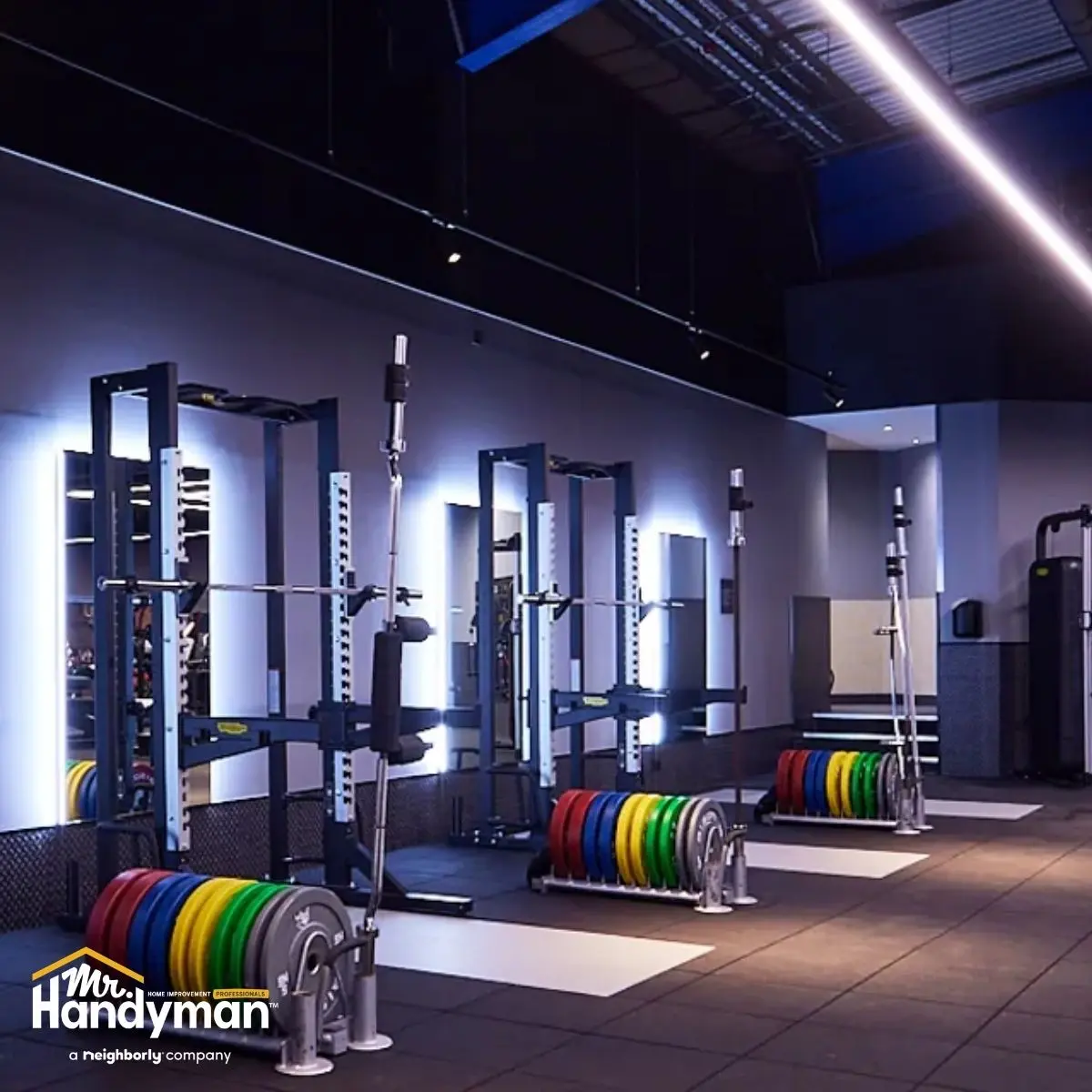
What Improper Installation Looks Like and Why It Fails
Walk into enough gyms in Oklahoma City and Norman, and you'll spot the warning signs of improper mirror installation. These aren't always obvious failures—sometimes they're subtle indicators that the mounting system is already compromised and heading toward eventual collapse.
Adhesive-only mounting is the most common shortcut and the most dangerous. Using construction adhesive or mirror mastic without mechanical fasteners might seem adequate initially, especially if installers apply generous amounts of adhesive. The problem is that adhesive bonds degrade over time when exposed to moisture, temperature changes, and constant vibration. What held firmly for the first six months starts to release in spots, creating a situation where most of the mirror's weight is now supported by smaller and smaller sections of remaining adhesive. When failure comes, it's sudden and complete—the entire mirror releases at once and comes crashing down.
Inadequate fastener placement happens when installers use too few clips or J-channels, space them too far apart, or fail to secure them into wall studs. Mirrors need support at regular intervals along all edges, with additional support in the center for large panels. Fasteners installed only into drywall without hitting studs will pull out under the mirror's weight, especially once vibration and temperature cycling begin working them loose. In older buildings with plaster walls over wood lath or concrete block, improper anchoring methods fail even faster because these materials don't hold fasteners as reliably as modern drywall on solid studs.
Missing or inadequate bottom support is a critical oversight. Mirrors need a secure bottom edge—typically a J-channel or shelf—to bear the weight and prevent the entire panel from sliding downward and overstressing top clips. When installers rely only on adhesive at the bottom or use clips that aren't designed to support vertical load, the mirror gradually shifts downward, pulling top fasteners loose and creating gaps where moisture can infiltrate. Eventually the whole system fails.
Wrong mounting surface preparation means mirrors installed directly over damaged drywall, uneven surfaces, or walls with existing moisture problems. Adhesive doesn't bond properly to dusty, dirty, or water-damaged surfaces. Mirrors mounted over existing wall damage inherit those structural problems, and when the wall surface fails, the mirror comes with it. This is particularly problematic in older commercial buildings in Oklahoma where wall surfaces may have been painted over repeatedly without proper preparation or where previous water damage was cosmetically covered rather than properly repaired.
The Safety and Liability Consequences of Mirror Failure
When a gym mirror fails, the consequences range from property damage to life-threatening injuries. The liability exposure for commercial gym owners is substantial, and even home gym owners face serious risks when family members or guests are injured.
Shattered glass creates immediate danger. Modern gym mirrors are typically made from safety glass or have safety backing applied, but when a 50-pound mirror falls from a wall and hits concrete or equipment, it still breaks into dangerous fragments. Anyone in the immediate area faces cuts, lacerations, and potential eye injuries from flying glass. In a busy commercial gym during peak hours, a mirror failure could easily injure multiple people simultaneously.
Impact injuries from falling mirrors can be severe. A large mirror falling from six feet up carries enough force to cause head trauma, broken bones, or crushing injuries if it lands on someone. This is especially dangerous in workout areas where people are lifting heavy weights or performing exercises that require focus and concentration—they may not notice or be able to react to a mirror coming off the wall behind them.
Liability claims and lawsuits follow predictably after mirror-related injuries. Commercial gym owners face premises liability for maintaining safe facilities, and improper mirror installation that leads to injury is clear negligence. Even with liability insurance, these claims damage business reputations, result in increased insurance premiums, and can lead to regulatory inspections that uncover other maintenance issues. For home gym owners, homeowner's insurance may not cover injuries if the installation was done improperly by the owner rather than by a qualified professional.
Business interruption happens when mirror failures force closure of workout areas or entire facilities for repairs. If a mirror wall comes down in your main weight room or group fitness studio, that space is unusable until glass is cleaned up, walls are repaired, and new mirrors are properly installed. That's lost revenue, disrupted member schedules, and damage to your gym's reputation as members post about the incident online or tell friends about the unsafe conditions.
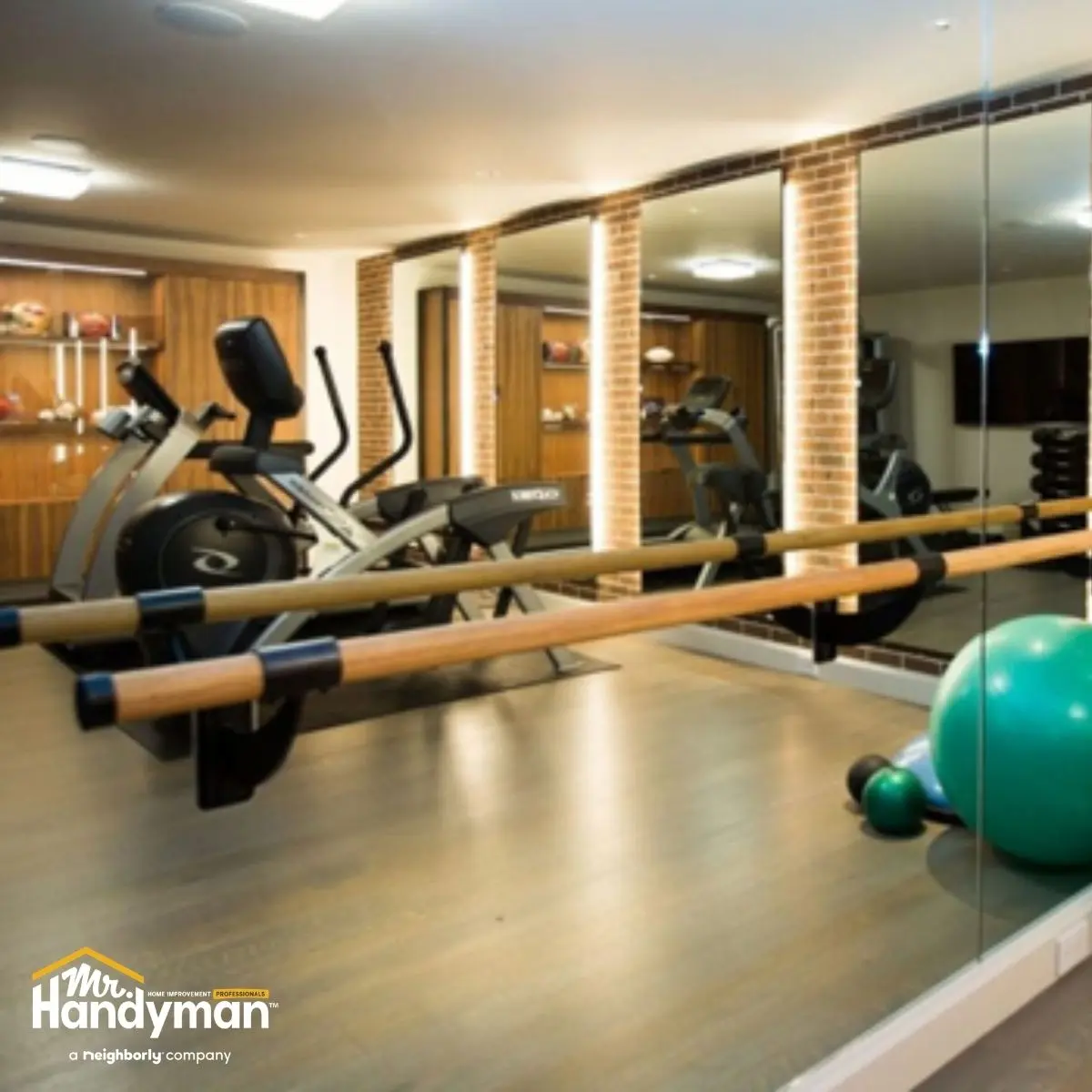
How Proper Installation Prevents These Problems
Professional mirror installation for gym environments involves specific techniques and materials that account for the unique stresses these spaces create. Understanding what proper installation entails helps you evaluate whether your existing mirrors are secure or whether you're looking at a future problem.
Structural mounting to wall studs or blocking is non-negotiable for gym mirrors. Every mounting clip, bracket, or channel system needs to be secured into solid framing members, not just drywall. In new construction or major renovations, horizontal blocking should be installed behind drywall specifically for mirror mounting at appropriate heights. In existing buildings, studs need to be located precisely and fasteners placed accordingly. For concrete block walls common in older commercial buildings in Oklahoma City and Norman, proper concrete anchors rated for the weight load are required—not standard wall anchors meant for drywall.
Professional adhesive systems designed specifically for mirror mounting provide backup security but should never be the sole mounting method. High-quality mirror mastic applied in the correct pattern creates a bond that helps stabilize the mirror and prevents moisture infiltration behind the glass, but mechanical fasteners still carry the actual weight load. The adhesive also serves to cushion the back of the mirror and distribute stress across the mounting surface rather than concentrating it at fastener points.
Bottom support channels or J-channels carry the mirror's weight and prevent downward sliding. These channels are mounted level and secured into studs at regular intervals before the mirror is installed. The mirror sits in this channel, which takes the entire vertical weight load so that top clips only need to prevent the mirror from tilting away from the wall. This is the single most important element in preventing mirror failure over time.
Top and side clips positioned correctly provide restraint without creating stress points. Clips should be spaced no more than 24 inches apart along the top edge and at strategic points along vertical sides for large mirrors. These clips are installed after the mirror is seated in the bottom channel, and they're tightened just enough to hold the mirror securely without creating pressure that could crack glass when temperature changes cause expansion. Using too many clips or over-tightening them is actually counterproductive—mirrors need slight freedom of movement to accommodate thermal expansion without developing stress cracks.
Proper spacing and ventilation between mirror and wall prevents moisture accumulation and allows air circulation. Most professional installations leave a small gap—often created by the mounting hardware itself—that allows moisture to evaporate rather than getting trapped behind glass. This is particularly important in humid Oklahoma summers and in gym areas with high moisture exposure.
Regional Considerations for Oklahoma Gym Mirror Installation
Oklahoma's climate and building characteristics create specific challenges that affect how mirrors should be installed and maintained. Understanding these regional factors helps ensure your mirror installation remains secure long-term.
Foundation movement in Oklahoma's clay soil means walls shift slightly with seasonal ground moisture changes. This movement can stress rigidly mounted mirrors or pull mounting hardware loose if not properly installed. Buildings in Oklahoma City and Norman constructed on slab foundations or pier and beam systems both experience some degree of seasonal movement. Proper mirror installation accounts for this by using mounting systems that allow slight movement without stressing the glass or pulling fasteners free.
Older commercial buildings common in established areas of both cities often have concrete block walls, plaster over lath, or older drywall systems that require specific mounting approaches. Concrete block needs concrete anchors rather than wood screws. Plaster walls may need to be reinforced with backing boards before mirrors are installed since the plaster itself can be brittle and prone to cracking. Identifying wall construction type before installation is essential to choosing the right mounting hardware.
Temperature extremes stress mirrors in garage gyms and commercial spaces where HVAC systems may not maintain consistent temperatures. Oklahoma summers regularly see temperatures above 95 degrees, and garages can reach 110 degrees or higher. In winter, unheated overnight periods in commercial buildings can see temperatures drop to near freezing. These swings cause repeated expansion and contraction cycles that inferior mounting systems can't handle. Using mounting hardware designed for commercial applications with thermal expansion tolerance prevents failures.
Humidity and storm seasons bring sustained periods of high moisture that infiltrate buildings and attack mirror mounting systems. Spring and early summer in Oklahoma often see weeks of high humidity, heavy rains, and temperature fluctuations. Gyms without excellent climate control and ventilation systems need mirror mounting methods that resist moisture intrusion and include proper sealing at edges and bottom channels.
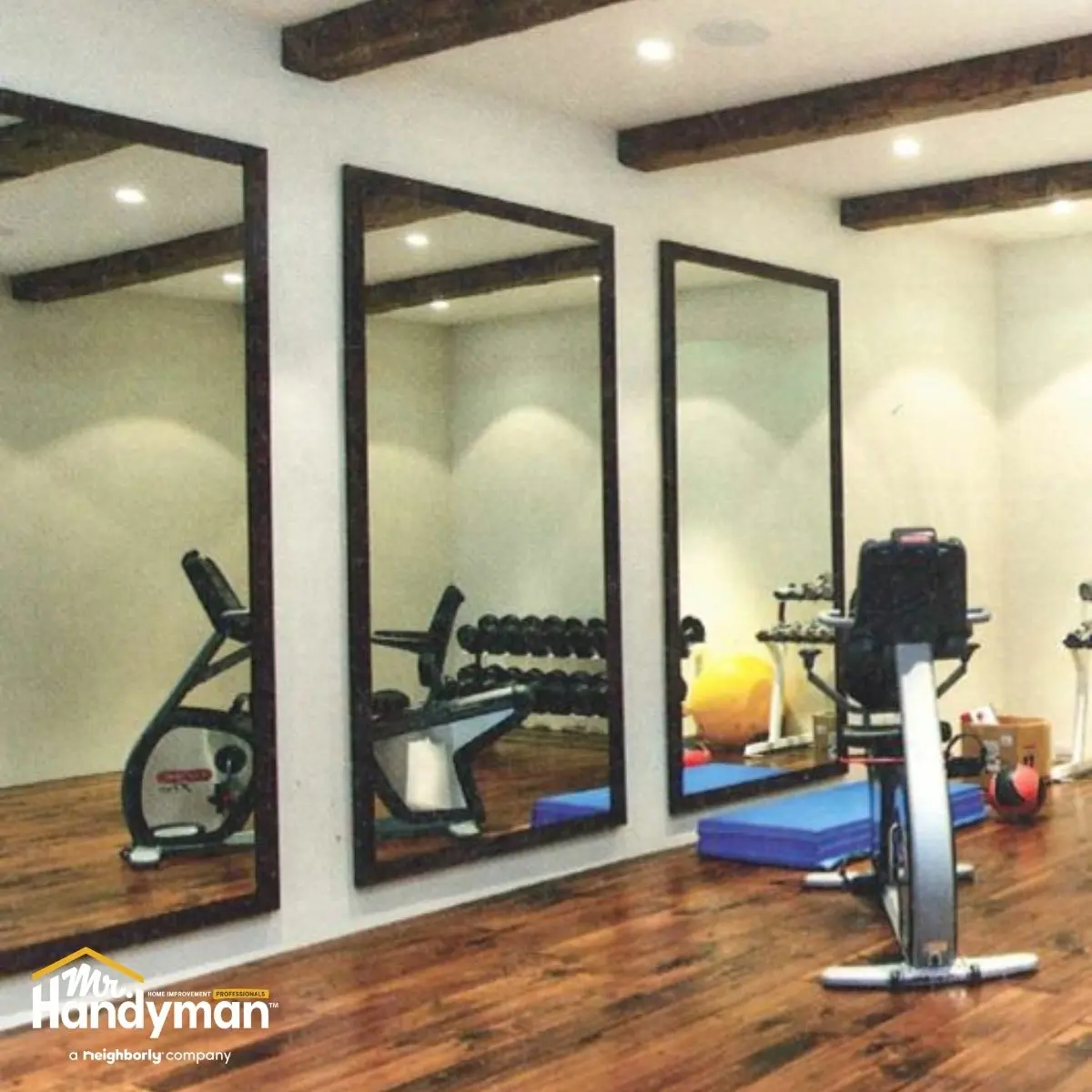
Frequently Asked Questions
How thick should gym mirrors be, and does thickness affect mounting requirements?
Standard gym mirrors are typically quarter-inch thick, which provides a good balance between weight, durability, and cost. Some commercial gyms use 3/16-inch mirrors to reduce weight, but these are more prone to distortion and flex. Mounting requirements increase with mirror thickness because heavier mirrors need stronger fasteners spaced more closely and more robust bottom support channels. Never use mirrors thinner than 3/16-inch in gym environments—they lack the rigidity needed to resist vibration and impact without distorting.
Can I install gym mirrors myself or should I always hire a professional?
Installing large gym mirrors is not a DIY-friendly project unless you have specific experience with structural mounting and working with heavy glass panels. The safety risks of dropping a mirror during installation, the liability if someone is injured by an improperly mounted mirror, and the high probability of installation failure without proper techniques and tools make professional installation worth the investment. Small mirrors in home gyms—under 3 feet by 4 feet—can be DIY projects if you're comfortable with the work, but wall-length mirror installations should always be handled by professionals.
How do I know if my existing gym mirrors are properly mounted?
Look for gaps between mirror edges and walls, any visible shifting or tilting since installation, moisture or condensation visible behind glass edges, corroded or loose mounting clips, and any signs that mirrors are pulling away from walls at top corners. Gently press against the center of the mirror—it should feel absolutely solid with no flex or movement. If you see or feel any of these warning signs, have the mirrors professionally inspected before they fail.
What's the difference between home gym mirror installation and commercial gym installation?
Commercial gyms require more robust mounting because of higher traffic, more intense vibration and impact, greater liability exposure, and building code requirements that may mandate specific installation methods or safety glazing. Commercial installations also typically involve larger mirror expanses and may need to meet ADA requirements for placement height and edge protection. Home gym installations can sometimes use slightly lighter mounting systems if the gym sees only family use and lower-intensity workouts, but the core principles of structural mounting and proper bottom support still apply.
How long do properly installed gym mirrors typically last?
With proper installation and maintenance, gym mirrors should last 15 to 20 years or more. The glass itself doesn't degrade, but mounting hardware may need inspection and occasional tightening as buildings settle or fasteners work slightly loose over time. Mirrors in high-moisture areas like near showers or in humid locker rooms may need mounting hardware inspected more frequently—every 2 to 3 years—to catch corrosion before it compromises security.
What should I do if I notice a mirror starting to come loose?
Stop using that area of the gym immediately and block access to prevent anyone from being near the mirror if it falls. Contact a professional for emergency repair—do not attempt to re-secure a failing mirror yourself as working underneath a compromised mirror is extremely dangerous. Even if only one corner seems loose, the entire mounting system may be failing and the mirror could release suddenly during repair attempts.
Professional Mirror Installation for Safety and Performance
Your gym's mirrors are too important to risk with improper installation. They're essential tools for your members, they define the look and feel of your space, and when properly mounted they'll serve reliably for decades. But when installation is done wrong, they're one of the most dangerous features in your facility.
Mr. Handyman of Central Oklahoma City and Mr. Handyman of S. Oklahoma City and Norman specialize in proper gym mirror installation that accounts for Oklahoma's climate, building characteristics, and the unique demands of fitness environments. We assess your wall structure, select appropriate mounting hardware for your specific situation, and install mirrors using professional techniques that ensure safety and longevity.
Whether you're building out a new gym space, replacing existing mirrors that are showing signs of mounting failure, or need a professional assessment of your current mirror installation, our experienced team provides the expertise and attention to detail that this critical safety component demands.
Don't trust your members' safety and your facility's reputation to shortcuts. Schedule a professional mirror installation assessment or consultation today.
Mr. Handyman of Central Oklahoma City
Website: https://www.mrhandyman.com/central-oklahoma-city/
Mr. Handyman of S. Oklahoma City and Norman
Website: https://www.mrhandyman.com/northern-montgomery-county/