The Gap Between What You See and What Your Customers See
There is a well-documented phenomenon in business ownership called adaptation. The longer you occupy a space, the less you actually see it. The scuff marks along the base of the reception wall become invisible to you. The entrance door that requires an extra pull to latch becomes something you do automatically without thinking. The outdated light fixtures in your waiting area stop registering as outdated because they have simply always been there.
Your customers do not have this blind spot. They walk in fresh, and they notice everything — not always consciously, but their impression of your business is being formed in real time by every surface, fixture, and detail they encounter. Research on customer behavior consistently shows that physical environment influences perceived professionalism, pricing expectations, and the likelihood of a return visit far more than most business owners anticipate.
The good news is that closing the gap between the space you have stopped seeing and the space your customers are actively evaluating does not require a full renovation budget. In Oklahoma City and Norman, where commercial buildings range from mid-century construction to newer developments, the most impactful improvements are often targeted, modest in cost, and completed without shutting your business down for days at a time.
Why Small Renovations Carry Outsized Weight
A full commercial renovation is a significant undertaking — it involves permits, extended timelines, contractor coordination, and business disruption that most owners want to avoid outside of an absolute necessity. Small renovations operate on an entirely different level. They target the specific details that shape customer perception without requiring the infrastructure of a major project.
The reason small renovations punch above their weight is rooted in how people process environments. Customers do not evaluate a space the way a contractor does, room by room and system by system. They experience it holistically, and their overall impression is often determined by a handful of high-contact, high-visibility details. The condition of your entrance. The quality of your lighting. The finish on your walls near eye level. The hardware on your doors and cabinets. These are the touchpoints that register — and improving them creates a perception shift that feels much larger than the scope of work involved.
In central Oklahoma, where businesses compete across a wide range of industries for customer loyalty and repeat traffic, the physical environment sends a message about standards, care, and professionalism that no amount of marketing can fully substitute for. A business that looks sharp earns trust faster. A business that looks tired loses customers to competitors before a single conversation takes place.
Entrance and Entry Area Improvements
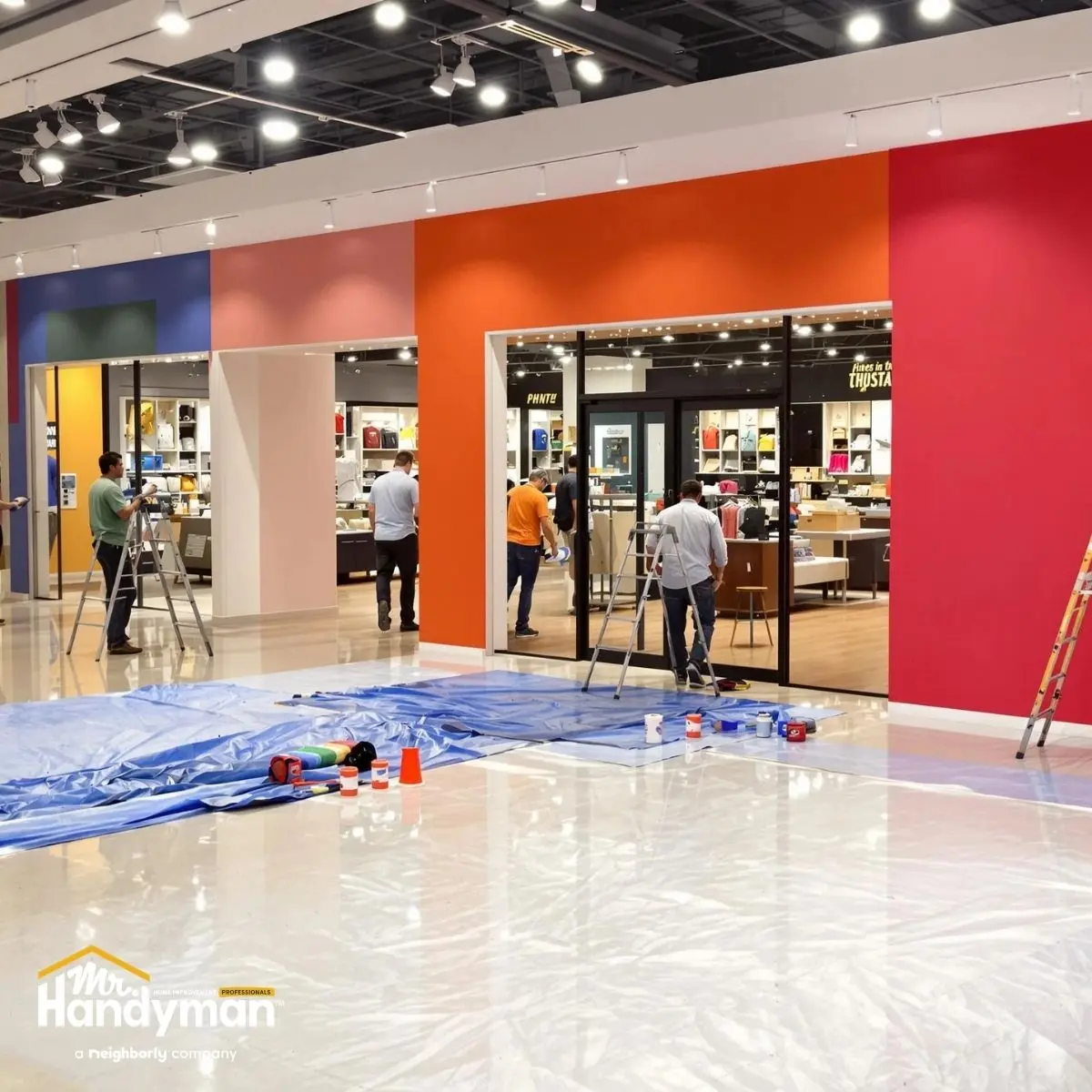
The entrance to your business is the single highest-impact zone for customer impression. It is the first thing they experience and the last thing they see on the way out. Entrance improvements deliver a return on investment that almost no other renovation category can match.
In Oklahoma City and Norman, commercial entrances take significant punishment from seasonal extremes. Summer heat warps door frames and dries out weatherstripping. Winter freeze-thaw cycles shift thresholds and stress hardware. By the time spring arrives, many commercial entrances are showing wear that accumulated gradually enough to escape notice — until a customer encounters it.
Fresh paint on an entrance door in a deliberate, updated color immediately signals that the business inside is attentive and current. New door hardware — a quality handle set, updated push plates, or a modern pull bar — transforms the tactile experience of entering a space. These are details that customers touch directly, and touch creates a physical impression that visual observation alone does not.
Interior entry flooring near the threshold is another high-return target. This zone receives concentrated foot traffic and shows wear faster than any other floor area in the building. Replacing a damaged or dated entry mat with a quality commercial option, repairing cracked tile at the transition point, or refinishing a scuffed hardwood entry section are all relatively modest investments that eliminate one of the most common first impressions that works against a business.
Wall surfaces in the entry area — particularly at shoulder height and below — accumulate scuffs, marks, and general wear faster than walls in lower-traffic zones. A fresh coat of paint in the entry corridor or lobby, especially in a color that reflects current design sensibilities rather than a palette chosen fifteen years ago, resets the entire visual tone of the space before a customer has taken ten steps inside.
Lighting Upgrades That Change How Everything Looks
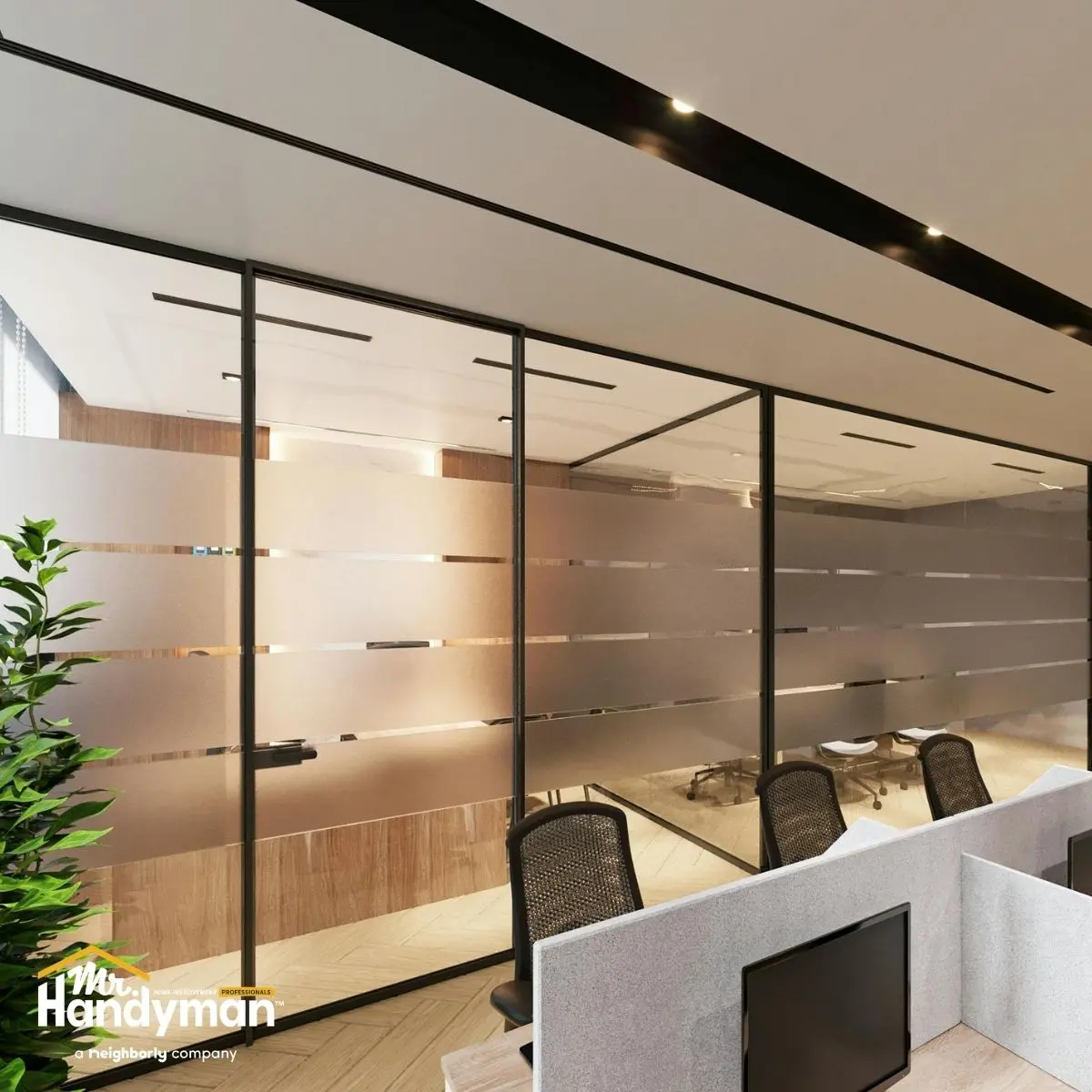
Lighting is the most underestimated renovation category in commercial spaces. Poor lighting does not just make a space look dim — it makes products look less appealing, colors look inaccurate, and spaces feel smaller, older, and less inviting than they actually are. Conversely, well-designed lighting makes a modest space feel considered and professional.
Many commercial buildings across Oklahoma City and Norman are still running fluorescent tube lighting in drop ceiling grids — a functional but aesthetically dated solution that casts flat, slightly harsh light across every surface equally. Replacing fluorescent fixtures with LED panel lights or recessed LED downlights in customer-facing areas is one of the most transformative small renovations a business can make. The color temperature of the light shifts, the quality of illumination improves, and the ceiling plane itself looks cleaner and more intentional.
Accent lighting is another tool that small commercial renovations frequently overlook. A simple track lighting installation above a retail display, a product wall, or a reception desk draws the eye exactly where you want it and creates visual hierarchy in a space that previously had none. Customers respond to well-lit focal points instinctively — it is the same principle that high-end retail environments have used for decades, and it is entirely accessible at a small renovation scale.
Exterior lighting improvements carry equal weight for businesses that operate into evening hours or want to maintain a strong nighttime presence. Updated wall-mounted fixtures flanking an entrance, improved parking lot lighting, or LED signage illumination all contribute to an after-dark impression that influences both safety perception and brand credibility.
Wall Treatments, Trim, and Surface Finishes
Walls represent the largest surface area in any commercial space, and their condition sets the baseline for how the entire interior is perceived. Chipped paint, scuffed baseboard trim, damaged drywall corners, and outdated wall colors are all conditions that customers register at a subconscious level even when they cannot articulate exactly what feels off about a space.
In Oklahoma's climate, where humidity swings between seasonal extremes, wall surfaces in older commercial buildings are particularly prone to nail pops, minor cracking at joints, and paint adhesion issues near exterior walls. Addressing these surface imperfections before repainting is essential — paint applied over unrepaired drywall damage telegraphs the underlying problem rather than concealing it.
Updating trim profiles is a renovation step that delivers significant visual impact for modest material and labor cost. Replacing flat, builder-grade baseboard with a more substantial profile, refreshing door casing that has been painted over repeatedly, or installing simple chair rail in a high-traffic corridor all add architectural detail that communicates investment and quality without approaching a full renovation scope.
Where Small Renovations Pay Off Room by Room
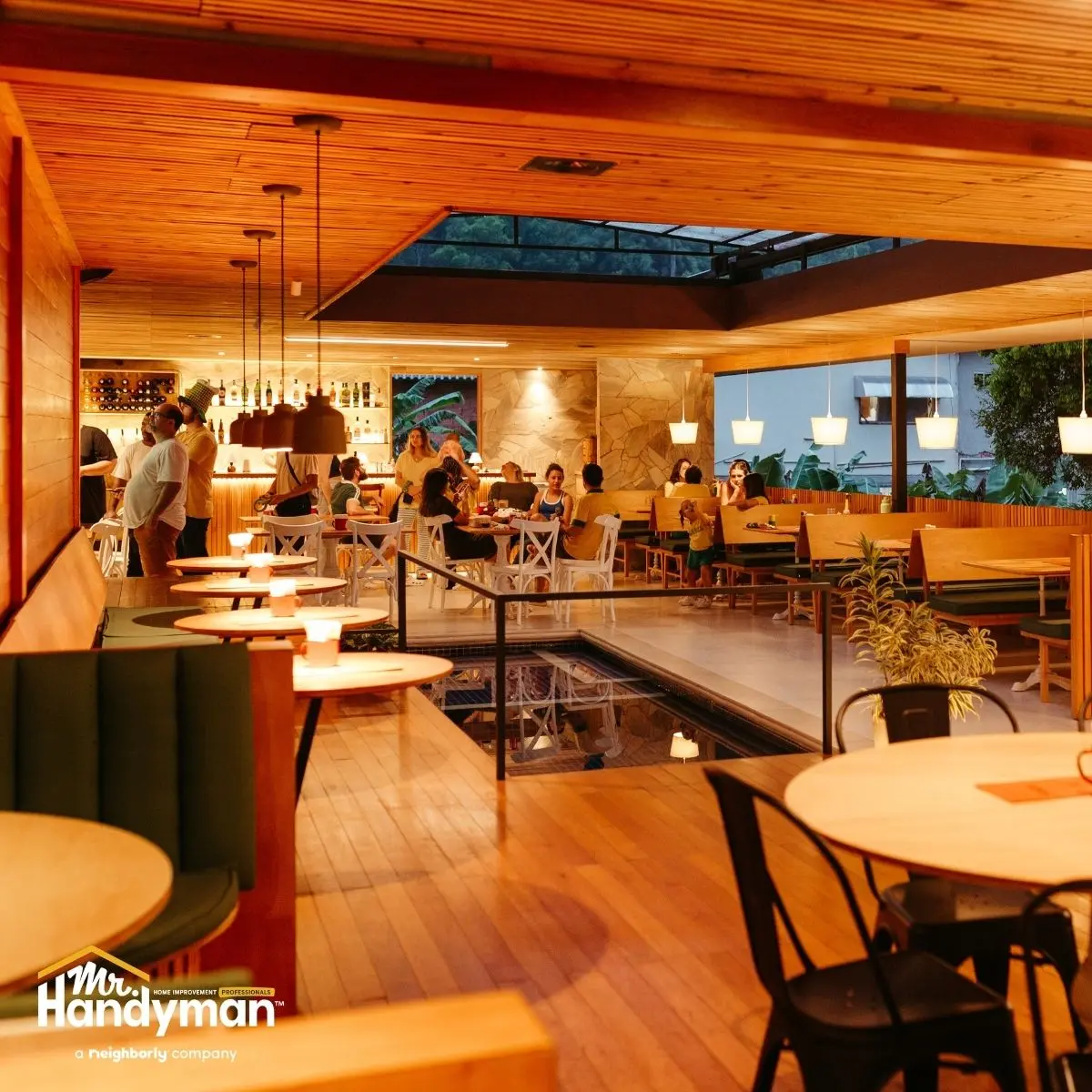
Understanding which renovations create the strongest customer impressions requires thinking the way a customer thinks — moving through your space for the first time, noticing what catches the eye, what creates friction, and what communicates care versus neglect. In Oklahoma City and Norman, commercial spaces vary widely in age, layout, and construction quality, but the high-impact renovation opportunities follow a consistent pattern regardless of building type or industry.
The reception area, waiting space, restrooms, and any customer-facing service area are the zones that shape perception most directly. Back-of-house operations, storage areas, and staff spaces matter for efficiency and employee satisfaction, but they rarely drive the customer impression that determines whether someone returns or recommends your business to others. Concentrating small renovation investment in the zones customers actually occupy is the highest-return strategy available to most commercial business owners.
Reception and Waiting Areas
The reception or waiting area is where customers spend unoccupied time — and unoccupied time means active observation. A customer waiting five minutes in your lobby will notice more about your space than someone moving purposefully through it for twenty minutes. That makes the waiting area one of the most scrutinized environments in any commercial building, and one of the most worthwhile targets for small renovation investment.
Seating condition is an immediate signal. Chairs or sofas with worn upholstery, loose joints, or visibly dated styling communicate that the business has not invested in its customer experience recently. Replacing or reupholstering seating in a reception area is a contained, affordable project that immediately elevates the space.
Wall-mounted elements in waiting areas — artwork, signage, informational displays, clocks, and decorative features — are frequently installed once and never revisited. Frames that have yellowed, prints that have faded, or signage that references outdated promotions or branding all create a static, neglected impression. Refreshing these elements, even simply reframing existing content or updating a single accent wall, introduces a sense of currency and attention that customers respond to positively.
Built-in reception counters and service desks accumulate visible wear at the front face and top surface faster than almost any other interior element. The front edge of a reception desk — the surface a customer rests their hands on while checking in or conducting a transaction — is a direct tactile and visual touchpoint. Refinishing, resurfacing, or replacing the top surface of a reception counter is a targeted renovation that has an outsized effect on how professional and polished the entire front-of-house feels.
Restrooms as a Reflection of Standards
No space in a commercial building communicates standards more directly than the customer restroom. Customers make immediate, sweeping judgments about a business based on restroom condition — and those judgments extend well beyond the restroom itself. A business with a clean, well-maintained restroom earns an implicit trust that transfers to perceptions of product quality, food safety, service standards, and overall professionalism.
Small restroom renovations in Oklahoma City and Norman commercial buildings frequently involve addressing the accumulated effects of hard water and humidity on fixtures and surfaces. Hard water deposits on faucets and fixtures, grout discoloration in tile floors and walls, caulking failures around sinks and toilet bases, and exhaust fans that have long since stopped functioning effectively are all conditions that customers notice immediately and remember.
Replacing a dated faucet set with a clean, modern fixture is a one-hour job that transforms the impression an entire restroom makes. Refreshing grout, recaulking around fixtures, and replacing a deteriorated toilet seat are similarly contained tasks that, taken together, make a restroom feel renovated without touching tile, plumbing rough-in, or any structural element.
Lighting in commercial restrooms is frequently inadequate — either too dim, too harsh, or simply wrong for the space. A vanity light replacement or the addition of a properly positioned LED fixture above the sink area improves both function and atmosphere in a space where customers want to feel comfortable and confident.
Doors, Hardware, and Interior Details
Interior doors and their hardware are touched by every person who moves through your space, yet they are among the most consistently neglected elements in commercial buildings. Door handles that are loose, lever sets that have lost their finish, hinges that cause doors to swing improperly, and interior door surfaces covered in years of painted-over hardware marks all contribute to a subliminal impression of age and deferred maintenance.
Replacing interior door hardware throughout customer-facing areas with a consistent, updated finish — brushed nickel, matte black, and satin brass are all current options that read as intentional and professional — is a renovation that costs relatively little per door but creates a cohesive, considered look across the entire space. Consistency of hardware finish signals that someone made deliberate design decisions, which customers interpret as a sign of overall business quality.
Cabinet hardware in service areas, break rooms visible to customers, and any built-in storage within customer zones follows the same principle. Mismatched pulls and knobs, or hardware that has corroded or lost its finish, ages a space significantly. Swapping hardware is one of the fastest, lowest-cost renovations available and one of the most visually effective.
FAQs
How much should a business budget for small commercial renovations that improve customer impression? There is no universal figure, but many high-impact renovation scopes — entrance refresh, lighting upgrade, restroom improvements, and hardware replacement — can be completed for a few thousand dollars when managed efficiently. The key is prioritizing customer-facing zones and avoiding scope creep into areas that do not directly influence customer perception.
How do I identify which renovations will have the most impact in my specific space? Walk through your space the way a first-time customer would — enter from the parking lot, move through the entrance, spend a few minutes in your waiting area, and use the restroom. Note every detail that creates friction or feels dated. That list is your renovation priority order.
Will small renovations disrupt my business operations? Most small commercial renovations can be scheduled outside of business hours or completed in phases that avoid disrupting customer-facing operations. An experienced commercial handyman service can assess your space and build a schedule that minimizes downtime.
Do these renovations add value to a commercial property beyond customer impression? Yes. Well-maintained, updated commercial spaces command stronger lease terms, higher valuations, and greater tenant interest if the property is ever listed. Consistent small renovation investment also prevents the deferred maintenance accumulation that leads to expensive catch-up projects.
Is it worth renovating a space I lease rather than own? In most cases, yes — particularly for customer-facing improvements. Your lease terms may allow for cosmetic modifications, and the return in customer perception and business performance typically outweighs the investment regardless of ownership structure. Always review your lease terms before beginning any work.
Ready to Make a Stronger Impression Starting Now
The businesses customers remember, return to, and recommend are not always the ones with the largest budgets or the newest buildings. They are the ones that feel cared for — where every detail communicates that the people running the business pay attention.
Mr. Handyman of Central Oklahoma City specializes in exactly the kind of targeted, professional commercial renovations that move the needle on customer impression without the disruption and expense of a full buildout.
🌐 mrhandyman.com/central-oklahoma-city/
Mr. Handyman of S. Oklahoma City and Norman brings the same level of craftsmanship and reliability to businesses throughout the southern metro and Norman area.
🌐 mrhandyman.com/northern-montgomery-county/
Schedule a walkthrough consultation today and find out exactly where small investments will make the biggest difference in your space.