Why Flooring Decisions Deserve More Thought Than They Usually Get
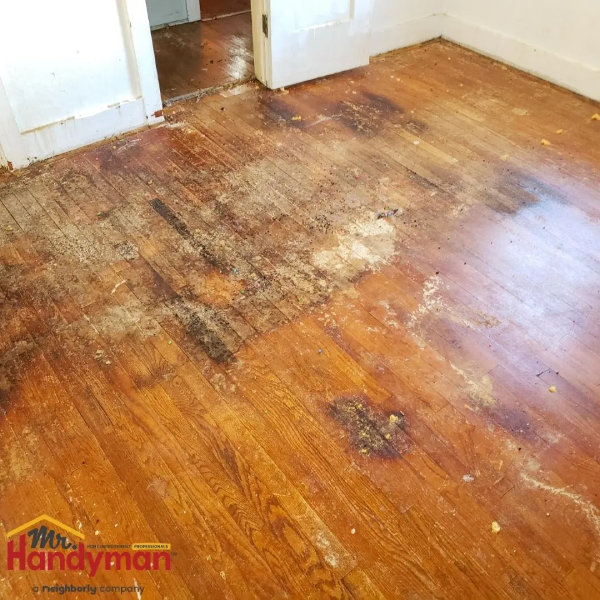
Flooring is the surface that every person in a home touches multiple times every day. It's walked on, sat on, played on, and subjected to the full range of household activity from quiet mornings to busy evenings, from dry summer days to the wet, salt-laden arrivals of a Pittsburgh winter. It's also the surface that sets the visual tone of every room it occupies, establishing the warmth or coolness, the formality or casualness, and the perceived quality of the space before a single piece of furniture is placed.
Despite this central role, flooring decisions are frequently made too quickly, with too much emphasis on appearance in the showroom and not enough consideration of how a particular material will perform under the actual conditions it will face in a specific home. A flooring material that photographs beautifully in a climate-controlled showroom may be entirely wrong for a Pittsburgh area basement that experiences seasonal humidity variation, a kitchen that sees heavy daily use from an active household, or an entryway that takes the full impact of Western Pennsylvania's winters every day for months at a time.
Homes throughout the Pittsburgh East Suburbs and Greensburg area present a specific set of flooring challenges. The age of local housing stock means that subfloor conditions in many homes are not the clean, level, structurally ideal surfaces that flooring manufacturers assume in their installation specifications. Older subfloors in communities like Monroeville, Murrysville, Penn Township, Export, Greensburg, Plum, and the surrounding boroughs may have levelness variations, moisture history, and structural characteristics that affect which flooring materials are appropriate and how installation needs to be approached.
Western Pennsylvania's genuine four-season weather produces significant temperature and humidity variation across the year, and those variations affect how different flooring materials expand, contract, and perform over time. A flooring material that's dimensionally stable enough to handle Pittsburgh's seasonal range, installed correctly over an appropriate subfloor, will perform well for decades. The same material installed without accounting for seasonal movement or over a subfloor that introduces moisture will develop problems within a relatively short time.
Understanding What Flooring Actually Needs to Do
Before evaluating specific flooring materials, establishing a clear set of performance criteria for the specific space being floored produces better decisions than selecting materials based on appearance alone.
Traffic volume is the most basic performance consideration for any flooring material. A primary living area in a household with children, pets, and frequent entertaining places fundamentally different demands on a floor than a guest bedroom that sees occasional use. Flooring materials have genuine durability differences that showroom samples don't communicate, and choosing a material rated for light residential use in a space that experiences heavy daily traffic produces premature wear well before its expected lifespan.
Moisture is the single most damaging force acting on most flooring materials, and Pittsburgh area homes present moisture challenges at multiple levels. The region's seasonal humidity variation, the wet boot traffic of a genuine winter, the occasional basement moisture event during heavy rain periods, and the everyday moisture exposure of kitchens and bathrooms all require honest assessment before a flooring material is selected. A material that's appropriate for a dry bedroom is often entirely wrong for a basement or mudroom in the same home.
The condition of the existing subfloor determines which flooring materials are feasible, what preparation work is needed before installation, and whether the installed floor will perform as expected over time. In older Pittsburgh area homes where subfloors may be original to the construction, they may carry decades of settling, moisture history, and surface variation that affect installation significantly.
Hardwood Flooring: The Standard Against Which Everything Else Is Measured
What Hardwood Genuinely Offers
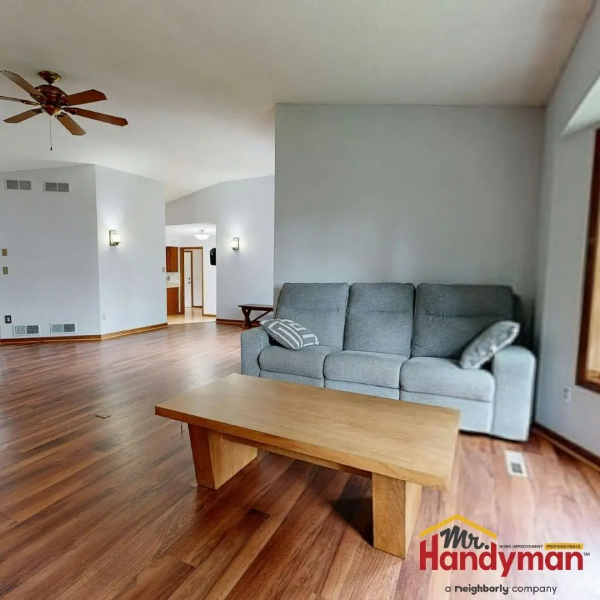
The appeal of hardwood flooring begins with its appearance, which develops character over time in a way that no manufactured material replicates. The grain variation, the natural color range, and the way hardwood responds to light at different times of day give it a visual richness that reads as quality in any room it occupies. In Pittsburgh area homes where original hardwood floors survive beneath carpet installed during later renovations, restoring those floors to good condition is consistently one of the highest-return improvements available because the material underneath is often significantly better than what was placed over it.
Hardwood's refinishability is its most practical long-term advantage. A solid hardwood floor can be sanded and refinished multiple times over its lifespan, removing surface scratches, wear patterns, and finish deterioration and restoring the floor to essentially new condition. This capability means that a quality hardwood floor installed in a Pittsburgh area home can remain in excellent condition across generations of use, making it one of the most cost-effective flooring investments available when evaluated over a long time horizon rather than just its initial cost.
Species selection significantly affects both appearance and durability. Harder species, including white oak, red oak, hickory, and maple, resist denting and surface scratching better than softer species like pine and cherry, making them more appropriate for high-traffic areas and households with pets. White oak has become the dominant choice in Pittsburgh area homes seeking a hardwood that combines durability with a grain pattern and staining versatility that suits contemporary design directions.
Where Hardwood Has Genuine Limitations
Solid hardwood flooring is dimensionally sensitive to moisture and humidity variation in ways that create real performance limitations in Pittsburgh area homes. Wood expands when humidity rises and contracts when humidity drops, and in a region with genuine seasonal variation, that movement is significant enough to affect floor performance when the material isn't installed correctly or when the installation environment isn't appropriate.
Solid hardwood should not be installed in basements or below-grade spaces where moisture conditions can't be reliably controlled. It's also a challenging choice for kitchens and bathrooms where water exposure is regular and where spills that aren't immediately addressed can penetrate the finish and reach the wood. In these spaces, engineered hardwood provides the appearance of hardwood with significantly better moisture resistance and dimensional stability across Pittsburgh's seasonal range.
Luxury Vinyl Plank: The Practical Performer That Has Earned Its Reputation
Why Luxury Vinyl Plank Works Well in Pittsburgh Area Homes
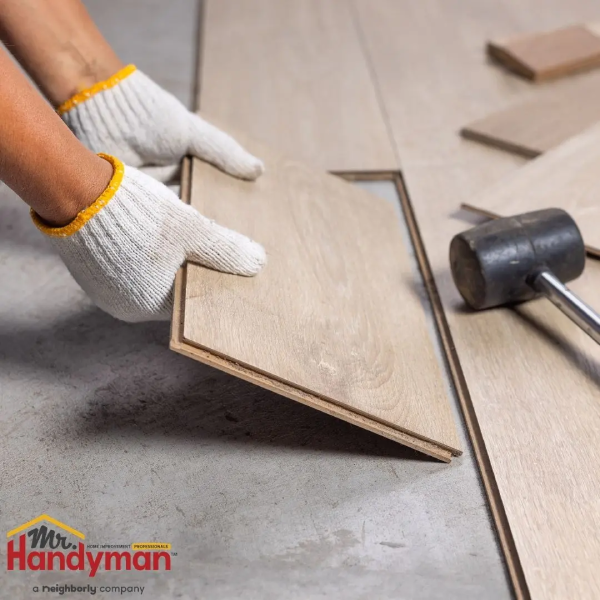
The most important performance characteristic of luxury vinyl plank for Pittsburgh area homeowners is its complete waterproof construction. Unlike hardwood, which is damaged by sustained moisture exposure, and unlike laminate, which swells and delaminates when water reaches its core, quality luxury vinyl plank is waterproof through its entire thickness. Water that reaches the surface, whether from a spilled drink, a tracked-in wet boot, or a pet accident, can be wiped up without penetrating the material or causing damage beneath the surface.
This waterproof quality makes luxury vinyl plank appropriate for installation in spaces where hardwood and laminate aren't suitable, including basements, laundry rooms, kitchens, and bathrooms. In Pittsburgh area homes where basements are being finished or updated as living spaces, luxury vinyl plank is the flooring material that most reliably handles the moisture variability these spaces experience without developing the problems that more moisture-sensitive materials produce.
The wear layer thickness of luxury vinyl plank is the specification that most directly determines how the material will hold up under traffic and daily use. Products with wear layers of 12 mil or greater are appropriate for residential applications with normal to heavy traffic. Products with 20 mil wear layers provide a level of durability that makes them a strong choice for the highest-traffic spaces in active Pittsburgh area households.
The Honest Limitations of Luxury Vinyl Plank
Luxury vinyl plank cannot be refinished when its wear layer is depleted. Unlike hardwood, which can be sanded and refreshed multiple times, luxury vinyl plank has a finite lifespan after which it needs to be replaced rather than restored. Quality products with thick wear layers have lifespans measured in decades under normal residential use, but that lifespan is definitively finite in a way that hardwood's isn't.
The appearance of luxury vinyl plank, while significantly improved from earlier generations of the product, remains a reproduction of wood rather than wood itself. For homeowners who genuinely value the authentic material quality of real wood and who are willing to manage the maintenance and installation requirements that wood demands, luxury vinyl plank is an honest alternative rather than an equivalent one.
Porcelain and Ceramic Tile: Unmatched Durability in the Right Application
Where Tile Genuinely Excels
Bathrooms, kitchens, entryways, mudrooms, and laundry rooms are the spaces where tile's combination of waterproofness and durability makes it the strongest available choice. In Pittsburgh area homes where the entryway takes the full impact of winter conditions, including wet boots, tracked salt, and the residual grit of a Pittsburgh street in January, porcelain tile with sealed grout lines is the flooring that handles those conditions without absorbing damage in the way that wood-based or resilient flooring materials would.
Larger format porcelain tiles offer fewer grout lines across a given floor area than smaller format tiles. Fewer grout lines mean less surface area for food, moisture, and grime to accumulate, making the floor easier to keep clean and reducing the maintenance that grout requires to stay looking good over time.
The Real Limitations of Tile
Tile is hard underfoot in a way that becomes apparent during extended periods of standing. In kitchens where the cook stands for hours during meal preparation, the hardness of a tile floor contributes to foot and back fatigue in ways that softer flooring materials don't. Anti-fatigue mats placed at primary work positions address this practically, but it's a consideration worth acknowledging before committing to tile in spaces where extended standing is a regular activity.
Tile installation in Pittsburgh area homes with older subfloors requires careful assessment and often significant preparation work. Tile is rigid and requires a subfloor that's both flat and structurally stiff enough to prevent the flex that causes grout and tile cracking over time. The cost of that preparation work needs to be accounted for in the total project budget rather than discovered after tile selection has been finalized.
Additional Flooring Materials Worth Understanding
Engineered Hardwood
Engineered hardwood occupies a position between solid hardwood and luxury vinyl plank that makes it the right choice for a specific set of Pittsburgh area applications. Its construction, a real wood veneer face layer bonded to a multi-layer plywood core, gives it dimensional stability that solid hardwood doesn't possess. The plywood core doesn't respond to humidity changes the way solid wood does, which means engineered hardwood can be installed in spaces with more humidity variation than solid hardwood tolerates, including first-floor installations over concrete subfloors.
The face layer thickness of engineered hardwood determines how many times it can be refinished during its lifespan. Products with a face layer of two millimeters or more can be lightly sanded and refinished once or twice, extending the floor's useful life when the surface shows wear. For Pittsburgh area homeowners who want the refinishability advantage that makes hardwood a multigenerational investment, selecting engineered hardwood with an adequate face layer thickness is an important specification to confirm before purchase.
Laminate Flooring
Laminate is a wood-based product with a high-density fiberboard core that is susceptible to moisture damage in a way that luxury vinyl plank's plastic core is not. Water that reaches the core of a laminate floor, whether from a sustained spill, from moisture vapor transmission through a concrete subfloor, or from the wet boot traffic that a Pittsburgh area entryway experiences regularly, causes swelling and delamination that can't be repaired. This moisture vulnerability makes laminate an inappropriate choice for kitchens, bathrooms, entryways, basements, and any other space in a Pittsburgh area home where moisture exposure is a realistic expectation.
Carpet
Carpet retains genuine performance advantages in specific applications. Bedrooms are the primary space where carpet continues to make strong practical sense. The softness and warmth underfoot that carpet provides contributes to comfort in a way that hard surface flooring doesn't replicate. Sound absorption is another genuine advantage in multi-story Pittsburgh area homes where sound transmission between floors is a concern. Carpet on upper floors absorbs impact noise, including footsteps and dropped items, in ways that hard surface flooring doesn't. For most other spaces in active Pittsburgh area households, the maintenance burden of carpet often outweighs the comfort benefit it provides.
Matching Flooring to Each Space
Entryways and mudrooms call for porcelain tile without meaningful qualification. No other flooring material handles the combination of wet boots, tracked salt, pet paws, and the general outdoor debris of a Western Pennsylvania winter with the same durability and ease of cleaning. Luxury vinyl plank is a strong secondary choice for entryways where tile installation isn't feasible due to subfloor conditions or budget constraints.
Kitchens work well with either porcelain tile or luxury vinyl plank. Porcelain tile with large format tiles and minimal grout lines is the most durable and easiest-to-clean option, but it requires a subfloor structurally adequate to support tile installation without flex. Luxury vinyl plank offers complete waterproofness, better underfoot comfort than tile, and installation flexibility over a wider range of subfloor conditions.
Living rooms and dining rooms are where hardwood flooring makes its strongest case. These are the spaces where hardwood's warmth, visual richness, and the character it develops over time have the greatest impact on how the home feels and presents. White oak hardwood in living and dining rooms is the current dominant choice in Pittsburgh area homes, for good reason: its hardness handles the furniture movement and foot traffic these spaces experience, and its refinishability means the floor can be refreshed when wear patterns develop rather than being replaced.
Bedrooms present the widest range of reasonable flooring choices because their performance requirements are the least demanding of any space in the home. Hardwood and engineered hardwood deliver the aesthetic quality and long-term value that make them the premium choice. Luxury vinyl plank is a practical choice that delivers easy maintenance. Carpet provides underfoot warmth and sound absorption that hard surface flooring doesn't replicate. All three are defensible choices, and the decision between them comes down to comfort preference, household conditions, and budget rather than performance requirements that narrow the field.
Pittsburgh area basements present the most constrained flooring selection because moisture is a consistent concern that eliminates wood-based flooring materials from consideration in most cases. Luxury vinyl plank is the dominant choice for finished Pittsburgh area basements, and it has earned that position through its waterproof construction, its straightforward installation over concrete subfloors, and its comfort underfoot. Porcelain tile in basements is appropriate for utility areas, laundry rooms, and bathroom spaces where waterproofness and easy cleaning are the primary priorities.
Frequently Asked Questions
How do I choose between hardwood and luxury vinyl plank for my main living areas?
The decision comes down to three factors considered together: budget, household conditions, and long-term priorities. If authentic material quality and refinishability across decades of ownership are priorities and the household conditions are compatible with hardwood's moisture sensitivity, hardwood is worth the additional investment. If the household includes pets, young children, or conditions that create regular moisture exposure in the living areas, luxury vinyl plank's waterproof construction and lower maintenance demands make it the more practical choice.
Can I install new flooring over existing flooring in a Pittsburgh area home?
In some cases, yes. Luxury vinyl plank can often be installed over existing resilient flooring that's in good condition, flat, and firmly adhered. However, installing over existing flooring adds height to the floor surface that affects transitions to adjacent spaces, door clearances, and the visual relationship between the new floor and existing baseboards and trim. In most Pittsburgh area home renovations, removing existing flooring to assess and address subfloor conditions before installing new material produces a better long-term result than layering new flooring over old.
What's the most important specification to check when buying luxury vinyl plank?
Wear layer thickness is the specification that most directly determines how luxury vinyl plank will perform under the traffic conditions of the specific space. For high-traffic areas including entryways, kitchens, and main living areas in active households, a minimum wear layer of 12 mil is appropriate, with 20 mil providing additional durability margin for the most demanding applications. Products with wear layers below 8 mil are appropriate only for light-use spaces and will show wear prematurely in any high-traffic application.
Is it worth refinishing existing hardwood floors rather than replacing them?
In most cases, yes, assuming the existing hardwood has adequate thickness remaining for sanding. Refinishing existing hardwood restores the floor to essentially new condition at a fraction of the cost of new flooring installation, and it preserves the authentic material quality and character of original hardwood that replacement with any material doesn't fully replicate. A professional assessment of the existing floor's thickness, structural condition, and refinishing potential determines whether refinishing is feasible before the decision is made.
How long does flooring installation typically take in a Pittsburgh area home?
A single room flooring installation typically takes one to two days including subfloor preparation, material installation, and trim work. A whole-home flooring project in a Pittsburgh area home of average size typically runs five to ten days depending on the number of rooms, the flooring material selected, the subfloor conditions encountered, and the extent of furniture moving and reinstallation involved. Building contingency time into the project schedule for subfloor conditions that require additional preparation is advisable in older Pittsburgh area homes.
The Floor Beneath Everything Else
Flooring is the foundation of every room's visual and functional character, and the decisions made about flooring materials, installation quality, and subfloor preparation shape how the home looks, feels, and performs every day for years after the project is complete. For Pittsburgh area homeowners navigating the full range of available options against the specific conditions of older homes and a genuine four-season climate, making those decisions with complete information about what each material actually delivers produces results that hold up over time rather than disappointing within the first few seasons.
Mr. Handyman of Pittsburgh East Suburbs and Greensburg works with homeowners throughout the region on flooring projects of every scope, from single room installations to whole-home flooring renovations. The team brings the experience with older Pittsburgh area homes and regional conditions that ensures flooring decisions are made correctly and installations are executed with the quality that makes them last.
Website: mrhandyman.com/pittsburgh-east-suburbs-greensburg
Serving homeowners throughout the Pittsburgh East Suburbs, Greensburg, and the surrounding communities with dependable service and the expertise your home deserves.