The Maintenance Reality That Every Eastern Panhandle Restaurant Faces
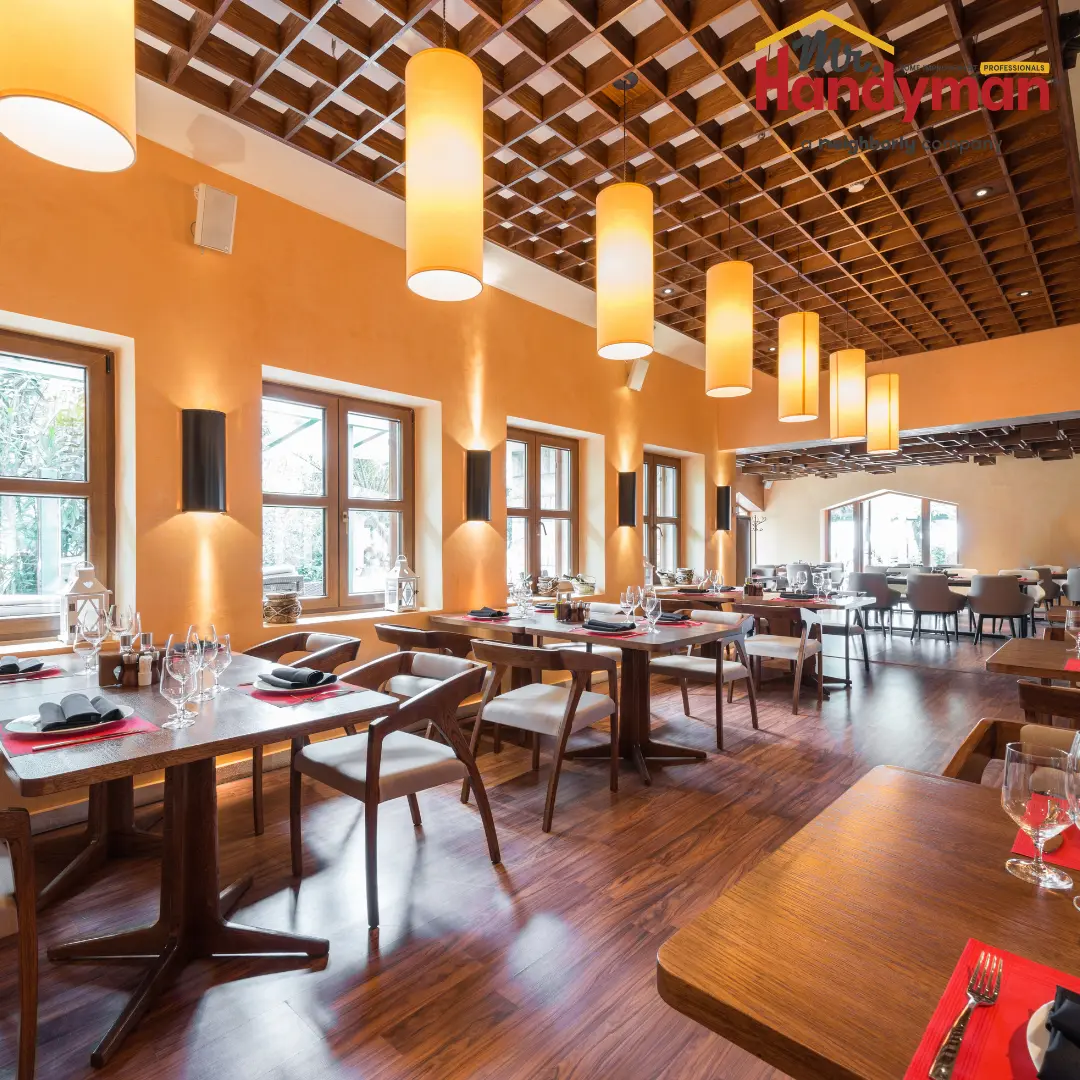
Running a restaurant in Martinsburg, Charles Town, or the surrounding Eastern Panhandle communities means operating in one of the most physically demanding commercial environments that any building type creates, and doing so through the specific seasonal cycle that the Shenandoah Valley's climate creates in the region's restaurant landscape. The concentrated foot traffic of a busy dinner service, the heat and humidity that kitchen operations sustain throughout every operating shift, the grease that food preparation distributes across kitchen surfaces and into ventilation systems, the continuous water use that commercial kitchen operations require, and the sheer volume of door operations, chair movements, and customer contact that a busy Eastern Panhandle restaurant generates through each service period all act on the restaurant's physical environment at rates that general commercial properties don't approach.
The Eastern Panhandle's specific context adds dimensions to restaurant maintenance that operators in more geologically and climatically uniform markets don't navigate. The Shenandoah Valley's summer humidity creates the specific restaurant interior conditions that the combination of commercial kitchen heat, valley ambient moisture, and the air conditioning that dining room comfort requires generates through the summer service periods when the region's outdoor dining culture concentrates the most revenue-critical business of the operating year. The region's limestone karst geology creates the water quality conditions that accelerate fixture and hardware deterioration in commercial restrooms, kitchen plumbing, and the various water contact surfaces that restaurant operation depends on daily. And the Eastern Panhandle's active spring and summer storm season creates the exterior entry conditions that concentrated rainfall, wind-driven moisture, and the humidity that follows significant valley storms creates at the restaurant entries that every customer navigates through each service period.
The solution that experienced Eastern Panhandle restaurant operators have discovered is the regular handyman service relationship that catches conditions early, addresses multiple items efficiently during each service visit, and prevents the critical failures that deferred maintenance creates in the demanding physical environment that restaurant operations produce through every operating day. Mr. Handyman of Martinsburg and Charles Town serves restaurants throughout the Eastern Panhandle with the regular commercial maintenance relationship that the valley's restaurant physical environments specifically require.
The Specific Maintenance Categories That Regular Restaurant Service Addresses
Furniture and Fixture Tightening and Repair
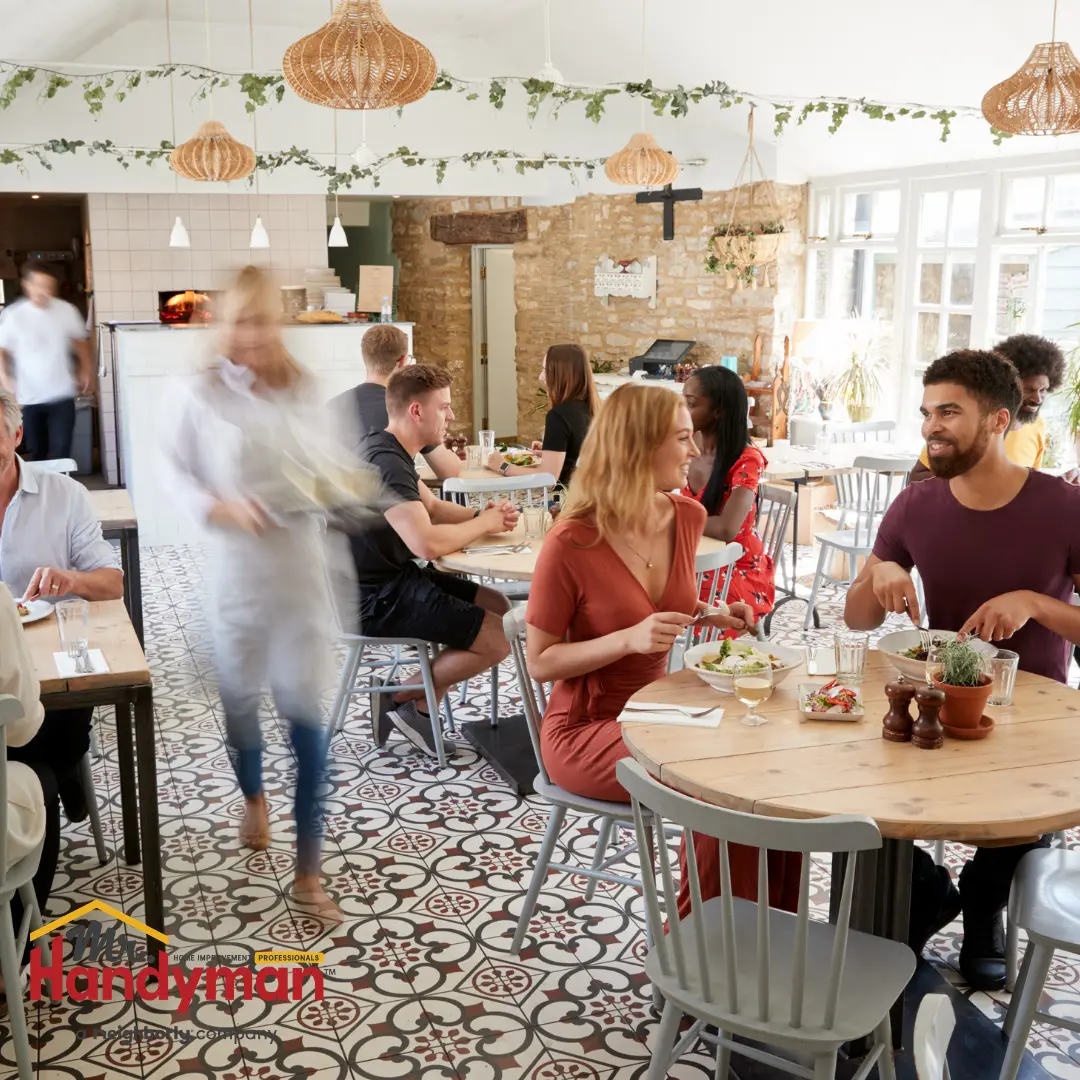
Restaurant furniture in Eastern Panhandle dining rooms experiences the physical demands of daily service at the intensity that Martinsburg and Charles Town restaurant traffic creates through lunch and dinner service cycles, amplified by the Shenandoah Valley's summer humidity that advances wood joint loosening in dining room furniture at rates that the valley's seasonal humidity cycling creates more actively than more stable humidity environments. The daily stacking and unstacking cycle that chair joint adhesion experiences through each service period, combined with the valley's summer humidity that the wood fiber absorbs and the winter's dry heated interior air that causes subsequent contraction, creates the joint loosening cycle that Eastern Panhandle restaurant furniture experiences more consistently than equivalent furniture in more stable humidity environments develops through comparable use periods.
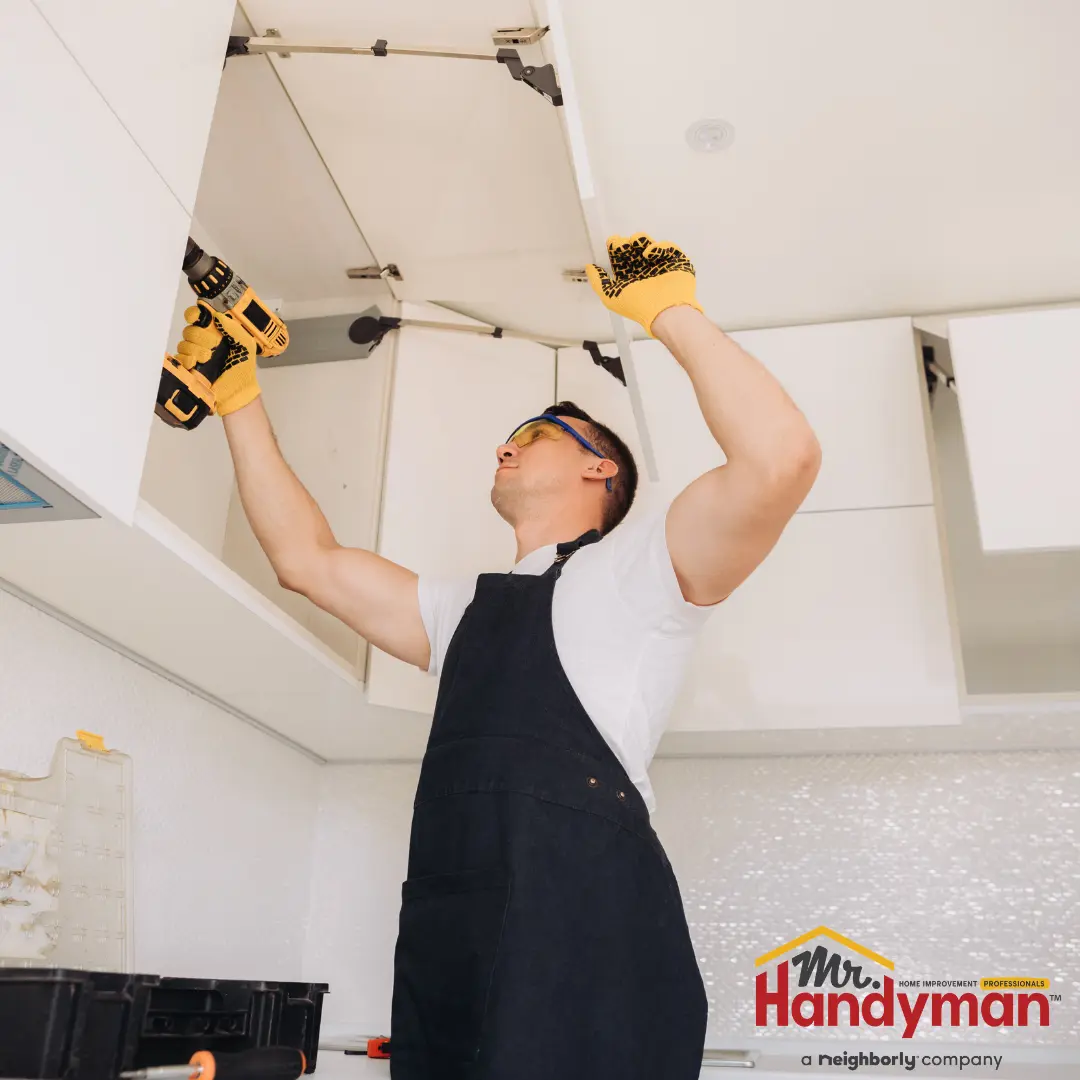
Regular handyman service that includes furniture joint inspection and tightening as a standard component of each service visit identifies loose joints before they advance to the structural failure that wobbling chairs eventually reach, and addresses them with the wood glue injection, screw replacement, and joint reinforcement that chair joint service requires to restore the stable condition that restaurant seating quality demands.
Door and Hardware Service Through Eastern Panhandle Conditions
Restaurant doors in Martinsburg and Charles Town experience the operation volumes that customer, staff, and delivery traffic creates through each operating day, amplified by the valley's summer humidity that advances wood frame expansion in restaurant entry doors at the same peak customer traffic period. The front of house entry doors operated through Eastern Panhandle summer's valley humidity carry the combined stress of maximum door operation cycling and the wood dimensional expansion that the valley's humid conditions create in door frame components, producing the sticking, dragging, and closure resistance that restaurant customer-facing entries cannot afford to present to the customers whose first physical interaction with the restaurant the entry door creates.
Walk-in cooler and freezer doors in Eastern Panhandle restaurant kitchens present the specific gasket maintenance condition that the temperature differential between the cold storage interior and the ambient kitchen environment creates in door gaskets through the combination of kitchen heat, valley humidity, and the Eastern Panhandle's mineral water that kitchen cleaning contacts at door gasket surfaces. Walk-in door gaskets that have lost their compression seal advance ice formation at the door perimeter, compromising food safety and energy efficiency simultaneously. Replacing walk-in door gaskets before seal failure advances to ice formation stages maintains both the food safety integrity and the energy cost performance that Eastern Panhandle restaurant kitchens require from cold storage systems.
Wall, Ceiling, and Restroom Maintenance
Restaurant wall and ceiling surfaces in Eastern Panhandle dining rooms and kitchens accumulate the damage that the Shenandoah Valley's specific conditions create through each operating period. Regular surface repair and paint touch-up that addresses accumulated dining room wall damage before it advances to the comprehensive repainting condition, and maintenance of kitchen wall surfaces in the areas that health code cleanability requirements govern, is the surface maintenance program that regular Eastern Panhandle restaurant handyman service sustains through the ongoing operation cycle.
Restaurant restrooms in Martinsburg and Charles Town receive the customer traffic volume that dining room occupancy creates through each service period, and the fixture, hardware, and surface conditions that restroom use generates advance faster in the Eastern Panhandle's mineral water environment than equivalent commercial restrooms in lower mineral content water environments at comparable use volumes. The mineral scale that Berkeley and Jefferson County's limestone water supply creates at faucet aerators, at toilet flush valve components, and on every fixture surface that the region's water contacts through regular restroom use communicates the maintenance standard that Eastern Panhandle restaurant customers form impressions from during their dining experience. The Eastern Panhandle's mineral water dimension makes aerator cleaning and replacement specifically more frequent in Martinsburg and Charles Town restaurants than equivalent service intervals in lower mineral content water environments motivate.
Regulatory Compliance Through Physical Plant Maintenance
West Virginia restaurants operate under the West Virginia Department of Health's food service establishment inspection requirements that create the regulatory maintenance dimension whose physical plant component regular handyman service specifically maintains at the compliant condition that inspections evaluate. The specific physical plant conditions that health inspections most consistently identify in Eastern Panhandle restaurants include equipment base caulking that has failed and created the joint between equipment and floor surface that food debris accumulates in and cleaning cannot adequately address, wall surface damage adjacent to food preparation areas that has advanced to the condition where the surface is no longer smooth and cleanable as the food code requires, and ceiling tile damage or staining above food preparation areas.
The Eastern Panhandle's limestone water quality creates a specific health inspection dimension that lower mineral content water environments don't generate as consistently. The mineral scale that Berkeley and Jefferson County's water supply creates on food service equipment surfaces, at plumbing fixture fittings, and at the various equipment and surface conditions that commercial kitchen water contact creates advances the unsanitary appearance and the cleanability compromise that health inspectors evaluate faster than equivalent use in lower mineral content water environments produces comparable conditions.
The Scheduling Approach That Works for Eastern Panhandle Restaurant Operations

The Eastern Panhandle's outdoor dining culture, shaped by the Shenandoah Valley's natural setting and the summer tourism activity that Harpers Ferry and the region's historical and natural attractions generate through the warm months, concentrates the most revenue-critical restaurant activity into the summer months when maintenance disruption is most operationally consequential and when the physical conditions that require attention are simultaneously at their most active.
Mr. Handyman of Martinsburg and Charles Town's commercial scheduling for Eastern Panhandle restaurant clients works within the pre-opening morning window, the post-service closing window, and the mid-week low-traffic periods that most Martinsburg and Charles Town restaurants have available between service periods, delivering the maintenance scope that each service visit addresses without creating the operational disruption that maintenance during active service would require. The pre-opening morning window is the most productive maintenance access period for front of house work including furniture tightening, door and hardware service, and dining room wall touch-up.
Monthly service visits address the higher-demand maintenance accumulation that the Shenandoah Valley's humidity and the Eastern Panhandle's mineral water conditions create in busy Martinsburg and Charles Town restaurant environments through summer's peak season. The valley's summer humidity dimension makes the monthly service visit interval specifically more productive for high-volume restaurants during the summer peak season, because the humidity cycling that the Shenandoah Valley's conditions create in dining room furniture joints, entry door frames, and kitchen surface conditions advances the maintenance accumulation rate during summer's peak season faster than the same monthly interval in lower humidity restaurant environments produces comparable accumulation at equivalent use volumes.
Eastern Panhandle-Specific Restaurant Maintenance Considerations
The Eastern Panhandle's limestone water supply creates the mineral scale accumulation on kitchen equipment surfaces, at coffee machine and ice machine water connections, and at the food preparation equipment whose water contact surfaces the region's mineral-active water conditions advance faster than lower mineral content water environments produce at equivalent use cycles. Regular descaling of coffee equipment and attention to the mineral deposits that the Eastern Panhandle's water creates at the various kitchen equipment connections are kitchen equipment maintenance dimensions that the valley's water quality specifically motivates in Martinsburg and Charles Town restaurant maintenance programs.
Outdoor furniture inspection and tightening whose joint integrity the preceding winter's storage and seasonal cycling has affected, outdoor entry approach assessment for the spring rainfall and karst soil settlement conditions that the Eastern Panhandle's active rainfall season creates at restaurant entry walkways and approaches, and outdoor lighting confirmation before summer's extended evening dining hours require full exterior lighting performance are the pre-summer Eastern Panhandle restaurant maintenance items whose completion before the outdoor dining season's first significant occasions positions the restaurant's outdoor service at its best presentation and functional quality from the season's beginning.
The Financial Case for Regular Service in the Eastern Panhandle's Seasonal Market
The financial argument for regular restaurant handyman service rather than reactive repair management carries specific weight in the Eastern Panhandle's seasonal restaurant market, where the Shenandoah Valley's outdoor dining season concentrates the most revenue-critical restaurant activity into the summer months when equipment failure or facility condition problems affect the restaurant's ability to serve the peak customer volume that summer tourism and local outdoor dining culture generates. The chair joint that receives tightening service during a regular monthly visit at modest cost becomes the chair that fails structurally during a peak summer outdoor dining service, creating the customer incident and the emergency replacement during the most revenue-critical operating weeks of the Eastern Panhandle restaurant year.
Frequently Asked Questions
How does Mr. Handyman of Martinsburg and Charles Town structure regular service agreements for local restaurants?
Mr. Handyman of Martinsburg and Charles Town structures regular restaurant service around each restaurant's specific maintenance needs, operating schedule, and service access windows. Monthly service visits address the higher-demand maintenance accumulation that the Shenandoah Valley's humidity and the Eastern Panhandle's mineral water conditions create in busy Martinsburg and Charles Town restaurant environments through summer's peak season. Quarterly service visits serve restaurants whose maintenance accumulation rate and budget parameters make the longer interval appropriate, with specific attention to the valley humidity's seasonal acceleration of furniture and surface maintenance conditions through summer's peak activity period.
What restaurant maintenance work falls within Mr. Handyman's permitted scope in the Eastern Panhandle?
Mr. Handyman of Martinsburg and Charles Town handles the full range of restaurant facility maintenance within the permitted commercial handyman scope including furniture joint tightening and repair, door hardware and closer service, walk-in door gasket replacement, wall and ceiling surface repair and painting, restroom fixture and hardware service, equipment base caulking, lighting fixture and lamp replacement, exterior condition maintenance, and the general facility repairs that restaurant operations generate through daily service. Work involving licensed plumbing, electrical, or mechanical scope requires the appropriate licensed trade contractor involvement that West Virginia's licensing requirements govern.
How does the Eastern Panhandle's limestone water quality specifically affect restaurant maintenance frequency?
The mineral content that Berkeley and Jefferson County's limestone geology creates in the regional water supply advances the specific fixture and surface deterioration conditions in Eastern Panhandle restaurant restrooms and kitchens that lower mineral content water environments don't generate at the same rate. Faucet aerator flow restriction from mineral scale accumulation, calcium buildup at flush valve components, mineral staining on restroom and kitchen surfaces, and scale accumulation at kitchen equipment water connections all advance faster in Eastern Panhandle restaurant environments than equivalent use in lower mineral content water service areas.
What is the recommended service visit interval for a busy Martinsburg or Charles Town restaurant?
Monthly service visits are the recommended interval for high-volume restaurants in Martinsburg and Charles Town during the summer peak season when the Shenandoah Valley's humidity conditions advance furniture, door, and surface maintenance accumulation at the rate that the valley's seasonal humidity cycling and peak customer traffic together create. The Eastern Panhandle's outdoor dining season concentration into summer's warm months makes the monthly interval during peak season specifically more important than equivalent monthly service for restaurants in less seasonally concentrated markets.
The Eastern Panhandle Restaurant That Regular Maintenance Protects
The Martinsburg and Charles Town restaurant whose regular handyman service relationship maintains furniture tightness through the Shenandoah Valley's humidity cycling, whose door and hardware conditions serve customer traffic without the valley humidity's accumulated sticking and dragging creating customer entry friction, whose wall and ceiling surfaces present the maintained condition that customer dining environments require through the valley's peak outdoor dining season, whose restrooms reflect the maintenance standards that the Eastern Panhandle's mineral water dimension makes specifically demanding, and whose outdoor dining area is prepared and maintained for the Shenandoah Valley's outdoor dining season from its first warm occasions through its final comfortable evenings is the restaurant whose physical environment supports the food, service, and experience quality that the Eastern Panhandle dining market deserves.
Mr. Handyman of Martinsburg and Charles Town is ready to develop the regular service relationship that each Eastern Panhandle restaurant's specific facility and operational needs require.
Website: https://www.mrhandyman.com/martinsburg-charles-town/
Serving Martinsburg, Charles Town, and the surrounding Eastern Panhandle communities with dependable service and the expertise your home deserves.