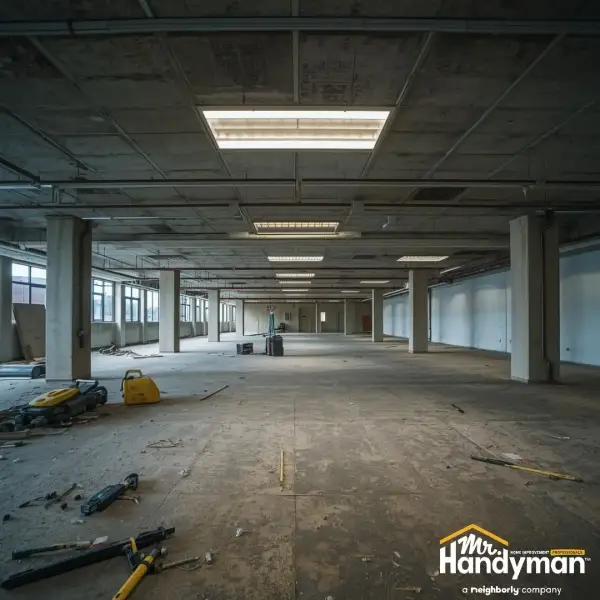
Common Office Repairs Needed After Holiday Downtime often become apparent as employees return, systems are powered back up, and normal traffic resumes. Even short periods of reduced occupancy can expose maintenance issues that were previously unnoticed or deprioritized. Temperature fluctuations, inactive systems, and delayed repairs during the holidays frequently result in small problems that quickly affect productivity, safety, and professionalism once offices reopen.
At Mr. Handyman of Montgomery County and Martinsburg, post-holiday service requests are a consistent trend across office buildings in Rockville, Silver Spring, Bethesda, Gaithersburg, and Martinsburg. Offices that appeared fine before the holidays often reveal maintenance gaps once daily use resumes. Addressing these repairs early prevents disruptions and sets a productive tone for the year ahead.
Why Office Issues Surface After Holiday Closures
Holiday downtime changes how buildings behave. Heating schedules are adjusted, lights and equipment are powered down, and routine cleaning or inspections may pause. These changes create conditions where minor issues can develop unnoticed.
Common contributing factors include:
- Temperature swings affecting materials
- Reduced ventilation and airflow
- Plumbing sitting idle
- Deferred maintenance during closures
- Increased wear from year-end activity
When offices reopen, these conditions show up quickly in the form of visible damage or functional problems.
Door and Hardware Problems Are Often the First Noticed
Office doors experience constant use once staff return. Doors that were rarely opened during downtime suddenly see heavy traffic, revealing alignment and hardware issues.
Common Post-Holiday Door Repairs
- Doors that stick or drag
- Loose hinges or frames
- Malfunctioning closers
- Handles and locks that do not operate smoothly
Door issues affect security, accessibility, and workflow. Addressing them promptly prevents further wear and ensures proper access control.
Flooring Damage Becomes More Apparent
Flooring issues are among the most common office repairs needed after holiday downtime. Reduced cleaning schedules combined with moisture from winter weather often accelerate wear.
Typical Flooring Repairs After Downtime
- Loose carpet tiles or seams
- Cracked or lifting hard surface flooring
- Worn transitions between flooring types
- Stained or damaged areas near entrances
These issues create safety risks and negatively impact the professional appearance of the office.
Drywall and Wall Damage Is Easy to Overlook Until Reopening
Minor wall damage often goes unnoticed during busy periods. After a closure, cracks, dents, and wear become more obvious under daily lighting and use.
Common Wall and Surface Repairs
- Nail pops or cracks from temperature changes
- Scuffs and dents from equipment movement
- Peeling paint near windows or vents
- Damage around door frames and corners
Repairing wall damage early improves appearance and prevents further deterioration.
Lighting and Electrical Issues Surface Quickly
Lighting systems that were powered down or minimally used during the holidays often reveal issues when fully reactivated.
Post-Holiday Lighting and Electrical Repairs
- Flickering or failed light fixtures
- Burned-out bulbs or ballasts
- Loose outlet covers
- Switches that do not function properly
Poor lighting affects safety, productivity, and employee comfort, making these repairs a high priority.
Restroom Issues Increase After Reopening
Plumbing systems that sit unused can develop problems that become obvious once usage resumes.
Common Restroom Repairs After Downtime
- Running or leaking toilets
- Loose sinks or fixtures
- Slow drains
- Damaged partitions or accessories
Addressing restroom repairs promptly prevents water damage and supports hygiene and comfort expectations.
HVAC-Related Comfort Complaints Often Follow Closures
While full HVAC servicing may fall outside general handyman scope, many comfort complaints stem from interior issues rather than system failure.
Interior Comfort Issues That Need Attention
- Drafty doors or windows
- Loose or damaged vents
- Blocked airflow due to layout changes
- Thermostat mounting or calibration issues
These problems often appear once offices return to full occupancy.
Storage, Furniture, and Workspace Wear Is Revealed
Office furniture and storage systems often see increased use during year-end activity and then sit idle. Once normal operations resume, wear becomes noticeable.
Common Furniture and Workspace Repairs
- Loose shelving or cabinets
- Damaged drawers or slides
- Wobbly desks or tables
- Misaligned cubicle components
Repairing these issues supports productivity and reduces safety concerns.
Why Addressing Repairs Early Matters
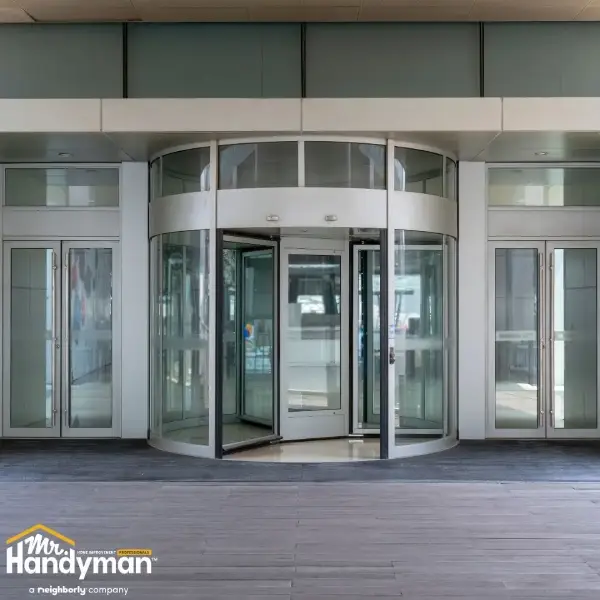
Small post-holiday repairs are easy to postpone, but delays often lead to bigger problems.
Addressing common office repairs needed after holiday downtime helps:
- Prevent safety incidents
- Improve employee morale
- Maintain a professional appearance
- Reduce emergency repair costs
- Support smoother operations
Early action keeps minor issues from becoming disruptive repairs later.
Post-Holiday Maintenance Sets the Tone for the Year
The start of the year is an opportunity to reset standards. Offices that address repairs immediately demonstrate commitment to safety, efficiency, and professionalism.
Common office repairs needed after holiday downtime are not signs of neglect. They are a normal result of how buildings behave during closures. The key is responding promptly and proactively.
Operational Areas Most Affected by Holiday Downtime
Once offices reopen, certain areas consistently show the most wear or failure after a period of reduced use. Understanding where problems tend to surface helps businesses address repairs efficiently instead of reacting piecemeal. Many common office repairs needed after holiday downtime are predictable and preventable when these operational zones are reviewed early.
Entryways and Common Areas Take the Hardest Hit
Entry points and shared spaces absorb the transition from low activity to full occupancy almost immediately. Winter weather compounds this stress.
Common Post-Holiday Issues in Shared Spaces
- Loose or damaged entry mats
- Worn flooring near doors
- Scuffed walls and corners
- Door closers that fail under increased use
- Drafts caused by worn seals
Because these areas shape first impressions, addressing them quickly restores professionalism and reduces safety risk.
Conference Rooms and Meeting Spaces Reveal Deferred Issues
Conference rooms often sit unused during holiday downtime, then return to heavy use in January. This sudden change exposes problems that were easy to overlook.
Typical Repairs Needed in Meeting Areas
- Loose tables or chairs
- Malfunctioning doors or locks
- Poor lighting or flickering fixtures
- Damaged wall surfaces from equipment movement
- Power or data access issues at tables
Functional meeting spaces are critical for productivity. Small repairs here prevent disruptions during client meetings and internal collaboration.
Workstations and Cubicle Systems Shift Out of Alignment
Office furniture and modular workstations expand and contract with temperature changes. When buildings sit partially heated or unused, alignment issues develop.
Common Cubicle and Workstation Repairs
- Panels that loosen or separate
- Shelving that shifts or sags
- Drawer slides that bind
- Cable management components that fail
These issues may seem minor, but they affect ergonomics, workflow, and employee comfort once work resumes.
Break Rooms and Kitchenettes Show Wear Quickly
Break areas often experience heavy use before and after holiday closures. When reopened, plumbing and appliance related issues frequently surface.
Post-Holiday Break Room Repairs
- Leaking faucets or supply lines
- Loose sinks or countertops
- Cabinet doors that no longer close properly
- Damaged flooring near sinks or appliances
- Poor ventilation leading to odors or moisture
Break room repairs support hygiene and morale while preventing water damage from spreading unnoticed.
Restrooms Experience Delayed Failure After Inactivity
Plumbing systems do not benefit from sitting idle. Once restrooms return to full use, problems emerge quickly.
Restroom Repairs Common After Downtime
- Toilets that run or fail to flush properly
- Loose partitions or accessories
- Leaks around fixtures
- Slow drains from sediment buildup
- Ventilation fans that no longer operate effectively
Restroom issues affect employee satisfaction and can escalate into water damage if ignored.
Lighting and Electrical Components Struggle After Power Cycling
Lighting systems that are powered down or minimally used during holidays often fail shortly after reopening.
Electrical Repairs Seen After Downtime
- Burned out bulbs and ballasts
- Fixtures that flicker under full load
- Loose outlet covers
- Switches that fail after extended inactivity
Addressing these issues early improves safety and reduces strain on electrical systems.
Storage Rooms and File Areas Develop Hidden Problems
Storage and file rooms are often overlooked during closures. Moisture, shifting loads, and reduced airflow create conditions for damage.
Common Storage Area Repairs
- Shelving that loosens or pulls from walls
- Damaged ceiling tiles
- Poor lighting creating safety risks
- Obstructed access to panels or exits
Fixing these issues improves safety and makes future maintenance easier.
Interior Glass and Partitions Need Review
Interior glass walls, doors, and partitions can crack or loosen due to temperature fluctuations during downtime.
Post-Holiday Glass and Partition Issues
- Loose mounting hardware
- Cracked or fogged glass
- Misaligned sliding doors
- Worn seals reducing acoustic performance
These repairs preserve privacy, safety, and professional appearance.
Why Targeted Repairs Are More Effective Than General Fixes
Focusing on high impact areas allows businesses to restore functionality quickly without disrupting operations. Many common office repairs needed after holiday downtime share the same root causes, including inactivity, temperature shifts, and deferred attention.
Addressing these issues systematically prevents repeat service calls and creates a smoother transition back to full productivity.
ongoing care.
Why the Same Office Issues Reappear Year After Year
Many post-holiday repairs are not random. They are the result of predictable conditions combined with deferred maintenance.
Common Causes of Repeat Post-Holiday Repairs
- Inconsistent temperature control during closures
- Lack of walkthrough inspections before reopening
- Deferred minor repairs before holidays
- Infrequent use of plumbing and doors
- Reduced cleaning and monitoring schedules
When these patterns are not addressed, the same problems surface every January.
Create a Pre-Reopening Office Inspection Process
One of the most effective ways to reduce post-holiday repairs is conducting a structured inspection before staff return.
Key Areas to Inspect Before Reopening
- Doors, hardware, and access points
- Flooring and entry transitions
- Restrooms and plumbing fixtures
- Lighting and electrical components
- Break rooms and shared spaces
Catching issues early allows repairs to be scheduled proactively rather than disrupting the first weeks back.
Adjust Building Settings During Downtime
How a building is managed during holiday closures directly affects repair needs afterward.
Smart Downtime Adjustments
- Maintain consistent baseline temperatures
- Ensure minimal ventilation continues
- Run plumbing fixtures periodically
- Keep lighting schedules appropriate for safety
These steps reduce stress on materials and systems, lowering the likelihood of failures once operations resume.
Use Post-Holiday Repairs to Improve Preventative Maintenance
Every repair completed after downtime provides useful data. Patterns reveal where preventative maintenance should be focused.
Questions to Ask After Repairs Are Made
- Has this issue occurred before
- Was it worsened by inactivity
- Could it have been prevented
- Does it affect safety or productivity
Using repairs as feedback improves maintenance planning and reduces future costs.
Schedule Early-Year Maintenance Instead of Reactive Fixes
January is an ideal time to bundle repairs and preventative work. Addressing multiple issues together is more efficient than repeated service calls.
Benefits of Early-Year Maintenance Scheduling
- Reduced labor costs
- Fewer operational disruptions
- Improved consistency across spaces
- Better budget control
Grouping repairs also allows offices to start the year with fully functional, safe environments.
Communicate Maintenance Standards to Staff
Employees play an important role in identifying issues early. Clear communication improves response time.
What Employees Should Be Encouraged to Report
- Doors that do not operate smoothly
- Lighting that flickers or fails
- Flooring issues or trip hazards
- Plumbing leaks or unusual noises
Early reporting prevents minor issues from becoming major repairs.
Balance Appearance, Safety, and Function
Post-holiday repairs often focus on what is most visible, but function and safety should remain the priority.
Repair Priorities That Deliver the Most Value
- Safety related issues first
- Functional disruptions second
- Cosmetic repairs third
This balance ensures resources are used effectively while maintaining professionalism.
Post-Holiday Maintenance Sets the Tone for the Year
How an office responds after holiday downtime sends a message. Prompt repairs demonstrate care for employees, attention to safety, and commitment to smooth operations.
Common office repairs needed after holiday downtime are normal. Repeating them every year is not necessary. Using these repairs as a roadmap for preventative maintenance creates stronger, more reliable workplaces.
Get Help Addressing Post-Holiday Office Repairs the Right Way
If your office is dealing with repairs after holiday downtime or you want to prevent the same issues next year, Mr. Handyman of Montgomery County and Martinsburg can help. Our experienced team provides dependable commercial maintenance and repair services designed to keep offices safe, functional, and professional.
Call to schedule service and start the year with an office that is fully ready for productivity.