Most grab bar failures happen not because the bar was the wrong product, but because it was anchored into tile and drywall without reaching structural framing behind it. Grab bar installation that actually prevents falls requires anchoring into wall studs, blocking, or rated structural anchors, and placing bars where the body transitions between positions rather than where they happen to look right. At Mr. Handyman serving Citrus Park and Keystone, our team handles bathroom grab bar installation and replacement services for homes throughout Hillsborough County. Here's what this guide covers:
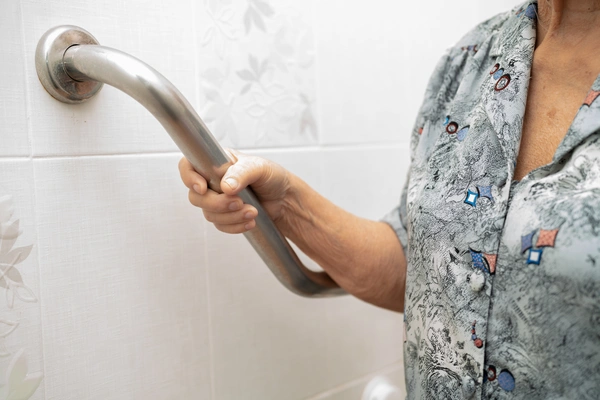
- Why the bathroom is statistically the most dangerous room in the house for fall injuries
- The specific placement positions that address how falls actually happen
- What structural anchoring involves and why it's non-negotiable
- How to handle installations where no stud is in the right location
- What separates professional grab bar installation from a DIY bar kit
The Numbers Behind Bathroom Fall Risk
The case for grab bars isn't theoretical. A CDC analysis of nationally representative emergency department data found that bathroom injuries generated an estimated 234,094 emergency room visits in a single year among adults, with more than four out of every five caused by falls. The tub and shower were responsible for the largest share of those injuries, with toilet-related falls increasing sharply with age. Despite this, the same dataset noted that only 19% of U.S. homes had grab bars in place.
For homeowners in Citrus Park, Keystone, Odessa, and Westchase, where a significant portion of the population includes adults planning to age in place, this gap matters directly. A bathroom without properly anchored horizontal grab bars at the tub, shower, and toilet carries meaningful daily risk for every household member, not only older adults. Installing grab bars in the right locations, anchored correctly, is one of the most straightforward fall prevention investments a homeowner can make.
6 Grab Bar Placement Positions That Match How Falls Happen
Bar placement follows the body's movement through the bathroom at the moments of highest instability. Each position serves a specific mechanical function. Here's where bars belong and why.
1. Horizontal Bar Inside the Tub
A horizontal grab bar mounted at 33–36 inches from the floor and running the length of the tub provides a steady handhold during bathing, standing, and repositioning. This is the most commonly requested bar and the one most frequently installed in the wrong location, whether too high, too short, or on the wall farthest from where the user actually stands. The bar should run along the wall the bather faces or stands closest to, long enough to grip at any point along the tub length.
- Height: 33–36 inches from floor
- Length: Minimum 24 inches; longer is better for grip flexibility
- Position: On the primary bathing wall, not the far end
2. Vertical Bar at the Tub or Shower Entry
A vertical or angled bar at the entry point addresses the step-over or step-in transition, which is where the highest proportion of tub and shower injuries occur. This bar is separate from the horizontal bar inside the tub and positioned specifically for the moment when one foot is on the bathroom floor and the other is crossing the threshold. The ideal location for this bar is on the wall directly beside the entry, at a height where the user can grip it before committing to the step.
- Position: On the wall beside the tub or shower opening
- Height: 32–38 inches for most adults
- Orientation: Vertical or 45-degree angle based on wall space
3. Bars at the Toilet
Toilet-related falls account for a disproportionate share of bathroom injuries in adults over 65, primarily during the seated-to-standing transition. A bar on the side wall at 33–36 inches from the floor and 6–8 inches forward of the toilet seat supports independent rising. When both side walls are accessible, bilateral bars provide the most stable support and accommodate users with one-sided weakness.
- Side wall bar: 33–36 inches height, 42 inches minimum length
- Back wall bar: 33–36 inches height, 36 inches minimum length
- Bilateral installation: Recommended when layout allows
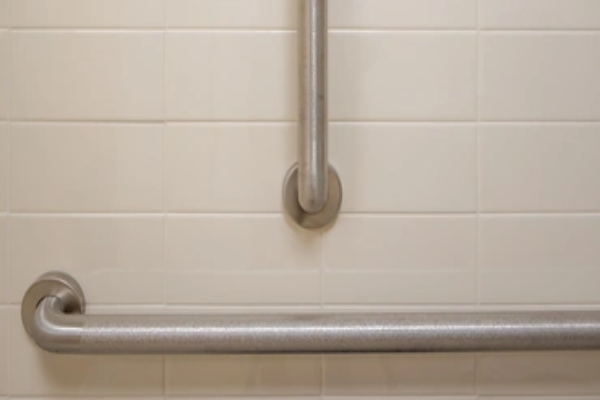
4. Horizontal Grab Bars in the Walk-In Shower
Walk-in showers and tiled shower stalls benefit from at least two bars: one horizontal bar along the primary bathing wall for balance during showering, and a second bar at the entry for the step-in transition. In larger showers, a third horizontal bar on the back wall gives the user a handhold when positioned away from the entry. Identifying the ideal location for each bar requires knowing the user's height, how they move through the shower, and where the studs or blocking are positioned behind the tile.
- Primary wall bar: 33–36 inches, minimum 36 inches long
- Back wall bar: 33–36 inches, minimum 36 inches long
- Entry bar: Vertical, 16–18 inches, at threshold height
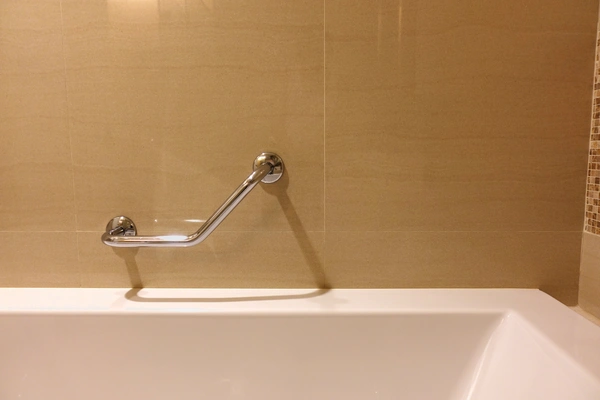
5. Angled Bar for Seated Bathing
For users who bathe from a seated position on a shower bench or tub transfer bench, an angled bar at 45 degrees provides support for the transition between sitting and standing that a purely horizontal or vertical bar doesn't replicate as effectively. This bar is particularly relevant for post-surgical recovery, users with limited lower-body strength, and older adults with balance deficits.
- Angle: 45 degrees
- Height range: Spans roughly 28–38 inches from floor
- Position: On the wall adjacent to the bench location
6. Near the Vanity
A horizontal bar on the side wall adjacent to the vanity addresses the balance challenges of extended standing at the sink, particularly relevant for users who experience dizziness, fatigue, or postural instability during grooming tasks. This bar is less common but adds meaningful support for users whose bathroom risk isn't limited to the tub or shower.
- Height: 33–36 inches, matching other bars
- Length: 18–24 inches
- Placement: Side wall beside the vanity, not on the cabinet itself
Why the Anchoring Is the Critical Variable
A grab bar anchored only into tile and drywall will hold under casual hand pressure and fail under dynamic load. When a person loses balance and grabs a bar, the force applied far exceeds their body weight due to momentum. The anchoring method determines whether the bar holds.
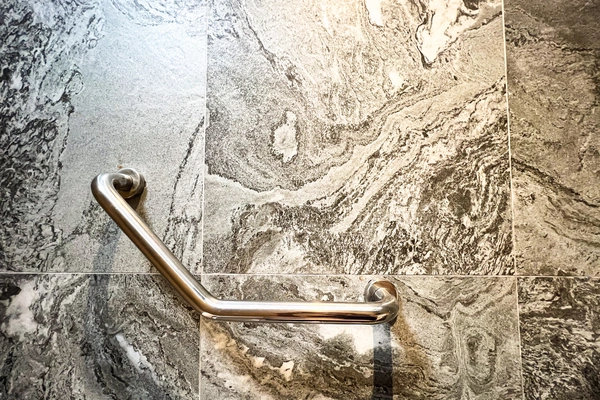
Into Wall Studs
The preferred approach. Stud locations are typically 16 or 24 inches on center. When the ideal bar placement aligns with a stud, stainless steel screws driven through the mounting plate into framing provide a reliable, corrosion-resistant connection. Drilling pilot holes through tile before driving fasteners prevents tile cracking and keeps screws aligned correctly.
Into Blocking
When studs don't fall in the right place, blocking solves the problem. A horizontal piece of lumber is installed between studs at the correct height from the opposite side of the wall, giving the mounting plate a full-width anchoring surface. This is the right solution when the ideal location for a bar doesn't align with framing.
Into Heavy-Duty Toggle Bolts or Specialized Anchors
When neither studs nor blocking are available, heavy-duty toggle bolts or specialized wall anchors rated for the specific wall assembly are the correct approach. Standard drywall anchors are not adequate for grab bar loads. Properly specified toggle bolts expand behind the wall surface to distribute force and are acceptable for supplemental bars when installed to the rated assembly.
Using a hammer drill and the correct drill bit for the wall material, with diamond or carbide for tile and standard twist bits for drywall or cement board, makes drilling pilot holes clean and precise without cracking surrounding tile. In wet areas, silicone caulk applied around mounting flanges after installation seals the penetration against water intrusion and protects the anchor points long-term.
Suction-cup grab bars are not a substitute for permanent installation. They are temporary positioning aids and are not rated to support full body weight under load.
What Professional Grab Bar Installation Covers
| Step | What Happens |
| User assessment | Bar locations are confirmed based on user height, movement patterns, and specific bathroom layout |
| Stud mapping | Wall framing is located at each proposed bar position before any drilling begins |
| Blocking installation | Where studs don't align, blocking is added from the opposite wall face before bar mounting |
| Tile drilling | Diamond or carbide drill bit and hammer drill used to drill pilot holes cleanly through tile |
| Bar mounting | Bars set level, fastened with stainless steel screws or rated anchors, tested under load |
| Sealing | Silicone caulk applied around all mounting flanges in wet areas before job is complete |
| Load confirmation | Every installed bar is load-tested before the job is signed off |
We're proud to serve home and business owners in Odessa, FL, and nearby communities including Citrus Park, Keystone, Westchase, Carrollwood, Tampa, and beyond with grab bar installation and aging in place modifications.
Frequently Asked Questions About Grab Bar Installation
Homeowners across Citrus Park, Keystone, Odessa, and Westchase ask these questions most often when planning a grab bar installation.
How many grab bars does a typical bathroom need?
A standard bathroom setup for aging in place typically includes three to five bars: one or two at the tub or shower, one at the tub or shower entry, and one or two at the toilet. Walk-in showers may add a back wall bar for a total of five or six. The right number depends on the bathroom layout and the user's specific movement patterns and risk areas.
What's the difference between a grab bar and a towel bar?
Towel bars are mounted for light loads and typically anchor into drywall or tile alone. They will pull free under any meaningful weight. Grab bars are rated to ADA standards requiring a minimum 250-pound static load capacity, are mounted with stainless steel screws into structural framing or rated anchors, and are designed specifically to support body weight under dynamic conditions. Using a towel bar as a grab bar is a documented cause of bathroom fall injuries.
Can grab bars be installed in a rental property?
Yes, with the landlord's permission. Many landlords in Florida approve grab bar installation when presented with a clear scope, since properly installed bars add to the property's accessibility value. Blocking installation requires wall access, but when studs align with the needed bar locations, installation can be completed with minimal disruption to the wall surface.
Do grab bars have to match existing bathroom fixtures?
Function comes before finish, but matching is achievable. Grab bars are available in brushed nickel, polished chrome, oil-rubbed bronze, and matte black to match most fixture lines. ADA-compliant bars have a 1.25–1.5 inch diameter, which is the grip range that allows secure contact without the hand fully closing around the bar. Finish selection doesn't affect load rating or anchoring requirements.
Get Your Citrus Park or Keystone Bathroom Properly Set Up
A grab bar system that's placed correctly and anchored into the structure provides daily fall protection for every member of the household. Mr. Handyman serving Citrus Park and Keystone installs grab bars to ADA placement standards with structural anchoring on every job, backed by upfront pricing and the Neighborly Done Right Promise.
Schedule your grab bar installation today and get your bathroom set up to actually prevent falls.