
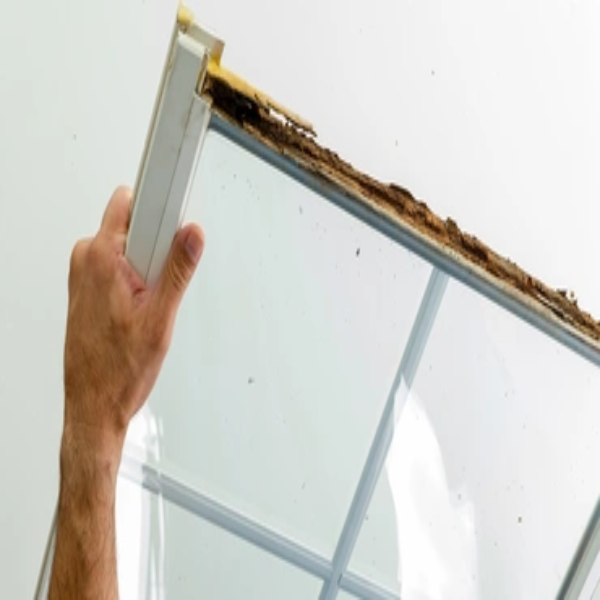
Rotten wood around windows is one of those problems that looks manageable from the outside and turns out to be significantly worse once a professional gets into it. Left unaddressed, surface rot and rotted wood cause further damage to the rough framing, siding, and interior wall behind it. Wood rot window repair handled at the right stage keeps costs contained and preserves the structural integrity of the surrounding wall. Waiting until the damage is obvious often means the rot has already moved past the trim and into the rough framing behind it. At Mr. Handyman serving Citrus Park and Keystone, our team handles carpentry and wood rot repairs for windows, sills, and exterior woodwork throughout Hillsborough County. Here's what this guide covers:
- Why Tampa-area homes lose window frames to rot faster than most homeowners expect
- The specific warning signs that indicate rot at each stage of progression
- When wood epoxy repair is the right call and when it isn't
- How to evaluate rotten window frames for partial vs. full replacement
- What a proper professional window repair sequence looks like
Why Citrus Park and Keystone Homes Are Especially Vulnerable
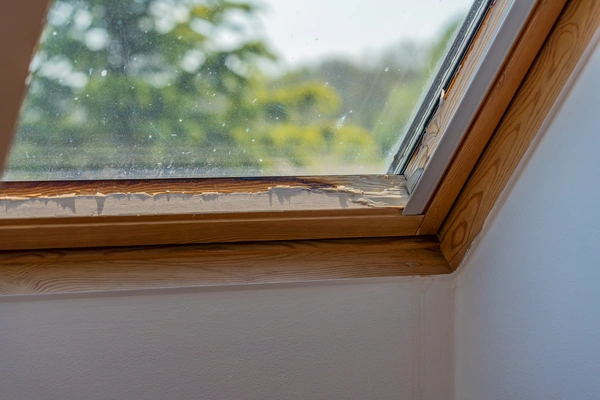
Hillsborough County's climate delivers the exact combination of conditions that wood decay fungi need to establish and spread: sustained heat, high humidity, frequent rain, and limited drying time between events. Wooden window frames in older homes throughout Citrus Park, Keystone, Northdale, and Westchase face these conditions year-round, and the ones with aging caulk, cracked paint, or failed glazing seals are particularly exposed. Wood rot can also be caused by infestations of wood-destroying insects, and exposure to acidic substances like certain wood treatments, fertilizers, or runoff from metal flashings can break down wood fiber over time, making it more susceptible to decay fungi taking hold.
USDA Forest Products Laboratory research establishes that decay fungi become active at wood moisture levels as low as 25%, with full decay progression above 30% moisture content. In Hillsborough County, where outdoor relative humidity regularly exceeds 80% for months at a stretch and afternoon storms drop inches of rain in minutes, exterior wood window frames can reach and hold those moisture thresholds through much of the rainy season. Wood naturally transfers moisture through its grain, and in original wood windows with compromised seals, that process moves decay inward quickly and silently.
The most vulnerable locations around a typical window include:
- The sill and sill plate, where standing water collects after rain
- Bottom corners of the frame, where caulk separates under UV exposure
- Exterior window trim and casing where it overlaps the siding
- The rough framing inside the wall around the opening, which stays wet long after the surface dries
7 Warning Signs of Rotten Window Frames to Check This Season
Hillsborough County's storm season is the period when existing rot accelerates fastest. Checking these signs before and after major rain events helps homeowners catch damage while wood epoxy repair is still a viable option.
1. Wood That Gives Under Finger Pressure
Sound wood is firm. Rotten wood compresses when pressed with a thumb or probed with a screwdriver, particularly at the sill and lower frame corners. Soft spots that feel dry to the touch on the surface can still indicate active decay several layers deep.
2. Paint Peeling or Lifting From the Frame
Paint separates from the substrate when moisture is moving through the wood beneath it. Bubbling or peeling paint on a wooden window frame is an early indicator of water infiltration, even if the wood underneath still looks intact. It's one of the first visible signs that the wood is absorbing more moisture than it can shed.
3. Dark Staining or Discoloration on the Sill
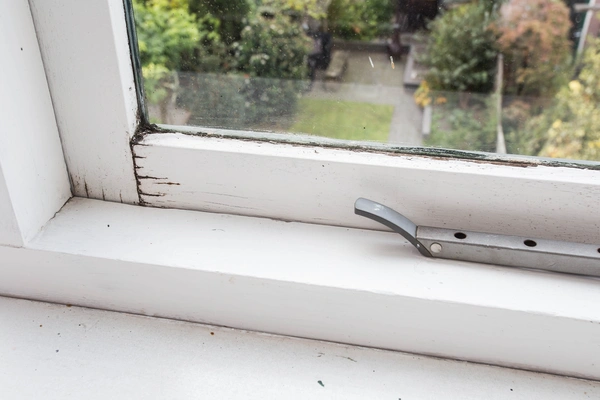
Brown or black staining at the window sill or lower casing indicates fungal activity or prolonged moisture contact. Staining that runs down the siding below the window signals water is exiting the frame through a compromised joint and pooling in the wall cavity below.
4. Gaps in Caulk at Corners or Along the Frame Edge
A gap as small as 1/8 inch between the window casing and the siding is enough for wind-driven rain to push water directly into the old wood beneath. Florida's storm season drives rain horizontally at speeds that defeat even minor caulk failures. Recaulking before gaps appear is maintenance. Recaulking after rot has started is a temporary fix on top of an active problem.
5. Visible Checking or Surface Cracking of the Frame
UV degradation on south and west-facing windows breaks down the surface of old wood quickly. When the protective surface layer cracks or checks, moisture enters freely and drying becomes much slower. This is particularly common in older homes with original wood windows that haven't been repainted on a regular cycle.
6. Window That Sticks, Drags, or Won't Seal
A lower sash that no longer seats correctly in the frame can indicate swelling from moisture absorption in the surrounding wood. This is often the first functional symptom that homeowners notice before visible rot becomes apparent on the exterior.
7. Soft Exterior Trim or Decorative Elements Adjacent to the Window
Wood rot spreads laterally through connected trim members. Window trim, decorative elements around the frame, and any casing that ties into the siding should be checked alongside the frame itself. Rot that originates at the window corner can travel along the window trim and into the wall cladding before it becomes visible at the original failure point.
Repair vs. Replacement: Matching the Method to the Damage
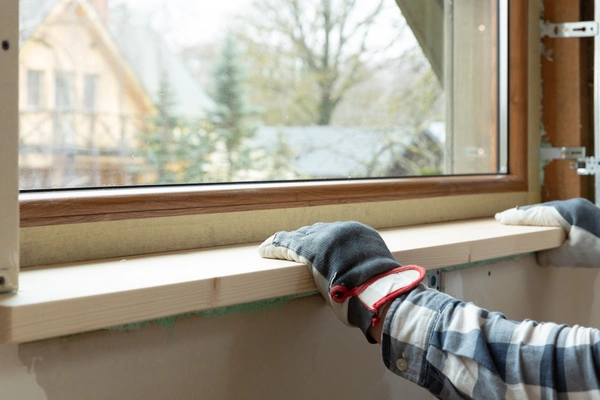
The right approach to rotten window frames depends entirely on how far the decay has progressed. Using wood epoxy on rot that has reached the rough framing wastes time and money. Replacing an entire window when epoxy would have held adds unnecessary cost. A quick answer for most homeowners: repairing wooden windows costs roughly 90% less than full replacement, and if you're planning to sell your house soon, repair is often the better choice over new window installation since buyers see maintained original windows as a sign of diligent upkeep. The assessment determines the method.
| Damage Level | Condition | Right Approach |
|---|---|---|
| Early stage | Surface softness, paint failure, less than 1/4 inch penetration | Wood epoxy consolidation and filler |
| Moderate | Rot through the casing or sill section, contained to trim | Partial section replacement |
| Advanced | Full frame depth compromised, sill plate or rough framing affected | Full frame or whole window replacement |
Wood Epoxy Repair
Wood epoxy is the right tool when rot is caught before it has penetrated deeply into the wood fiber. Before any repair product is applied, wood must be thoroughly dry. A heat gun is useful for accelerating moisture removal from the damaged area in Florida's humid conditions, where wood that looks surface-dry can still hold moisture beneath the paint film. Applying epoxy to wet wood traps moisture inside the repair and leads to failure. Once dry, apply a wood hardener first to strengthen remaining timber and give the filler a solid, stable base. For small repairs and filling shallow voids, a two-part epoxy wood filler is the standard professional approach. It bonds to the hardened timber, shapes to the original profile, and sands smooth before paint. Sealing the completed repair with exterior-grade caulk at all joints prevents water intrusion from restarting the decay cycle. The repaired woodwork holds up well in Florida's outdoor conditions and preserves the natural beauty of the original frame. Considering that repairing wooden windows can cost over $23,000 on average when full replacement becomes necessary, catching rot at the epoxy-repair stage is one of the most cost-effective decisions a homeowner can make.
Partial Section Replacement
When rot has moved past what epoxy can address but is confined to a section of the casing, sill edge, or window trim, removing the compromised section and splicing in new material is the right call. The rotted portion is cut back to sound timber; new lumber or composite material is scarf-jointed in, back-primed on all surfaces before installation, and finished to match. All joints are sealed with exterior-grade caulk to prevent water intrusion at the splice. This avoids the cost of pulling the entire window while delivering a repair that won't fail at the joint.
Full Frame or Whole Window Replacement
When the entire frame depth is compromised, the sill plate has softened, or rot has moved into the rough framing inside the wall, a full replacement is the only repair that holds. Trying to epoxy or patch a frame that is structurally unsound creates a window that looks repaired but will continue to fail. Full replacement involves removing the whole window unit, cutting back affected framing, treating adjacent wood with borate preservative, and completing the installation of new windows with proper glass, flashing, and weatherstripping. Doors adjacent to rotten window frames should be checked at the same time, as shared framing members can carry decay between openings. Our team evaluates the rough framing condition during removal and addresses any structural damage before the new unit goes in.
What Professional Wood Rot Window Repair Includes
A proper professional window repair sequence follows these steps regardless of which repair method applies.
| Step | What Happens |
|---|---|
| Full assessment | All wood around the window is probed to map the extent of rot before any repair plan is set |
| Moisture source identification | The entry point for water is confirmed and addressed before repair begins |
| Material removal | All rotten wood is cut back to sound material, and no repair goes over active decay |
| Preservative treatment | Borate-based preservative is applied to adjacent sound wood to inhibit future fungal growth |
| Repair execution | Epoxy consolidation, section replacement, or full frame replacement based on damage level |
| Sealing and priming | All surfaces are back-primed and all joints caulked before any finish work |
| Paint-ready finish | Repaired areas are sanded, primed, and ready for topcoat |
We're proud to serve home and business owners in Odessa, FL, and nearby communities including Citrus Park, Keystone, Westchase, Carrollwood, Tampa, and beyond with wood rot repair, carpentry, and window services.
Frequently Asked Questions About Wood Rot Window Repair
Homeowners across Citrus Park, Keystone, Odessa, and Westchase ask these questions most often when they discover rot around their windows and are deciding what to do.
Is wood epoxy a permanent fix for window rot?
When applied correctly to early-stage rot that hasn't penetrated deeply, wood epoxy repair is durable and long-lasting in Florida's outdoor conditions. It is not a fix for rot that has compromised the wood's structural integrity or reached the rough framing. A proper assessment before applying epoxy is what determines whether the repair will hold.
How do I know if the rough framing around my window is affected?
Surface symptoms like severe sill softness, rot visible along the interior window casing, or a window that has shifted or dropped in the opening all suggest the rough framing may be involved. Our team probes the framing through the exterior opening during assessment to confirm before committing to a repair approach.
Can I replace just the sill without replacing the whole window?
Yes, in many cases. When rot is confined to the sill and hasn't moved into the jack studs or rough sill below, the sill can be replaced independently. This is a partial section replacement and is less disruptive and less expensive than pulling the entire window unit.
How do I prevent window frame rot from coming back after repair?
The most effective prevention is keeping all caulk joints sealed, the paint film intact, and the sill free of debris that holds moisture against the wood. Repainting exterior wood windows every five to seven years in Florida's climate, recaulking at the first sign of gaps, and having a professional assessment before and after storm season are the most reliable ways to stay ahead of rot before it requires significant repair.
Schedule Your Wood Rot Assessment
Rot around windows in Citrus Park and Keystone homes rarely stays contained on its own. Each rainy season it isn't addressed, the damage moves deeper into the frame and the surrounding structure. Mr. Handyman serving Citrus Park and Keystone assesses the full extent of window rot, identifies where water is getting in, and recommends the repair that matches the actual condition of the wood. Every job is backed by the Neighborly Done Right Promise.
Schedule your wood rot assessment today before the next storm season extends the damage further.