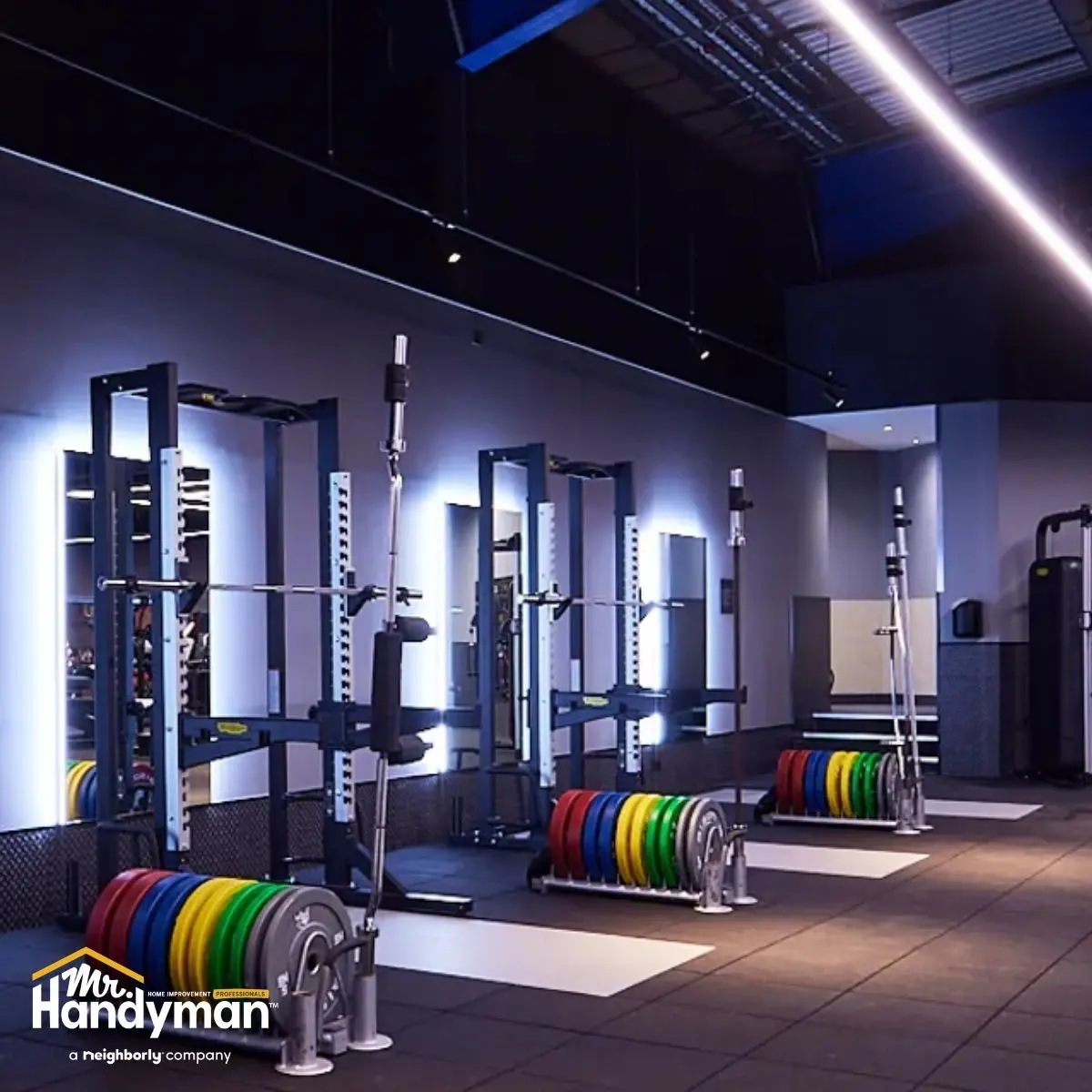
Gym mirrors serve a purpose that goes far beyond vanity. They're essential tools for form correction, spatial awareness, and injury prevention during exercise. A lifter checking their squat depth in the mirror isn't admiring their reflection—they're monitoring hip and knee alignment to avoid injuries that develop from poor mechanics. A yoga instructor watching their class in the mirror can spot students struggling with poses before those students realize they need help. Mirrors allow trainers to observe clients from multiple angles simultaneously without constantly circling the room. These aren't decorative accessories. They're functional equipment that directly impacts workout quality and safety.
The problem is that most people drastically underestimate what's required to mount large mirrors safely in a gym environment. A typical residential bathroom mirror might measure three feet by four feet and hang on a standard wall with basic hardware. Gym mirrors are often eight feet tall, span entire walls, and need to remain secure despite constant vibration from dropped weights, the impact of medicine balls hitting nearby walls, and the structural stress that comes with heavy equipment and high-intensity training. These mirrors aren't just heavy—they're heavy, fragile, and mounted in environments where failure means serious injury.
Buildings throughout Northern Indiana that house gyms present additional challenges. Older commercial structures often have plaster walls over wood lath rather than modern drywall over studs. Concrete block walls in industrial conversions may look solid but have inconsistent internal structure that makes anchor placement tricky. Retail spaces converted into fitness studios might have metal studs instead of wood, which requires completely different mounting hardware and techniques. Understanding what's behind the wall surface isn't optional information—it's the difference between a mirror that stays mounted for decades and one that eventually pulls away from the wall under its own weight.
Why Gym Mirror Failures Happen
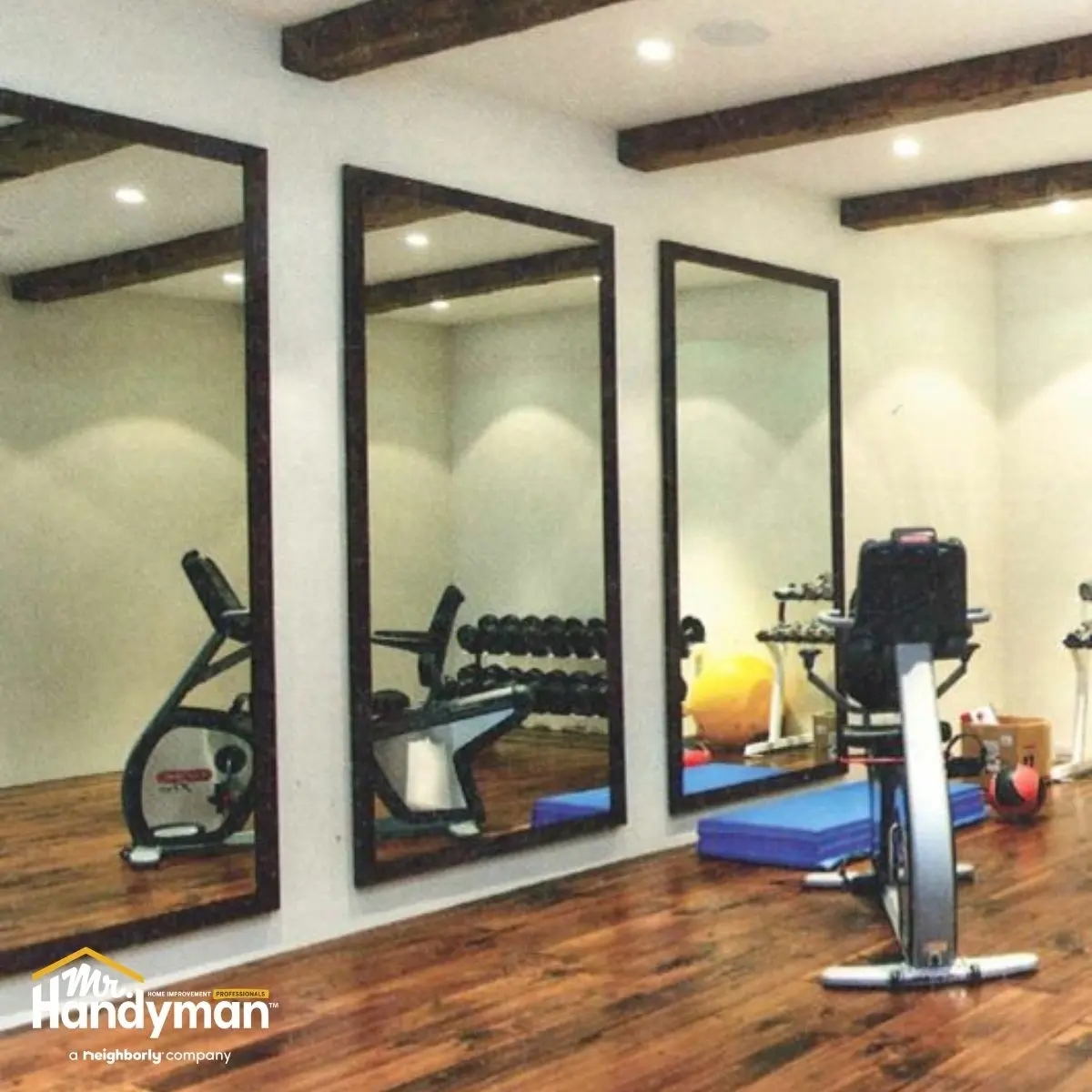
Mirror failures in gym settings follow predictable patterns, and almost all of them trace back to installation shortcuts or a fundamental misunderstanding of the forces involved.
The most common failure mode is inadequate anchoring into wall studs. Many installers treat gym mirrors like they're hanging picture frames, using a few anchors spaced along the top edge and calling it sufficient. This approach ignores the reality that an eight-foot by four-foot mirror weighs between 80 and 120 pounds, depending on thickness. When that weight hangs from just a few points along the top, each anchor bears an enormous load. Over time, the constant stress causes anchors to loosen, particularly in older buildings where wood studs have dried out and become less dense, or where drywall has degraded from decades of moisture cycling.
Using the wrong mounting hardware for the wall type causes failures that often don't show up immediately. Drywall anchors rated for 50 pounds in perfect laboratory conditions perform far worse in real-world gym environments where vibration and impact are constant. Toggle bolts that work well in standard drywall can spin uselessly in plaster walls where the material behind the surface layer is too soft to provide resistance. Concrete anchors driven into block walls sometimes hit hollow voids rather than solid material, leaving the anchor with almost no holding power. The mirror might stay up for months or even a year, but eventually the inadequate anchors fail.
Improper mirror spacing from the wall creates leverage that accelerates failure. Mirrors need a small gap behind them for air circulation and to prevent moisture accumulation, but if installers use overly long standoffs or spacers, they create a lever arm that multiplies the stress on mounting hardware. The farther the mirror stands off from the wall, the more it can shift and vibrate with building movement or nearby impacts. This movement slowly works mounting hardware loose, even if the hardware was initially appropriate for the wall type and load.
Ignoring building movement and vibration is a critical mistake in gym environments. Every time a loaded barbell hits a lifting platform, vibration travels through the floor and into the walls. Medicine balls slammed against walls, plyometric box jumps near mirrored walls, and the constant impact of cardio equipment all create vibration that standard residential mirrors never experience. Buildings themselves shift with temperature changes, foundation settlement, and wind load. Older structures with wooden framing experience more movement than newer buildings with steel frames. If mirror mounting doesn't account for this movement, the hardware gradually loosens and fails.
Moisture problems accelerate mounting hardware deterioration in ways most people don't consider. Gyms generate enormous amounts of moisture from sweat, showers, and wet cleaning. This moisture doesn't just stay in the air—it condenses on cool surfaces, seeps into wall cavities, and corrodes metal hardware. In older buildings with poor vapor barriers, moisture migrates through walls and concentrates behind mirrors where air circulation is limited. Rust and corrosion weaken mounting brackets, screws, and anchors. Steel hardware in particular degrades quickly in high-moisture environments unless it's specifically treated or made from stainless steel.
The mirror itself can contribute to failure if it's not the right type for the application. Standard residential mirrors are often 1/4 inch thick, which is inadequate for large gym installations. The mirror flexes under its own weight when mounted on a wall, which stresses both the mirror and the mounting hardware. Gym mirrors should be 3/8 inch thick at minimum, with 1/2 inch being ideal for installations over six feet tall. Thinner mirrors not only flex more but are also more prone to cracking from the vibration and impact inherent in gym environments.
The Real Dangers of Failed Mirror Mounting
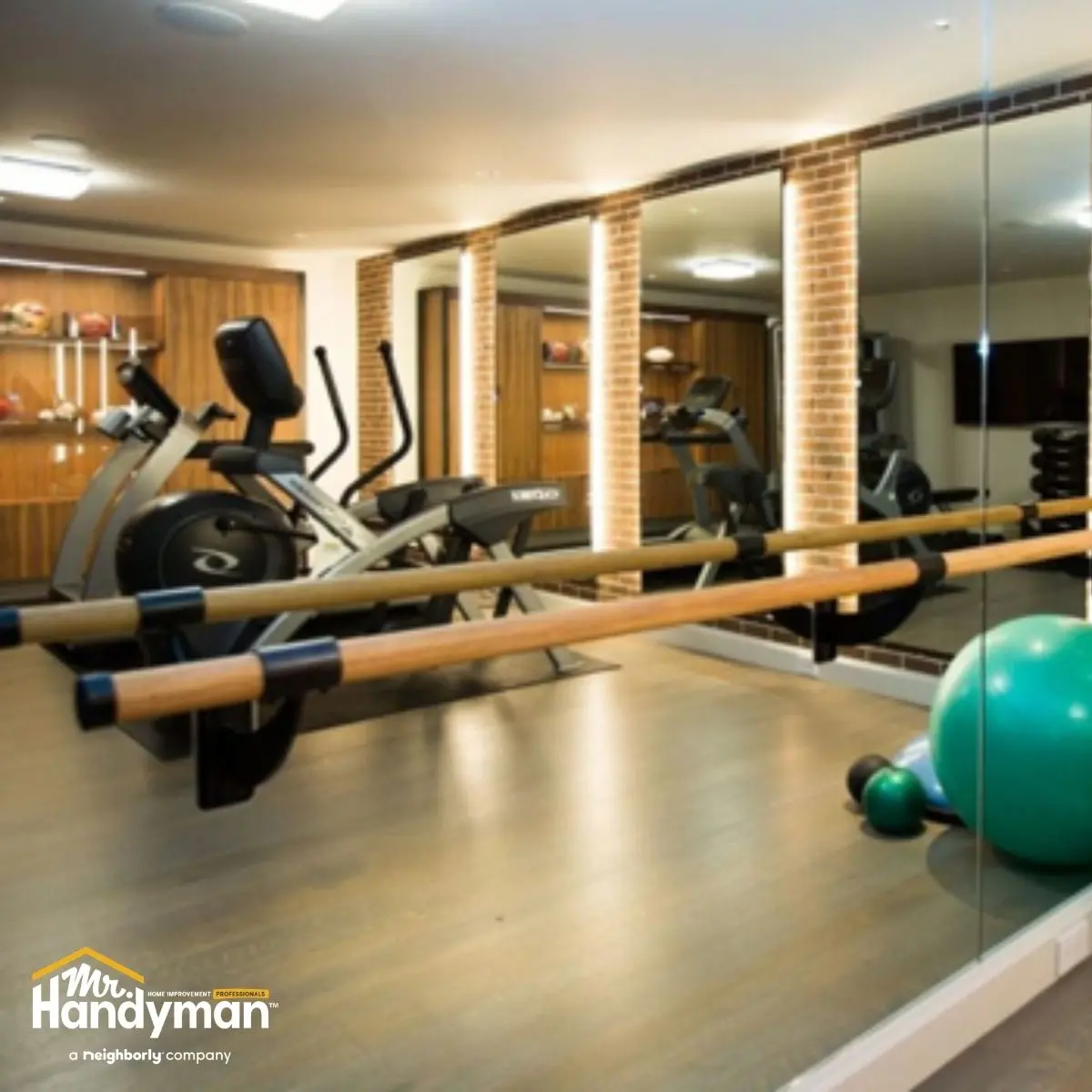
When a gym mirror fails, the consequences range from property damage to life-threatening injuries. Unlike a dropped picture frame, a falling mirror weighing 100 pounds is a catastrophic event.
The immediate danger is obvious: a large sheet of glass falling on someone causes severe lacerations, broken bones, and potentially fatal injuries. Gyms are crowded environments where people work out close to walls, lean against mirrored surfaces to stretch, or stand near them to check form. Group fitness classes often position participants in rows facing mirrors, which means a failure could injure multiple people simultaneously. The falling mirror doesn't just drop straight down—it often tilts forward as it falls, extending its impact zone several feet into the room.
Partial failures create ongoing hazards that are harder to recognize. A mirror that's starting to separate from the wall but hasn't completely failed yet sits in a dangerous intermediate state. It might appear fine from a distance but shift when someone leans against it or when nearby vibration hits at the wrong angle. This kind of unstable mounting is particularly dangerous because it fails unpredictably. One day the mirror stays put, the next day someone's hand on the surface to check stability causes it to give way completely.
Shattered glass from a failed mirror doesn't break cleanly. Modern safety mirrors use tempered glass that shatters into small, relatively less dangerous pieces, but older installations and budget mirrors use standard annealed glass that breaks into large, razor-sharp shards. These shards don't just fall where the mirror lands—they scatter across the floor, embed in nearby equipment, and create a hazard field that can shut down an entire gym area for hours. In a commercial facility, this isn't just a safety issue, it's a business disruption that affects member satisfaction and revenue.
The liability implications of a mirror failure are severe. Gym owners and facility managers have a legal duty to maintain safe environments. A mirror that falls because of improper installation or deferred maintenance represents clear negligence. Insurance may not cover injuries resulting from known hazards that weren't addressed, and even when coverage applies, claims drive up premiums and can affect the facility's ability to obtain insurance in the future. Beyond insurance, the reputational damage of a serious injury can devastate a gym's membership and community standing.
Secondary damage from mirror failures often exceeds the cost of the mirror itself. Falling mirrors damage flooring, equipment positioned near the wall, and sometimes electrical or plumbing systems running through the affected wall. If the mirror's mounting hardware pulls out chunks of drywall or plaster, the wall repair becomes extensive. In older buildings with plaster over lath, failed mirror mounting can compromise structural integrity of the wall finish, requiring professional restoration beyond simple patching.
What Proper Mirror Installation Actually Requires
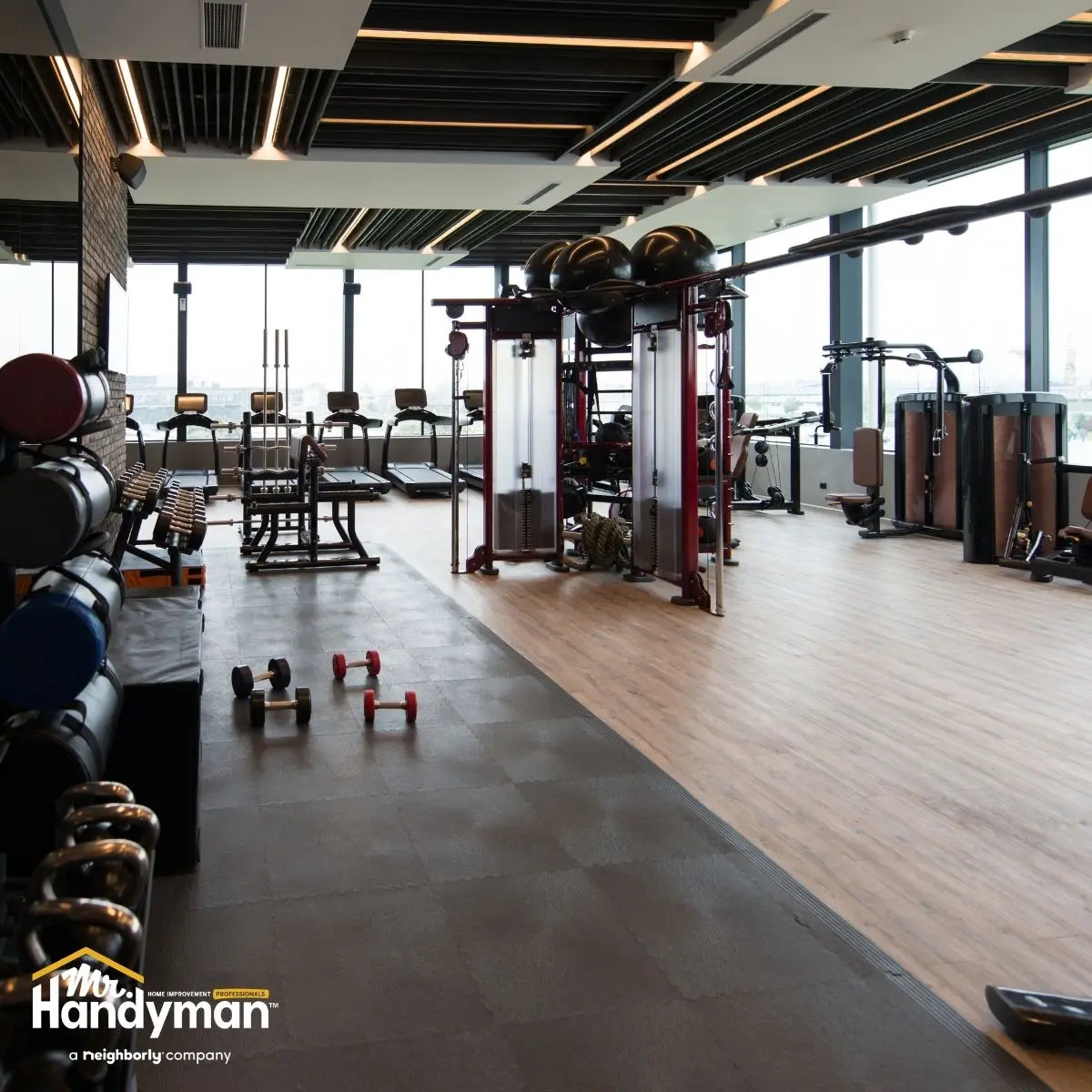
Professional gym mirror installation is a technical process that requires specific knowledge, appropriate materials, and careful execution. Shortcuts at any stage create failure points.
Wall assessment comes first. Before any mounting hardware goes in, professionals need to understand what they're mounting to. This means using stud finders to locate framing members, testing wall material to determine composition, and checking for hidden obstacles like electrical conduits, plumbing, or HVAC ductwork. In older commercial buildings, walls might have multiple layers—drywall over plaster over original lath, or paneling over block walls. Each layer changes the mounting approach. Walls also need to be evaluated for straightness and plumb. Older buildings often have walls that are neither perfectly flat nor perfectly vertical, which affects mirror placement and mounting hardware selection.
Choosing the right mounting hardware for the specific wall type is critical. Wood studs in standard framing accept heavy-duty wood screws or lag bolts. Metal studs require self-tapping screws designed specifically for steel. Concrete or block walls need expansion anchors or concrete screws that match the material density. Hollow block requires toggle-style anchors that can spread load across the interior of the block. Plaster walls often need extra care because the plaster itself is brittle and can crack during anchor installation, so mounting needs to go through the plaster into the wood lath or studs behind it. Every wall type has optimal hardware, and using the wrong type virtually guarantees eventual failure.
Mirror clips and channels distribute weight more effectively than adhesive alone. Professional installations use a combination of J-channels along the bottom edge to support the mirror's weight, and clips along the sides and top to prevent the mirror from bowing or pulling away from the wall. Adhesive adds stability but shouldn't be the primary attachment method for large, heavy mirrors. The clips need to be spaced appropriately based on mirror size and weight—typically every 16 to 24 inches for mirrors over six feet tall. More clips are better than fewer when dealing with gym environments where vibration is constant.
Proper backing and standoffs prevent moisture accumulation while maintaining stability. Mirrors can't be mounted flush against walls because trapped moisture leads to silvering degradation on the mirror back and promotes mold growth. Small standoffs or specialized mounting clips create a consistent 1/8 to 1/4 inch gap behind the mirror for air circulation. These standoffs need to be sized correctly—too large creates excessive leverage, too small restricts airflow. In high-moisture gym environments, using stainless steel or coated hardware for standoffs prevents corrosion that would eventually compromise the mounting.
Seam placement and mirror sizing affect both appearance and structural integrity. Full-wall mirror installations often require multiple mirror panels because single pieces large enough to cover entire walls are difficult to transport, expensive, and structurally problematic. Where mirrors meet, the seams need to be planned carefully. Vertical seams should fall on studs where mounting hardware can secure both adjacent mirror edges. Seams should avoid areas where they'll be visually distracting or where people regularly interact with the wall. In weight rooms, keeping seams away from high-impact zones reduces the stress concentration that can cause cracking.
Safety backing and edge treatment provide additional protection. Professional installations often apply safety backing film to the rear of mirrors. If the mirror breaks, this film holds the glass fragments together, preventing them from scattering across the room. Polished or beveled edges reduce the chance of edge chips during installation and look more finished than raw-cut edges. Edge protection is particularly important on mirrors that extend close to floor level where cleaning equipment or dropped weights could impact the edge.
Frequently Asked Questions About Gym Mirror Installation
How thick should gym mirrors be for safe installation?
Gym mirrors should be at minimum 3/8 inch thick, with 1/2 inch being the preferred thickness for installations over six feet tall or in high-impact environments like weight rooms. The extra thickness reduces flexing under the mirror's own weight, provides more structural integrity against vibration and impacts, and makes the mirror less prone to cracking from building movement or nearby impacts. Quarter-inch mirrors are too thin for most gym applications and will flex visibly when properly mounted, which stresses mounting hardware and creates cracks over time. The cost difference between 3/8 inch and 1/2 inch thickness is relatively small compared to the labor cost of installation, so choosing the thicker option is usually worthwhile for long-term durability.
Can gym mirrors be installed with adhesive alone or do they always need mechanical mounting?
Mirrors over four feet tall should never rely on adhesive alone for primary support in gym environments. While mirror adhesive is strong, it's vulnerable to temperature changes, moisture exposure, and the constant vibration inherent in fitness facilities. Professional installations use adhesive as a supplementary attachment method that adds stability and prevents the mirror from rattling, but mechanical mounting with clips, channels, and appropriate hardware provides the primary structural support. The exception might be very small mirrors in low-impact areas like locker rooms or offices, but even then, mechanical mounting is the safer choice. Adhesive-only installation might seem adequate initially, but failure in gym environments is a matter of when, not if.
What's the minimum distance between a mirror and a wall-mounted squat rack or cable machine?
The minimum safe distance is typically 12 to 18 inches between any equipment and the mirror surface, though more distance is better when possible. This spacing protects the mirror from direct impact with equipment, loaded barbells, or cable attachments that swing out during exercises. It also gives users enough space to move naturally without feeling cramped or worried about hitting the mirror. In tight spaces where equipment placement is constrained, consider using thicker mirrors and more robust mounting hardware, or protect the mirror with bumpers or padding at equipment height. Some facilities choose to position equipment so that it can't be moved closer than the safe distance, using floor bolts or positioning relative to fixed wall elements.
How often should gym mirror mounting be inspected for safety?
Professional inspection should happen annually at minimum, with semi-annual inspections being better practice for high-traffic facilities or older buildings. These inspections should check for loose mounting hardware, cracks in mirrors, separation between mirror and wall, deterioration of adhesive, and any signs of moisture damage affecting mounting points. Facility staff should also do informal visual checks monthly, looking for obvious problems like visible gaps between mirror and wall, mirrors that rattle when touched, or any cloudiness or damage to the mirror surface. After any significant building event—structural work, plumbing leaks, foundation settlement, or major impact near mirrored walls—mirrors should be inspected regardless of the regular schedule. The stakes are too high to skip inspections, and catching problems early makes repairs far simpler and less expensive.
Can existing mirrors in an older gym be remounted if they're starting to fail, or do they need replacement?
If the mirrors themselves are undamaged—no cracks, no delamination of the silvering, no significant scratches—they can often be remounted safely. The decision depends on mirror thickness, overall condition, and whether the failure was due to inadequate mounting rather than mirror degradation. Mirrors that have been properly stored after removal and cleaned of old adhesive can be reinstalled using current best practices for hardware and mounting. However, if mirrors are original to a building from the 1980s or earlier, they're likely thinner than modern standards and may not be tempered safety glass. In those cases, replacement is safer even if the existing mirrors appear intact. The cost of professional remounting is substantial enough that sometimes replacing with new, properly specified mirrors makes more economic sense, especially if the old mirrors are marginal in thickness or quality.
Should gym owners attempt mirror installation themselves or always hire professionals?
Large gym mirrors require professional installation. The combination of weight, fragility, specialized mounting requirements, and serious consequences of failure make this unsuitable for DIY installation regardless of general handiness or experience with other projects. Professionals have the tools to handle large glass safely, knowledge of appropriate mounting hardware for different wall types, and experience dealing with the building-specific challenges common in commercial spaces. They also carry insurance that covers damage or injury during installation. Small mirrors in low-risk areas might be manageable for experienced handyman services, but wall-spanning mirrors in workout areas should always be installed by professionals who specialize in commercial mirror work or who have extensive verified experience with large-scale installations in similar environments.
Keep Your Gym Safe with Professional Mirror Installation and Maintenance
Properly mounted gym mirrors are essential safety equipment that requires professional installation and regular maintenance. Whether you're setting up a new facility, upgrading existing mirrors, or addressing mounting concerns in an established gym in Northern St. Joseph or Elkhart Counties, don't compromise on installation quality.
Mr. Handyman of Northern St. Joseph and Elkhart Counties provides expert assessment of existing mirror installations, identifies mounting problems before they become dangerous, and can handle repairs and improvements to mirror mounting systems. We understand the unique challenges of working in older commercial buildings and ensure your mirrors are secured with appropriate hardware for your specific wall construction.
Call or visit https://www.mrhandyman.com/northern-st-joseph-elkhart-counties/ to schedule a mirror installation assessment. Your members' safety depends on mirrors that stay exactly where they belong.