Why Spring Is the Most Important Season for Your Plumbing
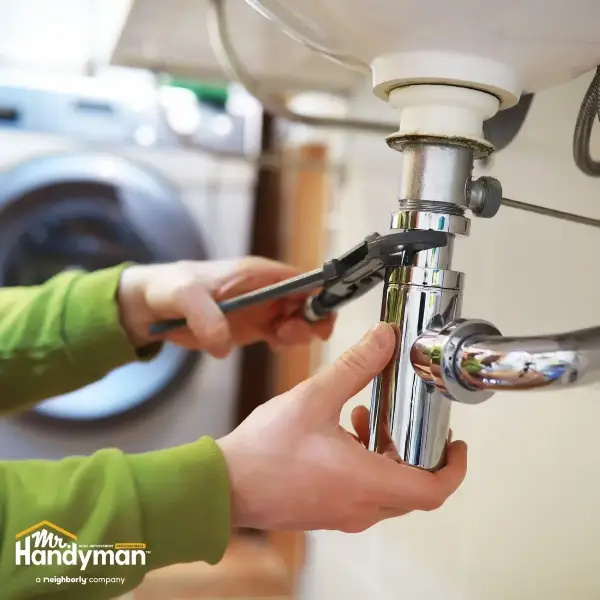
Most homeowners think about their plumbing only when something goes wrong. A faucet drips, a drain backs up, or water suddenly appears where it shouldn't. But plumbing, like most systems in your home, responds to the seasons, and spring is the time when months of stress quietly become visible problems.
Winter in the Eastern Panhandle of West Virginia and across Montgomery County, Maryland is hard on plumbing. Temperatures drop below freezing repeatedly, pipes contract and expand, outdoor spigots freeze, and the ground itself shifts under sustained cold. Then spring arrives, and everything thaws, including problems that have been building since November.
A spring plumbing check is not about being overly cautious. It is about catching what winter left behind before it turns into an emergency repair, a water damage claim, or a slow leak that quietly drives up your water bill for months before you notice.
This checklist covers the full picture: indoor plumbing, outdoor systems, water-using appliances, and the areas homeowners most often overlook.
What Winter Actually Does to Your Plumbing
To understand why spring matters, it helps to understand what has been happening to your plumbing for the past four to five months.
When temperatures fall below freezing, water inside pipes expands as it freezes. Pipes that are exposed, poorly insulated, or located in unheated spaces like crawl spaces, garages, or exterior walls are especially vulnerable. Even if a pipe does not burst outright, the repeated freeze-thaw cycle creates micro-fractures in the pipe material. These are invisible to the eye but slowly weaken the pipe until one warm day, pressure does the rest.
In older homes, which are common throughout Martinsburg, Shepherdstown, Charles Town, and the older neighborhoods of Rockville, Bethesda, and Silver Spring, this problem is more pronounced. Homes built in the 1950s, 60s, and 70s often have galvanized steel pipes that are already narrowed by decades of mineral buildup. Add winter stress, and those pipes are far more vulnerable to developing cracks, pinhole leaks, or full failures than newer copper or PEX systems.
The ground movement that comes with winter freezing and spring thaw also affects underground supply lines and sewer laterals. Shifting soil puts lateral pressure on pipes, and tree roots that were dormant all winter become aggressive again in spring, pushing into any existing crack or joint gap in your sewer line.
Spring also brings heavy rainfall in this region. Gutters that were clogged or damaged over winter push water toward your foundation. Downspouts that drain too close to the house can saturate the soil around your basement or crawl space, and that moisture finds its way toward floor drains, sump pits, and any weak point in your foundation plumbing.
Understanding this gives the checklist context. You are not just checking boxes. You are systematically reversing the damage of winter before it compounds.
The Indoor Plumbing Check: Where to Start
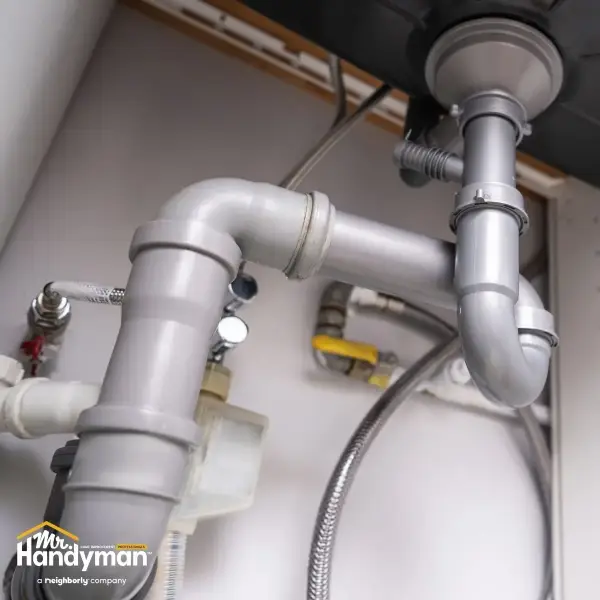
Begin inside, working room by room. This is where most leaks hide, and where small problems are easiest to catch early.
Under Every Sink
Open the cabinet under every sink in the house, including bathrooms, the kitchen, and any utility areas. Look at the supply lines, the drain connections, and the area around the shutoff valves. You are looking for moisture, discoloration on the cabinet floor, soft wood, or any sign of a slow drip. A supply line that feels stiff, brittle, or shows any corrosion near the fittings should be replaced before it fails. These lines are inexpensive to swap out and are a common source of slow, hidden leaks.
Toilets
Flush every toilet in the home and watch the tank refill. A toilet that runs longer than thirty seconds to refill, or one that runs intermittently on its own, has a flapper or fill valve issue. These are small repairs, but a running toilet can waste between 200 and 400 gallons of water per day depending on severity. Over a month, that adds up to thousands of gallons on your water bill. Check the base of each toilet for any soft flooring or slight rocking, which can indicate a failing wax ring seal.
Water Pressure Throughout the Home
Run water at multiple fixtures and pay attention to whether pressure feels weaker than usual. Low pressure at a single fixture usually points to a clogged aerator or a partially closed shutoff. Low pressure throughout the house is a different problem. It can indicate a leak somewhere in the supply line, sediment buildup in older galvanized pipes, or a failing pressure regulator. If your home has a pressure reducing valve, spring is a good time to have it tested.
Water Heater
Your water heater worked harder than usual all winter. Inspect the area around the base for any moisture or rust staining. Check the pressure relief valve by lifting the lever slightly to confirm it is not stuck. If your water heater is ten years or older, sediment may have built up significantly in the tank, reducing efficiency and increasing wear. Flushing the tank in spring removes that sediment and extends the life of the unit. If you notice rumbling or popping sounds when the heater runs, that is sediment moving inside the tank, and a flush is overdue.
Drains, Sump Pumps, and Basement Plumbing
Spring rain season puts real demand on the drainage systems in your home. This is the section most homeowners skip entirely, and it is often where the most expensive problems develop.
Floor Drains
If your home has floor drains in the basement, laundry room, or garage, pour a bucket of water into each one slowly. If the water drains away cleanly, the line is clear. If it backs up, pools, or drains very slowly, there is a blockage that needs to be addressed before heavy spring rains arrive and overwhelm the drain entirely.
Sump Pump
Pour water into the sump pit until the float rises and the pump activates. Confirm it starts, pumps the water out, and shuts off cleanly. Check the discharge line to make sure it is clear and that water is being moved away from the foundation, not just to the side of the house where it will re-enter the soil. A sump pump that hesitates, hums without pumping, or fails to shut off has a mechanical problem that needs immediate attention. Spring is the worst time to discover your sump pump does not work because by then, your basement may already be taking on water.
Washing Machine Hoses
Inspect the hoses connecting your washing machine to the water supply. These hoses are often overlooked for years. They crack, blister, or develop bulges at the fittings over time, and when they fail, they fail fast, flooding a laundry room or finished basement in minutes. If your hoses are rubber and more than five years old, replacing them with braided stainless steel versions is inexpensive insurance.
Outdoor Plumbing: The First Thing Spring Demands You Check
Once the indoor systems are confirmed, move outside. Outdoor plumbing takes the most direct punishment from winter, and it is where spring problems tend to announce themselves loudly, often in the form of a flooded yard, a water bill that doubled overnight, or a spigot that sprays sideways the first time you turn it on in April.
Outdoor Spigots and Hose Bibs
Every exterior spigot on your home should be tested individually at the start of spring. Turn each one on fully and let it run for thirty seconds. You are checking for full water flow, any dripping from the body of the spigot rather than the nozzle, and any sign of water seeping through the exterior wall near the fitting. A spigot that drips from the handle or body, rather than the tip, usually has a damaged stem washer or packing, both of which are straightforward repairs. A spigot that shows water staining on the interior wall nearby is a more serious situation, potentially indicating a pipe that cracked behind the wall during a freeze and has been leaking slowly into the structure every time you run water.
Homes throughout Martinsburg, Charles Town, Inwood, and the older communities of Montgomery County often have hose bibs that were installed decades ago without freeze-proof protection. If your home does not have frost-free hose bibs, this is a practical upgrade worth considering before next winter arrives.
Irrigation Systems and Garden Lines
If your home has an in-ground irrigation system or any outdoor water lines that were shut off and drained for winter, spring startup requires a careful approach. Do not simply turn the system back on at full pressure. Open zones one at a time, check each head for proper operation, and walk the yard looking for soft spots or unusually green patches of grass, both of which can indicate an underground line that is leaking. A single broken irrigation head can waste hundreds of gallons per cycle without ever being visible from the surface.
Exterior Drainage and Downspout Connections
Where your downspouts connect to underground drainage lines, check that the connections are tight and that water is being directed away from the foundation. Spring in this region brings sustained rainfall, and any drainage line that is cracked, disconnected, or clogged with debris from winter will channel that water directly toward your foundation instead of away from it. Walk the perimeter of your home after the first heavy spring rain and observe where water flows, where it pools, and whether any areas near the foundation remain saturated long after the rain stops.
Kitchens, Bathrooms, and Utility Spaces: The Room by Room Reality
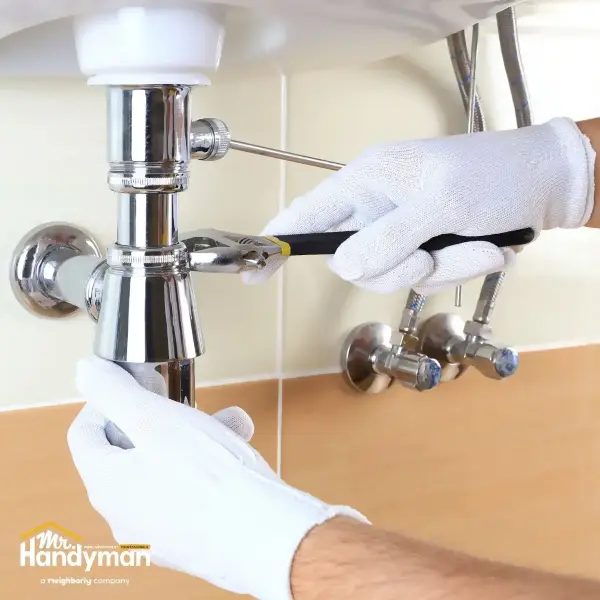
Plumbing problems do not announce themselves. They develop quietly in the spaces you use every day without looking closely. A thorough spring check means slowing down in each room and paying attention to details you normally walk past.
Kitchen
The kitchen is one of the highest-use plumbing areas in the home. Check under the sink for any sign of moisture around the drain basket, the garbage disposal connection, and the supply lines to the faucet. If your kitchen has a dishwasher, pull it out slightly if possible and look at the floor beneath and behind it. Dishwasher supply line failures and drain hose leaks often go unnoticed for months because the appliance itself hides the damage. A soft spot in the kitchen floor near the dishwasher is a warning sign that should not be ignored.
If your kitchen faucet has developed a drip over winter, spring is a practical time to address it. A single dripping faucet can waste over 3,000 gallons of water per year, and in older faucets, a worn cartridge or valve seat is typically the cause.
Bathrooms
Check around the base of every toilet, the perimeter of every tub and shower, and the caulk lines where fixtures meet the floor or wall. Grout and caulk that has cracked, separated, or discolored is no longer waterproof. Water migrates through those gaps with every shower, every bath, and every flush, working its way into the subfloor and wall structure over time. In older homes with tile floors and original grout, this is one of the most common causes of bathroom subfloor damage, a repair that starts small and becomes significant quickly if the entry point is not sealed.
Laundry and Utility Areas
Confirm that the utility sink, if present, drains freely and that shutoff valves turn smoothly. Valves that have not been operated in years often seize or fail when you actually need them. Turning each shutoff valve fully off and back on once a year keeps the seats from sticking and confirms the valve will function in an emergency.
Frequently Asked Questions
How do I know if a pipe cracked over winter but hasn't fully failed yet?
The most common signs are unexplained increases in your water bill, damp spots on walls or ceilings that appear without an obvious source, reduced water pressure at specific fixtures, or the sound of running water when no fixtures are in use. If you notice any of these, the pipe should be inspected before the problem worsens.
My water heater is only seven years old. Do I still need to flush it?
Yes. Sediment accumulation depends on your water quality as much as the age of the unit. Homes on well water or in areas with hard water can see significant sediment buildup within three to five years. Flushing annually keeps the tank efficient and extends the unit's lifespan regardless of age.
Is low water pressure in spring a serious problem?
It depends on where the low pressure occurs. A single fixture with low pressure usually has a simple fix, such as a clogged aerator. Pressure that is low throughout the entire home warrants a closer look at the pressure reducing valve, the main supply line, and the condition of older pipes. In homes with galvanized plumbing, whole-house low pressure often signals significant internal corrosion.
Should I be worried about tree roots affecting my sewer line?
If you have mature trees within twenty to thirty feet of your sewer lateral, root intrusion is a real possibility, particularly in spring when root systems become active. Signs include slow drains throughout the home, gurgling sounds from drains, or sewage odors. A camera inspection of the line can confirm whether roots have entered and how far they have progressed.
What is the most common plumbing mistake homeowners make in spring?
Ignoring slow drains. A drain that is moving water, even slowly, is easy to rationalize as fine. But partial blockages grow. Grease, soap buildup, hair, and debris accumulate around the restriction, and what started as a slow drain becomes a complete backup, often at the worst possible time. Clearing slow drains in spring prevents that outcome.
Do I need a professional to do a spring plumbing inspection, or can I do it myself?
Much of the visual inspection described in this guide can be done by any attentive homeowner. What benefits from a professional eye is anything behind walls, beneath slabs, or involving pressure testing, valve replacement, water heater servicing, or sewer line evaluation. A professional can also identify signs that a DIY check might miss, particularly in older homes where the plumbing history is unknown.
Schedule Your Spring Plumbing Check Before the Season Gets Away From You
Spring moves fast in this region. By the time summer arrives, the small issues that were manageable in April have often become urgent repairs in July. The value of a spring plumbing walkthrough is not just in what you find. It is in what you prevent.
Mr. Handyman of Martinsburg and Charles Town serves homeowners throughout the Eastern Panhandle, including Martinsburg, Charles Town, Shepherdstown, Inwood, and surrounding communities. Their experienced technicians handle plumbing repairs, fixture replacements, water heater maintenance, and the full range of home systems that spring tends to stress.
Mr. Handyman of Martinsburg and Charles Town
Mr. Handyman of Northern Montgomery County and Mr. Handyman of South Montgomery County serve homeowners across Rockville, Bethesda, Silver Spring, Gaithersburg, Potomac, and the surrounding Maryland communities.
Mr. Handyman of Northern Montgomery County
Mr. Handyman of South Montgomery County
Call to schedule an inspection, ask about a specific concern, or simply get an expert opinion on what your home needs this spring. No pressure, no guesswork, just experienced help when you need it.