
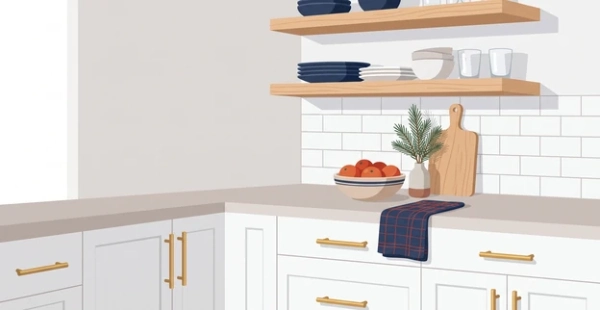
Three small kitchen upgrades you can finish before holiday guests arrive: new cabinet hardware, a tile backsplash, and open shelving. See timelines, prep tips, and when to call a pro.
|
Small Kitchen Upgrades: Quick Tips From the Pros The most practical small kitchen upgrades before the holidays are new cabinet hardware, a tile backsplash, and open shelving, since each one changes how the room looks and works in a few days or less. Hardware swaps and shelf installs often fit into a single visit, while most backsplash projects take two to three days from prep to grout sealing. Plan around material lead times and grout cure time so the kitchen is ready before holiday cooking starts.
|
If you want your kitchen to look and work better before holiday guests arrive, focus on three small upgrades: new cabinet hardware, a tile backsplash, and open shelving. Each one can make a noticeable difference without requiring a full kitchen remodel, and the installation work may take anywhere from a few hours to several days, depending on the project. The trick is choosing the project that fits your calendar, then leaving time for materials to arrive and finish to cure.
Start with whichever upgrade fixes your biggest daily annoyance, then check material lead times. In-stock tile and hardware can be ready in days, while special-order finishes may take weeks, depending on the supplier. These upgrades also work as a first phase if you're planning bigger kitchen repairs and installations later.
Which Small Kitchen Upgrades Fit Your Holiday Timeline?
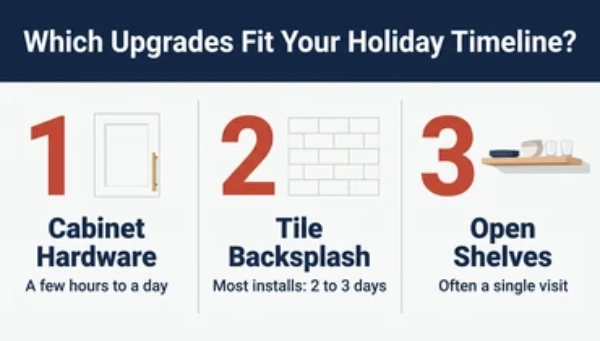
Each upgrade needs a different amount of work time and a different wait before the kitchen is back to normal. Use this comparison to match a project to your calendar.
| Upgrade | Typical work time | Wait before full use | Best for |
| New cabinet hardware and hinge fixes | A few hours to a day, depending on the number of doors and drawers and whether new holes are needed | None once screws are tight | Dated finishes, loose knobs, and doors that sag or won't close |
| Tile backsplash | Most installs take 2 to 3 days from prep over cure time to grout sealing; larger or detailed layouts may take up to 4 | Follow the mortar, grout, caulk, and sealer labels; many products need several days to cure | Bare or stained walls and kitchens that need a focal point |
| Open or floating shelves | Often a single visit for a few shelves, depending on wall type and shelf count | None once brackets are secure | Extra storage for serving pieces or a coffee and drink station |
If your first gathering is close, hardware and shelves are the safest choices. A backsplash works best when it's finished at least a few days before you plan to cook and clean heavily around it.
Upgrade 1: How Much Can New Cabinet Hardware Change Your Kitchen?
Swapping knobs and pulls is one of the fastest ways to change a kitchen's style, because cabinet fronts cover so much of the room. Pair new hardware with a few hinge adjustments, and doors that sagged or drifted open will close evenly again.
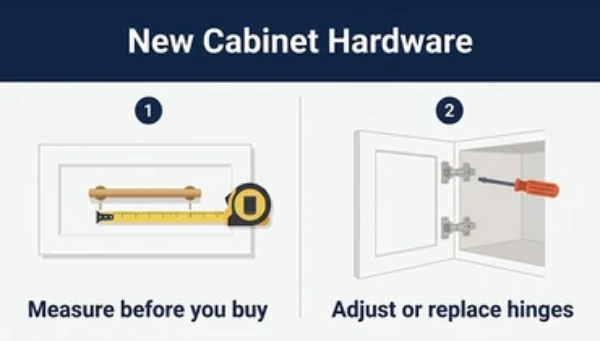
Measure before you buy new pulls
Pulls are sized by center-to-center spacing, the distance from the center of one screw hole to the center of the other. Common sizes include:
- 3 inches (76 mm)
- 3 3/4 inches (96 mm)
- 5 inches (128 mm)
- 6 1/4 inches (160 mm)
Buying pulls that match your current spacing lets you reuse the old holes. Knobs typically use one screw, while pulls usually use two. Switching from knobs to pulls means drilling new holes and filling or covering the old ones. Backplates can hide old holes, but measure them first to be sure they cover the full spot.
Fix doors that sag, rub, or won't stay closed
Many cabinets, especially those with concealed hinges, have adjustment screws that move a door up, down, in, or out. Make small turns and check the gap after each one. If a hinge is bent, stripped, or worn, replacing it is the lasting fix. Soft-close hinges and small bumpers can also cut down on slamming during busy holiday cooking.
Screws that keep backing out, stripped holes in particleboard, or doors that won't line up after adjusting usually point to a worn hinge mount or a damaged cabinet box. Your local Mr. Handyman® service professional can replace hardware, adjust or replace hinges, and repair the mounting points so every door closes the way it should.
Upgrade 2: Can You Add a New Backsplash Before Guests Arrive?
Yes, if you plan around cure time. A backsplash protects the wall behind your counters from splashes and grease, and it gives the kitchen a clear focal point. Most installs take two to three days from prep to grout sealing, and larger or more detailed layouts can stretch to four.
Choose tile that fits your kitchen and schedule
- Ceramic and porcelain: durable, low-maintenance, and widely available in stock colors
- Glass: resists stains, but needs careful grouting for clean lines
- Natural stone: adds texture, but needs sealing so it doesn't absorb splashes and grease
In-stock tile keeps the timeline short, while special-order patterns or stone can add wait time before work begins. In some cases, a backsplash can be installed professionally over existing tile when the existing surface is sound, properly bonded, sufficiently flat, and appropriately prepared for the installation system being used. A professional can assess the existing tile and determine whether installation over it is appropriate or removal is the better option.
Plan for grout cure time
Grout and sealer need time to set before the backsplash takes daily splashes and scrubbing. Cure times vary by product, temperature, and humidity, so follow the label on the grout you use. For example, one common sanded grout calls for keeping the area above 50°F for at least 72 hours to cure properly. Cement-based grout is often sealed after it cures, while some polymer-enhanced grouts don't need sealing.
For holiday planning, aim to have the grout and sealer finished several days before your biggest cooking day.
Caulk the joint where the backsplash meets the counter
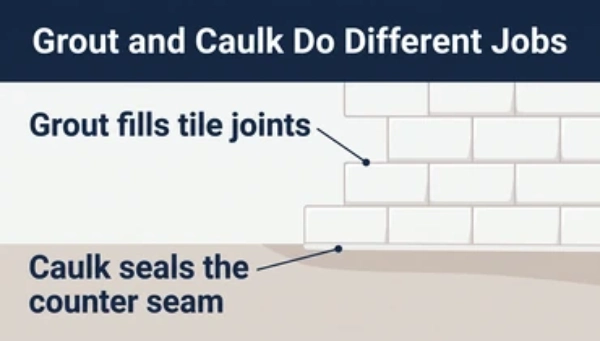
The seam between the backsplash and the countertop, along with inside corners, should get a flexible sealant such as caulk. Tile industry guidelines call for movement joints at inside corners and where tile meets other surfaces, because those spots shift slightly as the house expands and contracts. Rigid grout in those joints tends to crack, while flexible caulk helps keep water from seeping behind the tile.
Grout and caulk do different jobs: grout fills the joints between tiles, and caulk seals the joints that need to flex.
Upgrade 3: Where Can Open Shelves Add the Most Holiday Storage?
Open or floating shelves give you a place to keep serving platters, extra glasses, and holiday dishes within reach. They can also break up a long run of upper cabinets or put an empty, clutter-prone wall to work.
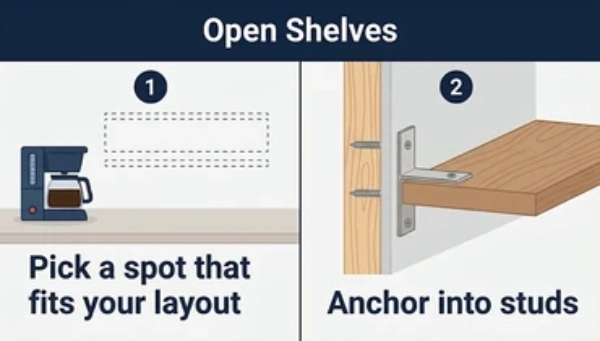
Pick a spot that works with your layout
- An empty wall near the coffee maker or a drink station
- The end of a cabinet run, where shelves can hold everyday dishes
- Above a counter you use for serving
Keep shelves out of the heat, steam, and grease that rise from the cooktop. Items stored above it collect residue quickly.
Anchor shelves into studs for heavy loads
Dishes are heavier than they look. Shelves mounted into wall studs can typically hold 30 to 50 pounds, depending on the wall type, shelf depth, and hardware. Shelves held only by drywall anchors carry less weight and suit lighter decor. Plaster, tile, and brick walls each need different fasteners, so check what's behind the surface before you drill.
Pipes and wiring can also run through kitchen walls, especially near sinks and outlets. If you're not sure what's inside the wall, a pro can locate studs and work around hidden lines.
Which Kitchen Upgrades Can You DIY, and When Should You Call a Pro?
Hardware swaps that reuse existing holes are a reasonable DIY project for many homeowners. Consider calling a pro when:
- You need new holes drilled and lined up across every door and drawer
- Hinges are stripped, broken, or mounted in damaged particleboard
- The backsplash wall needs repair, or you're tiling over existing tile
- Outlets in the backsplash area need adjusting to sit flush with new tile
- Shelves will hold heavy dishes, or the wall is plaster, tile, or brick
- You can't confirm where pipes and wiring run behind the wall
Any electrical work around outlets should be handled by a qualified professional who meets your local licensing rules.
Continue Your Research
- Kitchen Remodel Checklist
- How to Grout a Tile Backsplash Like a Pro
- Replacing Kitchen Cabinet Knobs & Hinges for a New Look
Get Your Kitchen Holiday-Ready With Mr. Handyman
Your local Mr. Handyman team can install new cabinet hardware, adjust or replace hinges, put up a tile backsplash, and mount sturdy open shelves, so the room is ready when guests arrive. Each location is locally owned and operated and backed by a national brand, and the kitchen projects offered can vary by location.
Every job is backed by the Neighborly Done Right Promise®. Contact your local Mr. Handyman to schedule your kitchen upgrade before the holiday rush.
FAQs About Small Kitchen Upgrades
Mr. Handyman is a one-stop solution for everything on your to-do list. This includes answering your questions about repairs, maintenance, and improvements. Here are answers to some of your most frequently asked questions about small kitchen upgrades.
How far ahead should I schedule kitchen upgrades before the holidays?
Book as early as you can, and work backward from your first holiday gathering. The right lead time depends on the project, material availability, and your local pro's schedule.
Hardware and shelf installs usually need the least lead time because the work goes quickly once materials are on hand. A backsplash needs the most, since tile has to arrive and grout and sealer need time to cure after a two- to three-day install.
Ask about material lead times when you schedule. In-stock tile and hardware can be ready quickly, while special-order finishes can push your start date back by weeks.
If your gathering is only a week or two away, start with hardware or shelves and save the backsplash for after the holidays.
Can a new backsplash go over existing tile?
Often, yes, as long as the existing tile is solid, level, and free of grease.
Tiling over tile skips demolition, which saves time and keeps dust down on a holiday deadline. It also adds thickness, which changes how the new tile meets cabinets, window trim, and outlet covers.
Before tiling over, check for:
- Loose or hollow-sounding tiles
- Cracks or missing grout
- Grease buildup that won't wipe clean
- Edges that would stick out past the countertop or cabinets
If the old tile fails any of these checks, removal and wall repair come first. A pro can assess the surface before the new tile goes up.
How much weight can floating shelves hold?
It depends on the shelf, brackets, fasteners, wall construction, shelf depth, and how the weight is distributed. There isn't one safe weight limit that applies to every floating shelf.
For shelves that will hold dishes or heavy serving pieces, check the manufacturer's load rating and installation instructions. Mounting into wall studs can provide stronger support than relying on drywall anchors alone, but the entire shelf system must be suitable for the intended load.
If you're installing shelves on plaster, tile, or brick—or you're unsure where studs, pipes, or wiring are located—a professional can help determine the appropriate mounting method.
Do I need to replace hinges when I change cabinet hardware?
No, but it's the best time to check them.
With knobs and pulls off, it's easy to spot doors that sag, rub, or don't close evenly. Fixing them at the same time gives the whole kitchen a finished look.
Many concealed hinges adjust with a screwdriver to move the door up, down, or sideways. Replace hinges that are bent, stripped, or worn, and match the new ones to the existing mounting holes and door overlay so they fit without new drilling.
If doors still won't line up after adjusting, the cabinet box or mounting point may be damaged. That's a good point to bring in a pro for cabinet repair.
Can new pulls cover the holes left by old knobs?
Sometimes a pull with a backplate can cover an old knob hole, but most pulls on their own won't.
Knobs use one screw hole, while pulls use two holes set at a fixed center-to-center spacing. Switching usually leaves the original hole visible between or beside the new ones.
You can fill the old hole with a wood dowel or filler, sand it flush, and touch up the finish, or choose backplates large enough to cover it fully. Painted cabinets hide filled holes more easily than stained wood.
If the finish is hard to match, or you want every pull lined up across the kitchen, a pro can fill, drill, and align the holes for consistent results.