
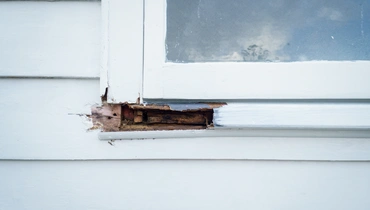
Window frames and sills are among the first places wood rot takes hold in Florida homes, and the gap between catching it early and facing a full structural repair is narrower than most homeowners expect. Rotten window frames and rotten wood at the sill are among the most common carpentry repairs our team handles across Pinellas County. Wood rot window repair done at the right stage costs a fraction of what full frame replacement runs, but only if the damage is caught before it moves into the surrounding framing. At Mr. Handyman serving Palm Harbor, Clearwater, and Largo, our team handles wood rot repair for window frames, sills, and surrounding trim throughout Pinellas County. Here's what this guide covers:
- Why windows are one of the highest-risk locations for wood rot in Florida homes
- How to identify rot at each stage before it spreads
- The difference between epoxy consolidation repair and full frame replacement
- Which repair approach is right for which level of damage
- What the professional repair process looks like from assessment to finish
Why Window Frames Are a Prime Target for Wood Rot in Pinellas County
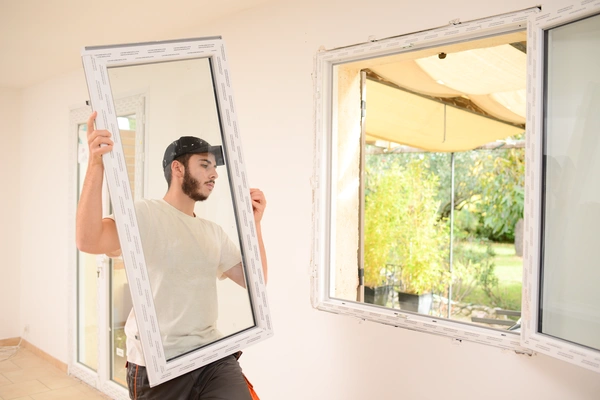
Wood rot doesn't develop randomly. It follows moisture, and windows are one of the primary moisture entry points on any home's exterior. In Palm Harbor, Clearwater, and Largo, that risk is compounded by the combination of high humidity, frequent rain, intense UV exposure, and the thermal cycling that comes with year-round heat.
Research from the USDA Forest Products Laboratory confirms that wood will decay above 30% moisture content, with decay activity initiating as low as 25% under sustained conditions. Exterior window frames in Florida's climate regularly exceed those thresholds when caulk fails, glazing seals deteriorate, or flashing allows water to pool at the sill. Wood naturally absorbs and transfers moisture through its grain, and in a wooden window or original wood windows with aging paint and seals, that process accelerates significantly during Florida's rainy season. Once moisture penetrates the paint film and reaches the wood beneath, decay fungi establish quickly, and unlike surface damage, rot spreads through the wood fiber before it becomes visible from outside.
The areas most vulnerable around a typical window include:
- The sill, where water sits longest after rain
- The bottom corners of the frame, where caulk tends to separate first
- The exterior casing and trim, particularly where it meets the siding
- The rough framing around the window, which can rot silently behind the frame
6 Signs of Window Frame Wood Rot to Check Before Hurricane Season
Catching rot early gives homeowners the option to repair rather than replace. These are the signs our team looks for on service calls throughout Pinellas County.
1. Soft or Spongy Wood When Pressed
Healthy wood feels firm. Rotted wood gives under light pressure from a screwdriver or fingernail, particularly at the sill or bottom corners of the frame. Soft spots that feel dry on the surface can still indicate active decay deeper in the wood fiber.
2. Paint That Won't Stay Adhered
Peeling or bubbling paint around a window frame is one of the earliest visible signs that moisture is moving through the wood beneath. Paint separates when the substrate it's bonded to becomes unstable from moisture absorption or early-stage rot.
3. Discoloration or Dark Staining on the Frame
Brown or black staining on wood around windows indicates moisture and potential fungal activity, particularly at the sill and lower casing. Discoloration that extends under the paint film or appears in streaks down the siding below the window signals water is finding a path into the frame.
4. Gaps Between the Frame and Caulk
Caulk that has separated from the frame or siding creates an open channel for water to enter the wood directly. Even a small gap at the window corner or along the top casing is enough for water to work in over multiple rain events and begin saturating the wood beneath.
5. Visible Cracking or Deterioration of the Frame Material
Surface cracking, checking, or splintering of the frame, particularly on south and west-facing windows with heavy UV exposure, indicates the wood's protective surface layer has broken down. Once that layer fails, water penetration accelerates.
6. Difficulty Operating the Window
A lower sash that sticks, drags, or no longer seals completely when closed can indicate frame swelling from moisture absorption, an early warning that water is getting into the wood before visible rot becomes apparent.
Repair vs. Replacement: Choosing the Right Approach
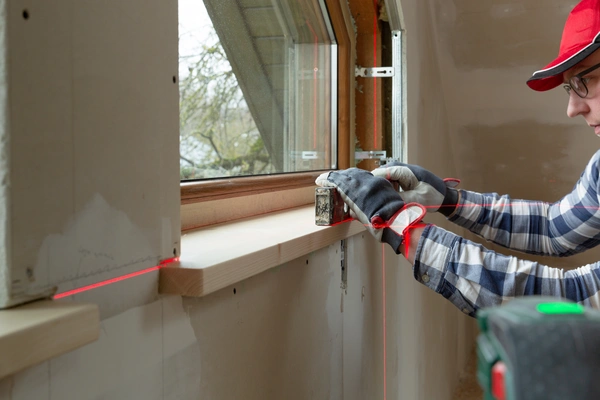
The right repair method depends on how far the rot has progressed. There are three general approaches, and the correct one is determined by the depth and extent of the decay, not by preference.
| Damage Level | Condition | Right Approach |
|---|---|---|
| Surface or early stage | Paint failure, minor softness, less than 1/4 inch deep | Epoxy consolidant and filler repair |
| Moderate | Soft wood through more than 1/4 inch, contained to trim or casing | Partial section replacement |
| Advanced | Rot through the full frame depth, sill, or into rough framing | Full frame or structural replacement |
Epoxy Consolidation and Filler Repair
When rot is caught early and hasn't penetrated deeply, epoxy-based wood epoxy repair is a durable and cost-effective option. A liquid consolidant is applied to the damaged area to harden remaining soft fibers and give the filler a solid base. Wood epoxy filler is then shaped to match the original profile, sanded, and primed. Done correctly, an epoxy repair on window trim, decorative elements, a sill, or casing is indistinguishable from the surrounding wood after painting and preserves the natural beauty of the original frame. This approach holds up well in Florida's climate and works for shallow surface damage on trim, casings, and sill edges.
Partial Section Replacement
When rot has penetrated beyond the surface but is contained to a specific section of the casing, sill, or trim, partial replacement is the right approach. The rotted section is cut back to sound wood, new material is scarf-jointed or spliced in, primed on all surfaces before installation, and finished to match. This preserves the surrounding frame and avoids the disruption and cost of full replacement when the damage doesn't warrant it.
Full Frame Replacement
When rot has penetrated the full depth of the frame, reached the sill plate, or spread into the rough framing around the opening, full replacement is the only window repair that holds long-term. A window in rough shape from advanced decay cannot be reliably stabilized with fillers or partial patches. Full frame replacement involves removing the entire window unit, cutting back damaged framing, treating or replacing structural members, installing a new whole window unit with proper flashing, and finishing the interior and exterior. At this stage, the repair overlaps with window replacement, and our team assesses both the frame condition and the window unit simultaneously.
What the Professional Wood Rot Repair Process Includes
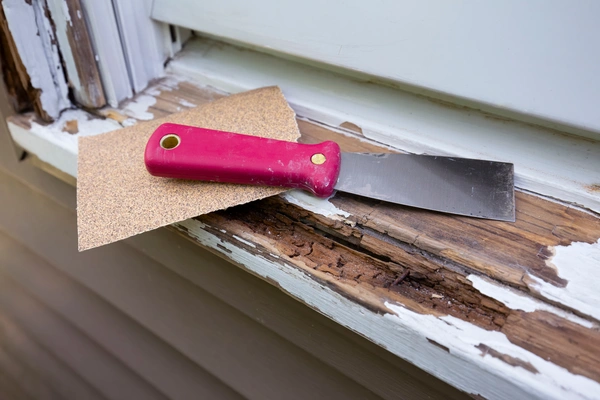
A proper wood rot repair around windows follows a consistent sequence regardless of which approach is needed.
| Step | What Happens |
|---|---|
| Probe and assess | All soft areas are probed to determine rot depth and extent before any work begins |
| Moisture source identification | The path water is using to enter the frame is identified and addressed before repair |
| Removal of compromised material | Rotted wood is cut back to sound material, and no repair is applied over active decay |
| Treatment of surrounding wood | Borate-based wood preservative is applied to adjacent sound wood to inhibit future fungal activity |
| Repair or replacement | Epoxy consolidation, partial section replacement, or full frame replacement based on damage level |
| Priming and sealing | All surfaces are back-primed before final installation and caulked at every joint |
| Paint-ready finish | The repaired area is sanded, primed, and ready for topcoat |
We're proud to serve homeowners in Clearwater, FL, and nearby communities including Palm Harbor, Largo, Dunedin, Tarpon Springs, Safety Harbor, and beyond with wood rot repair, carpentry, and window services.
Frequently Asked Questions About Wood Rot Window Repair
Palm Harbor, Clearwater, and Largo homeowners ask these questions most often when they find rot around their windows and are deciding what to do next.
Can I paint over wood rot to stop it from spreading?
No. Paint seals the surface but does nothing to stop decay that is already active inside the wood fiber. Painting over rot traps moisture and accelerates the damage while hiding it from view. The rotted material must be removed or consolidated with epoxy before any surface treatment is applied.
How fast does wood rot spread around windows in Florida?
In Florida's humidity, untreated window frame rot can move from a surface issue to a structural problem within one to two rainy seasons. The rate depends on the type of fungi, how much moisture is reaching the wood, and whether the damage is in a shaded or sun-exposed location. Shaded north-facing windows dry more slowly and often show faster rot progression than sun-exposed south-facing units.
Does wood rot around windows affect the home's structural integrity?
Surface rot on trim and casing is cosmetic. Rot that has reached the sill plate, jack studs, or header around the window opening is structural and affects the load path above the window. Our team probes the rough framing during assessment to confirm whether structural members are involved before recommending a repair approach.
When should I call a professional instead of attempting a DIY repair?
Any rot that has penetrated beyond the surface layer, involves the sill, or shows discoloration extending into the siding or interior wall surface warrants professional assessment. DIY epoxy kits are effective for very shallow, early-stage surface damage, but applying filler over active decay or structurally compromised wood creates a repair that fails and conceals worsening damage beneath.
Schedule Your Wood Rot Assessment
Window frame rot doesn't stop on its own, and the cost difference between catching it at the epoxy-repair stage and waiting until the frame needs full replacement is significant. Mr. Handyman serving Palm Harbor, Clearwater, and Largo assesses window rot damage, identifies the moisture source, and recommends the right repair for the actual condition of the wood, not the simplest or most profitable option. Every repair is backed by the Neighborly Done Right Promise.
Schedule your wood rot assessment today before the next rainy season does more damage.