The Business Case for Getting Exterior Repairs Done Before the Rush Arrives
Every business in the Wichita metro has a version of busy season. For retailers it arrives with summer foot traffic and the back-to-school period that follows. For restaurants and hospitality businesses it tracks with warm weather, outdoor dining demand, and the event calendar that fills up from late spring through fall. For professional service businesses, medical offices, and commercial tenants of all kinds, the first impressions their physical space makes on clients and customers carry weight every single day, and the condition of the exterior of the building is the first data point in that impression before anyone walks through the door.
Exterior repair work deferred through winter has a compounding quality that business owners and property managers underestimate until the busy season is already underway and the repair that could have been scheduled quietly in March is now an emergency in June with customers watching and contractors at a premium. The window between the end of winter and the beginning of peak business activity is the most practical and most cost-effective time to address every exterior repair item on the list, and in the Wichita metro that window is real but not unlimited.
Kansas winters are demanding on commercial building exteriors in specific and predictable ways. Freeze-thaw cycling stresses every joint, seam, and material transition on the building envelope. Wind events damage signage, loosen fasteners, and work at roofing edges and flashings that were already at the end of their service life. Ice and snow load affects gutters, awnings, and any canopy structure that was not designed or maintained with Kansas winter conditions in mind. Spring arrives with all of that accumulated stress visible or waiting to become visible, and the businesses that address it systematically before their busy season begins are the ones that operate through summer without the disruption and reputation impact of visible deterioration or reactive emergency repairs.
Facade and Storefront Conditions That Customers Register Before They Know They Are Doing It
Consumer psychology research has consistently demonstrated that physical environment conditions affect customer perception and behavior in ways that operate below conscious awareness. A customer approaching a business with a clean, well-maintained facade and a functional, welcoming entry experience arrives at the door in a different psychological state than one who has navigated a cracked walkway, noticed peeling paint on the exterior trim, or observed a damaged sign cabinet that no one has addressed. The difference in the transaction that follows is measurable, and for businesses in competitive Wichita market categories, that difference matters.
Exterior paint and finish condition is the most broadly visible indicator of how a commercial property is being maintained. Paint that has chalked, faded, peeled, or stained communicates neglect in a way that affects business perception regardless of how excellent the product or service inside the building may be. Spring is the appropriate season for exterior repainting work on commercial properties in this climate because temperature and humidity conditions allow paint to adhere and cure correctly. Application in summer heat or fall cooling produces results that do not hold as long and do not look as good as work done under the moderate, stable conditions that Wichita springs provide.
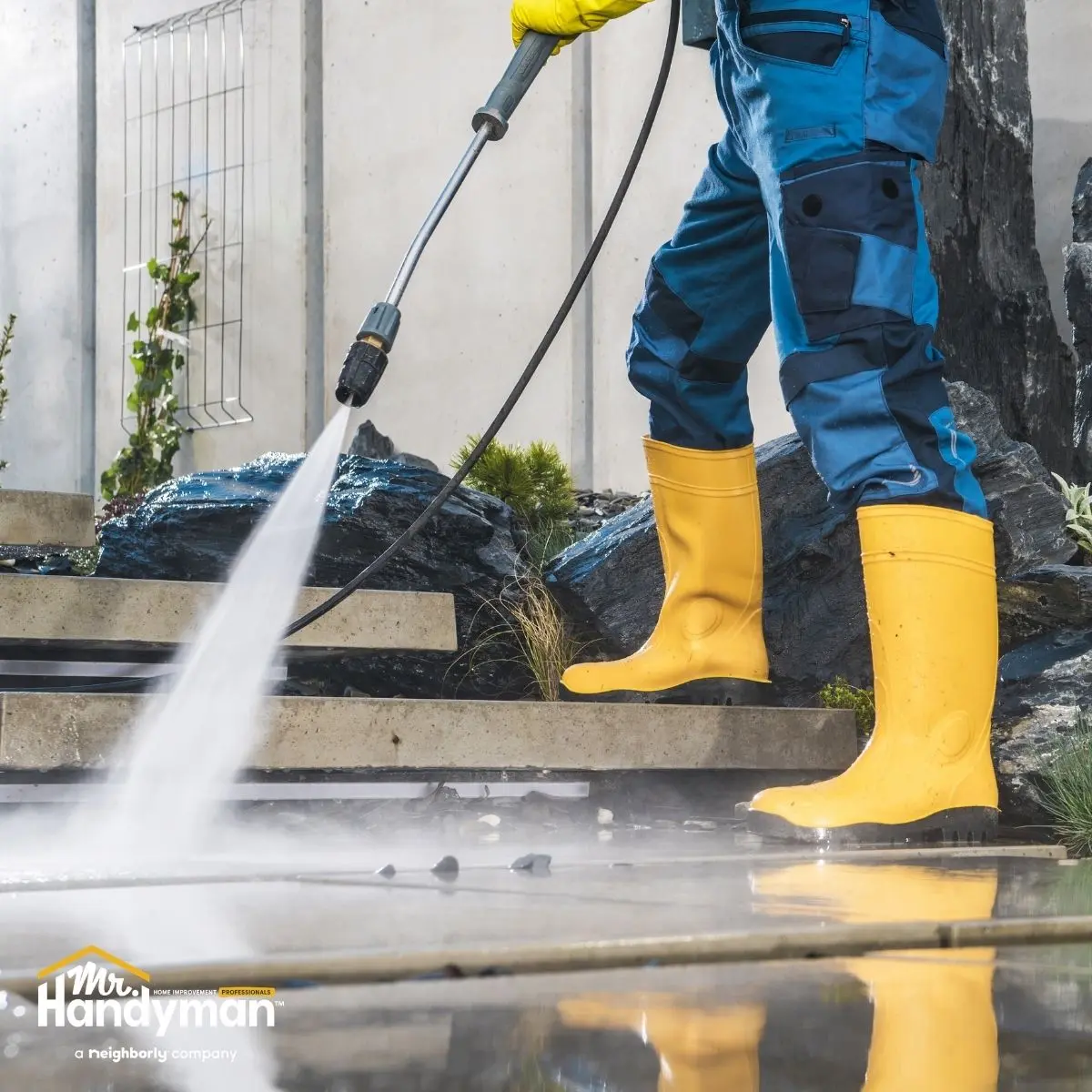
Surface preparation is the variable that most directly determines how long a commercial exterior paint job lasts, and it is the variable that gets compromised most often when work is rushed or underpriced. Proper surface preparation for a commercial exterior involves pressure washing to remove chalk, dirt, and biological growth, scraping and sanding all areas where existing paint has lost adhesion, spot priming bare surfaces and repaired areas, and caulking all joints and gaps before any topcoat goes on. A paint job applied over inadequate surface preparation will fail at the adhesion level within a fraction of its expected service life, regardless of the quality of the topcoat product used.
Storefront glazing systems, the aluminum framing and glass assemblies that define the entry and window areas of most Wichita commercial buildings, are worth a specific spring inspection that goes beyond cleaning the glass. The sealant joints at the perimeter of storefront frames, at the glass-to-frame interfaces, and at the frame-to-wall connections are the points where water infiltration most commonly enters a commercial building at the storefront level. Sealant in these locations that has hardened, cracked, or pulled away from the substrate is an active infiltration pathway that affects both the building envelope and the interior finish conditions near the entry. Resealing compromised storefront joints in spring is a repair with a cost that is easy to justify against the alternative of water-damaged interior finishes, swollen door frames, and deteriorating flooring at the entry threshold.
Entry and Accessibility Conditions That Create Liability Before They Create Damage
Commercial building entries concentrate foot traffic, weather exposure, and the specific liability concerns that come with public access in a way that makes them the highest-priority exterior maintenance zone for any business property. A condition that would be a maintenance note in a lower-traffic area of the property becomes an active liability exposure at a commercial entry where dozens or hundreds of people pass through daily.
Concrete and masonry steps at commercial entries are among the most consequential maintenance items on any spring checklist. Wichita's freeze-thaw cycling produces specific damage patterns in entry steps that are worth understanding because they are predictable and preventable. Water that infiltrates the joint between a step tread and a riser, or between a step and an adjacent wall, freezes and expands in a way that progressively separates the masonry components. A step that showed a hairline crack at the tread-riser joint in fall may have a gap wide enough to catch a shoe heel by spring, and that gap is both a trip hazard and an accelerating deterioration point. Tuckpointing and patching entry step conditions in spring, before peak customer traffic arrives, addresses the liability exposure and the structural progression simultaneously.
Entry door hardware condition deserves direct inspection before busy season. Door closers that are operating too slowly, too quickly, or inconsistently create both accessibility compliance concerns and customer experience friction that reflects poorly on the business. A closer that slams a door shut behind a customer carrying packages, or one that fails to fully latch a door that should be self-closing for security or fire rating purposes, is a maintenance item with consequences that go beyond the hardware itself. Threshold and door sweep conditions affect both weather sealing and ADA compliance at entry doors, and these components wear through a winter of heavy use in ways that are easy to assess with a visual and functional check in spring.
Awnings and canopy structures above commercial entries take significant punishment from Kansas winters and should be inspected for structural integrity, fabric or panel condition, and fastener security before they are carrying the weight of spring rain events and summer crowds. A canopy that has developed a structural weakness through winter ice loading or wind stress is not going to fail during a clear April morning. It is going to fail during a summer storm when the entry is occupied, which is the worst possible timing for a structural failure at a public entry point.
Parking Lot and Site Perimeter Conditions

A commercial parking lot is often the first physical element of a business property that a customer interacts with, and its condition sets expectations before any other element of the customer experience begins. Wichita's freeze-thaw cycling is among the most damaging forces that asphalt pavement faces, and the damage it produces through a single winter can transform manageable maintenance items into urgent safety and liability concerns if the transition season is not used to address them.
Pothole formation in commercial parking lots follows a predictable seasonal pattern in this climate. Water infiltrates existing cracks through fall and winter, freezes and expands within the pavement structure, and the repeated pressure of freeze-thaw cycling combined with vehicle traffic loads over the weakened area produces the pothole that emerges in spring. A pothole in a commercial parking lot is not a nuisance. It is a vehicle damage liability and a pedestrian safety hazard that carries the specific legal exposure that comes with an invitation to the public to use the property. Pothole patching in spring, before the parking lot is carrying its full seasonal traffic load, is the minimum intervention. Properties with extensive cracking and pavement distress beyond isolated potholes should be evaluated for crack sealing and sealcoating, which extends pavement life significantly and is most effectively applied in spring temperature conditions.
Perimeter fencing, security lighting, and site drainage features that border the parking area and property boundary all carry winter wear that spring inspection should capture. A fence section that has shifted or a gate that no longer latches correctly after frost heave has moved the post is a security concern. A site drain inlet that is blocked with winter debris is a flooding concern during spring storm events. These are items that take minutes to identify on a systematic spring walkthrough and hours or days to deal with reactively when they fail during the busy season.
Roofing and Drainage Repairs That Cannot Wait Until Summer
Commercial roofing issues that developed through winter do not hold their position patiently while a business works through its spring to-do list. They progress, and they progress faster once spring rainfall begins delivering the water volumes that Wichita's storm season routinely produces. A roofing repair that was a contained seam separation in February becomes an active interior leak by May if the spring maintenance window passes without it being addressed.
Flat and low-slope commercial roofs across the Wichita metro share a common vulnerability profile after winter. Membrane seams that have been cycled through repeated freeze-thaw stress lose adhesion at their edges in ways that are not always visible from a casual rooftop walk. Flashing at HVAC curbs, parapet walls, and pipe penetrations separates from its substrate when the differential thermal movement between the roofing membrane and the metal flashing components exceeds what the sealant at their interface can accommodate. These are the points where water enters a commercial building, and they are the points that spring inspection needs to identify and address before rainfall makes them active problems.
Roof drain maintenance on flat commercial roofs is the single highest-return maintenance action available in spring for properties with this roof type. A roof drain flowing at full capacity during a heavy rain event keeps ponding water from accumulating to the depth and duration that damages membranes and stresses roof structure. A drain that is partially blocked by winter debris, gravel displacement, or ice damage restriction produces standing water that can reach depths significant enough to affect structural loading calculations on roofs that were not designed for sustained ponding. Clearing drains, inspecting drain bowls for cracks or separation from the membrane, and confirming that overflow scuppers are unobstructed are tasks that take minutes per drain and prevent consequences that take weeks and significant expense to remediate.
Signage Repairs That Affect Business Identity and Safety
Commercial signage takes a consistent beating from Kansas winters, and the damage it accumulates is not always obvious from ground level or from inside the building. A systematic spring signage inspection that includes both appearance and structural assessment is a standard item on any complete exterior repair checklist for Wichita area businesses.
Illuminated sign cabinets and channel letter installations are vulnerable to winter moisture infiltration at seams, weep holes that have become blocked, and electrical component exposure that occurs when cabinet seals fail. A sign cabinet that has taken on moisture through winter may appear functional during dry weather while harboring corrosion of internal components and wiring connections that produces intermittent failures during the humid summer months when moisture levels inside the cabinet remain elevated. Spring is the right time to open cabinet access panels, inspect internal components for corrosion or moisture damage, clear weep holes, and reseal any cabinet seams that have separated.
Mounting hardware for all exterior signage deserves direct inspection in spring. Fasteners that have corroded, anchors that have loosened in masonry that experienced freeze-thaw cycling, and bracket welds that have developed fatigue cracks are structural concerns that are easy to identify during a deliberate inspection and genuinely dangerous if they go undetected until a summer wind event applies dynamic load to a sign that is no longer properly secured. In the Wichita area, where summer thunderstorms can produce significant wind gusts with minimal warning, a sign with compromised mounting hardware is a public safety liability that no business should be carrying into peak season.
Wayfinding signage, address numbers, and directional signs on the property perimeter are lower-profile items that nonetheless affect customer experience and emergency response in ways that justify their inclusion in a spring exterior review. Faded or damaged address signage that makes a property difficult to identify from the street is a customer friction point and an emergency services concern. Replacing or refreshing these elements in spring is a modest investment with practical returns.
Building-Specific Exterior Repairs for Wichita's Commercial Property Types
The Wichita metro commercial landscape includes a range of building types that each carry characteristic exterior repair profiles in spring. Understanding which repair categories are most relevant to a specific property type helps business owners and property managers prioritize their spring exterior maintenance investment effectively.
Older masonry commercial buildings in established Wichita business districts, including the downtown core, the Douglas Avenue corridor, and neighborhood commercial strips throughout the city, typically carry the most significant spring repair agendas because their age means more accumulated material fatigue and more winters of freeze-thaw cycling working on mortar joints, sills, lintels, and facade details. Tuckpointing deteriorated mortar joints is the foundational masonry repair for these properties. Mortar that has eroded, cracked, or lost its bond with the adjacent brick or block allows water infiltration that accelerates deterioration of the masonry units themselves and eventually reaches the interior wall assembly. Spring tuckpointing, done with mortar matched to the strength and composition of the original, stops that progression and restores the facade's weather resistance.
Metal panel and EIFS clad commercial buildings, which are common in Wichita's suburban business parks and along commercial corridors developed from the 1980s onward, have their own spring repair profile centered on sealant joint maintenance and panel condition. EIFS systems are highly dependent on the integrity of their sealant joints at all transitions, openings, and terminations, and those joints require periodic replacement as the sealant ages and loses its performance characteristics. A systematic spring sealant inspection on an EIFS building, followed by replacement of any joints that have failed or are approaching failure, is the maintenance action that most directly protects the significant investment that EIFS cladding represents.
Retail strip centers and multi-tenant commercial buildings carry the added complexity of coordinating exterior repairs across tenants whose lease terms may allocate maintenance responsibility differently. Property managers of these assets benefit from completing spring exterior repairs during lower-traffic periods, scheduling work to minimize disruption to tenant operations, and documenting completed maintenance in a way that supports both lease compliance and insurance record requirements.
Frequently Asked Questions
How do I know whether an exterior repair is a tenant or landlord responsibility in a commercial lease?
The answer is in the lease language, specifically in the maintenance and repair provisions that define which party is responsible for which building systems and surfaces. Triple net leases typically assign most maintenance to the tenant while the landlord retains structural and roof responsibility. Modified gross and full-service leases vary considerably. When the language is ambiguous, getting a clear written agreement between parties before work begins prevents disputes over invoices after it is done.
Should exterior repairs be completed before or after spring cleaning and landscaping work?
Repairs first, then cleaning and landscaping. Masonry repair, caulking, and painting all generate debris and overspray that affects surfaces below and around the work area. Completing the repair work first and following with cleaning and landscape refresh produces a finished result that looks cohesive rather than one where fresh landscaping has been contaminated by subsequent repair activity.
How do I evaluate whether a commercial exterior repair contractor is qualified for the specific work?
Ask for examples of similar work completed on comparable property types in the Wichita area. Verify that they carry commercial general liability insurance and workers compensation coverage. For roofing and structural work, confirm that the contractor is familiar with the specific system installed on your building, since different roofing membrane types and cladding systems require different repair approaches and materials. References from other commercial property owners or managers in the metro are the most reliable qualification indicator.
What exterior repairs create the most immediate liability exposure if left unaddressed?
Trip and fall hazards at pedestrian surfaces, including cracked or uneven walkways, damaged entry steps, and potholed parking areas, carry the most immediate liability exposure for commercial properties with public access. These items should be at the top of any priority-ranked spring repair list regardless of budget constraints, because the cost of a single premises liability claim exceeds the cost of the repairs that would have prevented it by a significant margin.
Start Your Busy Season With a Property That Reflects Your Standards
The condition of your commercial property's exterior is a business statement that operates continuously, every day that customers, clients, and competitors interact with it. Mr. Handyman of the Wichita Metro Area works with business owners and property managers throughout the region on the exterior repairs and maintenance work that keeps commercial properties presenting well and performing correctly through every season.
Call us or visit mrhandyman.com/wichita-metro-area to schedule a spring exterior assessment or request service for specific repair items your property needs before busy season arrives. The work done now is the work that does not become an emergency later.