
The Air Quality Standard That Every Fitness Facility Owes Its Members
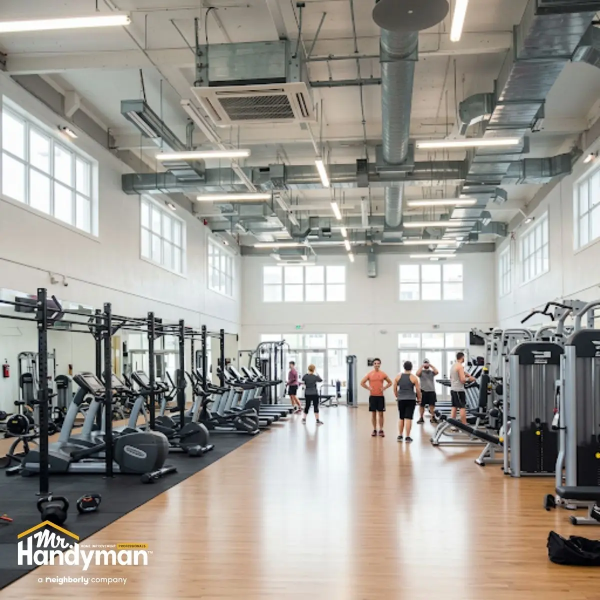
There is a fundamental premise at the center of every fitness facility's relationship with its members that is rarely made explicit but that shapes every aspect of how the facility should be operated and maintained. Members come to a fitness facility to improve their health. The environment that facility provides during that pursuit should support that goal rather than work against it, and nothing in the facility environment affects the health of every member simultaneously and continuously more directly than the quality of the air they are breathing during their workout sessions. A fitness facility whose HVAC system is not maintaining the air quality standard that an active exercise environment requires is not simply failing at a maintenance task. It is failing at the foundational promise that its existence as a health-oriented business represents.
Air quality in a fitness facility is not a static condition that can be established once and maintained passively. It is a dynamic outcome that HVAC system performance produces continuously in response to the changing occupancy, activity intensity, and outdoor air conditions that a commercial fitness facility experiences through every operating hour. During a peak morning session when the free weight floor is fully occupied, the cardio zone is running at capacity, and the group fitness studio is conducting a high-intensity interval class simultaneously, the air quality demands on the HVAC system are dramatically different from the demands during a quiet midday period with low occupancy and moderate activity. A system that is not maintained to perform at peak demand conditions will produce air quality failures that are most severe precisely when member occupancy and the health stakes of those air quality conditions are highest.
The specific air quality challenges that fitness facilities in the Wichita metro face are shaped by the combination of factors that this region's climate and building stock create. Kansas summers deliver high outdoor temperatures and humidity levels that make outdoor air ventilation energetically expensive and that introduce moisture loads into the building that inadequately maintained HVAC systems cannot manage without allowing indoor humidity to rise to levels that promote biological growth. Wichita winters create the opposite challenge, with cold, dry outdoor air that heating systems must condition to a temperature and humidity range that is both comfortable for members and supportive of the air quality conditions that exercise demands. The transition seasons of spring and fall bring the temperature and humidity variability that tests HVAC system responsiveness and that reveals maintenance deficiencies that stable conditions might not expose. Operating an HVAC system through all four of those seasonal conditions without the maintenance program that keeps it performing correctly through each transition is operating a fitness facility with a persistent air quality liability that members are experiencing even when they cannot identify it specifically.
Carbon Dioxide Accumulation and the Ventilation Failure That Produces It
Carbon dioxide accumulation is the air quality condition that inadequately maintained or improperly operated HVAC systems most commonly produce in fitness facilities, and it is a condition that affects member experience and performance in ways that are simultaneously measurable and frequently misattributed to causes other than air quality. Every person in a fitness facility is exhaling carbon dioxide at a rate that increases with exercise intensity, and the concentration of carbon dioxide in the facility air at any given moment is the product of the number of occupants, their average activity intensity, and the rate at which the HVAC system is introducing fresh outdoor air to dilute the carbon dioxide that member respiration is continuously adding to the indoor air volume.
Outdoor air ventilation rates in commercial fitness facilities are governed by ASHRAE Standard 62.1, which specifies minimum ventilation requirements based on occupancy and floor area that are designed to maintain carbon dioxide concentration below the level where occupant cognitive function and physical performance are affected. In a fitness facility context, where members are engaged in physical activity that both increases their carbon dioxide production rate and increases their sensitivity to elevated carbon dioxide concentration, maintaining adequate outdoor air ventilation is not simply a code compliance matter. It is a direct performance factor that affects how members feel during their workouts, how effectively they can sustain effort through their sessions, and whether they leave the facility feeling energized or depleted.
HVAC systems that have been operating with reduced outdoor air intake, whether through damper failures that prevent the outside air damper from opening to its design position, through economizer system malfunctions that close the outdoor air intake under conditions when it should be open, or through filter loading that has reduced total system airflow below the ventilation rate the outdoor air fraction was calculated to deliver, are producing elevated carbon dioxide concentrations that members are experiencing as a vague sense of stuffiness, reduced exercise tolerance, and the headaches and fatigue that carbon dioxide concentrations above approximately one thousand parts per million reliably produce in exercising individuals. Members experiencing these symptoms in a fitness facility environment typically attribute them to overtraining, dehydration, or illness rather than air quality, which means the HVAC maintenance failure that is actually responsible goes unidentified and unaddressed while its effects on member experience accumulate.
Humidity Control and the Biological Growth It Prevents Enables
Humidity management is the HVAC function whose failure produces the most visually apparent and the most hygienically concerning air quality outcomes in fitness facilities, and it is the function whose demands in a commercial fitness facility environment are most significantly greater than in standard commercial occupancies. An active fitness facility generates moisture through member perspiration and respiration at rates that can introduce several gallons of water vapor per hour into the indoor air volume during peak occupancy periods, and the HVAC system's dehumidification capacity must be adequate to remove that moisture load continuously during occupied hours to maintain indoor relative humidity within the range that prevents mold and bacterial growth on building surfaces and in the HVAC system itself.
Indoor relative humidity above sixty percent creates conditions that support mold growth on virtually any organic or porous surface in the facility, including drywall, ceiling tiles, carpet backing, grout in tile installations, and the insulation and duct liner materials inside the HVAC system itself. Mold growth in a fitness facility environment is not simply a surface maintenance problem that cleaning can address. It is an air quality problem because mold colonies produce spores and volatile organic compounds that are continuously released into the air that members are breathing during their workouts. A member with respiratory sensitivities, asthma, or mold allergies who is exercising in an environment with elevated airborne mold spore concentrations is being exposed to a health risk that directly contradicts the health improvement goal that brought them to the facility in the first place.
Wichita's summer climate creates the most demanding humidity control conditions that fitness facilities in this region face, because the outdoor air that ventilation systems must introduce during summer carries significant moisture content that adds to the internal moisture load from member activity. A fitness facility HVAC system in Wichita that was specified and maintained correctly for its design ventilation rate but that has been operating with increased outdoor air infiltration through building envelope gaps, or that has had its ventilation rate increased through programming changes without corresponding increases in dehumidification capacity, may be introducing more moisture than its cooling coil can remove at the design operating conditions. The result is a facility that maintains an acceptable temperature but operates at indoor relative humidity levels that promote biological growth and that members experience as a clammy, uncomfortable environment that is difficult to tolerate during intense exercise sessions.
Filter Maintenance and the System-Wide Consequences of Filter Neglect
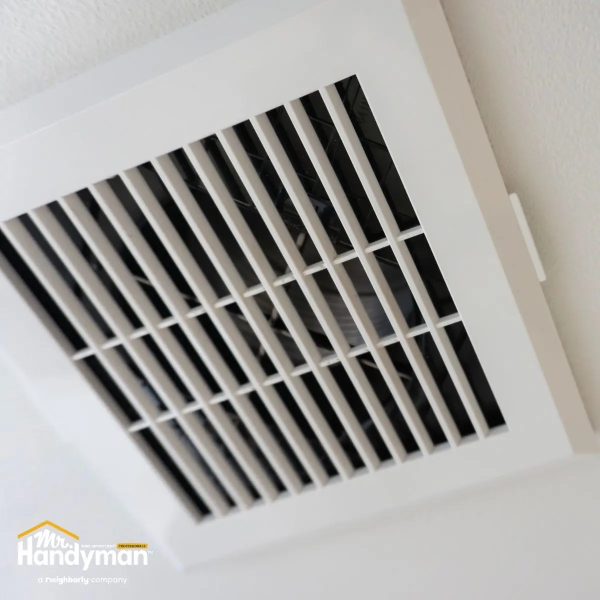
Air filtration is the HVAC function that fitness facility operators most frequently manage incorrectly, not because the correct maintenance practice is complicated but because the consequences of incorrect practice develop gradually and remain invisible until they have produced effects that extend well beyond the filter itself into the system's total performance and the building's air quality. A fitness facility that changes filters on a calendar schedule that does not account for the elevated loading rate that a commercial exercise environment creates is operating with filters that are restricting system airflow for extended periods between changes, and that restriction carries consequences that affect every dimension of HVAC performance simultaneously.
Filter loading in a commercial fitness facility environment occurs at a significantly faster rate than in standard commercial occupancies because the airborne particulate generated by member activity, including the skin cell debris, chalk dust from weightlifting, lint from athletic apparel, and the elevated biological particulate that perspiring, exercising members produce, is substantially greater than the particulate generation of a sedentary office or retail environment. A filter that would adequately perform for three months in an office building may reach its design pressure drop limit within four to six weeks in a busy fitness facility, and a filter that has reached its design pressure drop limit is not simply failing to capture additional particulate. It is reducing the total airflow through the system to a level that compromises ventilation rates, reduces cooling and heating capacity, increases energy consumption, and creates conditions that promote moisture accumulation on the cooling coil that the reduced airflow can no longer keep dry.
Cooling coil fouling is the downstream consequence of filter maintenance neglect that produces the most expensive and most difficult HVAC repair scenario that fitness facilities encounter. When filter loading reduces airflow to the point where the cooling coil surface temperature drops below the dew point of the air passing over it at the reduced velocity, moisture condenses on the coil at a rate that the condensate drain cannot remove, and biological growth colonizes the wet coil surface in the dark, humid environment that the reduced airflow has created. A fouled cooling coil is both an air quality source that introduces biological contaminants into the supply air stream and an energy efficiency problem that can reduce the coil's heat transfer capacity by thirty to fifty percent, driving up energy consumption while reducing the system's ability to maintain design conditions in the occupied space.
Building an HVAC Maintenance Program That Matches Fitness Facility Demands
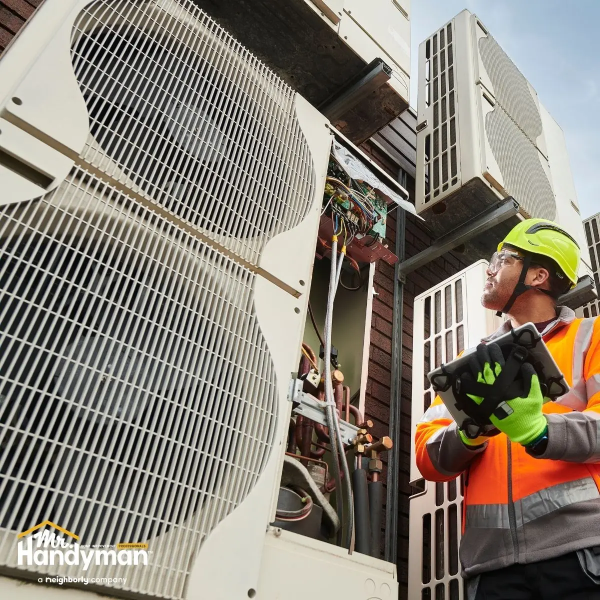
The HVAC maintenance program that keeps a fitness facility's air quality at the standard its members deserve is not the standard commercial building maintenance program with a fitness facility label applied to it. It is a program whose inspection intervals, service tasks, and performance verification methods are calibrated to the specific demands that a commercial exercise environment places on HVAC system components, and whose frequency reflects the accelerated wear and loading rates that those demands produce relative to standard commercial occupancy applications.
Filter replacement interval determination is the first maintenance program element that needs to be calibrated to fitness facility conditions rather than manufacturer calendar recommendations. The correct approach is to establish the initial replacement interval based on the manufacturer's recommendation, then measure the actual filter pressure drop at regular intervals using a manometer or digital differential pressure gauge across the filter section to determine how quickly the filter is actually reaching its design pressure drop limit under the specific loading conditions of the facility. If measurement reveals that the filter is reaching its limit in half the manufacturer's recommended interval, the replacement schedule should be compressed to match the actual loading rate rather than maintained at the calendar interval while the system operates with an overloaded filter between scheduled changes.
Cooling coil inspection and cleaning is the HVAC maintenance task whose correct frequency is most dramatically different between standard commercial and fitness facility applications, and whose neglect produces the most expensive repair scenario when it progresses to the fouling condition described in Part A. In standard commercial occupancies, cooling coil inspection at annual intervals is typically adequate to maintain coil cleanliness within acceptable performance parameters. In a fitness facility with elevated particulate generation and the filter loading rates that the environment produces, annual inspection is insufficient to catch coil fouling before it has progressed to a degree that requires chemical cleaning rather than the simple brushing or low-pressure rinse that early-stage coil surface deposits respond to. Quarterly coil inspection during the cooling season, with cleaning performed whenever surface deposits are visible rather than at fixed intervals, maintains coil performance at a level that preserves both energy efficiency and the air quality that a clean supply air stream provides.
Condensate drain system maintenance is the cooling season task whose neglect most reliably produces the biological growth conditions that compromise air quality in the supply air stream. Condensate drain pans accumulate biological growth through the summer season as the combination of collected moisture, moderate temperature, and nutrient-rich particulate from the return air stream creates ideal growth conditions. Treating condensate drain pans with appropriate biocide tablets or solutions at monthly intervals through the cooling season prevents the algae and bacterial growth that blocks condensate drains and that produces the air quality contaminants that drain pan overflow and biological colonization introduce into the system's airflow.
Ductwork Condition and the Air Quality Implications of Duct System Neglect
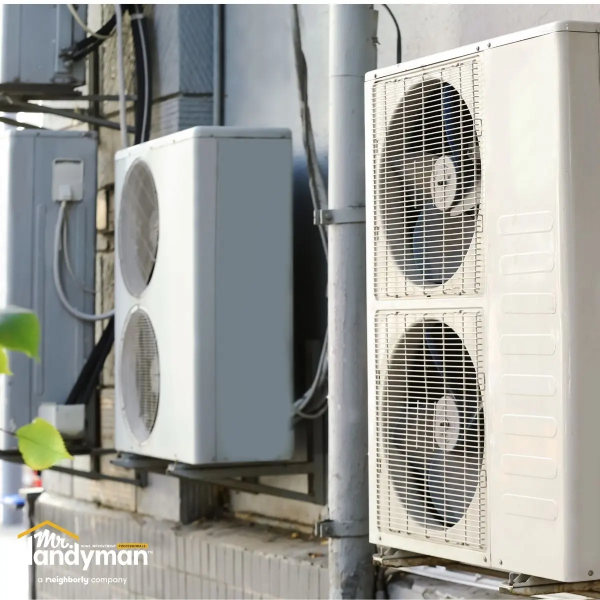
The duct system that distributes conditioned air from the HVAC equipment to the occupied spaces of a fitness facility is a component of the air quality equation that facility operators rarely consider explicitly because it is concealed from view and because its condition does not produce obvious operational symptoms until it has deteriorated significantly. A duct system in poor condition is not simply an inefficient air distribution pathway. It is a source of the biological contaminants, accumulated particulate, and moisture-related deterioration products that the HVAC system is then distributing throughout the occupied spaces that members train in.
Duct liner deterioration is the ductwork condition that produces the most direct air quality consequence in older fitness facilities. Internally lined ductwork, which uses a fibrous insulation material applied to the interior duct surface to provide both thermal insulation and acoustic attenuation, is common in commercial HVAC systems installed through the 1980s and 1990s in Wichita area commercial buildings. Duct liner that has been exposed to moisture from condensation events, water intrusion, or inadequate system dehumidification develops biological growth on its fibrous surface that the supply airflow continuously erodes and carries into the occupied spaces downstream. Members training in spaces served by deteriorated lined ductwork are breathing air that has passed over a biological growth surface, and the air quality consequence of that contact is not addressable through any maintenance action short of duct liner replacement or encapsulation.
Supply and return air grille condition affects both air distribution performance and the perceived cleanliness of the HVAC system in a way that members observe directly. Grilles that are coated with accumulated dust, lint, and biological growth communicate a maintenance standard that members associate with the air they are breathing rather than the surface they are visually observing, and the association is not entirely unfounded because a fouled grille is also a partially blocked air distribution opening whose flow restriction contributes to the ventilation performance deficit that air quality depends on adequate airflow to prevent. Cleaning supply and return grilles monthly in fitness facility environments, rather than the quarterly or semiannual interval appropriate for standard commercial occupancies, maintains the visual impression and the flow performance that facility air quality requires.
Air Quality Monitoring That Converts HVAC Performance Into Measurable Outcomes
The most rigorous HVAC maintenance program in the world produces uncertain air quality outcomes if its effectiveness is never verified through actual measurement of the air quality conditions the maintained system is delivering. Air quality monitoring converts HVAC maintenance from an activity-based program into an outcome-based one by providing the data that confirms whether the maintenance investment is achieving the air quality standard that member health and facility performance require.
Carbon dioxide monitoring through permanently installed sensors in high-occupancy zones provides continuous visibility into the ventilation adequacy that represents the most critical air quality variable in an active fitness facility. CO2 sensors placed in the main training floor, the group fitness studio, and any other high-occupancy zone display real-time concentration levels that facility staff can observe and respond to when concentrations approach the threshold where member performance and comfort are affected. The data from continuous monitoring also provides the evidence base for HVAC system adjustments, outdoor air damper setting verification, and ventilation rate modifications that keep measured concentrations within the target range across the full range of occupancy conditions the facility experiences.
Relative humidity monitoring complements CO2 measurement by providing continuous visibility into the dehumidification performance that prevents the biological growth conditions described throughout this blog. Wall-mounted digital hygrometers in representative locations across the facility provide the real-time humidity data that confirms whether the HVAC system is maintaining indoor relative humidity within the forty to sixty percent range that the combination of member comfort, biological growth prevention, and building material protection requires. Readings consistently above sixty percent during occupied hours indicate a dehumidification capacity deficit that needs to be addressed through HVAC system service, supplemental dehumidification, or building envelope improvements that reduce moisture infiltration.
Frequently Asked Questions
How do I know if my fitness facility's HVAC system is providing adequate ventilation without hiring an air quality consultant?
A portable CO2 monitor placed in the main training floor during a peak occupancy period provides a reliable indication of ventilation adequacy without consultant-level investment. CO2 concentrations below one thousand parts per million during peak occupancy indicate that outdoor air ventilation is adequate for the occupancy level present. Concentrations consistently above one thousand parts per million during occupied periods indicate a ventilation deficit that warrants HVAC system assessment and likely outdoor air damper inspection and adjustment to confirm that the system is actually delivering the outdoor air that its design specifies.
What HVAC filter specification is appropriate for a commercial fitness facility in Wichita?
A MERV 11 to MERV 13 rated filter provides the combination of particulate capture efficiency and reasonable service life that most commercial fitness facility HVAC systems can accommodate without the airflow restriction that higher-rated filters produce in systems not specifically designed for their pressure drop characteristics. MERV 13 provides meaningful capture of the biological particulate and fine dust that fitness environments generate and is the minimum specification that most HVAC engineers recommend for health-sensitive commercial occupancies. Facilities with members who have respiratory sensitivities may benefit from MERV 14 or higher filtration where system static pressure capacity permits.
How does Wichita's seasonal climate affect the HVAC maintenance schedule for fitness facilities specifically?
Spring and fall are the transition seasons that require the most active HVAC maintenance attention for Wichita area fitness facilities because they are the periods when the system is transitioning between heating and cooling modes and when the deferred maintenance from the preceding season is most likely to affect performance in the new one. Cooling coil inspection and cleaning before the first cooling demand of spring, heating system verification before the first heating demand of fall, and outdoor air damper function check at both transitions ensures that the system enters each demanding season in the best possible condition. Summer filter replacement intervals should be compressed relative to winter intervals because summer occupancy and activity intensity typically produce higher particulate loading rates.
What is the most cost-effective single HVAC maintenance investment for improving fitness facility air quality?
Consistent filter replacement at intervals calibrated to actual loading rate rather than manufacturer calendar recommendations produces the broadest improvement in HVAC system performance relative to its cost of any single maintenance investment. Correct filter maintenance preserves system airflow at design rates, which maintains ventilation at the outdoor air fraction the system was designed to deliver, keeps the cooling coil dry and clean, maintains the dehumidification capacity that humidity control requires, and reduces energy consumption relative to a system operating against the resistance of an overloaded filter. No other single maintenance action affects as many air quality variables simultaneously or produces as consistent a return on the maintenance investment it requires.
Air Quality Is the Foundation of Everything a Fitness Facility Promises
A fitness facility that delivers excellent equipment, strong programming, and professional staff in an environment whose air quality is compromised by inadequate HVAC maintenance is delivering an incomplete and potentially counterproductive version of the health improvement experience it is in business to provide. Mr. Handyman of the Wichita Metro Area works with fitness facilities, corporate wellness centers, and commercial properties throughout the region on the HVAC maintenance support work that keeps facility environments performing at the standard member health and business reputation require.
Call us or visit mrhandyman.com/wichita-metro-area to schedule HVAC maintenance support or request assessment for specific air quality concerns your facility has identified. The air your members breathe during their workouts is as important as the equipment they train on, and maintaining it correctly is one of the most meaningful investments a fitness facility can make in the members it serves.