
The Mirror Is Not a Decoration. It Is a Safety-Critical Installation.
There is a tendency in fitness facility planning and renovation conversations to treat mirror installation as a finish element, a cosmetic addition that comes after the structural and mechanical work is done and that belongs in the same decision category as paint color and flooring pattern. That framing is wrong in a way that has produced serious injuries in fitness facilities across the country, and it is wrong in a way that fitness facility operators in the Wichita metro cannot afford to perpetuate in their own properties.
A gym mirror is a large, heavy, fragile panel of glass or glass-composite material installed at standing height in a space where physically active people are moving, lifting, jumping, and swinging implements in close proximity to wall surfaces. The forces that training activity generates, the momentum of a swinging kettlebell, the rebound of a medicine ball, the lateral movement of a member losing balance during a heavy set, are forces that a poorly mounted mirror cannot resist. When a mirror fails under those forces, it does not simply fall. It shatters into fragments that present laceration hazards across a wide area, and it fails at the moment when a member is in close physical contact with the training activity that caused the failure, which is precisely the worst moment for a sharp object hazard to materialize in a gym environment.
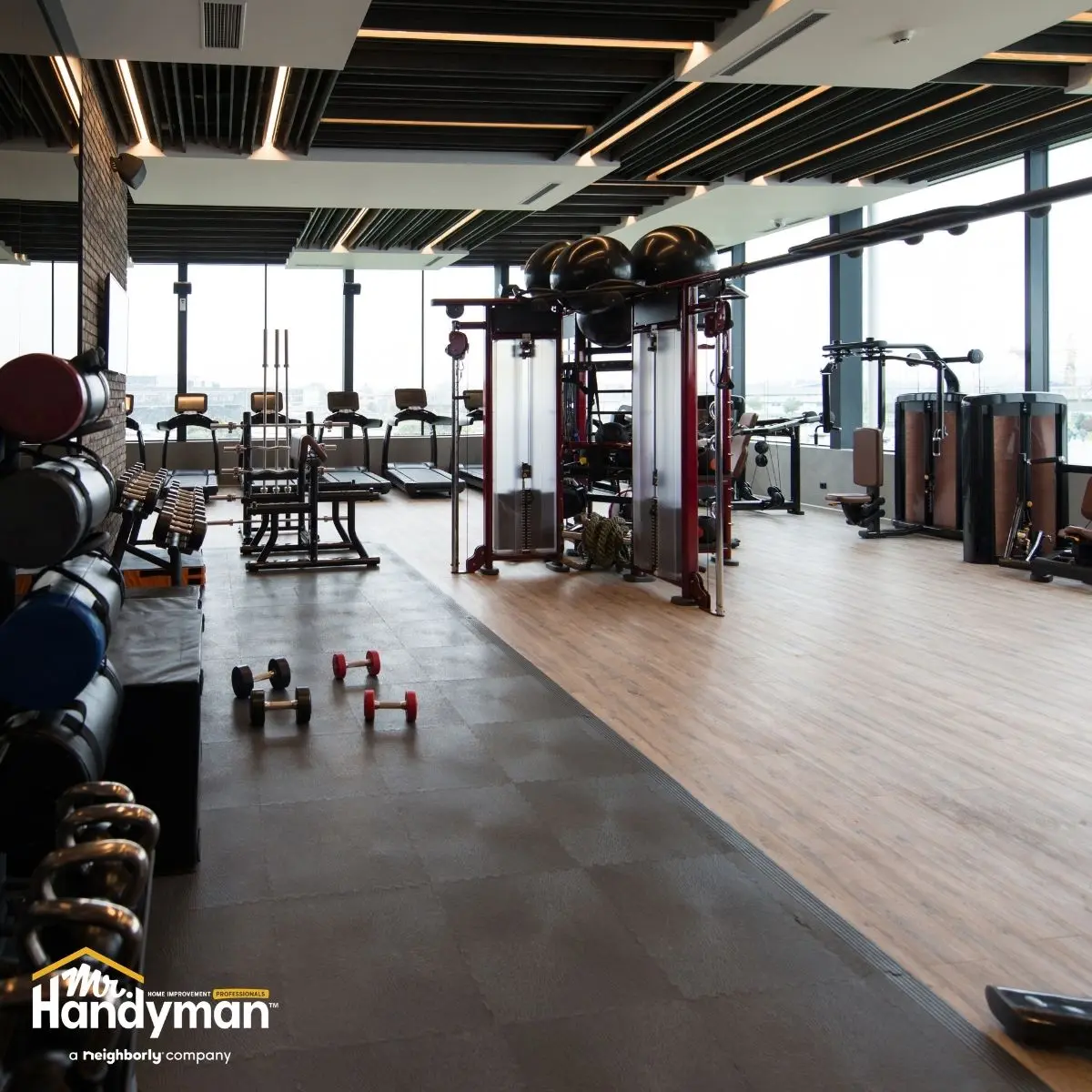
Beyond the acute injury risk of a mirror failure event, improperly installed gym mirrors carry a continuous, lower-level safety concern that manifests through gradual mounting degradation that is not visible from the mirror surface until the mounting has deteriorated to the point where failure is imminent. A mirror that was installed with inadequate fastener selection for the wall substrate, with insufficient adhesive coverage behind the panel, or without the backing support that the wall construction requires will hold its position for months or years before the cumulative effect of vibration, thermal cycling, and the minor impact events that gym environments produce reaches the threshold where the mounting fails. The failure, when it occurs, appears sudden to everyone who observes it, but the conditions that produced it were developing throughout the period between installation and failure.
Wichita area fitness facilities operate in a climate that adds specific stresses to mirror installations that facilities in more stable climates do not face to the same degree. The temperature and humidity cycling that Kansas delivers through its seasonal transitions affects both the adhesive systems used in mirror installation and the wall substrates to which those adhesives bond. An adhesive that performs correctly under the moderate conditions of spring installation may be stressed by the humidity of a Wichita summer and the dry cold of a Kansas winter in ways that gradually compromise its bond strength at the mirror-to-wall interface. Understanding these climate-specific installation requirements is part of what separates a mirror installation that performs safely through years of Wichita weather from one that deteriorates toward failure under conditions the installer did not fully account for.
Wall Substrate Assessment: The Step That Determines Everything That Follows
The most consequential decision in any gym mirror installation is not the mirror specification or the mounting hardware selection. It is the honest assessment of the wall substrate that will carry the mirror's weight and resist the dynamic forces that gym use will apply to the installation. A mirror mounted to an inadequate substrate with correctly specified hardware and adhesive will fail at the substrate level in a way that is indistinguishable from a failure caused by incorrect hardware selection. The substrate is the foundation of the installation, and every other element of the mounting system performs only as well as the substrate it is anchored to.
Standard drywall construction, which is the wall assembly behind most commercial interior surfaces in Wichita area fitness facilities, is not an adequate substrate for large mirror panel installation without reinforcement. Gypsum board carries meaningful compressive strength but limited tensile strength at fastener points, which means that screws or lag bolts installed into standard drywall without hitting a stud or a backing panel pull out under sustained load at forces that are well below what a large mirror installation requires for safety. The weight of a commercial gym mirror panel in a standard size, typically running between 15 and 30 pounds per panel depending on thickness and dimensions, combined with the dynamic loading that vibration and minor impact events add to the static weight, exceeds what standard drywall fastener installation can reliably support over the service life of the installation.
Stud location and condition assessment is the first substrate evaluation step for any mirror installation that will use mechanical fasteners. Locating studs accurately, verifying their spacing, confirming that they run continuously behind the full height of the mirror installation area, and assessing their condition in older Wichita buildings where moisture damage or pest activity may have compromised their structural integrity provides the information needed to determine whether stud-based fastening alone is adequate or whether supplemental backing is required.
Backing panel installation behind drywall in mirror zones is the substrate reinforcement approach that most experienced mirror installers specify for commercial fitness facility applications, and for good reason. A continuous panel of three-quarter inch plywood installed horizontally across the full width of the mirror installation zone and spanning the full height of the mirror panels distributes the load of the mirror installation across multiple stud bays rather than concentrating it at individual stud locations. This load distribution dramatically reduces the per-fastener demand on both the fasteners and the studs they engage, producing a substrate system whose capacity is substantially greater than stud-only fastening and that provides a consistent, verifiable mounting surface regardless of variations in stud spacing or condition behind the existing drywall.
Adhesive Systems and Mechanical Fasteners: Why Both Matter and Neither Alone Is Sufficient
Mirror installation methodology in commercial fitness facilities has evolved toward a hybrid approach that combines construction adhesive with mechanical fastener systems, and that evolution reflects the lessons of installation failures that relied on either approach in isolation. Understanding why both elements are necessary and how they function together in a properly executed installation gives facility operators the technical basis to evaluate installation proposals and to recognize approaches that cut corners in ways that compromise the safety of the finished installation.
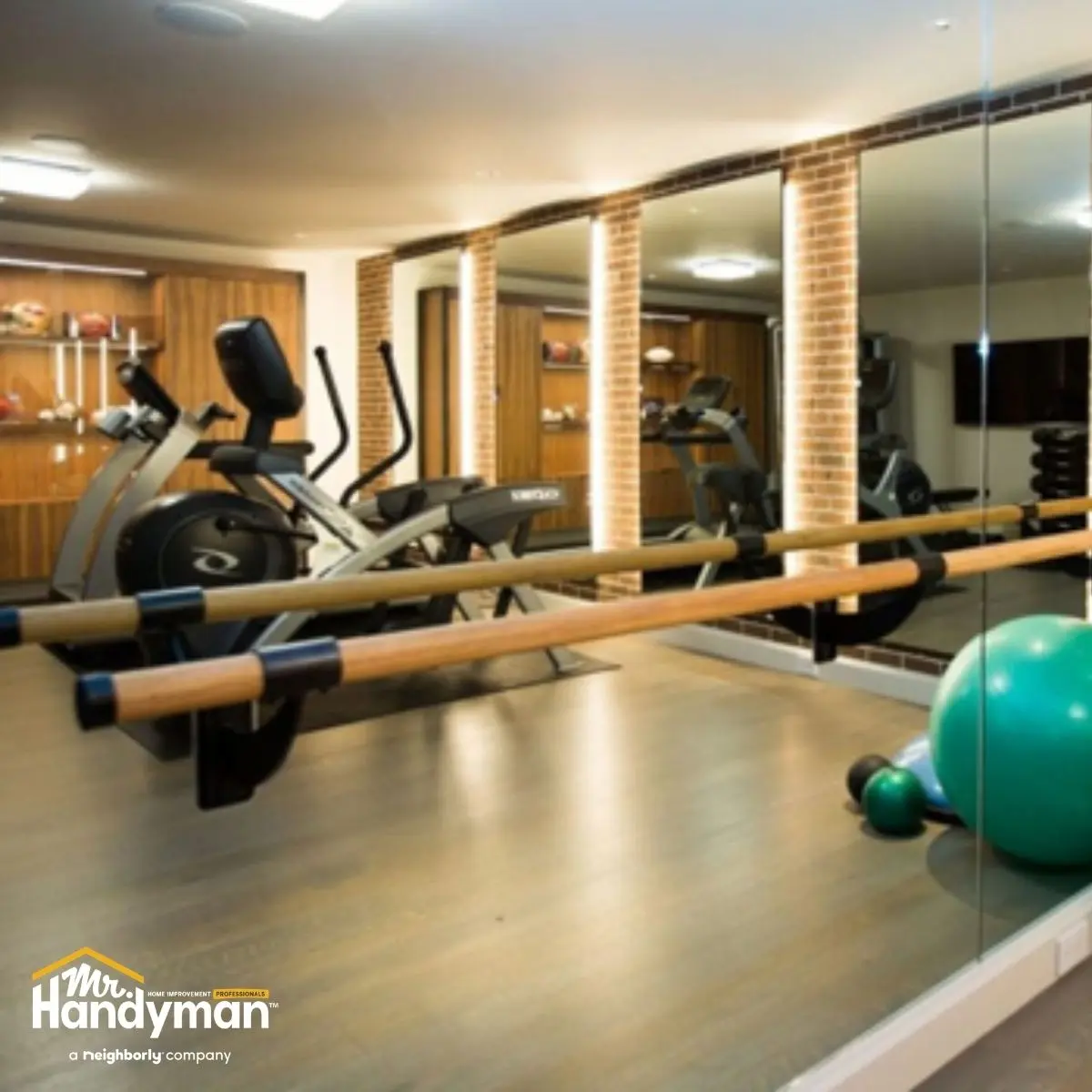
Construction adhesive in mirror installation serves two primary functions. It distributes the static weight of the mirror panel across the full contact area between the mirror backing and the wall surface, reducing the point loading at mechanical fastener locations. And it provides resistance to the peel forces that act on the mirror mounting system when dynamic loads are applied to the panel from training activity in the adjacent space. The adhesive system that performs these functions correctly in a gym environment needs to meet specific requirements that not all construction adhesives satisfy. It must be compatible with the mirror backing material, which for mirrors with a metalite or vinyl backing is a more constrained compatibility requirement than for bare glass. It must maintain its bond strength through the temperature and humidity cycling that Wichita's climate delivers. And it must be applied at the coverage rate and in the pattern that the manufacturer specifies for the load and dynamic conditions of the application, rather than the reduced coverage that faster installation timelines encourage.
Solvent-based adhesives present a specific concern for mirror installation that facility operators should be aware of and that installer proposals should address explicitly. Many common construction adhesives contain solvents that damage the reflective coating on the back surface of glass mirrors, producing the dark edge staining and interior spotting that appears weeks to months after installation as the solvent vapors migrate through the mirror backing and attack the reflective layer. Specifying a mirror-safe, solvent-free adhesive is not a premium option in commercial mirror installation. It is the baseline requirement that protects the mirror panels from the cosmetic damage that solvent exposure produces and that forces premature replacement of panels that are otherwise structurally sound.
Mechanical fasteners in a hybrid mirror installation system provide the positive retention that adhesive alone cannot guarantee against the peel and shear forces that gym use applies. Mirror clips, which engage the top and bottom edges of the mirror panel, and through-panel fasteners with appropriate backing washers that distribute clamping force across the mirror surface without creating stress concentrations that initiate cracking are the mechanical fastener approaches used in commercial mirror installations. Clip selection needs to account for the full thickness of the mirror panel, the weight per linear foot of the panel edge that each clip will carry, and the finish compatibility with the surrounding aesthetic of the installation zone. Through-panel fastener installation requires precise drilling technique to create clean holes in the glass or glass-composite panel without generating the edge cracking that incorrect drill bit selection or excessive feed pressure produces.
Mirror Size, Panel Layout, and the Spacing Decisions That Affect Both Safety and Function
The size of individual mirror panels and the layout of a multi-panel mirror installation across a gym wall are decisions that affect both the safety profile of the installation and its functional performance for the members using it. Larger panels present greater weight per installation point and require more robust mounting systems than smaller panels, but they also produce fewer seam lines that interrupt the reflected image and that present edge-chipping vulnerability at the joints between panels. The panel size decision is a balance between mounting system demands and functional performance that should be resolved through explicit analysis rather than default to whatever panel size is most readily available or most convenient to handle during installation.
Panel thickness is the mirror specification variable that most directly affects the safety consequence of a failure event. Standard residential mirror glass at three-sixteenths of an inch thickness is not appropriate for commercial fitness facility installation, where the risk of impact from equipment and member contact is real and where the consequence of a shattering panel is severe. Commercial gym mirrors are specified at a minimum of one-quarter inch thickness, and many facility operators in high-intensity training zones specify three-eighths inch panels for the additional impact resistance that the greater thickness provides. Safety-backed mirrors, which have a plastic film laminated to the rear surface that holds fragments together in the event of panel breakage, are the specification that eliminates the laceration hazard of a shattering glass panel and should be considered the minimum acceptable specification for any fitness facility mirror installation regardless of zone or traffic level.
Installation Sequencing That Produces Safe and Professional Results
The sequence in which gym mirror installation steps are executed is not a matter of installer preference or scheduling convenience. It is a technical requirement whose logic is determined by the curing characteristics of the adhesive system, the structural demands of the mounting hardware, and the irreversibility of decisions made early in the process that affect the performance of every step that follows. A mirror installation executed in the correct sequence produces a result whose safety and appearance are maximized by the process. One executed out of sequence produces compromised adhesive bond development, misaligned panel layouts, and fastener placements that do not correspond to the substrate locations where they have adequate holding capacity.
Wall preparation is the first installation phase and the one that determines the quality ceiling of everything that follows. The wall surface that will receive the mirror installation needs to be clean, flat, and structurally sound before any adhesive or fastener work begins. Surface contamination from dust, paint chalk, residual adhesive from previous installations, or the silicone residue that is common on commercial wall surfaces near HVAC diffusers reduces adhesive bond strength at the contaminated locations in ways that are not visible after the mirror is in place but that compromise the load distribution the adhesive system is designed to provide. Cleaning the wall surface with an appropriate solvent and allowing full evaporation before adhesive application is the preparation step that most installations skip when schedule pressure is present and that most installation failures can be traced back to when the failure mechanism is analyzed after the fact.
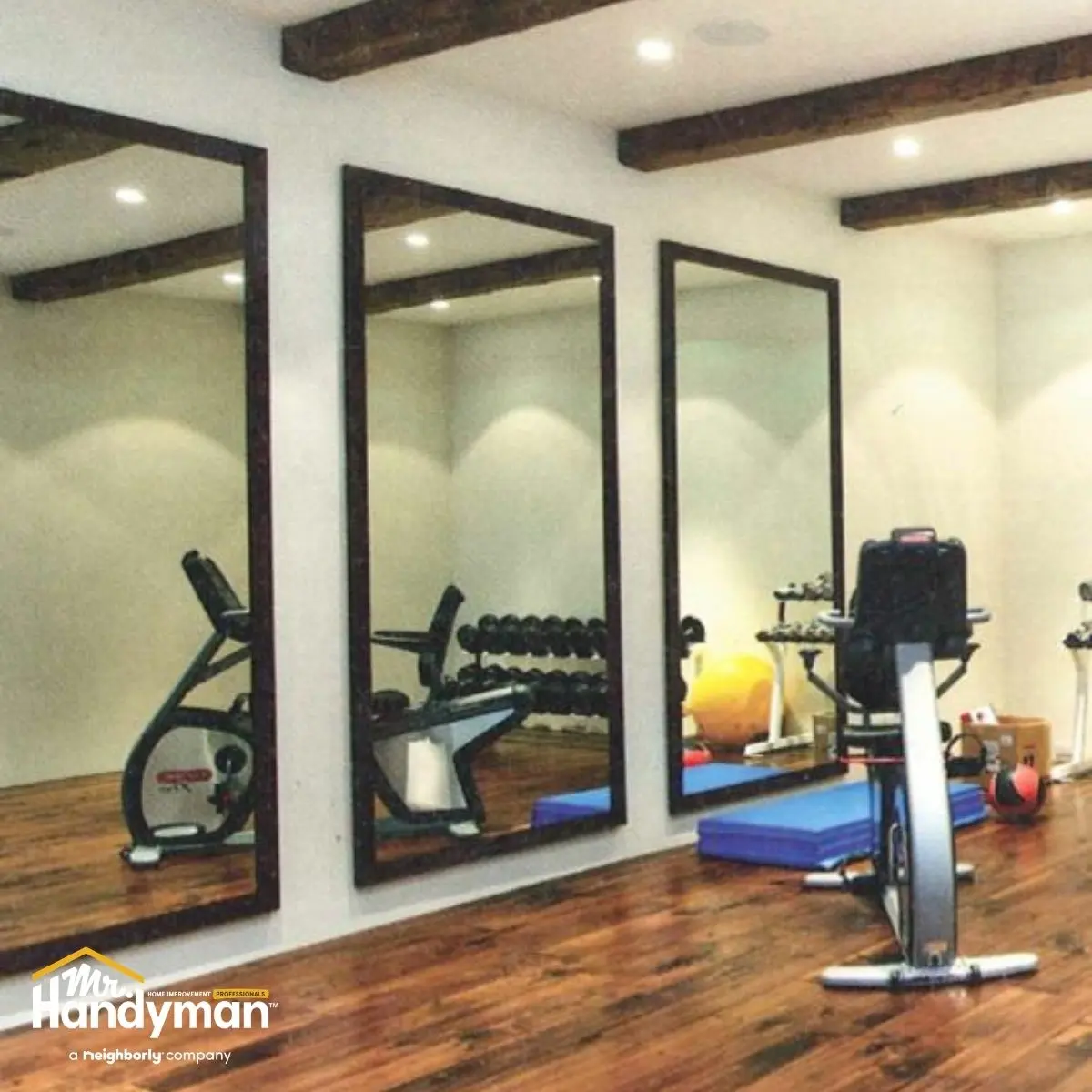
Layout marking before any adhesive is applied establishes the reference lines that keep panel alignment consistent across a multi-panel installation and that prevent the cumulative drift that produces a visibly uneven mirror wall by the time the final panel is in place. Snapping a level horizontal chalk line at the bottom panel support height, establishing vertical reference lines at each panel joint location, and confirming that the layout produces the intended coverage across the installation zone before any adhesive is applied catches layout errors at the stage where they cost nothing to correct. Layout errors discovered after adhesive panels are in place cost significantly more in material, time, and wall surface remediation to correct.
Adhesive application pattern and coverage are the technical variables that most directly affect the long-term performance of the mounting system, and they are the variables that shortcuts most frequently compromise. Applying adhesive in continuous horizontal beads spaced at intervals specified by the adhesive manufacturer across the full height of the panel contact area, rather than in the corner and center dab pattern that reduces material usage and application time, produces the coverage distribution that supports the panel weight and resists the peel forces that gym use generates. Leaving the prescribed open time for the adhesive to develop initial tack before panel placement, and applying firm, uniform pressure across the panel surface after placement to achieve full contact between the adhesive and both the panel backing and the wall surface, completes the adhesive application process correctly.
The Specific Installation Risks That Wichita's Climate Creates
Wichita's climate creates installation timing and curing conditions for gym mirror projects that require attention from any installer who is applying national installation guidelines to a regional climate reality. The temperature and humidity conditions under which adhesive systems are applied directly affect how those systems cure and what bond strength they ultimately achieve, and Kansas delivers a wider range of those conditions through the year than installation guideline authors typically account for in their standard recommendations.
Adhesive application in low-temperature conditions, which are relevant for any Wichita gym mirror project undertaken in fall or winter, slows the curing process in ways that extend the period during which the mirror must be supported against movement before the adhesive has developed adequate bond strength. Most construction adhesives specify a minimum application temperature of 40 to 50 degrees Fahrenheit and achieve their rated bond strength most reliably in the 60 to 80 degree range. A gym space that is being renovated in January and has not yet been fully conditioned to operating temperature may present substrate and ambient temperatures below the adhesive's reliable performance range, producing a cure that is slower and potentially less complete than the manufacturer's specification assumes.
High humidity conditions during summer installation in Wichita present a different adhesive performance concern. Moisture-curing adhesive systems can over-cure in high-humidity conditions, producing a skin on the adhesive surface before the panel is placed that reduces bond area. Water-based adhesive systems may have extended open times in high-humidity conditions that alter the installation timing sequence. Selecting adhesive products that are formulated for the full range of temperature and humidity conditions that a Wichita installation will encounter, rather than products whose performance window is optimized for mild, stable conditions, is the specification decision that protects installation quality across the seasonal variation that Kansas delivers.
Maintenance Inspection That Keeps Mirror Installations Safe Over Time
Mirror installation in a commercial gym environment is not a set-and-forget operation. The combination of vibration from equipment use, the thermal cycling that Wichita's climate delivers, the humidity fluctuations of an active training environment, and the minor impact events that inevitably occur in spaces where members are training with loaded implements all act on the mounting system over time in ways that require periodic assessment to catch developing conditions before they reach the point of failure.
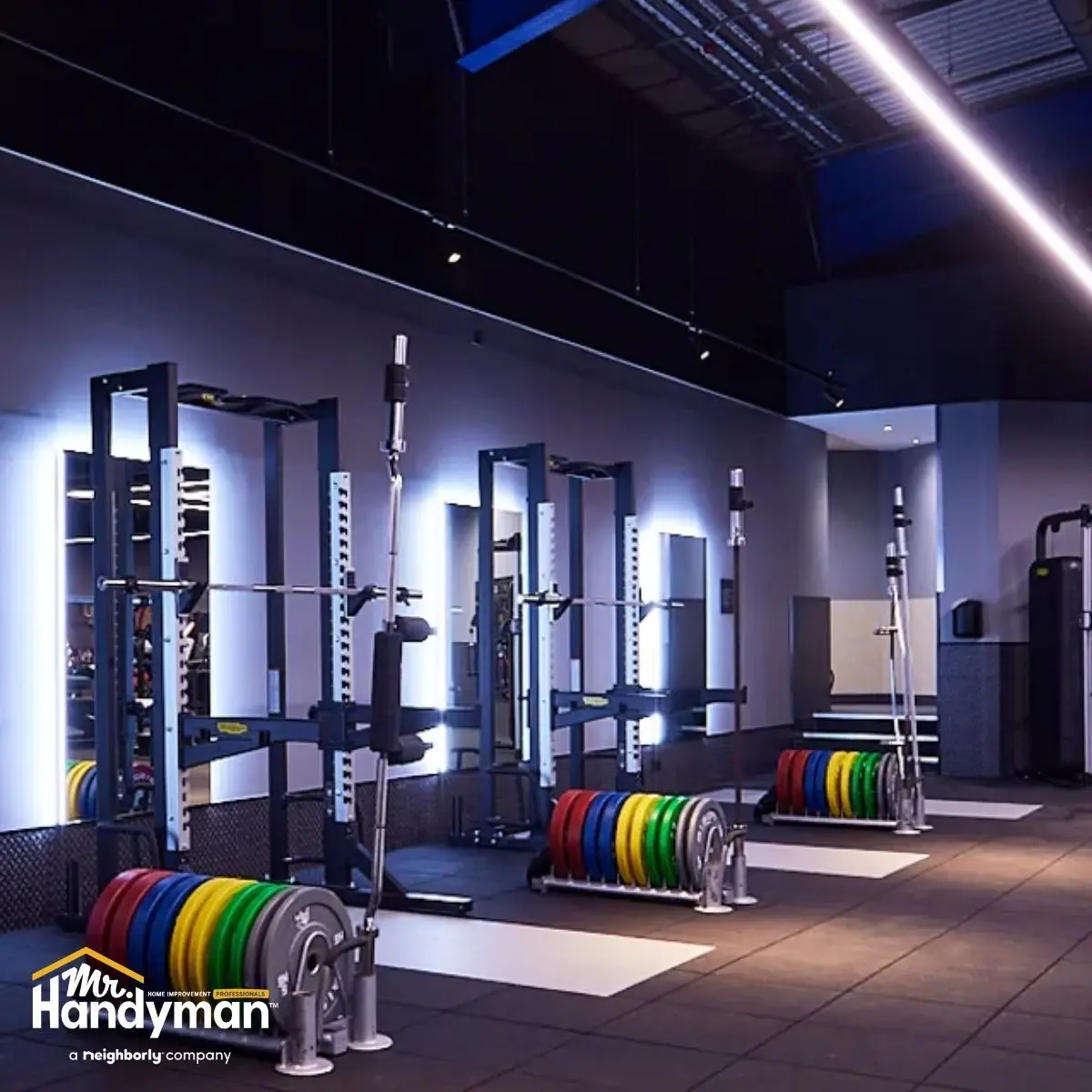
A mirror inspection protocol for commercial fitness facilities should be conducted at minimum quarterly, with additional inspections following any significant impact event near the mirror installation or any weather event that produces extreme temperature or humidity conditions in the facility. The inspection should assess the condition of the mirror surface for new cracks, chips, or edge damage that indicate structural compromise of the panel. It should check the condition of all mechanical fasteners and clips for looseness, corrosion, or physical damage. It should examine the perimeter of each panel for any evidence of adhesive bond failure expressed as panel movement, edge separation from the wall surface, or the hollow sound that a debonded panel produces when tapped lightly at its edges compared to a fully bonded panel.
Any mirror panel that shows cracks, significant edge chipping, loose mechanical fasteners, or evidence of adhesive debonding should be removed from service immediately and either repaired or replaced before the area is returned to member use. The interim step of marking the compromised mirror with out-of-service signage and preventing member access to the area immediately adjacent to it provides protection during the period between discovery and repair that fully eliminates the injury risk the condition presents.
Frequently Asked Questions
How long does a properly installed commercial gym mirror installation typically last?
A mirror installation completed with appropriate substrate preparation, mirror-safe adhesive applied at correct coverage, and properly specified mechanical fasteners in a maintained facility environment should provide a service life of ten to fifteen years before adhesive degradation or panel condition warrants replacement. Installations in high-intensity training zones adjacent to free weight and functional training areas may require panel replacement at shorter intervals due to the impact exposure those zones produce, but the mounting system behind properly backed installations should remain serviceable beyond the panel replacement cycle.
What is the minimum distance between the nearest mirror panel and a free weight rack or functional training equipment?
Most fitness facility safety guidelines recommend a minimum clearance of three to four feet between mirror surfaces and the nearest point of free weight equipment operation. This clearance provides a buffer against the equipment contact and member movement patterns that high-intensity training generates and reduces the frequency of impact events that the mirror installation must withstand. In facilities where space constraints make this clearance unachievable, protective padding at the lower wall section below the mirror line provides additional impact absorption that reduces the consequence of equipment contact events.
Can existing gym mirrors be remounted safely if they were originally installed incorrectly?
Yes, with the appropriate scope of remediation. If the original installation used solvent-containing adhesive that has damaged the mirror backing, the affected panels need to be replaced rather than remounted because the reflective coating damage is irreversible. If the original installation lacked adequate substrate backing and the panels are otherwise undamaged, adding backing panels to the wall behind the existing installation zone and remounting the original panels with correct adhesive and hardware is a viable approach that avoids the cost of full panel replacement.
How should gym operators manage mirror installations during facility renovation projects that generate vibration and impact near the mirror walls?
Mirror panels in areas adjacent to renovation activity that will generate significant vibration, impact, or structural movement should be removed and stored before that work begins rather than left in place with protective covering. Construction activity vibration transmitted through wall and floor structures is a common cause of adhesive bond fatigue in mirror installations, and the protective film or cardboard that contractors typically apply to in-place mirrors during renovation provides no protection against the bond degradation that vibration produces at the adhesive layer behind the panel surface.
Mirror Installation Done Right Is a Safety Investment, Not a Finish Detail
The mirrors in a fitness facility are doing safety-critical work every hour the facility operates, providing the movement feedback that members depend on for form correction and injury prevention while themselves presenting a hazard if their installation does not meet the standard that a commercial training environment requires. Mr. Handyman of the Wichita Metro Area works with fitness facilities, corporate wellness centers, and commercial properties throughout the region on professional mirror installation that accounts for the specific substrate, climate, and usage conditions that Wichita area facilities present.
Call us or visit mrhandyman.com/wichita-metro-area to schedule mirror installation or assessment service for your facility. An installation done correctly the first time is the one that never becomes an emergency.
