
Why Monthly Safety Inspections Are Not Optional in a Commercial Fitness Facility
Every fitness facility in the Wichita metro carries a set of safety obligations that exist independently of the facility's size, its membership demographic, or the length of time it has been operating without an incident. Those obligations are not suggestions that well-intentioned facility operators follow when time allows. They are legal requirements, insurance conditions, and ethical responsibilities that the act of inviting members to exercise in a commercial space creates automatically and that remain in force through every operating hour regardless of how low-profile or routine facility operations may feel on any given day.
Monthly safety inspections are the mechanism through which those obligations are converted from abstract requirements into documented, verifiable operational practices that protect members from preventable injury and protect facility operators from the liability exposure that preventable injuries create. The distinction between a safety failure that could not have been anticipated and one that a reasonable inspection program would have identified and prevented is the distinction that determines whether an injury event produces an insurance claim or a negligence lawsuit, and that distinction is made by the presence or absence of a documented inspection record that demonstrates the facility was actively monitoring the conditions that produced the failure.
The specific safety elements that monthly inspection covers in a commercial fitness facility, handrails, grab bars, emergency systems, egress lighting, and the full range of passive and active safety components that the building and its operation require, are precisely the elements that develop their failure conditions most gradually and most invisibly. A handrail whose mounting fasteners are developing looseness through the vibration of daily use does not announce its deteriorating condition until a member applies lateral force to it and discovers that it moves in a way that a structurally sound handrail does not. An emergency exit device whose push bar has developed internal spring fatigue does not display its functional deficit during normal traffic through the door, only at the moment when a member applies force to it under the stress of an emergency evacuation and discovers that it does not operate correctly.
Wichita area fitness facilities face a safety inspection environment that Kansas's regulatory framework shapes in specific ways. The State Fire Marshal's office conducts inspections of commercial occupancies that include fitness facilities, and those inspections assess emergency egress systems, fire suppression and detection systems, and means of egress lighting conditions against the Kansas fire code requirements that commercial facilities must maintain. A facility that cannot produce documentation of regular internal safety inspections during a fire marshal review is a facility that has communicated to the inspector that its safety management practices are reactive rather than systematic, which influences the scrutiny that the inspection applies and the citations that identified deficiencies produce.
Handrail Inspection: The Safety Element That Members Depend on Most Directly
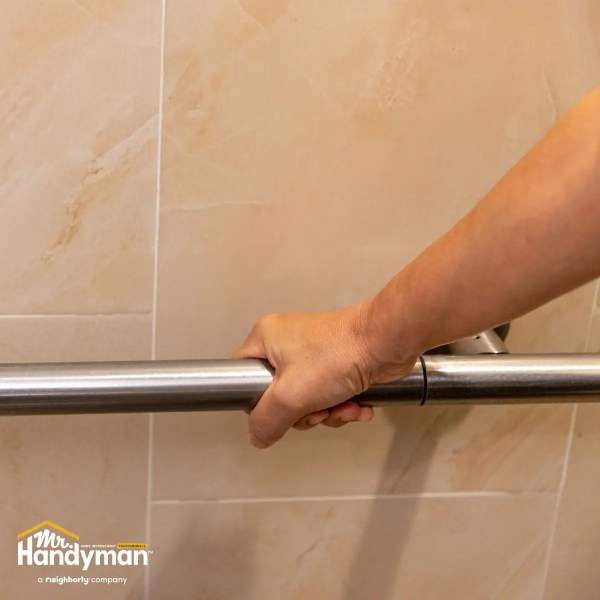
 Handrails in a commercial fitness facility serve a life safety function that their ubiquity in stairwells, elevated platforms, and transition areas can cause facility operators to take for granted. Members who are ascending or descending stairs after an intense workout, navigating an elevated platform with loaded implements, or transitioning between floor levels while fatigued from exercise are depending on the handrails in those locations to provide the stability support that prevents falls whose consequences in a fitness facility context, where members may be fatigued, sweating, and moving in exercise clothing with reduced grip, can be severe.
Handrail structural integrity assessment is the most safety-critical component of monthly handrail inspection, and it requires a specific physical testing approach rather than a visual check alone. A handrail that appears visually sound may have developed fastener looseness, bracket corrosion, or substrate deterioration at its mounting points that visual inspection from a distance cannot detect. The correct assessment method is to apply a firm lateral force to the handrail at multiple points along its length, simulating the loading that a member grasping it for support would produce, and to feel for any movement, give, or instability in the response. A structurally sound handrail mounted to an adequate substrate transmits that lateral force directly to the building structure without perceptible deflection or movement at the mounting points. Any detected movement indicates a mounting condition that requires immediate investigation and repair before the handrail is returned to member use.
Mounting point inspection follows the physical stability test and focuses on the specific fastener and bracket conditions at each wall or post attachment location. Wall-mounted handrail brackets in fitness facilities are subject to the vibration transmitted through the building structure from heavy equipment use and to the thermal cycling that Wichita's climate delivers through the seasonal transitions that affect the dimensional stability of the substrate materials the brackets are anchored to. Fasteners that have backed partially out of their substrate, brackets that have developed cracks at their weld points or cast sections, and anchor plates that have pulled the wall surface slightly away from the structural layer behind it are all conditions that monthly inspection identifies at the early stage where repair is straightforward and before they progress to the structural failure that makes them emergency repair situations.
Graspability assessment is the handrail inspection element that connects directly to ADA compliance requirements and to the functional safety performance that handrails are designed to provide. ADA standards require that handrails along accessible routes have a gripping surface diameter or width within the one and a quarter to two inch range that allows a member's hand to fully encircle the rail for a secure grip. Handrails with larger profiles, flat surfaces, or ornamental shapes that prevent full hand encirclement do not meet this standard and do not provide the secure grip that the life safety function of the rail requires. Monthly inspection should confirm that handrail gripping surfaces are clean, free of the paint buildup that repeated repainting cycles can add to rail diameter, and free of sharp edges or projections that could injure a member's hand during the gripping contact that stair use produces.
Grab Bar Inspection in Locker Rooms, Restrooms, and Wet Areas
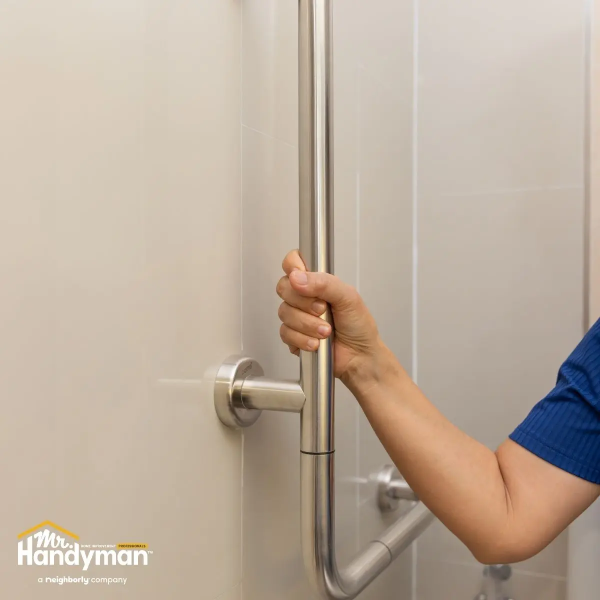
Grab bars in fitness facility locker rooms, restrooms, and shower areas serve a safety function that is distinct from but equally critical to the handrail function in vertical circulation areas. A member who loses footing on a wet shower floor or who needs support during the transition from a shower bench to a standing position is depending on the grab bar in that location to support their full body weight under dynamic loading conditions that the bar's mounting system must resist without failure.
Grab bar loading conditions in commercial fitness facility wet areas are significantly more demanding than the static touch-and-balance contact that most grab bar installations experience in residential applications. Commercial fitness facility members include a wide range of ages, body weights, and physical conditions, and the loading that a large, heavy member applies to a grab bar during a balance recovery event can approach or exceed three hundred pounds of dynamic force applied at the end of a bar whose lever arm amplifies that force at the mounting points substantially. A grab bar mounted with the minimum fastener penetration that residential installation standards specify is not adequate for this loading condition, and facilities that have installed grab bars to residential standards in their commercial wet areas are carrying a structural liability at every bar installation that monthly inspection needs to identify before a failure event reveals it.
The pull and push test that verifies grab bar structural adequacy requires applying firm force in both the pulling direction, away from the wall, and the lateral direction, along the wall plane, while observing the bar's response at its mounting points. Any visible wall surface deformation around the mounting flanges, any audible fastener movement, or any perceptible rotation of the bar relative to its mounting position indicates inadequate mounting that requires immediate repair. Grab bars in commercial shower areas should be mounted through the tile and substrate into structural backing that distributes the loading across a backing plate or blocking member rather than relying on tile anchor fasteners alone, and monthly inspection that identifies bars lacking this structural backing provides the information needed to prioritize retrofitting before a loading event produces a failure.
Emergency Systems Inspection That Cannot Be Deferred or Abbreviated
Emergency systems in a commercial fitness facility include every active and passive safety component whose function is specifically required at the moment when normal facility operations have been disrupted by a fire, a power failure, a medical emergency, or any other event that creates an immediate safety need for facility occupants. The defining characteristic of emergency systems is that their function cannot be tested at the moment it is needed and then corrected if it fails. They must be confirmed to be working before the emergency that requires them, which is precisely why monthly inspection exists.
Emergency lighting system testing in fitness facilities requires the same functional test approach described in the lighting maintenance discussion, with the specific addition of the visual confirmation that every emergency unit in the facility is in the test list and that no units have been omitted through space reconfiguration, renovation work, or the gradual accumulation of oversights that reduces inspection coverage over time. Walking the full facility perimeter and every interior zone with the emergency lighting test list during monthly inspection confirms that coverage is complete before initiating the functional test of individual units.
Automated External Defibrillator availability and condition inspection is a monthly safety check whose importance in a fitness facility context is difficult to overstate. Kansas law requires AED availability in certain commercial fitness facilities, and the American Heart Association's guidelines for fitness facilities recommend AED placement within a three to five minute response time from any location in the facility. A monthly inspection that confirms the AED is present at its designated location, that the battery and pad indicators show a ready status, that the unit has not been moved from its accessible position, and that the surrounding cabinet or mounting location is unobstructed by equipment or signage confirms that the device will be available and functional at the moment a cardiac emergency makes it necessary.
Building the Monthly Inspection Checklist That Covers Everything That Matters
A monthly safety inspection program that actually protects members and facility operators requires a documented checklist that is comprehensive enough to capture every safety-relevant condition in the facility and specific enough to require genuine assessment rather than perfunctory visual passes that miss developing conditions. The checklist is the operational tool that converts the safety inspection commitment from an intention into a verifiable practice, and its quality directly determines the quality of the protection the inspection program provides.
Organizing the checklist by facility zone rather than by safety system category produces the most efficient inspection workflow because it eliminates the backtracking that system-organized checklists require when a single zone contains multiple system types that need to be assessed. A zone-organized checklist moves the inspector through the facility in a logical geographic sequence, assessing every safety element in each zone before moving to the next, which minimizes travel time and ensures that no zone is inadvertently skipped through the transition between system categories.
Each checklist item should specify the assessment method rather than simply identifying the element to be checked. An item that reads "inspect stairwell handrail" produces a different and less reliable outcome than one that reads "apply lateral force to handrail at each bracket location and confirm no movement, check gripping surface diameter and condition, verify wall surface integrity at all mounting flanges." The specificity of the assessment method is what differentiates an inspection that finds developing conditions from one that confirms that obvious failures are absent, and it is the specificity that makes the resulting documentation meaningful when it is reviewed during a regulatory inspection or produced in response to a liability claim.
Documentation of findings should include both the conditions confirmed as satisfactory and any conditions identified as requiring attention, with the latter categorized by priority level that reflects the urgency of the required response. A condition that presents an immediate injury risk requires same-day response and should trigger immediate removal of the affected element from member use pending repair. A condition that represents a developing concern without immediate injury potential requires scheduled repair within a defined timeframe that prevents it from progressing to the immediate risk category before the repair is completed. Both categories require documentation of the identified condition, the response action taken, and the date of repair completion that closes the finding in the inspection record.
Fire Safety System Elements That Monthly Inspection Must Include
Fire safety systems in a commercial fitness facility encompass a range of active and passive components whose monthly inspection requirements extend beyond the emergency lighting assessment described in Part A to include the full chain of systems that detect, suppress, and facilitate evacuation of fire events in the occupied facility.
Fire extinguisher inspection is the monthly fire safety task with the most specific regulatory requirement in Kansas commercial facilities. Monthly visual inspection of each extinguisher must confirm that the unit is present at its designated location, that the pressure gauge needle is in the green operating range, that the tamper seal on the pull pin is intact, that the unit shows no visible physical damage, and that the last annual professional inspection tag is current. A fire extinguisher that fails any of these monthly check criteria requires immediate attention before the affected unit is returned to its designated location as an available suppression resource.
Fire suppression system inspection items that monthly checklist should confirm include the visual confirmation that all sprinkler heads throughout the facility are unobstructed by equipment, signage, storage, or any material placed within the eighteen inch clearance zone below each head that fire codes require. Sprinkler heads that have been painted over through interior paint projects, that show visible corrosion, or that have been physically damaged by equipment contact are conditions that require immediate professional evaluation because a compromised sprinkler head may not activate at the temperature rating it was designed for or may not produce the spray pattern that the suppression system design depends on for effective coverage.
Fire alarm pull station and smoke detector inspection should confirm that every pull station in the facility is visible, accessible, and unobstructed, and that every smoke detector shows its operational indicator in a status consistent with normal function. In Wichita area fitness facilities where renovation work, equipment reconfiguration, or storage placement has occurred since the previous inspection, confirming that these devices have not been inadvertently obstructed or relocated from their code-required positions is the specific check that renovation and reconfiguration activity makes necessary.
Medical Emergency Preparedness Elements Beyond the AED
A fitness facility's monthly safety inspection program needs to extend beyond the equipment and system checks that physical plant condition requires to include the preparedness elements that medical emergency response depends on, because the physical condition of the building and its systems is only one dimension of the safety environment that members are trusting the facility to maintain.
First aid kit inventory and condition inspection is a monthly task whose importance is proportional to the likelihood of minor injuries in an active exercise environment, which is to say that it is a task that fitness facilities should treat as routine and non-negotiable rather than discretionary. A first aid kit that is present but whose contents have been depleted through use without replenishment, whose sterile items have passed their expiration dates, or whose location is unknown to current staff is not providing the first response capability that its presence is supposed to ensure. Monthly inspection that confirms contents against a defined inventory standard and replenishes depleted items keeps the kit ready to support the minor injury response that fitness facility operations regularly require.
Staff emergency response capability verification is the monthly inspection element that most facilities omit because it involves people rather than equipment and because its assessment requires active engagement with staff rather than a physical walkthrough. Confirming monthly that the staff members on duty know the location of the AED, the first aid kit, and every emergency exit in the facility, that they can demonstrate the basic operation of the AED, and that they know the emergency contact protocol for the facility provides the human readiness component that physical equipment availability alone cannot deliver. An AED that is present, charged, and ready for use provides no benefit if the staff member who first reaches a member in cardiac arrest does not know where it is located or how to operate it.
Egress System Elements That Monthly Inspection Needs to Verify
Emergency egress systems in a fitness facility encompass every element that members depend on to safely exit the building during an emergency, and monthly inspection of these systems needs to cover both the hardware condition of exit devices and doors and the spatial conditions of the egress pathways themselves.
Exit door hardware functional testing during monthly inspection goes beyond the fire door condition assessment described in Part A to include the specific functional verification that every exit device in the facility operates correctly under the loading conditions that emergency use produces. Pushing each exit device to its full throw and confirming that the latch bolt fully retracts, that the door swings freely through its full arc without binding, and that the door can be opened from the exterior side by authorized personnel without a key if the facility's operational requirements include that function confirms the complete egress capability of each exit point rather than just its latch and closure performance.
Egress pathway clearance inspection confirms that every path from any occupied area of the facility to an exterior exit is free of obstructions that have accumulated since the previous monthly inspection. Equipment that has migrated from its designated position into a corridor, cleaning supplies stored in an egress stairwell, promotional displays placed in front of exit doors, and any other accumulation that reduces the clear width of egress pathways below the code-required minimum are monthly inspection findings that require immediate correction rather than scheduled remediation.
Exit signage illumination inspection confirms that every exit sign in the facility is illuminated correctly, that its directional arrows are pointing toward the actual egress path rather than toward a reconfigured space layout that has changed since the signs were installed, and that no sign has been obscured by renovation work, new equipment placement, or signage additions that block its visibility from the approaches it is designed to serve.
Frequently Asked Questions
Who should conduct monthly safety inspections in a fitness facility, and what qualifications do they need?
Monthly safety inspections can be conducted by facility management staff who have been trained in the specific assessment methods required for each checklist item rather than requiring an outside professional for every inspection cycle. The training investment that produces a competent internal inspector is modest relative to the cost of outsourcing every monthly inspection, and an internal inspector who knows the facility well brings contextual knowledge about recent changes and known developing conditions that an outside inspector working from a standard checklist cannot match. Annual professional inspection by a qualified safety consultant complements the monthly internal program by providing the independent assessment that confirms the internal program is capturing everything it should.
What should a fitness facility do when a monthly inspection identifies a condition that cannot be repaired immediately?
Any condition that presents an immediate injury risk to members requires the affected element or area to be removed from member use immediately, through physical barrier, signage, or both, until the repair is completed. Conditions that represent developing concerns without immediate injury potential should be documented with a repair timeline, assigned to a responsible party for follow-up, and monitored at intervals appropriate to their progression rate until repair is completed. The inspection record should document both the identified condition and the interim protective measures taken, creating the evidence that the facility responded appropriately to the finding rather than ignoring it.
How does monthly safety inspection documentation protect fitness facilities during liability claims?
Documented inspection records create an evidentiary timeline that demonstrates whether a facility was actively monitoring the conditions relevant to a specific injury event. A facility with consistent monthly inspection records showing no identified deficiency at the location and element involved in an injury, followed by prompt response documentation when the condition was first identified, has a defensible position that supports the claim that the injury was not the result of maintenance negligence. A facility without inspection documentation cannot demonstrate this, and the absence of documentation is typically interpreted unfavorably in liability proceedings.
Are there specific Kansas regulations that govern safety inspection requirements for fitness facilities?
Kansas commercial facilities including fitness centers are subject to fire code requirements enforced by the State Fire Marshal that include specific inspection and testing intervals for fire safety systems, emergency lighting, and means of egress components. OSHA standards applicable to commercial employers cover workplace safety conditions that affect staff. ADA requirements apply to accessible route elements including handrails and grab bars. While Kansas does not have a fitness facility-specific inspection statute that covers all elements of a comprehensive monthly safety program, the combination of fire code, building code, and ADA requirements creates a regulatory framework that monthly inspection addresses comprehensively when the checklist is built to cover all applicable standards.
Safety That Members Can Feel Without Having to Think About It
The best safety inspection program is one whose results are invisible to members because everything is working correctly every time they use it. The handrail that supports them on the stairs, the grab bar that steadies them in the shower, the exit that opens immediately when they push it, and the AED that is ready when it is needed are all products of the consistent monthly inspection that keeps each of those elements at the standard members deserve. Mr. Handyman of the Wichita Metro Area works with fitness facilities, corporate wellness centers, and commercial properties throughout the region on the inspection follow-through, repair, and installation work that keeps safety systems performing at the standard every member has a right to expect.
Call us or visit mrhandyman.com/wichita-metro-area to schedule safety system repair or installation service for your facility. A facility that takes monthly safety inspection seriously is a facility that its members can trust, and that trust is the foundation of everything a fitness business is trying to build.