
The Environment Your Gym Creates Is a Brand Statement That Operates Continuously
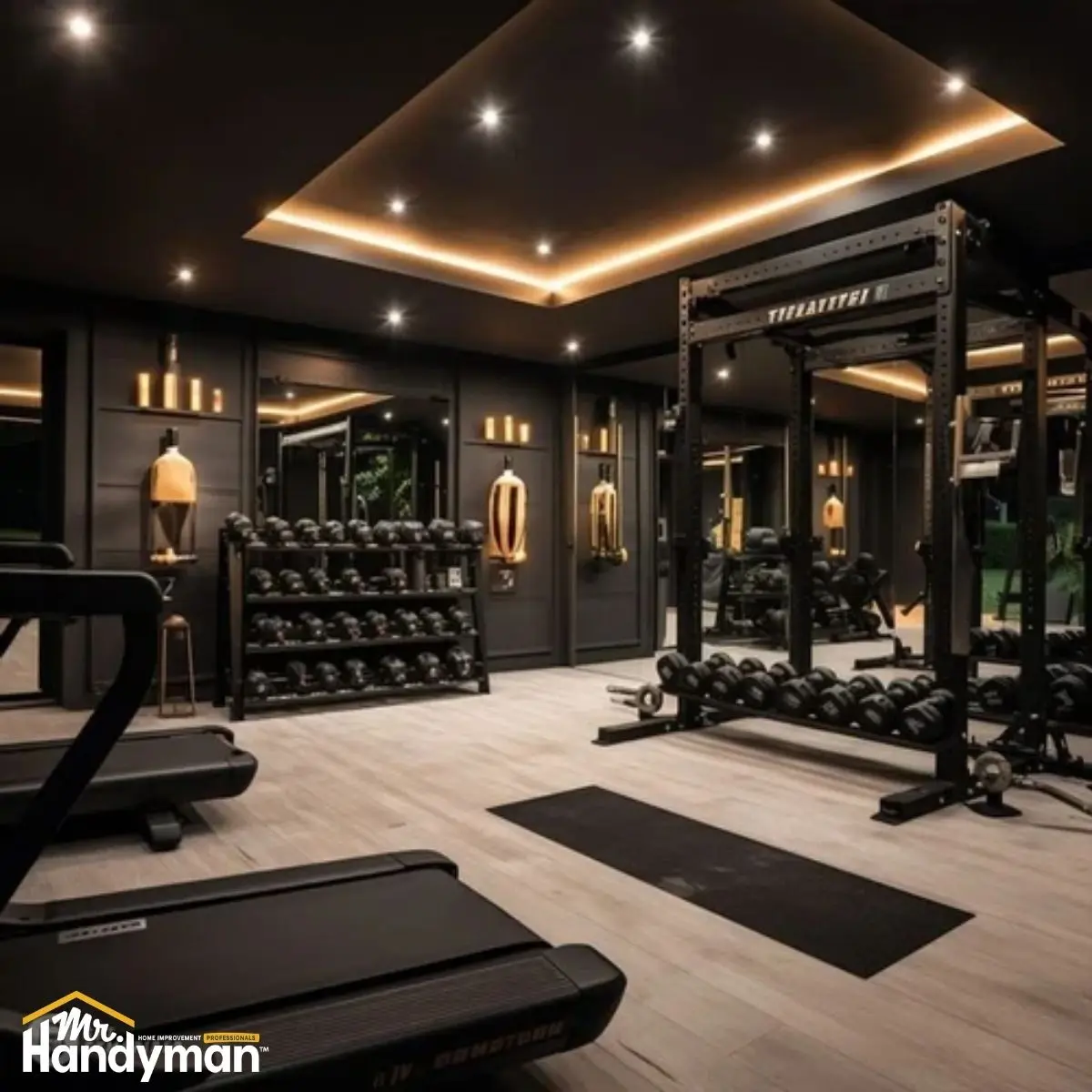
Every fitness facility in the Wichita metro is making a brand statement every hour its doors are open, and that statement is not being made primarily through its logo, its social media presence, or the programming language on its website. It is being made through the physical environment that members and visitors experience the moment they step inside. The condition of the walls and ceilings is a central component of that environment, and its influence on brand perception operates in a way that is simultaneously pervasive and largely invisible to facility operators who have acclimated to conditions that members and prospective members are evaluating with fresh eyes on every visit.
Brand image in the fitness industry is not an abstract marketing concept. It is the cumulative impression that every physical and experiential element of the facility creates in the minds of people who interact with it, and it directly determines whether those people feel that their membership investment is justified, whether they recommend the facility to others, and whether they renew when their commitment period ends. A facility with strong equipment, quality programming, and experienced staff can see all of those advantages undermined by a physical environment that communicates neglect, deferred maintenance, and a gap between the standards the facility claims and the standards it actually maintains.
Walls and ceilings carry more brand weight than most fitness facility operators assign to them in their maintenance priority conversations, and the reason is straightforward. These surfaces are present in every photograph a member takes in the facility, visible in every video posted to social media from the gym floor, and experienced as the surrounding environment during every workout session. A wall with visible water staining, impact damage from equipment, or peeling paint is not a background detail that members ignore while focusing on their training. It is an environmental condition that shapes the psychological state of every member training near it and that communicates a specific message about the facility's standards to every person who sees it.
The Wichita metro fitness market is competitive enough that the physical condition of a facility is a genuine differentiator in member acquisition and retention decisions. Prospective members touring facilities before committing to a membership are making comparative judgments that include wall and ceiling conditions alongside equipment quality, cleanliness, and programming. A facility whose interior surfaces are in visibly poor condition is starting that comparative evaluation at a disadvantage that its other strengths have to work against rather than build on.
Water Damage: The Wall and Ceiling Condition That Creates the Strongest Negative Signal
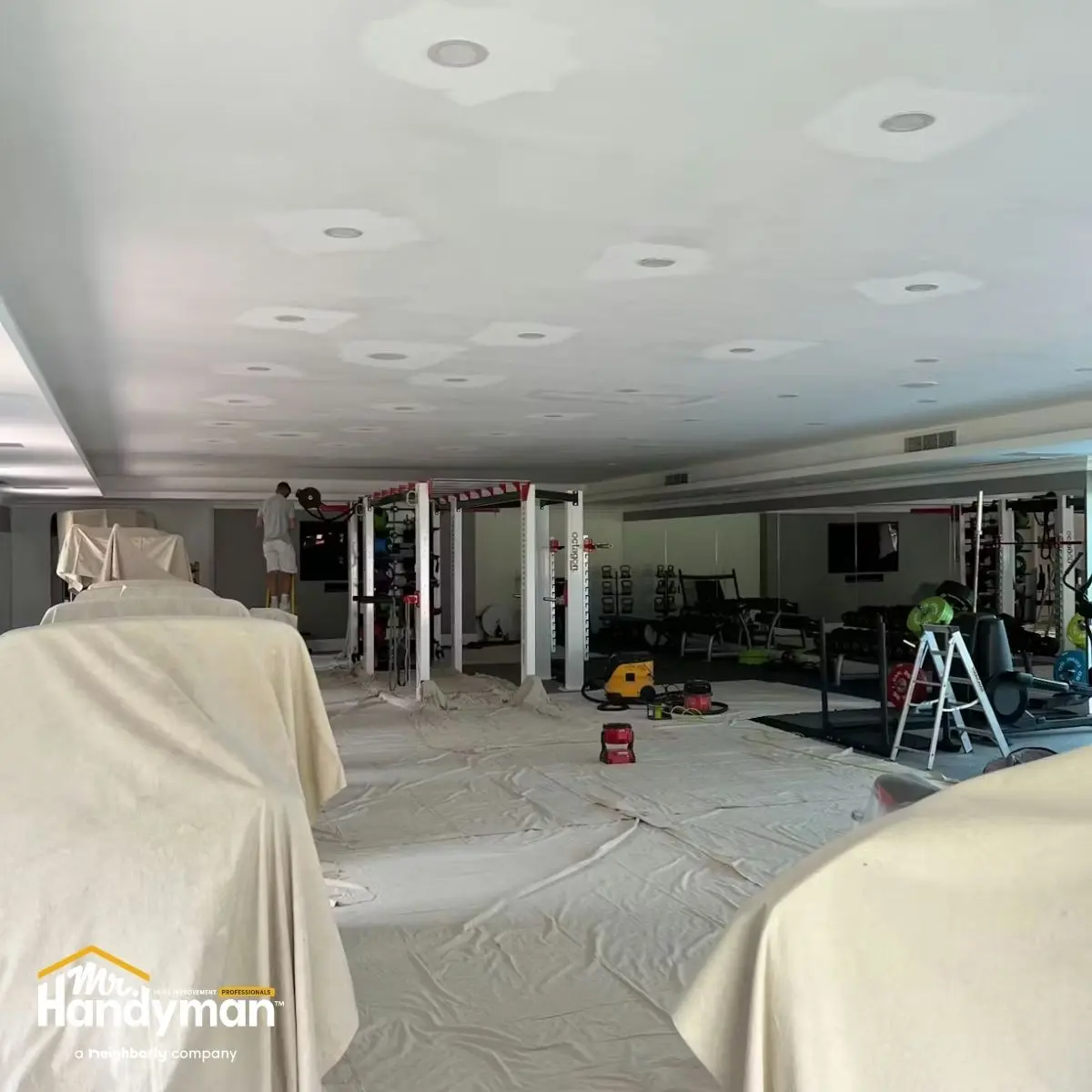
Water staining on walls and ceilings is the single most damaging surface condition a fitness facility can present to its members and visitors, and the damage it produces to brand perception is disproportionate to its physical scope. A single water stain on a ceiling tile in the cardio zone communicates to every member who sees it that the facility has a leak that has not been addressed, that the building envelope or mechanical systems above that area are not being maintained, and that the management standard of the facility may not match what the membership fee suggests it should be. These conclusions are drawn rapidly and often unconsciously, and they are not easily reversed by other positive facility attributes.
Water damage on gym walls and ceilings originates from several sources that Wichita's climate makes particularly relevant. Roof leaks that develop through winter freeze-thaw cycling or that result from the hail events that accompany the region's spring and summer storm season produce ceiling infiltration that shows as staining on ceiling tiles, paint bubbling on drywall ceilings, and in more advanced cases, visible structural sagging at the affected area. HVAC condensation issues that arise from inadequate insulation on supply ductwork or from condensate drain systems that have become blocked produce moisture at ceiling level that stains tiles and creates the mold growth conditions that present a health concern alongside the brand damage.
Plumbing leaks from supply lines, drain connections, and fixture supply points in restroom and mechanical spaces above or adjacent to training areas produce wall and ceiling conditions that are frequently more advanced than their surface appearance suggests by the time they become visible. A ceiling tile that shows a fresh water stain has typically been receiving moisture for long enough to have saturated the tile backing and potentially the structural elements above it before the stain became apparent at the finished surface. Treating a water stain as a cosmetic repair without identifying and resolving the moisture source above it is the maintenance error that produces recurring staining at the same location through subsequent leak events, compounding the brand damage each time the stain returns.
The appropriate response to any water stain on a gym wall or ceiling follows a non-negotiable sequence. Source identification and elimination comes first, requiring investigation above the stained surface to find and correct the origin of the moisture infiltration. Structural assessment of the affected area follows, evaluating whether the materials that have been wet have retained their structural integrity or whether replacement rather than surface repair is required. Mold assessment is the third step, because any area that has held moisture long enough to produce visible staining has been in conditions that support mold growth, and surface repair that conceals mold without addressing it creates an ongoing air quality concern that is both a member health issue and a liability exposure. Only after those three steps have been completed does surface repair or replacement of stained materials become the appropriate final action.
Impact Damage and Surface Wear in High-Intensity Training Zones
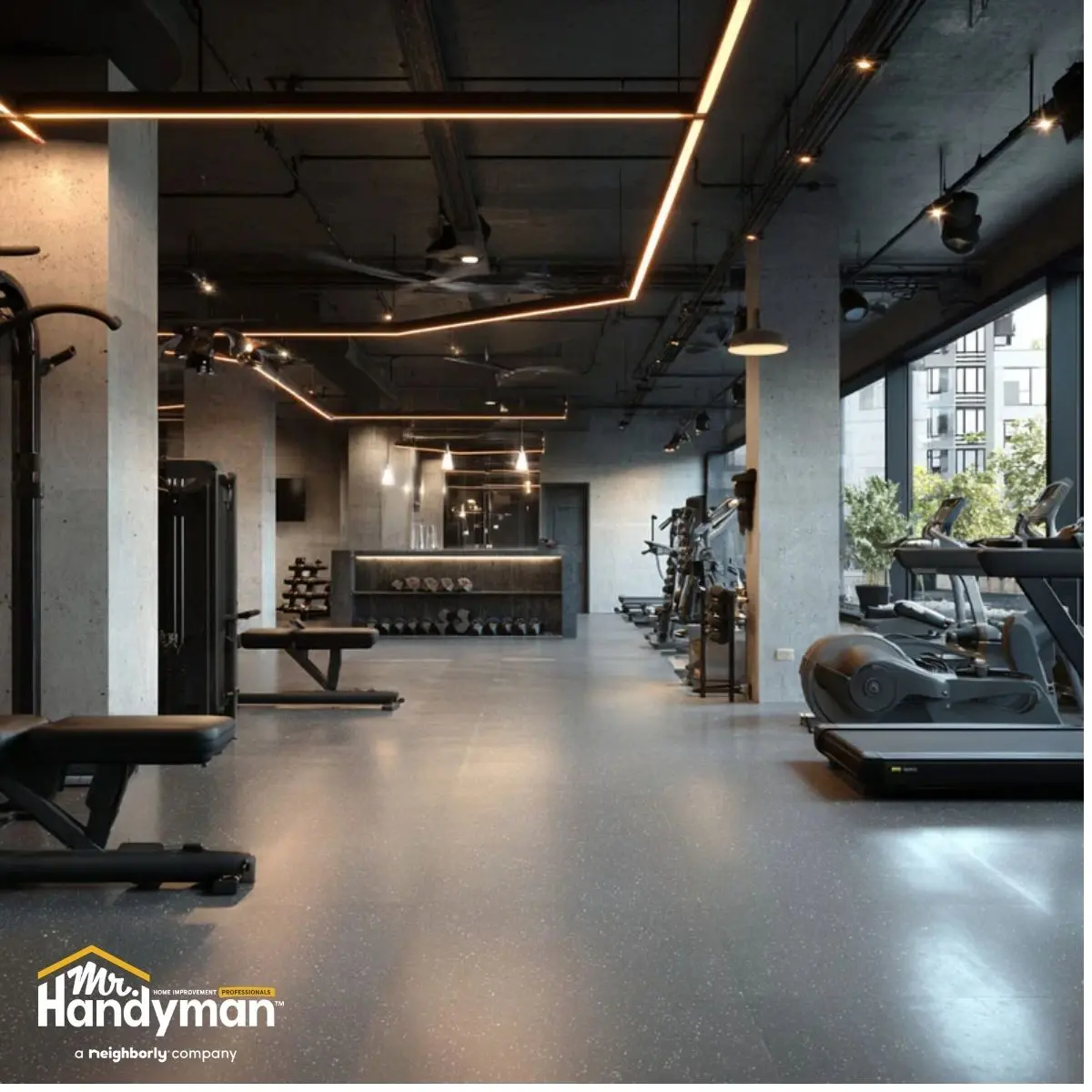
Impact damage to gym walls is a predictable consequence of the activities that high-intensity training zones support, and managing it proactively is a maintenance responsibility that the zone's design and programming intensity should have anticipated. Free weight areas, functional training zones, and any space where kettlebells, medicine balls, battle ropes, and loaded implements are in regular use will experience wall surface damage from equipment contact, member movement, and the proximity of high-energy activities to surrounding surfaces.
Drywall impact damage in gym environments ranges from surface scuffs and paint transfer from equipment contact to full-thickness holes produced by weight drops, barbell contact, or equipment tipping events. The specific concern with impact-damaged drywall in a fitness facility goes beyond the aesthetic problem that visible damage creates. Drywall that has been compromised through impact loses its structural contribution to the wall assembly at the damaged location, and in walls that also carry equipment mounting points, electrical conduit, or mechanical rough-in, that structural compromise creates conditions that affect both the integrity of the mounted elements and the safety of the surrounding area.
Protecting high-risk wall areas through the installation of appropriate protective materials is the proactive approach that reduces impact damage accumulation in training zones where equipment proximity to walls is unavoidable. Rubber wall padding at the lower wall sections of free weight and functional training areas absorbs impact energy that would otherwise transfer directly to the drywall substrate, extending the service life of the underlying wall assembly and eliminating the recurring repair cycle that unprotected drywall in these zones requires. Plywood backing panels installed behind drywall at locations where wall-mounted equipment, cable machine anchors, and suspension trainer attachment points are installed distribute the loading of those mounted elements across a larger wall area than the drywall alone can support, preventing the fastener pullout and panel deformation that wall mounting into standard drywall without backing produces under training loads.
Mirror installations in gym environments deserve specific mention in the wall damage context because they are simultaneously among the most valued member amenities in a fitness facility and among the most vulnerable wall-adjacent elements to impact damage and improper installation consequences. A mirror that has been installed without adequate backing, with incorrect fastener selection for the wall substrate, or at a height and location that places it within the range of equipment swing and member movement is a safety liability that its aesthetic contribution does not offset. Mirror cracking from equipment contact, edge chipping from fastener stress concentration, and full panel failures from inadequate mounting all produce injury risks that are severe enough to warrant treating mirror installation and condition assessment as a safety-critical maintenance category rather than a cosmetic one.
Ceiling Conditions That Affect Member Experience Beyond Appearance
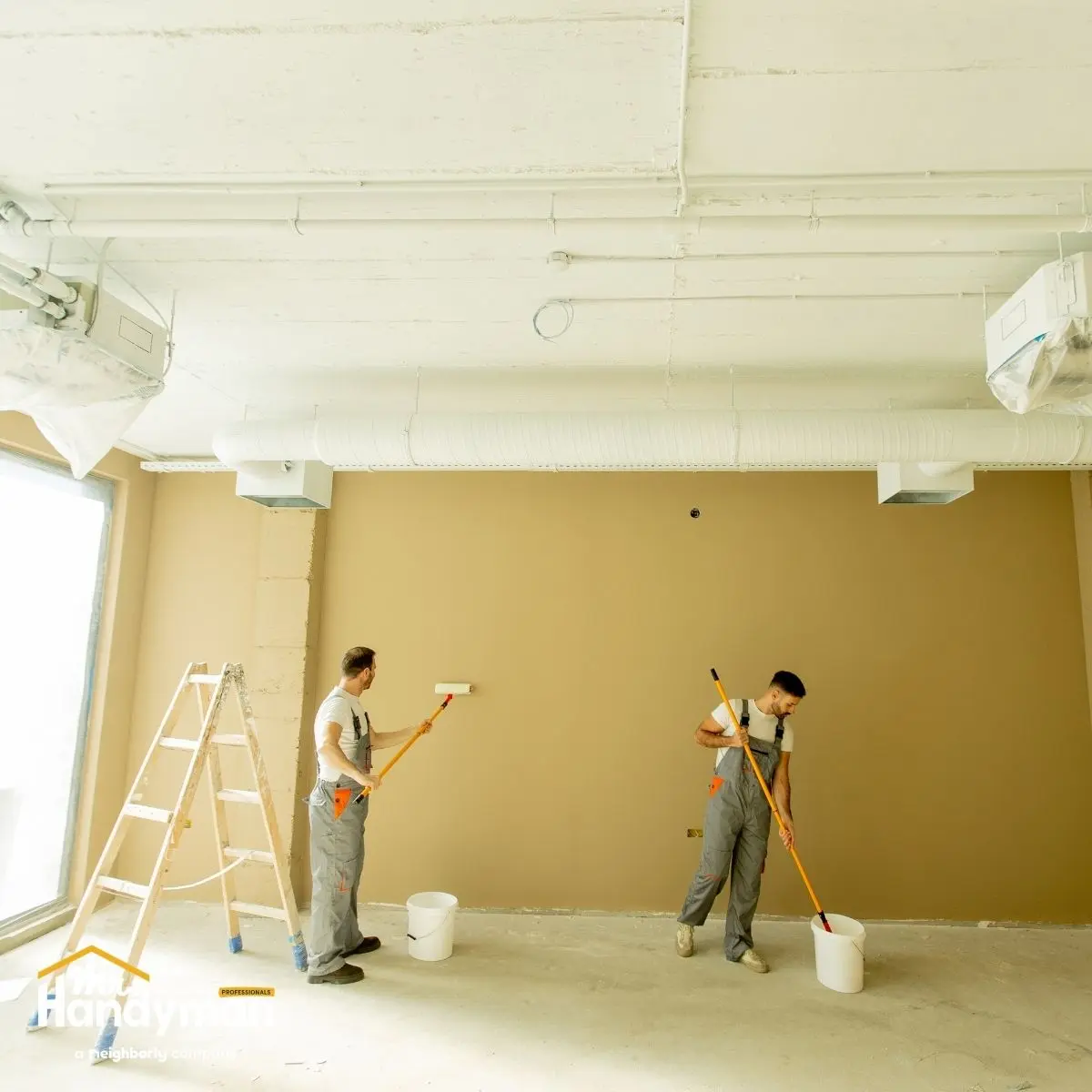
Ceiling conditions in a fitness facility affect member experience through mechanisms that extend beyond the visual impression that surface staining and physical damage create. The ceiling plane carries lighting, ventilation, and acoustic elements whose performance is directly affected by the condition of the ceiling materials and systems at that level, and deterioration in those ceiling-level systems produces member experience impacts that compound the brand damage of visible surface conditions.
Lighting performance in a fitness facility depends on the reflective contribution of ceiling surfaces to the overall light distribution in the space. A white or light-colored ceiling in good condition reflects light downward into the training space in a way that multiplies the effective output of the fixtures above it. A ceiling that has yellowed through age, been darkened by water staining, or been compromised by failed paint adhesion absorbs light rather than reflecting it, reducing the effective illumination level in the space below without any change in the fixture output. Members experience this as a space that feels dim and uninviting relative to what the same fixture layout would produce over a well-maintained ceiling surface, and that psychological effect is real and measurable in how the space feels during training.
Acoustic tile ceilings in fitness facilities serve an important sound management function that deteriorated tile condition compromises in ways that affect every member in the space simultaneously. Acoustic ceiling tiles derive their sound absorption performance from their porosity and surface texture, properties that water infiltration and physical damage destroy. A water-stained acoustic tile has had its porous structure collapsed by moisture in the affected area, reducing its sound absorption coefficient to near zero at the stained zone. In a fitness facility where equipment noise, music, and member activity generate significant sound energy, the cumulative effect of multiple acoustically compromised ceiling tiles is a space that is louder and more acoustically fatiguing than it was designed to be.
Prioritizing Wall and Ceiling Repairs When Everything Cannot Be Done at Once
Most fitness facilities in the Wichita metro are operating within maintenance budgets that require repair prioritization rather than simultaneous comprehensive remediation of every identified wall and ceiling condition. The prioritization framework that produces the best outcomes for both member safety and brand perception addresses conditions in the order of their consequence severity rather than their visibility or their convenience to repair.
Safety-critical conditions occupy the first priority tier without exception. Any ceiling element that presents a falling hazard, including tiles that have been displaced from their grid supports, light fixtures with compromised mounting conditions, and any ceiling-level structural element that shows deflection or separation from its support system, requires immediate removal from service or remediation before the affected area is returned to member use. Any wall condition that presents a sharp edge, an exposed fastener, a compromised mirror panel, or a structural penetration that members could contact during normal training activity belongs in the same immediate response category regardless of where it falls on the aesthetic priority list.
Active water infiltration conditions occupy the second priority tier, immediately behind acute physical safety concerns. A ceiling that is actively leaking or showing fresh staining from an ongoing moisture source is a condition that cannot wait for a scheduled maintenance cycle. The combination of structural degradation in the wet materials, mold growth potential in the moisture-laden environment, and the slip hazard that water dripping onto a gym floor creates during a training session makes active water infiltration a same-day response item rather than a scheduled repair. Identifying the source, stopping the infiltration, and establishing temporary protection for the area below are the immediate actions that precede the permanent repair work.
Visible surface conditions that affect brand perception significantly but do not present immediate safety concerns occupy the third priority tier, and this is where the majority of wall and ceiling maintenance work in most facilities falls. Water stains from resolved leaks, impact damage to drywall surfaces, peeling paint in high-visibility areas, and deteriorated acoustic tiles in primary training zones all belong in this category. Addressing these conditions on a scheduled basis that reflects their visibility and their influence on member perception, rather than deferring them indefinitely or addressing them only when member complaints make them unavoidable, is the maintenance discipline that keeps facility brand presentation at a consistent standard.
Room by Room: Where Wall and Ceiling Attention Produces the Most Brand Return
Different zones within a Wichita area fitness facility carry different brand exposure levels that affect how wall and ceiling condition in each zone influences overall facility perception. Directing repair investment toward the highest brand-exposure zones first produces the most visible return on maintenance spending.
The main training floor is the highest brand-exposure zone in any fitness facility because it is where members spend the majority of their time and where the most photographs and videos capturing the facility environment are taken. Wall and ceiling conditions in the main training floor are the conditions that appear most frequently in member-generated content shared on social media, and that content reaches prospective members who are evaluating the facility before visiting. A water-stained ceiling tile or a wall section with visible impact damage that appears in the background of a member's workout video is a brand impression delivered to every viewer of that content without the facility having any control over how it is presented or contextualized.
Locker rooms and restroom areas carry a brand exposure level that is lower in terms of photography and social media presence but higher in terms of the maintenance standard that members use to evaluate the facility's overall hygiene and care standards. Wall and ceiling conditions in these spaces, particularly any evidence of moisture infiltration, mold growth, or delaminating surface materials in the humid environment that locker rooms and restrooms create, produce negative member assessments that are disproportionate to the square footage of the affected area. Members who experience clean, well-maintained locker room wall and ceiling conditions develop a level of facility trust that extends to the training floor and the equipment they use there.
Reception and entry areas carry brand exposure that is concentrated at the prospective member evaluation moment, when a new visitor is forming the first impression that determines whether a trial membership becomes a full enrollment. Wall and ceiling conditions in the entry and reception area are the first interior environment conditions that a prospective member encounters, and their quality sets the expectation frame through which everything else in the facility is evaluated. A reception area with fresh paint, undamaged ceiling tiles, and clean wall surfaces communicates a management standard that prospective members project onto the facility as a whole. A reception area with visible maintenance deficiencies in its wall and ceiling conditions communicates the opposite with equal efficiency.
The Repair Sequence That Produces Professional Results
Wall and ceiling repairs in a fitness facility environment require a sequencing approach that accounts for both the technical requirements of the repair work and the operational reality of a facility that cannot afford extended closures of its primary training spaces.
Ceiling repairs that require access above the ceiling plane should be scheduled during off-hours to minimize disruption to facility operations. Drop ceiling tile replacement is the least disruptive ceiling repair category because individual tiles can be replaced without affecting adjacent tiles or the grid system that supports them, and the work can be completed in minutes per tile during periods between member sessions. Drywall ceiling repairs that require cutting, patching, and finishing work are more disruptive and require adequate cure time for joint compound before painting, which means scheduling them during a period when the affected area can be closed without operational impact.
Wall repairs in training zones should be completed using materials and methods that are appropriate for the specific stress conditions those zones create. Standard joint compound patches in high-impact zones produce repairs that fail through subsequent equipment contact in a fraction of the time that the surrounding original drywall has survived. Using setting-type compounds for structural patches and applying an appropriate impact-resistant finish coat in areas with recurring impact exposure produces repairs that hold up to the conditions that caused the original damage rather than repeating the cycle of patch and repatch that standard repair approaches produce in high-stress gym environments.
Paint selection for gym wall surfaces deserves the same scrutiny that material selection receives in any other high-performance application. Standard interior flat paint in a gym environment is a maintenance liability because it absorbs moisture, holds biological growth, and shows every scuff and mark from equipment and member contact. Eggshell and satin sheens provide the washability and moisture resistance that gym environments require while maintaining an appearance that reads as professional and well-maintained. Semi-gloss in restroom and locker room wall applications provides the maximum moisture resistance and cleanability that those environments demand.
Frequently Asked Questions
How do I identify whether a ceiling stain is from an old resolved leak or an active ongoing one?
A stain that has defined, dry edges with a consistent color throughout its area is typically from a resolved moisture event. A stain with wet or soft edges, color variation suggesting fresh moisture addition to the affected area, or any visible dripping or surface moisture in the surrounding ceiling material indicates an active or intermittent ongoing source that needs to be traced and resolved before surface repair proceeds.
What is the most cost-effective way to address widespread ceiling tile staining in a large training area?
If the moisture source has been fully resolved and structural integrity of the grid system is confirmed, painting acoustic ceiling tiles with an appropriate stain-blocking primer followed by ceiling tile paint is a cost-effective approach for widespread staining where individual tile replacement would require purchasing and replacing a large quantity of tiles. This approach works best when staining is primarily cosmetic and tile substrate integrity has not been compromised by water damage.
How should gyms handle wall damage in mirror-adjacent areas where impact risk is highest?
Installing a continuous rubber or foam-backed wall panel system from floor level to mirror bottom edge in areas where equipment use brings members and implements within range of the mirror creates a protective buffer that absorbs impact energy before it reaches the mirror or the wall substrate behind it. This approach eliminates the most common mechanism of both mirror damage and wall impact damage in high-intensity training zones simultaneously.
Can gyms undertake wall and ceiling repairs during operating hours without disrupting members?
Minor repairs including ceiling tile replacement, small drywall patches in low-traffic areas, and touch-up painting can typically be completed during off-peak operating hours without significant member disruption when appropriate dust and odor management precautions are taken. More extensive repairs involving cutting, grinding, or the application of products with significant VOC off-gassing should be scheduled outside operating hours to avoid member exposure and to allow adequate ventilation before the space is returned to use.
A Facility That Looks the Part Performs the Part
The wall and ceiling conditions of a fitness facility are doing brand work every hour the facility operates, and the message they send is either supporting or undermining everything else the facility is trying to accomplish. Mr. Handyman of the Wichita Metro Area works with fitness facilities, corporate wellness centers, and commercial properties throughout the region on the wall and ceiling repair, painting, and remediation work that keeps facility environments at the standard their members expect and their brand requires.
Call us or visit mrhandyman.com/wichita-metro-area to schedule a facility assessment or request service for specific wall and ceiling repair needs your facility has identified. The environment your gym creates is a promise to every member who trains in it, and keeping that promise starts with the surfaces they see every day.