
What the Transition From Winter to Warm Weather Demands of Your Home's Exterior
The exterior of a Wichita area home does not experience the transition from winter to warm weather as a gentle, gradual shift. It experiences it as a compressed period of accelerating stress that follows the sustained mechanical punishment of a Kansas winter and precedes the UV exposure, heat loading, and storm activity that the region's summer delivers. The window between those two demanding periods is the moment when every weakness that winter created in the exterior envelope is simultaneously most visible and most practically addressable, and homeowners who use that window deliberately arrive at summer with a home exterior that is genuinely prepared for what the warmer months bring.
Preparing a home's exterior for warmer weather is not a single task or a weekend project. It is a systematic process that moves through the components of the exterior envelope in an order that reflects both the consequence severity of the conditions being addressed and the logical sequencing of repair and preparation work that makes each subsequent step more effective. A gutter that is cleaned before the roof above it is inspected and repaired may need to be disturbed again when roofing work dislodges debris into it. Exterior paint preparation that precedes caulking leaves the paint film covering failed sealant that will crack the new finish above it within a season. Getting the sequence right is not a minor detail. It is what determines whether the preparation work produces lasting results or requires repetition sooner than it should.
The specific demands that Wichita's climate places on home exteriors are shaped by a combination of factors that make this region's maintenance requirements more intensive than milder climates. The freeze-thaw cycling that the metro experiences through winter stresses every joint, sealant, and material transition in the exterior assembly. The wind events that Kansas produces year-round fatigue roofing materials, siding fasteners, and any exterior element that presents a surface to moving air. The hail that accompanies many of the region's spring and summer storm systems tests the impact resistance of roofing, siding, and window components in ways that accumulate damage across multiple events. And the summer UV exposure that follows spring is among the most intense in the continental United States at Wichita's latitude, degrading paint films, sealants, and any organic material in the exterior assembly at a rate that makes pre-summer preparation genuinely consequential.
Roofing and Attic Preparation That Sets the Foundation for Everything Below
A home exterior preparation process that does not start at the roof is working in the wrong direction. Everything below the roofline depends on the roof performing correctly, and a roof that enters warm weather with unaddressed winter damage will deliver that damage to the interior of the home through the rain events and wind loading that spring and summer bring. Starting at the top and working down is not a stylistic preference in exterior preparation sequencing. It is the logical order that prevents completed work below from being damaged by unaddressed conditions above.
Post-winter roofing assessment in the Wichita area should focus on the specific damage patterns that this climate produces rather than a generic inspection that could apply to any region. Shingle sealant bond failures are the most common winter damage mechanism on asphalt roofs in this climate, because the temperature cycling between Wichita's coldest winter days and the warmest days of the same month stresses the sealant strips on the underside of shingle tabs beyond their designed flexibility range. A shingle whose sealant bond has broken will not show obvious visual damage from the ground, but it will lift at its lower edge during wind events in a way that a properly bonded shingle does not, admitting water at the unsealed interface during wind-driven rain.
Flashing condition at every roof penetration and transition is the second priority in roofing preparation for warm weather. Chimney flashings, pipe boot flashings, valley flashings, and the step flashings at any roof-to-wall intersection are the points where water entry is most likely to occur and where winter thermal cycling has worked most aggressively at sealant integrity and metal-to-substrate adhesion. A flashing that has lifted even partially from its substrate is an active water entry point during any rain event that delivers water to that area of the roof. Identifying and resealing or replacing compromised flashings before the spring storm season begins is the repair that most directly protects the interior of the home from the moisture damage that roof penetration failures produce.
Attic ventilation assessment is a warm weather preparation item that many homeowners overlook because the attic is not a lived-in space, but inadequate attic ventilation has consequences that affect the entire home through the summer months. A poorly ventilated attic in a Wichita summer accumulates heat that drives up cooling loads on the HVAC system, accelerates shingle aging from below through elevated roof deck temperatures, and creates conditions where moisture-laden air from the living space below condenses on cooler attic surfaces during the temperature differentials that occur between conditioned interior spaces and the unconditioned attic above them. Confirming that soffit vents are clear of insulation blocking that may have shifted through winter and that ridge or gable vents are unobstructed takes minimal time and contributes meaningfully to summer performance of both the roofing system and the home's energy efficiency.
Siding, Trim, and Exterior Cladding Inspection and Preparation
The vertical surfaces of a home's exterior carry winter damage in patterns that are less dramatically obvious than roof damage but that carry equally significant consequences when left unaddressed through another season of weather exposure. Siding inspection for warm weather preparation requires a methodical approach that moves systematically around the full perimeter of the home rather than a casual observation from the driveway that captures only the most obvious conditions.
Wood siding and trim on older Wichita homes, which remain common in established neighborhoods throughout the metro, carry the most complex post-winter inspection agenda because wood responds to moisture cycling in ways that both reveal developing conditions and create new ones through each season of exposure. Paint film that has blistered, peeled, or checked through winter is not simply a cosmetic problem requiring a coat of paint. It is a diagnostic indicator that moisture has been moving through the wood substrate in a volume that the paint film could not contain, and that the underlying wood has been experiencing moisture content levels that promote decay. Before any paint preparation or application work proceeds on wood siding or trim, the condition of the substrate needs to be evaluated honestly, with soft or spongy areas probed to determine whether surface repair or full board replacement is the appropriate response.
Fiber cement and engineered wood siding products, which are common in Wichita homes built from the 1990s onward, carry their own warm weather preparation requirements that differ from those of natural wood but are no less important. The painted finish on fiber cement siding is the critical performance element that protects the substrate from moisture infiltration, and any areas where the factory or field-applied finish has been compromised by impact damage, joint sealant failure, or UV degradation need to be addressed before the aggressive UV exposure of a Wichita summer accelerates the finish breakdown further. Impact damage from hail events is a particular concern for fiber cement in this market, because hail strikes that crack or chip the painted surface of fiber cement create moisture entry points at the substrate level that expand through subsequent wet-dry cycling.
Vinyl siding inspection for warm weather preparation should focus on the conditions that winter produces in this specific material. Vinyl siding becomes more brittle in cold temperatures, and the impact events that winter delivers, ice, wind-blown debris, and the expansion and contraction of the material through repeated freeze-thaw cycles, can produce cracking, distortion, and panel separation that is not always obvious from casual observation. Walking the perimeter of the home and pressing gently on individual panels to confirm that they are properly locked in their horizontal channels and that end caps and J-channel trim pieces are fully seated identifies the conditions that wind events through spring and summer will exploit if they are not corrected first.
Window and Door Preparation for Warmer Weather Performance
Windows and doors are the penetrations in the building envelope that warmer weather tests differently than winter does, and preparing them for the transition addresses both the conditions that winter created and the demands that spring and summer place on these assemblies.
Exterior window and door caulking that survived winter in a condition adequate to prevent obvious infiltration may nonetheless have reached the end of its useful flexibility range in a way that spring's thermal cycling will reveal through visible cracking. The temperature differential between a cold winter morning and a warm spring afternoon in Wichita can exceed 40 degrees within a single day during the transition season, and caulk that has hardened through winter experiences that differential as mechanical stress that it can no longer accommodate through elastic deformation. A caulk joint that cracks under spring thermal cycling admits water during the rain events that accompany Wichita's spring weather in a way that creates the same infiltration risk as a joint that was visibly failed entering winter.
Weatherstripping at exterior doors transitions from its winter role of preventing cold air infiltration to its warm weather role of preventing conditioned air from escaping the cooled interior. The performance demands are different in direction but equally consequential for energy efficiency and comfort. A door with worn or compressed weatherstripping that admitted cold drafts through winter will allow cooled interior air to escape through the same gaps through summer, adding to the cooling load that the HVAC system must manage. Spring is the appropriate time to replace weatherstripping that has compressed, torn, or lost its sealing contact with the door stop, restoring the thermal barrier that the door assembly is designed to provide in both heating and cooling seasons.
Exterior Paint Preparation That Produces Results Worth Having
Exterior paint preparation is the category of warm weather exterior work that most directly determines how long the finished result lasts and how well it performs through the demanding conditions that a Wichita summer delivers. The preparation phase is also the category that homeowners and contractors most frequently compress when schedules are tight or budgets are under pressure, and that compression almost always produces a finish that fails earlier than properly prepared work would have, requiring the project to be repeated sooner and at greater total cost over time.
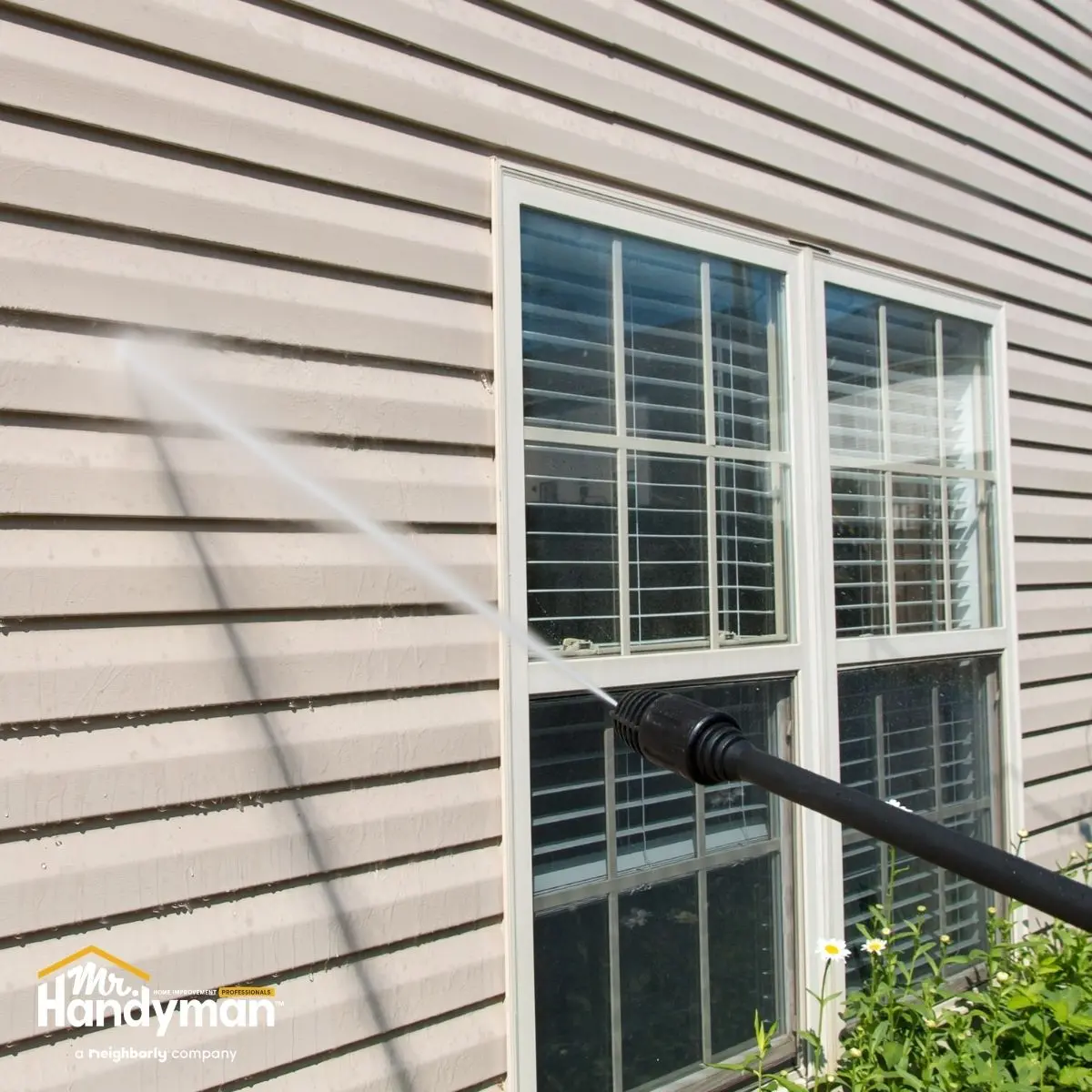
The sequence of preparation steps for an exterior paint project in this climate follows a logic that cannot be rearranged without compromising the result. Pressure washing comes first, removing the chalk, dirt, mildew, and oxidized paint residue that have accumulated on the surface through winter. Chalk from deteriorating paint and biological growth from moisture-retaining surfaces both compromise the adhesion of new paint applied over them, and no amount of paint quality overcomes an inadequately prepared substrate. Pressure washing at appropriate pressure for the specific siding material, higher for masonry and fiber cement, lower for wood and vinyl, cleans the surface without damaging the substrate or driving water into gaps that a lower-pressure wash would not.
Following the wash and allowing adequate drying time, which typically requires a minimum of 24 to 48 hours under moderate spring conditions in Wichita, the surface inspection that determines the scope of preparation work can be conducted accurately on a clean, dry substrate. Paint that is peeling, flaking, or blistering needs to be removed to the point of sound adhesion before new paint goes on. Wood surfaces with rot damage need to be repaired with appropriate consolidant and filler products, or with board replacement where the damage is too extensive for surface repair, before prime coat application. Bare wood and repaired areas need a primer that is compatible with both the substrate and the topcoat system, applied at the coverage rate that the primer manufacturer specifies rather than stretched thin to reduce material cost.
Caulking is the final preparation step before any topcoat goes on, and it needs to be the right product for each specific joint application. Paintable acrylic latex caulk is the appropriate choice for most exterior wood and trim joints. Siliconized acrylic formulations provide better long-term flexibility for joints subject to significant thermal movement. Pure silicone caulk, while highly durable, does not accept paint reliably and is not appropriate for joints that will be painted over. Applying caulk after primer and before topcoat allows the caulk to bond to a primed surface rather than raw wood, which produces better long-term adhesion, and allows the topcoat to cover the caulk line cleanly and uniformly.
Hardscape and Outdoor Surface Preparation for the Active Season
Driveways, walkways, patios, and any concrete or asphalt flatwork surfaces around the home carry post-winter conditions that warm weather preparation should address before the surfaces are in active use through spring and summer. The freeze-thaw damage mechanism that Wichita's winters apply to these surfaces produces deterioration that compounds through each subsequent season of weather exposure and traffic loading if the products of that damage are not addressed while they are still in a manageable state.
Driveway crack sealing is the highest-priority flatwork preparation item for most Wichita area homes because driveways carry vehicle loading that accelerates the progression of crack damage from cosmetic to structural more rapidly than pedestrian-only surfaces. A crack that is wide enough to allow water infiltration during spring rains becomes a crack that is subject to freeze-thaw expansion through the following winter, which produces a wider crack that admits more water and is subject to greater freeze expansion in the cycle after that. Crack sealing with the appropriate hot-pour or cold-pour sealant product, applied cleanly to a dry, blown-out crack channel, interrupts that progression at the current stage rather than at a more advanced and more expensive one.
Concrete walkways with raised joints from frost heave present both a trip hazard and a progressive deterioration concern that warm weather preparation should address directly. Joint grinding to reduce raised edges to a flush or near-flush condition eliminates the trip hazard immediately and removes the mechanism by which water pools at the joint during rain events and then freezes and expands through the following winter. Joints that have opened significantly may benefit from joint sealant application after grinding to limit future water infiltration while the concrete panels complete their post-thaw settlement.
Patio surfaces, whether concrete, pavers, or natural stone, benefit from spring cleaning and sealing that restores their appearance and protects their surface from the UV exposure and moisture cycling that Wichita's active weather season delivers. Paver and stone patios that have developed joint sand erosion through winter rain events and freeze-thaw activity need joint sand restoration before sealer application, because sealer applied over depleted joints does not provide the interlock support that properly filled joints contribute to the stability of the paver system.
Exterior Lighting, Hardware, and Finish Details Worth Addressing in Spring
The finish-level exterior elements of a home, lighting fixtures, house numbers, door hardware, mailbox conditions, and any decorative exterior features, collectively contribute to the curb appeal impression that the home makes from the street and that visitors experience approaching the entry. Winter affects these elements in ways that are individually minor but cumulatively significant, and spring is the appropriate time to address their condition as part of a comprehensive exterior preparation process.
Exterior light fixtures accumulate moisture, insect debris, and oxidation through winter in ways that affect both their appearance and their function. Fixtures with clear or frosted lens covers that have yellowed through UV exposure and temperature cycling reduce the light output of the bulbs inside them and read as dated and neglected from the street regardless of the condition of the surrounding exterior. Cleaning fixture lenses with appropriate products, replacing yellowed lenses where replacement components are available, and converting fixtures to LED sources that maintain their output quality longer than incandescent alternatives all contribute to exterior lighting that performs and appears correctly through the active season ahead.
Entry door hardware that has weathered through winter, with finish wear at high-contact points, tarnishing on exposed metal surfaces, and mechanical stiffness in latch and lock mechanisms from temperature-related lubrication deterioration, communicates a maintenance standard to visitors that is disproportionate to the actual scope of attention it requires to correct. Cleaning and lubricating door hardware with appropriate products, polishing or treating exposed metal finishes, and addressing any mechanical stiffness in operation restores the entry experience that the hardware was installed to provide and protects the mechanical components from the accelerated wear that inadequate lubrication produces.
Frequently Asked Questions
How do I know whether my siding needs full replacement or just paint and repair work?
Siding that is structurally sound with intact substrate behind the finish layer is a repair and repaint candidate regardless of how poor its current appearance may be. Siding that has warped, buckled, or developed moisture damage through to the substrate material, or that has been compromised by impact damage extensive enough to affect the water-shedding performance of the cladding system, is a replacement candidate. When the boundary between those conditions is unclear, a professional assessment that probes and evaluates the substrate condition behind the visible surface provides the information needed to make a sound decision.
What exterior preparation tasks can a capable homeowner handle without professional involvement?
Cleaning gutters and downspouts, recaulking window and door perimeters with appropriate sealant products, replacing weatherstripping at exterior doors, cleaning and touching up minor paint scuffs and chips, and addressing small concrete cracks with appropriate filler products are all within the capability of an attentive homeowner with basic tools and accurate product selection. Roofing work, full exterior repainting, significant concrete repair or replacement, and any work involving ladders above one story are categories where professional involvement produces better safety outcomes and typically better results.
How often should exterior caulking be replaced on a Wichita area home?
Most quality acrylic latex and siliconized acrylic caulk products carry rated service lives of ten to twenty five years under ideal conditions, but Wichita's thermal cycling, UV exposure, and moisture conditions compress those service lives in practice. A realistic inspection and selective replacement cycle of every five to seven years for high-exposure joints at window and door perimeters, and every seven to ten years for lower-exposure locations, maintains the envelope integrity that exterior sealants are designed to provide.
Can exterior preparation work be staged across multiple weekends rather than done all at once?
Yes, and for most homeowners that approach is more practical than attempting a comprehensive exterior preparation in a single effort. Staging the work in a logical sequence, roof and drainage first, then siding and envelope, then flatwork and landscaping, then finish details, allows each phase to be completed thoroughly rather than rushing through the full scope in a compressed timeline that compromises quality.
A Prepared Exterior Is a Protected Home
The work that goes into preparing a home's exterior for warmer weather is the work that protects the investment, prevents the damage that another season of weather exposure would produce on unaddressed conditions, and ensures that the home performs at its best through the active months ahead. Mr. Handyman of the Wichita Metro Area works with homeowners throughout the region on the exterior preparation, repair, and improvement work that gets homes ready for spring and summer the right way.
Call us or visit mrhandyman.com/wichita-metro-area to schedule exterior preparation service or request an assessment of what your home's exterior needs this spring. A prepared exterior is a protected home, and protecting it now costs far less than repairing it after another season of unaddressed conditions.
