
Why the Details of Your Physical Space Are Doing More Work Than You Realize
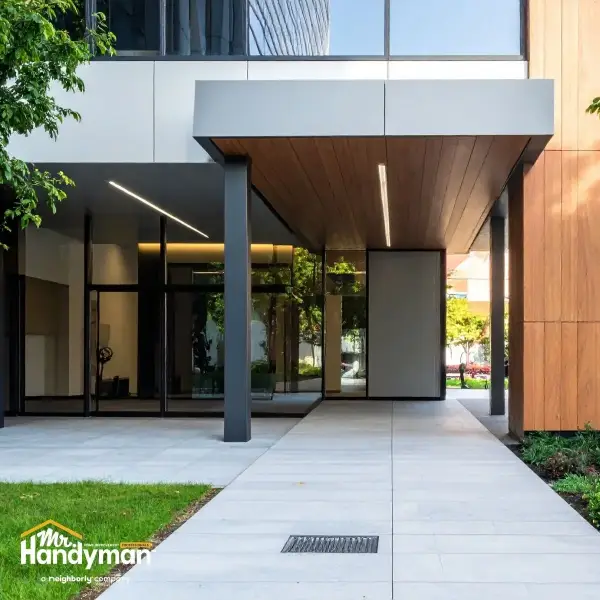
There is a version of customer experience that happens before a single word is spoken, before a product is examined or a service is explained, and before any transaction takes place. It happens in the seconds between when a customer walks through the door and when they form their first impression of the business they have just entered. That impression is assembled from dozens of environmental details that the customer processes without conscious deliberation, the condition of the flooring underfoot, the quality of the lighting overhead, the state of the walls and trim, the functionality of the entry hardware, and the overall sense of whether this is a place that is cared for or a place that has been allowed to drift.
Research on retail and service environment psychology has consistently demonstrated that physical space conditions affect customer trust, perceived quality, and willingness to spend in ways that are disproportionate to the actual cost of the conditions producing those effects. A business operating in a space with worn flooring, flickering lighting, and scuffed walls is communicating something about its standards that competes directly with whatever its marketing is trying to say. And in the Wichita metro, where customers across every market category have genuine options and make choices based on the full experience a business provides, that competition matters.
The good news for business owners and commercial tenants throughout Wichita, Derby, Andover, Maize, and the surrounding communities is that the renovations that most meaningfully shift customer perception are frequently not the large, disruptive, expensive ones. They are targeted, well-executed improvements to the specific elements that customers interact with most directly and register most immediately. Understanding which improvements carry the most perceptual weight relative to their cost and disruption is what separates renovation spending that produces measurable results from spending that improves the space in ways that customers never consciously notice.
Entry and Reception Areas: Where First Impressions Are Made and Cannot Be Remade
The entry and reception area of any customer-facing commercial space is the highest-return renovation zone available to a Wichita area business, and the reasoning is straightforward. Every customer who visits the business passes through this space. It is the first interior environment they experience and the one that sets the frame through which everything that follows is interpreted. A strong entry experience primes customers to perceive the rest of their visit positively. A weak one creates a skepticism that subsequent positive elements have to work against.
Flooring at commercial entries takes the most direct punishment of any interior surface in the building. It absorbs foot traffic, moisture tracked in from outside, the grit and debris that Kansas weather delivers through every season, and the mechanical wear of carts, dollies, and rolling equipment that service and delivery traffic introduces. Commercial entry flooring that has worn through its finish layer, developed visible scratches and gouges, or stained in patterns that cleaning cannot address is communicating a maintenance standard that customers register whether they articulate it or not.
Replacing or refinishing entry flooring is a renovation investment that produces one of the most immediate and broadly perceived improvements available in a commercial interior. Material selection for commercial entry applications needs to account for the specific traffic and moisture conditions that Wichita's climate delivers. Porcelain tile in appropriate slip-resistance ratings is a durable, professional choice that handles moisture, heavy traffic, and the cleaning demands of a commercial entry well over a long service life. Luxury vinyl tile and plank in commercial grades offer a more installation-friendly and budget-accessible alternative with good durability in moderate-traffic applications. Whatever material is selected, the transition from entry flooring to the adjacent interior surface needs to be detailed correctly, with appropriate transition profiles that are flush, cleanable, and free of the trip hazard risk that poorly detailed flooring transitions create.
Lighting in entry and reception areas is the renovation element that produces the most dramatic perceptual shift relative to its installation cost, and it is consistently the element that business owners who have completed entry lighting upgrades identify as the single change that generated the most immediate and universally positive customer response. The reason is straightforward. Light quality affects how everything else in the space looks, feels, and reads. A reception area with warm, well-distributed, appropriately bright lighting communicates professionalism, care, and attention to the customer experience in a way that the same space with inadequate or poorly aimed lighting simply cannot, regardless of what else has been done to the space.
The lighting upgrade conversation for commercial interiors in Wichita typically involves replacing aging fluorescent tube fixtures with LED alternatives that deliver better light quality, significantly lower energy consumption, and elimination of the flicker and color rendering problems that fluorescent lighting produces as it ages. LED panel fixtures in drop ceilings produce flat, even illumination that works well in office and professional service environments. Directional LED downlights and track fixtures produce the kind of focused, layered lighting that retail and hospitality environments use to draw attention to products, displays, and architectural features. The right choice depends on the specific use of the space, but in either case the improvement over aging fluorescent is immediate and substantial.
Wall Finishes and Trim Conditions That Customers Notice Without Knowing They Are Noticing
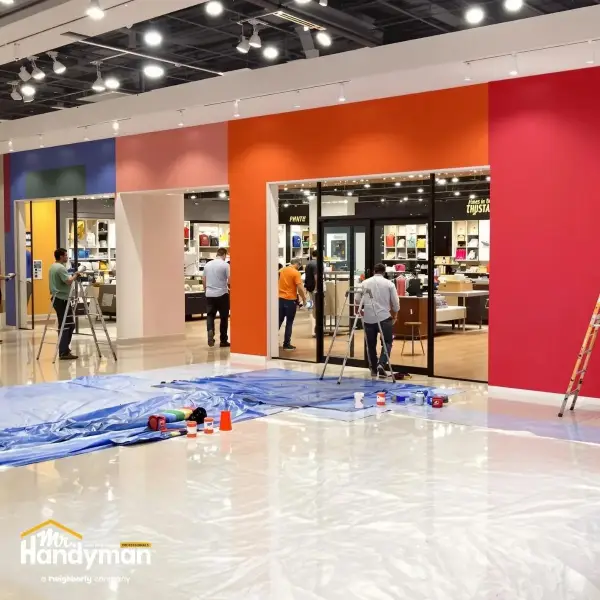
Wall conditions in commercial customer-facing spaces carry perceptual weight that is easy to underestimate because walls are background elements that healthy, well-maintained examples simply disappear into. It is only when walls are scuffed, stained, cracked, or painted in colors that have aged poorly that they become foreground elements that customers register negatively. The goal of a commercial wall finish renovation is to restore the background quality that allows the customer's attention to focus on the business's products, services, and people rather than on the condition of the space housing them.
Fresh paint is the most cost-effective large-surface renovation available in a commercial interior, and in the Wichita commercial market, where many business spaces carry paint that has not been refreshed in five or more years, the impact of a professional repaint is significant. Color selection for commercial interiors should be driven by brand alignment and the psychological associations that different color palettes produce in the specific customer context. Warm neutrals and carefully chosen accent colors work well across most retail, professional service, and hospitality environments because they read as current, intentional, and welcoming without the distraction risk that more assertive color choices carry.
Trim condition is the detail that separates a paint job that looks professional from one that looks adequate. Baseboards, door casings, window trim, and crown molding that are cleanly painted, properly caulked at their joints, and free of the impact damage that commercial traffic produces create a finish quality that customers associate with a business that pays attention to detail. Trim that is chipped, scuffed, or pulling away from the wall at caulk joints undermines the effect of freshly painted walls above it in a way that is disproportionate to the actual size of the deficiency. Addressing trim condition as part of any commercial interior paint project rather than treating it as a separate optional step is the difference between a renovation that looks finished and one that looks partially done.
Restroom Conditions That Affect Customer Perception More Than Almost Anything Else
Commercial restrooms occupy a unique position in the customer experience hierarchy because customers draw stronger conclusions about a business's overall standards from restroom condition than from almost any other single environmental indicator. A business with an impressive showroom and a neglected restroom has created a contradiction that customers resolve in the direction of the restroom, not the showroom. The reasoning is intuitive: if the part of the business that the customer knows is being inspected looks good while the part that might be overlooked looks poor, the poor condition is the more honest signal about the business's actual standards.
Restroom renovation in a commercial context does not need to be comprehensive to produce a meaningful customer perception shift. Targeted improvements to the highest-visibility and highest-contact elements, the vanity and sink area, the fixtures and hardware, the lighting, the flooring, and the wall finish condition, deliver a cumulative result that reads as a genuinely improved space even when the underlying layout and plumbing configuration have not changed.
Vanity and sink area improvements carry the most immediate visual impact in a commercial restroom renovation. A dated or damaged vanity top, a faucet with mineral buildup that cleaning cannot address, and a mirror with edge deterioration all concentrate customer attention on the area they interact with most directly during a restroom visit. Replacing a cultured marble vanity top with a solid surface or porcelain alternative, updating the faucet to a contemporary single-handle or sensor-activated model, and replacing a deteriorated mirror with a clean frameless or simply framed alternative transforms the primary interaction zone of the restroom at a cost that is modest relative to the perception shift it produces.
Ceiling Conditions That Affect the Feel of an Entire Space
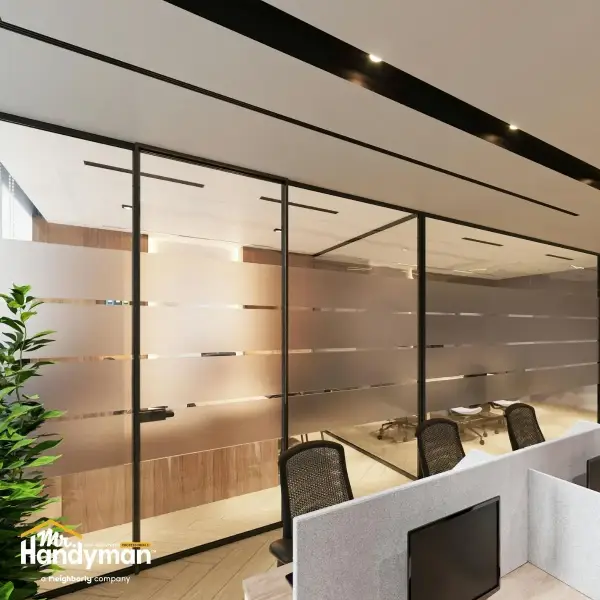
Ceilings are the surface that customers spend the least conscious attention on and that nonetheless shape the overall feel of a commercial space in ways that are difficult to articulate but immediately felt. A ceiling in poor condition, with stained or sagging tiles, outdated fixtures, or visible water damage patterns from past roof or plumbing events, pulls the perceived quality of the entire space downward in a way that no amount of attention to lower surfaces fully compensates for.
Drop ceiling tile replacement is one of the most cost-effective large-surface improvements available in commercial interiors throughout the Wichita metro, and it is a renovation that businesses frequently defer far longer than they should because the ceiling feels like a background element that customers are not actively evaluating. The reality is that customers are evaluating it, and a ceiling with multiple stained or mismatched tiles registers as a space that has been patched and neglected rather than maintained and cared for.
Standard white acoustic ceiling tiles are available in a range of grades, and upgrading from a basic builder-grade tile to a higher-quality option with better light reflectance and a cleaner surface finish produces a noticeable improvement in how bright and fresh the space feels without changing the fixture layout or the grid system that supports the tiles. For businesses considering a more significant ceiling renovation, replacing a dated 2x4 grid system with a 2x2 grid and higher-quality tiles produces a visual result that reads as a genuinely updated space rather than a refreshed one. Combined with LED lighting upgrades within the same ceiling plane, the combined effect is transformative relative to the individual cost of either improvement alone.
Exposed ceiling treatments in retail, restaurant, and creative professional environments have become an established design approach in the Wichita market and can represent a cost-effective alternative to tile replacement in spaces where the structure above the drop ceiling is in acceptable condition. Removing a dated drop ceiling, painting the structure and deck above it in a dark matte color, and installing track or pendant lighting in the exposed plane creates a contemporary aesthetic that many customer demographics respond to positively. The cost calculation for this approach depends heavily on what is above the existing ceiling, and a realistic assessment of mechanical and structural conditions in the exposed cavity is a necessary first step before committing to this direction.
Hardware, Fixtures, and the Small Details That Signal Quality
There is a category of commercial renovation that operates almost entirely below the level of conscious customer awareness but that contributes meaningfully to the cumulative impression a space creates. It is the category of hardware, fixtures, and finish details that customers touch, operate, and interact with in passing without specifically evaluating. Door handles, light switch covers, outlet plates, cabinet pulls, paper towel dispensers, coat hooks, and signage hardware all fall into this category, and their collective condition either supports or undermines the quality signal that the larger renovation elements are trying to create.
A business that has invested in fresh paint, updated flooring, and new lighting but still has door hardware with worn finishes, outlet covers with cracks or discoloration, and cabinet pulls that are mismatched from previous replacement cycles has created a renovation that feels incomplete in a way that is hard for customers to identify specifically but easy for them to feel generally. Addressing these finish-level details as part of any renovation project, rather than treating them as optional afterthoughts, closes the gap between a space that looks renovated and one that feels genuinely considered.
Door hardware replacement is the highest-impact item in this category because doors are the elements that customers interact with most directly and most repeatedly during a visit. A lever handle or pull that operates smoothly, feels substantial, and presents a finish that is consistent with the overall design direction of the space creates a tactile quality impression that customers carry into the rest of their experience. Hardware in a finish that has worn through to the base metal, that wobbles or sticks during operation, or that is mismatched across different doors in the same space creates friction that customers register even when they cannot articulate why the space feels slightly off.
Renovation Sequencing That Produces the Best Results
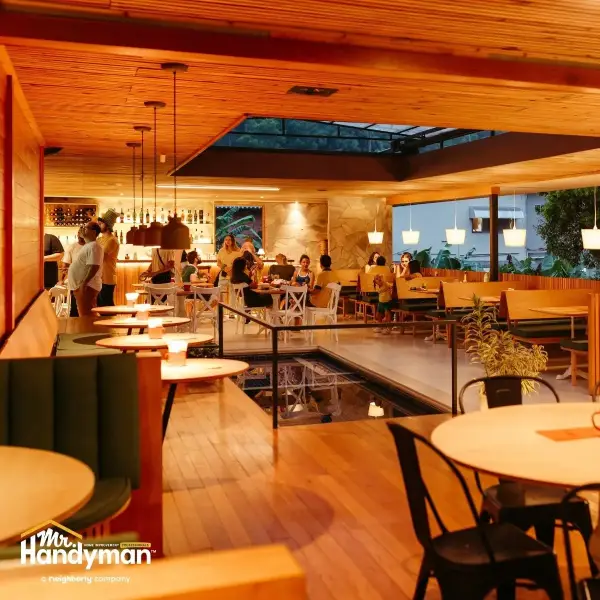
The order in which small commercial renovations are completed affects both the quality of the final result and the efficiency of the work itself, and getting the sequence right is something that business owners planning renovation projects benefit from thinking through before any work begins.
Ceiling work always comes first in any interior renovation sequence that includes ceiling changes. Work above the ceiling plane, whether it is mechanical, electrical, or structural, needs to be completed before new ceiling tiles or finishes go in. Lighting upgrades that involve new fixture installation or relocated fixtures need to happen before ceiling surfaces are finalized. Any wall work adjacent to ceiling transitions needs the ceiling condition established before the wall finish can be properly terminated and caulked at the ceiling line.
Wall work, including painting and trim repair, follows ceiling completion. Flooring is always the last interior surface to be finished because it is the most vulnerable to damage from subsequent work activity. Paint overspray, drywall dust, and the foot traffic and material staging of any other trade work in the space all affect flooring surfaces, and protecting a newly installed floor through the remainder of a renovation sequence is more complicated and more expensive than simply scheduling flooring installation as the final step.
Fixture and hardware replacement can occur at any point after the surfaces surrounding them are complete, and batching these items together rather than addressing them individually as separate visits is a scheduling efficiency that reduces total labor cost and minimizes business disruption.
Renovation Planning Around Business Hours and Customer Traffic
One of the practical realities of commercial renovation for customer-facing businesses is that the work needs to happen without eliminating the revenue-generating activity that the space supports. A renovation that closes a business for a week may be unavoidable for certain project scopes, but most small renovation improvements can be sequenced and scheduled to minimize customer-facing disruption significantly.
Evening and weekend scheduling for renovation work is a standard approach for Wichita area businesses that operate during standard business hours. Most painting, flooring installation, ceiling tile replacement, and fixture work can be completed outside of business hours when the work is planned and materials are staged in advance. Property managers and business owners who communicate clearly with their renovation contractors about operational constraints get better scheduling results than those who leave timing decisions to the contractor's default preferences.
Phased renovation approaches that address one zone of a business at a time allow customer-facing operations to continue in unaffected areas while work proceeds in others. An entry and reception renovation completed while customer service operations continue in the main floor area, followed by restroom renovation during a period of lower traffic, followed by main floor improvements on a rotating zone basis, allows a comprehensive renovation to be completed without the full business disruption that attempting everything simultaneously would require.
Frequently Asked Questions
Which small renovation produces the fastest visible return in a customer-facing commercial space?
Lighting upgrades consistently produce the most immediate and broadly perceived improvement relative to their cost and installation time. The quality of light affects how every other element in the space looks and feels, which means a lighting upgrade amplifies the perceived value of every other renovation that has been completed in the same space.
How do I prioritize renovation spending when my budget is limited?
Focus first on the elements customers interact with most directly and most frequently. Entry flooring, door hardware, restroom fixtures, and lighting are all high-contact, high-frequency interaction points that produce strong perception returns relative to their renovation cost. Cosmetic improvements to surfaces that customers view but do not touch, like upper wall areas and ceiling fields, are lower priority than the elements customers physically engage with during their visit.
Does the age of a commercial space affect which renovations make the most sense?
Yes, meaningfully. Older commercial spaces in established Wichita business districts often benefit most from lighting modernization, since their original fixture systems are typically the most dated element and the one creating the largest gap between current condition and current customer expectations. Newer spaces in suburban commercial developments more commonly need targeted hardware and finish updates that bring builder-grade specifications up to a level that supports the business's brand positioning.
Can small commercial renovations affect employee morale as well as customer perception?
Consistently and significantly. Employees who work in a well-maintained, thoughtfully renovated space report higher job satisfaction and greater pride in the business they represent than those working in spaces that have been allowed to deteriorate. The customer perception benefits of a renovation are matched by an internal culture benefit that affects employee retention and performance in ways that business owners frequently describe as an unexpected return on their renovation investment.
Make the Impression Your Business Deserves to Make
The condition of your commercial space is a continuous business statement that operates every hour your doors are open. Mr. Handyman of the Wichita Metro Area works with business owners and commercial tenants throughout the region on the targeted renovations and repairs that elevate customer perception, support business performance, and reflect the standards your business holds itself to.
Call us or visit mrhandyman.com/wichita-metro-area to schedule a consultation or request service for your next commercial renovation project. The right improvements, done well, change how customers experience your business from the moment they arrive.